

ReCentering Methodism
These are days of discontent and disruption (even despair) in United Methodism in the United States. Earlier this week, my friend Professor Ted Campbell speaking to a gathering of World Methodists said the following about the United Methodist denomination: “The question at this point is not whether we divide or not,” said Campbell, standing under a “One” sign that signified the unity theme of the conference. “That I fear is a given now.”[United Methodist News, 9-1-16]
As a “cradle Methodist,” one who has lived and loved this Wesleyan expression of the church for more than seven decades, I have watched our common story as it is shattered apart. As it unfolds I watch with the horrid fascination of someone who fears she is seeing a train wreck about to occur. “A given?” So says my friend. I pray and hope Ted is WRONG. Really, are we to divide over this? This?
Still, Professor Campbell’s comment has caused me to do much thinking about our denomination. If we are going to speak of “givens,” I have a few to add. Here are a few “givens” that have been firmly in place for too long and I would suggest have led to my friend’s stark assessment of our situation.
In his fine book Beauty Will Save the World, Gregory Wolfe reflects on the cultural battles in our nation. He notes James Davison Hunter’s statement that culture wars consist of “competing utopian politics that will not rest until there is complete victory.” Wolfe continues regretfully, “The very metaphor of war ought to make us pause. The phrase ‘culture wars’ is an oxymoron: culture is about nourishment and cultivation, whereas war inevitably involves destruction and the abandonment of the creative impulse.”
Gregory Wolfe summarizes further: “Somewhere in our history we passed a divide where politics began to be more highly valued than culture.” Borrowing from Wolfe, I would adapt his statement to read that somewhere in our denomination’s history we passed a divide where politics began to be more highly valued than theology –especially our understanding of the church. We stopped caring for the health of our institution and began to seek total victory through our politics. Humility took a back seat to triumph. Years ago, it became a given — raw politics replaced more generous theological discourse. Outside forces played a role. If “culture wars” are an oxymoron, shouldn’t theological wars be equally onerous? (More on this in future.)
So, there is the previous “given” of politics being more salient than respectful theological discourse. I would suggest two other “givens” that underpin this.
It is increasingly scientifically clear that there are biological, hereditary contributors to a person’s sexual orientation. Year by year, the science keeps mounting — this research is a “given.” It is not that United Methodists have been unaware. In the 1980s and 1990s biological scientists like Sally Geiss were encouraging a more scientifically based view of human genetics. However, by narrow majorities, the General Conference chose to ignore this work. This, my friends, is another “given” that should be set along side the one Professor Campbell mentions. We have been MADE by our creator to have differing sexual proclivities and desires. I believe this is a “given” that should inform our theological reflection and transcend the political and the theological divisiveness we face. I fear on this issue our denomination continues to operate with the ignorance of those who once believed the earth was flat, even in the face of solid scientific evidence to the contrary.
Finally, I suggest it is a “given” that the true disagreement among us, the issue that divides, isn’t primarily human sexuality but how we interpret scripture. For years I have asked my friends, who wish to exclude homosexual persons from full participation in the church, to share with me their hermeneutic of scripture. I ask on what basis they interpret the five or six passages of all of scripture that MIGHT refer to what we understand today as homosexuality? How is it that my colleagues, with whom I disagree on this one matter, find more space to interpret scripture in less literal ways when it comes to divorce, the role of women in the church, support for slavery, polygamy, the eating of pork or even being left-handed? How is there this latitude in interpretation on some important matters like divorce, slavery, the role of women and at the same time a restrictive interpretation of passages on homosexuality?
I believe it is a “given” that until we can sit down respectfully and reason together about our interpretive approaches and differences, we will live more by political strategies than by theological respect. As one wag recently confided in me, “I wonder if this increasingly openness to schism, to the dividing of the body of Christ first rests in an openness to divorce, even though Jesus spoke against it? Perhaps once you accept divorce as normal, you are more open to a dividing of the church!” Interesting and troubling thought, this — even as I find it slightly off key.
Another friend has said that there can be grace-filled endings of marriages, but there seem never to be grace-filled divisions of a congregation or denomination. In this I fully agree. Over the years I have watched the damage done by the exclusionary practices, theologies and splintering activities of the Missouri Synod Lutheran and Southern Baptist denominations. It is clear that the seeking of some mythical purity has left both groups less focused on mission and imaginative ministry.
It is my belief that United Methodism has been shaped by too many “givens” already, without our easily accepting another, even if it is proposed by the good Professor Campbell. What if we worked on some other prior givens like: politics being more highly valued than theology, the scientific evidence we have at hand, or the inability to speak constructively about differing hermeneutical interpretations. What if folks in the emerging Wesley Covenant Association were to include all of these givens in their upcoming deliberations? What then?




 Lesson #1: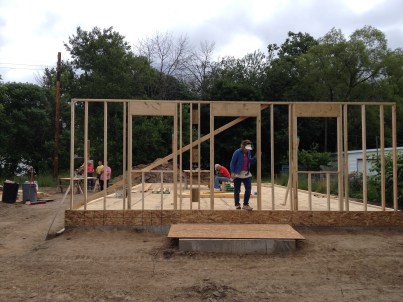




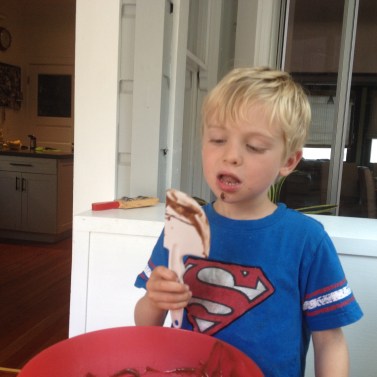 need to repent. He said I offered no positive alternative. Or, as he put it, “you call us to a whimper and a pout in our separate corners.” Yikes, I thought. Whimpering and pouting? People who know me, know I like little more than a GOOD “conversation” — a solid and respectful debate often helps all sides come to fresh understanding, new truth. There is, for me, Joy In It. For me, a good learning experience is akin to my grandson Gus’ delight in cleaning up a bowl of chocolate cookie mix.
 At root, our differences will call for us to struggle with our interpretation of scripture and our various “captivities to local cultures” and step away from the worlds of narrow experience. Folks like me will need to know how we can focus so narrowly on excluding gay folks based on a limited and questionable scriptural basis, and at the same time ignore other scripture “rules.” There are also “scriptural rules” on the role of women, divorce, the eating of pork, the wearing of synthetic clothing or the call to stone folks to death for many of our modern practices.




 Hands of the Strong
Ten Predictions – United Methodism Summer 2016
[July 10, 2016 — First, an apology — many of you are not United Methodists and care little about the ecclesial wars underway in the denomination of my birth and my ordination. Forgive my need to offer this set of predictions at this time. More importantly, what is happening in our nation now, following the tragic murders and wounding of police officers in Dallas, along with the police shootings of African American men in Minneapolis and Baton Rouge (and beyond), only places in sharp relief the relative insignificant meanderings, bigoted and contradictory activities of United Methodism these days. We UM’s are in search of our true identity. Would that we might find again ways to speak to the nation of the power of love to overcome fear. So, I write this perspective, these predictions on United Methodism 2016. We are a denomination in search of our soul. Pray for us.]
Ten Predictions about United Methodism — summer of 2016:
United Methodism’s structure is akin to the old cosmological suggestion that the world rested on the back of a turtle. And what is beneath that turtle? The answer comes, of course, it is said, “it’s turtles all the way down!” In United Methodism it is conferences all the way down!
This spring and summer, in the United States, there are conferences on top of conferences (General Conference was in Portland in May), on top of this are Annual Conferences (56 in the U.S) and this week we will have five Jurisdictional Conferences where bishops will be elected. I will spare the reader my perspectives on each of these, except as they lead to the ten predictions outlined below:
Prediction #1. For the next decade at least, the word “omnishambled,” a new word to recent editions of the Oxford English Dictionary, will describe the denomination. There will be very little that can be said to be “United.” I recall the wedding bulletin nicely printed for a ceremony many years ago. It read that the wedding was being held at the First Untied Methodist Church. Spell check missed it — UNTIED rather than UNITED. Well, we are headed into a decade of Untied Methodism.