There he was. Comfortably situated on the front steps, he was. We will call him “Andy.” I thought I recognized him the first time I passed but didn’t speak.
It was a shady spot. Good place for a breather and a smoke. He wasn’t in anyone’s way. It was Friday and these steps wouldn’t be needed until Sunday. Doors were locked. All the doors locked, each entrance around that church building. Locked. It was Friday noon. I tried an entrance on the other side of the building. Locked. There was a phone number to call. No answer. Disappointed, as I wanted to introduce my friend De’Amon to some of the folks there, we retraced our steps. Andy was still resting on the front steps.
His gear was scattered around him on the steps – helmet, belt pack, notebook, lighter. In front of him, between us, a nice bicycle, a good barrier – just in case. De’Amon and I approached. I caught his eye and opened with “Don’t I know you? You seem so familiar to me.” His eyes sparkled and his handsome ebony features all seemed to join the fun. “No, don’t think so.” I took off my hat so he could catch a clearer view. “You kinda familiar, but I don’t recall. I used to work in a nursing home in town, perhaps you knew me there.”
“Yeh, I think that’s it,” I responded. “I think I knew you back when.” He smiled, “I worked there for almost twenty years – of course that was a while ago.” Laughing I said, “I think you nailed it; I remember you there.” “Good work it was,” he replied, “but I got tired of seeing my friends die.”
De’Amon is pictured with Michael Mather. longtime friend and colleague.
I could have walked by but didn’t. You see, I was with the original “Roving Listener,” De’Amon Harges. He has listened tens of thousands into friendship. He can discover human-buried-treasures. He finds a depth of resources so often overlooked. De’Amon has helped establish networks of mutuality where others saw only poverty, alienation, or separation. He has taught thousands of folks around the world, from all social strata, about the value of social capital, the value of “neighboring.”
What choice did I have? It was like a test, a gift, a challenge, and Andy was there right beside us. I broke the ice. Off we went. De’Amon asked Andy about his work, his history, where he grew up, what he does best, what he is hoping to do in the future. We found out Andy had his own business, cleaning buildings. Had enough work to hire some others as well. “But they better be willing to work. I mean, seriously, it is my name on the business.” We got Andy’s phone number and thanked him for the visit.
As we left, I whispered to De’Amon “There it is, abundance on the doorstep of the church.” We laughed and knew this story would one day be in a sermon. But would such gifts, such opportunities remain outside?
“Politics ain’t beanbag” is an oft used quote about the rough and tumble, often bruising, realities of living and participating in a democracy. The phrase was coined by Finley Peter Dunne, a Chicago author who wrote of a fictional character, Mr. Dooley. Starting in the 1890s, Dunne wrote a column where Dooley offered up a philosophy of life from his perch on a barstool in a Chicago pub. Politics ain’t beanbag is probably the best known of Mr. Dooley’s witticisms.
At my age and stage, I have experienced the truth of this philosophy often. Things can be tough – pick yourself up and move on – is what Mr. Dooley seems to be saying. I recall 1984 when Frank McCloskey won a “landslide election” for Congress in the “Bloody Eighth” Congressional District. The first reported results had McCloskey winning by four votes. Or did the Republican candidate Rick McIntyre win by 34 votes? This is what one of the many “recounts” in the following days claimed?
My memory is that a “true result” was never fully determined, as there were thousands of ballots that were not counted for “technical reasons.” Most of these uncounted votes were in Democratic-leaning precincts. Indiana Republican Secretary of State, Ed Simcox, decided to certify McIntyre as the winner but the Democrats controlled the U.S. House of Representatives and accepted that McCloskey had won – even if only by four votes! And so, the high drama was on!
Thus, in early 1985 Speaker Tip O’Neill swore in and seated McCloskey as a member of Congress. The ensuing full-blown melodrama was worthy of a Shakespeare comedy. Walkouts and shouting and blaming were orchestrated by folks like Newt Gingrich and Dick Cheney. Speaker Tip O’Neill and Texan Democrat Jim Wright took advantage of their power of office.
This election may have helped set the stage for current election denial and conspiracy theories. Of course, one also thinks of the Swiftboating tactics used against John Kerry in the Presidential Campaign in 2004 when lies undercutting a distinguished military career were broadcast widely. In Indiana over recent years, I recall mayoral races marked by dishonest whispering campaigns. In one, a fella was said to be a closeted gay man. In another city, the rumor was that the candidate had a mistress “on the wrong side of town.” This was meant to say she was of another race. I wondered if it would have mattered if the mistress was on the right side of town.
Politics ain’t beanbag is a truism. Bloomington has just finished our primary elections. There are, no doubt, some candidates and members of the electorate still nursing some election bruises. Some candidates were said to be too close to developers, or another to realtors, or another to people who want to block any progress. We even witnessed some rather strange, last-minute, “news coverage” concerning unsubstantiated allegations against a mayoral candidate.
Still, there did seem to be a good exchange of ideas coming from several debates and town hall gatherings. Even so, this should be a moment to “dust ourselves of and move on.” A time to look toward building our future together. Mayor Hamilton’s term has several months ahead when good and cooperative work is possible. More, this is a time to step beyond the meanness and divisions we see on the national level and plan for a positive cooperative governance in the future. Now are the months to appreciate what can still be accomplished by our current elected officials and look to a positive future with new city leadership.
In 2022 Daniel Effron and Beth Anne Helgason published “The Moral Psychology of Misinformation.” They identify a newly emerging danger in our politics, the growing tendency to excuse dishonesty in a post-truth world. They conclude: “As political lies and ‘fake news’ flourish, citizens appear not only to believe misinformation, but also to condone misinformation… We are post-truth in that it is concerningly easy to get a moral pass for dishonesty even when people know you are lying.”
The primary election is over. Maybe it is a time to commit to speaking truth in the elections and governance ahead. Can we be a people who will not believe misinformation? Will we live into truth even while understanding the beanbags will fly.
“I was afraid I might be shot walking from my car into the building.” These were the words of a friend, a denominational leader. He was speaking of work while his office was at Central Avenue UMC in the 1990s.
In recent years I assumed there were few surprises left for me after more than fifty years as a pastor in my particular Protestant denomination. I was wrong.
It was a casual conversation, but a stunning one. My friend’s almost off-hand comment opened a new vista into what I had failed to see those three decades earlier. He was speaking of when his office was in the Central Avenue Church years before. Still, the fear lingered in his voice.
I have written about the decline and closing of the Central Avenue in earlier posts. In the mid-1980s, I joined others in proposing some denominational offices be moved to the unsued space at Central Avenue. Our assumption was it would benefit urban ministry across the state. It would signal and solidify a commitment to valuing of city churches. Surely, if denominational offices and mission activities were located in the core-city, it would guarantee more support and an awareness, a commitment, to city ministry. In an amazing set of circumstances, in that decade, even Governor, Frank O’Bannon, and his wife Judy, United Methodists themselves, chose to live nearby and associate with Central Avenue. They were advocates for urban revitalization.
Still, something was awry. My assumption in hindsight was fool hearty. There was an insufficiency in vision. Locating offices in that building didn’t have the effect we had hoped. Central Avenue officially closed in 1999. The building needed significant repairs. The worshipping congregation was down to only thirty members. Ultimately the grand old structure was given over to Indiana Landmarks and extensive refurbishment was carried out.[i]
What did we fail to understand when it was thought that locating some denominational offices in that place would be a difference maker? Something more basic, more at the core of things, was at play. Offices might be centered in a building, but fear and a lack of a shared vocational clarity as to city ministry overwhelmed the best of intentions.
Earlier I posed the question, why? Why did so many urban parishes seem to evaporate or vanish over the past half century? Central Avenue is representative. In fact, it had more advantages than many others. The many parishes that vanished faced a tsunami of urban change. Long deferred building maintenance and the costs of repairs played a significant role. It will be argued later that an inadequate sense of theological clarity and sense of connection between the congregation and a shifting neighborhood population was a contributor to this decline.
Too few neighbors found a home at the church. Few persons were willing to drive from more distant neighborhoods back into the core-city. There was insufficient interest, skill or insight in re-establishing this as a viable parish. Other factors contributed to this demise (secularization, smaller families, alternative faith communities nearby); even so, I have come to the belief that, at the core, there are two fundamental issues which offer the clearest explanation. These are:
a) the social and political ecology of embedded racism; and
b) Ineffectual denominational and congregational responses lacking in theological clarity.
A Look at the Embedded Racism in Urban Ecologies
My friend who spoke of being afraid of being shot walking between his office and the car was not someone who would fit the label of a racist. Over his career he spoke against racial discrimination. Yet, the fear he experienced belied something deeper, something far more problematic.
Racism is about more than individual attitudes or behaviors. It is embedded in perceptions and expectations. Even more, it is interwoven in the political and economic systems in which we all participate. After speaking of “being afraid of being shot” he went on to say, “I couldn’t invite persons to come to the building for meetings, especially in the evenings, out of concern for their safety. On more than one occasion I heard gunshots near the building.”
As these words were spoken, I thought of the dozen or so United Methodist congregations nearby, several within a couple of miles. I thought of the dozens of churches, around the city and in urban neighborhoods across the state, that were in more “dangerous” settings (with higher crime statistics or gang activity).
Fear is a powerful force in shaping what we see and how we behave. Comments like “we must go to where the people are” or “I couldn’t invite people here” are not intended to carry racist freight on the surface – but they are marioneted in a broadly assumed and unspoken racist gestalt. In truth, in nearby churches congregants gathered in more crime ridden neighborhoods, day-and-night, to carry on their ministries.[ii]
There was a failure to consider a wider array of options than an exit strategy. The resulting reality was a benign neglect of most core-city parishes. The “left behind” congregations were undervalued as to their potential.
There are many factors that underlie WHY neighborhoods changed and parishes slowly vanished. Realities and patterns vary from congregation-to-congregation, city-to-city, and neighborhood-to-neighborhood. Even so, when one considers the common ingredients surrounding neighborhoods that were abandoned and where parish life was ignored, fear of the other (of the stranger) is always present.
Our nation’s history is that of a restless citizenry, moving from place to place, job to job, home to home.[iii] This mobility is assisted by the capitalistic assumptions that social status and a better life can be purchased by a move to a more respected place.
There is a lengthly list of contributors to transitions in urban neighborhoods like those surrounding Central Avenue Church. This recent research on the dynamic of urbanization singles out racist structures as far and away the critical explanatory and discriminatory component. Racism serves as what social scientists call an “independent variable.”
There are now scores of research reports, mostly from the past decade, that document the extent of racial inequity. It permeated our social and economic ecology. It was manifest in the building of interstate highways,[iv] the decline of newspapers and local media,[v] real estate speculation and housing practices,[vi] shopping malls and big-box retail,[vii] employment,[viii] education,[ix] taxation,[x] law enforcement,[xi] urban development,[xii] and, this all reinforced by patterns of governance and political control in cities.[xiii]
To illustrate, here is a quick review of the first factor above, the building of interstate highway systems. It is clear systemic racism shaped the urban landscape. A pervasive, and decades long, reality can be seen in the destroying and/or dividing neighborhoods based on race. The interstate highway system begun in the mid-1950s, and even earlier the parkways built by planners like New York’s Robert Moses, intentionally divided neighborhoods by race and social class.[xiv] In the process it was nearly always the Black and Brown neighborhoods that were destroyed or “isolated off.”
Today the former Central Avenue church building is only a few yards from I-65 as it loops through the middle sections of the city; and, barely two blocks away is another barrier as I-70 separates off heading east. The now gentrified Near Northside neighborhood is, thus, walled off from other, historically poorer neighborhoods in Indianapolis.[xv]
Robert Bullard in 2004 documented how the Interstate Highway System was blatantly and, in most cases, effectively utilized as a tool of “transportation racism”.[xvi] Bullard speaks of the power of transportation inequity. Poorer neighborhoods suffered the consequences that included: isolated poverty detached from needed services, environmental hazards, loss of neighborhood centers (including churches), excessive noise and more difficult access to shopping, parks, entertainment, and other amenities. Bullard posits that “transportation planning has duplicated the discrimination used by other racist government institutions and private entities to maintain white privilege”.[xvii]
Thus, by the 1970s, in Indianapolis, the building of interstate highways, the establishment of Unigov (bringing together city and county government), the desegregation of schools and taxation policies were powerful reinforces of an often-covert racism. It was a racism that was deeply embedded in urban planning activities and in the souls of well-meaning but fearful citizens, even church leaders. It is little wonder that congregations like Central Avenue were in trouble. It is a story deeply embedded in racial fear. But the story is even more nuanced, more complex.
If racism was a primary cause, the response to this time of transition and the vanishing of parishes by the denominations was also due to largely ineffectual and misguided practices. We turn to this in the next posting. There is more. There are words of hope offered by two other questions beyond the “why?” In future we will also ask about the “what if?” and “why not?” options before us.
[ii] I was serving as one of the pastors at Broadway United Methodist under two miles north of Central Avenue from 1986 to 1992. Yes, there were gun shots heard and even violent exchanges on that parking lot; however, the lay people, who lived near and far away, and the nearby neighbors were beginning to forge bonds of cooperation and respect. It was hard won – and was filled with the challenges of mistrust and paternalistic behaviors.
[iii] Frederick Jackson Turner had hypothesized all the way back in 1893 that the American Spirit was one of always moving into a new frontier. Turner spoke of the idea of an exceptionalism that sought to “win against the wilderness.” Mobility came naturally to the settlement and resettlement of our cities.
[iv] Bullard, R. D. (2004). The anatomy of transportation racism. Bullard, R., Johnson, G., & Torres, A. (Eds.). Cambridge, MA: South End Press.
[v] There is a clear and growing research on the decline in civic engagement as related to the decline of a local press. See for example Madeline Price, “No Longer Black and White and Read All Over: How the Disappearance of America’s Local News Threatens Our Democracy,” Democratic Erosion, February 13, 2022.
[vi] Rothstein, Richard and Leah, Just Action: How to Challenge Segregation Enacted Under the Color of Law, Liveright Publishers, 2023.
[vii] Dunlap, Michelle, Retail Racism: Shopping While Black and Brown in America, Rowman and Littlefield, 2021. See also: Drost, Philip, “How Malls and Freeways helped segregate America, CBC Radio, June 26, 2022; and, Young, Michael and Peter Willmott, Family and Kinship in East London, The Free Press, 1957. This remarkable early study of two communities. The decline in civic engagement and community involvement anticipated the losses of parish awareness ahead for places where suburban development was underway. undermining the viability of neighborhood shops and shopping.
[viii] Wilson, Valerie and William Darity Jr., Understanding black-white disparities in labor market outcomes requires models that account for persistent discrimination and unequal bargaining power, Economic Policy Institute, March 25, 2022.
[ix] Ramsey, Sonya, The Troubled History of American Education after the Brown Decision, The American Historian, March 2021.
[x] Davis, Carl and Wiehe, Meg, Taxes and Racial Equity: An Overview of State and Local Policy Impacts, Institute on Taxation and Economic Policy, , March 31, 2021. See: https://itep.org/taxes-and-racial-equity/
[xii] Baker-Smith, Christine, Lourdes German, Samantha Pedrosa and Stacy Richardson, Racial Equity and Municipal Bond Markets, National League of Cities. 2022.
[xiii] “Unigov: Unifying Indianapolis and Marion County,” Digital Civil Rights Museum, accessed May 8, 2023, https://www.digitalresearch.bsu.edu/digitalcivilrightsmuseum/items/show/42.In Indianapolis the dramatic shift in governance came with the adoption of Unigov – a merger of multiple city and county agencies. While presented as a way to streamline the work of overlapping government agencies, the Indiana Conference on Human and Civil Rights also served to dilute and weaken the voice and representation of the poor and black citizens of Indianapolis.
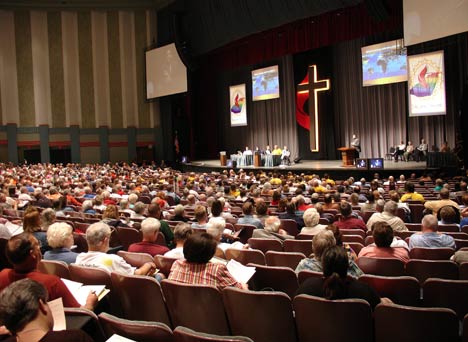
In June 1979, the Indiana United Methodist Annual Conference met in the I.U. Auditorium. The presiding bishop, Leroy Hodapp,[i] set an agenda for the future “We must go to where the people are!” The subtext was clear, we must go to the suburbs and invest talent, time, and resources there. As pastor in a core-city neighborhood at the time, I leaned to a friend beside me and whispered, “What are the people in our neighborhoods? Chopped liver?
The post-WWII Baby Boom population surge was slowing. A “population shock wave[ii]” or “Agequake”[iii] disrupted assumed church practices. Denominational anxiety about the future was on the upswing. In 1970 Alvin Toffler, with his wife Adelaide, published the popular Future Shock.[iv] It spoke of the events of these years as “too much change in too short a period of time.”
Urban neighborhoods, perceived as dangerous and in inevitable decline, were changing rapidly. Homes were abandoned by families, mostly of European ancestry and sold to real estate speculators. The houses left behind were often subdivided into multiapartment residences. The new arrivals came mostly from non-Caucasian ancestry. Typically, they were families with lower wealth. Dramatic population and neighborhood changes continued, wavelike over the next decades, as residences and local businesses were turned into rental properties. Only a couple of decades later, change came again as younger folks who were given the rather ironic label of “urban pioneers”[v] arrived and refurbished the older houses again into single-family dwellings.
In an earlier post,[vi] I wrote of the demise of the Central Avenue United Methodist Church in Indianapolis. A version of Central Avenue’s story was replicated in thousands of churches in the U. S. during the middle-and-late Twentieth Century. The underpinnings of parish life were vanishing as linkages with surrounding neighborhoods diminished. This pattern, like rolling ocean waves, washed across city neighborhoods. Social connections withered, were then rebuilt, and again diminished, and then reestablished again.
Gentrification was only beginning. White flight had speeded changes.[vii] The none-to-subtle subtext of the bishop’s counsel in 1979 was that primary attention should be directed to those leaving the core-city and refocused on suburban church growth. Ironically, of course, the population density in core-city neighborhoods was growing to levels higher than ever.
The good bishop’s analysis and strategy failed to perceive the ways in which the “left behind” neighborhoods were becoming more global, more multicultural.[viii] There was also a failure to discern the gifts being brought by the new residents. Even as new Asian, Hispanic enclaves emerged, and African American communities were enlarged, at the same time many of these “re-establishing” neighborhoods became more multiethnic in composition.[ix]
A listening to, visiting with, and welcoming of the people of the neighborhoods near the church buildings by church leaders was rarely practiced. The focus was on who was leaving, following “our” people. There was a blindness. Importantly, and in truth determinatively, the financial base for many city congregations was diminishing as members left for the suburbs. In the Baby Boom years of the middle 1950s and early 1960s, many church buildings were expanded beyond what could be afforded by those left behind or newly arriving in the following decades.
The call to “go to where the people are” failed to consider options other than an exit strategy. Left behind were paternalistic responses welcoming the new arrivals. If there was an outreach to the newcomer, it was typically an effort to “fix” these new in-migrants. Rather than seeing these persons as resources, with gifts to share, they were thought of as “the needy” and as such, well-meaning ministries like food pantries, thrift shops, and tutoring programs became the primary mission of many inner-city churches.
As was noted in the previous post, “It is one thing to restore buildings and houses, quite another to re-establish (or perhaps rediscover) a parish.”[x] What lessons might we discover from this history? We ask: why?what if? and why not?
Why did these parishes evaporate or vanish? In the next two postings I will offer what I believe are the two primary reasons for this phenomenon: 1) the social and political ecology of embedded racism in the nation; and 2) Ineffectual denominational and congregational responses to these changes lacking in theological clarity.
Coming Next: 2-B, The Social and Political Ecology of Embedded Racism in the Nation.
Your thoughts? — Please enter these in the comment section.
ENDNOTES:
[i] Bishop Leroy Hodapp was a good and intelligent man and a good friend. Still, he was a product of the mid-twentieth century church culture that selected him and shaped him for leadership. He would be considered a Christian “progressive” and generally friendly to many urban ministry efforts at the time. However, the pressures of office and desire to balance competing expectations of over 1,100 congregations and 300,000 Hoosier United Methodists limited what he perceived to be the best way forward. There were dozens of urban congregations and pastors that might have helped widen his vision, but the dye was set by the prevailing myths of the inevitability of suburban growth and urban decay.
[ii] Rizvi, Abul, Population Shock, Monash University Publishing, 2022.
[iii] Wallace, Paul, Agequake: Riding the Demographic Rollercoaster, Shaking Business, Finance and Our World, UNKNO, 1999.
[iv] Toffler, Alvin and Adelaide, Future Shock, Random House, 1970. Society was said to move through the three stages: agrarian, industrial, and post-industrial and with each transition there was a period of societal disruption and stress. Toffler’s analysis followed in follow-up books, The Third Wave and Powershift.
[v] Hwang, Jackelyn, Pioneers of Gentrification: Transformation in Global Neighborhoods in Urban America in the Late Twentieth Century, Demography, February 2016, 189-213.
[vi] Amerson, Philip, Recentering the Parish – Part 1, see: https://wp.me/p5lzr1-3Kc. Upon reading the earlier piece on the decline of Central Avenue church a friend reminded me of other changes including the interstate highway system where Interstate Highways I-64 and I-70 sectored off neighborhoods from one another. He also noted the consolidation many city and county functions in a new structure known as Unigov in Indianapolis. He was right. There are multiple other contributors as noted in this essay and each one seems shaped by racial discrimination.
[vii] Semuels, Alana, White Flight Never Ended, THE ATLANTIC, July 30, 2015.
[viii] Buccitelli, Anthony, Bak, City of Neighborhoods: Memory, Folklore, and Ethnic Place in Boston, University of Wisconsin Press, 2016.
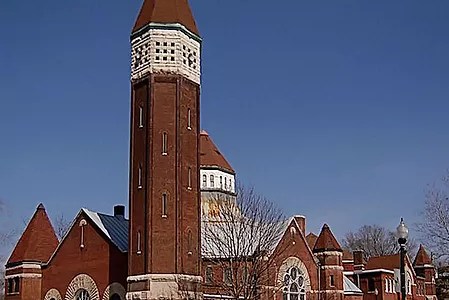
Indianapolis: early morning tv news, April 12, 2022. In the predawn shadows I recognize it. The tower of The Centrum, formerly Central Avenue United Methodist Church, greets the dawn. The Twelfth and Central intersection pictured is blocked off with yellow “crime scene” tape.
The story of Central Avenue Methodist Episcopal Church is a tale of great success, ending in a disappointing closure. It concerns the loss of a true center – for a community and a denomination. A familiar and oft repeated pattern across cities in the Rust Belt, this. A similar plotline has played out around the nation over the past century. At one-point, Central Avenue was a civic and cultural center and then, abandoned by the Methodists. “Redundant” as the Brits say. This is the tale of a faith group’s loss of clear identity, mission, and vision; a loss of “true north.” A building was “redeemed;” a parish was lost.[i]
Bill Cook, medical device inventor and visionary, from Bloomington came to the rescue in 2008. With Indiana Landmarks, restoration began on the grand old Romanesque-Revival structure. Good thing. Fine for the grand old facility, and the neighborhood. The Centrum is now a center of civic activities. The abandoned church captured Cook’s imagination — and dollars. Bill and Gayle Cook gave careful attention to preservation efforts in dozens of locations across the Midwest. Lovely this.
Central Avenue Methodist Episcopal Church was built in the horse and buggy era (1891) in one of Indianapolis’ first suburbs. It stood only a mile-and-a-quarter, twelve blocks, from city center – the Circle. Soon automobiles came to town. Following decades saw the Great Depression, two World Wars, and accompanying urbanization. Central Avenue prospered. An influential center of civic and social service efforts in the city and beyond, it offered much leadership and support for fledgling institutions. For example, the Methodist Hospital opened in 1908 a short distance to the west carrying with it the undergirding of several congregations, but Central Avenue was a leader. However, in the following decades, the prominence of the congregation changed.
Economic patterns shifted. Employment and housing ecologies were re-sorted. Newer neighborhoods in more distant suburbs were built. Depending on location, real estate values spiked or plummeted. The actual and perceived quality of various public schools was altered. Urban parishes, like Central Avenue, faced decline and redundancy. In the early decades of the 20th Century urbanization brought “improvements” and fresh investments, especially for those living further out from Center Township.
Thousands more workers were needed. While most in the working class lived on the south and west side of town the addition of even more hands and heft required finding additional living space. New migrants found this near the church. There was also an expanding racial diversity. Those leaving behind grand old homes and churches were moving on to newer, more prestigious addresses. It was the early-and-mid-century American Way; a prevailing residential and economic wave was playing out across the nation. Apartment buildings began to dot nearby streets and avenues. Folks moved into town from farms across the Midwest to find work; soon, to support “war efforts.” Others, from Appalachia (mostly Kentucky and Tennessee) and a greater number of African Americans (from the deep South) came to the city. Manufacturing, especially on the south and west side was booming and a robust pharmaceutical industry expanded.
The need for a low wage workforce of clerks, secretaries, cooks, janitors, and food service workers meant that many poor families were competing for a place. They arrived seeking shelter wherever it could be found. Near Central Avenue church, most single-family homes were slowly but steadily transformed into rental properties. Former one-family houses were sectored into three, four, five or even six apartment units. The carriage houses and garages, off the alleys nearby, were turned into one-room residences. Often, a family with several children might reside in these conversions. There would be a little coal-burning cookstove in one corner and a shallow loft for sleeping. By the early 1960s many of the graceful residences along Central, Park, Broadway, Alabama, College, Pennsylvania and Delaware Streets had fallen into disrepair. Apartment units, built to handle the migration during the World Wars, became roach and rat-infested, places of squalor.
Tree-lined neighborhood streets were widened into bustling three-and-four-lane, one-way thoroughfares. No longer was parking allowed along many of these byways. Commuters could speedily travel to and from work or entertainment downtown. Many who formerly resided in the neighborhood, now rushed through it, past it. This “transition” accelerated and expanded during the 1950s and 1960s.
The fabric of neighborhood relationships and human commitments, often overlooked or beneath the surface, suffered. Fear of the “stranger” shaped social and spiritual underpinnings. Like tectonic plates quaking beneath the earth’s crust, the Central Avenue parish was shaken, broken. By the early 1960s the neighborhood and congregation were seen as places of decline, even danger. This quaking left this congregation (and thousands of others like it across the nation), facing an existential crisis. Church members transferred to other congregations, primarily Methodist or another mainline denomination, mostly on the northside.
Some unethical real estate speculators, “slum lords” truly, invested little and extracted much. Like their cousins, still out on the farm, these real estate strip miners couldn’t resist the impulse to turn-a-quick-profit. There was an ignoring of the stewardship of a neighborhood’s fabric, just as farming malpractice fails to properly steward the land. The impulse, in too many cases, was to accrue ever larger profits, skip over best sustainable practices, ignore the long-term health and stability of the ecology of the farm or human residences in the city. Like the erosion of the soil of a farm, an erosion of the parish around Central Avenue was underway. It was the depletion of neighborhood institutions, shops and churches, community pride and a sense of commonweal.
Prevailing myths “explaining” why these neighborhood changes were occurring grew out of the individualistic notion that such patterns were the necessary, unfortunate, but unavoidable stages in urban progress.[ii] The resulting poverty surrounding the church was said to be “inevitable,” tragic perhaps, but essential to the larger success of the city. The poor would have to “make their way out” by individual hard-work and bootstrap initiative. These newly arriving poor ones, “the industrious unfortunate” could one day “escape” their plight through hard work – and perhaps a little luck.
Congregational assistance/charity programs to meet the needs of these new arrivals were commonplace and included a usual array of efforts – food pantry, a thrift shop, rummage sales, recovery groups, summer programs for children and youth, and emergency assistance. So it was, at Central Avenue Methodist in middle years of the century; so it was, in core city congregations across the nation.
The neighborhood ecology was believed to be rooted in a biological model, like the human life cycle: neighborhoods were born, grew up, then declined. Low wealth persons who lived around the church in the 1950s and 1960’s were understood to be “born to poverty,” or ones who suffered some misfortune, or were destined to their circumstances due to some individual human failing. If they had sufficient imagination, initiative, or opportunity they too could join the upwardly mobile path to the suburbs.
In some places, in other northern Rustbelt cities, the abandonment of lovely neighborhoods was even more dramatic. Banking practices of red-lining and racist government housing mortgage guidelines aided and abetted the decline. Lost, were opportunities for poor and minority persons to benefit from home ownership. Richard Rothstein’s excellent book the “The Color of Law: The Forgotten History of How Our Government Segregated America” documents the multiple ways local, state, and federal governments incentivized this deleterious turnover in neighborhoods, all the while limiting or outright blocking opportunities for homeownership for racial minorities and the poor.[iii]
By 1961, other voices, like Jane Jacobs and Gibson Winter offered alternative views of how urban neighborhoods might thrive[iv] and urban congregations might give witness.[v] Alternative urban parish models were emerging in the mid-century. Places like the East Harlem Protestant Parish in New York, the Church of the Savior in Washington D.C., and in Chicago, Woodlawn Mennonite Church, and the Ecumenical Institute were challenging old assumptions.
There were a few attempts at incorporating alternative approaches to the traditional congregational life emerging in Indianapolis. As one observer commented, “Indianapolis is a city that is long on charity and short on justice.”[vi] Mainline congregations confirmed a preference for charity as the primary hallmark and missional goal of urban parish life.
However, the story is more complex, isn’t it? It turns out to be more circular. Today a fuller view of the development cycle of economic, housing and neighborhood vibrancy is clearer. It is “wash, rinse and repeat.” Decline and decay were not inevitable. Indianapolis is more fortunate than many other cities where the loss of entire neighborhoods was and is more profound. It only took a few short decades, along with the vision and resources of folks known as Urban Pioneers for this cycle to be obvious.
Still, a blindness remains. Congregations and neighborhoods once benefitting from the population turnover and changes around Central Avenue now face their own demise. They now experience the loss of any sense of parish cohesiveness. False options offered by the prevailing view of inevitable development and/or decline persist and shape understandings. Today Indianapolis’ Old North Neighborhood has mostly been “gentrified.” There is good in this. There has also been harm. The Centrum, is a symbol of a neighborhood rediscovered and being “preserved.” One wonders for how long?
It is one thing to restore buildings and houses, quite another to re-establish (or perhaps rediscover) a parish.
This leaves one today (and hopefully future leaders of congregations and denominations) with three questions: why?what if? and why not? Future installments will seek to address these three queries. The hope is to better understand and offer suggestions as to alternative futures for faith-based communities. Might there be multiple ways to “re-parish” the urban landscape?
Endnotes.
[i] This story is one I know well, as I lived much of it. My father was pastor of Central Avenue, 1962-1966. He was a good and respected pastor. Prior to moving to Indianapolis, he had served growing congregations with predominantly working-class memberships. However, sixty years ago, Central Avenue was viewed as a “dying inner city congregation.” This work proved to be tough duty for my papa. He seemed to age too rapidly over those four years with speedily graying hair and the burdens of such a parish spiraling downward he seemed to stoop in his shoulders. He was one of five or six talented younger pastors across two decades of the 1950s and 1960s who were sent to “turn the place around.” It was not to be. ++There is more. As it turns out, just twenty years later I was appointed pastor to nearby Broadway United Methodist, just seventeen blocks to the north. The story of Broadway and the surrounding neighborhood was not unlike the story of Central Avenue. A once prominent congregation had fallen on hard times. In 1986 my family bought a home near the church, and I became one of those younger white professionals (urban pioneers) fortunate enough to own a home in a neighborhood that was beginning to regentrify.
[ii] Much of the work of the University of Chicago sociologists (e.g., Robert Park and Ernest Burgess) assumed that such patterns or variations thereof, known as the “Concentric Zone Model,” were predictable and normal in every city. Their book, The City, was published in 1925 and the model they offered, based largely on Chicago, shaped understandings of an inevitable pattern in all American urban ecologies.
[iii] Rothstein, Richard, The Color of Law: A Forgotten History of How Our Government Segregated America, Norton Publishing, 2018.
[iv] Jacobs, Jane, The Death and Life of Great American Cities, New York: Random House, 1961.
[v] Winter, Gibson, The Suburban Captivity of the Churches, An Analysis of Protestant Responsibility in the Expanding Metropolis, Doubleday, 1961.
[vi] This perspective, of Indianapolis being a city “long on charity and short on justice,” was discussed on several occasions by this author with Indianapolis Mayor William Hudnut III, mayor from 1976-1990. Hudnut had been pastor of the influential Second Presbyterian Church in the city. He was a graduate of Union Theological Seminary. Among his seminary classmates was his friend and mine, Dr. Carl Dudley, a leading observer, researcher, and proponent for new models of urban parish life. (Dudley was an urban pastor in St. Louis who later taught at McCormick Seminary in Chicago and Hartford Seminary.) “Mayor Bill” also knew the history of neighborhood decay and renewal set down in this piece. Hudnut knew the alternative approaches to urban parish life emerging in other cities. He did not disagree that individual charity was the preferred norm for the city and as such, the challenge for urban pastors was problematic. Even so, he offered cautionary counsel about “moving too quickly” to organize opposition that would confront underlying assumptions held by leaders in the city or denominational bodies.
February 25, 2023: a “National Day of Hate.” Astonishing, this headline!
I doubted anyone would be this publicly misguided, this wrong-headed, this evil. Still, the call for public displays of antisemitism, racism and the hate mongering are genuine phenomena.
A quick online search found law enforcement agencies across the country, from New York to Miami to Seattle, are extending this warning. A coalition of neo-Nazi and White Supremacists are calling for hate-filled speech and actions on Saturday. It is not new; it is a more open call for abuse against anyone who differs. Sadly, this is a part of a freshly emerging pattern.
Only two days ago, on Ash Wednesday, Christians were reminded of our common humanity and our need for repentance. Ashes symbolize a “humas,” central to our identity. From “dust you have come and to dust you shall return.” All of us; we hold this in common. We are but temporal and temporary vessels, each carrying the potential for hope and healing or harm and hatred.
In her book “People Love Dead Jews,” Dara Horn points poignantly to the ways antisemitism is deeply embedded and intertwined in our culture. Among the haunting illustrations is the story of a Jewish child visiting a Christian church and while there asking the mother, “Where are the security guards?” It was for this Jewish child normal for any space of worship, like his own synagogue, to always need security guards present.
There has been much news about a spiritual awakening at my alma mater Asbury University. Honestly, I have been fearful that this phenomenon offers a simplistic, pietistic, and personalistic response to the divisions, deceits and challenges we face as a nation. Folks quite rightly say that the impact of this spiritual awakening will not be known for decades. True enough. Still there is a good test to be had on Saturday, February 25th. Will we stand against hatred and turn the so-called National Day of Hate into a Day to Overcome Hatred with Words and Acts of Love of Neighbor. All neighbors!
You don’t have to go to Pharoah to design a course on freedom, so says Professor Michael Eric Dyson, of Vanderbilt University. Per usual, Dyson puts the pith into pithy. We need his clarity as we enter Black History Month 2023. Right on time, Michael Eric Dyson nails the ugliness, the meanness and inappropriateness of Florida Governor Ron DeSantis’ efforts to block the content of AP African American Studies curriculum.
This is but a contemporary example of a governor standing in the schoolhouse door. It is like George Wallace in 1963 who sought to block African American students Vivian Malone Jones, Dave McGlathery, and James Hood from enrolling in the University of Alabama. This time it is a governor seeking to block the free exchange of ideas and a shared knowledge of a painful history. It is an attempt to keep us from acting like respectful adults, as people open to the free expression of differing ideas.
But, what about us? Easy to pick on a demagogue stirring up racial animosity as he prepares to run for the presidency. How might churches faithfully respond in this time? Let me speak for my group, the United Methodists. We, who are heirs to John Wesley’s legacy, have a ready response built into our theological DNA.
Sadly, many of our congregations and denominational institutions have forgotten and others often don’t display it. Early Methodists, in cities like London and Newcastle, formed a Strangers Friend Society. Wesley taught Christians “should meet strangers in their own habitation.” These societies designed “to visit and relieve the sick and distressed” were expressions of acceptance and inclusion. One such society still meets, weekly, in John Wesley’s New Room in Bristol near a clock identified as the Strangers’ Friend clock.
In the United States, the distressing chronic illness of racism continues – sometimes it seems to overwhelm. The tragic death of Tyre Nichols in Memphis in recent days is an expression of our dilemma. Let me suggest it is time for United Methodists to turn STRANGERS INTO FRIENDS. What if United Methodist congregations across the nation and world offered classes in Critical Race Theory or on Being “Woke” to Racial Injustice? Okay, not realistic, you say. Well, what if… oh, let’s say 50%, or 25%, or even 10% of United Methodist congregations offered such courses? What if pastors and lay leaders in these places taught complementary classes based on Biblical sources and drawing on curriculum already developed by fine faculty in our seminaries?
In a time when all Christians, especially United Methodists, are too focused on much less relevant matters like institutional survival, or on how to handle our divisions, what if we called for healing of the disease of racism in our nation. What if we acted like we believed in a conversion (a wokeness). What if we called for the need of repentance and conversion from our chronic racism?
I can imagine certain politicians’ discomfort when they passed the church with the sign “Critical Race Theory Taught Here, Monday Evening at 7:00 PM, Register NOW.” It’s about time!
Thanksgiving arrives! I realize my gratitude for many things. Family, friends, home, nation, church, education, even the Chicago Cubs! There were surprisingly lessons of gratitude learned during the COVID Pandemic. One for example was leaning to bake chocolate chip cookies. Had the pandemic not occurred, I would not have become so accomplished. My memory was that these attempts at baking cookies were awesome, (he said in a modest voice).
So, early Thanksgiving Morning 2022, I decided to strut my baking skills. Wanting to offer my excellent cookies to friends, Betty and Tony, when we shared dinner together later today, I began with confidence. What could go wrong?
It had been nearly a year since I baked my last batch. In the meantime, we had moved to a new condo, a new oven. I had my secret recipe. This should be a “cake walk” – or should I say, “cookie walk.” Alas, it must have been the new oven, or something missed in my recipe, or that we only had mini chocolate chips in the house. Taking the first batch from the oven, they looked unusually “toasted and flat.” At first bite I thought “well, this is better than eating shoe leather.” No prize-winning cookies these.
It set me to thinking about my gratitude even for imperfections. Some of life’s best lessons are learned here. What other times was there an occasion to learn? Or did I too quickly turn a disappointment into a source of disgruntlement, a blaming of others, or a grievance, or complaint?
Anthropologist Mary Douglas wrote of the dangers of dividing the world into the binary categories of the “pure” and the “polluted.” She traces the meaning of “dirt” and what is considered “filth,” through history and multiple cultures. Douglas identifies rituals used to cleanse or purify defilement, persons or groups seen to be “dirty” or considered an “abomination.” Douglas noted that this effort to identify others as “filthy” often was the precursor, a contributor, to racism and fascism. What lessons can be drawn from the Jewish holocaust? What lessons might there be from the mass murders of LGBTQ persons? What of the hatred and division that is spread across social media in our time?
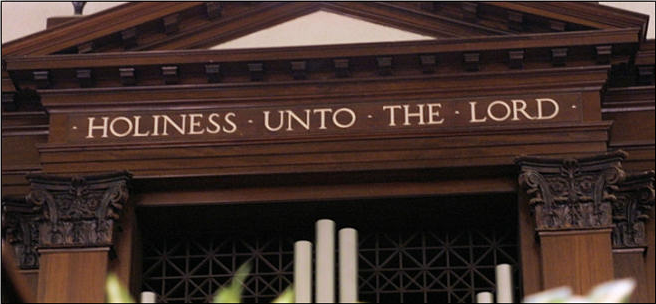
Having grown up in Methodism’s Holiness movement, where part of my education was centered in Wilmore, Kentucky at Asbury College and Seminary, I know well the efforts made to exclude and isolate the “in group” from those things that are seen as impure. These schools have been significant institutions advancing “spiritual holiness,” I sat through scores of college chapel services where the words “Holiness unto the Lord” were boldly inscribed above the chancel.
Often preachers would call for purity. In what theologians speak of as sanctification, the desire was to encourage a life of perfection. At base a good thing – but a dangerous instrument as well. (No one mentioned perfect cookies as I recall, but in many other aspects of life and faith there was the assumption of purity and filth.) Some believed purity was found in avoiding certain activities (e.g., dancing, going to movies, drinking alcohol, etc.). Others suggested there was a doctrine of “perfection” and a need to reject any theological perspectives that differed.
It is my sense this search for holiness as an end point has done much harm, even caused the splintering of families, marriages, congregations, and denominations. It leads to divisions over who is pure and who is polluted. I do not doubt that some folks lived a “sanctified” way of life.
Usually, it was not the teachers or preachers who claimed to be “sanctified” who demonstrated this best. Instead, I think of folks like Ms. Warner, the history teacher, a quite Quaker woman, who practiced her holiness in the loving ways she lived toward others and care for her students.
In my reading of Christian scripture, the holiness sketched across those pages and any evidence of holiness discovered in human history is always best seen as a process, a verb, and not an end point. It is an ever-maturing love for God and neighbor, an openness to imperfection – especially one’s own.
Good reader, don’t take to much comfort from growing up in other traditions, not burdened with the language or theology of “holiness.” The human story is one where there is a dividing the world up into what is pure and polluted takes many forms — and seems to be a universal trait.
This past week former Secretary of State Mike Pompeo denounced Randi Weingarten, the president of the American Federation of Teachers, as “the most dangerous person in the world.” Really? Not even a thought of Kim Jong-un or Vladimir Putin? Pompeo went on to say that our nation’s schoolteachers are teaching “filth” in their classrooms. Careful there, Mike. Methinks your presidential ambitions have fallen into a toxic hole where a need to divide and harm others clouds the language you use. Is there any acknowledgement of your own failings? You might check out Matthew 7:5 (“You hypocrite, first take the log out of your own eye, and then you will see clearly to take the speck out of your neighbor’s eye.” — NRSV)
Our nation, our communities, our institutions are amid an entangled and dangerous struggle. It is often manifest as a desire for purity. The irony, of course, it that speeches against “filth” come from the mouths of persons who have supported bigotry, deceit and even insurrection – or have looked the other way when it took place. This Thanksgiving, I am grateful for imperfections – but chose to seek to move past them. This is how one learns – and the second batch of cookies today were better. I look forward to quality of my future chocolate chip cookies! And I am even grateful for the gift of imperfections.
A North American Adaptation of the Lord’s Prayer – for too many Christians
A “Distortion” of The Lord’s Prayer as understood by too many North American Christians
(With interpretive notes)
Matthew 6:9-15
Pray then in this way: Our* MY Father in heaven, hallowed be MY UNDERSTANDING OF your name. Your SPIRITUALIZED kingdom come, Your SPIRITUALIZED will be done, On earth** AMONG MY TRIBE as it is in heaven. Give us ME this day ourdaily MORE EXCESS bread, And forgive us our ME MY debts, as we I also have forgiven our MY debtor FRIENDs WHO DESERVE IT. And do not bring us ME to the time of trial, but rescue us ME from the evil ones WHO DISAGREE WITH ME. For if you forgive*** CONDEMN others of their trespasses,
your heavenly Father will also ESPECIALLY forgive you;
but if you do not forgive others,
neither will your Father WILL forgive your trespasses ANYWAY. –Matthew 6:9-15
Interpretive Aids:
*This prayer is distorted to fit “modern” North American individualistic sensibilities held by many Christians. Toby Keith’s song “I Want to Talk About Me” can be sung after the prayer. It is based on the message preached and believed that all the followeres of Jesus are to focus on is individual salvation. This view forgets any mention of love of neighbor, the Year of Jubilee, Gospel stories about welcoming the outsider and stranger, Paul’s mention of each having gifts needed to be a part of whole community, historic practices of social-justice or ideas of covenant and commonweal.
** Faith in this view is all about heaven and the hereafter. It has little reference to daily life on earth. My current life is to get me ready for the “sweet by-and-by.” God’s will is meant only for those who think like me and believe the same theology and creeds that I hold. In other words, “on earth” is about how I treat those who are part of my tribe. This means, climate change is a myth, any government aid the poor is “evil socialism,” the earth’s resources are to be dominated and used up for my benefit and those who are like me. The earth is not our “Common Home” as Pope Francis proclaims. The United Methodist bishops calling for “environmental holiness” was wrong.
*** Forgiveness in this view is a sign of weakness… unless it is asking for a pardon for crimes. The individual praying the prayer doesn’t need forgiveness because he or she has the right answer on two or three critical issues (e.g., against homosexuality and all abortions) and all else is “up to God.” I don’t really need to ask for forgiveness as my way is the only way to salvation. The story about the prodigal returning home is always about “them” and never about “me.”
Bloomington, Indiana is a lovely college town; I’m an unabashed booster. The name “Bloomington” is no accident. Tree-lined streets, parks and flower gardens are in abundance. Playgrounds and walking trails dot the city. At the community’s heart is the lovely campus of Indiana University. There is abundant and diverse fine music performed. Museums, libraries and theaters, research centers and multiple dining options are sprinkled in the mix. Surrounded by forests, lakes, farms, vineyards and orchards it is where natural beauty finds a home.
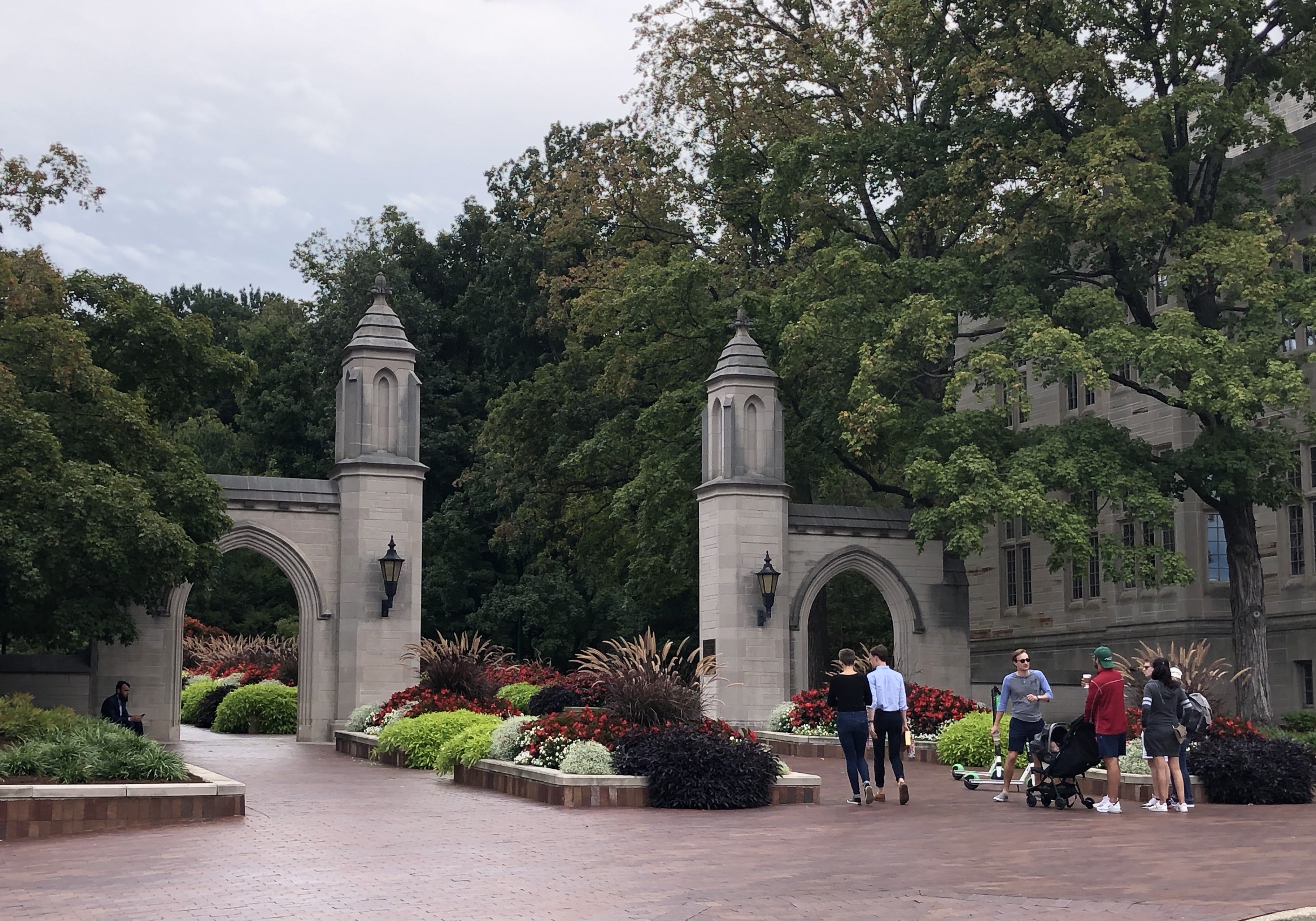
“Welcome Gates” Downtown Post Office
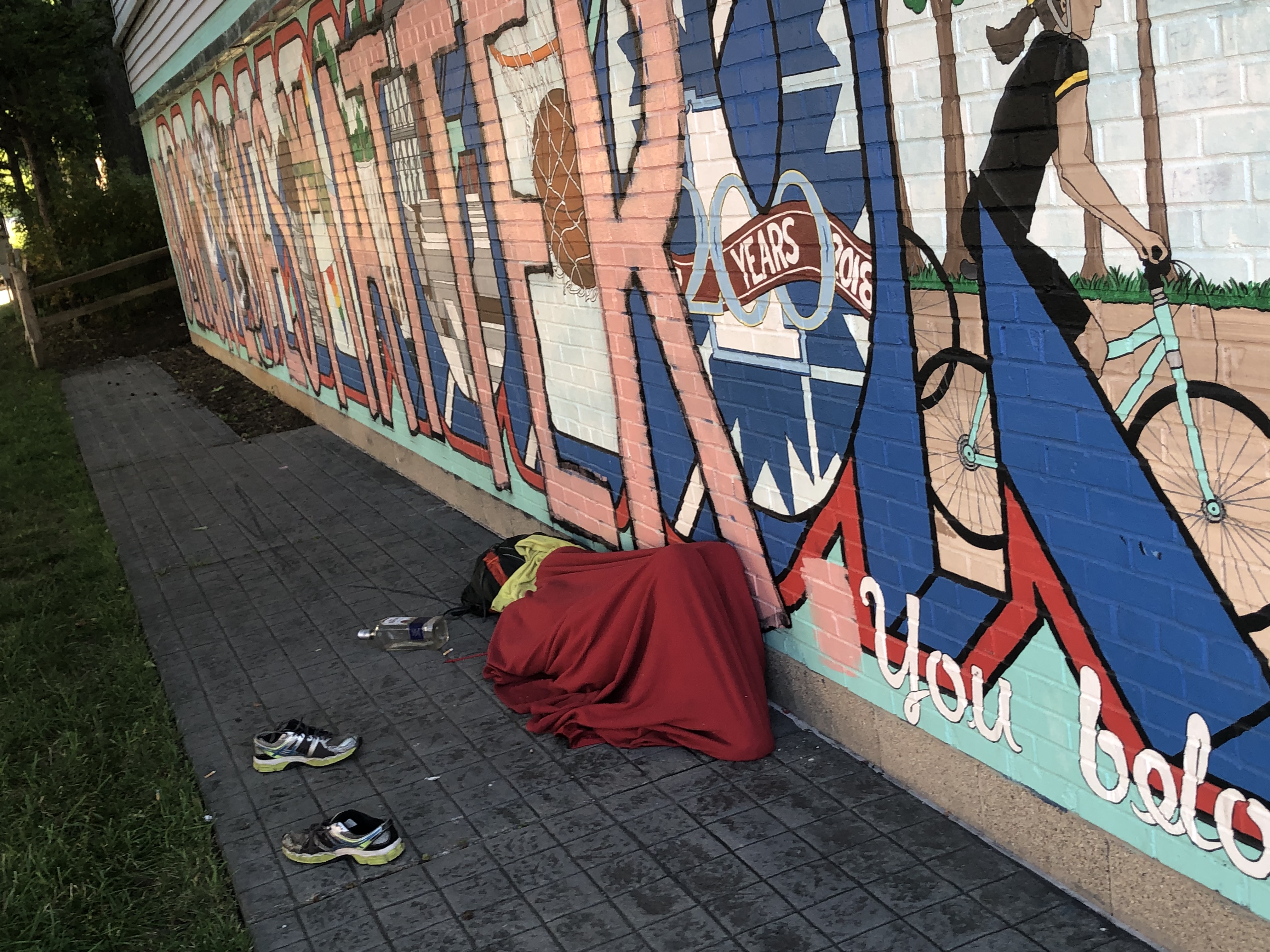
Natural beauty resides comfortably in Bloomington – Beauty resides here more easily than some of our people. People without shelter, who due to heath or economic realities, are left with no option other than life on the street. Perhaps the ugliest addition to our community is the 8-10 foot fence that has been placed around the downtown post office. The fence is festooned with threatening signs. Gates are locked tightly every evening. “No trespasing” is posted and one can’t even find a place to drop a letter in the mail. Forget it if you wish to walk up to a drop box or pass a drive-through box after hours. Why the ugly high fencing and all the horrible signs?
Near Sample Gates 6-27-22
You see, this post office is now “off limits” in the evenings because it is next to Seminary Square Park. Seminary Square is registered as a national historic site. It is the location of the first campus for what would became Indiana Univeristy. In recent years Seminary Square is where many unsheltered persons chose to gather; many camped there until city officials began to disperse them. The result? Folks are now scattered, sleeping on sidewalks and being rousted from one doorway or storefront to another. Where are efforts to bring ALL the stake holders together — including the unsheltered — to find new ways forward? I am told “there are plans”. If so they are not well known in the city. How many millions of dollars have been spent on street improvements so that streets can now be closed off for dining, or for new bikeways to encourage such travel? And, why has such little thought been given to developing more places for the unsheltered? There are wonderful nonprofit programs designed to assist unhoused persons (Beacon Inc. – Shalom Center and New Hope for Families, for example) but these folks have limited palliative options and must focus on the most dramatic examples of this challenge.
People’s Park, near Sample Gates, 6-27-22
A first-rate new IU Health Bloomington Hospital facility recently opened on the east side of the city; the hospital having completely abandoned its downtown location. Now that old facility is… you guessed it… FENCED off. Plans for re-use or redevelopment are slow to unfold and little has thus far been announced. Yes, redevelopment is complicated, and to do it well takes time, but what of those who could benefit from a dry and safer space to sleep in the meantime? And what of any new outreach initiatives from the fancy new I.U. Health facility? Any annoucement of outreach to address mental health and addiction issues faced by many of the unsheltered sleeping on the street? What of outreach to those no longer at the hospital’s doorway? If the past is prologue, in ten years, the old hospital site will become commercial property or another upscale housing site — and we will still have the unsheltered fenced out.
WE CAN AND MUST DO BETTER. Bloomington claims to be a civically engaged and imaginative place where democracy is valued. Let’s prove it by the way we live together. Ugly fences do us no pride. Hundreds of millions of dollars have been, and will be spent, on building new apartment/condo complexes. The university is spending millions to provide shelter for students. Where are plans to include alternative housing options for the unsheltered now and in future? Other cities face similiar dilemmas and are offering creative alternatives. I have never thought of our Bloomington as a laggard… until recently.
Now, please understand, as an pastor for more than fifty years, one who has lived and worked in impoverished areas, and with many persons without shelter much of my adult life, I get it. I have no doubts that the troubling reality of insufficient shelter and healhy options FOR ALL is extraordinarily demanding work. And I know there were incidents near the downtown post office (perhaps dangerous ones) that lead to the fence being errected and the park being cleared each evening. Even so, let’s be clear, this is the message being sent: “If you are an unsheltered person, you are unwelcome — you are locked out.” Bloomington is a beautiful city, mostly. It’s time to do better.








 urce of disgruntlement, a blaming of others, or a grievance, or complaint?
Anthropologist Mary Douglas wrote of the dangers of dividing the world into the binary categories of the “pure” and the “polluted.” She traces the meaning of “dirt” and what is considered “filth,” through history and multiple cultures. Douglas identifies rituals used to cleanse or purify defilement, persons or groups seen to be “dirty” or considered an “abomination.” Douglas noted that this effort to identify others as “filthy” often was the precursor, a contributor, to racism and fascism. What lessons can be drawn from the Jewish holocaust? What lessons might there be from the mass murders of LGBTQ persons? What of the hatred and division that is spread across social media in our time?
Having grown up in Methodism’s Holiness movement, where part of my education was centered in Wilmore, Kentucky at Asbury College and Seminary, I know well the efforts made to exclude and isolate the “in group” from those things that are seen as impure. These schools have been significant institutions advancing “spiritual holiness,” I sat through scores of college chapel services where the words “Holiness unto the Lord” were boldly inscribed above the chancel.
urce of disgruntlement, a blaming of others, or a grievance, or complaint?
Anthropologist Mary Douglas wrote of the dangers of dividing the world into the binary categories of the “pure” and the “polluted.” She traces the meaning of “dirt” and what is considered “filth,” through history and multiple cultures. Douglas identifies rituals used to cleanse or purify defilement, persons or groups seen to be “dirty” or considered an “abomination.” Douglas noted that this effort to identify others as “filthy” often was the precursor, a contributor, to racism and fascism. What lessons can be drawn from the Jewish holocaust? What lessons might there be from the mass murders of LGBTQ persons? What of the hatred and division that is spread across social media in our time?
Having grown up in Methodism’s Holiness movement, where part of my education was centered in Wilmore, Kentucky at Asbury College and Seminary, I know well the efforts made to exclude and isolate the “in group” from those things that are seen as impure. These schools have been significant institutions advancing “spiritual holiness,” I sat through scores of college chapel services where the words “Holiness unto the Lord” were boldly inscribed above the chancel.
 Often preachers would call for purity. In what theologians speak of as sanctification, the desire was to encourage a life of perfection. At base a good thing – but a dangerous instrument as well. (No one mentioned perfect cookies as I recall, but in many other aspects of life and faith there was the assumption of purity and filth.) Some believed purity was found in avoiding certain activities (e.g., dancing, going to movies, drinking alcohol, etc.). Others suggested there was a doctrine of “perfection” and a need to reject any theological perspectives that differed.
It is my sense this search for holiness as an end point has done much harm, even caused the splintering of families, marriages, congregations, and denominations. It leads to divisions over who is pure and who is polluted. I do not doubt that some folks lived a “sanctified” way of life.
Usually, it was not the teachers or preachers who claimed to be “sanctified” who demonstrated this best. Instead, I think of folks like Ms. Warner, the history teacher, a quite Quaker woman, who practiced her holiness in the loving ways she lived toward others and care for her students.
In my reading of Christian scripture, the holiness sketched across those pages and any evidence of holiness discovered in human history is always best seen as a process, a verb, and not an end point. It is an ever-maturing love for God and neighbor, an openness to imperfection – especially one’s own.
Good reader, don’t take to much comfort from growing up in other traditions, not burdened with the language or theology of “holiness.” The human story is one where there is a dividing the world up into what is pure and polluted takes many forms — and seems to be a universal trait.
Often preachers would call for purity. In what theologians speak of as sanctification, the desire was to encourage a life of perfection. At base a good thing – but a dangerous instrument as well. (No one mentioned perfect cookies as I recall, but in many other aspects of life and faith there was the assumption of purity and filth.) Some believed purity was found in avoiding certain activities (e.g., dancing, going to movies, drinking alcohol, etc.). Others suggested there was a doctrine of “perfection” and a need to reject any theological perspectives that differed.
It is my sense this search for holiness as an end point has done much harm, even caused the splintering of families, marriages, congregations, and denominations. It leads to divisions over who is pure and who is polluted. I do not doubt that some folks lived a “sanctified” way of life.
Usually, it was not the teachers or preachers who claimed to be “sanctified” who demonstrated this best. Instead, I think of folks like Ms. Warner, the history teacher, a quite Quaker woman, who practiced her holiness in the loving ways she lived toward others and care for her students.
In my reading of Christian scripture, the holiness sketched across those pages and any evidence of holiness discovered in human history is always best seen as a process, a verb, and not an end point. It is an ever-maturing love for God and neighbor, an openness to imperfection – especially one’s own.
Good reader, don’t take to much comfort from growing up in other traditions, not burdened with the language or theology of “holiness.” The human story is one where there is a dividing the world up into what is pure and polluted takes many forms — and seems to be a universal trait.




 Hands of the Strong