Lessons from the Barber Shop

Lessons from the Barber Shop
barbershop-1

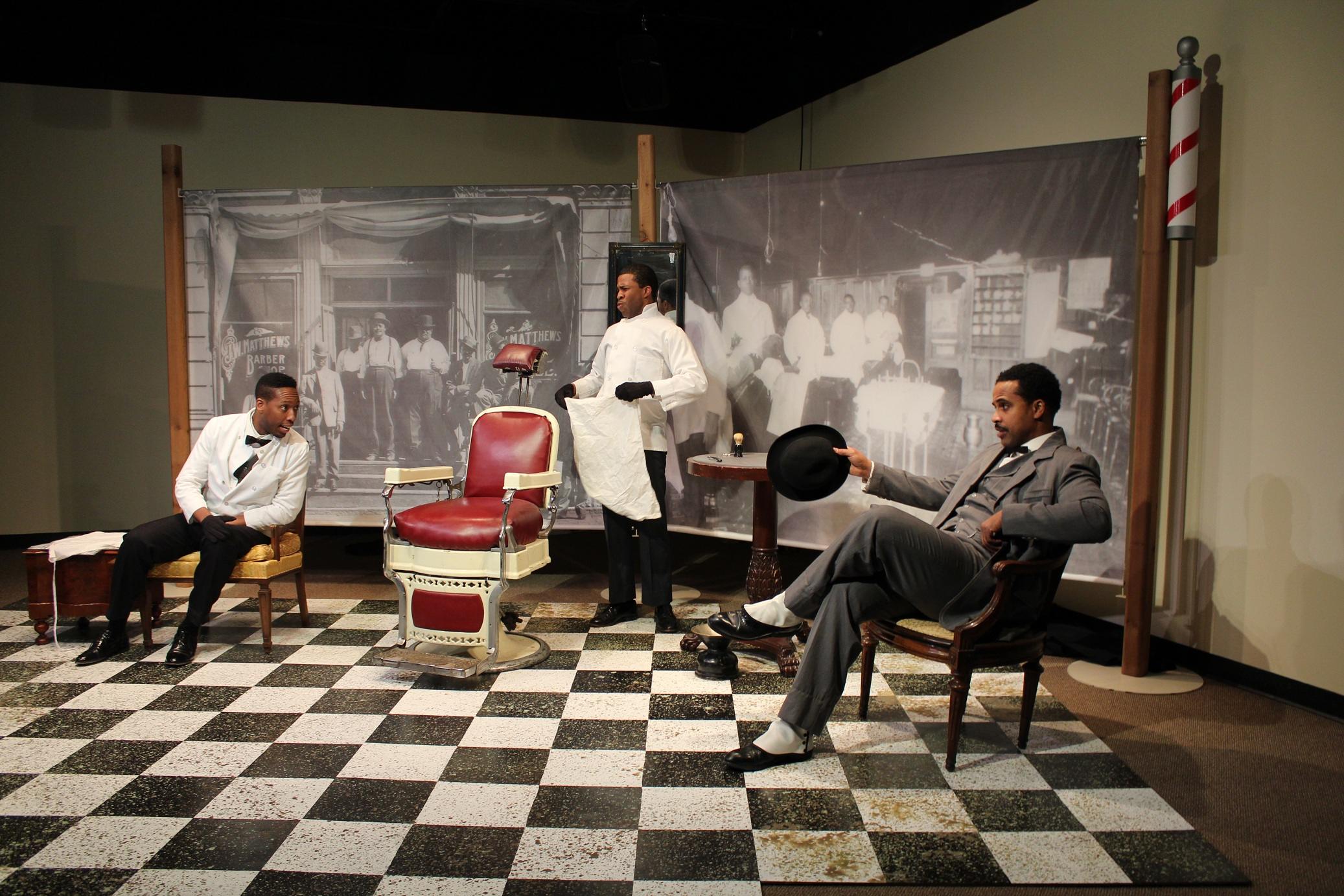
One of the challenges of moving to a new community is finding a barber.  For nearly eight years I had been in the hands of Manny, my barber — or his father before him.  I knew about Manny’s family and where they vacationed — and he knew about mine.  In our new home, I discovered yet again that starting over on haircuts can be both a test and a teaching experience.

As my appearance no doubt shows — I have never sought a stylist or looked for any of the extras offered by upscale salons.  Nope, I liked the democratic air of the good ole, two or three chaired, small barber shop.  These are the places where opinions are uncensored even if sometimes overblown.  Here is where you hear the young ones brag and the older fellas complain.  Here I can see my gray hair drop to the floor and watch as it is swept up into a pile along with the darker shades of hair from younger customers. 

I’ve tried nearly half-a-dozen barbers since settling in northern Indiana last summer.  Each one was a teacher, as well as a barber.  This I found true from the tattooed fella who gave a fine haircut, but was so good, that he always had a long line of customers ahead of me, to the old-timer who opined that he had been cutting hair since “Nixon was telling lies in the White House and, that none of those crooks following him there got any better.”  So, in the past year I have experienced a range of clips and snips, views of the news and an open-sourced set of opinions about life, love, politics and religion.

The barber shop is a place to listen in on everyday perspectives on the world.  Of course, these male refuges remain (along with our Sunday morning worship services) among the most racially segregated places in our society.  I like to listen, especially if I can stay anonymous.  I learn a lot, about how some folks are thinking about everything from foreign trade to who’s been arrested and why.  I’ve heard opinions on how to save a marriage and what’s gone wrong with the county fair.  I was able to learn a lot, that is until someone, usually the barber, asked me what I do for a living.  I get some cover by simply saying I am retired… but the questions keep coming and the truth is squeezed, like Brylcreem from a tube, out of me. 

“You’re a preacher, I thought so!” someone says, and with that, I lose the advantage of hearing unvarnished and often quite colorful language about life and the world around.

One of the joys of retirement has been the advantage of not being “on” as a professional Christian.  And, until I was recently “outed” as a retired pastor, I was able to listen in on colorful language and ribald boasting of men in the barbershop of a small rust-belt community of the Midwest. 

I listened to talk about the economy, politics and sex, baseball and hockey, motorcycles, farming, golf and flying model planes.  The talk wasn’t as full of victimization, anger, fear or racism as some of our talk-radio hosts seem to encourage.  Instead, these were folks seeking company, a good laugh or maybe a story to re-tell. 

Talk about the church, before I was outed as a pastor, wasn’t very positive.  The church was seen as a place trying to get your money, to build another building or where a fella would have to work all weekend at a fish fry when he would rather be just fishing.  Honestly, the church was viewed as just another program or another project to be avoided.  Yes, I heard the word “hypocrites” more than once when talk turned to church.

Please don’t misunderstand, while I don’t confuse what happens in a barbershop for important and potentially transformative work of the church, there is a lot that goes on in barbershops that is more honest and helpful than in much of what happens in churches these days.  It is about relationships, first; a story, second; and, some honest talk about the real world, third.   Of course, if we let folks know that church life could be this simple and direct it would put all our church consultants and revitalization specialists out of business.  And, building such relationships wouldn’t cost as much as a shave and a haircut!

It’s as my barber said last week, “You know, most people are hungry for someone just to listen to them.  When I remember that, I am happiest in my job.”  Should I tell the barber he is involved in ministry, or would this spoil it for him?

Hands of the Strong: The Order of the Teaspoon

The Order of the Teaspoon

The 2015 Lenten Season begins.  “From dust you have come and to dust you shall return” are the words we hear as millions of Christians receive the ashes.  They are daubed on our foreheads or hands in the shape of a cross.  Many enter Lent making plans for a specific “Lenten discipline” (something like giving up deserts, increasing prayer time or fasting at least one day a week).  And, with it goes the prayer that we will do better with our Lenten discipline that we did with that New Year’s resolution made just 45 days ago and already broken.

images

As we enter Lent, on the first two days, we are met with not one but two major speeches by President Obama.  He speaks on terrorism or as he would have it “violent extremism.”  He says that “we are not at war with Islam; rather we are at war with those who have perverted Islam.”  I agree.  In the background, the chattering classes have been quick to argue that he should use the language of “radical Islam” to talk about the the barbaric, inhumane and extreme actions against innocents by ISIS or ISIL in the Middle East.

I don’t pretend to be a foreign policy expert.  Even so, I remember the mistakes our nation made following the tragedy of 9/11.   In my view we were led into an extended war in Iraq and Afghanistan that was fueled too much by revenge and too little by knowledge.  We allowed understandable but blind retribution propel the U.S.A. into war.  We now can see the terrible price of the last fifteen years in terms of human casualties and wasted treasure.  Some at the time warned of an inevitable “blow-back” that would result.

As we rushed to war I was a part of a minority who felt engaging in Iraq was misguided.  My opposition was in large measure related to the failure to follow the long established ethical guidelines for a just war (proportionality of response, clarity of purpose, authority, prospect for winning, protecting noncombatants).  I remember being invited to speak at a seminar in San Diego on Ash Wednesday in 2002.  Nervous, I was even more on pins and needles when I discovered that the room was full of active and retired military brass.  Still I proceeded to speak about the ethical realities when considering military engagement.

I need not to have worried.  The folks in the room were way ahead of me.  You see, I learned that those who face the reality of warfare are more thoughtful and careful about these matters.  They not only took to my rather tepid presentation on Just War Theory.  They appreciated it.  They also spoke in private conversations about the challenges of fighting our perceived enemies on multiple fronts.  They also spoke of the differences between Sunni and Shiite sects in Islam and of our sloppy language and analysis.  We as a nation were long on emotion and short on facts.

I am not certain we have learned much in the intervening decade.  I have more Muslim friends and have been privileged to know several Imams who encourage their followers in practices that are decidedly open and respectful of persons from other faiths.  Still, in too many ways the current talk of war with ISIS seems strangely like the situation we faced in 2001.

One of the reasons I won’t be using the words “radical Islam” is that many of the people who are encouraging us to do so wouldn’t think of insisting that we speak of “radical Judaism” or “radical Christianity.”  These folks, often encouraged by Christian leaders like Franklin Graham, paint Islam as entirely evil and see us in a great battle of civilizations.  These “Fanatical, Apocalyptic Christians” believe these are the end times.  They suggest that we are facing an inevitable encounter with the evils of Islam.  This is the mirror image of the view of “Fanatical, Apocalyptic Muslims” ready to establish a caliphate.

What do those of us who are not fanatics and do not accept such apocalyptic notions of the future have to bring?  I remember a phone call to an Imam, a man I didn’t know, back in 2002.  “I hear that the children of your mosque are living in fear as they walk to school.  Might we help?”  It was the beginning of a remarkable friendship.

During this Lent, I will give up easy, sloppy language and foolish images about those who differ in their faith.  More I will commit to giving time to study.  Military engagement seems to be inevitable in the Middle East.  I reluctantly understand this.  The Israeli novelist Amos Oz has written a fine essay “How to Cure a Fanatic” (Princeton University Press, 2004).  He writes: “Fanaticism is older than Islam, older than Christianity, older than Judaism, older than any state or any government, or any political system, older than any ideology or faith in the world… Who would have thought that the twentieth century would be immediately followed by the eleventh century?”  (pp. 41-42).  Amos Oz speaks of the value of imagination and humor in the face of such evil.  The volume ends with an interview in which he speaks of the Order of a Teaspoon (pp. 93ff).

Faced with a calamity, say a conflagration, Oz says there are three responses we may have: 1) run away; 2) Get angry, march in protest, blame others and seek to remove leaders from office; or, 3) grab a bucket of water and throw it on the fire.  And if you don’t have a bucket?  Bring a glass of water.  And if you don’t have a glass?  Bring a teaspoon. The fire is huge but we can bring what we can.

Our teaspoons may be the language we select, the prayers we pray, the letters we write, the hands we reach out to greet, the knowledge we seek.

This Lenten season, my discipline will be to bring all of the teaspoons and glasses and buckets I can to put out the flames.  Others may have to fight against evil in far away places; they may sacrifice their lives. 

Remember, “from dust you have come and to dust you shall return.”  It is how you use the spirit-infused life in the here-and-now that is of eternal consequence.  Begin where you are.  Bring your teaspoons full of good will, your imagination and your good humor.  We people of dust will need this and more…

Hands of the Strong: Southern Exposure – People

Southern Exposure – People

 A new novel by Harper Lee.  Stunning news.  There she is, pictured on the front page of sections in today’s New York Times and USA Today.  Unbelievably, a previously written novel now has been discovered.  Written before To Kill a Mockingbird, and rumored to have existed for many years, it has been found.  The new novel, titled Go Set a Watchman, will be out in July 2015Only recently discovered among other documents, the news story suggests that even Miss Lee did not know this novel still existed.  It was written prior to, and with source material for, To Kill a Mockingbird.

What does this have to do with the Amerson’s 2015 tour through the south?  Well — everything and nothing — I guess.  We were able to visit with many wonderful friends along the way.  I will only mention one by name, Thomas Lane Butts.  Tom lives in a town in southern Alabama, Monroeville.  We stopped for a delightful visit with Hilda and Tom on January 12, 2015.  Monroeville, you puzzle?  Yes, some of you are already making the connection with Miss Harper Lee, she too lives in Monroeville.

IMG_0942

In fact, Dr. Butts and Harper Lee are longtime friends.  For years they would meet for breakfast every Thursday at the Hardees in town.  Harper Lee was known for her reclusive ways but among her most trusted friends are the Butts.  When you visit Monroeville you feel as if you have walked right into the fictional Maycomb County of the novel.

Thomas Lane Butts has been a remarkable friend to Elaine and me over the years.  He has been one of my mentors.  He is a great preacher — to my knowledge no other preacher’s sermons were more often featured on the national radio program The Protestant Hour.  His commitments to the civil rights struggles meant that he often took courageous stands during the early days of his ministry.  As a result was often overlooked, ridiculed and even punished by religious and denominational leaders.  Tom is, for me, a giant.  I chuckle when I say this.  He is great in spirit and in intellect although he is short in physical stature.  I write about him today because he represents so many exceptional southerners we have been privileged to know. 

I knew Tom long before I became president of Garrett-Evangelical Theological Seminary and was pleased to discover after my appointment to that post that Tom was a graduate.  In fact, he finished a masters degree in pastoral counseling in Evanston before returning to the south and many years of courageous sacrifice in the service of racial justice.  If you want to hear more of Tom’s remarkable story you can find the sermon he preached at Garrett-Evangelical in the fall of 2013 on the school’s website: (http://www.garrett.edu/gmedia/pdf/communications/Thomas_Lane_Butts_Sermon_Nov_2013.pdf).

The movie Selma was playing as we traveled across the southern states.  We took time to see it one evening along the way.  I was reminded of the many great folks who sought racial justice in the past — and who still act with courage and vision.  On our southern tour we visited so many of them. 

We visited with friends who work at the Open Door community, a ministry modeled in the Catholic Worker tradition that offers shelter and clothing for the homeless and gives witness against the death penalty in Atlanta.  There were university deans providing remarkable leadership and preparing a new generation of community, religious and academic leaders.  There was a bishop who is doing amazing work that opens new vistas for the church in Texas.  We spent time with a medical doctor who is extending the availability of health care to the poor across the southeastern U.S. and a psychiatric social worker who provides creative new ways for mental healing.  There were teachers, preachers, engineers and preschool teachers along the way.  There was the board chair of a Fortune 500 company and a retired school teacher who drives elderly friends to the grocery each week.

“Red State/Blue State” divisions have become a part of our national vocabulary.   We think we can predict how people will behave or think based on where they live.  Of course, we know it isn’t true — but we so easily can divide folks into false dichotomies.  Stereotypes are dangerous things.  We found remarkable people everywhere we went, even in the most out of the way places.  Miss Harper Lee demonstrated this in her writing first published fifty-five years ago.  Do you recall?  I especially remember two quotes from To Kill a Mockingbird — the book we thought would be the only book Harper Lee would publish.  She wrote “I think there’s just one kind of folks. Folks.”  And in another place she says, “The one thing that doesn’t abide by majority rule is a person’s conscience.”

+++++++++++

I started writing this blog wondering if it was something I would want to continue.  Now, I find I am thinking of more posts than I dreamed might be tucked away in the corners of my consciousness.  If you would like to hear more about any items mentioned today, just ask.  Here are some of the other things I plan to write about soon:

  • What Contemporary Atheists Get Right,
  • What We Learn from Bees,
  • The Sermon that Pushed Me Over the Edge,
  • Encouragement Even Helps a Rat!
  • Whining Bishops and Other Oddities,
  • Why I Won’t Plant Rutabagas
  • Racism and Other Modern Mysteries

As you can tell, there will be whimsy and challenge, critique and compliment in the postings ahead.  Perhaps you would like to follow this post regularly?  There is now a “tag” along the right edge allowing you to do this.  Perhaps you will share this with friends.

Just Folks — Phil A

Hands of the Strong: Southern Exposure – Places

Southern Exposure – Places

We traveled south in January.  Logical, if you live in the north.  I will not regale you with the details of our seventeen day trip; unfamiliar as I am with social media, I am enough aware to understand this is not a twitter note or Facebook page.

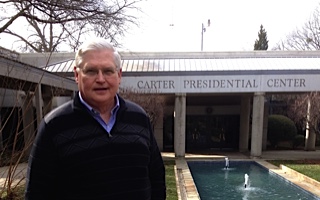
Suffice it to say that we visited the Presidential Museums/Libraries in Georgia, Texas and Arkansas.  Five in all — and more.  Starting with the Carter museum in Atlanta.  We got our “passport” to the “modern” presidential museums, thirteen in all beginning with Herbert Hoover, right through George W. Bush.  Our hope, of course is to visit all thirteen in the next year or so — and, this will prepare us for the Obama Library/Museum we hope will be located in Chicago.

IMG_0926

The presidential museums were fine.  Lots of history — as presented in ways that were generally favorable to the president being honored.  Understandable, of course.  Still, I came away from some of the visits, not all, wondering if there could be any acknowledgement of the mistakes, the shortcomings, the poor decisions of those men — all men at this point.  In fact, I remember leaving one such museum with the feeling that this fella had been dealt an inside straight at birth and lived his whole life thinking he was a great poker player.

Lest I be misunderstood, there were things noteworthy about each of the presidents.  The experience reinforced the sense that we are fortunate — the “American experiment” has continued to provide a remarkable gift to many.  And, it leaves room for us to continually seek improvement!

Among these five libraries – Carter, Bush 41, LBJ, Bush 43 and Clinton, our favorite was the LBJ Library.  One is able to hear tape-recordings of Johnson and many other leaders of his day.  There is no hiding of his greatest failure — the extension of the Vietnam War.  There is also beautiful evidence of his courage and commitments to civil rights and a more just society.  He was a man who knew how to weld power — but who also was able to grow and change.

However, the best of the presidential centers was not in the five we had scheduled.  On the way home from Little Rock to La Porte we decided to stay over in Springfield, Illinois and visit the new Lincoln museum.  It is exceptionally well done.  Don’t miss it. 

In Atlanta we also visited the new Center for Human and Civil Rights.  It too is a spectacular way to spend an afternoon. We were also fortunate to fly out to Scottsdale, AZ for a few days.  Again, we found a museum-you-must-not-miss.  It is the little publicized but increasingly popular Museum of Musical Instruments in Scottsdale.  Not only a remarkable collection of instruments but also forms of music from nations around the world.  You will be amazed and to see/hear everything would take several days.

Museums, Libraries and Centers — all good, some great; however, the real reason for our travels was the people, friends we have known over the years.  Another post will come soon — maybe today — about these people.

This is a rapid overview of our tour.  We got off before the heavy snows came and drove across the south never paying more than $1.90 for a gallon of gasoline.  This in itself was miraculous.  And, we returned just home just in time for the BLIZZARD OF 2015!  Eighteen (18) inches of snow over a two day period in La Porte!  Yes, the new snow blower was great. 

Let me close with this word.  I started writing this blog wondering if it was something I would want to continue.  Now, I find I am thinking of more posts than I dreamed might be tucked away in the corners of my consciousness.  If you would like to hear more about any items mentioned today, just ask.  Here are some of the other things I plan to write about soon:

  • What Contemporary Atheists Get Right,
  • What We Learn from Bees,
  • The Sermon that Pushed Me Over the Edge,
  • Encouragement Even Helps a Rat!
  • Whining Bishops and Other Oddities,
  • Why I Won’t Plant Rutabagas
  • Racism and Other Modern Mysteries

As you can tell, there will be whimsy and challenge, critique and compliment in the postings ahead.  Perhaps you would like to follow this post regularly?  There is now a “tag” along the right edge allowing you to do this.  Perhaps you will share this with friends.  I know that I still owe you a more substantial reflection on the two movies Calvary and The Overnighters.  Soon.

Looking Forward – Phil A

Hands of the Strong: Great and Small

Great and Small

Do you recall the moments when you unexpectedly encountered greatness?  Such times often arrive without forewarning; thereafter they are permanently imprinted in our memories.  On May 12, 2005 I had one such experience.  I was baccalaureate speaker at the University of Southern California.  This, in itself, was quite an honor for this Southern Indiana preacher!  Overly nervous, I arrived almost an hour early and thought I would find a place to sit quietly and review my talk.  I was ushered into the green room and took a seat. 

After a few minutes the university president Steven Sample entered with another person on the platform that day.  I recognized him even before the words were spoken: “Phil, I would like for you to meet Neil Armstrong.”  President Sample then excused himself and left us alone in the green room. Suddenly I was confronted with rare greatness. 

Sitting across from him on the sofa, I recalled that Mr. Armstrong had a reputation for modesty and didn’t seek celebrity.  Moments passed… it seemed like an hour.  Mr. Armstrong was comfortably quiet and me — well, I was tongue-tied, amazed, aware that this was a rare privilege.  I decided it best if I visited with him like he was just another fella from small town in the Midwest.

We had a marvelous conversation — about normal, everyday things — how the world had changed… his love of flying as a youth, attending Purdue… his having to break off from his masters degree course work at USC because he was called up to serve as an astronaut.  (USC awarded him his master’s degree on this day.  I remember thinking they should have made it a doctorate!)

images

I was amazed that he seemed just as interested in my experiences.  We probably had twenty-five minutes together.  I spoke of being a pastor, teacher and time working in urban settings.  Near the end of the conversation he told me about one of his experiences on the moon.  He said it had been misunderstood.  As best I can remember he said, “Some people have misinterpreted an action while on the moon.  At one point I focused on that tiny, pretty blue pea that was the earth.  I stuck up my thumb and shut one eye.  Some thought this was an expression of our great achievement — making the earth so small — but I didn’t feel like a giant at all.  I felt very small and I realized there are dimensions of our universe that are beyond imagination.  There is beauty all around.”

On July 20, 1969, Elaine and I watched the moon landing, first steps and the planting of the flag from a living room in Tenafly, New Jersey.  We were in the home of Rev. Robert and Mrs. Katherine Kelly, a Presbyterian minister and spouse serving in Harlem.  I didn’t realize it at the time but as we watched Neil Armstrong on a fuzzy black and white television screen, we were seated with greatness.  The Kellys had given up opportunities to serve in more distinguished pulpits in order to serve folks in a rough NYC neighborhood. 

Sadly, I don’t have a photo of the Kellys to share — but they left an imprint on our hearts and lives that lasts to this day.  They would never be celebrities.  In the eyes of many their lives were not all that significant.  But I know better — I know that they contributed to healing and transformation in a tough neighborhood.  They too saw the beauty all around them and understood that the universe contains dimensions beyond our imagination.

Near the end of George Elliot’s novel Middlemarch, is a passage about Dorothea, a person who is not thought of as great.  It reads: “But the effect of her being, on those around her was incalculably diffusive, for the growing good of the world is partly dependent on unhistoric acts, and that things are not so ill with you and me as they might have been is half owing to the number who lived faithfully a hidden life and rest in unvisited tombs.”

Neil Armstrong, the modest fella from a small town in Ohio understood.  Greatness is more… sometimes it is recognized, sometimes folks miss the point.  That point?  There is beauty all around.
images-5

Hands of the Strong: Epiphany Day

Featured image

Snow on Snow

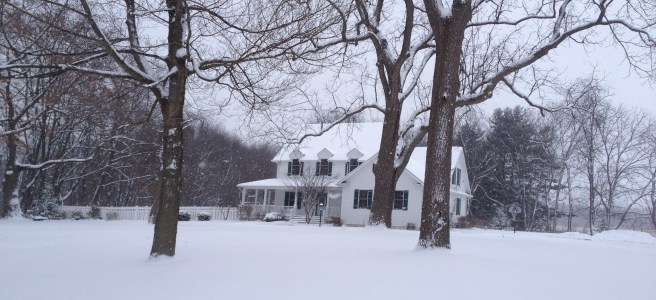
Snow came.  As it was supposed to come.  Today is Epiphany — Twelfth Night.  In Colonial Days this was the day of parties and celebration.  Christmas Day was more somber among the early settlers – a time to go to church and stay at home with the family.  Epiphany is when we remember the visit of the Magi, when we look to the light that is coming into our world — and share our joy in being able to share this LIGHT.

I can see the corn stalks from harvest from my window.  They rise tall above the white blanket.  They remind me of those young, frozen columns of French soldiers in the winter of 1812 on Napoleon’s futile march to Moscow.  Or, more positively and nearer home, I remember the rag tag collection of farmers and shop keepers, the Colonial Army who appeared to be in full retreat from the British.  Icy, freezing, apparently snowbound, they make that amazing push across the Delaware River and give the Hessians that “Christmas Surprise” in 1776, capturing Trenton.  It was a time of turning to a new reality.   

The bluebird house at the edge of the field stands empty, hungry for spring and new life.  In the wood beyond, a doe and her young find refuge.  I wonder.  What might they understand of the death of the father, that 14 point buck “harvested” along with the corn in November?  A trophy for a young neighbor.

Our lives follow patterns.  Harvest, snow, anticipation of spring.  Some of us head south.  Surprise in these routines is possible, precisely because we have certain expectations of the world.  Epiphany is a time when we are invited to exchange our lives of expectation for lives of expectancy.  This, for me, has become one of the great signs of a people of faith.  Do we believe change is possible?  Do we still have the capacity to be surprised?

I mentioned in an earlier post that two movies premiered this fall about the work of pastors: Calvary and The Overnighters.  There have been a number of movies in recent years about faith, God and the church.  The list includes: Heaven Can Wait, The Apostle, Sister Act, Oh God!, Bruce Almighty, The Preacher’s Wife, Higher Ground.

There are many more — some of these are silly and embody magical thinking more that any actual faith experience.  Some are more substantial demonstrating the complex realities of the life of faith — a life lived within the bounds of a paradigm while still remaining open to surprise.

Where can one explore the realities of parish life without resorting to magic or hero worship?  Where are the everyday foibles and hopes of a people of faith presented?  The movies Calvary and The Overnighters are a rare gift to us this year.  Real life here.  Calvary is a drama written and directed by John Michael McDonagh.  The role of Father James is played masterfully by Brendan Gleeson (who also provided an extraordinary performance this year in The Grand Seduction).  The Overnighters is a documentary and so is filled with the contradictions and challenges of real life.

I do not remember movies that capture parish ministry better than these.  (One exception to this that does come to mind is the wonderful BBC comedy Ballykissangel broadcast in the late 1990’s.  It exposed many of the dilemmas contemporary parish ministry — especially in a small Irish town.) 

I find myself wanting to sit down with lay people and/or young pastors or seminarians (or older pastors for that matter) and discuss the dimensions of community and life that are portrayed in Calvary and The Overnighters.  Perhaps this summer we will invite a few persons to the farm to watch these or other movies and spend time reflecting on Paradigms and Paradoxes.

Please don’t think I am in sympathy with the decisions made by either of the central characters.  They were flawed — as we all are.  And that is a part of the point I wish to make.  Within 15 minutes of the start of The Overnighters I was deeply troubled by Pastor Jay Reinke’s actions and theology.  More on that in future blogs.  For now, let me just say that if you want to be challenged to think about congregation, faith and God this winter, I highly recommend these two movies.

IMG_2020

The snow has now stopped and the sun is shining.  The roads have been plowed.  Our neighbor Greg has cleared the long drive way and I have powered up that new snow blower to clear the walks and the path to the barn.  Time to get in the car and drive SOUTH!

Elaine and I are off on what we are calling our Winter of 2015 Southern Tour!   Georgia, Texas and Arizona await.  Along the route we will be visiting the Presidential Libraries of six former presidents.  Next posting?  Somewhere warmer!

Happy Epiphany

Phil Amerson 1/6/2015

HANDS OF THE STRONG

Paradigms and Paradoxes

2015 arrived in Northern Indiana filled with wonder.  Astonishingly, no snow can be seen in the field outside my window.  Strange and wondrous.  We who live in and around Chicago saw December 2014 come and go with no measurable snowfall.  “First time since 1912” we are told.  It shatters expectations.  As much as many wanted a white Christmas, this anomaly was just fine with me.

If you live in a place like La Porte county Indiana, you expect snow – and lots of it by now.  We “enjoy” that lake effect snow and perhaps rival Buffalo in our expectation that each year we will see whiteness in abundance by now.  “December” and “snow” fit together for us on any analogy test.  None came in December 2014.  Maybe it is climate change.  Maybe sheer luck.  Maybe it was that new snow blower I purchased.  What has held back the “gifts” of winter?  Maybe a new snow blower is like carrying an umbrella when rain is in the forecast. I know it is superstitious and I can’t afford to buy a new snow blower every year!  Fortunately, I like winter.

Featured image

A month from now this will all have changed.  We will again experience (and, yes, enjoy) the haunting beauty of winter days.  We will again live with “what we have come to expect as normal.”  So, snow will arrive.  In fact, it may make its entrance tomorrow — if the weather channel is to be believed.  For now, however, it is a welcome break with the expected.  It is not Arizona or Florida weather but it is a nice surprise.  (Although some of us are already worried about what this may mean for the water level of Lake Michigan.  Last winter’s heavy snows and ice coverage turned around a decade long drop in the lake threatening the operation of many harbors.)

Snow, or the lack of it, in our neck-of-the-woods is a nice symbolic image for this entry on Paradigms and Paradoxes.  Over my years as pastor, teacher, administrator and student I came to value these two elements of analysis — paradigms and paradoxes.  They inform little thought experiments; more importantly, they help me as I seek to live faithfully as a Christian.  They assist as I seek understanding of others and, hopefully, how to better understand myself.

More to come.  For now let me suggest a framework (paradigm) is related to assumed structure we bring to the world – like snow in La Porte County in December.  Some theologians speak of a master narrative or meta-narrative that serves as a scaffolding or primary storyline behind a person’s thought and action.  It is variously referred to by scholars as paradigm, gestalt, template or matrix.  Most recently Nancy Ammerman identifies the resilience and dimensionality of frameworks or paradigms in her fine work Sacred Stories, Spiritual Tribes, Finding Religion in Everyday Life. 

The other element?  Paradox?  It is Parker Palmer who first opened my thinking to the power of contradiction or, better, paradox.  An early and little known work by Parker The Promise of Paradox.  It proved to be critical to my own faith and work in ministry.  Like Jonah in the belly of a whale, Palmer draws on the work of Thomas Merton to write about the value of facing alternative, even oppositional views of life and work.

Paradox assumes the power of paradigms — like the paradox of no snow in December.  Paradigms may be challenged and made pliable (more human and humane).  This is often referred to as a “paradigm shift.”   Such a transition incorporates contradictions or conundrums and may lead to more textured and richer insights into our world.  All of this leads to my an ongoing interest in and value placed on transformation and conversion.

Okay.  A pretty cerebral start, I know.  Stick with me, we are going to have fun here.  There will be silliness and lots of whimsy.  And there will be seriousness — especially in thinking about society, politics, the church and ministry.

Oh yes, about the title of this blog Hands of the Strong.  It is something I learned from a mentor years ago, Robert K. Greenleaf when he spoke of the core value of “strengthening the hands of the strong.”  What he meant by this was both paradoxical and paradigmatic. 

Coming up soon will be reflections on ministry derived from two movies in 2014.  Each provides remarkable fodder for insights on being a pastor or a lay person engaged in congregational ministry.  The first, Calvary, tells the story of an Irish Catholic priest, Father James (Brenden Gleeson), as he faces the challenges of parish life and of his own past personal demons.  The second is the documentary film The Overnighters about a Lutheran pastor (Jay Reinke) who seeks to provide shelter for homeless folks drawn to North Dakota to find work in the booming oil industry.   Both movies are filled with ample material for reflection on the frameworks and paradoxes that shape life and ministry in our time.

Stay tuned…