Regenerative Imagination: Toward A Sustainable Faith Ecology
The coronavirus came to visit and our nation was not prepared. Our cultural, religious, political and medical systems were not ready. Most institutional leaders, (the generals) were, and still are, “fighting the last wars” – wars among themselves and with those beyond. Writer Anne Lamott put it thusly, “Our poor country has been torn asunder. I await the rain of frogs.”[i]
Field of Kernza at The Land Institute, Salina, Kansas
The battles around COVID-19 were over who would survive and have control in future. Shall we favor efforts to save lives or livelihood? The irony, of course, is that at the very time we needed to practice new habits of cooperation and imagination, we turned away and sought to blame and shame others. We are not ready, as yet, to affirm regenerative and sustainable faith understandings. Uniformity has been mistaken for unity when diversity is required for health. What’s the old line? “There is a love of power rather than a seeking after the power of love.“
The same might be said for the struggles going on over the care for our natural environment. I believe there is a correlation between what has been happening in our faith ecology and our natural world ecology. Wes Jackson at the Land Institute in Salina Kansas speaks of homo sapiens in the twenty-first century as a “species out of context.”[ii] A leader of the sustainable agriculture movement, Jackson points to our scramble to use energy-rich carbons, produced by ancient sunshine and trapped in the ground, to ease our labors and provide comfort. He speaks of this as our “carbon imperative” or as his friend and co-author Bill Vitek suggests, rather than our human-nature, we would better speak of our “human-carbon nature.”[iii]
The coronavirus pandemic of 2020, and following, starkly reveals that Christians, particularly in North America are a faith group out of context, a forlorn people lacking a sufficiently clear understanding of our “human-spirit nature.” People of faith have much to learn from the natural systems of our world. More, we have a contribution to make to reducing the destructive patterns of our overly greedy human-carbon natures. Might we contribute to offering a sustainable way forward? This is to suggest there is spiritual dimension that might better assist us in becoming who we were created to be. Jackson quips “The only way to save our souls is to save our soils.”[iv] The inverse is also true: “the only way to save our soils is to save our souls.” Both are required.
My faith tradition, which I have called “home” for some seven decades, is United Methodism. We are one of the modern expressions of faith shaped out of a movement begun by John Wesley in the 18th Century. As the pandemic in 2020 came our way, United Methodists were unprepared. We were engaged in contentious internecine struggles. There were impulses to splinter around theological, ideological and cultural differences. We were distracted from the best of our human-spirit nature work. We were not ready to be at our best.
First United Methodist, Bloomington, IN
I am aware that Methodism is but one instrument in the great faith symphony known as Christianity. There are other faith traditions that might offer spiritual imagination toward a sustainable human future. In my perception of this spirit orchestra, I do not think of Methodism as the oboe, nor the timpani. Nor would we be in the trumpet section, nor the piccolo. No. I place United Methodism in the string section, perhaps we are among the cellos or the violins. Our tradition offers up the soaring beauty of personal experience and the connective music that links belief and action together. Or, if you prefer country music or Western swing, we are like the fiddle and steel guitar and sometimes sing the harmonies in the contemporary telling the story of Jesus. In other words, while we are not the whole of the ensemble, Methodism can offer needed harmonies to the witness of contemporary faith. We might can now prepare for the next pandemic – or other treat to a more convivial and flourishing future for humanity.
In thinking about the future of Christianity and United Methodism in North America, I have seen the links between our natural worlds and faith worlds ever more clearly. I will be sharing many of these insights here and looking forward to listening and learning with others. Some of them will be found in talks I am giving at the North Texas Annual Conference sessions on June 14-15. Watch this space.
++++++++++
[i] As writer Anne Lamott put it “Our poor country has been torn asunder. I await the rain of frogs.” In Sarah Meyrick’s interview with Lamott, “Anne Lamott on Unflinching Hope in Dark Days,” Church Times, April 16, 2021.
[ii] Jensen, Robert, The Restless and Relentless Mind of Wes Jackson: Searching for Sustainability, Lawrence: University of Kansas, 2021, p. 31
The North Texas Annual Conference of the United Methodist Church is where I will be speaking on June 14-15, 2021. Originally the invitation was for June 2020, however, the COVID-19 pandemic changed those plans. I have been asked to make three presentations on the future of United Methodism in the United States. In preparing, it became clear the topic was larger than the future of one denomination. There is a loss of relevance for many institutions that has occurred over recent decades – United Methodism is but one example. Mainline Protestantism has lost its formerly dominant place in society.
It is my plan to post the presentations I am making here over several days, beginning on Monday, June 14. There are no easy solutions presented; although there are some examples of places where new imaginative ministry can be seen. We are at a time in the history of this nation and the church when there are no easy answers. I believe that for Christians today, “our work is one hundred year work.” As Wes Jackson of The Land Institute says, “If your life’s work can be accomplished in your lifetime, you’re not thinking big enough.”
The paragraphs below are from the introduction to these talks. My hope is to encourage some dialogue on this site and in various other venues.
+++++++++++++
INTRODUCTION: DOES UNITED METHODISM HAVE A FUTURE?
Recently, a friend on an early morning walk, asked if I believed United Methodism had a future? I have heard this question often over my ministry, especially recently. This time, however, I heard the question with surprising urgency.
Weaver Chapel United Methodist Church, Lafayette, Indiana
Does United Methodism have a future…or in highfalutin language, “Can United Methodism be Sustainable and Regenerative?” I don’t have a crystal ball. Still, I came all this way, so I am obliged to offer some perspective, some lessons from history and signs of hope. Mostly, I invite us to remember the invitation Jesus makes to the disciples in every age, simply this, “follow me.” Let’s walk together a bit, and consider the question of United Methodism’s future.
Our Context and Its Complications
As we consider our context, let me begin by sharing with you my answer to my friend. “Yes, I have no doubt that United Methodism has a future.” As to what our mission, witness or structure will be, here is a word of hope – we can choose the pathway forward. I believe our work is 100-year work. Or, as my friend Wes Jackson puts it, “If your life’s work can be accomplished in your lifetime, you’re not thinking big enough.”
Bishop Grant Hagiya prays at California-Pacific Annual Conference worship, 2019
Researcher David W. Scott notes what is happening in the UMC is part of a larger cultural trend, shared by other denominations; a trend that cuts across race, class and theology. He writes: “U. S. Methodists (and U. S. Christians generally) are fooling themselves if they think that they can solve a cultural problem with organizational solutions.” Scott concludes, “I don’t know what the adaptive solution to the cultural problem of U. S. religious decline is. I wish I did. But I am sure that understanding the nature of the problem is the first step in finding the solution.”
Let me propose that our most hopeful options involve stepping away from long held assumptions about power and influence within the dominant culture. Douglass John Hall [Slide 5] speaking about Ecumenical Protestantism in North America, wrote: “Christianity has arrived at the end of its sojourn as the official, or established, religion in the Western world… The end of Christendom could be the beginning of something more nearly like the church – the disciple community described by the Scriptures and treasured throughout the ages by prophetic minorities.” By stepping away from the easy assumptions and practiced patterns of the dominant culture, a new beginning for Christianity and Methodism is possible. It can surprise, and perhaps, even delight us.
An overview for the three talks: 1) We consider what it means to be Rooted and Grounded in Love – our core identity as United Methodists. 2) We will consider being: “Connected to Bear Good Fruit,” and 3) “Communities of Restoration and Joy.” Our scripture focus will be on Ephesians 3 and John 15.
The text for these talks, including citations will be provided beginning on June 14th.
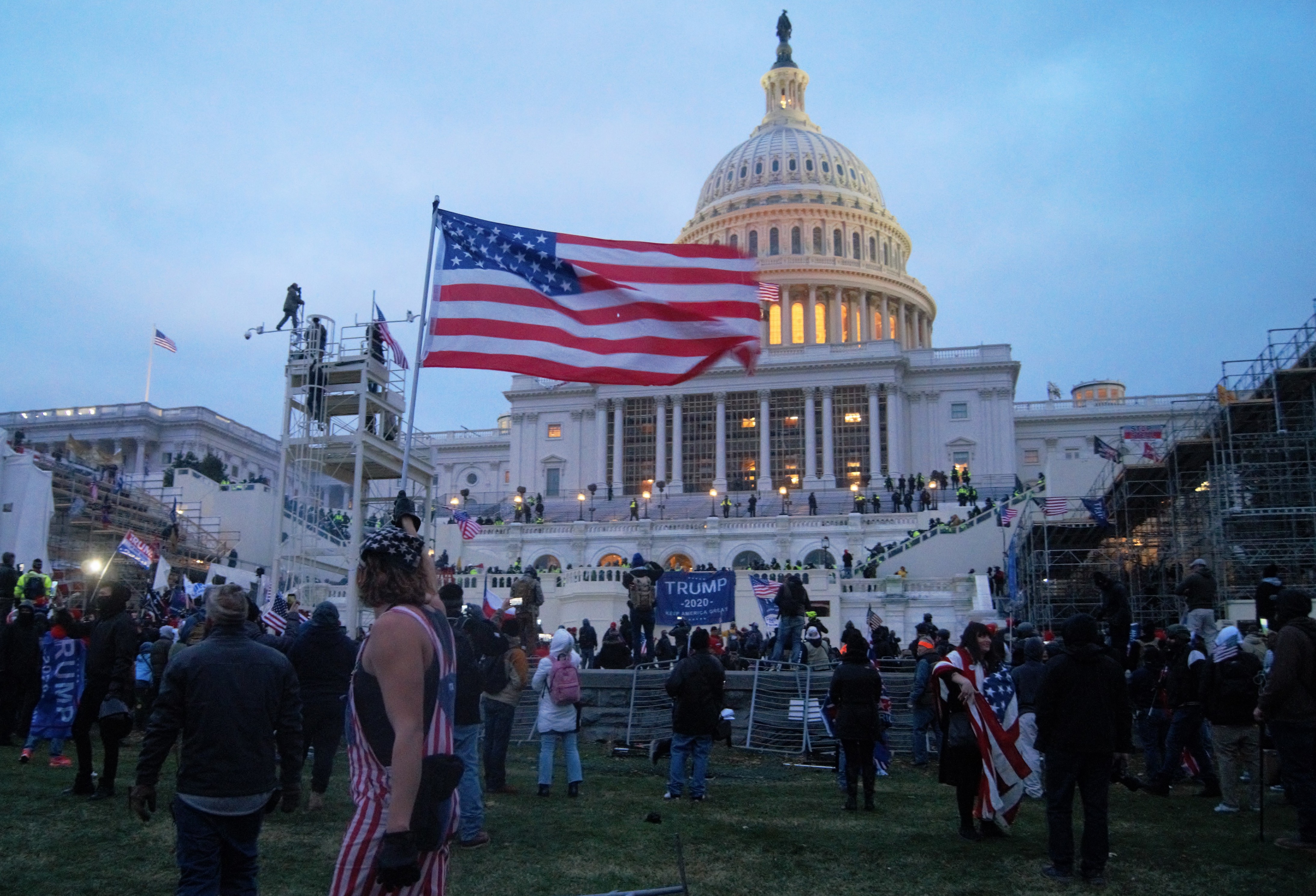
Democracy in the United States of America came to the edge of survival on January 6th, 2021. We watched in horror as our nation moved perilously close to a chasm, a coup d’etat. In fact, there are concerns that widespread anarchy may be exhibited in coming days. I pray not. A mob of insurrectionists, egged on by a psychologically disturbed and morally bankrupt president, invaded and occupied the capitol building for several hours. Others will investigate the “whys” and “wherefores” of this totalitarian-near-miss. It is time to hold the invaders accountable. For all citizens this is the time to consider the “thenceforth.” What now? Where next? How might we gain our bearings? How shall we, as citizens of this remarkable republic, proceed?
With no small irony, January 6th is also the day we Christians annually celebrate the Feast of Epiphany. It is a season of light, of discovery, of realization, of seeing new things, in new ways. In 2021 Epiphany became a day of treachery and tragedy. Insurrectionists sought to destroy our democracy. While some may seek revolution, let us understand that Epiphany is better employed as a time of revelation.
Over the next few postings, let’s think together about what has been and might be revealed. We will do this under three categories: Carnage, Complicity and Community.
I. Carnage
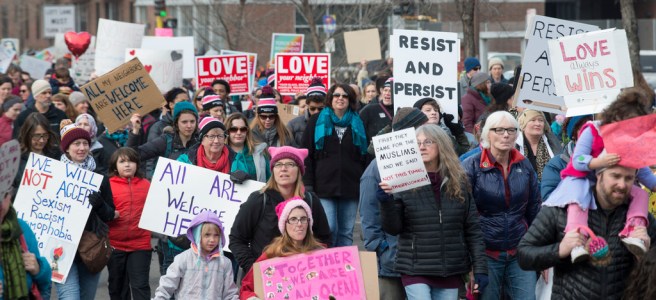
Trump Inauguration 2017
“American Carnage” is the way Donald Trump chose to describe our nation and its institutions in his inaugural address on January 20, 2017. Former President George W. Bush was heard to comment afterward, “That was some strange sh*t.” Trump was elected as the champion of grievance and revenge. He has built a governing philosophy based on lies, division and self promotion. Even listening to him at the inauguration in 2017, I found myself thinking of the axiom from sociologists W. I. and Dorothy S. Thomas: “What we perceive to be real becomes real in its consequences.” What was perceived then as carnage has ricocheted in genuine death and tragedy from Charlottesville to Seattle to Minneapolis and finally landing at the Capitol building on Epiphany 2021.
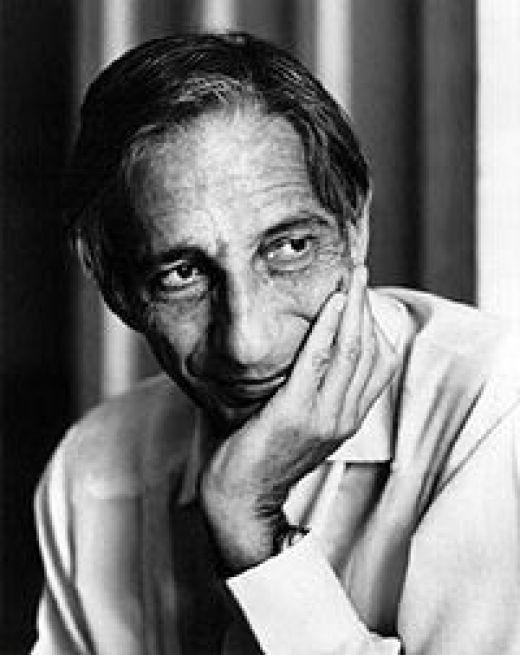
Social philosopher and Catholic priest Ivan Illich was asked by journalist David Cayley “Given what you suggest about institutions, what is the best way to make change, violent revolution or gradual reform?” Illich responded, “Neither. The best way to bring change is to give an alternative story.“**
Ivan Illich, source Wikipedia
Illich, was an iconoclast, a Christian visionary, a prolific writer — widely read in the last decades of the Twentieth Century. His brilliant critiques of our counterproductive institutional practices, still provide a clear-eyed challenge. He offered valuable wisdom, about our easy customs, traditions and ideologies. Schools, hospitals, courts, governments and churches were all subjects of his sharp analysis.
Illich was a truth-teller. He saw the failures of our schools, our broken economies, our media and strategies that continued to ignore and crush the underprivileged, our distortions of faith traditions, our inability to see. He understood the conditions of despair that became the source of Trump’s appeal… he understood the power of fear and misplaced anger.
Illich’s call was not to anarchy, nor was it an invitation to some set of “fixes,” or an elaborate new strategy whereby those in power can better serve their “clients.” He was about something much more basic — as basic as the streets where we walk and the tables we share (or don’t share). His call was to reinvest in the original “revelation,” the motivating principles behind our “helping” and “governing” institutions and the essential importance of neighborliness (see Tools for Conviviality).
Illich was silenced for years by the Catholic Church, prohibited from teaching through official church media. He writes of a church that has lost its highest calling in The Corruption of the Church.
Donald Trump’s claim that he “alone” is was the chosen one to end the Carnage in our nation found a home in the narrative of the Religious Right. Donald and his religious enablers turned Christianity away from narratives of grace and mercy into a faith that was rooted in individual salvation alone, into a struggle for a “religious freedom” to discriminate and faith as a tool of retaliation and censure against those who differed. It became a way to promote, even baptize, exclusion, racism and greed. Religious leaders like Eric Metexas and Franklin Graham were so bold as to suggest that anyone, Christian or not, anyone who didn’t follow Donald Trump was demon possessed (The Atlantic, “To Trump’s Evangelical’s Everyone Else is a Sinner,” November 25, 2019).
Metexas, who like Senator Josh Hawley, is Ivy League educated and can be an attractive, engaging spokesperson for a narrow and corrupted narrative. It is a narrative that cocoons the message of Jesus of Nazareth inside a political ideology. In the process it transforms the Gospel message into something distorted and limited. Folks like Metexas, make the parable of the Good Samaritan into a tale about how fortunate it was that the Samaritan was wealthy so he could assist the one found beaten on the road! The parable becomes a story in praise of wealth and tax cuts for those in power.
Here is a good test question for us all about our core narratives and Epiphany. Does your ideology capture your faith, limiting and containing it? Or is your ideology continually challenged and transformed by your faith? Compare the way Eric Metexas and Ivan Illich understand the Good Samaritan story. For Illich, this is an ever opening revelation. It is about “an untrammeled freedom to act” turning all strangers into a neighbor where “no category, whether of law or custom, language or culture, can define in advance who the neighbor might be.” (Caley, David, “Rivers North of the Future: The Testament of Ivan Illich,” p.30).
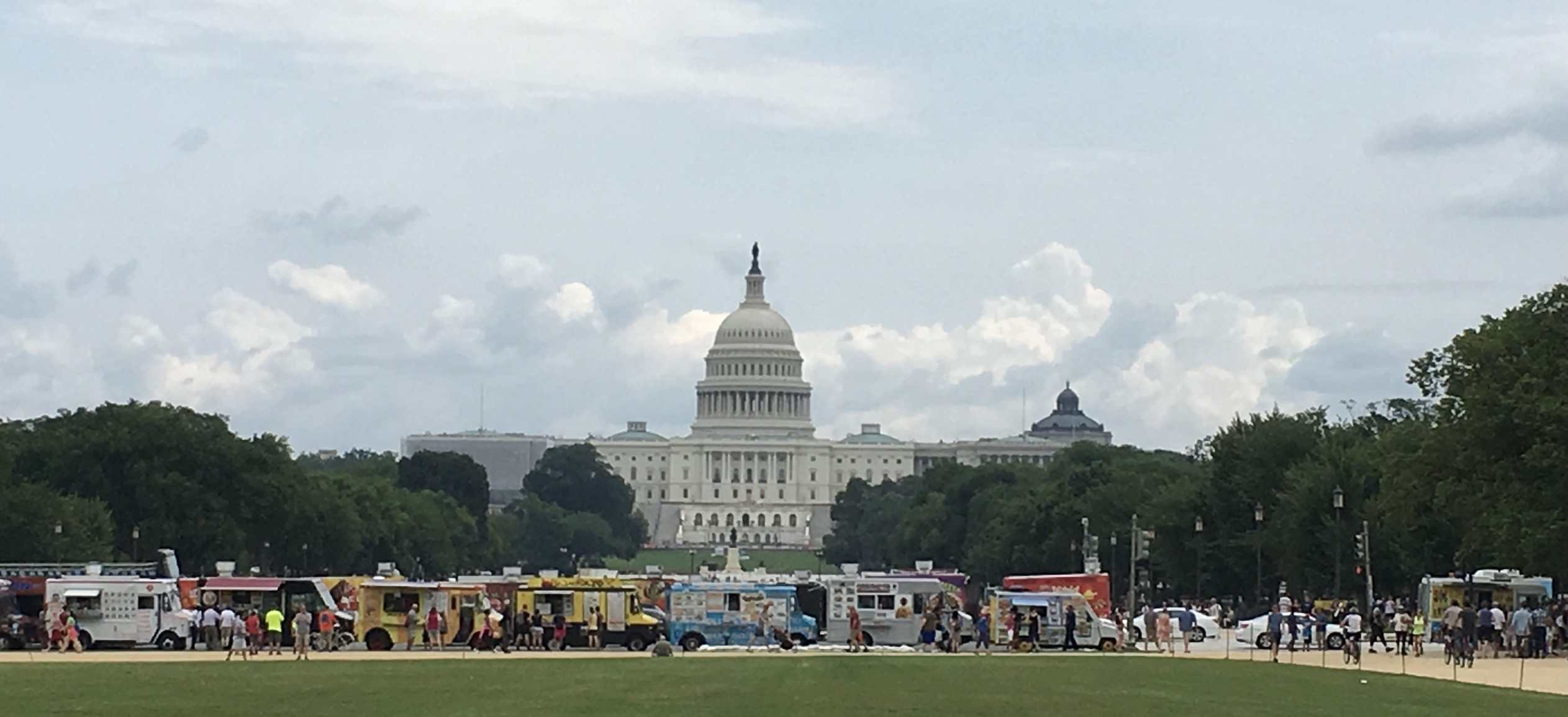
Capitol Building, Summer 2018
In the summer of 2018 I walked along the Capitol Mall on a number of occasions. I had joined a group of colleagues to work on a revision of The Social Principles of the United Methodist Church. In random conversations with strangers on the Mall and in the hotel lounge, it was apparent something troubling was already taking place — an attempt to reshape the nation’s story into one of Donald Trump’s (and his enablers) making. The American Carnage motif had taken root. Persons were out to remake the nation. As one proudly told me, “There is a new sheriff in town.” When I spoke about the offices of the Board of Church and Society, where we were meeting, being the only denominational presence on The Hill, I was told that, “Sorry, that is no longer true, we are on the inside.” Inside and outside language was strange to me as I still carried some notion of the separation of church and state. The “We” had to do with a certain brand of Evangelicalism busy making Faustian bargains with Donald Trump.
At the time I didn’t foresee the tragedy coming on Epiphany Day 2021. However, I sensed then there was a dangerous change underway. Some were seeking to challenge our national self understandings into ones shaped by a small, restrictive vision for our nation and for the faith.
Father Richard Rohr speaks of the import of story, of revelation, on January 10, 2021. He writes of an alternative journey defined by a “Christ map” that can shape who we can be as a people when he writes: We might not really believe it or surrender to it, yet if we could, we would be much happier people because the Christ map holds deep and unconscious integrating power for us as individuals and for society as a whole. A Great Story connects our little lives to the One Great Life, and even better, it forgives and uses the wounded and seemingly “unworthy” parts of our lives and others’ lives (1 Corinthians 12:22). What a message! Nothing else can do that. Like good art, a cosmic myth—like the Gospel—gives us a sense of belonging, meaning, and most especially, a personal participation in it. (Rohr, Richard, “Stories are Essential,” Center for Action and Contemplation, 1/10/21)
+++++++++++
**A fuller expression of the idea by Illich is “Neither revolution nor reformation can ultimately change a society, rather you must tell a new powerful tale, one so persuasive that it sweeps away the old myths and becomes the preferred story, one so inclusive that it gathers all the bits of our past and our present into a coherent whole, one that even shines some light into the future so that we can take the next step… If you want to change a society, then you have to tell an alternative story.”
All Saints Day 2020 arrives two days ahead of the Presidential Election. We remember lives well lived — and others lived not so well. We consider the fraying of our national identity and the evident threats to our commonweal. Mortality lurks as a backdrop on the nation’s theatrical stage this year. I think of the friends who have died. Many wonderful folks. There are 230,000 others in the United States and 1.2 million around the world who have died in the COVID-19 pandemic since February. We know only a handful of their names or life stories. Still, this is ALL SAINTS DAY.
The New York Times today (11/1/2020) carried an opinion piece entitled “Obituaries for the The American Dream 1931-2020.” It was inspired by Lizania Cruz, a Dominican artist and museum curator, who asked other artists When and How The American Dream Died For You? The Times opened the question to a wider audience and invited readers to respond.
One of the original responses was from, Marsha McDonald who wrote: “The American Dream died for me when I realized how many of my fellow Americans valued selfishness over community, power over justice, prejudice over generosity, demagoguery over science. For me, the 2020 pandemic is very real, but also a metaphor. How sick our national soul is! The old dream should pass away. Isn’t it time for us to dream new dreams, better dreams, that include us all?“
Since All Saints Sunday 2019, I have spent countless hours looking into the history of Methodism and the Ku Klux Klan in Indiana.** This research led to libraries, books and articles, old newspapers along with dozens of conversations and email exchanges. There are mysteries yet to be solved. Even so, I have sadly learned more of the broad swath of racism and religious bigotry that infected (and still infects) the church. At the same time my research uncovered the lives and witness of dozens of remarkable persons of faith in the early 20th Century who opposed the Klan and worked against this corruption of the Gospel and human dignity. In their day, these women and men dreamed “new dreams, better dreams, that included us all.”
If I were I to write my letter as a part of an Obituary for the American Dream today it would be a rolling set of dates — times of death, trauma and despair — and times of hoped for rebirth. Scores of times, a refrain, recurring rhythms of loss and return. Times when the dream died – along with Dr. King or the Kennedy brothers in the 1960s, or the twenty children and six adults at Sandy Hook Elementary School in 2012, or the treacheries of hunger, violence, betrayal and death witnessed while working in impoverished settings filled with saintly people in the U.S. and Latin America, and on and on and on. THEN – times when hope was rekindled.
Shortly after the death of Pope John XXIII in 1963 author Morris West wrote an appreciation titled “Good Pope John” for Life Magazine in which he wondered: “Will they canonize him and make him, officially, a saint in the calendar? In a way, I hope not… I want to remember him for what he was — a loving man, a simple priest, a good pastor and a builder of bridges across which we poor devils may one day hope to scramble across to salvation.” In 2014, Pope John XXIII was canonized — so much for the wishes of Mr. West.
I don’t know that any one American Dream should be canonized. In truth all of our best dreams will end up in some graveyard of good intentions. In fundamental ways, our society and culture are flawed and destined to continuing corruptions — as are all human political and institutional designs. Our hope is not in finding the perfect president, or political ideology or government program. In truth, there is no “draining of the swamp”; instead we require an honest assessment of the human dilemma and self-critical response — where better oversight and care of all of our swampy places is required — social and personal. The future is not yet clear, even so I join in cautious hope.
I pray that Jon Meachem is correct in offering that: “In our finest hours…the soul of the country manifests itself in an inclination to open our arms rather than to clench our fists; to look out rather than to turn inward; to accept rather than to reject. In so doing, America has grown ever stronger, confident that the choice of light over dark is the means by which we pursue progress.” (The Soul of America: The Battle for Our Better Angels)
+++++++++++++++++++
Thomas Merton wrote: “What makes the saints saints is a clarity of compassion that can find good in the most terrible criminals. It delivers them from the burden of judging others, condemning others. It teaches them to bring the good out of others by compassion, mercy and pardon. We become saints not by conviction that we are better than sinners but by the realization that we are one of them, and that all together we need the mercy of God.” (Merton, Thomas. New Seeds of Contemplation, p 57)
+++++++++++
Ordinary Saints, Malcolm Guite
The ordinary saints, the ones we know,
Our too-familiar family and friends,
When shall we see them?
Who can truly show
Whilst still rough-hewn,
the God who shapes our ends?
Who will unveil the presence, glimpse the gold
That is and always was our common ground,
Stretch out a finger, feel, along the fold
To find the flaw, to touch and search that wound
From which the light we never noticed fell
Into our lives?
Remember how we turned
To look at them, and they looked back?
That full- -eyed love unselved us, and we turned around,
Unready for the wrench and reach of grace.
But one day we will see them face to face.
(Malcolm Guite, From Plough, March 22, 2018)
++++++++++++++++++
**[My interest was in part linked to my appreciation for the research by retired Indiana University Professor James Madison, whose book The Ku Klux Klan in the Heartland arrived in September 2020. Madison rightly argues that the Klan was made up by more than the “hillbillies and Great Unteachables” as some claimed. Klan membership extended into the ranks of community and church leaders. My interest, of course, was given more urgency by the tragic murders of George Floyd and Breonna Taylor in the past year.]
Doubts are the ants in the pants of faith. This well known aphorism from Frederick Buechner comes to mind as the presidential election approaches. Four days now, four days until the presidential election. Few things puzzle me more than the rigid certitude I hear from so many voters. They trust their candidate, without doubts, even when there is evidence to the contrary. Many seem to live in a world “beyond the shadow of doubt.” Has grievance erased the ability to doubt?
A fuller quote from Buechner’s volume Wishful Thinking reads: “Whether your faith is that there is a God or that there is not a God, if you don’t have any doubts you are either kidding yourself or asleep. Doubts are the ants in the pants of faith. They keep it awake and moving.” (Wishful Thinking, p. 20). So, today I pray for an awakening in our body politic. No matter who is elected (and it is clear I have my preference) we need a good dose of skepticism at play in the future of our democracy. We have gone for too many years with a president who asks, “Who you gonna believe? Me or your lying eyes?”
Doubt is a gift when paired with hope — for religious faith and for a vibrant democracy. The opposite of faith is not certainty. Rather it is lively and discernment that rests in hope. I would argue a healthy democracy isn’t secured by uncritical allegiance to one leader or one ideology, rather healthy democracy requires healthy doubt. Such doubt rests in hope. Doubting is a gift that other institutions (the press, the faith community, the educational, judicial and the heath care institutions, the corporate and research worlds) must also provide. Doubt builds heft into democratic behaviors… especially if it can move us to be more trusting. Hope and doubt are the oppositional muscles needed for a healthy democracy.
Perhaps the apparent reduction in “doubters” is a sign of confirmation bias. Receiving information (news, sermons, radio talk shows, social media, etc.) from sources that almost exclusively support a person’s preconceived beliefs. It is astonishing that as the band-width of information available has dramatically increased in our digital worlds, our circles of received information tend to become more and more narrow. Much of this is due to the algorithm that pres-sorts what shows up on our screens. As Google has learned, why expand the options for a person when you can own their choices through their data?
It is reported that Albert Einstein regarded scientists who were unimaginative as “stamp collectors” of science. He then quickly apologized to stamp collectors. Einstein regarded science as brittle and dreary without doubts, imagination, vision and creativity.
Vance Morgan writes of Confronting the Sin of Certainty, Patheos, June 16, 2020: “Certainty without doubt has been the argumentative gold standard for centuries in logical arguments, and such arguments have their place—but not in the life of faith. A lived example is far more convincing.”
J Ruth Gendler, in The Book of Qualities, “Doubt camped out in the living room last week. I told him that we had too many house guests. Doubt doesn’t listen. He keeps saying the same thing again and again and again until I completely forget what I am trying to tell him. Doubt is demanding and not very generous, but I appreciate his honesty.” (p21)
Tennyson wrote “There lives more faith in honest doubt than in half the creeds put together.”
Whatever ever happens in the coming election, I will look for a doubting that rests in hope as an indicator of vitality. We need more doubters, more agnostics. Along with hope, we will need people who will suspend judgment and then see the signs more clearly.
++++++++++++
Natalie Sleeth offered language for people of faith in Hymn of Promise (#707 in the United Methodist Hymnal):
In the end is our beginning;
in our time, infinity;
in our doubt there is believing;
in our life, eternity.
In our death, a resurrection;
at the last, a victory,
unrevealed until its season,
something God alone can see.
(From Hymn of Promise, Natalie Sleeth, #707 in U.M. Hymnal)
++++++++++++++
My God my bright abyssInto which all my longing will not goOnce more I come to the edge of all I knowAnd believing nothing believe in this.
-- Christian Wiman
Prayers for our nation today — and a resource for hope.
This week, my friend, Mark Feldmeir’s book,
“A House Divided: Engaging the Issues Through the Politics of Compassion,” will be released. It offers a hopeful way forward in these challenging times. Mark is pastor of St. Andrews United Methodist Church in Highlands Ranch, Colorado.
Regarding racism, Mark offers these axioms:
How we think about racism is largely determined by our own particular race.
Race is the child of racism and not the father.
Colorblindness is a myth that blinds us to the truth about racism.
God of justice, in your wisdom you create all people in your image, without exception. Through your goodness, open our eyes to see the dignity, beauty and worth of every human being. Open our minds to understand that all your children are brothers and sisters, in the same human family. Open our hearts to repent of racial attitudes behaviors, and speech that demean others. Open our ears to hear the cries of those wounded by racial discrimination, and their passionate appeals for change. Strengthen our resolve to make amends for past injustices and to right the wrongs of history. And fill us with courage that we might seek to heal wounds, build bridges, forgive and be forgiven, and establish peace and equality for all in our communities. Amen. (A House Divided, page 30)
Prayer for Today, August 31, 2020:
Dear God, calm the fears of our nation. We think especially of the events in Kenosha, Portland, Louisville, Atlanta, Minneapolis and in so many other places. We pray for our own home towns. [Silent prayer] Show us the way to greater justice for all as we seek understanding. Even as we go about our lives in this restricted world of COVID 19, awaken us to, and remind us of, the gifts and value of our neighbors. [Silent reflection]. Make of us, who are your church and who live outside the church, advocates for non-violence and renewal. [Silent prayer] Amen.
A Call for Antiracist Commitments by Indiana United Methodists
Date: August 17, 2020
Dear Friends,
At the August 15th session of the Indiana Annual Conference the following motion was referred for consideration: “In preparing the 2021 budget for the Indiana Annual Conference, the Conference Finance and Administration Commission will set aside 10% of future program ministry budget(s) for antiracism work.”
Rationale: We have reached a kairos moment in the life our nation and church. Ours is a time of opportunity, transformation, and an occasion to clearly and directly address the enduring racism that besets our nation, state and church. In truth, racism is embedded in all of our systems: education, medicine, commerce, housing, law enforcement and, most tragically, even the church.
This motion to aside a tithe of conference program budget for antiracism efforts is an opportunity for United Methodists to lead in this critical work. It would demonstrate again our witness to racial justice through positive and constructive actions. We would thereby demonstrate our commitment to follow the Christ who welcomes all without reservation. Sadly, more than the vestiges of racism survive in our body. Racism continues to reshape our practices, our ministries and our structures. By wide majorities our members live and worship in racial enclaves. Membership reports, programming and attendance records since the beginning of the United Methodist Church in 1972 offer abundant evidence of our failure to extend our denomination’s welcome very far beyond that of being a church primarily focused on ministry with and for Whites. At the same time the racial and ethnic diversity of our state has greatly expanded while our percentages of persons from differing racial groups remains small.
This is an evangelistic and missional dilemma – and an opportunity. If Indiana’s youth see our church at all, there is scant evidence that Indiana United Methodism is modeled upon the beloved community of Jesus, where all are welcome. Antiracist commitments are seldom displayed, whether in camping, leadership initiatives, or church development programs. It is painful to ask the question, Where do we invest our dollars and our lives in specific and clear ways that confront the sin of racism in our society and in our own church? Persons of Color now make up more than sixteen percent of Indiana’s population, while our membership percentages of non-white persons is somewhere between three to five percent.
MINNEAPOLIS, MN – MAY 27: Two men wear shirts stating “Rest in Power George Floyd” outside the Third Police Precinct on May 27, 2020 in Minneapolis, Minnesota. The station has become the site of an ongoing protest after the police killing of George Floyd. Four Minneapolis police officers have been fired after a video taken by a bystander was posted on social media showing Floyd’s neck being pinned to the ground by an officer as he repeatedly said, “I can’t breathe”. Floyd was later pronounced dead while in police custody after being transported to Hennepin County Medical Center. (Photo by Stephen Maturen/Getty Images)
Tragically, it has taken the murders of George Floyd, Breonna Taylor, Ahmaud Abery, Elijah McClain, Sandra Bland, Tony McDade, Christian Cooper, Treyvon Martin, Eric Garner, and dozens of others, to awaken our nation to the profound violence and daily bigotry against African Americans. These murders, and dozens of others, are the most dramatic examples of the ways an acceptance of racism contributes to a societal assault on human decency. Indiana United Methodists have been far too passive. This is not a time to claim neutrality or blame some other forces for our tribal and de facto segregated lives. It is not sufficient to simply claim to be “non-racist.” This is a moment of gospel opportunity. This is, potentially, our Kairos moment, when the United Methodist Church in Indiana, can be true to the best of our history, our Evangelical theology, and our better angels. This is our time to act in bold, antiracist ways.
Fifty years ago, James Baldwin wrote “I will flatly say that the bulk of this country’s white population impresses me, and has so impressed me for a very long time, as being beyond any conceivable hope of moral rehabilitation. They have been white, if I may so put it, too long.” (New York Times, February 2, 1969)
Robert P. Smith’s book “White Too Long: The Legacy of White Supremacy in American Christianity,” published only this summer, draws on Baldwin’s perception. Smith’s research is both a deeply disturbing and helpful resource for Christians who seek to take the next steps in confronting the sin of racism. While much of this research is based on Smith’s own Southern Baptist background, there are ample illustrations for United Methodists and other mainline folks. Clear evidence of our racist complicity and our deeply embedded racist-worlds-taken-for-granted behaviors is provided. Fortunately, there are also examples offered of the ways congregations and judicatories have moved from simply talking about racism to taking specific steps to act in constructive and restorative ways to repair what has been broken and reach out in life giving ways.
This motion, offered and referred on August 15, is a call for the Indiana United Methodist Church to give witness and take responsibility for the damage done to all parties, Blacks (along with other “minorities”) and damage to Whites as well, for too long. It will require more than preaching to change prejudiced attitudes or attending workshops on inclusion and diversity. It will require more than a few token examples of racially integrated vacation church schools or charity work with the poor.
Antiracism work will involve structural changes, new partnerships and a stepping away from the paternalism that has shaped many of our ministries. This is a time for seeing the remarkable gifts and resources brought by persons of color already within our churches and in the neighborhoods and communities surrounding them. It is an opportunity to establish a new template for the long-term health of our congregations and conference that is marked by including new persons and groups. Such renewal work will require decades of effort and resources. It will be, however, a key investment in a stronger and healthier future for the church.
In earlier conversations, I have been appropriately reminded that Bishop Trimble does not need our counsel, advice or wisdom in matters regarding racism so much as he needs us to put action behind our words of hoped for racial reconciliation. I do not claim to be an expert so much as a long-time observer and a follower of Jesus; I am one who is captured by the hope of the gospel. Do I think such a change in the budget is easy or likely? No, and probably not. Even so, I believe a tithe toward antiracism ministries is essential to matching what we say with what we do – and to sustain United Methodism’s witness in the future.
How might this be done? There are dozens of ways our pastors and lay leaders can, and I believe would, respond to this call. Many more ways than we can imagine. Attached is a page of “possibilities” that briefly offer ideas for positive antiracism work in Indiana. Prayers for you and with you as you contemplate how best to respond to this time that calls for our repentance and action.
Sincerely,
Philip A. Amerson
+++++++++++++++++
Ten Examples of Potential INUMC Antiracist Activities
There are dozens of ways Indiana United Methodists can act in antiracist ways. These could begin to repair damage done over the decades by racial violence and brokenness. Such actions might be mixed and matched together through study, travel, outreach, witness, etc. A tithe from our conference program budget might:
1) Reestablish the work of a Commission on Religion and Race in the Annual Conference with funding for such work for the next decade.
2) Join with our United Methodist Hospitals and other health services in direct, hands-on and prayer-supported, engagement to address the high rates of infant mortality in Indiana. This is something that is particularly a problem in our minority communities.
3) Offer annual updates and workshops on the racial makeup of our congregations and populations in each county in a district. This would offer new insights for persons who mistakenly believe there is “no diversity in our community.” Several counties have seen significant increases in Hispanic and other non-white populations in the last decade; still many in our churches seem not to be aware.
4) Provide resources for at least two annual gatherings of persons of color in the conference, pastors and laity. Mostly they would get to know one another. Another goal could be to monitor conference actions; or another goal might be to design “learning journeys” with white clergy and laity where they could spend time in prayer, reflection, learning and planning for the future, together.
5) Review and update existing conference programs, in consultation with African American, Hispanic and Asian educators to offer more racially sensitive and appropriate approaches to strengthening our education, outreach and evangelism. Persons like the Rev. Vanessa Allen-Brown or Mr. De’Amon Harges and Ms. Seana Murphy of The Learning Tree in Indianapolis would offer valuable assistance.
6) Encourage every congregation in the conference to establish a partnership with another congregation or group of persons from a different racial or cultural background. This might include regular ways to fellowship and worship with Indiana AME, AMEZ and CME congregations. One can imagine how remarkable such gatherings these might be if guest lecturers shared insights regarding antiracism options.
7) Read, study and travel with others. For example, read the books by Bryan Stevenson (Just Mercy) and Robert P. Smith (White Too Long) and take a trip to the National Memorial for Peace and Justice in Montgomery, Alabama Or, read Jim Madison’s book on the Klan in Indiana and visit one of the sites, perhaps with a video or face-to-face conversation with Professor Madison.
8) Join the Community Remembrance Project sponsored by the Equal Justice Initiative to offer witness at each of the seven known lynching sites in Indiana. These are recorded at the National Memorial for Peace and Justice and a part of the Community Remembrance Project that seeks to set a Historical Marker at each site. There is also a gathering of the soil near each site to be placed on display along with the victim’s names at the museum. Wouldn’t it be “GOOD NEWS” to report that it was the UMC in Indiana that saw memorials placed and services of repentance held in each of location of a lynching.
9) Identify places where racism has damaged our witness (such as the troubled cross racial appointment at Old North Church in Evansville in 1985 or the closing of City Methodist Church in Gary) and/or locations where we once had a congregation of color that is now vacated. Hire persons to document these stories and/or share with the conference materials that are already available giving preference to researchers who are persons of color. Work with pastors in these settings to hold gatherings of repentance and reconciliation.
10) Ask the Indiana United Methodist Historical Society to research and publish a fuller account of the connections between Indiana Methodism and the Ku-Klux Klan, especially in the early 1920s. (In his 1994 United Methodism in Indiana, John J. Baughman wrote: “Particularly awkward was some local Methodist support for the infamous Ku Klux Klan in Indiana in the 1920s. Even now this is a no-no subject within the denominational history.”) Knowing this history, painful as it may be, can lead to honest acts of repentance and restoration. It is likely that several of our congregations could benefit from an honest knowledge such a history.
“Racial Prejudice is a sin.” So reads the lead sentence in an ad from a well meaning Christian institution. Yes, it is! “Good,” I thought. “Not sufficient,” was my second thought.
The ad was announcing a new educational program. Daily I read of a new degree program, or certificate, or workshop on racism. There are programs featuring inclusion and diversity; some offering cultural awareness. Good — many in our nation have been woke to our nation’s prevailing racism. Then, again I think, not sufficient.
Anti-racism work involves more than addressing individual prejudice, or practicing inclusion, or graduating from diversity training. The deeply embedded racist practices, white privilege and enduring structures of our society require more than changing bad attitudes or reorienting mental categories. I am helped by Isabel Wilkerson’s recent argument that our society is, in reality, a caste system.
In my tradition, the prayer for each day begins “New every morning is your love, great God of light, and all day long you are working for good in the world. Stir up in us desire to serve you, to live peacefully with our neighbors, and to devote each day to your Son, Our Savior, Jesus Christ the Lord.” Once woke, there is the need to keep awakening.
Setting aside my unpleasant thoughts about the marketing and commercialization of programs to address racism, it is clear that antiracism work will require more than a new curriculum, or a certificate or registration for a webinar. If we are to continue movement toward the Beloved Community we will be required to do some major overhauls, yes personally, but also in our institutions and economies.
As I have come to realize, over and again, my personal confession and repentance is only the prelude to a life-long reorientation. Recently I was asked if I was suggesting there is need for a “continual conversion.” In short, YES. As one friend suggests, this is “one-hundred-year-work.” It is as Eugene Peterson reminds us “A long obedience in the same direction.” Antiracism requires sustained commitment to institutional and cultural change. If you thought differently, I want to disabuse you of belief in any easy path. This is to say those eight week or eight month programs are… well, a small, good beginning, but only that.
In ways too numerous to list, we will always be learning, confessing, repenting, and re-imagining our common life and its institutions. In our podcast/videocast, Mike Mather and I suggest this lifelong commitment will involve Remembering Community — remembering our common Beloved Community.
While we don’t offer a certificate, a degree program, or a $135 workshop or webinar, Mike Mather and I invite folks to listen in and join the conversation. We are reflecting on our own racism and the deep caste-like patterns with which we have struggled in our ministries — personal, institutional and cultural. In the weeks ahead we will be looking at this along with the many stories from parish and community ministry.
In this weeks episode we speak of institutional racism, and of how two remarkable African American women, Hertha Taylor and Sadie Flowers, each acted in creative and joy-filled ways. Our call is to remember folks like these and to venture beyond the comfortable formats of small projects in “helping others,” that so many assume to be best. You can watch the video at: https://www.youtube.com/watch?v=sbFkguEMsSw.
We are “two old white guys.” United Methodist pastors with over 90 years of parish experience between us. In the attached podcast we think about racism and anti-racist work. We laugh, we confess our failures and we acknowledge the joy of ministry in places of diversity. Over the years we have spoken of the romance of work in a parish and its surrounding community. Here is a taste of what we have discovered.
If you find something here that parallels your journey — or even if there is something helpful, or something with which you disagree — make a comment, share your story.
When I hear politicians say “we must get back to normal,” I can barely contain my laughter — or my tears. Good reader, would you suggest that what we were experiencing as a nation, as a world, in 2019 was “normal?” If so, we may need to have a little chat about faith, science, reason and being a society of constitutional law. We would need to talk about the meaning of “life, liberty and the pursuit of happiness.”
This question about normalcy is the second of three questions we are considering in this time of pandemic. Here they are again: 1) What livelihoods will we love or treasure? 2) What shall we consider to be normal? 3) What shall we truly love and treasure in the future?
Blizzard, Long Winter or New Mini Ice Age?
In early March I began to see newsletters and opinion pieces that offered a metaphor regarding the changes the COVID-19 pandemic would bring. By now, dozens have used these images. Here is how it is framed: Is this pandemic going to be more like a blizzard, a long winter or a new mini ice age? In other words, How long will it last? How bad will it get? How much will we be changed?
Award winning journalist Laurie Garrett, a highly respected scientist and author of The Coming Plague has been warning of the possibility of a world pandemic for more than three decades. Garrett has emerged as someone who can offer us clues as to what may be ahead. In an interview with Frank Bruni in the New York Times on May 2, 2020 Garrett was asked: So, is “back to normal,” a phrase that so many people cling to, a fantasy?
Her answer: “This is history right in front of us,” Garrett said. “Did we go ‘back to normal’ after 9/11? No. We created a whole new normal. We scrutinized the United States. We turned into an anti-terror state. And it affected everything. We couldn’t go into a building without showing ID and walking through a metal detector, and couldn’t get on airplanes the same way ever again. That’s what’s going to happen with this.”
When asked in a CNN interview on May 7th if this situation is worse than she had predicted and feared, Garrett’s response was clear. She warned that things will not be the same and that five years from now we would still be dealing with the changes across all of our society brought by this pandemic. She noted that in every other viral outbreak over recent years, the CDC (Center for Disease Control) was a scientific center of good information and strategic thinking. However, now they have been reduced in scope, their guidelines are being set aside and this will only lead to a wider spread of the virus and deeper damage to our society and other societies around the world.
So… what shall we consider normal? Sadly, I believe that even with a change at the top of our government, the damage has been done and over the next year will continue with a result that…. well, at least a long winter of discontent is ahead, or, I hate to write this, but we may be entering another mild ice age like our world experienced from roughly 1300 to 1900 AD. As one writer has put it: For 600 years the earth was colder than average. This affected farming practices, house designs, and pushed Europeans to search for warmer areas and more fertile lands to farm, such as in North America. This was a multi-generational event that shaped the history of the world. People lived their entire lives in this ice age (Jeff Clark, “Blizzards, Winters and Ice Ages,”Rural Matters Institute, April 14, 2020).
Is Normal Our Best?
My sixteen year old grandson and I recently talked about societal norms in our weekly zoom chat. (“A weekly zoom chat with a 16 year old?” you say. Okay, I guess this is a new normal — at least for a while.) In our conversation, I rehearsed the sociological categories of social norms: folkways, mores, taboos and laws. He politely listened and then with appropriate doubt to the sufficiency of these categories, observed, “But none of those things can measure what is truly ‘normal,’ right? Don’t we need to also think about what things are ethical, I mean like moral?” Of course… such a smart grandson I have!
Guided by Too Much Grace
In the mid-1980s, I faced some powerful questions about norms and ethics. It was during the HIV-AIDS epidemic. I was pastor of Broadway United Methodist Church in Indianapolis. Suddenly there were many young men in that congregation and community who were getting very sick. They were dying from this strange new disease. First a few, then dozens. Our congregation had welcomed many gay and lesbian persons into membership. Actually, it may be better said that many LGBTQ folks were generous enough to welcome us. We were connected, the phony barriers and bigotries of religious tradition and being closeted were set aside for a new normal of common humanity. It was a marvelous time as I grew in understanding and faith. I learned many things about my own ignorance and unrecognized biases; and, it was a painful time as well when many of my superiors in the denomination were upset that we were breaking with what was their “normal.”
In the midst of this, a phone call came from the father of one of the young men who had been worshiping with us. He started by introducing himself as the young man’s father and then said, “I am a pastor in Ohio and I want you to know that I don’t agree with your theology or my son’s choices.” There was a long pause… I was expecting a theological harangue. Still, I could tell this might be different. Even over the phone from hundreds of miles away I knew the man was holding back tears. With a breaking voice this father went on. “I guess part of me thinks your church offers too much grace, but another part of me is so grateful you have found each other. I am glad he is connected even if it is not normal.”
As a pastor, I was grateful that that congregation had decided it would be normal to live in terms of too much grace… grace for all. John Wesley, Methodism’s founder often pointed to Psalm 145:9 which reads, “The Lord is good to all and his compassion is over all he has made” (NRSV), or from another source it is translated “God is good to one and all; everything he does is suffused with grace” (The Message).
Surely, my denomination is still very broken over how we align our ethics and our norms. I often ponder what John Wesley would think of our quarrels these days. For me, at least, I make the choice to come down on the side of Too Much Grace — for me and for all.
I have been warned by my psychologist and psychoanalyst friends to take care when speaking of any thing as “normal.” One of them was bold enough to say, “Well, I may be normal but you look pretty sketchy to me!” I replied, “this is what keeps folks like you employed.” Anyone who has read E.B. White’s delightful short story “The Second Tree From the Corner” will appreciate that, like beauty, normal is in the eye of the beholder.
If a healthy way forward, beyond this pandemic is to be discovered, it will require honesty about the scientific data, more good research, testing and tracking… and perhaps a vaccine. It will require more, I believe. It will require that we see that God’s compassion extends over all and to all.
Or, we can pretend that we can “go back” to a fantasy world, where science is diminished, bigotries are encouraged as normal, and God’s care for all is ignored.
Such a move backwards from the fact that we are all connected one to another and to creation is a possibility. Let’s choose another option. Wendell Berry wrote: “Only by restoring broken connections can we be healed. Connection is health.” (Berry, Wendell, Essays: 1969 to 1990). (See also https://wordpress.com/block-editor/post/philipamerson.com/6682)
So choose your metaphor: blizzard, long winter or ice age? What will be a compass and a guide as we seek to better align the normal with the ethical? I fear we are in a long winter at least; probably a mild ice age. John Wesley offered this overarching way of proceeding: “Do no harm, Do Good, Stay in Love with God.” I will look, in these ways, to restoring broken connections — to getting to a new normal or a “daily harmony” as one therapist friend suggests — and to living with others in terms of our common humanity and the sufficiency of God’s grace as we journey together.
Even if we could go “back to normal,” I would work and pray that we could do better than that.






 Hands of the Strong