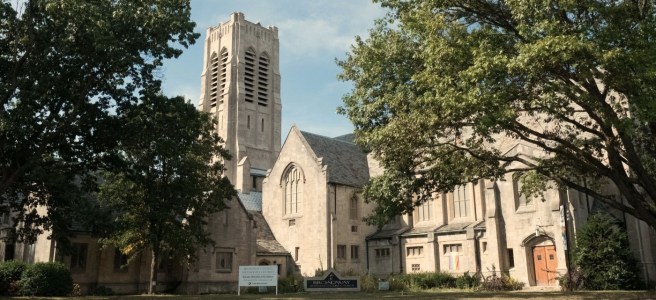
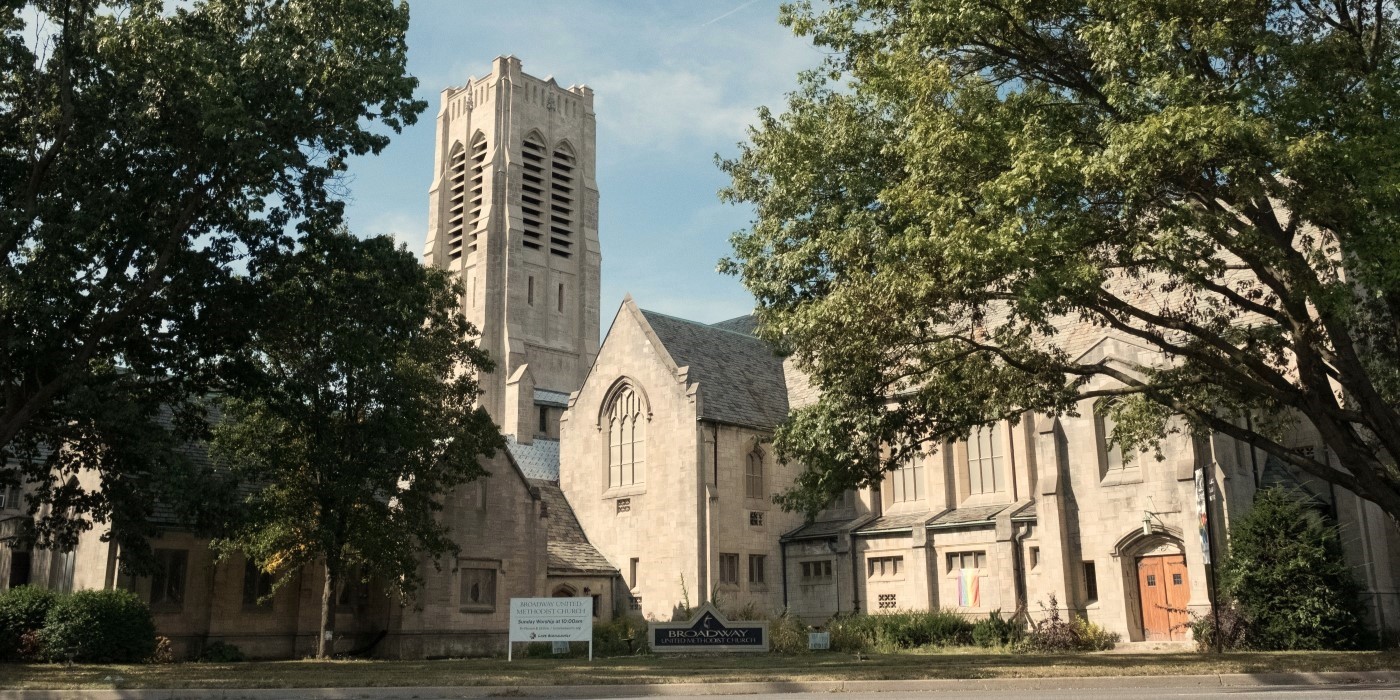
Admittedly naïve, the Christians at Broadway Church in Indianapolis in 1986 wrote: “As followers of Jesus Christ, responding to God’s love, our mission as the people of Broadway Church is to be a multicultural, Christian community that in its ministry seeks, welcomes, and values ALL people.” We knew it was a challenging aspiration, none-the-less the choice was to be a church that said it welcomed everyone – and acted like it. No matter. Everyone.
That congregation hasn’t done it perfectly, but over the decades it has claimed this mission. Still does. Yes, we were naïve, about our society, our world and the human condition… or were we?
Life would teach many lessons, some hard ones. The power of tribalism and fear-stoked resentment has too often overridden respect for all. It has even undermined alliances among western nations. Today we see bigotry and discrimination, dressed up as ICE agents with masked faces and camouflaged outfits, terrorizing our cities. Such threatening realities appear to trample on that simple mission statement.
Naïve? Surely so. Wrong as a witness to the love your neighbor message of Jesus? Not so then, not so, now. The Apostle Paul wrote of this in the earliest years of the church: “In Christ’s family there can be no division into Jew and non-Jew, slave and free, male and female. Among us you are all equal. That is, we are all in a common relationship with Jesus Christ. Also, since you are Christ’s family, then you are Abraham’s famous “descendant,” heirs according to the covenant promises.” (3:28-29 as rendered in The Message).
Twenty years ago, columnist David Brooks wrote of the coming death of multiculturalism. https://www.nytimes.com/2006/04/27/opinion/the-death-of-multiculturalism.html. Brooks spoke of what he saw as the excesses of multiculturalism where diversity was too easily celebrated and sometimes prevented true openness to all voices. He predicted multiculturalism would pass and we would see a “rebirth of liberal American nationalism.” I wonder what Brooks would say today of the trajectory he offered then?
Whether one points to the multiculturalism displayed in the Ruth and Naomi story, or to the multiple ways Jesus of Nazareth broke and transformed deep patterns of race, class or religious exclusion, or to the Pentecost events, multiculturalism and faithful Christian practices are intertwined.
At Broadway, shortly after that mission statement was written, a longtime member told me that grand old building of stone and stained glass might one day be gone, it might be razed, but the gift of knowing others who differed in a community of acceptance could never be erased. Perhaps that congregation at Broadway was not so naïve. It continues today as faithful to its mission. So do thousands of other gatherings and activities in the name of Jesus around the world. Naïve? Perhaps, it appears so, in the short term. However, as Eugene Peterson suggested, Christians are called to “a long obedience in the same direction.”
I know the tyranny of numbers. How many? How much? In my work-life there were always such questions: What is the average in worship attendance, pastor? How large is your enrollment, seminary administrator?
Counting is deeply embedded in our culture; math is essential for a strong citizenry. I recall my children delighting in Sesame Street’s Muppet Count Von Count. Even so, the oft overlooked and more critical understandings are based in asking “what should be counted and to what purpose?” What are the essential measures for the health of a congregation, school, government program or social service agency? A hospital can report the number of beds, or the financial bottom line, but what of the morale of the staff, or trust patents have in a nurse or physician?
My dear colleague, Walter Wangerin, Jr., first alerted me to an overlooked theme in scripture. Reminding me that the fourth book of the Christian Bible is the “Book of Numbers” Walt noted that throughout the narratives, when the focus shifts from knowing the people to numbering them, danger is ahead.
In an astonishing fabrication, former President Donald Trump, claimed “No one has spoken to crowds bigger than me.” He said more people attended his January 6th, 2020 event prior to the attack on the capital building, than attended Dr. Martin Luther King, Jr.’s “I Have a Dream” speech. Truth is 250,000 gathered on the Capital Mall on August 28, 1963. It was a crowd five times larger. Think on this: how do these two speeches differ in purpose? Crowds gathered to do what? Was it to enrich and extend our democracy or to upend it?
The Gospels are filled with stories of crowds following Jesus, anticipating his every move. Some first century census taker reported 4,000 and 5,000 at meals. One of these stories breaks open the myth that size matters, as a small boy gives his lunch of five barley loaves and two fish (John 6) toward the feeding of everyone.
There is no doubt that crowd size is seen as an indicator of popularity and power. Adolf Hitler loved to brag about the size of his crowds in World War II Germany. However, there is another way to think of the gathering of people around a leader. Jesus of Nazareth, who often faced the press of crowds said: “For where two or three are gathered together in my name, there am I in the midst of them (Matthew 18:20 KJV). As to power and authority, this Jesus said, “You’ve observed how godless rulers throw their weight around, how quickly a little power goes to their heads. It’s not going to be that way with you. Whoever wants to be great must become a servant” (Matthew 20:26, MSG).
Those in our time who suggest Mr. Trump is God’s choice, have a problem bigger than his persistent lies; they have a Jesus problem. Jesus spoke of small gifts, shared in hope, as core indicators of God’s true purposes. God’s realm often was understood as yeast, seed, salt and light. Jesus looked out on the crowds with compassion and taught that love of God and neighbor was the highest good. Everyone counted. Bragging about crowd size and seeking division and fear for personal gain, not so much.
Like hundreds of cities across the United States, Bloomington, Indiana, my home, is a place where we face the challenge of unhoused persons surviving on our streets. Because we are a generous and caring community, our town is seen as a place of welcome. Sadly, it is also a place where the number of persons facing chonic homelessness continues to grow and our resources fail to offer hopeful ways forward.
What follows is a column for our local newspaper, The Herald Times. Perhaps there are some ideas here that could be of value as you seek to offer responses in your communities. Perhaps you have some suggestions that you can share to be helpful to us. Here is the column:
Missing Ingredients in Housing Assistance Plans
On Tuesday evening August 6th the Bloomington City Council received a “comprehensive” Housing Action Plan. It was presented by Bloomington Mayor Kerry Thomson, Mary Morgan, the director of Heading Home of South Central Indiana, and advocates from several service groups. It is an ambitious six-year plan designed to make street homelessness “brief, rare and non-repeating.” It is indeed a dramatic and critical step in the right direction, but comprehensive?
The plan is bold. As The Herald Times reports, it proposes “significant” investments coming from “multiple” sources. It will require increased dollars, imagination and durable civic commitment. The report is found at: headinghomeindiana.org/news/housing-action-plan/. It deserves the community’s immediate endorsement and financial investment. Seeking 1,000 low-rent housing units by 2027, and 3,000 such units by 2030, is a HUGE challenge. Adding ten additional Healthnet street outreach staff and many more case workers at existing homeless services is appropriate. We need such a commitment.
The idea of a moratorium on helping unhoused persons from out of town for a period is strong and distasteful medicine. Even so, it may be what is required while other communities, and the State of Indiana, do not act in more caring ways for the vulnerable among us all. A temporary moratorium to regain a balance and offer sufficient safe housing, healthcare and see an end to persons living on the streets deserves exploration. Such a step, so long as the commitment to dramatically increase low-income housing is also accomplished, could serve as a model for other communities in Indiana and beyond.
STILL, this is not a “comprehensive” plan. It is good. It is bold. It includes parties that have stood too long on the sidelines, parties like Indiana University and I. U. Health. But is it “comprehensive”? Nope, don’t think so.
Three elements are noticeably missing:
First, how will each of us, as citizens, in Bloomington, act in new and meaningful ways to support such a plan? More basically, how will we behave to understand that “these people” seen as “problems,” and “outsiders,” are part of us, our tribe, our social network, our family? As Kevin Adler and Don Burnes write in “When We Walk By: Broken Systems and the Role We Can Each Play in Ending Homeless in America,” the people we see as foreigners are persons with families – often they come from nearby biological families, and all are certainly a part of our larger human family. What reading, thinking, acting, praying might we do together as citizens to provide a witness as to a better way?
Second, aren’t faith communities essential in providing motivation, resources, volunteers, leadership, imagination and even shelter space (emergency and longer-term)? Why are they not at the planning table? Yes, a few “religious groups” are mentioned as “providers;” but I would argue any comprehensive plan would include faith communities as essential “stake holders” and critical to the designing and implementing any sustainable plan. What if this is not simply an economic, addiction or heath care issue? What if it is a spiritual one as well? By this I do not mean to suggest a moral failing of those without shelter, but rather, a spiritual failure of our community and nation. The irony, of course, is that many, dare I say most, of homeless assistance resources in Bloomington were initiated and have been largely undergirded by faith-based vision, volunteers and financial support. A good case can be made that faith groups and leaders have been missing-in-action in recent years as we have been too focused on our own congregations with too little focus on being good neighbors. Oh, there are some fine individual congregational programs, but working with others in a coordinated way? Not so much.
Finally, and perhaps most importantly, there is no mention of how persons identified as “homeless” will be engaged in envisioning and implementing a “comprehensive” plan. Many, many, who are currently living on the streets bring gifts, insights, connections and experience to assist in making homelessness “brief, rare and non-repeating.” These folks without shelter have names. Any plan needs to be imbued with an understanding that working with vulnerable persons is critically different from doing for “them.” Rather than clients, patients or “the needy,” what might we do to act in ways that find a space where all of us can act as fellow citizens?
So-called Christian Nationalism appears to have mushroomed in our body politic. Books like Taking Back America for God (Andrew Whitehead and Samuel Perry) and The Kingdom, The Power and The Glory (Tim Alberta) document the spread and extent of this ideology across American faith communities. Is this new? Or is it reappearing after years buried in the subsoils of our common life?
Do your recall the l-o-n-g word Antidisestablishmentarianism? In elementary school I learned it was the longest word in the English language. Well, not quite. At only 28 letters, it now is said to be the fourth longest. I won’t try to spell or pronounce the top three. The folks at Merriam-Webster say it doesn’t qualify for a dictionary; it is so little used. Okay – but I have burned too many brain cells learning to spell it. Antidisestablishmentarianism arises from historic struggles in Britain over the role of religion in government. This word argues religion (the Church of England in this case) should receive special government benefits, support, patronage.
Increasingly unmerited claims that the United States was to be an exclusive Christian Nation are made. Stephen Wolfe’s book The Case for Christian Nationalism, widely read and oft cited, is a core effort in this “restorationist” project. This desire to return a simplistic narrative about our nation’s founding, our diverse communities of faith, and multiple cultural expressions is misleading, even antithetical to what Jefferson referred to as our “Great Experiment.” In fact, the First Amendment to the U.S. Constitution (known as the Establishment clause) opens with the words, “Congress shall make no law respecting an establishment of religion, or prohibiting the free exercise thereof.” Something fresh, never seen before, was being birthed with the American experiment. Something untethered to a monarch, or a single faith tradition was begun.
Evangelical scholar Kevin DeYoung acknowledges an understandable hunger among some Christians for something like Christian Nationalism; however, after reviewing Wolfe’s book, he concludes “Biblical instincts are better than nationalist ones, and the ethos of the Christian Nationalism project fails the biblical smell test.”
DeYoung offers a clear window on the rootage of Wolfe’s narrowly drawn and grievance informed “research” as he writes “The message—that ethnicities shouldn’t mix, that heretics can be killed, that violent revolution is already justified, and that what our nation needs is a charismatic Caesar-like leader to raise our consciousness and galvanize the will of the people—may bear resemblance to certain blood-and-soil nationalisms of the 19th and 20th centuries, but it’s not a nationalism that honors and represents the name of Christ.” He concludes“Christian Nationalism isn’t the answer the church or our nation needs.” (DeYoung, Kevin, “The Rise of Right-Wing Wokeism”, Christian Living, Nov. 28,2022)
As a teenager, in the early 1960s, I recall sermons warning if John Kennedy were elected, our first Roman Catholic President, he would receive orders directly from the Pope and the Vatican. Fortunately, a majority of U.S. voters didn’t buy that argument. Today, the benefits of Kennedy’s presidency and the tragedy of his assassination continues to shape and haunt our national self-understanding.
In my early adulthood (late 1960s and early 1970s), I heard the black evangelist Tom Skinner preach. He said “All the pictures of Christ were pictures of an Anglo-Saxon, middle-class, Protestant Republican. There is no way that I can relate to that kind of Christ.” (See Jamar Tisby, Footnotes, October 24, 2023.). Skinner painted the image of a white Jesus wrapped in an American flag. He was saying “the Jesus long marketed by the American church wasn’t a faithful representation of the Jesus of the Gospels.” Teaching in a United Methodist school in the Republic of Panama in these years further sharpened my awareness. Skinner was right.
Today’s Christian Nationalism continues to market a fraudulent version of the Christ. It is often linked to the “great replacement” theory that rests on the notion that immigrants and nonwhite, nonChristian persons (especially “Jewish elites”), are engaged in an international plot to take power away from those with birthright privilege in the United States. Do you remember the torchlight parade and the chant “Jews will not replace us” in Charlottesville, Virginia in 2017? Such entitlement beliefs are not only profoundly racist and antisemitic, but they are also neither faithful to U.S. history nor the Christian message.
Whether as Christians or patriotic Americans, or both, how shall we respond?
My friend, Lovett H. Weems, has outlined seven strategies “for responding to Christian Nationalism in measured and faithful ways.” (Leading Amidst Christian Nationalism, LEADING IDEAS, Lewis Center for Church Leadership, June 25, 2024). Weems offers a helpful overview especially reflecting on the church’s historic endorsement of a civil religion. He is clear about the dangerous ties to the racist agenda of many that Christian Nationalism brings. The strategies offered start with “Be Cautious” and conclude with advice to “Understand the broader social, historical and political landscape.” In between are calls to love of country, to be humble, to stay positive and focused, and to remind others that Christians are called to give witness. These are more a starting point than a guide.
Missed is an awareness of the multiple and diverse contexts and callings of Christian congregations. Few people understand this more than Weems. In many places a more robust response is appropriate. The cautious tone of these “strategies” reflects the tendency of many denominational leaders in recent years to avoid conflict. It reminds one of the crouching stances that have marked too many “leaders” in handling the recent divisions in United Methodism. Perhaps it is, as Weems admits, a “soft civil religion,” but it can none-the-less be misunderstood as a draping of the American flag across the shoulders of the cautious contemporary U.S. church. I suspect the author knows the suggestions offered focus more on what should be avoided and miss some options of what Can Be Done to faithfully respond to Christian Nationalism.
In future days I will offer what I believe may be more effectual responses. I close remembering the words of British Methodist leader Donald English when he said, “The world has enough salesmen of the Gospel. What we need is more free samples.”
“Preaching leads to changed lives,” I recall one of my seminary homiletics professor’s assertation. Another professor, a diminutive Scot, with a marvelous Scottish brogue (involving the trilling of ‘r’s in his speech), offered instead that “Ser-r-mons are r-r-eminder-rs of where God is al-r-r-eady active in the lives of the people.”
In my experience, sermons typically aren’t life-changing events for the hearer — or the preacher. Like workshops they can be helpful, but not often transformative. Now, after more than five decades, I have much appreciation for my Scottish professor’s understandings. A sermon may assist others in taking a step along faith’s journey. I don’t recall anyone greeting me after worship and saying, “that sermon was transformative.” On the other hand, years later a few have said, “You didn’t know it but that word came at a time in my life when I was ready to hear.” Amazingly, years or decades later, some have said, “I remember that sermon back in 19??. It came at a time when I was seeking another path, another vocation, or a new partner. Thanks.”
Recently, I wrote about well-intentioned but ineffectual Diversity, Equity and Inclusion workshops. Like sermons, such events rarely lead to substantial change in racialism and discrimination. But this is not written as a screed against workshops or sermons. Instead, it is the proposition that when these activities are accompanied by a clear invitation to join with others in witnessing and addressing racial discrimination, remarkable transformation is possible.
So, why this focus on preaching and racism? Well, put simply, addressing racism is about more than words or ideas. Racism is often distilled into the belief that it is only about personal attitudes or prejudice. For Whites — for all people – sermons are effective as they are joined to changes in the ways we live. Parker Palmer suggests “Changed thinking doesn’t lead to changed actions so much as changed actions lead to changes in the ways one thinks.” Sermons and workshops are insufficient, helpful perhaps, but in isolation they may serve as an inoculation avoiding fundamental change.
Several Open Housing campaigns in the 1960s carried the slogan: Your heart may be in the right place, but are you? As hundreds of thousands were moving to the suburbs avoiding racially integrated schools and neighborhoods, the church was… well, preaching a lot about racial justice. Meanwhile in only a few cities were churches at the center of racial justice and integration efforts. In 1961 Gibson Winter, theologian and social scientist, documented this in the book “The Suburban Captivity of the Churches.”
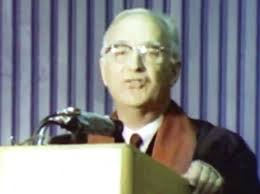
Dr. William Pannell
A cherished friend of mine, Professor William Pannell of Fuller Seminary, is now in his nineties. We met in the late 1960s when as a young seminarian his book “My Friend, the Enemy” spoke powerfully about racism being more than personal prejudice. As friends, he taught me that it was not enough to have a “changed heart.” I needed to acknowledge the enemy we both faced of white privilege, culture and discrimination.
Sermons, workshops, and conferences can be mechanisms of avoidance. Bill speaks of the 1966 World Congress on Evangelism. The theme for the 1966 gathering was One Race, One Gospel, One Task. Evangelical leaders invited more than 1,200 delegates from 100 countries to Berlin for this World Congress on Evangelism (an important precursor to the historic 1974 Lausanne Congress). Pannell speaks of a small group of African American Christians who discover that even though the theme was One Race, One Gospel, One Task, there was a silence about racial injustice. Imagine this in the middle of the Civil Rights struggles of those years. As Pannell tells it, (see: https://www.youtube.com/watch?v=AkpYIg8tpOI) those concerned about this omission confronted the conference leadership and, as is often the case, they were asked to write a document on racism to be approved by the Congress. Pannell then reports, these more than fifty years later, that document must be “sitting on a shelf somewhere.” You see, the passing of a nicely worded document, was not connected to concrete institutional and cultural change. Or as Pannell would have it, “Vital and Biblical evangelization.”
All around we have the opportunity to join in activities to address racial injustice and do more than attend workshop or preach sermons. However, those of us who are now, or have been, a part of Mainline Christian leadership need to learn to listen to and support others. There are some remarkable young persons ready to teach and lead us. Persons who come from different racial experiences. I will share more in future chapters. Urgently now, look for places where persons are addressing the evil of White Christian Nationalism. Check out the upcoming event: https://www.eventbrite.com/e/how-white-christian-nationalism-threatens-our-democracy-tickets-439763242697#search. Then do more. A true addressing of racism involves deep change in the ways our institutions understand, and act differently based on the structural, financial and cultural options pursued.
One of my other heroes was Thomas Broden on the faculty of Notre Dame Law School. Tom joined a team working on an initiative called Project Understanding, back in the early 1970s. It focused on city congregations across the country (Chicago, Los Angeles, Atlanta, Dallas, Indianapolis, Bay Area, South Bend). My work was to carry out research on ways racial attitudes might be changed and how racism in many forms might be addressed.
I recall the day we recommended to Broden that lay persons from many denominations be gathered to study and consider ways to address racial injustice. Tom’s response was “That’s okay as far as it goes.” He had my attention! He went on, “We will want to get them involved in some activity with persons who differ racially and in situations where discrimination can be clearly seen.” In South Bend, one of the activities he suggested was to have lay people sit in welfare offices and observe the cheating going on there. I was appalled – Tom laughed – “Oh, he said, cheaters will be found, but few of them will be those seeking assistance!” He was right, so very right. Today, in Indiana every welfare office must post “the rights of those who seek assistance.” That came directly from the work of lay people in Project Understanding. In Chicago and Dallas, change came from teams who sought to rent an apartment (some teams were White only, some Black only, some mixed racially). After visiting the same apartment and seeking to rent it, the teams would gather and learn about the ways discrimination was seen in the prospect of renting the same apartment. In California, there were engagements with persons seeking immigration or work documents. Sermons helped, workshops were okay, but the research showed that true and lasting changes in racial attitudes were rooted in real and concrete efforts to address discrimination and unjust institutions.
Or, as my seminary preaching professor would put It, “Serr-r-mons are r-r-eminder-rs of where God is al-r-r-eady active in the lives of the people.”
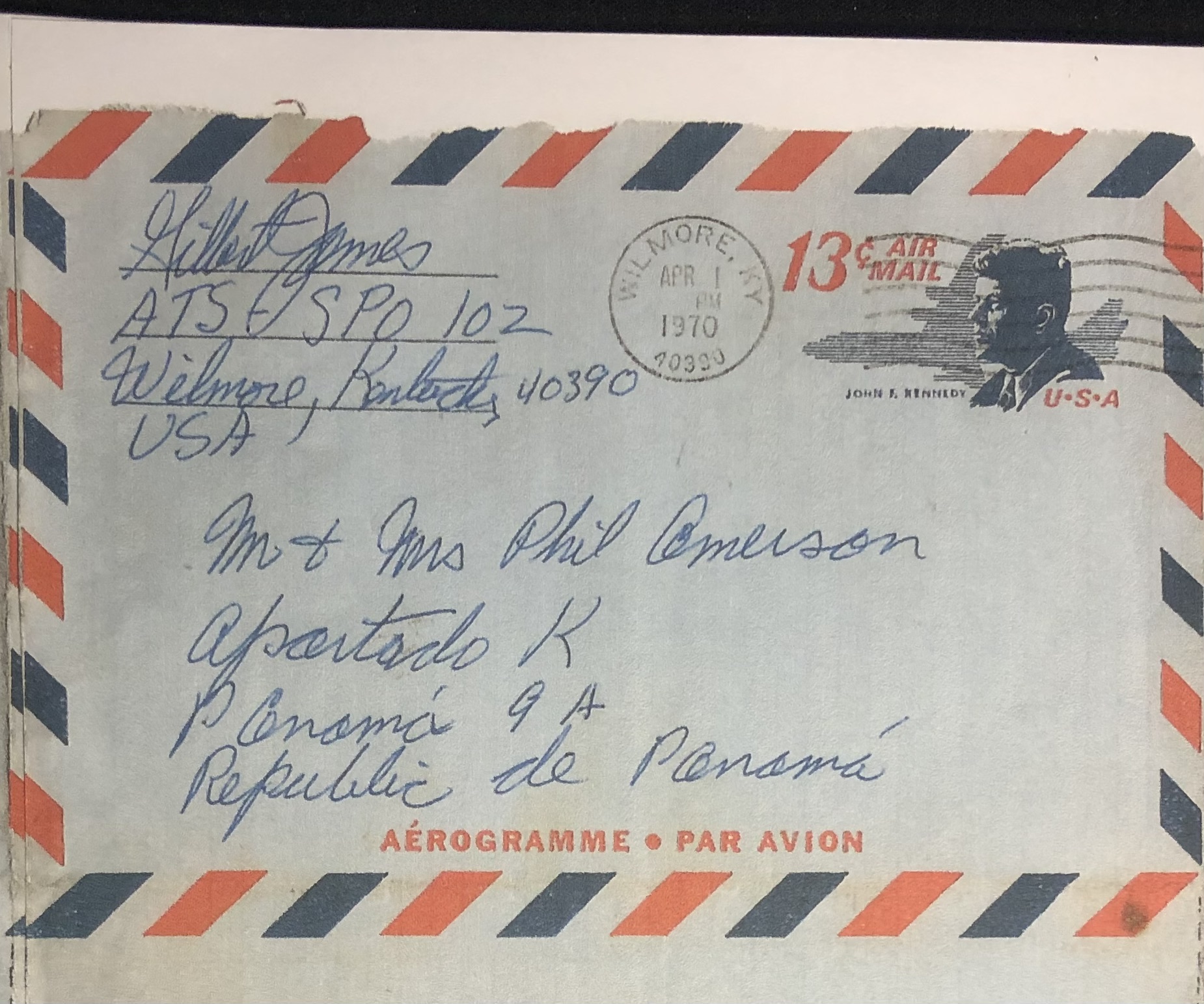
Recently while sorting though an old file, I found the letter from Professor Gilbert James written in 1970. I had taken a leave from my formal seminary education in Kentucky and was in a year-long intership, teaching at the United Methodist School IPA, in the Republic of Panamá. Professor James at Asbury Seminary and I exchanged correspondence during the year. I was taking a reading course from him while away from campus.
Dr. Gilbert James, Used Courtesy of the Archives and Special Collections of Asbury Theological Seminary
In the letter I recently discovered, Dr. James asks that I not share its contents because “if expressed openly on campus would be considered high treason.” Hyperbole is all too comon in the academy. However, I think Gilbert was quite serious. His comments in the letter would have created problems and perhaps even censure.
My spouse, Elaine, and I were in Panama. Back in the U.S. Gilbert was confronted with a “spontaneous revival” which had begun at the college across the street. Others have since spoken and written about the 1970 Asbury College Revival in positive terms. There are, indeed, powerful stories of persons finding emotional and physical healing and being restored in their faith.
What were these controversial comments in the letter? Gilbert writes of his dismay watching folks “getting high on ‘mass enthususiasm.'” As a social scientist, educated in both sociology and psychology, what he observed was a religious fanaticism, interpreted with narrow fundamentalist language, and celebrated with “abysmal Biblical ignorance.” Only that!
Gilbert and Esther James with Abbie Christian Establishing a Work in Indianapolis for the Department of Interracial Evangelism for the Free Methodist Church (circa 1955). (Used with Permission of the Asbury Seminary B.L. Fisher Archives and Special Collections)
Some saw in the enthusiastic fervor at Asbury College in 1970 a great time of spiritual renewal. Gilbert noted there was good, but expressed concerns rooted in his years of experience with such spiritual awakenings. There is irony in the fact that Gilbert James had spent much of his life as an evangelist, attending and preaching in many camp meetings and revivals. Between 1946 and 1960 he was the Superintendent of the Department of Interracial Evangelism for the Free Methodist Church. He knew the genuine article and celebrated it. In 1970 he also was troubled.
Knowing my teacher as a world class provocatuer, I suspect that his fear of being accused of being a traitor to the faith is correct. He might have been charged with something like “high theological treason” in that particular time and place five decades ago — and in many places still today. He saw some of the fanaticism of the events at the college across the street, spilling over into the seminary. My guess is that during the 1970 Asbury Revival his wife, Esther, had to tone him down each evening; although, I suspect she shared many of his perspectives.
With some discomfort I recall that Gilbert was a revivalist. He believed in seeking both personal and institutional renewal. My discomfort is primarily due to the fact that his breadth of theological vision seems to be in short supply in today’s world. Evangelism has been given over to a narrow set of understandings. It has been limited to only a change in an individual — who is being introduced into thinly disguised social and political understandings. Unlike the revivals in the Second Great Awkening, where a wide array of societal injustices were addressed (poverty, slavery, voting rights for women, etc.), there is scant focus on institutional practices that need transformation, apart from a short list that includes fights against abortion and homosexuality.
Gilbert, the evangelist, believed in personal conversion — in transformation, possible through faith in Christ. Such change is affirmed in the letter — but he knew of an evangelism that was much deeper and wider. And he knew of the threats of individualism and fundamentalism that were at play. There were troublesome signs for him in the events surrounding the 1970 Asbury Revival that I don’t believe have been made public before.
So, here, 52 years later I offer this insight into his perspective of the 1950 Asbury Revival. I have highlightedin bold some passages mentioned above, the underlining was his.
++++++++
Letter from Dr. Gilbert James – March 31, 1970 – Wilmore, Kentucty To: Phil and Elaine Amerson – Republic of Panamá
Dear Phil and Elaine,
“Thanks for your good letters and your patience with me… “ [Professor James then writes a few paragraphs about a reading course for Phil.]… The letter then continues speaking of the 1970 Asbury Revival.
“I am sure you have read of the revival and all of the excitement around here with teams going out in all directions – classes suspended – and the academic quarter an educational shambles.“
Letter from Gilbert James to Phil and Elaine Amerson, March 31, 1970
“There were some remarkable individual examples and changed lives and I am grateful for every one of them. There has been, however, I must in all honesty confess, a great deal of shear non-sense that was nothing more than “getting high” on mass enthusiasm. I have never witnessed in my life more expressions of atrocious theology and abysmal biblical ignorance than I heard from the “witnessing” lips of those college students. As a result, we underwent the usual “exorcism of demons” at the college until it was suppressed and now we have the most frightful outbreak of “tongues” at the seminary that we have ever suffered. The word is out that Asbury Seminary is the “Mecca” for the tongues movement. I am just sick about it. The most remarkable aspect of the whole affair is not that it occurred, but rather that as much good was accomplished as was with all the inane and disrespectful antics that went on with it.“
“Please do not write back to anyone about this, for what I am writing to you, if expressed openly on the campus would be considered high treason.” I repeat, I am glad for the work of a sovereign God, in spite of man’s ignorance and sinfulness, but I predict it will be years to fully recover from the unfortunate results that have damaged the reputation of Asbury and reflected on the sound biblical basis of her message.“
“I am right in the midst of the elaborate planning necessary for the Chicago program. We received $50,000 from Lilly for the experiment, and this is our big chance to try to seek some new directions in theological education. After a full day’s consultation with the Minister’s Study Board director of the NCC. He said, in great seriousness, “This is one of the most exciting and unique experiments in American theological education. He has agreed to direct our evaluation of the program and we hope to get a monograph out of it.“
“Love to you both – I must close. Write soon about books you want. Pray for me – please.“
Gilbert James
++++++++++++++++
Teaching in Panamá, I was thousands of miles away from the spiritual, emotional, psychological cyclone richocheting in and around Wilmore, Kentucky. I was far from the events my teacher, Gilbert, saw at close proximity. However, a “spiritual awakening” was continuing for me at the time in Panamá. There I saw more clearly the injustice, racism and violence of institutions and nations. Gilbert James had been insturmental in alerting me of similar structures in the U.S. in my earlier years as his student. In Panamá, these were brought into even sharper relief. I saw, up close, what it was like to live in a nation suffering under a dictator who was propped up by the U.S. I saw the racism institutionalized in the practices of the Canal Zone and the abuses of so called “aid projects” privileging of wealthy, both in Panamá and the U.S. I saw hungry children dumpster diving to have something to eat. And there was the corruption of young women sold into sexual arrangements as teenagers. Evangelization needed to be wider and deeper than “individuals getting high on mass enthusiasm.”
In my review of materials from the 1970 Revival and from reports I recall receiving from others at the time, there were many testimonies about giving up cheating, lying, gossip, drinking alcohol, smoking, sexual petting, premarital sex or persons having an “insufficient prayer life.” It is almost exclusively about individual sins or a shortcoming of one’s self. Where are the witnesses who say, “We must now speak out against racism, war, poverty or violence?”
I do not agree with all of Gilbert’s perspectives, including some in this letter. That would make him happy… and he would, no doubt, want to have a conversation about where we differ and what we might together learn. Even so, I very much believe his call to an intelligent faith that combines personal and social transformation, informed by careful biblical and theological work was right then, and continues to be right today.
I can already hear some saying, but you must begin with the individual, then “changed persons will change society.” My response: Where is your evidence? It has now been fifty years. If you disagree, please point me to how this “revival” made the kind of difference in our society that came from the revivals of the Second Great Awakening. The Cane Ridge Revival began forty-six miles from Wilmore and one-hundred-and-sixty-nine years earlier.
Other “Awakenings” or revivals involved more than an adjustment of personal pieties or individual behaviors and beliefs. For early Evangelicals like John Wesley or John Calvin, institutional changes accompanied personal change. For the Anabaptists, a new personal faith meant a commitment to pacifism and the persecution that ensued. There is the conversion of John Newton who wrote the lyric we now sing as “Amazing Grace.” Newton’s conversion led him to become an abolitionist, after serving as the captian of slave ships. More recently one thinks of the bombing of Coventry Cathedral in England and the ensuing spiritual awakening resulting in international work at peacemaking (See: Fire in Coventry, Varney, Stephen: Hoder and Stoughton Ltd., 1974). Dozens of other examples could be cited; the sadness is that even today Asbury College and Seminary have fallen into the narrow valleys of a tamed evangelism and pursue cultural stances that are more informed by reactionary political elites and shaped by categories of individualism.
Professor Gilbert James and Eugene Carson Blake, General Secretary of the World Council of Churches, Taize Community, circa 1971. Used Courtesy of the Archives and Special Collections, Asbury Theological Seminary.
Gilbert James was way ahead of me in 1970, and I suspect even now. When traveling with him for a seminary class in Chicago, New York, Detroit or Minneapolis, it was always amazing how he nudged us forward to see the broader ecology and the challenges of ministry in urban settings. It was even more astonishing meeting the people he brought to those seminars. Today I think of Letty Russell, Bill Stringfellow, Bill Pannell, George Riddick, Richard Leuke, Stan Hallett and George Weber, to name only a few.
A 1974 article by Gilbert entitled “The Use and Abuse of Power: A Study of the Principalities and Powers” demonstrates his understandings of the challenges Christians face in urban ecologies. He understood the need to seek transformation that is more than individual renewal (http://place.asburyseminary.edu/firstfruitspapers/15/).
My last visit with Gilbert was, I believe, in the fall of 1978. Having finished my doctoral work, I was asked to cover his seminary classes for a semester. My brilliant teacher was decending into early onset dementia. He would die in 1982 at the age of 66. I traveled to the seminary from my home at the time in Evansville, Indiana.
As I walked down a hallway in the seminary’s administration building, there was Gilbert heading toward the mail room. As he approached, we both began to weep. Then he gave me a hug and said, “I should know but I can’t place who you are.”
Ah, Gilbert, my friend, my beloved teacher, what is truly sad is that too few today remember who YOU are!
When the student is ready, the teacher will appear. So goes the aphorism. Another version of this idea, attributed to Buddha Siddhartha Guatama, is: “Teachers are like enzymes. Nature’s go-to facilitators of change.” Even if only partially true, there is much wisdom here — at least in my experience.
Dr. Gilbert James, Used Courtesy of the Archives and Special Collections of Asbury Theological Seminary.
By the late 1960s, my generation in the U.S. were “teacher-ready.” We watched as young men, many of them friends, were being shipped off to an inexplicable war in Vietnam. Too many returning in body bags. State governors stood in univeristy doorways blocking entrance to African American students. We witnessed the assinations of M. L. King, Jr. and the Kennedy brothers. Riots were breaking out in many cities and the emerging “counter culture” saw a growing interest in drug use. Given the availability of “the pill,” a sexual revolution was afoot.
Like other young men, my name was placed in the military lottery; I was one of the lucky ones with a high number, so after college I headed to Asbury Seminary in Kentucky. There I met Gilbert James. He was teaching courses on The Church in Society, Race Relations and Sociology of Religion. The teacher appeared and I was “ready.”
Gilbert James: Free Methodist pastor, sawdust revival preacher, boxer, university professor, union organizer, poet, brilliant social researcher, friend of the poor, worker for racial justice, comfortable in a corporate board room and on skid row. Great “teachers” are not limited to the classroom. Fortunately, for many of us, Gilbert offered graduate-level insights wherever you found him. He challenged us to learn, whether in a classroom, on a Chicago “L” train, in a Congressional office, or, on a street corner in Harlem. Socratic in approach, he would ask probing questions, frame a situation so that those within earshot began to teach and learn from one another. How does one cipher the complexities of this man?
Not far beneath the surface was Gilbert James’ commitment to an historic Wesleyanism that encouraged vital piety, valued knowledge and sought social justice. He was one of several teachers at Asbury Seminary in those years who found ready students. I think of Bob Lyon who helped us explore serious Biblical interpretation and modeled a faith that included deep commitments to nonviolent action.
Gil James spoke easily of personal conversion and Christian experience; after all, he had come to faith by such a personal spiritual journey. However, he was critical of an individualism that ignored the Biblical mandates to love God and the neighbor. He spoke of a church that might live in terms of a “Jubilee sharing” of resources with the poor. He was suspicious of fanaticism and cautioned against the abuses of those seeking power for power’s sake – especially in the church. He had seen enough chicanery in the church and beyond. He knew the dangers of fanaticism when mixed uncritically into the religious life.
Gilbert encouraged us to be “both faithful and forward leaning.” At the same time he wanted us to know our ancestry. James reminded us of the insights of Eighteenth Century Methodists (including Free Methodists, Wesleyans and others). Our legacy included those who opposed pew rentals privileging the wealthy, who supported abolitionist struggles against slavery, who welcomed women in leadership, who encouraged ecumenism and unity, and who practiced peacemaking — often as pacifists.
Gilbert knew of the dangers of individualistic theology and the drift away from a balancing of personal conversion with social justice. In my next blog, I will share a letter from Gilbert written 52 years ago in the midst of an extended revival at Asbury College (a neighboring undergraduate institution to the seminary, seperate in curriculum and faculty).
James knew of the marginalization experienced by religious conservatives and foresaw a time when greivance would spill over and could lead to a insatiable hunger for power and status unmoored from Biblical ethics. He noted the transformation of Fundamentalism into Evangelicalism — that brought a sophistication in the use of political power. It might result, he suggested, in danger for our nation and the ruin of our churches. I remember thinking, as we were reflecting on the writings of Reinhold Neibuhr, that James was being overly grandiouse. Today, I see how on target he was about this threat that faith could to be compromised by a lust for approval and blind acquisition of institutional power these fifty years later.
Over coffee in the seminary cafeteriaI, I recall many informal “debates” with other faculty and students. Such exchanges were common and truly a gift. Students might be asked to “grab a cup and join the conversation.” I recall, one well-known faculty member offering up a common trope used at the time. Assuming the notion that there were two camps in American Protestant Christianity, this faculty member said that “Evangelicals were always rooted in ultimate authorithy of scripture, but Liberals always let the dominant culture set the agenda for their theology.” I recall Gilbert wriley smiling and responding, “Your culture does not set the agenda for how you read the scripture?”
Other exceptional teachers followed (Jackson Carroll, Earl Brewer, Gwen Neville) at Emory University. I then went on to my days of university teaching and Gilbert stayed in touch. In Atlanta, at Candler School of Theology, I helped him bring a group of Asbury students to that city, just as he had brought me as a student to Chicgo, Detroit and New York a decade earlier. He was still learning, teaching, making connections and demonstrating to students the ways a life of faith might be practiced among the institutions of the powerful and the gifts in low-wealth communities that were often hidden.
Gilbert James touched many lives and shaped the work of pastors and laity in diverse places. We found him to be a READY teacher and friend. Still, his concerns about the corruption of Evangelicalism ring true; and, are more applicable than ever. At his funeral in 1982 the great African American pastor and theologian James Earl Massey stood to speak of Gilbert and his influence. Massey summerized my teacher’s greatness in these simple words: He was a “practitioner of intelligent love.” It is my sense that we have a whole new generation of students ready to find such teachers today. May it be so.
Session III: June 15, 2021: Toward a Regenerative and Sustainable UMC
Introduction: Restorative and Joyful Communities
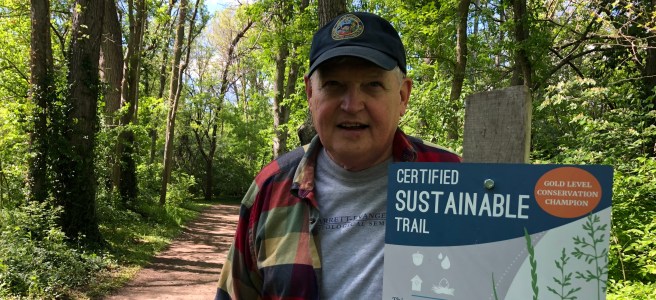
Not far from my home is a walking path designated as a “certified sustainable trail.” It is wide, one of those “if you want to walk far, walk together” trails. As we conclude, let’s acknowledge a sustainable trail for the United Methodist Church is still emerging. We are, after all, God’s church, part of God’s wider economy. We are part of God’s symphony of hope. Many remarkable previous travelers signal us forward. Earlier today we identified these trail markers:
Loving action is our North Star and singular mark of a mature Christian.
Deep evangelization extends across space and time to name, bless and connect.
Each mission site can be God’s mother tree in the social forest where it is located.
The “Root Command” of Love
In 1974, at bicentennial celebrations for Columbia University the world-renowned economist Sir Dennis Robertson was asked a big question, What Do Economists Economize?” Robertson, gave an “astonishing answer: We economize on love.”[i]Nobel Prize winner Edmund Phelps later agreed that indeed altruism is central to any sound economic analysis. As you might guess both economists, went on to say, ‘It’s complicated.’
Long before modern economic theories, Jesus points to love as the source of joyful communities. From John 15:11-17 we read: The Message: 11-15 “I’ve told you these things for a purpose: that my joy might be your joy, and your joy wholly mature. This is my command: Love one another the way I loved you. This is the very best way to love. Put your life on the line for your friends. You are my friends when you do the things I command you. I’m no longer calling you servants because servants don’t understand what their master is thinking and planning. No, I’ve named you friends because I’ve let you in on everything I’ve heard from the Father.
16 “You didn’t choose me, remember; I chose you, and put you in the world to bear fruit, fruit that won’t spoil. As fruit bearers, whatever you ask the Father in relation to me, he gives you.
17 “But remember the root command: Love one another.
Jesus speaks of a love more profound than economic altruism. Moses provides ten commandments (Exodus 20 and Deuteronomy 5). There are 613 Mizvot or commandments in Hebrew Scripture. Jesus reduces the commandments to one, “the root command: Love one another (John 15:17), so that you might have joy and be fruit bearers.[ii]Agape love, a willingness to lay down one’s life for another, is essential to joyful restoration of lives and communities. John’s gospel, was written in Ephesus a few decades after the Letter to theEphesians and comes to a church full of interpersonal struggles, dissension and disagreement. Faith rooted in sacrificial love is said to be the path forward. Disciples were no longer servants, but friends. Ivan Illich wrote of this as conviviality, celebrating an awareness that in love we can make our life today in the shape of tomorrow’s future.[iii]United Methodists find our home as a community of loving activity, a community of friends.
Stories of restoration and joy come bubbling with laughter and hope from our scripture: Ninety-year-old Sarah laughs, Joseph embraces his brothers, mana comes in the wilderness, Babylonian refugees return, Nehemiah announces the joy of the Lord is strength, a prodigal returns home, magi see a star, a baby leaps for joy in Elizabeth’s womb, water is turned to wine, winds of Pentecost blow across the church, and Christ is recognized in the breaking and sharing of bread. Joy and restoration are communal. Solo performances can be lovely and moving, but scientists have shown that it is in choral singing, voices raised together, that sustainable social bonds and personal wellbeing in forged.[iv]
Last month, as I watched Wesleyan Investive (UMDF) awards given to five national Innovative Leaders the joy was evident. One awardee was DeAmon Hargis of The Learning Tree in Indianapolis, (DeAmon is a longtime friend and has been a guest of this annual conference). Years ago, DeAmon noticed folks he identified as neighborhood healers. They practiced generosity and hospitality. They knew how to host parties to celebrate others. Not a party in the church building, but in neighborhood homes.
De’Amon Harges, The Learning Tree
Did someone graduate from school? Get a new job? Retire? Complete an art project? Start a band? Then celebrate and welcome outsiders to join: the police commander, a foundation director, the mayor, a hospital administrator, a school principal. It was a reweaving, a restoration of the fabric of a community. A group of young men, the Cultivating Joy Cypher began to meet and celebrate the gifts and potential all around. Such imagination has been a critical starting point for the investments of dollars in housing, economic development, the arts and small business initiatives As DeAmon puts it “We kidnap people from old routines and bring them together so that they can fall in love with each other.”
Wesley emphasized both personal and communal religious experience. Methodists were to walk with others: classes, bands, societies and conferences. Paul Chilcote writes “Christianity, according to the Wesleys, is not so much a religion as it is a relationship. It is from the outset personal AND social.[v] Excessive individualism distorts Christianity.[vi] Our faith is relational. Our work is God’s corporate work, God’s song, God’s poem in human experience.
Regenerative Root Systems
About 200 miles due south of the Red Wing Barn portrayed in Ted Kooser’s poem is a place called The Land Institute (TLI) near Salina, Kansas. TLI has been much on my mind in thinking of root systems. I had the privilege of meeting Wes Jackson, co-founder of TLI two summers ago.
Jackson left university teaching and research nearly fifty years ago to go back to his home state of Kansas. He shifted from genetics research to investigating crop sustainability and teaching about regenerative agriculture. He later won the MacArthur Fellowship, unofficially known as the “genius award” back in 1992 for this work. Wes works to restore communities in the soil and among humans. Professor Robert Jensen, retired from University of Texas says of Wes, Jackson has perfected the art of “seeing small and thinking big.”[vii] Uncomfortable with traditional religious language, Jackson jokingly describes himself as a 5/8th Methodist! His Methodist roots are displayed as he speaks of a Creaturely Worldview. It is Wes who says, “If your life’s work can be accomplished in your lifetime, you’re not thinking big enough.”
A large photo, perhaps twelve feet long and three feet wide, is placed down a stairway at TLI. It’s two root systems, actual size, side-by-side. On the left are thin winter wheat roots grown and replanted annually less than one (1) meter long. The other, a perennial plant, has roots over three (3) meters long reaching broadly outward. Jackson proposes a mix of wheat, soybean and oilseed (like sunflower) plants grown together as perennials. Imagine the mutual benefits for soil and water preservation from deeper root systems and the activity of diverse plants, with some preventing erosion and others restoring nitrogen in the soil.
From The Land Institute, Salina, Kansas
What do root systems in the Kansas River Valley have to do with the vibrancy of congregations in North Texas? Or, ministry in towns, rural settings or the Dallas metroplex? Imperfect, as all metaphors are, our places of ministry might be seen as regenerative sources for communities and personal lives. What if we sought deep regenerative roots of faith? Do we plow under our ministry investments too quickly as we shift from one strategy to another?[viii]
Being “fruitful” is a fixation for many North American denominations. We do a lot of plowing-under-and-replanting. While understandable, many of these efforts are counterproductive, increasing stress and diverting local, indigenous innovations. Rather than the vision from Jeremiah of a tree planted by water, anxious North America Christians turn to questionable spiritual husbandry. Perhaps, in anxiety about institutional decline, many have been, as the song by country singer Johnny Lee goes, “Looking for love in all the wrong places.” What if we focused on being sustainable as well as fruitful?
Recently a pastor friend of a large church put the challenge succinctly, “Programs that attracted people two years ago, pre-pandemic, are no longer effective. Expectations and attention spans shift month to month. There can be a constant churning. We have learned to take a longer view.” Jim Collins and Jerry Porras in their book Built to Last made a distinction between “time telling” and “clock building” cultures.[ix]Time tellers can tell you the latest industrial fad while clock builders build sustainable institutions.
Change comes to the doorstep of all institutions, including church. Some call it “creative destruction.” Some see a slow and steady entropy, a post-denominational society, a decline to be expected and accepted? I think of Ezekiel’s haunting question looking at a Valley of Dry Bones, “Can these bones live?”
Wes Jackson reflects on the ecology of human institutions saying we quickly seek the “how to?” and insufficiently focus on the “why?” Ronald Heifetz and Marty Linsky distinguish between Technical and Adaptive Challenges. Technical Challenges seek a “how to” response. Adaptive Challenges, on the other hand, require new discoveries, more imagination and an adaptive leap for a culture. Adaptive Challenges require a look at core mission and the “why” questions.[x] Have too many of our ministries lost the “why” behind our activities?
Several years ago I directed a mentoring program for pastors. At our first gathering, apprentices were placed in one group and the mentors in another.[xi] The apprentices were smart, thoughtful, energetic, committed folks, typically younger, though not always. Their early conversations were about what they were accomplishing – new programs and successes. Voices brimmed with a confidence.
Meanwhile, down the hall very different conversations were unfolding. The mentors demonstrated what I came to call the “three-experience-based-attitudes:” encouragement, forgiveness, and laughter. Apprentices were confident, even prone to a little bragging. Many of the apprentices were emerging as righteous interrupters. Among mentors there was confession of failure as mistakes and lessons learned were shared, stories of regret often followed by words of forgiveness. There was laughter, and sometimes tears. This pattern seemed true in class after class. I now see mentors regenerative connecters. They were perennials with an ability to adapt and keep growing. Their roots were deep and wide. Encouragement, forgiveness and laughter. Over a year, as apprentices and mentors prayed and dreamed together, the joy of a common calling bubbled up. They learned the truth of the adage that leadership is often better caught than taught. A community of joy was born.
If we had time, I would tell you of similar patterns among lay persons that I have witnessed. Gene, blind from birth, and Carol his spouse offered their infectious joy that helped sustain and restore an old core-city church as new, younger members were attracted to the journey unfolding in that congregation. They were generative root system that sustains this faith community.[xii] These folks were clock builders.[xiii]
Fifty-three years ago, here is Dallas, Dr. Albert Outler preached at the birthing of the United Methodist Church. “The heart of the gospel is startlingly simple,” he said, “that God loves you and me and all [men] with a very special love and that Jesus Christ is sufficient proof to this love.”[xiv] Outler challenged United Methodists to be true Protestants — reformed and ever reforming.[xv] He closed the sermon, “This is the day the Lord has made, Let us really rejoice and be glad in it[xvi] – glad for the new chance God now gives us: to be a church united in order to be uniting, a church repentant in order to be a church redemptive, a church cruciform in order to manifest God’s triumphant agony for all [humankind].”[xvii]
Albert Outler, United Methodist Uniting Conference
Like the early church in Ephesus or Eighteenth Century Methodists, today, there are multiple obstacles, threats and challenges. Let me suggest that considering the questions of sustainability, we need to think about the far horizon for the church and not just about the next General Conference.[xviii] If we are to develop sustainable ecologies, we will move beyond the patterns of sickening denominational self-concern.[xix] We must shift from denominational preservation to be mindful of the opportunities for witness all around whether reducing racism, welcoming the stranger, addressing economic injustice, or protecting our natural world.[xx]
So, there is much work to do. Would I advise throwing a few more parties and inviting strangers to join? Yes. Should we celebrate righteous interrupters and regenerative connectors who build communities of restoration and joy – Yes, definitely!
When considering the challenges that too easily appear to impede our future, to block our flow, I am reminded of
Wendell Berry’s poem, Our Real Work.
It may be that when we no longer know what to do
we have come to our real work,
and when we no longer know which way to go
we have begun our real journey.
The mind that is not baffled is not employed.
The impeded stream is the one that sings.
—Wendell Berry, from Standing by Words. Counterpoint, 1983
Albert Outler called for a cruciform way of proceeding. We know from our Gospels that “Those who try to gain their own life will lose it; but those who lose their life for my sake… will find it.) It is paradoxical. So, here are my seven paradoxical endnotes for a reshaping or re-imagining of the United Methodist Church:
The trail markers noted here are:
Following the Jesus of scripture leads to Christ alive today;
Stepping away from Christendom is a step to being church;
Calmed and converted to Forever-Beginning-Disciples.
God loves each as none other and God loves all equally;
Strong local hub trees interconnect to global forest;
Diverse, linked, perennial roots encourage, forgive and laugh;
The impeded stream is the one that sings.
The calling for United Methodists today is to ripple and splash with delight in one an other’s company as we reinvent our ecology in interconnected and restorative ways.
Samuel Wells writes of A Future that is Greater Than the Past in this way “The church is a work of art. God is the artist, who makes the church, through the action of the Holy Spirit, in the form of Christ, out of the material of human beings… The church is not beautiful in a detached, distant sense: but if and when it is well and honestly made, it exhibits that overflow of presence that generates joy.” Reflecting on Ephesians (2:10) Wells says “we [the church] are God’s ‘work of art,’ or perhaps better, ‘God’s poem.’”[xxi]
[ii] My father lived to be 92. In the last decade of his life, when greeted and asked how he was doing, he would answer, “I’m rejoicing.” Those who knew, him knew it to be true. A pastor friend shared that his mother who would often say, “I have the rhythm of rejoicing.” Personal joy is a good and holy thing. As John’s Gospel, Ephesians and, yes, Albert Outler suggest to truly rejoice and be glad in this day the Lord has made will involve a community of loving activity, a community of friends.
[iv] Launay, Jacques and Eiluned Pierce, “The New Science of Singing Together,” Greater Good Magazine, December 4, 2015, available at https://greatergood.berkeley.edu/article/item/science_of_singing. See also, Dina Kraft, “In Israel, Singing for Social Harmony,” Christian Science Monitor, February 12, 2019. In Isreal in recent years there is an event known as Koolulam that brings Israelis and Palestinians together to sing. The musical director, Ben Yefet, directs the crowd with this instruction: “If you can’t hear the person singing next to you, you are singing too loudly.” Available at: https://www.csmonitor.com/The-Culture/Music/2019/0212/In-Israel-singing-for-social-harmony
[v] Chilcote, Paul Wesley, Recapturing the Wesley’s Vision, (Downers Grove, IL: InterVarsity Press, 2004) p 20. Chilcote proposes that Wesley’s vision comes in eight conjunctions, starting with Free Grace, Inclusive Love, Shared Experience and Enthused Disciples,
[vi] Bellah, Robert, et. al., Habits of the Heart: Individualism and Commitment in American Life, (Berkeley: University of California, 1985), 221, 235. Robert Bellah’s book Habits of the Heart, identifies the growing phenomenon in 1985 he called Sheilaism He writes of this is an individualistic understanding of faith. Radically self-focused, the sole determinate for each person’s beliefs is a home-made theology. It is a DIY (Do It Yourself) faith, popularly expressed in the phrase, “I am spiritual but not religious.”
[vii] Jensen, Robert, “Intellectual Grounding: Podcast from the Prairie,” add link: Also see Jensen, Robert “The Restless and Relentless Mind of Wes Jackson.”
[viii] I would assert local community ecologies have far deeper roots than easily seen on the surface. As Willie Jennings said, there may be a lot of “unused gospel” we have missed. Or, as the line in the Kooser poem suggests, “The good works of the Lord are all around.”
[ix] Collins, Jim and Jerry Porras, Built to Last: Successful Habits of Visionary Companies, (New York: Harper, 2004).
[x] Heifetz, Richard and Marty, Linsky, Leadership on the Line: Staying Alive through the Dangers of Leading (Boston: Harvard Business School Press, 2002), 31.
[xi] In this mentoring program for pastors, we had to determine who were mentors and who apprentices. After considering several formal research approaches, a remarkable Roman Catholic sister and university administrator advised, “Just ask.” Ask denominational leaders and lay persons to name parish pastors who have done their work effectively with grace for seven or eight years and which ones showed promise as apprentices. So we did. As we welcomed each new group into the mentoring program, an interesting pattern began to appear. We quickly saw, that for most, there was a distinction between time tellers and clock builders.
[xii] Gene and Carol were interrupters, connectors and ambassadors of joy in a congregation I served. Each Father’s Day we held an ugly tie contest. Men were asked to wear their ugliest tie to church. I was always nervous that someone might be chosen who didn’t know about the contest, who just wore ugly ties. I recall the year Gene gathered a piece of elongated orange cloth and several white balls of cotton. He asked Carol to sew these onto an already disgusting looking tie. It was, he said, his “rabbits in the garden” motif. Gene won that ugly tie contest — for the third consecutive year. In his acceptance speech he said “Now that I have won for the third year, I will now retire from entering in the future. I just have too much of an unfair advantage.” Laughter filled the room. You see Gene was blind from birth.
Carol played second base on our church softball team. Occasionally, early in the season, before other teams knew Gene, Carol would help position him behind the catcher. Someone would tell him to announce, “Play Ball!” He would then act as the umpire calling balls and strikes. Seriously, there were a couple of games, early in the season, when he went through the first three batters before the other team caught on! Laughing he would say he was doing better than most major league umpires! Helped to return to the bleachers, he would loudly cheer the exploits Carol and the team. They assisted that church in rejoicing at the gift of being Christ’s community. On Sundays there was no pretending. Rarely could a visitor leave worship in this city congregation who wasn’t first welcomed by Carol and Gene. Carol would follow up with a note shortly thereafter. They practiced a generative, life affirming love, an ability to treat others with dignity and respect and thereby assist us all in remembering the community in which we were privileged to worship. I am convinced that these two joyful disciples were a critical reason this urban congregation has grown in mission and ministry.
Or, I think of a pastor who understood the importance of communities of joy. The first holiday season in her new appointment, she watched as hundreds lined up in freezing weather for an annual charity giveaway – a few groceries and a frozen chicken. Leaving her office and going outside she visited with folks waiting in that line. Later she thought, “We can do better than this.” Shortly thereafter she shared her concerns with the congregation’s outreach team. Some old-timers were offended. Who was this new pastor anyway? She listened, explained her concerns, and suggested more conversations. They met again, prayed and talked, and prayed some more. “Those who stood in line were not our clients,” she said, “they are persons with names, families, stories. They are part of our community.” Slowly a new idea emerged. First, they would visit and invite some neighbors to join in planning. The next year a “holiday store” replaced the frozen-chicken-give-away. Several neighbors who only a year before stood outside, now volunteered as fellow workers. Many neighbors received vouchers and were invited to come and “shop” for items of new clothing, toys and food. That day, no one stood outside. Everyone was inside. Carols were sung, laughter filled the hall, some helped wrap gifts. ALL were neighbors.
[xiii] Herman B Wells was a member of the parish in Bloomington, Indiana. A cradle Methodist, he was president, then chancellor of Indiana University over several decades. Herman was a rotund, brilliant man who enjoyed good conversation. His eyes danced as he shared from his encyclopedic memory. During one visit he winked as he said, “It is important to think about things in fifty-year blocks.” Chuckling, he added, “Of course it helps if you are ninety-five years old!” As Herman was at the time.
[xviii] I believe parish ministry, denominational witness and shaping the future of the church as one-hundred-year work. I have been inspired by religious and social movements beyond Methodism. Movements like the Danish Folk School movement begun in the late 18th Century, inspired by Lutheran Pastor N.S.F. Grundvig. This movement focused broadly on democratic education of the peasantry in the arts, literature, music, sports, dance, gardening and what he called “the living word.” Over the next century social and cultural realities in Denmark were reshaped. So much so that a century later a majority of the Danish legislature were graduates of a folk school. While we hold dear our heritage, we must also be open to what I believe was Dr. Outler’s evangelism and ecumenical project and what Professor Edgardo Emerick Colon suggests when he writes The Future of Methodism is not Methodism. Wes Jackson, for example, reminds us of need to reduce our dependance on energy-rich-carbon extracted from our soils, trees, coal, gas and oil.
[xix] As to unity, we have work to do. As to ecumenism, I find myself agreeing with Professor Edgardo Emerick Colon, that The Future of Methodism is not Methodism. When we focus on the words of Jesus in John 15 we need to remember that just two chapters further on we have the prayer of Jesus that his followers might be one. https://www.ministrymatters.com/all/entry/10112/the-future-of-methodism-is-not-methodism
[xx] Jensen, Robert, The Restless and Relentless Mind of Wes Jackson: Searching for Sustainability, Lawrence: University of Kansas, 2021, p. 31. Noting our personal and social insatiable appetite for lifestyles built on energy-rich carbon, he says homo sapiens as a “species out of context” (page 2) Soil, timber, coal, oil and gas – resources from ancient sunshine and trapped in the ground – have eased our labors, providing wealth and comfort to many. This he says, is our “carbon imperative,” or as his friend and co-author, Bill Vitek puts it, rather than human-nature, we would better speak of ours currently as “human-carbon nature.” (pages27-28). If we are a species out of context in the natural world as Wes Jackson suggests, the pandemic in 2020 revealed North American Christians may be a faith group out of context. Might we find ways to live more fully in terms of our “human-spirit-nature”? Wes Jackson quips “The only way to save our souls is to save our soils.” I want to argue that inverse is also true: “the only way to save our soils is to save our souls.” Both are required. Scientists report this winter that over one-third of the carbon rich topsoil in Corn Belt in the Midwest (nearly 100,000 acres) has been completely lost. See University of Massachusetts Amherst. “Corn belt farmland has lost a third of its carbon-rich soil.” (See ScienceDaily, 15 February 2021. Source: http://www.sciencedaily.com/releases/2021/02/210215160227.htm.)
[xxi] Wells, Samuel, “A Future That’s Bigger than the Past,” London: Canterbury Press, 2019, pp 126-127.
Regenerative Imagination: Connected to Bear Good Fruit
Presentation #2, North Texas Annual Conference, July 15, 2021
On June 4, 1941, C.S. Lewis preached one of only seven sermons ever believed to be preached by him. It was at University Church, St. Mary’s Oxford during the height of the Second World War. (See the June 4, 2021 issue of Church Times for more on this.)
Lewis suggests that knowledge and wisdom grow in precisely those places where we are uncomfortable, including the repellent parts of holy scripture; and that, if we’re not puzzled, then perhaps we are just painting God in our own image. He calls all of us to do the intellectual hard work of getting outside our comfort zones.
He recognised that, even in 1941, it was a post-Christian England. However, he argues “if there is a divine being and the offer of eternal life, then we would do well to realise that there is no such thing as an “ordinary” person. Even the dullest and apparently most uninteresting person we encounter may one day be a creature of extraordinary glory, and this should shape everything: the way we conduct our friendships, our lives, and, of course, our politics.”
“Next only to the Blessed Sacrament,” he says, “our neighbour is the holiest object presented to our senses; and that is a great antidote to the kind of rudeness which we often show towards one another.”
Yesterday we talked of love as central to United Methodist theology and practice. Today, we look at connections where love is practiced today. See below. (The document will be posted for smaller devises in full later.)
Let’s Talk! Attached below is a pdf copy of the first of three presentations shared at the sessions of the North Texas Annual Conference on June 14, 2021. I have no doubt that many will come to the question of “Does United Methodism Have a Future?” with a set of expectations that will be unsatisfied by these presentations. This is the dilemma of speaking to a situation in flux and an institutions under stress.
St. Andrew UMC, Plano, Texas
For many years, and continuing to this day, some believe there is a formula, a key, a right set of practices or doctrines that will solve the question of the declining influence and relevance of Christendom in our world. However, any fair-minded reading of our context and the complications of modernity, requires an admission that the old domination of Western religious institutions is rapidly passing away. No religious group is immune from this loss of influence and apparent relevance. (The largest Protestant denomination, Southern Baptists, are in the midst of dramatic decline in membership and attendance.)
United Methodist congregations come in many shapes and sizes (nearly 30,000 of them in the U.S.). We have multiple hospitals, child care, social service and education facilities across the nation. For example, over one hundred United Methodist institutions of higher education are scattered across the country. They are marks of the vision and commitments of past generations. Even so, United Methodism does not have the influence or cultural reach of the past. United Methodists have been growing in other parts of the world (Philippines, Africa and elsewhere; even in these global places growth is slowing).
For many years the mistaken belief was that the conservative or traditionalists were the growing center of North American Christianity. Some sophisticated social scientists who wrote about this ascendancy of “the Evangelicals,” as an inevitability. Sadly, United Methodism, was too often led to believe that aping the theologies and practices of these conservative groups would be our salvation. United Methodism was often distorted and focused in ways that were not true to our theological DNA. As it turns out now, taking a longer view, it appears that all denominations and theological camps now have declining numbers and influence.
I believe there is a faithful way forward for Christianity and the expression of it known as United Methodism waiting to unfold. These talks are NOT a blueprint for how to rebuild a denomination; rather they are in invitation to other sojourners to walk together acting in ways that would seek to follow the lead of Jesus.







 Hands of the Strong