Turning Bad News to Good

First, Confess The Sin of Racism

xrayview
Racism in Plain Sight*

It is a clarifying moment… The x-rays are back from this laboratory.  These hypothetical x-rays come from Super Tuesday of the 2016 presidential primaries.  And what can be seen in these images?  There it is — the often hidden, not-so-attractive, practices and support of racism.  Surprisingly this racism comes from those who call themselves Evangelical Christians.  It is painfully clear.  Support for racial bigotry and discrimination is all too apparent in the way they vote and self-identify. 

The voters have spoken: Donald Trump won seven of the twelve primary elections in states.  He claimed the largest percentage of the so-called white Evangelical voters.  Just hours before these elections Trump dodged questions about support he was receiving from the Ku Klux Klan and David Duke, a well known white supremacist.  In what has become a typical media ploy, after he winked his appreciation for the racist support, Trump then changed his tune, saying that he had always opposed racism and, in typical form, he attacked the media saying that he was again being mistreated.

Can there be any doubt that behind the scenes and often breaking into the open racism has been employed to weaken the presidency of Barack Obama?  Like many things, few people are as articulate in identifying such realities as is poet, novelist, conservationist Wendell Berry.

8972.jpg
Wendell Berry**

Berry writes: “A good many people hoped and even believed that Barack Obama’s election to the presidency signified the end of racism in the United States.  It seems arguable to me that the result has been virtually the opposite:  Obama’s election has brought about a revival of racism.  Like nothing since the Southern Strategy, it has solidified the racist vote as a political quantity recognizable to politicians and apparently large enough in some places to decide an election…

Nobody can doubt that virtually all of the President’s political enemies would vehemently defend themselves against a charge of racism.  Virtually all of them observe the forms and taboos of political correctness.  If any very visible one of their own should insult the President by a recognized racial slur, they would all join in the predictable outrage.  But the paramount fact of this moment in the history of racism is that you don’t have to denominate the President by a recognized racial slur when his very name can be used as a synonym.” (Wendell Berry, Louisville Courier-Journal, September 15, 2015.  See more at: Berry, Revival of Racism.

I was stuck by a recent report from the Southern Poverty Law Center that provided the recent history of active hate groups in the United States.  During the first eight years of the twenty-first century there were roughly 150 groups such as the Ku Klux Klan, White Nationalist, Racist Skinhead, and Neo-Nazi.  Their numbers changed very little in the period between 2000 and 2008.  However, in 2009, following the election of our president, the number of hate groups rose to over 500 — and today there are nearly 1,000 such groups in the United States!

I am not saying that white Evangelicals are all racists.  Still it is more than a little suspicious that there is not more resistance among these folks to Mr. Trump’s dog whistle to the racist fringe.  I still remember visiting a family farm, shortly after the election of Mr. Obama.  These were good people, church going folks, active in state politics.  I have known them for years.  As we talked my friends began to share email “jokes” about our president.  The language was crude, ugly, bigoted and demeaning projections.  It was raw, blatant racism in the depiction of our president. I was stunned — didn’t join in the laughter and spoke only a halting word of disagreement.  In hindsight, I wish I had said more.  In hindsight, I understand there are such “God fearing” folks and how they could vote for Mr. Trump.

In his insightful study One Nation Under God Kevin Kruse of Princeton University outlines the way the Christianity shifted in the twentieth century to become a public spiritual spectacle, useful to politicians and corporate leaders to pursue their goals of power and wealth.  Kruse cites William Lee Miller of Yale Divinity School who spoke of the American people who followed their president, Eisenhower, and “had become fervent believers in a very vague religion.”  (Kruse, p. 68)  Or, as Robert Bellah put it, “Is this not just another indication that in America, religion is considered a good thing but people care so little about it that it has lost any content whatsoever?” (Kruse, p. 68) This vague religiosity has been filled with many things — and as Evangelicalism has gained ascendancy too much of the “vague” content has been long on self concern and short on self criticism.

The vague content of American Christianity — Evangelicalism in this case, has been filled with patterns of thought and behavior that have almost no connection with the message or life of Jesus the Christ.  In fact, the vague content has been filled with shabby self indulgent understandings that are amazingly at odds with the Sermon on the Mount or the Lord’s Prayer

xraybrain

What would a beliefs x-ray show about a person’s real commitments?***

I do not seek to salvage this word “Evangelical.”  The damage, the identity theft, has been done.   Such a project belongs to others.  Thankfully, they are already at work and know it will take generations to correct what has gone amiss.  As suggested in an earlier post, these elections provide an x-ray into the flawed theological and faith perspectives of such Evangelicals. Sadly, the x-ray comes back saying the illness is at a critical stage.  This religiosity is shaped more by culture, history and prejudice than it is by the scriptures or sound theology.  Honestly, it is more a folk religion than a coherent faith practice.

What are we to do?  What is the church to do? In his column, “The Governing Cancer of Our Time, ” David Brooks speaks of the rise of authoritarianism (Brooks, Governing Cancer).  Over forty years ago, I served as part of a national research project on the church and racism.  In this work we discovered the connections between authoritarianism, status concern and racism in its various forms.  The question became how should the church, the People of God, respond?

We learned three important things:

  1. The church — especially the leaders in the church — must say NO to racism.  That which is obvious and that which is more subtle.  I wonder what difference it might have made if religious leaders and political leaders had stood up against Mr. Trump’s “birther” comments in 2008, or every year since?  One can’t help but think that the current dilemma of the Republican Party was brought about by their own silence and disrespect all along the way.
  2. Sermons and study groups alone have little effect on changing racist attitudes or behaviors.  (Sorry about this preachers and teachers.)  However, when sermons and education are combined with activities that engage parishoners with persons of a different race, especially activities that seek cooperatively to address racism, real change is possible.  We saw it in Chicago, South Bend, Fresno, Dallas and Los Angeles.
  3. Finally, a denomination’s commitment or congregation’s commitment to battle racism can be measured by the way budgets are made and expended.  In 1974 we found that almost all congregations reported they spent more on toilet paper or light bulbs in a year than they did on efforts to address racism.  Nothing much has changed over these four decades in this regard!

Silence.  Vague content to our faith.  Low commitment to change as evidenced in our practices and budgets.  These things, good reader, may be among the reasons for our current embarrassment.

Phil A

++++++++++++

Attributions:
  1. *Women viewing x-ray. Copyright: http://www.123rf.co/profile_rmarmion’>rmarmion / 123RF Stock Photo</a>.
  2. **Photo of Wendell Berry from newsinfo.iu.edu, (Indiana University media)
  3. ***Simulated x-ray of brain. Copyright: <a href=’http://www.123rf.com/profile_scottff72′>scottff72 / 123RF Stock Photo</a>
     

When Good News Becomes Bad News

The Evangelical Embarrassment

Evangelical

Agata Gladykowska, stock photo


The presidential primaries of 2016 are an embarrassment — to our nation, to thoughtful public discourse and, perhaps most tragically, to the witness of people of faith.  This trend has been underway for quite some time.  In an earlier post, I wrote of “Christian identity theft.”

Today is the so-called Super Tuesday, March 1, 2016.  Primary elections are being held in twelve states with hundreds of delegates in play for both political parties.

Over and again it is reported that the Evangelicals are a crucial and determining voting block.  The New York Times this morning says that “Donald Trump’s success with evangelicals is expected to help him dominate” in several of these elections.  REALLY?

The vileness and ugliness of this primary, especially on the Republican side, is so full of meanness and junior high potty mouth jokes as to make mud-wrestling look like a noble enterprise.  But most troubling for me is the use of that word “Evangelical.”

Sadly, this primary has proven to be a DNA test, or an x-ray image, showing the actual make-up and inner organs of many who claim to be Evangelicals.  Really?  Donald Trump represents the best hope for the future among people of faith, the desire to have a God-fearing nation?  Really?  Or, the juvenile, divisive and snarky comments of Mr. Rubio or Mr. Cruz — are these the marks of an “Evangelical?”  Thank God, there are Mr. Kasich and Carson who represent something better; but they seem to have little appeal to those who call themselves “Evangelicals.”

Compass&amp;Bible
For Evangelicals the whole of Scriptures was 0nce the guide
Wavebreak Media, stock photo

Evangelical at one time spoke of a person who believed the good news of God’s love for the world, each one and all.  An Evangelical once was a person who sought to follow Christian scripture, especially the major themes.  Today it has been distilled down to a test on two or three current cultural issues, abortion and gay marriage mostly. 

The x-ray machine which is the 2016 Republican Primary, shows that the core of the Biblical story is either ignored or little understood by this group, who claim the name Evangelical. Things like the care of God’s creation, the welcoming of strangers and refugees, sharing with the poor or living a life of service have dropped out of the body.  These organs critical for life have disappeared.  In its place, Mr. Trump and others have substituted fear, racism, xenophobia, distrust and envy.  Good news has become bad news.  This look inside those who call themselves Evangelicals suggests a perhaps incurable soul sickness, a brokenness.  I fear it is a sickness unto death.

Evangelical has been a word of richness and diversity.  Many won’t understand, but Hillary Clinton, as a United Methodist, stands as much (or more) in the classical definition of Evangelicalism as do any of the Republican candidates.  As a United Methodist her heritage links her to the work of John Wesley and Martin Luther.  While both were men of their age — I think it is clear that neither would recognize what has been going on in these primaries as in any way “Evangelical” in its basic theological DNA structure.

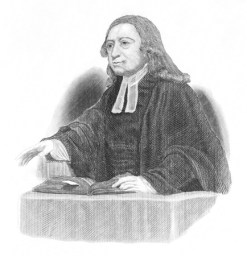
John Wesley
John Wesley (1703-1791) Engraved after original artwork by J. Jackson

Having served as president of a school called “Garrett-Evangelical” I have sought to understand this word and place it in its historical and proper theological context.  The categorization that has been done in recent decades has resulted in a division that seems to allow no breadth of understanding.  I consider myself a “progressive-evangelical,” a place to stand that is, I believe, consistent with Luther or Wesley in their day or millions of Christians outside the U.S. today.

It is tragic that the word has been turned inside out, upside down and backwards in contemporary American thought.  Too long the word has been defined by Fox News and talk radio — too long certain preachers have used the word to divide rather than to heal.  Too long, well meaning pastors and bishops have remained quiet, allowed others to commit identity theft.  Too long, well meaning pastors have said, “It is in God’s hands, you don’t have to worry, it will all work out.” Perhaps it is their own fear that prevents them from speaking against the ugliness of this mean-spirited time.  And now, not surprisingly, “we have sown the wind and are reaping a whirlwind.”

Of course, all of this didn’t happen over night.  In his excellent column, The Governing Cancer of Our Time, David Brooks speaks of the distance we have traveled from our political and civic heritage and speaks of our current situation as “anti-politics” (Brooks, Governing Cancer).

In this column, Brooks notes that politics as a constructive art is in retreat and authoritarianism is on the rise world wide.  What might the church say in such a situation?  Where might Evangelicals seeking to be true to the deeper and richer meaning of the tradition find a constructive voice?  Stay tuned — more to follow.

Phil A


Of Blessed Memory

“OF BLESSED MEMORY”

Only yesterday I was thinking of the three words spoken all too often these days — “Of Blessed Memory.” This is a phrase that typically follows the mention of the name of a friend who is now deceased.  That list among my friends “of blessed memory,” sadly, continues to grow.

Little did I realize that today, less that 24 hours after this awareness, I would speak those words about two GREAT women — Harper Lee and LaVerta Terry. They were both 89 years old — they certainly experienced life over the same decades, yet in very different ways.  I think they probably saw the world – its joys and challenges – in similar ways and would have been dear friends had they met.  Both will remain among my greatest teachers.

Harper Lee

harper-lee-02929
Harper Lee 1961 Monroeville Courthouse

Time Life Pictures/Getty Images

Although I met Harper Lee only through her writing and the occasional news stories about her, I felt she was a friend.  We had a mutual friend, Thomas Lane Butts.  Tom who for years would visit with Harper weekly would keep me updated about Ms. Lee.  A treasured book on my shelf is a signed copy of To Kill a Mockingbird that he arranged for me during one of his weekly visits. I did meet Harper Lee’s older sister, Miss Alice Lee, at a church event over twenty years ago.  Every United Methodist active in denomination-wide activities knew of Miss Alice.  She was that remarkable lay leader and attorney from Monroeville, Alabama.

Harper Lee won a Pulitzer for To Kill a Mockingbird in 1960 which was an immediate success.  I can still remember reading late into the night while a senior in high school, caught up in the drama surrounding the trial of Tom Robinson in the fictional town of Maycomb, Alabama.  It was fictional but I knew it was about real life, real bigotry, real threats, real racism.  I loved picturing Scout, Jem, Boo and and most of all Atticus Finch in my mind’s eye.

So, it was a quite a joy this past year to read Go Set a Watchman, a

33973d3671642c141e5ef909cba487020df8c7a2
Harper Lee 2006

novel that was written prior to Mockingbird.  It was not as polished… and less idealistic.  It was not published back then.  Too bad.  In Watchman, Good and evil are not as easily separated… and Atticus?  Oh, sadly he turns out to be more true to real life as he buys into the racism of the town — for a larger “good.”  Alas.

I must say, however, that I found Watchman to be a great read, full of humor and a clear-eyed view of life.

LaVerta Terry

56c7ed3599a07.image
Source: Bloomington, Indiana Herald Times

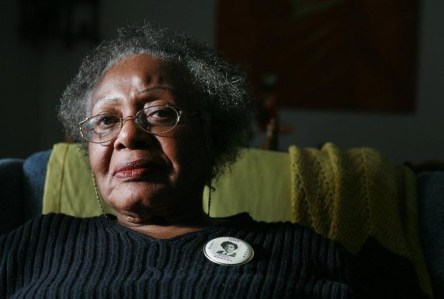
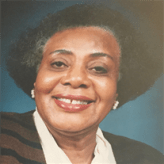
LaVerta Terry became my friend and mentor when I served as her pastor in Bloomington, Indiana.  You can catch a glimpse of her dignity, intellect, her direct manner and memorable presence in this brief piece: https://www.youtube.com/watch?v=oRrZTKik8L8

Nothing was better for me than hearing LaVerta Terry laugh — and usually at my expense.  She would tease and I would tease right back.  She usually won. However, one evening when Elaine had other commitments, I asked LaVerta to accompany me to the opera at the Indiana University.  (The opera is one of the great gifts of I.U. and LaVerta was a fine musician.)  When we arrived at the auditorium, LaVerta looked at me and said “What will people think, the two of us out on a date.”  I was ready for her and replied, “Don’t worry, they will think you are Elaine.” LaVerta was still laughing at the end of the first act.

In 1963, LaVerta Terry was the first African American hired by Public Schools in Monroe County.  Twenty years earlier, in 1944 she had won a scholarship to the Indiana University School of Music.  The remarkably sad story is that she had won first place in auditions with the Metropolitan Opera; however, when she arrived at I.U. with her luggage, she was denied a place in the dormitory because of her race.

Sadly, the persistent racial discrimination she found led her to complete her bachelors degree at Jarvis Christian College after some study at Tuskegee Institute.  What a sad story and yet she was a great spirit.  Later she became Assistant Director and Director of the Groups program at Indiana University.  This program focused on encouraging and supporting racial ethnic minority students, most were the first generation from their family to attend college.  Her students now are in places of leadership all around the world.  When I was pastor in Bloomington, I would often meet them and hear of the way Mrs. Terry had been a “difference maker” in their succeeding at the university and in life.

Laverta-Terry-1455972308 My friend La Verta Terry taught me much.  Mostly, she tried to teach me to speak the truth about difficult things with grace, elegance and style.  I will never match her in this; but often I can hear her voice in my head cheering me on.  And, like many of my dearest friends, she knew how to be a loving critic if I said or did something she thought might have been handled better.  LaVerta, lived on the other side of the white-privilege Harper wrote about.  They both knew the bitterness of racism and shaped beauty and meaning from the ugliness.


There are many, many others about whom I speak of with the words “Of Blessed Memory.”  Mostly I speak these words about folks I knew, some very well, and folks who shaped me for the good.  People like Daphne Mayorga Solis, Carl Dudley, Earl and Ethel Brewer, Stella Newhouse, Bob Greenleaf, Clarence Jordan, Scott Lawrence, Ernie and Polly Teagle, Ray Dean Davis, Bob Lyon, Gil James, Dow Kirkpatrick, Parker Pengilly, Liz Shindell, David Stewart, Jerry Hyde, Kenda Webb, Will Counts and Jane Tews… I am realizing this list could continue on and on.  It does.  Yes, the list goes on and on.  It is called “the Community of the Saints.”  Blessed are we who have known them, in person or otherwise; blessed are we indeed.

(You can read more about Tom Butts in the February 4, 2015 post Southern Exposure.  See: https://philipamerson.com/2015/02/04/hands-of-the-strong-southern-exposure-people/)

An Ecological Dawning?

An Ecological Dawning

I am an early riser, one who enjoys watching the sun spread across the sky.  This morning I couldn’t help but consider it a metaphor for the new light I believe is on the horizon regarding our environment.  One reason for this is the reading I have been doing of late on this topic.  Yesterday, it was my honor to preach at Wesley United Methodist Church adjacent to the campus of the University of Illinois.  It was called a “teach in” as part of a national focus on faith and the environment.  I believe a new day is dawning in terms of public awareness and constructive action.

IMG_1327

It is not my intent to offer a reprise the sermon here.  Instead I have attached a link to a copy for those who are interested.  Here is my take away.  First, we face enormous challenges as a society, as a global community.  The damage has been severe, it will be difficult to reverse.  NASA now suggests that climate change is our nation’s most serious security risk.  Note the changes in the Arctic as our early warning system.  (The Petermann glacier in Greenland is receding more than twenty miles a year!)   Increasingly we are seeing a link with floods, wild fires and drought.  We will have more than fifty million environmental refugees by the year 2020.  This doubles the number of the estimates just twenty years ago. 

I know the dangers of climate change are very real — difficult (some say impossible) to reverse.   On the other hand, there are signs of hope, a dawning of awareness among nations, corporations and the general public.  It is my sincere hope that the U.S. Congress will one day soon catch up with the scientific evidence.  As the research is overwhelming clear, the Paris agreements are tentatively in process, and corporate and technological leaders are investing billions of dollars toward constructive change, it is our duty as citizens to press the case with Congress.  The cost of solar and wind energy continue to drop in price.  

It was a joy to be with a university community and see the commitments made by that congregation.  I spoke with several students who indicated a deep appreciation for the sermon — but more importantly a personal commitment as future engineers, chemists, business leaders and farmers to a different way of thinking about our economy and ecology.  Hooray for the gifts of great universities!  (Look for a post soon challenging the larger church to rethink our investments in and valuing of campus ministry.)

I know that change will be difficult.  Actually, it calls for a conversion — an ecological conversion, on the part of individuals, the culture and the economy.  The witness of people of faith is essential as part of any solution. All people of faith – especially the local church… these communities will need to find voice on these matters. As Pope Francis demonstrated with the issuance of the encyclical Laudato Si, Christians can bring a perspective, insight and inspiration for the future — for the dawning just ahead.

For the complete text of the  sermon, see: WesleySermon – Feb 14, 2016

Upsidedowning: Inauguration 2017 Ups or Downs

Upsidedowning and January 20, 2017

One year from today — January 20, 2017 we will be watching the inauguration of the next President of the United States.  Trump? Clinton? Cruz? Sanders?  One of the others?  All flawed.  Some seem to threaten the very fabric of our democracy.   I am often asked by younger folks (you know, folks who are 40 or 50 are YOUNG to me) if I can remember a time when political conversation was this, well, nutty, this far off the rails, this unhinged from facts.

WhiteH8015375_sThe honest answer is NOAbsolutely not.  I remember well the campaigns of George Wallace, Gene McCarthy, Ross Perot, John Anderson, and I remember my high school infatuation with Barry Goldwater.  None of these are comparable.  This is a time when facts seem to matter little.  Anger, make that rage, is in vogue. 

It is as if our national identity, our political assumptions about integrity and well reasoned analysis of the national and world situation has gone down a rabbit hole.  We have entered a period of UPSIDEDOWNING.  What once was up is now down and…

whitehouse$20163804_s

Ridicule of others is now the currency to win votes. Wealth is either a measure of ones value or decadence.  No space is left for the virtues of thoughtful dialogue, learning, humility.  Intemperate statements are valued by the electorate.   Reasoned and careful action by the current president is seen as weakness.  No, I don’t recall a time like this in my memory when behavior like that of a junior high school bully is seen as a positive credential for a future president.

Of course there is a history as to how we got to this place.  Persons, it seemed on all sides, decided it was better to demonize others than find common ground.  You add the complexities of a modern world with 24/7 news coverage and throw in a large dose of racism, bank malfeasance (see or read THE BIG SHORT) and economic uncertainty and you come to the presidential race of 2016.

So, what’s a person to do?  Honestly I don’t know — I have no big idea.  I do remember the bumper sticker that read “If you think education is expensive, try ignorance!” 

Here is my small modest proposal.  You and I, good reader have one year, 366 days (its leap year) to engage persons at a local level with good caring but critically factual conversation.  My pledge is to every day speak to at least one person, preferably someone whose opinions differ from mine, and see what I can learn.  What do I need to know to be a better citizen? And, of course, what can I share that encourages another person, perhaps a stranger, to understand that we are neighbors – even when we disagree.  This might do a little bit to lower the temperature on the language that continues to boil over into vitriol. 

I will do other things, of course, to help the candidate I believe who can best move us out of these mean-spirited times and contribute to our being a place of honest and constructive disagreements.  It is what is called democracy.  Depending on how high the stakes may be, I may do a lot besides talking with my neighbor and stranger trying to bring more light than heat to the political dialogue of our time.  But for the next year (or until next November’s elections) I pledge to work toward honest, factual dialogue… that builds up rather than destroys.

My sense is that our nation can ill afford to elect a president who will encourage us to try ignorance.  The stakes are too high — the world is too complex.  We need cool wisdom and not hot revenge to make it through the challenges ahead.  Meanwhile, I tell my young friends, those under 50, that “NO, I have never seen a political season like this; and, it is time to seek factual information and to speak honestly and respectfully.” 

This is the stuff (honest dialogue and respectful disagreements) of a healthy democracy.  This is the way to RIGHTSIDEUP our national life.

What you take into your Hands, You take into your heart

Via Hand and Heart: Part II

9364084_s
The Knotted Gun sculpture by Carl Fredrik Reutersward, United Nations, New York

 December 14th, 2012.  Sandy Hook Elementary School, Newtown, Connecticut.  It has been three years — such horror.  If there were ever evidence that we are following a misguided path regarding access to guns in our nation, Newtown is the evidence.

Twenty-seven murdered.  Children, teachers, a principal — all sacrificed to our nation’s inability to think or act rationally to protect the innocents.

In the early autumn of 2013, ten months after the tragedy, I was invited to preach in a congregation in downstate Illinois.  During the sermon on the text of “reaping and sowing,” I spoke of our inability to address the gun violence in our culture.  At that point, ten months after the Sandy Hook murders, Congress was still unable to offer even the slightest form of intelligent response of healing or hope for an alternative approach.

Following the worship service a well-spoken gentleman approached.  He didn’t appear angry but he did begin by saying he wanted to disagree with the sermon.  “Okay,” I said, “Please share; I am eager to learn.”  At this point he said that I should not have mentioned guns — “talk about violence, if you must, but when you make it ‘gun violence’ you make it political.  People can also hurt others with a knife.” He went on “if more people were armed the innocent could be protected from the crazies.” 

I was speechless, frightened really.   I didn’t want to have an argument right there in the fellowship hall.  A long pause followed.  I prayed.  He was obviously a sincere, intelligent man — one who had the courage to speak of his disagreement.  After what seemed like an eternity, I reached out and took his hand, still not knowing what to say.  Then, these words came, “How long have you worshiped fire arms?  Is it possible that you may have substituted trust in guns for trust in God?”  To my surprise he squeezed my hand and instead of taking up the argument he said, “I’ll have to think about that” and dropped his head.

Later I found out that this man was active in state politics… If he changed his perspective on the gun lobby his work would be in jeopardy.  He too was frightened.

The scripture lessons at Christmas tell the story of the birth of Jesus, yes.  There is more.  This story continues as it moves toward the story of the slaughter of the innocents and Jesus’ family becoming refugees to avoid his murder.  Herod sends out word that all the male infants should be killed.  I am reminded of the cover of the New York Post the day following the Sandy Hook tragedy.

tumblr_mf2xwj6iFj1rv4aqro1_1280Congress continues to give more protection to gun owners than to the innocent ones who face the terror of sick, troubled and misguided folks who find it easier to own a gun than have a license to drive a car.  We are not helpless… even in the face of difficult odds against change.  Let me suggest that you look to the work of the Brady Center at Brady Center to Prevent Gun Violence.

In Part I of this reflection I spoke of the movie Witness and the scene where the grandfather Eli is speaking with young Samuel about the gun he has found.  He says to the child “What we take into our hands we take into our hearts.”  This is one of two scenes I will always remember.

When the movie first came out in 1985, I was teaching an urban studies class for future pastors in Chicago.  One afternoon the class went to see the movie and then came back to discuss it together.  There were about twenty students in the class, approximately half of them were from the Mennonite or Brethren traditions.  The other students were a mix of Presbyterian, Baptist, Reformed and Methodist. 

The discussion turned to the second unforgettable scene for me from the movie.   It is near the end of the film.  Gunmen come to the Amish farm to track down and kill Detective Book and members of the Lapp family who witnessed a murder in Philadelphia.  What ensues is dramatic, haunting and amazing all rolled into one.  I won’t spoil you by giving you the ending of the movie, but I want to share the reactions from my class to one scene in particular.  The grandfather is facing an approaching gunman.  He looks into another room where Samuel can see him as he motions.  Grandfather Lapp’s hand is out at his side, clenched and moving slightly up and down.  The boy understands and runs to perform the unspoken task. 

In the debriefing of the movie Witness with that class in 1985, I asked how many thought the grandfather was signaling for Samuel to go ring the bell to gather the neighbors.  All of the Mennonite and Brethren students raised their hands.  I asked how many thought the signal was to go get the gun… almost all of the rest of us thought it was signal to get the gun.

The difference in what was seen by the two groups continues to haunt.  One group had grown up knowing the power of community when faced with danger; others of us had learned to prefer force and power.


What you take into your hands, you take into your heart.

Via Hand and Heart: Part I

9364084_s

The Knotted Gun sculpture by Carl Fredrik Reutersward, United Nations, New York


The movie Witness opens with eight year old Samuel Lapp (Lukas Hass) witnessing a murder.  Philadelphia detective John Book (Harrison Ford) questions the boy.  What did he see?  Detective Book is aware that young Samuel is now in danger.  As the plot unfolds, the detective is shot identifying a suspect; still he manages to drive the Amish boy and his mother to their farm. 

Upon arrival in Lancaster county, Detective Book collapses from his wounds.  He is now in the care of this Amish household/community.  Two scenes from this movie are particularly thought provoking for me.  The first scene is of Eli, the grandfather (Jan Rubes) talking with Samuel about the discovered gun.  Witness Youtube video: Eli and Samuel.  Eli says to the youngster “What we take into our hands, we take into our hearts.”  The scene is a too easy summary of one pacifist’s philosophy — still it carries power when thinking of the violence in our modern world.

In the wake of Paris, San Bernardino, Charleston, Colorado Springs, Newtown… [This list of the massacre of innocents can go on for pages] what will we take into our hands and hearts?  Thus far in 2015 there have been more than 40 mass murders in the U. S.  Of these, two involved persons claiming Islamic motivations.  Of over 12,500 gun deaths thus far this year, 19 were done by persons claiming a perverted radical Muslim identity.  We in the United States now have more guns than people.  To what end?

Congress is so controlled and manipulated by the gun lobby that all sensible legislation is blocked.  A majority of Americans are seeking restrictions on gun ownership and usage.  Does this change any thing?  No.  Background checks?  Nope.  This week there was a vote asking that those who are unable to fly, who are on a terrorist watch list, be restricted from purchasing guns.  One would think this is an easy “yes”, right?  No way!   Can we limit the purchase of guns designed for military style use?  Nope.  Limit the amount of ammunition in a cartridge?  Not a chance.  Have electronic finger print control allowing only the licensed owner to fire any new weapon?  Are you kidding?  Not in the U.S.!  We are suffering from a suicidal social addition.

In Indiana we have the added burden of being the major supplier for the armaments sold that are used in the murders on the south side of Chicago.  Will the Indiana legislature act to have universal background checks on gun purchases?  You know the answer — it is “No, no, no.”

At Liberty University this week, Jerry Falwell Jr. encouraged every student to have a handgun — this as part of what a Christian should be about in these days.  He praised the ability to have a concealed weapon and said this would take care of our “Muslim problem.”  Alas.

Two of my friends made cogent responses to Mr. Falwell.  Let me close this Part I of “What we take into our hands” by sharing links to these.   My friends Will Willimon and Sara Wenger-Shenk give us perspective on how we proceed.  They help us better understand what it means to respond to Falwell as a different brand of Christians.

See Willimon’s at: Pistol-Whipped Preacher

See Wenger-Shenk’s at:Practicing Reconciliation

 gun-166507_960_720


The Great Identity Theft of 2015

The Great Christmas Identity Theft of 2015 

The devastating assaults in Paris have shattered our best hopes during this season.  I was traveling the day following this tragic time and couldn’t help but marvel at the way persons sitting in the airline terminal transfixed by the television images from Paris.  The usual noises of travelers hurrying through the terminal were muted.  We were all distracted.  Fear and anxiety overwhelmed any sense of normalcy.  Then, our worst fears about the future of terrorism seemed confirmed by the murders of innocents in San Bernardino.  Terrorists assault.  They kill and gravely wound unsuspecting civil servants at a holiday party. 

How do we respond to such evil.  What can we learn?  How will we find a way forward when there are appropriate fears about the future.  One healthy response is to seek to learn more, to understand more, to gain knowledge of the situation.

Who are these misguided murderers?  What motivates?  Why do they choose these suicidal theatrics.  We want to know who is doing this and what are their motives. This is all healthy and appropriate.  It is needed information.  And what can we learn about Islam and this radical apocalyptic cult — this ISIS or ISIL?  Important this is, all of it.

Still, isn’t it intriguing that during these days of terror, we hear volumes from the experts about Muslims — who they are and how they behave — while at the same time there is little or no consideration about who is a Christian or how Christians might act at this time.  The media are full of analysis about Islam.  Good.  knowledge is helpful; as one of my mentors would say “facts are our friends.”

It may be as important, make that more important, to consider what it means to be a Christian in this time.  In the seasons of Advent and Christmas 2015 we hear again the Jesus narratives.  His life and words are captured in carols and story and sermon.  What is there to be learned from this narrative about retaliation, revenge, exclusion, bigotry toward those who are different? 

It is interesting that on the same day that Pope Francis announced the beginning of Year of Jubilee as a time of mercy and reconciliation, Donald Trump is loudly and adamantly speaking words designed to stir up fear and set up new systems of discrimination.  Many people in this country seem to agree with him — in some places, places where there are strong “Christian” environments, there may even a majority who agree with The Donald.  

What has happened?  Most of those who seem to agree with Trump would be quick to say the United States is a Christian nation.  Really?  There is grave danger here.  If we are to choose the way of discrimination toward persons of a different faith, this is a danger I would label identity theft.  Someone is taking the basic elements of what it means to be a Christian and substituting a cheapened, debased form of shallow and self-serving religiosity.

It is not up to me to say whether Donald Trump is a Christian or not.  He says he is, “I attend church on Christmas, Easter and special occasions.”  He says that if he is elected president he will be “the greatest Christian representative ever to be in the White House.”  His faithfulness and the ways he acts on his beliefs are between him and God.  However, he doesn’t get a pass on his easy claims.  How do they match up with the story of Christmas?

9931687_sNo, it is not my call to determine whether Donald is a Christian… but we do know a great deal about who and what a Christian is expected to be from the scriptures and the great traditions of the church.  Racism, bigotry and calls for revenge displayed by too many just don’t square with the person and teachings of Jesus.  Right now — as we gain knowledge about others, equal care needs to be given to thinking clearly about what it means to be a Christian.  Certainly the calls to exclude persons from the United States based on a religious test is unconstitutional.  That is easy.  For me, however, it is more important to ask, is it Christlike?

We are warned at this time of year to guard our credit card information.  We are told to be careful giving out information about social security numbers or family background.  Someone might steal your identity and this would be disastrous.  I want to warn of an even greater identity theft that is underway — it is a theft of what it means to be a Christian.  Guard this closely.  The loss of this identity might be even more damaging than having one’s credit compromised.  The loss of this identity may close down important options that will be needed in the future if we are to find a way past this current wave of terror.

Fear is a powerful thing; so is knowledge.  It is critically important in these days to know more about Islam — what is true and what is false?  Let me suggest that it is even more essential, for those of us who make the faith claim that we are “Christian” to consider carefully what this means — what is true and what is false? 


An Advent of Sustainability

A Sustainable Advent: Integral Ecology

Dateline – Paris, November 30, 2015:  It is the first day of Advent and the leaders of nations around the world gather to seek ways to address the dilemmas created by Climate Change.   While there are some who believe that concern for the climate is antithetical to economic prosperity, there is a slow and steady awareness among business leaders that an alternative to this old either/or model can emerge. 

Interestingly this environmental summit begins on the first day of Advent.  Advent is a season filled with of stories of exile and a longing for home.  It is a time of waiting and watching.  Paris, touched so recently by terror, knows something about the challenges of exile and the welcoming of strangers

For me, the question of Climate Change is a leading edge of growing faith understanding.  This issue is a way I continue to “learn to learn.”  Sustainability is another way of speaking of the human responsibility to provide enduring care for God’s creation.  So… Advent is a time to wait, think anew, and reconsider my beliefs in the light of new lessons from scripture and science.

On my desk is a copy of the encyclical “Laudato Si” offered this spring by Pope Francis. The subtitle of this fine document is “Care for Our Common Home.”  Drawing on the witness of the pope’s namesake, St. Francis Assisi, we are encouraged to seek an “integral ecology.”  Care for the earth, it’s creatures and all human beings is one, indivisible task — it cannot be separated into parts.  Our commitment to care for the poor and stranger among us is related to our care for the earth; they are one focus. [Link to Ladato Si: Care for Our Common Home]

For years I have pondered the power and beauty of scriptures related to the the creation.  The call for an integral ecology is another way of saying the deepest spiritual themes of scripture and faith are interconnected.

I think of Genesis 1, where we are told that God sees everything that has been made and announces “behold it is very good.”  I consider passages like the 24th Psalm (“the earth is the Lord’s and all that is within it”) or the majesty of Psalm 104 or 148 — or Isaiah 40.  All of these passages are linked speaking to how we are to relate to our neighbor — especially the widow, orphan and stranger.  Our Christian scriptures culminate with Revelation 21 which speaks of the fulfillment of creation as a new heaven and a new earth.  

For me, the most haunting passages comes in the eighth chapter of Romans, one section of which reads: “We know that the whole creation has been groaning in childbirth right up to the present time.”  It goes on, “Who hopes for what he already has?  But if we hope for what we do not have we wait patiently for it.”

Advent is a time of waiting… in hope… and then taking steps toward a more integrated way of living as people of faith.  This is a time to ask and answer some hard questions, no matter your stance on how to proceed.  [Link to: NY Times: Short Answers to Hard Questions about Climate Change]

Sadly, there are climate skeptics who deny both science and these compelling scriptural injunctions.   Many in the U.S. Congress are voting against the plans that will be offered by the current U.S. administration this week.  Sadly, these skeptics do not offer any alternative ideas.  They simply deny the science — and the scriptures.  Leaders in more than half of the states are suing the administration over this climate care agenda.  Okay, congress and governors, disagree if you will; however, offer some alternative.  Especially if you make claims about being persons of faith.  At least speak to the matter of stewardship and God’s desires for the care of the earth.

If one is an intelligent Christian, this season of Advent is a time to think carefully about God’s call for us to care for creation.  The science regarding the dangers of climate change is compelling.   Even if it were not, we persons of faith are to be good stewards of all we have been given.  If you are a person of faith and cannot support the Paris proposals, then speak clearly about alternatives as to how we should live with care and respect for creation.  Advent is the perfect season to think this through and then begin to offer alternatives in the new year.

If, like me, you are both a person of faith and trust the science, then we may have the greater task.  How can we help others understand?  How will we live?  What will we do to bring about change.

One encouraging sign comes from persons in the corporate world who are ready to help address the climate crises.  Microsoft co-founder Bill Gates will be announcing the creation of a multi-billion dollar clean energy fund, tomorrow, November 30th, at the opening of the Paris summit.  This announcement comes after and in addition to his announcement this summer that he was investing more than $2 billion in renewable energy that will encourage both “productivity and sustainability.” 

Early reports are that several others are joining Mr. Gates in the creation of the clean energy fund; however, many donors wish to remain anonymous because there is still a considerable lobby of persons who are climate change skeptics among corporate leaders. 

This skepticism and resistance is changing, and apparently quickly, Steve Schein, a former CEO and now professor in the business school at Southern Oregon University has recently written “A New Psychology for Sustainability Leadership.”  In it he suggests that more and more business executives are displaying an ecologically informed worldview — a worldview that for many of them has been nurtured since childhood.

IMG_1030
2015, Pines in Yellowwood Forest

Several years ago a friend took me on a hike that led to a grove of trees in Indiana’s Yellowwood State Forest.  It is a wonderful natural cathedral.  The white pine planted in the mid-to-late 1930s are now over 100 feet tall.   This grove is still a spiritual place for me.  It is an Advent place — my Advent wreath —  where I pray and think.

It is more than a place to think and pray.  You see, as lovely as these trees are they are dying too soon. 

Planted by the Civilian Conservation Corps, they are in an area that is often swampy and this forest lacks the necessary biodiversity of the wider forest and ground coverings all around.  Still, this grove of pines is far better than the land there previously; land that was eroding and abandoned due to the Great Depression that so scoured the region in the 1930s.  Something had to be done then… and it was.  These trees, now one of my favorite cathedrals, were planted over 80 years ago.  This was a temporary fix, perhaps only lasting 100 or 150 years.  It does, however, give space for further ways the natural world might, groaning as in childbirth, bring yet another season of beauty and hope.  Even if it is only a temporary fix, success at the Paris summit needs to be a part of our Advent prayers in 2015.


Unwrapping an Early Christmas Gift

Christmas 2015: A Pageant of Imagination

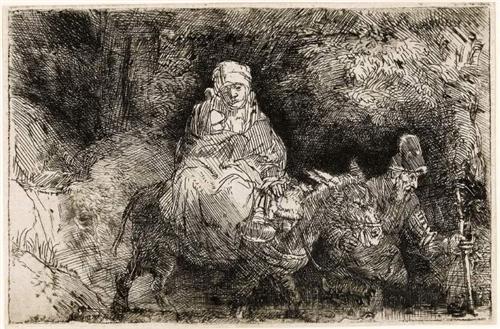
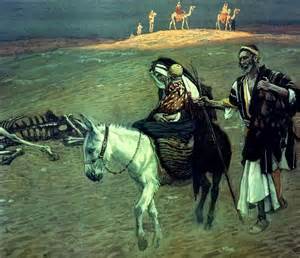
How will church nativity pageants be different in 2015?   Should we check the visas of Mary, Joseph and the baby Jesus before they process down the church aisle?   Or, should they be detained before they sit beside the manger scene in the chancel?  After all, these three family members were “outsiders” threatened by terror.  They were vetted by the authorities and found to be dangerous.  As a result, they became refugees.

You remember this part of the story, don’t you?  As a nation we in the United States seem to forget or perhaps simply say, “Well, that was then and this is now.”  Right?  Well, no, not really.

the-flight-into-egypt.jpg!Blog

Rembrandt’s rendering of “The Flight into Egypt”


The fears generated by tragic events in Paris this past week have resulted in U.S. political leaders loosing their ability to think clearly.  To call the response “knee-jerk” is disrespectful to knees everywhere!  The ignorance and intolerance displayed by folks like Donald Trump are not worthy of a great nation like ours.

Suddenly, our greatest fear is the 10,000 Syrian refugees who are being forced by terror to seek new homes?  While Jordan, Lebanon and Turkey are accepting millions of displaced refugees, we proud Americans, who are an ocean away, can’t welcome 10,000 who have been screened for nearly two years — and these are persons who are going to be placed with resettlement organizations most of which are religious groups with long histories of working with such refugees. 

Members of the House of Representatives quickly pass a bill that is designed to target persons based on their religion.  It is an astonishing nod to the bigotry and ignorance of the cheap seats in the American electorate.  It has been said by many and it is true — “we are better than this.”

However, rather than writing a screed on the small mindedness behind the statements and legislation that has been proposed, I choose to believe that these events just might be an early Christmas present, waiting to be unwrapped.  An early Christmas gift to be shared at our Thanksgiving dinner tables.  There is the opportunity here for imagination, for those who will be guided by thought, prayer, a clear-eyed view of our history to offer another version — not of who the Syrian refugees are, but who we are, especially if we are persons of faith.

I think of heroes like Colorado Governor Ralph Carr, who was faced with the demands of the Roosevelt administration to set up detention camps for Japanese Americans in his state.  Carr, a conservative Republican was shaped more by his Christian faith than political expediency.  He said, “No, not here, not on my watch” and he paid the price of losing an upcoming election to the U.S. Senate.  Today if you visit Denver you will see that the state judicial building is named for Ralph Carr in recognition an ethical clarity, drawn from  his faith, that allowed him to stand for justice against the popularity of bigotry on the march.

If you watch the news carefully, you will see politicians already coming to terms with their reactive bigotry.  News speak is that they are “walking back statements made about Syrian refugees.”  The mayor of Roanoke, Virginia is an example of one who had to change his suggestion that we go back to camps like those used to detain Japanese Americans during WW II.  Presidential candidate Ben Carson now says he regrets speaking of the refugees with a rabid dog analogy.  Fear is a powerful emotion mixed with self-interest in which human beings sometimes get lost in the worst of our impulses.

These events, put together, provide the occasion to think more holistically and imaginatively about how to proceed.  Should we accept Syrian refugees that are carefully screened.  Absolutely, YES… and I think we should welcome even more. 

HOWEVER, this is only a start — there are dozens of other things that might be done in the United States and in other parts of the world to humanely address this crises.  How do we assist those in Jordan and Lebanon and Turkey who have borne the brunt of the tragedy in Syria?  How do we assist those in Europe facing these challenges?  Now is not the time to play the tortoise by hiding inside our shell.   

The nations of the world no doubt will make increasing military responses to ISIS.  There are arguments to be made as to what might be done and how.  Again there will be dozens of ways to respond.  As for me, there will need to be a witness against war and violence — as our continuing “go to” solution to every dangerous and hostile situation.  Didn’t we get here by trusting too much in overusing the military as a solution to everything?

th

James J. Tissot’s “The Flight to Egypt”


This week, let’s join one another in unwrapping an early Christmas present at the Thanksgiving table.  Make this your early gift — encourage imagination.  Help others remember that our Christmas pageants are more than little parades of children in bathrobes and silly hats.   Laugh, play and retell the Christmas narrative in fullness, including the parts about a refugee family driven from their home.