Whitsun Walks

Pieter_Brueghel_(II)_-_The_Whitsun_Bride_(Sotheby's_2013).jpg
Whitsun Bride, Pieter Brueghel the Younger

Whitsun Walks

Yesterday, I walked from meeting to meeting.  I had lunch with a Pentecostal minister; confided with a United Methodist pastor; participated in a planning meeting with a Baptist, a Jew, and a Buddhist; and completed the day conversing with a Roman Catholic layman.  It seemed right, this visiting with such a diverse group of folks.  My meetings were a “getting ready”… ready to move, to be led by the Spirit to new places of discovery.

Today we have arrived at the eve of Whitsunday (Pentecost Sunday), a celebration Christians call a moveable feast.  (Whitsunday is celebrated on the seventh Sunday following Easter.  Since the date of Easter changes from year to year so does the date of Whitsunday.)   I consider Pentecost a moveable feast for another reason – it is our call to new places, new understanding, new language.  Whitsun Walks occur in communities across the world, especially in Europe.  These walks, or parades, traditionally take place on almost any day in the week following Whitsunday — but Friday is a favorite.  The Whitsun Walks typically end with a community-wide party.  You see, Whitsuntide festival is a time of new beginnings — marriages are often are scheduled, crops are typically in the ground and graduation ceremonies abound.  Folks are in motion. 

Across Europe there are still vestiges of these Whitsun Walks in Italian, British and German towns.  Sadly, as commercialism, and its inevitable secular shadow, reach across these cultures, Whitsun Walks have diminished and in many places have disappeared.   In Great Britain, such festivities have largely been replaced by a fixed day, appropriately and ironically known as Bank Holiday, which is set on the last Monday in May.

Might we reclaim the week ahead (and the year ahead) as a time of Whitsun Walks?  Our world needs to remember the gifts of the Spirit set in motion at Pentecost.  We need a time to look around, all around, and see the gifts in the smiles of friends, to laugh, to hear the aria of the nightingale and thrush at dusk, to revel in the rich tapestry of music, language, art and to grow with the insights from multiple spiritual sources.

It was heart-breaking this past week, the week before Pentecost, to see the images in the Holy Land.  The celebration of the new U.S. Embassy in Jerusalem this week is a picture that is the very opposite, a reverse image, of the stories we read of the first Pentecost.  This week, folks of wealth and privilege gathered to congratulate one another on the opening of the new embassy in Jerusalem.  Only a few miles away, others who differ in culture, physical appearance and faith commitments were protesting.  There were more than fifty deaths and hundreds of injuries while the elites in power were giving one another high-fives. 

Both groups — those protesting in Gaza and those celebrating in Jerusalem are imprisoned.  Those in Gaza are trapped by unemployment and horrible living conditions.  They are trapped by a history many of their leaders helped create over decades of failed negotiations, broken promises and the heartless oppression from Israeli practices.  They are trapped by an inability to move past the physical and ideological fences and barriers that prevent migration to a place of greater security and opportunity.

Those who were celebrating the new embassy are trapped by arrogance and bigotry, horrible theologies and a foolish trust in economic and military power.  Some of this bigotry not only condemns all others to hell, now and in the future, but serves to daily undercut, ever more deeply, the prospect for a lasting peace.  This trap has become a never-ending cycle of fear, violence and retaliation, followed by new fears. 

Whereas the folks at the first Pentecost were able to communicate across divisions that separated peoples in the ancient world, the celebrants at the embassy opening seem to have lost any common language that speaks of hope, vision or the true source of human power.

It is amazing to see “Evangelical” pastors baptizing this embassy with their prayers and simultaneously condemning the rioters only a few miles away — persons they do not know.  Do they not know, for example, that there are tens of thousands of the Christian Palestinians in the Holy Land and there are hundreds of thousands of Palestinian Christians in diaspora? (See Richard Mouw’s To My Fellow Evangelicals, Richard Mouw.)

So we pray for peace; but we must also walk.  I do not oppose an embassy in Jerusalem — but at what price?   The decades of promises of a two state solution, of Jerusalem also being an international city, a capital city for both Jews and Palestinians, may have been permanently erased as a possibility.  We not only pray — we must walk — keep moving — keep learning from and about others.

If there was any movement in Jerusalem this week it was in the wrong direction.  Tomorrow across the world, Christians will read from the second chapter of Acts, the story that recounts how persons from diverse backgrounds were drawn forward by the Spirit into a new community.  These early followers of Jesus were known as People of the Way.  Too many of us today have become People of the Fence, or People of my Same-Ole-Stuck Place

It is a challenge for we humans, who have adapted to the power of fear, to act out of love for the stranger.  The early Jesus followers certainly had reason to hide, to protect themselves, to cluster in ever smaller worlds of kinship.  However, the hope of the Resurrection or the power loosed at Pentecost required risk.  Even when there is not clear path ahead, we walk — by faith more than sight.


Pentecost Lost… and found

Pentecost Lost… and found

Light the candles, sing the songs, cut the cake, burst the piñata — it’s a birthday.  Laugh, dance, tease, shout out “Many Happy Returns!!”  WAIT A MINUTE… Which Birthday is it?  PENTECOST?  Where?  What if the gifts of Pentecost go missing this year?  Shouldn’t we send out a missing feast day alert?

Pentecost is said to be the birthday of the church.  Why celebrate the Spirit first unleashed two millenia ago?  Should I wear red on Pentecost Sunday, May 20, 2018 as in other years?  Perhaps not.  Scanning the international, national and ecclesial horizon, there is little evidence such celebration is in order or that Pentecost will have much of a season in our world today.  Pentecost has gone missing.

The Pentecost Season in the church is to last several months.  It is when we read some of the greatest chapters in Christian scripture —  Acts 2, Ezekiel 37, Romans 8, Psalm 104, Galatians 3.  And, the most reiterated word (and theme) in these passages? It is “ALL,” as in “EVERYONE,” “EACH TOGETHER.” 

Here is the core identity of church, the basic DNA of God’s people.  In these texts it is made clear — God includes all persons.  Further, we are to love and protect ALL of creation.  Francis of Assisi had it right — we indeed are relatives to brother sun and sister moon.  Pentecost is about including, renewing, accepting, out-reaching.  It is about creating community and not simply talking about community. In Pentecost we learn the meaning of neighboring with God and with one another.

Romans 8 speaks of all creation groaning in B+Pentecost+Acts+02_17+No+2new birth.  The work of the Spirit is about new life, addition to our social fabric and our communities of friends.  It is not an excluding or dividing.  Rather, Pentecost passages include, extend, restore.  Like the dry bones in Ezekiel, this is a focus on that which has been separated or torn asunder being made whole.  God’s heart in any Pentecost celebration is about inclusion. 

If the word “All” were to be left out of these passages, they turn to gibberish.  Or, if words like “everyone,” “each,” or “every nation,” “every tongue” or “all flesh” were to be omitted, Pentecost vanishes.  No need for celebration, no call for many happy returns — Pentecost would drift away, vaporize, disappear.circle-312343_960_720

At a national level, in the U.S. today, Pentecost may have gone missing.  The preachers who affirm the mean and divisive ways of this president, have missed the story and meaning of Pentecost for our world.  Instead of a Pentecost vision we are offered border walls, white nationalist rhetoric, the separating of children from undocumented parents, thinly veiled racism that smoothly falls from the lips of national leaders.  Pentecost seems hidden by ugly bigotries.  On so many fronts the vision of Pentecost seems erased. 

Racism and Patriarchy continue to plague our nation and blind us to the story of Pentecost.  We are still discovering the enormity of these curses on our national psyche and our people.  Racism and sexism is baked into all we do and who we are as a nation — it masks any signs of Pentecost among us. 

Take for example the tragedy of the maternal and infant mortality rates in the United States.  These percentages are growing and are almost exclusively due to the increased percentage of deaths among African-American mothers and their children.  “We are the only developed country the [mortality] rate is going up.” (https://www.nytimes.com/podcasts/the-daily.  The Daily, New York Times podcast, May 11,2018).

Our “infant mortality rate is high…  It is 32nd out of the 35 most developed countries… A black woman is 2 to 3 times more likely to die in child-birth than a white woman and a black baby 2.2 times more likely to die than a white baby… This racial disparity is larger now than it was in 1850!” (Listen to “A Life-or-Death Crises for Black Mothers” on The Daily podcast, May 11, 2018 at https://www.nytimes.com/podcasts/the-daily).   

Today there is now overwhelming research that demonstrates this disparity in mortality is grounded in the racism of our institutions and cultural life in the United States.  Such disparity does not exist to this extent in other countries.  One of the most astonishing discoveries has been named the “weathering” of African-American women.  (Again, Listen to “A Life-or-Death Crises for Black Mothers” on The Daily podcast, May 11, 2018.) Weathering is language that speaks of the results of chronic toxic stress on African-American women.  This is the impact of racism on the body of women facing day-in and day-out challenges and diminishment in this society due to their racial identity.  Put simply, our racism damages the bodies of our sisters.

stained-glass-cross-morristownumc-450x412

Or take, for example, the patriarchy that still distorts the church from genuine expressions of the gospel — from the meaning of Pentecost.  Southern Baptist leader Paige Patterson has finally apologized from insensitive and dangerous remarks about women needing to stay in homes where they are being physically abused so that “they might be a witness” to abusive husbands.  Patterson only recently also acknowledged that some sermon illustrations about young women were “hurtful.”  It is tragic.  Still this denomination and many others exclude women in leadership in multiple ways.

In my own denomination, United Methodism, we live under our own distortions of Pentecost.  Jeremy Smith has argued that “the Gay Panic” has also harmed women and equality throughout the denomination.  In his most recent posting Smith outlines the ways the United Methodist Church is damaged by an inability to welcome all people. (Gay Panic Harms Women and Equality, Jeremy Smith, May 11, 2018.)

In a stunning, dispiriting outcome this past week, United Methodists learned that a constitutional amendment stating that woman and girls were to be equals in the church, narrowly failed to receive the two-thirds vote from the world-wide denomination necessary for its approval.  A re-vote is scheduled due to some mistakes in the original stated language of the amendment.  Still, no matter.  Damage done.  Patriarchy clearly asserted, riding the coattails of Gay Panic in the church.  Where is Pentecost in this?

Still I confess to being a prisoner of hope.  Just when I believe Pentecost has been lost or gone into permanent hiding, there are experiences that renew and restore.

As in so many other places in my life, I have discovered that I was looking for Pentecost in all the wrong places.  Our nation and our churches seem to be drifting away from the SPIRIT BEING A GIFT TO EVERYONE.  Still there are Pentecost tracks and genuine sightings all around.  Last Sunday I saw evidences of Pentecost at St. Paul United Church of Christ in Chicago.  And, I know that such signs are bubbling up in churches like Broadway United Methodist in Indianapolis and St. Marks United Methodist in Bloomington Indiana (where I worship).  I see it there — almost weekly.  There it is — the Spirit given to ALL.

IMG_0045.jpg

Then today, I caught what will be an enduring glimpse of Pentecost for me.  It was the dedication of two Habitat for Humanity Houses in my town.  Two homes — one for Colleen and her daughter Juliana;  another for Rachel.  Two houses — built by women and for women.  There were women crew chiefs and three-hundred-and-forty (340) local women working on these builds!  These women raised the money, hammered the nails, put on the roof, painted the walls and finished these homes.  They completed two homes in two weeks (take that Paige Patterson)! 

I watched as the crew leaders passed the keys along a line of celebration — each one a contributor — and then to the new owners.  I watched Colleen and Juliana accepted the keys to their home.  They have worked hard to get to this point — their own homes, their own mortgages — after years of living it difficult, counter productive situations. 

Then keys were passed to Rachel.  When I heard Rachel say “I have worked hard but you women have taught me more than building, you have taught that we need each other.  Hey, this is MY House but your love is in every board,” I caught a glimpse of Pentecost.  It has been in hiding for me, but I might see it more clearly yet.  I may even wear red on May 20, Pentecost Sunday!


James Cone, Gaye Hudson and Other Difference Makers

James Cone, Gaye Hudson and Other Difference Makers

I have come to understand that there is a rather simple human choice each of us can make.  It is this, will the generosity of a loving God be reflected in our lives?

In the past week two such difference makers for me, died.  Their names, James Cone – renown theologian, faculty member at Union Seminary in NYC and author of ground-breaking work on Black and Liberation theologies, and Gaye Hudson – elementary school teacher, musician and supporter/surrogate parent of students at Indiana University both passed away.

Gaye and James were in many ways different, and yet, in essential ways they were similar.  It is this — though both of them had reasons to live otherwise — they turned toward hope and healing as they lived their lives.

I remember the joy it was for me when James Cone would visit during my time in the administration at Garrett-Evangelical Theological Seminary or when we were attending various academic meetings together.  I would argue that more than any other writer in the last century, James Cone named the racism that constrained and corrupted the church in the United States.  James understood the way all of our institutions, including his own alma mater, Garrett-Evangelical, were diminished by the toxins of racial bigotry and discrimination. 

Still I knew him as a man of hope and… wait for it… JOY.  I can see that smile and loved the ease with which he shared a small laugh, a riddle, a pun, that betrayed an underlying sense of hope.  On more than one occasion, he expanded my ability to see past the fear-filled static and toxins of our society.  Even when his words began in anger, they found their way to the gift of transformation. John Robert McFarland writes meaningfully and beautifully of memories with his seminary  classmate James Cone — the difference maker (see: http://christinwinter.blogspot.com/).

Gaye Hudson was a member of First United Methodist Church in Bloomington, Indiana.  This is a church I served as pastor for almost a decade.  It was, and is, a congregation filled with remarkable folks — few more remarkable than Gaye.  For over thirty years she sang in the choir and for all of this time she was a friend to many.  Hundreds of students knew of Gaye’s care while in school.  She fed them, provided transportation, encouraged them, attended their recitals and on occasion slipped a little extra cash their way.  Some went on to teach; some became opera or recording stars; many were choral conductors, some wrote music and published books — ALL of them were in debt to their “dear friend Gaye.”

Gaye was the choir-mothercaring, challenging, sometimes lovingly disagreeing, anticipating the needs of others, and, yes, difference making.  At her funeral service on April 29th, the choir loft was overflowing with her “children.”  My, my, the music they made in her memory!  I suspect that nowhere in American — or the world for that matter — was music of praise and generosity more gloriously sung than yesterday in that sanctuary.

In a world too full of anger and blame, fear and shame, I give thanks for James Cone and Gaye Hudson, two folks who didn’t know one another, two who knew injustice and burdens, but they knew more, they knew the joy of living with generosity toward others.  I give thanks for these two who make a difference in my life.


News from an Errant Boy

News from an Errant Boy

Near the end of a route
he glances back
still carrying a basketful of undelivered scuttlebutt
unwelcomed, unfaked news
few eagerly bought.

images

A carrier, spreader of tales, features, opinion, infectious dis-ease
tucked in Tribune, Courier or Star,
each carefully rolled or banded
made ready to fly
in predawn raids on a neighborhood.

Mounted on a shiny Schwinn red stallion
he slalomed the streets,
loosing a flock of ink-stained sparrows
into boxwoods, across rooftops, and through roses,
most dropping arm’s-length from a door.

If not distracted by shooting star or northern light
he kept score
like a major leaguer
ninety-five percent on a great day,
Santo or Banks zipping it to first.

At collection time, dogs barked, doors cracked, curtains parted, or simply silence,
some away, others hiding, many grumbling,
and a few tipping
if only with a smile
But Mrs. Arnholt had warm cookies and milk.

Later, he couriered along other routes –  
conferences, sermons, lectures, reports,
audits, inventories, evaluations and strategic plans.
some landed on roofs, some sailed through boxwoods or into roses,
a few slid to a place near the door.

At such collection times, dogs barked, doors cracked, curtains parted,
mostly there was silence
many hid, some grumbled, and a few, generous beyond expectation,
opened imaginations and purses like
Mrs. Arnholt offering warm cookies and milk.

Dear boy, still on his fool’s errands,
casting fish wrapped delicacies, tinged with gospel mystery, hither and yon.
Little scoring among fear-filled Kool-Aid drinkers.
Some deliveries will never land – near the heart
Still he peddles toward the finish, basket overflowing.

images-3

Our Racism: Tears Are Not Enough

Our Racism: Tears Are Not Enough

images-1

Who or what will wash away the tears?  On April 5th, 1968, I woke up crying.  It was a cool morning, sunny as I remember, but a crushing shadow of sadness enveloped our small apartment.  I had arrived home from travels late the night before.  Stopping for fuel along Interstate 40 near Jackson, Tennessee that evening I was met by an attendant (others pumped gas in those years) who, even before asking whether I wanted “regular” or “high-test,” ebulliently announced, “We finally got the SOB.”  I didn’t know what he meant.  “Regular,” I remember saying.  Later I would think that there was nothing regular about that evening.

Upon leaving the gas station I turned on the radio and heard the horrible news.  Dr. Martin Luther King Jr. had been murdered, in Memphis, just a few miles away.  The words “We finally got the SOB” were still fresh in my ears on that Friday morning, April 5th, 1968.  They continue to echo fifty years later.

I wept on that cool sunny morning.  Spring was near but hope seemed to be further away than ever.  I was midway through my seminary education having come to understand and believe in Dr. King’s efforts.  Professors like Gilbert James and Bob Lyon had challenged me to think more deeply about injustice.  And I was reading widely — stretched to think that sin was more than individual and that prejudice was only the window dressing of racism.  I was learning that discrimination and systemic injustice were often more difficult to see and much more difficult to address.  I had not joined in any marches by then.   Reading Dr. King had lead me back to the works of Gandhi, and surprisingly, back to E. Stanly Jones and J. Waskom Pickett out of my own tribe of Methodists.

(I chuckle at the folks who today tell their story of heroism — joining the Freedom Riders and so on.  I’m glad, but my memory of those years does not include much heroism on my part.)  I did march but it was four days later at Dr. King’s funeral in Atlanta.  A few other students from seminary joined a couple of professors in the trip but we couldn’t get near Ebenezer Baptist Church for the funeral. 

images

We did march, in truth it was a procession, continuing for several miles from Auburn Avenue to the Black Colleges in west Atlanta.  I recall seeing the mules and a wagon pass.   At a distance there was Mrs. King and the children.  There was Harry Belafonte and other civil rights leaders: Andrew Young, Hosea Williams and Jesse Jackson.  The Kennedys and Nixon, Humphrey and other politicos passed by.  More than anything, I remember the press of people and their tears… and songs.  Men hanging on telephone polls singing.  One fellow, handkerchief in hand, weeping from a perch high up in a tree comes back to memory.

“We Shall Overcome” and “I Ain’t Gonna Let Nobody Turn Me Around” were the songs.  I knew then that tears and these songs would not be enough.  Racism was more profound and entrenched than I understood then.  My racism.  Much as my heart was in the right place, this national sin required more than changing my heart — or the hearts of ten million others.  Like so many of my peers in those days I was blind to this pernicious illness that touched every sector of our lives.  There were expansive institutional, economic and cultural dimensions of this sin.  Shaped by a predominantly white southern Indiana culture, racism was like the water in which a fish swims.  It was all around me, in the language spoken and the institutions that would educate and credentialed me and in the church where I prayed. 

It was in my senior year of high school that I had first experienced any real racial diversity.  No, let me be more specific, it was only then I had my first lasting conversations with black students.  It was then I had my first African-American friends.  Here were my first arguments, first disagreements with black students, who were also friends.  I was growing toward understanding, but slowly.  At the time I didn’t know it, but that year was a remarkable gift, a privilege. 

My “white privilege” was being unmasked, slowly and sometimes painfully, my layered naiveté about racial relationships was exposed.  This unmasking of our nation’s sins continues these fifty years later. Still I live with hope — I have seen some positive changes.  I have also witnessed great ugliness that can only be shaped by a nation still laboring to find equality for all.

Six years prior to Dr. King’s assassination, in 1962, the bishop moved my father, a pastor, to Indianapolis to serve a central city church.  This meant I would be attending Shortridge High School.  Shortridge was at the time among the most racially diverse schools in the state, probably the nation.  The African-American students were about half of those enrolled. 

Here I met African-American students as smart, and many smarter, than me.  I remember another tenor in our choral group who one day said to me, “You have your prophet Billy Graham but we have a King.” He meant it out of kindness and I heard it in confusion.  Didn’t we share both? I wondered. 

Years and study have followed.  I did graduate work looking at how racial attitudes, institutions, and cultures might be changed.  Like my tears and songs, the teaching, preaching, writing and sharing I have done over these fifty years have not been enough.  Racism still rages like an unchecked fever in our society.  I have sometimes thought I should return my diploma to Emory University where I wrote a dissertation titled: “Suburban Churches and White Racism: Strategies for Change.”  What more might I have done?  Or, perhaps, I should turn in my ordination papers as the church seems as limited in addressing its own racism as ever.  There are still too many who would join in saying “We finally got the SOB.”  Some days it seems that even those in our nation’s White House live in a world that cannot acknowledge this national sin — and are far from supporting efforts to bring equity.

It is true, tears are not enough.  Nor are songs, or sermons, or books.  But they are all essential, I have come to discover.  These and other artifacts of our learning new ways to live, help us as we work to reshape our communities, our friendships, our churches, our politics. 

So there are still tears, and songs, and sermons, and books, and movies, and churches, the institutions we lead and serve, and our mundane daily schedules.  All of these are a part of moving beyond our nation’s blindness. 

And, yes, then there are the upcoming elections…


Shared Laughter: A Missing Vital Sign

Shared Laughter: A Missing Vital Sign

Has shared laughter gone into hiding?  Shared laughter has become a stranger to our nation and the church.  I miss the merry heart, spoken of in Proverbs 17.  Expressions of common joy are secluded, perhaps kidnapped or a part of a gaiety-witness-protection-program buried underground somewhere.  Shared laughter, healing laughter, earnest and sustained laughter, seems hard to find.

IMG_4796I still laugh, but too often alone… or with people who think much like me.  Such singular pleasure is a place to begin.  Small signs of whimsy, mirth and delight are starting places.  When I miss those, I quickly get lost in my prejudices and despair.  I lose the lightheartedness that can serve as a lubricant to God’s desired wholeheartedness for me.  A little laughter keeps my ideological GPS in tune and my prejudice-constructed life-maps from being read upside down.  Recently I had a reminder of such a gift.
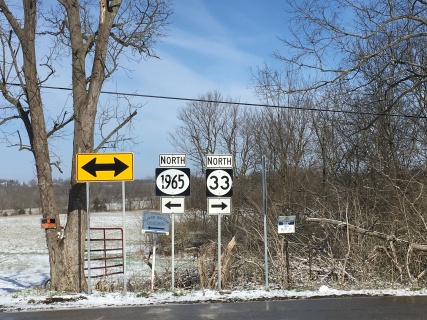
On a winding road in central Kentucky, the junction ahead at first confused me, then delighted.  I could turn left and go NORTH or turn right and go… uh… NORTHAnd the path straight ahead (NORTH by the way) was posted with a NO TRESPASSING sign.

If I wished to go NORTH, which way should I go?  I laughed out loud.  This reminded me of the certainty as to direction I hear from pundits and preachers who speak confidently of the only true way forward — their way.  Traveling this day and familiar with this particular road, I knew the path I would take.  I wondered about others who followed, who arrive at this junction — first timers.

I believe the certainty, that there is only one way, a best and only road ahead puts the nation, and the church, in hands of humorless demagogues.  For our nation  such certainty means that every choice is binary with no ability to value and learn from those who have different perspectives or life experiences.  Any sense of a commonweal is set aside.  In the church such certainty turns the theological task into a marshaling of doctrinaire pronouncements.  Instead of theology being “faith in search of understanding” we have one narrow set of understandings setting the limits of our faith.  Not much shared joy here.  I believe laughter can be medicine for the soul and oxygen for a suffocating nation and church.

On my wall is Wendell Berry’s poem, Manifesto: The Mad Farmer Liberation Front.  Near the end, he counsels, “Laugh.  Laughter is immeasurable.  Be joyful even when you have considered all the facts.”

I am asking what has happened to shared laughter — among friends and with those who disagree?  I don’t mean the little individual chuckles coming from late-night television parodies or the smile after reading ironic memes about the state of the nation.  I mean the sense of well-being that is born of a shared hope beyond our calculations.  What I miss is the ability to laugh at ourselves, to visit with others who may hold differing opinions and enjoy each other’s company.  It is the joy of discourse and community that is creative and constructive and larger than our personal prejudices and proclivities.  Laughter is not sufficient for our salvation but I believe it may be a necessary vestibule to hope and renewal in finding a way forward.

Aimee Laramore writing in the March 7, 2018 blog Voices on Stewardship  helps me when she writes, “The great theologian Dave Chappelle introduced a concept that made me laugh out loud when he spoke about imperfect allies. In his most recent special, he offers a poignant description of not understanding some of the differences in societal demographics and ended with his personal truth on the matter. Is it possible in our faith communities to be honest about the things we don’t understand? He repeatedly said, “I don’t want to harm you. I want to support you. I just don’t understand you.” I believe we should do a lot more earnest laughing about our own discomfort about diversity in giving. At the very least, a heartfelt response is authentic.”

Much more shared EARNEST LAUGHING with IMPERFECT ALLIES is called for in the nation and church.  In these time of “Fake News,” made-up statistics and certainties that avoid scientific evidence, we might look again to the realism of theologian Reinhold Niebuhr.  In response to the horrors and potential devastation from threats of fascism he wrote “Laughter is the no-man’s land between cynicism and contrition.”  In his Children of Light, Children of Darkness, Niebuhr argues “Humour is, in fact, a prelude to faith; and laughter is the beginning of prayer… Laughter is swallowed up in prayer and humour is fulfilled by faith.”

In an effort to offer something constructive for churches (and our society) I recently wrote a paper on what I see as the mistaken, and humorless efforts to repair the church by implementing certain business practices.  This is a well-meaning effort but of little purchase if it simply is composed of one perspective, outside of dialogue with those who view the church differently (see: FruitFixPubShare02-01-18).  My long and rather tedious musings needed the benefit of EARNEST LAUGHTER WITH IMPERFECT ALLIES.

I did find a chuckle when I read a quote from St. Louis area United Methodist pastor Diana Kenaston who captured my paper’s conclusions when she wrote:

So we look at statistics and we call them ‘vital signs.’  We commission a report and draw an electrocardiogram on the front.” 

IMG_4799

In two sentences, Rev. Kenaston covered what took sixteen pages and forty-nine footnotes for me to say…  and this without ever reading my paper!  I LAUGHED.

I knew my research paper was insufficient.  (Even so, I inflicted it upon many friends and my students.)  Reading Diana’s quote helped.  However, some other uncommon laughter was needed.  Some candor from imperfect allies might help.  The ability to learn of my mistaken understandings, and laugh with those who had another view, might help each.  Until then I don’t believe much progress is made. 

Might I sit with those who disagree and talk, and learn?  Might we make a common alliance to agree to disagree?  Until then, good as any research might be, it would be of modest value.  Yes, I have reached out to my imperfect allies — several times asking to hear from them.  Might those who offer their products, known as “fruitful congregation” initiatives be open to dialogue that might lead to understanding?  As yet, no response to my multiple requests.  Still waiting.  Even more, I am eager to experience a little shared laughter.

Until then, or even if such shared conversation never arrives, I am helped by the poetry of the fourteenth-century Dominican mystic Meister Eckhart.  He gives me a joy-filled perspective at this junction for our society and church.

He writes:

Do you want to know

what goes on in the core of the Trinity?

I will tell you.

In the core of the Trinity

The Father laughs

and gives birth to the Son.

The Son laughs back at the Father

and gives birth to the Spirit.

The whole Trinity laughs

and gives birth to us.

[Meister Eckhart, Meditations with Meister Eckhart, translation and editor Matthew Fox (Bear and Company: 1983), p. 129.

Conclusion Jumping – #TodayMrRyan?

Conclusion Jumping – #TodayMrRyan?

So, following the murder of seventeen children and teachers in Parkland, Florida, in what has become an all too common strategy, alleged “leaders” like Paul Ryan suggest it is too soon to talk about gun use — including AR-15 style assault weapons.  Too soon to talk about how semiautomatic rifles are easier to purchase than hand guns?  Too soon to talk as we watch the murders of our nation’s children?  Too soon to talk following the murders in Las Vegas?  Too soon to talk after worshipers are slaughtered in Southerland Springs, Texas?

Using language about wanting no “knee jerk responses,” and no “jumping to conclusions,” or the need to “get all the facts,” Republican Speaker of the House Paul Ryan, and others complicit in these deaths, use the tired old avoidance strategy.soldier-uniform-army-weapon-41161.jpeg They are the ones who help make these battlefield weapons available to brutally slaughter our own children.  They need to be asked, every day, when is the time to talk?

Is it today, tomorrow, next week?  How about never?  Is this what you are saying Mr. Ryan?  The American public isn’t jumping to conclusions; rather you are the one jumping over the conclusions that a vast majority of our citizens have already made.  It is time, way past the time really, to start every day with the question #TodayMrRyan?

#WednesdayAshes

#WednesdayAshes

Let this Lenten Season begin in #WednesdayAshes. 

In a nation where far too many “Christians” hide beneath the umbrella of cover-churches and look-the-other-way-religious-leaders who give space for greed, racial bigotry, manufactured cultural divisions and self-centered nationalism, let’s offer a counter narrative.  Let’s proclaim messages of transformation and renewal?

In this season let’s encourage one another to think about the issue of wealth and poverty in new ways?  The book by Maricio Miller, The Alternative is a place to begin.  #WednesdayAshes is a way to share new understandings.  If you are in or around central Indiana, folks will be gathering to learn more on February 24th Register here.

What better time to “do justice, love kindness and walk humbly with your God?” (Micah 6:8). 

We might be clear that the time for repentance and renewal in this nation so full of words designed to divide and demean is at hand.  Personally, I am sending my congressional representatives the passage from Isaiah 10:1-2 under the #WednesdayAshes.

10:1 Woe to those who make unjust laws,
    to those who issue oppressive decrees,
to deprive the poor of their rights
    and withhold justice from the oppressed of my people,
making widows their prey
    and robbing the fatherless.

Care to join?

Lent — What Fast Might Be Required?

Lent Arrives — What Fast Might Be Required?

I write this post on Shrove Tuesday, Fat Tuesday, the day known for Madi Gras or Carnival in many parts of the world. It is a time for play, for “letting go,” for silliness… and preparation.

Years ago, when teaching in the Republic of Panama, I discovered that in that culture at least, Carnaval lasted for days – make that weeks – with music and dancing till dawn every night and tricksters roaming the streets by day ready to smear the unsuspecting passerby with makeup or face paint.  This frolicking was a counterpoint to what followed, the Lenten season.  These forty days of Lent (excluding Sundays) were the days prior to Easter and were to be a season of fasting, mediation and self-denial.

As an adult, I have come to value the remarkable gift of the alternating seasons of the liturgical year, and alternating opportunities to live more fully, more deeply, into the dimensions of human experience.  Over the course of every liturgical year there are seasons of celebration and times of preparation, reflection and penitence.  This rotation captures the human reality — no fake news here — we humans live with the complications of joy and sorrow, sickness and health, solitude and community.  At best, at our most whole and holy center, appropriate belief and value systems will reflect this alternating dynamic.

Shrove Tuesday, for our family at least, usually means pancakes and perhaps a silly mask or costume… not much more.   No dancing all night or smearing with face paint.  We typically eat pancakes with lots or syrup, fruit and maybe even whipped cream on top.  We do this knowing that the next season will include some times of sacrifice, discipline and prayer.  Tomorrow, Ash Wednesday, begins a time of meditation and, perhaps, fasting and self-denial.

images-2


Some traditions speak of “giving something up for Lent.”  Perhaps it is sweets that are “given up,” or not going to the movies, or giving up attending a sports event (well, not basketball in Indiana!)  Perhaps some change in diet or giving up some other pleasure is practiced. 

In recent years I have appreciated those who suggest that perhaps we should think about what we might ADD to our daily life patterns during Lent.  Perhaps we should add some acts of kindness, charity or justice.  I like it.  Our pastor, Jimmy Moore, suggests this idea of adding something at Lent.  Then, jokingly, he says that when growing up, he had already given up all the pleasures and excesses of life, because at the time he was a Southern Baptist and had already given up all such temptations.  I laughed, and understand, because growing up in a strict conservative Methodist home, we had already given up dancing, movies, rock and roll music and, of course, smoking, alcohol and playing cards!

As Lent 2018 begins, two realities collide. 

There is scripture that speaks of God’s desire for humanity and there is the proposed national budget presented today in Washington, D.C.   From scriptures, think especially of Isaiah 58:1-11, where the prophet asks what sort of fast does God require of the faithful?  Hear these words written hundreds of years before Jesus of Nazareth, and referenced by him in his ministry.  They still carry a force for shaping the lives of believers today.

Isaiah 58:6 “Is not this the kind of fasting I have chosen:
to loose the chains of injustice
and untie the cords of the yoke,
to set the oppressed free
and break every yoke?
7 Is it not to share your food with the hungry
and to provide the poor wanderer with shelter—
when you see the naked, to clothe them,
and not to turn away from your own flesh and blood?
8 Then your light will break forth like the dawn,
and your healing will quickly appear;
Then the righteousness of the Lord will go before you;
and the glory of the Lord will be your rear guard.
 9 Then you will call, and the Lord will answer;
you will cry for help, and he will say: Here am I. 
“If you do away with the yoke of oppression,
with the pointing finger and malicious talk,
10 and if you spend yourselves in behalf of the hungry
and satisfy the needs of the oppressed,
then your light will rise in the darkness,
and your night will become like the noonday.
11 The Lord will guide you always;
he will satisfy your needs in a sun-scorched land
and will strengthen your frame.
You will be like a well-watered garden,
like a spring whose waters never fail.
12 Your people will rebuild the ancient ruins
and will raise up the age-old foundations;
you will be called Repairer of Broken Walls,
Restorer of Streets with Dwellings.
[New International Version]


Ironically, tragically, these words of guidance and reminder to the faithful, read during this 2018 Lenten season, COLLIDE HEAD ON with the national budget from the White House presented TODAY!  There are deep budget cuts proposed to efforts that provide food, housing and health care for the poorest among our people in the U.S.  [Less than a month ago, deep tax cuts were made that benefited the richest among us.]  Instead of building up our foundations, instead of seeking to strengthen our COMMONwealth here is a focus on walls, on further depleting our environment and the exclusion of those who differ.

So, what fast is required of us?  We shall pray and reflect; however, this is not a season for quietism or passivity.   We will need to find alternating patterns of action and prayer during Lent this year.  Richard Rohr appropriately calls his ministry a “Center for Action and Contemplation.”  These two emphases seem right this Lent.  Perhaps this is one of the sacrifices required this Lent — to do both — act and pray.  Some time normally given to meditation, may be time that will go to writing a congress person.  Maybe the money saved from having no desert should go more directly to offer food to the hungry.

This Lenten season I invite you to add some act of kindness and justice to your normal routine.  I invite you to daily prayer and meditation.  If this is not a part of your routine — this is your opportunity. 

There are many fine resources.  You might subscribe to the insightful reflections of Richard Rohr at the Center for Action and Contemplation CAC Daily Meditation; or, look to the Upper Room Upper Room for the daily devotionals there.

Perhaps you would wish to join some in New Harmony, Indiana on March 23 and 24 for a “Finding New Harmony” retreat (check out: www.mycalmcard.com ).

How will you observe this Lenten Season?  What might you give up?  What might you add?


An Untamed Pastor’s Fifty-Year Window

A Leaf from the Notebook of an Untamed Pastor: A Fifty Year Window

2018 marks my fiftieth year as an ordained pastor.  Five decades!  Many fine memories, good friends and much learning.  Wonderful, loving people have been teachers for me at every stop.  As former Indiana University President Herman B Wells once told me, “One sees things more clearly when viewed in fifty year blocks.”  Dr. Wells then laughed — he was 93 years old at the time. 

So, what do I see more clearly in 2018?  What might I share from a fifty-year window into this vocation?

IMG_4376
Five pastors of Broadway UMC regather in 2016: left to right -Phil Amerson, Rachel Metheny, Michael Mather, Mary Ann Moman and S. Baik.

A year has passed and I have shared strong words about Mr. Trump as a citizen; this year, 2018, I speak as pastorIt’s time to speak as a person of faith in an untamed fashion.  What we face in our nation is SIN — a clear and present danger to the spiritual health of our society and believers.   I have been too cautious in not speaking in terms of faith and in scriptural language.  I have not clearly called for repentance — from DJT.  Nor repentance for myself and so many in our nation. 

Clearly, ideology and grasping for power have replaced decency shaped by biblical and faith understandings.  Have we had other presidents who were sinful? — Of course — in fact, this is a character flaw, sin, we all are challenged by.  More to the point — it is the acknowledgement of sinfulness that marks movement to maturity and spiritual health.

In DJT we are witnessing an assault on truth, on the poor, on the immigrant, on God’s creation.  It is sinful.  This is a daily assault — sometimes hourly assault.  Our judicial and legislative systems, designed to align with highest religious values, are continually being threatened and undermined. Name-calling has become more normative than honest dialogue.  Those who disagree with the president are threatened with verbal abuse, even jail.  This is wrong.  Accepting it is a partnership with evil.  Sadly some support comes from those brothers and sisters who claim to be Christian — yet, little of what they argue appears to be established on scriptural basis or on principles of disciples.

On July 15, 2016, when Mr. Trump announced he was seeking the presidency, I was almost immediately troubled.  My pastoral radar sounded an alarm.  Bluntly, the fears unleashed, the thinly veiled racism and factual distortions, layered higher and higher, were anti-Christian.  My experienced eyes saw a person who was clearly a troubled, angry and manipulative man.  He belittled others so easily and thought far too highly of himself.  Over the months that have passed these initial indicators of the man’s soul-sickness have only become more tragically and dramatically evidenced by sinful decisions and impulses. 

I have decided to become an unleashed pastor because what we are witnessing is dangerous to our future and that of our grandchildren.  What we see unfolding comes straight out of Stalin’s play book — it is a pattern of disinformation, demonization and displacement.  (See Anne Applebaum’s fine book Red Famine.)

Let me offer a pastor’s call for repentance.  My own confession first.  I have been too timid to speak of the sinfulness of Mr. Trump’s words and actions.   I have been too quick to allow those who argue a false equivalency, his defenders, suggesting that the 2016 presidential election was between two equally flawed candidates. No. This is simply NOT TRUE, based on any fair-minded look at the options.  Was Secretary Clinton plagued by her own failings? — of course.  However, I am bold to claim we have journeyed in the ways of the devil after this election far more than had there been a different outcome. What we face now scriptures speak of as the evil of principalities and powers.  The spiritual well-being of our nation is at risk.

As a pastor, every year I would meet with the church’s nominating committee.  Our task?  To propose leaders the upcoming year.   Honestly, if Donald Trump were a member and his name proposed for any leadership task, I would quickly speak against him in almost any role.  I would speak about his not being a “good fit.”  No place for such a man as an assistant usher or a parking lot attendant, until there was evidence of more spiritual health.  And I certainly wouldn’t want him anywhere near the finance committee, youth work or buildings and grounds committees.  His evident narcissism and duplicity would be my guide — based on experience.

Fifty years have sharpened my radar about people.  Yes, I have made mistakes in this judgement — and keep learning from them.  And, yes, I know people can change — I have witnessed this.  However, my experience has taught that change comes with personal awareness of brokenness and the knowledge of the need to accept God’s transforming gifts in one’s life.  None of which are evident in this man.  If any role were offered, it would be the opportunity to spend a year working (silently) alongside the poor and studying scripture with a good teacher.  That would be an appropriate place for DJT – a place to begin a journey to healing and renewal… It would be an invitation to conversion.  I do not know the wounds contributing to his arrogance, masked low-self-confidence and sinful actions — but they are not helped by the enabling going on by many politicians and alleged religious leaders.

We are a nation struggling under the spell of a narcissistic, sin-burdened, con-artist.  A man who lies so frequently that truth and falsehood are continually blurred.  Can anyone account for a need to claim to be a “stable genius.”  Such hubris, such arrogance!  Can you imagine Abraham Lincoln or Ronald Reagan making such a claim — with a straight face? My dear Republican friends, what have you endured… and so many of you accepted as normal?  We have a self designated “stable genius” who doesn’t read, has almost no understanding of geopolitical historical realities and bases our nation’s future on own self-aggrandizement.  I do give thanks for Republicans like Steve Schmidt, Jeff Flake, David Jolly and Mitt Romney.  Perhaps they will help the party and our nation — save it’s soul.  However, they may not be enough.  More is required of us all.

Wesley_United_Methodist_Church_Urbana_Illinois
Wesley UMC, Urbana, Illinois — One of the many great centers of campus ministry for the denomination.

The United Methodist church once claimed a mission to “Reform the nation and spread scriptural holiness.”  Sadly, our recent response to the assault on our nation’s highest values, and Christianity itself, has been muted at best.  We do speak a word on behalf of the immigrant and the poor — but we say nothing about the sinfulness of our nation’s leaders at this critical time. So much for reforming the nation and spreading scriptural holiness. 

We have known greatness.  Our work in education and mission offer remarkable hope.  There have also been times when we have been an embarrassment to ourselves and our nation.  Now, as we are silent, I believe is a time when we should be embarrassed.

We have failed before — Methodists back-tracked from our early impulses against slavery or took too long to support our courageous women seeking suffrage and equality.  Still, like Legion in scriptures, upon being confronted by the Christ, we somehow turned around and came to our senses on these matters and many others.  This is the way sinful persons and institutions change.  But there is also potential for movement in another direction — it is this sinful downward movement I fear for our nation (and church) just now.   I speak as an untamed pastor, shaped by this denominational tradition and filled with awareness of many of my own shortcomings. 

Still I speak as one with experience — experience in recognizing sin-sickness and the need for repentance.  One sees things more clearly when viewed in fifty year blocks.