
That Which Cannot Be Razed
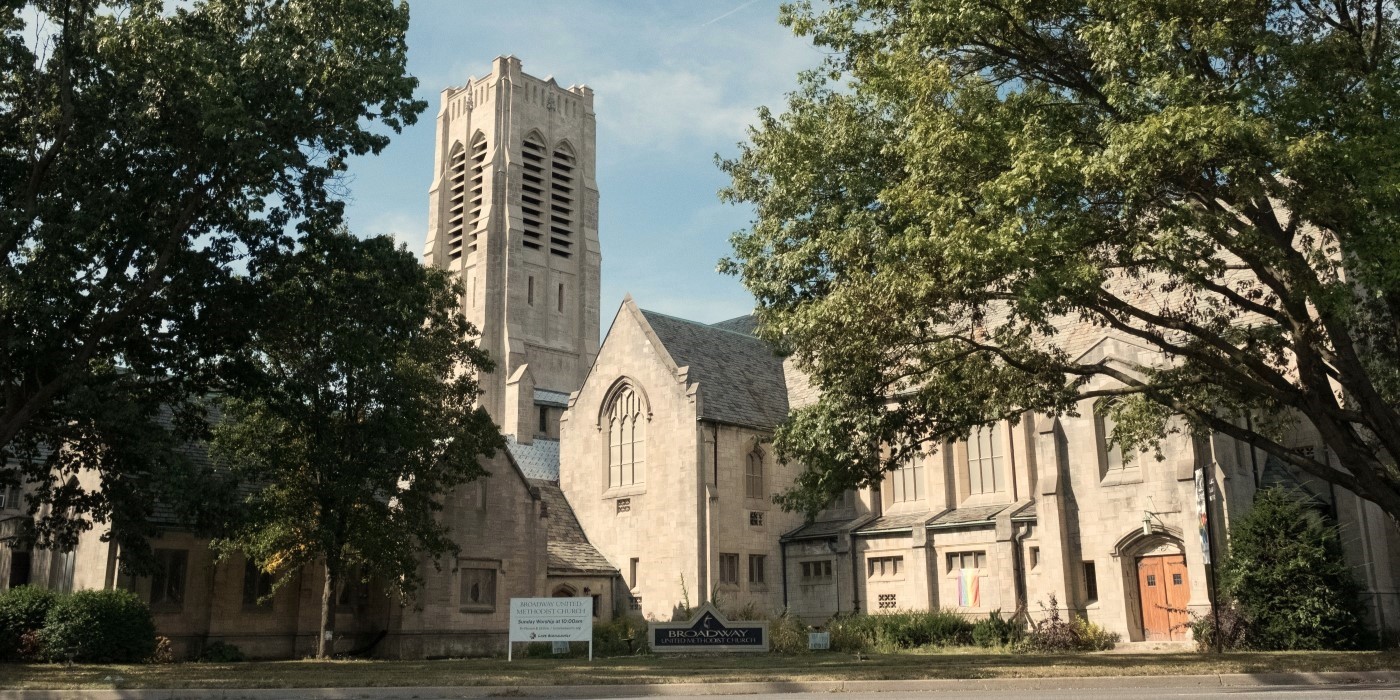
Admittedly naïve, the Christians at Broadway Church in Indianapolis in 1986 wrote: “As followers of Jesus Christ, responding to God’s love, our mission as the people of Broadway Church is to be a multicultural, Christian community that in its ministry seeks, welcomes, and values ALL people.” We knew it was a challenging aspiration, none-the-less the choice was to be a church that said it welcomed everyone – and acted like it. No matter. Everyone.
That congregation hasn’t done it perfectly, but over the decades it has claimed this mission. Still does. Yes, we were naïve, about our society, our world and the human condition… or were we?
Life would teach many lessons, some hard ones. The power of tribalism and fear-stoked resentment has too often overridden respect for all. It has even undermined alliances among western nations. Today we see bigotry and discrimination, dressed up as ICE agents with masked faces and camouflaged outfits, terrorizing our cities. Such threatening realities appear to trample on that simple mission statement.
Naïve? Surely so. Wrong as a witness to the love your neighbor message of Jesus? Not so then, not so, now. The Apostle Paul wrote of this in the earliest years of the church: “In Christ’s family there can be no division into Jew and non-Jew, slave and free, male and female. Among us you are all equal. That is, we are all in a common relationship with Jesus Christ. Also, since you are Christ’s family, then you are Abraham’s famous “descendant,” heirs according to the covenant promises.” (3:28-29 as rendered in The Message).
Twenty years ago, columnist David Brooks wrote of the coming death of multiculturalism. https://www.nytimes.com/2006/04/27/opinion/the-death-of-multiculturalism.html. Brooks spoke of what he saw as the excesses of multiculturalism where diversity was too easily celebrated and sometimes prevented true openness to all voices. He predicted multiculturalism would pass and we would see a “rebirth of liberal American nationalism.” I wonder what Brooks would say today of the trajectory he offered then?
Whether one points to the multiculturalism displayed in the Ruth and Naomi story, or to the multiple ways Jesus of Nazareth broke and transformed deep patterns of race, class or religious exclusion, or to the Pentecost events, multiculturalism and faithful Christian practices are intertwined.
At Broadway, shortly after that mission statement was written, a longtime member told me that grand old building of stone and stained glass might one day be gone, it might be razed, but the gift of knowing others who differed in a community of acceptance could never be erased. Perhaps that congregation at Broadway was not so naïve. It continues today as faithful to its mission. So do thousands of other gatherings and activities in the name of Jesus around the world. Naïve? Perhaps, it appears so, in the short term. However, as Eugene Peterson suggested, Christians are called to “a long obedience in the same direction.”
 Hands of the Strong