
Experts and other Obsoletes
Expertise and professionalism have shaped much of our social and economic world over the past century. Experts and professionals have their place – after all, my adult life has been spent playing one, or both, of these roles. Still, I chuckle at Mark Twain’s quip “an expert is an ordinary fellow from another town.” Later Geroge Bernard Shaw wrote the oft quoted line “Those who can do and those who can’t, teach.”
Now, at eighty, with nearly sixty years ordained as a pastor, administration and teaching behind me, I ponder the role of expertise and professionalism. I wonder if the role of “expert” and “professional” has been overvalued. A good consultant can be of great assistance. I know and have benefitted. Even so, much of professionalism and expertise is facing obsolesence. We are at the edge dramatically altered reality. Artificial intelligence is already radically shifting our assumptions and social stratifications.
Over my years of ministry, I have often been amazed by the authority and deference given to experts. Church experts on congregational life and pastoral ministry have brought their advice. It is often provided by consultants with minimal experience serving as pastor, or as one who has led a congregation.
These are good, well-meaning people, often talented and full of research that comes from arenas outside the life in a parish. However, as I have watched, I have been aware that they do not know, what they don’t know. They don’t know the reality of standing in the hospital room as the matriarch dies, the doctor not yet there, and the family looks for guidance and prayer. They have not been with parents whose child has been fatally shot, or who has committed a horrific crime, waiting for the sheriff or state trooper to confirm the tragic news. They have not faced a week in the parish when the boiler fails, there are three funerals to perform, a wedding coming on Saturday, a sermon to prepare and a church leader has been publicly accused of spousal abuse. They do not know what they do not know.
Experts function in a world of “let me help you analyze your situation and offer counsel with my preset categories.” These are often based on business, biological or cultural models. Meanwhile pastors live in ‘the overwhelming mix of emerging and overlapping situation(s).’
Often, I have appreciated the wisdom of a bishop with years of experience as a parish pastor. It makes a difference. I wonder, what if bishops served for a term and then returned to parish work? We could use this talent. This was a pattern in the former Evangelical United Brethren that merged with Methodists to become the United Methodist Church, where now bishops are elected for a lifetime. I watch as talented persons climb the ladders of leadership in the church, becoming experts on many things apart from leading a parish. Understandably something critical is being diminished, even lost. Often what is lost is the ability to value the talents of the members of a congregation. Often what is lost is a more democratic and community-building understanding of church.
This dilemma is not one faced by Mainline churches alone. A young couple I married a few years ago visited with me recently telling me of their experience in a large megachurch in a nearby city. They spoke of meeting the preaching pastor after a service and when they said, “We would like to welcome you to our home for a meal,” the preacher replied, “Oh, I am not that kind of pastor.”
Such specialization, such expertise, has limits and AI will expose these – sooner than most of us know. In the years ahead, when information about “situations” can be gained by, and speeded up by, using the powers of artificial intelligence, who will stand by the family in the hospital room? Or who will sit with the young woman in jail, or who will have gained understanding of the family dynamics often at play in weddings? Who will look in the eyes of other humans, hold their hands, pray the prayer that starts the healing? There won’t be time to login or call the consultant.
The future will require connectors, community builders. Leaders will need to convene and consecrate more than consult.













 need to repent. He said I offered no positive alternative. Or, as he put it, “you call us to a whimper and a pout in our separate corners.” Yikes, I thought. Whimpering and pouting? People who know me, know I like little more than a GOOD “conversation” — a solid and respectful debate often helps all sides come to fresh understanding, new truth. There is, for me, Joy In It. For me, a good learning experience is akin to my grandson Gus’ delight in cleaning up a bowl of chocolate cookie mix.
 At root, our differences will call for us to struggle with our interpretation of scripture and our various “captivities to local cultures” and step away from the worlds of narrow experience. Folks like me will need to know how we can focus so narrowly on excluding gay folks based on a limited and questionable scriptural basis, and at the same time ignore other scripture “rules.” There are also “scriptural rules” on the role of women, divorce, the eating of pork, the wearing of synthetic clothing or the call to stone folks to death for many of our modern practices.


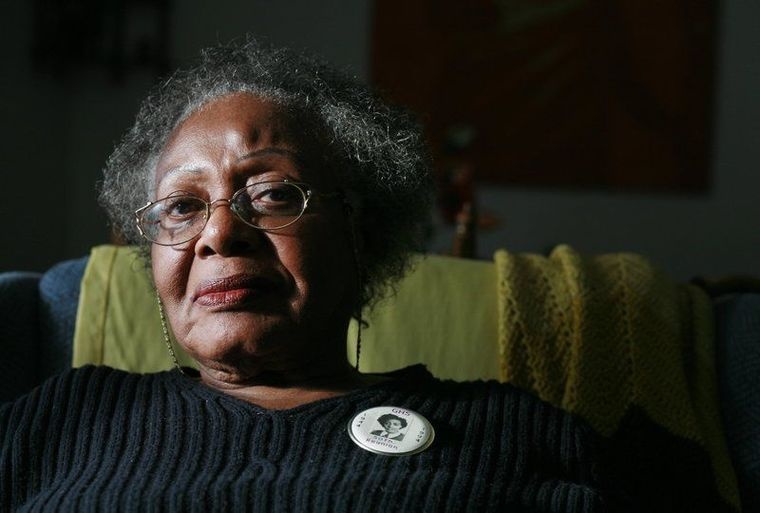
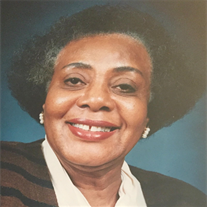 My friend La Verta Terry taught me much. Mostly, she tried to teach me to speak the truth about difficult things with grace, elegance and style. I will never match her in this; but often I can hear her voice in my head cheering me on. And, like many of my dearest friends, she knew how to be a loving critic if I said or did something she thought might have been handled better. LaVerta, lived on the other side of the white-privilege Harper wrote about. They both knew the bitterness of racism and shaped beauty and meaning from the ugliness.
 Hands of the Strong