
Francis: A Broken, Open Man

Francis: A Broken, Open Man

Easter Monday 2025: Pope Francis is dead. I read the headlines, and glancing above my desk, see a copy of what I believe is one of the most important documents of our age. Laudato Si, the encyclical Francis offered a decade ago as a word of concern and hope.

Speaking of the natural world as “our common home” Laudato Si, simply means “praise be to you.” It is offered as a diagnosis, a prayer, a remedy for the health our good earth. Educated as a scientist and theologian, Francis offers carefully researched science linked with finely crafted moral guidelines. Part science, part ethics, and part poetry this is a call for honest attention and constructive action around the changes to our climate.

Here is an example of science and faith in conversation, each respectfully engaging the other. Science, thickly presented; moral theology merged in an appeal for an open “integral ecology.” Environmental activist Bill McKibben writes this “is arguably the most important piece of writing so far this millennium.”

Here is one summary sentence: “We are faced not with two separate crises, one environmental and the other social, but rather with one complex crisis which is both social and environmental.” It is the poor and refugee who already suffer, first and most, from ignoring the treatment to our common home.

Late in 2023 I was privileged to travel to Argentina. The most popular personage was not Pope Francis.  Images of another Argentinian, soccer (futbol) star Lionell Messi, were seen on every block. Shops were full of Messi’s jerseys (#10 or #30). Shops were filled with bobblehead dolls of Messi for sale; and nearby, a few were available of Pope Francis. When I asked a shopkeeper why? She whispered, “some are upset with the pope.”  More on that later.

In Buenos Aires we visited Cardinal Jorge Bergoglio’s assignment prior to the papacy. The Metropolitan Cathedral faces the Plaza de Mayo. At the other end of the plaza is the Casa Rosada (Argentina’s White House). The plaza is where the Mothers of the Disappeared gathered to protest during the “dirty war” (1976 to 1983) when it is estimated 30,000 young people were “disappeared” by the military junta in charge. The Mothers offered a human rights witness, a statement against the dictator.

This plaza is still a place where resistance to authoritarianism is on display. During our visit “stones of remembrance” were being placed around the statue of General Manuel Belgrino, leader of the fight for independence in the early 19th Century.  These stones today are an expression of grief for the more the 100,000 who had died of COVID as national leaders failed to respond.

Pope Francis knew this history, the struggles for human rights and the dilemmas of the poor. He believed in the connection of all people and creation and chose the name “Francis,” as signal St. Francis of Assisi would be a guide star.

In 2023 Argentina’s presidential election saw the ascendency of the flamboyant “anarcho-capitalist” Javier Melei, who lifted a chain saw during his campaign as example of his fight against what he called the evils of “collectivism” and the idiocy of “social justice.” Melei called Francis an “imbecile” for his efforts to aid the poor.

There was said to be a reconciliation in February 2024 when President Melei met with Pope Francis in Rome. Even so, a year later, in early 2025, Elon Musk stood on stage joining with Melei as Musk put on his own chainsaw routine to suggest that social programs in the U.S. should be cut out and destroyed with his DOGE efforts.

Returning to the shop keeper who spoke of some who were disappointed with the pope, she went on to say that Argentinians were most unhappy when in 2019 Francis visited Brazil and Chile but had “flown over” his own nation.  Ah, yes, Francis critiqued for not touching down in Argentina!  Nationalism alive and well… all around the world.

There is irony in the fact that one of the last visitors with Pope Francis prior to his death was U.S. Vice President JD Vance, a recent Catholic convert. Vance disagrees with the witness of Pope Francis on climate change, immigration, refugees, the war in Ukraine, to name only a few. Has JD Vance read Laudato Si?  Does the current U.S. Administration know of this work?  If so, what of the closing of USAID? Do any of the “faith leaders” surrounding our president offer a witness that considers the poor of our world or the climate crisis we face?

Some pundits today suggest Pope Francis has not changed the lyrics of the Catholic Church, just the music.  By this it is meant he didn’t transform specific dogma on abortion, homosexuality, or the role of women.  I believe he nudged us toward the future. Perhaps he moved these concerns from music in minor to a major key.

Changing the structures and practices of millennial old institutions is a one-hundred-year or two-hundred-year endeavor.  What we have been privileged to witness in Francis is one broken, open man, who gave himself fully for others in the hope of healing of our world.
Woke Smoke

Woke Smoke

I work up this morning, birds chirping outside.  Good thing.  It “beats the options” as they say.  Sorting through “news” of the day, I read a strange, recurring theme – one word repeated in many places.  The word?  WOKE.  It has been used in disparaging ways for a few years. In government, education, religion, and more there are warnings of the dangers of “woke-ness.”

Dozens of arguments in recent months seem to begin and end with stressing the dangers of being “woke.”  Nothing much more.  Just a label, a four-letter word that carries a dumptruck load of fear and grievance.   Here are a few examples from this past week:

  • Bill Barr, former U.S. Attorney General, warns of “wokeness” as a reason he would support the former president, that grievance-filled ghost of an administration-past. Mr. Barr earlier called him “a grotesque embarrassment” but one idea had tipped the scales, had caused him to reverse.  It was a concern about being W-O-K-E!
  • After 92% of the Indiana University faculty voted “no confidence” in President Pamela Whitten, sadly, the response from many was the claim this was ALL about “woke-ism in the academy.”
  • Well documented and tragic reports of the destruction coral reefs around the globe are presented.  Sure enough, there it is – responses calling it “woke science.”
  • Pope Francis is viewed favorably by 3/4ths of American Catholics, even so, there are disgruntled ones, some bishops and cardinals, who call him the “woke pope.” 
  • The newly formed “Global Methodists” are issuing warnings that upcoming United Methodist General Conference will be overrun by persons with “woke theologies.”

There is, of course, a history of how this word has evolved in use.  For some it is a verb, as in the past tense of “wake.”  Here it means to be alert, aware, attentive.  A decade or more ago scholars began to employ it as an adjective common in African-American vernacular speech, as in an awareness of racial discrimination and prejudice. This was the threat – and the opportunity – presented to many who didn’t want to be awakened to the racism in our society.

The word was repurposed, turned inside out and upside down.  It became a quick way to avoid dealing with the realities of discrimination in our society.  It is a way to flood the zone with smoke – to hide and obscure the need for conversion.  It gained currency as a powerful “code word” allowing the user to avoid thought or conversation.  It avoids the hopes for a civil society.  Rather than being alert to a new day, experience or danger, it is turned into a verbal cudgel.  It becomes an imprecise way to avoid facing our nation’s history and bigotry.  An avoidance mechanism.  Our nation’s original sin of racism is dodged by using a single word.  Nice trick – avoid and redirect the word as a weapon.

Critiquing something as “woke” is lazy.  It is a way to obscure, suppress, and avoid any call to rethink the old assumptions and categories. It demonstrates that change is always resisted; it is difficult. What’s the old saw?  Only a baby with a wet diaper is comfortable with change. 

For a fine reflection on a Biblical way of understanding the importance of “woke” as a spiritual activity, look to Dr. William Lawrence’s, “When the Church Woke.”  Bill, former dean of the Perkins School of Theology, points to the Biblical call for wokeness – it is about conversion, metanoia, deep personal and social change. 

https://www.umnews.org/en/news/methodism-overdue-for-becoming-woke-author-says

Glad I woke up this morning.  I am reminded of Lamentations 3:22-23, “The steadfast love of the Lord never ceases, his mercies never come to an end; they are new every morning; great is your faithfulness.” 

As with many things, one can choose the lazy path of chirping out the fearful words, “woke, woke” and avoid an honest, healthy way forward.  Instead, one can let the smoke clear and choose to be woke in “hope, hope” shaped by active care for others and for the healthy and honest ways forward.

An Ecological Dawning?

An Ecological Dawning

I am an early riser, one who enjoys watching the sun spread across the sky.  This morning I couldn’t help but consider it a metaphor for the new light I believe is on the horizon regarding our environment.  One reason for this is the reading I have been doing of late on this topic.  Yesterday, it was my honor to preach at Wesley United Methodist Church adjacent to the campus of the University of Illinois.  It was called a “teach in” as part of a national focus on faith and the environment.  I believe a new day is dawning in terms of public awareness and constructive action.

IMG_1327

It is not my intent to offer a reprise the sermon here.  Instead I have attached a link to a copy for those who are interested.  Here is my take away.  First, we face enormous challenges as a society, as a global community.  The damage has been severe, it will be difficult to reverse.  NASA now suggests that climate change is our nation’s most serious security risk.  Note the changes in the Arctic as our early warning system.  (The Petermann glacier in Greenland is receding more than twenty miles a year!)   Increasingly we are seeing a link with floods, wild fires and drought.  We will have more than fifty million environmental refugees by the year 2020.  This doubles the number of the estimates just twenty years ago. 

I know the dangers of climate change are very real — difficult (some say impossible) to reverse.   On the other hand, there are signs of hope, a dawning of awareness among nations, corporations and the general public.  It is my sincere hope that the U.S. Congress will one day soon catch up with the scientific evidence.  As the research is overwhelming clear, the Paris agreements are tentatively in process, and corporate and technological leaders are investing billions of dollars toward constructive change, it is our duty as citizens to press the case with Congress.  The cost of solar and wind energy continue to drop in price.  

It was a joy to be with a university community and see the commitments made by that congregation.  I spoke with several students who indicated a deep appreciation for the sermon — but more importantly a personal commitment as future engineers, chemists, business leaders and farmers to a different way of thinking about our economy and ecology.  Hooray for the gifts of great universities!  (Look for a post soon challenging the larger church to rethink our investments in and valuing of campus ministry.)

I know that change will be difficult.  Actually, it calls for a conversion — an ecological conversion, on the part of individuals, the culture and the economy.  The witness of people of faith is essential as part of any solution. All people of faith – especially the local church… these communities will need to find voice on these matters. As Pope Francis demonstrated with the issuance of the encyclical Laudato Si, Christians can bring a perspective, insight and inspiration for the future — for the dawning just ahead.

For the complete text of the  sermon, see: WesleySermon – Feb 14, 2016

The Great Identity Theft of 2015

The Great Christmas Identity Theft of 2015 

The devastating assaults in Paris have shattered our best hopes during this season.  I was traveling the day following this tragic time and couldn’t help but marvel at the way persons sitting in the airline terminal transfixed by the television images from Paris.  The usual noises of travelers hurrying through the terminal were muted.  We were all distracted.  Fear and anxiety overwhelmed any sense of normalcy.  Then, our worst fears about the future of terrorism seemed confirmed by the murders of innocents in San Bernardino.  Terrorists assault.  They kill and gravely wound unsuspecting civil servants at a holiday party. 

How do we respond to such evil.  What can we learn?  How will we find a way forward when there are appropriate fears about the future.  One healthy response is to seek to learn more, to understand more, to gain knowledge of the situation.

Who are these misguided murderers?  What motivates?  Why do they choose these suicidal theatrics.  We want to know who is doing this and what are their motives. This is all healthy and appropriate.  It is needed information.  And what can we learn about Islam and this radical apocalyptic cult — this ISIS or ISIL?  Important this is, all of it.

Still, isn’t it intriguing that during these days of terror, we hear volumes from the experts about Muslims — who they are and how they behave — while at the same time there is little or no consideration about who is a Christian or how Christians might act at this time.  The media are full of analysis about Islam.  Good.  knowledge is helpful; as one of my mentors would say “facts are our friends.”

It may be as important, make that more important, to consider what it means to be a Christian in this time.  In the seasons of Advent and Christmas 2015 we hear again the Jesus narratives.  His life and words are captured in carols and story and sermon.  What is there to be learned from this narrative about retaliation, revenge, exclusion, bigotry toward those who are different? 

It is interesting that on the same day that Pope Francis announced the beginning of Year of Jubilee as a time of mercy and reconciliation, Donald Trump is loudly and adamantly speaking words designed to stir up fear and set up new systems of discrimination.  Many people in this country seem to agree with him — in some places, places where there are strong “Christian” environments, there may even a majority who agree with The Donald.  

What has happened?  Most of those who seem to agree with Trump would be quick to say the United States is a Christian nation.  Really?  There is grave danger here.  If we are to choose the way of discrimination toward persons of a different faith, this is a danger I would label identity theft.  Someone is taking the basic elements of what it means to be a Christian and substituting a cheapened, debased form of shallow and self-serving religiosity.

It is not up to me to say whether Donald Trump is a Christian or not.  He says he is, “I attend church on Christmas, Easter and special occasions.”  He says that if he is elected president he will be “the greatest Christian representative ever to be in the White House.”  His faithfulness and the ways he acts on his beliefs are between him and God.  However, he doesn’t get a pass on his easy claims.  How do they match up with the story of Christmas?

9931687_sNo, it is not my call to determine whether Donald is a Christian… but we do know a great deal about who and what a Christian is expected to be from the scriptures and the great traditions of the church.  Racism, bigotry and calls for revenge displayed by too many just don’t square with the person and teachings of Jesus.  Right now — as we gain knowledge about others, equal care needs to be given to thinking clearly about what it means to be a Christian.  Certainly the calls to exclude persons from the United States based on a religious test is unconstitutional.  That is easy.  For me, however, it is more important to ask, is it Christlike?
We are warned at this time of year to guard our credit card information.  We are told to be careful giving out information about social security numbers or family background.  Someone might steal your identity and this would be disastrous.  I want to warn of an even greater identity theft that is underway — it is a theft of what it means to be a Christian.  Guard this closely.  The loss of this identity might be even more damaging than having one’s credit compromised.  The loss of this identity may close down important options that will be needed in the future if we are to find a way past this current wave of terror.

Fear is a powerful thing; so is knowledge.  It is critically important in these days to know more about Islam — what is true and what is false?  Let me suggest that it is even more essential, for those of us who make the faith claim that we are “Christian” to consider carefully what this means — what is true and what is false? 


An Advent of Sustainability

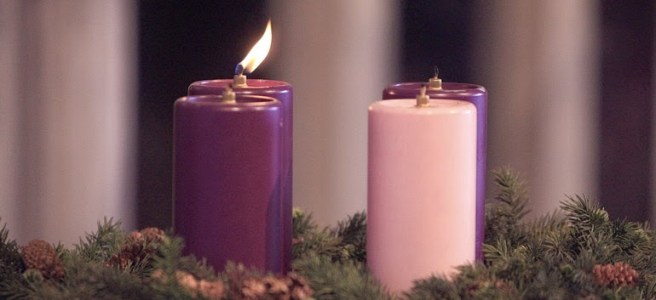
A Sustainable Advent: Integral Ecology

Dateline – Paris, November 30, 2015:  It is the first day of Advent and the leaders of nations around the world gather to seek ways to address the dilemmas created by Climate Change.   While there are some who believe that concern for the climate is antithetical to economic prosperity, there is a slow and steady awareness among business leaders that an alternative to this old either/or model can emerge. 

Interestingly this environmental summit begins on the first day of Advent.  Advent is a season filled with of stories of exile and a longing for home.  It is a time of waiting and watching.  Paris, touched so recently by terror, knows something about the challenges of exile and the welcoming of strangers

For me, the question of Climate Change is a leading edge of growing faith understanding.  This issue is a way I continue to “learn to learn.”  Sustainability is another way of speaking of the human responsibility to provide enduring care for God’s creation.  So… Advent is a time to wait, think anew, and reconsider my beliefs in the light of new lessons from scripture and science.

On my desk is a copy of the encyclical “Laudato Si” offered this spring by Pope Francis. The subtitle of this fine document is “Care for Our Common Home.”  Drawing on the witness of the pope’s namesake, St. Francis Assisi, we are encouraged to seek an “integral ecology.”  Care for the earth, it’s creatures and all human beings is one, indivisible task — it cannot be separated into parts.  Our commitment to care for the poor and stranger among us is related to our care for the earth; they are one focus. [Link to Ladato Si: Care for Our Common Home]

For years I have pondered the power and beauty of scriptures related to the the creation.  The call for an integral ecology is another way of saying the deepest spiritual themes of scripture and faith are interconnected.

I think of Genesis 1, where we are told that God sees everything that has been made and announces “behold it is very good.”  I consider passages like the 24th Psalm (“the earth is the Lord’s and all that is within it”) or the majesty of Psalm 104 or 148 — or Isaiah 40.  All of these passages are linked speaking to how we are to relate to our neighbor — especially the widow, orphan and stranger.  Our Christian scriptures culminate with Revelation 21 which speaks of the fulfillment of creation as a new heaven and a new earth.  

For me, the most haunting passages comes in the eighth chapter of Romans, one section of which reads: “We know that the whole creation has been groaning in childbirth right up to the present time.”  It goes on, “Who hopes for what he already has?  But if we hope for what we do not have we wait patiently for it.”

Advent is a time of waiting… in hope… and then taking steps toward a more integrated way of living as people of faith.  This is a time to ask and answer some hard questions, no matter your stance on how to proceed.  [Link to: NY Times: Short Answers to Hard Questions about Climate Change]

Sadly, there are climate skeptics who deny both science and these compelling scriptural injunctions.   Many in the U.S. Congress are voting against the plans that will be offered by the current U.S. administration this week.  Sadly, these skeptics do not offer any alternative ideas.  They simply deny the science — and the scriptures.  Leaders in more than half of the states are suing the administration over this climate care agenda.  Okay, congress and governors, disagree if you will; however, offer some alternative.  Especially if you make claims about being persons of faith.  At least speak to the matter of stewardship and God’s desires for the care of the earth.

If one is an intelligent Christian, this season of Advent is a time to think carefully about God’s call for us to care for creation.  The science regarding the dangers of climate change is compelling.   Even if it were not, we persons of faith are to be good stewards of all we have been given.  If you are a person of faith and cannot support the Paris proposals, then speak clearly about alternatives as to how we should live with care and respect for creation.  Advent is the perfect season to think this through and then begin to offer alternatives in the new year.

If, like me, you are both a person of faith and trust the science, then we may have the greater task.  How can we help others understand?  How will we live?  What will we do to bring about change.

One encouraging sign comes from persons in the corporate world who are ready to help address the climate crises.  Microsoft co-founder Bill Gates will be announcing the creation of a multi-billion dollar clean energy fund, tomorrow, November 30th, at the opening of the Paris summit.  This announcement comes after and in addition to his announcement this summer that he was investing more than $2 billion in renewable energy that will encourage both “productivity and sustainability.” 

Early reports are that several others are joining Mr. Gates in the creation of the clean energy fund; however, many donors wish to remain anonymous because there is still a considerable lobby of persons who are climate change skeptics among corporate leaders. 

This skepticism and resistance is changing, and apparently quickly, Steve Schein, a former CEO and now professor in the business school at Southern Oregon University has recently written “A New Psychology for Sustainability Leadership.”  In it he suggests that more and more business executives are displaying an ecologically informed worldview — a worldview that for many of them has been nurtured since childhood.

IMG_1030
2015, Pines in Yellowwood Forest

Several years ago a friend took me on a hike that led to a grove of trees in Indiana’s Yellowwood State Forest.  It is a wonderful natural cathedral.  The white pine planted in the mid-to-late 1930s are now over 100 feet tall.   This grove is still a spiritual place for me.  It is an Advent place — my Advent wreath —  where I pray and think.

It is more than a place to think and pray.  You see, as lovely as these trees are they are dying too soon. 

Planted by the Civilian Conservation Corps, they are in an area that is often swampy and this forest lacks the necessary biodiversity of the wider forest and ground coverings all around.  Still, this grove of pines is far better than the land there previously; land that was eroding and abandoned due to the Great Depression that so scoured the region in the 1930s.  Something had to be done then… and it was.  These trees, now one of my favorite cathedrals, were planted over 80 years ago.  This was a temporary fix, perhaps only lasting 100 or 150 years.  It does, however, give space for further ways the natural world might, groaning as in childbirth, bring yet another season of beauty and hope.  Even if it is only a temporary fix, success at the Paris summit needs to be a part of our Advent prayers in 2015.