New Jails? The Fictions and True Costs of our Dependence on Punishment

New Jails? The Fiction and a Generational Mistake

Unless the citizens of Monroe County Indiana make a U-turn, we are heading toward a huge, generational mistake. (Others have made such mistakes recently: Grant County, Kentucky; Terrebonne Parish, Louisiana; Santa Fe, New Mexico; Indianapolis, Indiana and Douglas County, Kansas to name a few.) Building the proposed new jail in Bloomington Indiana will undercut resources for our children’s children. Construction, interest and maintenance will cost over $330 million dollars! The drive to build this jail is based on several myths: 1) our current jail cannot be renovated; 2) there are no good alternatives to incarceration; 3) the current jail isn’t large enough; 4) the 2008 ACLU lawsuit requires a larger jail. 

NONE IS TRUE. Renovating and caring for the Bloomington current jail is one-fourth the cost of a new build (under $70 million).  Alternatives to prison are demonstrating significantly better approaches. Monroe County’s current jail capacity is 294 while average population is 225. In her 2025 State of the City address, Mayor Kerry Thompson noted violent crime was down 24.3% in the community last year. There are multiple actions already being taken to respond to the ACLU lawsuit.  It is rinse, wash and repeat with these myths, often hiding other motivations like those encouraged by the entities standing to benefit from the construction of a new jail. A majority of human service groups oppose a new jail based on their day-to-day service efforts. Yes, there is a troubling problem with mold in the building.  Correction is underway.

Finally, there are many other troublesome dimensions to this drive for a new jail. Here are three:

1) A large majority (over 75%) of those held in jail are there because they are poor (can’t afford a bond), suffer from addictions or mental health issues, or are persons without shelter.  Most are pretrial – they have been convicted of nothing. How does incarcerating them provide a way out of difficulty or build a stronger community?  While in jail the indebtedness of those incarcerated grows! The expense to inmates for phone calls, room and board fees, commissary charges all add up, and up.

2) Access to the newly proposed location is limited to those with an automobile. There is currently no public transportation to the location. If courts and public defender’s offices are there, the visits and support of family and friends is further compromised.  Many of the services currently available to the incarcerated, family and friends are downtown.

3) Finally, and deeply troubling, locating a new jail in Tax Increment Finance (TIF) is an attept to hide the way local governments can spur commercial and other development in the area based off the new and extended services put in place for the jail. 

We ALL will pay more, but the debt burden on the poorest among us will be the highest.

Integrity & Jimmy Carter

Integrity & Jimmy Carter

Integrity and Jimmy Carter are synonymous. For one hundred years he offered his witness. There were ups and downs, missteps and the recognition of a Nobel prize. I see his life as a wonder-filled demonstration of human decency and generosity. A paradoxical mix of pride and humility, intelligence and determination, vision and myopia. This peanut farmer from Plains, Georgia offered a standard, a vision for a better way.

Friends disagree. Some call him naïve, too uncompromising, or too unwilling to make savvy political calls when necessary.  A ‘fluke,’ they say, ‘one who would never have been elected had not the nation become overburdened by the agony of wars in Southeast Asia and the deceptions of Nixon and Watergate.’ I disagree. Carter’s leadership emerges as an immeasurable gift for our nation and the world. Can we learn from, benefit from, the many positives of his life and perhaps, journey carefully around its pitfalls? 

I hold that President Carter, alongside countless others who have recently died, persons like my friends Ruth Duck, Jan Foster, Bill Pannell, John Cobb, and John McKnight, exemplified lives guided by an informed faith, a hunger for truth and a future established in hope rather than fear that our nation and world now desperately need. Their lives, along with millions of unknown or unnamed others, point toward the better path for humanity, a path taught in scripture.

Closing my eyes for a moment, I see Jimmy Carter standing before a Sunday School class at Maranatha Baptist Church in Plains, each Sunday. He had studied the lessons found in scripture, lessons that shaped his daily living and informed his efforts to lead. This image is in stark contrast to that of another president filled with guile, poising in front of a church building, sanctimoniously holding up a Bible as a prop, knowing little of the contents or gifts found in its pages.

One man, Carter, worked to build homes for the impoverished. The other, Trump, gained wealth by building hotels for the rich and casinos that served to impoverish the vulnerable. One worked to end the guinea worm disease and other illnesses in the world. The other used an epidemic to divide and undercut public health initiatives needed by a fearful nation. One worked to encourage care for our fragile earth, protecting more than 150 million acres of wild lands and rivers. The other continues to deny the reality of climate change and lives by the words “drill baby drill.” One was ridiculed as naïve for saying he had committed “adultery in his heart.” The other was convicted of sexual abuse and bragged of his sexual exploits.  One said, “I will not tell a lie.”  The other said, I will offer “alternate facts.” One spoke a hard truth about people torn apart by religion or culture, and scripted peace accords between nations. The other used culture wars to establish new enemy lines and employed exaggeration and falsehood about the immigrant, poor and vulnerable.

Sr. Joan Chittister writes: “At the end, three things measure both our integrity and the harmony of our own lives: self-control, respect, and freedom from self-deception.”  The true value of our living will ultimately surface like a submerged cork in the ocean.  Life comes and passes; nations rise and fall. I hold to the wisdom of scripture: “Whoever walks in integrity walks securely, but whoever takes crooked paths will be found out.” (Proverbs 10:9)

And I Did Not Speak

And I Did Not Speak*

  • First they came for the immigrants
  • And I did not speak
  • Because I was not an immigrant
  • Then they came for election poll workers
  • And I did not speak
  • Because I was not an election worker
  • Then they came for the journalists
  • And I did not speak
  • Because I was not a journalist
  • Then they came for prosecutors and judges
  • And I did not speak
  • Because I was not a prosecutor or judge
  • Then then came for teachers
  • And I did not speak
  • Because I was not a teacher
  • Then they came for me
  • And there was no one left
  • To speak for me

*[In these perilous times for our nation I recall the words of Lutheran pastor Martin Niemöller on January 6, 1946.  The “Then they came” poem speaks to the silence of the German church during the rise of Nazism.  Below is a poetic rendering of the original.]

“First they came for the Communists
And I did not speak out
Because I was not a Communist

Then they came for the Socialists
And I did not speak out
Because I was not a Socialist

Then they came for the trade unionists
And I did not speak out
Because I was not a trade unionist

Then they came for the Jews
And I did not speak out
Because I was not a Jew

Then they came for me
And there was no one left
To speak out for me”

[German Lutheran pastor Martin Niemöller]

Jesus Wrapped in a Flag

Jesus Wrapped in a Flag

So-called Christian Nationalism appears to have mushroomed in our body politic. Books like Taking Back America for God (Andrew Whitehead and Samuel Perry) and The Kingdom, The Power and The Glory (Tim Alberta) document the spread and extent of this ideology across American faith communities. Is this new? Or is it reappearing after years buried in the subsoils of our common life?

Do your recall the l-o-n-g word Antidisestablishmentarianism? In elementary school I learned it was the longest word in the English language. Well, not quite. At only 28 letters, it now is said to be the fourth longest. I won’t try to spell or pronounce the top three. The folks at Merriam-Webster say it doesn’t qualify for a dictionary; it is so little used. Okay – but I have burned too many brain cells learning to spell it. Antidisestablishmentarianism arises from historic struggles in Britain over the role of religion in government. This word argues religion (the Church of England in this case) should receive special government benefits, support, patronage.

Increasingly unmerited claims that the United States was to be an exclusive Christian Nation are made. Stephen Wolfe’s book The Case for Christian Nationalism, widely read and oft cited, is a core effort in this “restorationist” project. This desire to return a simplistic narrative about our nation’s founding, our diverse communities of faith, and multiple cultural expressions is misleading, even antithetical to what Jefferson referred to as our “Great Experiment.” In fact, the First Amendment to the U.S. Constitution (known as the Establishment clause) opens with the words, “Congress shall make no law respecting an establishment of religion, or prohibiting the free exercise thereof.” Something fresh, never seen before, was being birthed with the American experiment. Something untethered to a monarch, or a single faith tradition was begun.

Evangelical scholar Kevin DeYoung acknowledges an understandable hunger among some Christians for something like Christian Nationalism; however, after reviewing Wolfe’s book, he concludes “Biblical instincts are better than nationalist ones, and the ethos of the Christian Nationalism project fails the biblical smell test.”

DeYoung offers a clear window on the rootage of Wolfe’s narrowly drawn and grievance informed “research” as he writes “The message—that ethnicities shouldn’t mix, that heretics can be killed, that violent revolution is already justified, and that what our nation needs is a charismatic Caesar-like leader to raise our consciousness and galvanize the will of the people—may bear resemblance to certain blood-and-soil nationalisms of the 19th and 20th centuries, but it’s not a nationalism that honors and represents the name of Christ.” He concludes“Christian Nationalism isn’t the answer the church or our nation needs.” (DeYoung, Kevin, “The Rise of Right-Wing Wokeism”, Christian Living, Nov. 28,2022)

As a teenager, in the early 1960s, I recall sermons warning if John Kennedy were elected, our first Roman Catholic President, he would receive orders directly from the Pope and the Vatican. Fortunately, a majority of U.S. voters didn’t buy that argument. Today, the benefits of Kennedy’s presidency and the tragedy of his assassination continues to shape and haunt our national self-understanding.

In my early adulthood (late 1960s and early 1970s), I heard the black evangelist Tom Skinner preach. He said “All the pictures of Christ were pictures of an Anglo-Saxon, middle-class, Protestant Republican. There is no way that I can relate to that kind of Christ.” (See Jamar Tisby, Footnotes, October 24, 2023.). Skinner painted the image of a white Jesus wrapped in an American flag. He was saying “the Jesus long marketed by the American church wasn’t a faithful representation of the Jesus of the Gospels.” Teaching in a United Methodist school in the Republic of Panama in these years further sharpened my awareness. Skinner was right.

Today’s Christian Nationalism continues to market a fraudulent version of the Christ. It is often linked to the “great replacement” theory that rests on the notion that immigrants and nonwhite, nonChristian persons (especially “Jewish elites”), are engaged in an international plot to take power away from those with birthright privilege in the United States. Do you remember the torchlight parade and the chant “Jews will not replace us” in Charlottesville, Virginia in 2017? Such entitlement beliefs are not only profoundly racist and antisemitic, but they are also neither faithful to U.S. history nor the Christian message.

Whether as Christians or patriotic Americans, or both, how shall we respond?

My friend, Lovett H. Weems, has outlined seven strategies “for responding to Christian Nationalism in measured and faithful ways.” (Leading Amidst Christian Nationalism, LEADING IDEAS, Lewis Center for Church Leadership, June 25, 2024).  Weems offers a helpful overview especially reflecting on the church’s historic endorsement of a civil religion. He is clear about the dangerous ties to the racist agenda of many that Christian Nationalism brings. The strategies offered start with “Be Cautious” and conclude with advice to “Understand the broader social, historical and political landscape.” In between are calls to love of country, to be humble, to stay positive and focused, and to remind others that Christians are called to give witness. These are more a starting point than a guide.

Missed is an awareness of the multiple and diverse contexts and callings of Christian congregations. Few people understand this more than Weems. In many places a more robust response is appropriate. The cautious tone of these “strategies” reflects the tendency of many denominational leaders in recent years to avoid conflict. It reminds one of the crouching stances that have marked too many “leaders” in handling the recent divisions in United Methodism. Perhaps it is, as Weems admits, a “soft civil religion,” but it can none-the-less be misunderstood as a draping of the American flag across the shoulders of the cautious contemporary U.S. church. I suspect the author knows the suggestions offered focus more on what should be avoided and miss some options of what Can Be Done to faithfully respond to Christian Nationalism.

In future days I will offer what I believe may be more effectual responses. I close remembering the words of British Methodist leader Donald English when he said, “The world has enough salesmen of the Gospel.  What we need is more free samples.

Woke Smoke

Woke Smoke

I work up this morning, birds chirping outside.  Good thing.  It “beats the options” as they say.  Sorting through “news” of the day, I read a strange, recurring theme – one word repeated in many places.  The word?  WOKE.  It has been used in disparaging ways for a few years. In government, education, religion, and more there are warnings of the dangers of “woke-ness.”

Dozens of arguments in recent months seem to begin and end with stressing the dangers of being “woke.”  Nothing much more.  Just a label, a four-letter word that carries a dumptruck load of fear and grievance.   Here are a few examples from this past week:

  • Bill Barr, former U.S. Attorney General, warns of “wokeness” as a reason he would support the former president, that grievance-filled ghost of an administration-past. Mr. Barr earlier called him “a grotesque embarrassment” but one idea had tipped the scales, had caused him to reverse.  It was a concern about being W-O-K-E!
  • After 92% of the Indiana University faculty voted “no confidence” in President Pamela Whitten, sadly, the response from many was the claim this was ALL about “woke-ism in the academy.”
  • Well documented and tragic reports of the destruction coral reefs around the globe are presented.  Sure enough, there it is – responses calling it “woke science.”
  • Pope Francis is viewed favorably by 3/4ths of American Catholics, even so, there are disgruntled ones, some bishops and cardinals, who call him the “woke pope.” 
  • The newly formed “Global Methodists” are issuing warnings that upcoming United Methodist General Conference will be overrun by persons with “woke theologies.”

There is, of course, a history of how this word has evolved in use.  For some it is a verb, as in the past tense of “wake.”  Here it means to be alert, aware, attentive.  A decade or more ago scholars began to employ it as an adjective common in African-American vernacular speech, as in an awareness of racial discrimination and prejudice. This was the threat – and the opportunity – presented to many who didn’t want to be awakened to the racism in our society.

The word was repurposed, turned inside out and upside down.  It became a quick way to avoid dealing with the realities of discrimination in our society.  It is a way to flood the zone with smoke – to hide and obscure the need for conversion.  It gained currency as a powerful “code word” allowing the user to avoid thought or conversation.  It avoids the hopes for a civil society.  Rather than being alert to a new day, experience or danger, it is turned into a verbal cudgel.  It becomes an imprecise way to avoid facing our nation’s history and bigotry.  An avoidance mechanism.  Our nation’s original sin of racism is dodged by using a single word.  Nice trick – avoid and redirect the word as a weapon.

Critiquing something as “woke” is lazy.  It is a way to obscure, suppress, and avoid any call to rethink the old assumptions and categories. It demonstrates that change is always resisted; it is difficult. What’s the old saw?  Only a baby with a wet diaper is comfortable with change. 

For a fine reflection on a Biblical way of understanding the importance of “woke” as a spiritual activity, look to Dr. William Lawrence’s, “When the Church Woke.”  Bill, former dean of the Perkins School of Theology, points to the Biblical call for wokeness – it is about conversion, metanoia, deep personal and social change. 

https://www.umnews.org/en/news/methodism-overdue-for-becoming-woke-author-says

Glad I woke up this morning.  I am reminded of Lamentations 3:22-23, “The steadfast love of the Lord never ceases, his mercies never come to an end; they are new every morning; great is your faithfulness.” 

As with many things, one can choose the lazy path of chirping out the fearful words, “woke, woke” and avoid an honest, healthy way forward.  Instead, one can let the smoke clear and choose to be woke in “hope, hope” shaped by active care for others and for the healthy and honest ways forward.

Shall we Overcomb?

Shall we Overcomb?

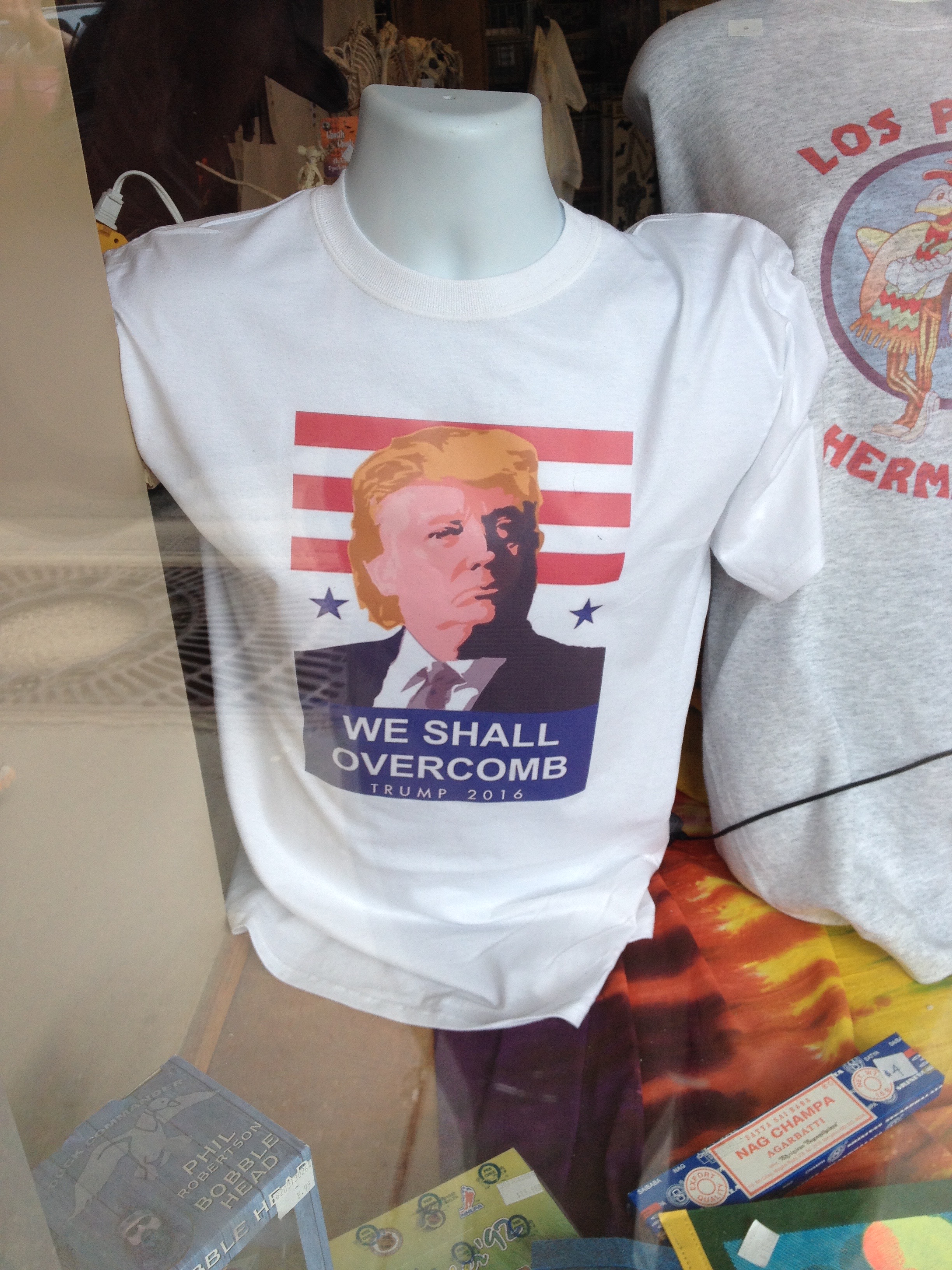
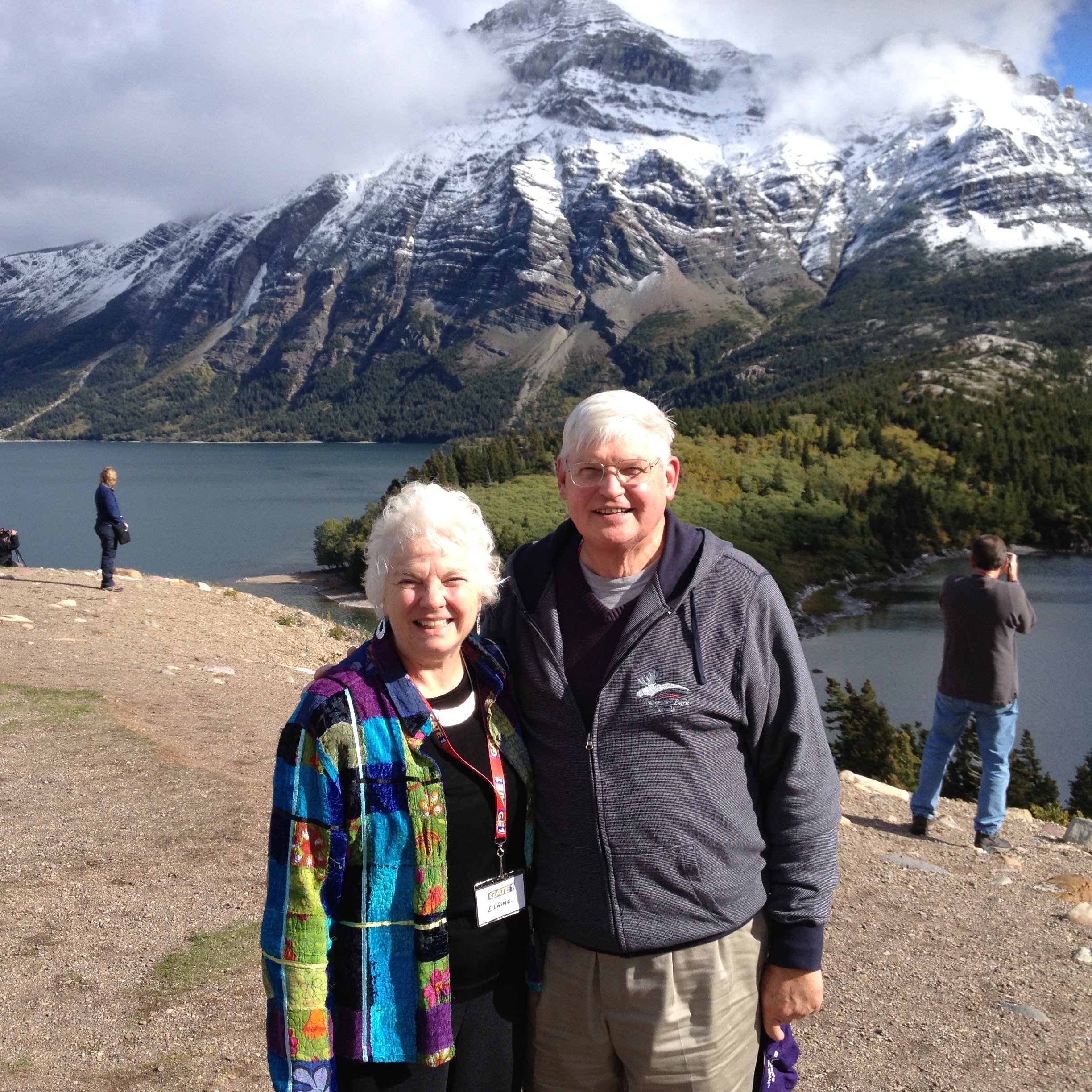
It was mid-September 2016.  Elaine and I were traveling in the Canadian Rockies; part of our 50th years of marriage celebration.  Walking in the lovely city of Banff, Alberta I spied a t-shirt in the tourist shop window. We laughed. I pointed it out to others who were on the trip.  I shared my concerns about Donald Trump. 

Two in our group were retired attorneys now living on Long Island. One was volunteering as a Catholic lay deacon who shared my concerns about “the Donald’s” mean-spiritedness, misogynistic behaviors, and racial bigotry.  The other attorney laughed saying, “I worked in the prosecutor’s office in NYC for years. Everyone knew he liked to pretend to be something he was not. We all knew Trump was ‘mobbed up’ with the Russian mob.”  “Don’t worry,” he said, “a guy like that will never be elected.”  “Okay,” I thought, “if you say so.  You have seen him up close.”

That was then.  He was wrong about Mr. Trump’s possible election.  Ever since, I have recalled the “mobbed up” comment.  As president, Mr. Trump spoke fondly of Mr. Putin and his dictatorship in Russia. There were other troublesome moments like a phone call that appeared to be asking for a bribe from the Ukrainian president.  In the intervening years as Mr. Trumps actions have become more bizarre. Now, he says the quiet part out loud about admiring dictators and hoping to be a totalitarian leader of the U.S.  I keep thinking about that conversation in front of the shoppe window in Banff.

This past week (2/2024) at a rally in South Carolina, Trump, railed against NATO countries suggesting they didn’t pay enough in dues.  He claimed, “one of the presidents of a big country asked whether the US would still defend that European country if they were invaded by Russia.”  Astonishingly, Trump replied “No, I would not protect you. In fact, I would encourage them (Russia) to do whatever the hell they want. You got to pay. You got to pay your bills.”

The words “mobbed up” keep recurring, ever gaining more salience for me.  I didn’t buy the t-shirt on that September day in 2016.  I buy that he was unelectable.  I was wrong.  Our nation keeps living though what seems to be an unending nightmare.  A nightmare that could endanger the future of our democracy and the freedoms of my grandchildren and the hope for freedom for children around the world.

There is much beauty in our world — in nature and in our flawed but essential institutions of democracy. Will truth and liberty and civility be easily combed over? Don’t fall into the trap I did — believing that IT CAN’T HAPPEN.

The Principle of Clarity

Full text of Bloomington Rotary Reflection Notes 2-7-24 (Parts were edited out at presentation for brevity.)

Mark Twain once said: “When I was a boy of 14, my father was so ignorant I could hardly stand to have the old man around. But when I got to be 21, I was astonished at how much the old man had learned in seven years.”

There is another side to this wisdom.  For me, now that I am in my late 70s, I am often surprised by how little I know.  Wendell Berry and Wes Jackson have written we need to often add an “Ignorance-based world view.”  Philosophers call this the Principle of Clarity.  The administration of Indiana University would benefit from a familiarity with this Principle of Clarity.  Clearly the administration’s failure to support the Kinsey Institute and canceling of the exhibition of Palestinian artist Samia Halaby at the last minute after months of planning demonstrate an abandonment of Academic Freedom that is dependent on open conversation and dialogue.

I mention Wes Jackson in honor of our speaker today who, of course, offers much valued alternative perspectives on agriculture. Wes is a geneticist, farmer, winner of MacArthur Genius award for research on perennial polycultures at The Land Institute in Salina Kansas.

As we enter Black History month while facing continuing racism exhibited by candidates for the highest offices in our nation and in a world filled with violent problems that seem intractable, there is need for open-minded clarity.  If you are like me, it is too easy to live in an information bubble, supported by confirmation biases. Without looking at events from multiple perspectives, it becomes easier to argue than to respectfully disagree. It leaves us in zero-sum worlds where an understanding the opposite person’s perspective and experiences are disregarded.

Last week, Traci Jovanovic offered a helpful word about knowledge of others related to the war in Gaza.  It caused me to think of my second visit (of what I think are now six trips) to Israel/Palestine; this in the 1988.  Mickey Mauer invited many civic, corporate, and religious leaders from Indianapolis. We met with Israeli and Palestinian leaders in political, economic, and educational arenas.  Near the end of trip, several of the Indy leaders held an unscheduled meeting seeking to come up with a solution they could offer after hearing from a few of the many sides in the region.  It was 40th anniversary of State of Israel and in the early years of First Intifada.

My friends, these leaders, were going to suggest ways to fix things. After a few minutes, feeling discouraged by the well-intentioned naivete of some, I left the meeting and sat in the bar with our Israeli tour guide and Palestinian bus driver. We chuckled together about the well-meaning effort to find easy solutions to struggles that had gone on for decades, centuries, well… millennia.  Indiana Jones movies were popular in those years.  I recall the Palestinian bus driver saying, with a wink to the Israeli tour guide, “Well, maybe these Indiana Joneses can solve things.  I wonder have they fixed all the problems in Indiana?”

Humility is a virtue that is enhanced by honoring the Principle of Clarity. For those of us who are Christians, it is worth noting that the keys to the Church of the Holy Sepulcher in Jerusalem have been entrusted to Muslim families for hundreds of years because the various “Christian” denominations and sects struggle and disagree over who should have what spaces in the church.  Alas.

One of my friends over the years was Palestinian Christian Rev. Alex Awad.  He worked with United Methodists who visited the region, was pastor of the East Jerusalem Baptist Church and taught at the Bethlehem Bible College. Several years ago, Rev. Awad suggested that perhaps the future will need something more connected at the grass roots, something deeper than politics. He said, “People must start dreaming about Palestinian and Jewish children playing together without refugee camps, segregation walls and tanks.  Then we can truly call it a Holy Land.”

Israeli peace activist Amos Oz has written “I believe that if one person is watching a huge calamity, let’s say a conflagration, a fire, there are always three options. 1. Run away; 2. Write a very angry letter or hold a demonstration; 3. Bring a bucket of water and throw it on the fire, and if you don’t have a bucket, bring a glass, and if you don’t have a glass, use a teaspoon, everyone has a teaspoon.” In his book “How to Change the World” Oz suggests everyone can join The Order of the Teaspoon.

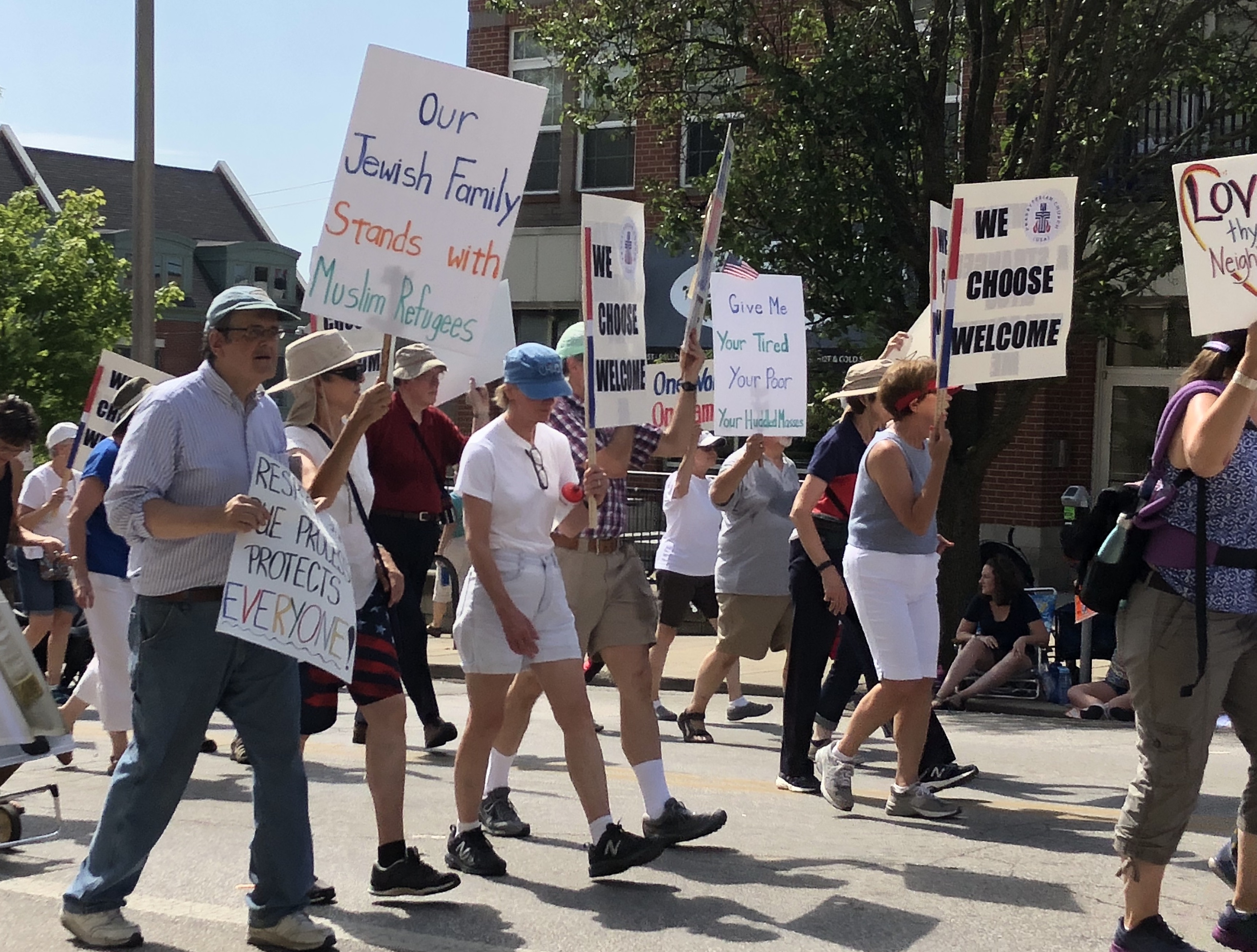
I am glad there are some people in this room working to find BIG SOLUTIONS to war and violence.  There are also small things we can do, right here, now, at home.  Welcoming the immigrant, finding shelter for the unhoused, saying no to racial prejudice and discrimination, seeking to mitigate domestic violence and gun play on our streets.

Jon Paul Dilts heads our club’s peace building committee.  He reminded me that February is Rotary’s “Peacebuilding and Conflict Prevention Month.” The February issue of Rotary Magazine offers several grass roots ways to seek clarity – to work across differences.  Much of the brokenness in our world has been ongoing for centuries, millennia.  Big steps and small ones toward peace are required.

I close with the wisdom of my friend Wes Jackson who said, “If your life’s work can be accomplished in your lifetime, you’re not thinking big enough.”

America’s UnCivil Wars

Republican Presidential Candidate Nikki Haley, campaigning in New Hampshire at the end of 2023, was asked a simple question “What caused the U.S. Civil War?” Haley’s response was word-salad. It was mumbo-jumbo talk about differing theories of governance. We hear you loudly and clearly Nikki Haley. One hundred and fifty-eight years after the end of the U.S. Civil War, she was unable to give the clear one-word answer to the question.  It was SLAVERY.

If anyone believes racism isn’t deeply embedded in our national psyche, our politics and civic discourse these more than fifteen decades later, they are either ignorant of history and/or unwilling to confess a sin that continues to erode our best future. There is considerable irony, of course, that the question was asked in New Hampshire.  New Hampshire is a state from which thousands of brave young men gave their lives to end slavery.

The answer Nikki Haley gives – or fails to give – underlines our need for national confession of sin, repentance, and reconciliation. It exemplifies our continuing Un-Civil Wars. If the Confederacy had prevailed in 1865, would someone like Haley be able to hold political office today?  One wonders. Yes, there are several auxiliary causal factors to U.S. Civil War; however, why avoid the basic truth?  It was, and is, wrong for human beings to be treated as property to be held and sold? This was the crux of the war — the evils of racism as evidenced in slavery.

On April 9th, 1865, General Robert E. Lee and the Confederate Army of Northern Virginia surrendered to General Ulysses S. Grant at Appomattox Courthouse, Virginia. Five days later President Abraham Lincoln was assassinated in Washington, D.C. A surface telling of the history misses that thousands of troops continued fighting after April 9th and April 14th

It also misses the continuing Un-Civil Wars across these past fifteen decades (Reconstruction, Lynchings, Jim Crow Laws, Segregation, Red-lining in housing, Unequal school funding and dozens of other discriminatory acts). The UnCivil Wars continue today as is evidenced clearly in voter suppression efforts and racial gerrymandering. Racist impulses and ideologies continue to shape our political conversation and actions, national values, and self-understandings. If one believes otherwise, please explain why Haley’s answer could not have included one simple word?