

UMC and PTSD

UMC & PTSD

A research psychologist friend told me about epigenetic trauma a couple of years ago. Can the traumas of one generation be genetically passed on to the next? Not just environmentally but biologically? Might there be some influence/alteration on the DNA of offspring following extreme stresses on the parent?  I thought it improbable, fantastical even; then began to discover the scientific research and was amazed. Rachel Yehuda writes in the Scientific American (July 1, 2022) of “How Parents’ Trauma leaves Biological Traces in Children.” The article makes modest claims, even suggesting some potential benefits; still it is clear this phenomenon is rooted in a growing body of research. Some report significant inherited vulnerabilities among children, as gene functions are altered by violence and trauma to a parent. 

My research friend notes that over the past seventy years, generation after generation have lived in a time when foreign wars never ceased for long. For decades now gun violence and mass shootings have become a staple in our information diet.  He conjectures that well over 60% of our societies’ population lives with some degree of Post-Traumatic Stress Disorder or Depression.  Significant increases in suicide rates and treatment for severe depression stand as evidence something has changed.

This has left me wondering about the United Methodist Church. What has been the impact of decades of disinformation and disagreement on the denomination and leaders?  Following the decisions of the 2024 General Conference in Charlotte, removing the harmful language excluding LGBTQ persons from congregational care and leadership, the question of institutional epigenetic trauma weighs on my mind. Sociologists have long understood the phenomenon of “structural effects” or “institutional effects.”  Persons are shaped, restricted, influenced, limited, or open based on the ecologies in which they reside and work. This has been evident in the responses of denominational leaders following General Conference. An ecology of abuse and division has prevailed in the denomination for decades. Much of it is carried out by well-funded advocacy groups like the so-called Institute for Religion and Democracy and Good News Movement.

The decisions in Charlotte, long overdue, offered a time of relief, celebration, joy.  I was there – and found myself laughing and sobbing all at once. As some sang and hugged, there was a muted quality to the celebration. A good thing, I thought. It was not a time of gloating or retribution. As Steve Harper puts it, we need to be an “Un-reviling Methodist Church” to become, in truth and fullness a “United Methodist Church.” This spirit of forgiveness and opportunity was reflected in persons who spoke in favor of making space for congregations who had disaffiliated to return in the future. 

Still, it seems, many denominational leaders were careful not to engage in too much celebration in Charlotte and upon returning home these “leaders” were more inclined toward defense. Many who quietly supported welcoming all into the church, returned home (to their local context – district or conference) with a more muted response. Their main theme became, “If you disagree with the decision in Charlotte, don’t worry, your local church doesn’t have to change. You can keep behaving the way you always have.” Meaning keep excluding as you will.  This is to my understanding much more a PTSD response than imaginative leadership.  The violence done by groups specifically organized to do damage has left its generational marks.

I can easily ask “Where is the courage?  Where is the imagination for the future?” And I do. Even so, I am mindful that for decades groups organized to do damage on the UMC continue at their work. Even before we left Charlotte, there were forces publishing and on social media seeking to bully and diminish the joy that should otherwise accompany the new day of openness and welcome for United Methodists.  

I don’t have an easy remedy to this institutional epigenetic trauma.  My research friend recommends meditation, prayer, music, seeking calm, new collaborations, reaching out to others who have been wounded. In my experience imagination will require finding time for laughter and celebration. It will require an end to seeking to placate those who have been a part of the damage inflicted. Now is time for generational healing and for the imagination that will follow. 

We are passing through a season of Ascension and Pentecost in the liturgical year.  The fires of Pentecost continue to burn. Willie James Jennings of Yale Divinity School says of this season, “The revolution has begun.”  Time to focus on the future.  Time to admit our institutional PTSD and find care in one another and in our core and gracious identity as United Methodist.
Locked up in the Rush County Jail

Locked Up in the Rush County Jail

Tears fall from her chin; she carries a never ending uneasiness. Ashamed she waits.  In a nearby cell, he fidgets, knees bouncing uncontrollably, repentant without a path to forgiveness, he waits for a phone call.  Both have made serious mistakes. Life-altering condemnation results, closing off future options. I do not know these two personally, but I can “see” them sitting alone, or with a cellmate, or standing in shackles in a courtroom.  Such scenes continue across my state and our nation.  Each person has a name, a history, a family, friends, and enemies waiting on the outside.

They have “done harm.”  Some crimes are extremely serious, I understand.  Much of the damage, however, has been done to themselves and their loved ones. This self-harm is often rooted in addiction or psychological illness. Some are dangerous to themselves and others.  Sometimes, not always, these who sit and wait have journeyed through poverty, homelessness and/or abuse. We all lose. In Indiana alone the estimates are that opioid addictions cost the state between $4 billion and $5 billion in lost revenue, incarceration, and recovery expenses every year.

I write of “Rush County” jail more as metaphor than the actual place. There is a Rush County; Rushville, Indiana is the county seat. It is grand old town, where Wendell Willkie headquartered his 1940 campaign as the Republican candidate for the President.  It is east and south of Indianapolis.  Traveling south and east it is on the way to Cincinnati. With a population of roughly 6,200, it is like hundreds of towns dealing with the scourge of addiction and other illness. It is a symbol that across the board, once arrested, so many are rushed to vilification, only to languish in jail.  It is quick judgement and slow justice. The wheels of our legal system grind ever more slowly as so many weep and wait for that phone call.

In Monroe County, my home, our jail is a disgrace – overcrowded, unhealthy, and understaffed. Monroe is regarded as one of the most progressive counties in Indiana, yet every month seems to find another incident reflecting the horrors of our jail. We have a fast train into jail and a slow walk to trial. This, despite a sheriff, judges and commissioners who diligently seek to change the situation and build a safer facility.  It is already too late for so many. 

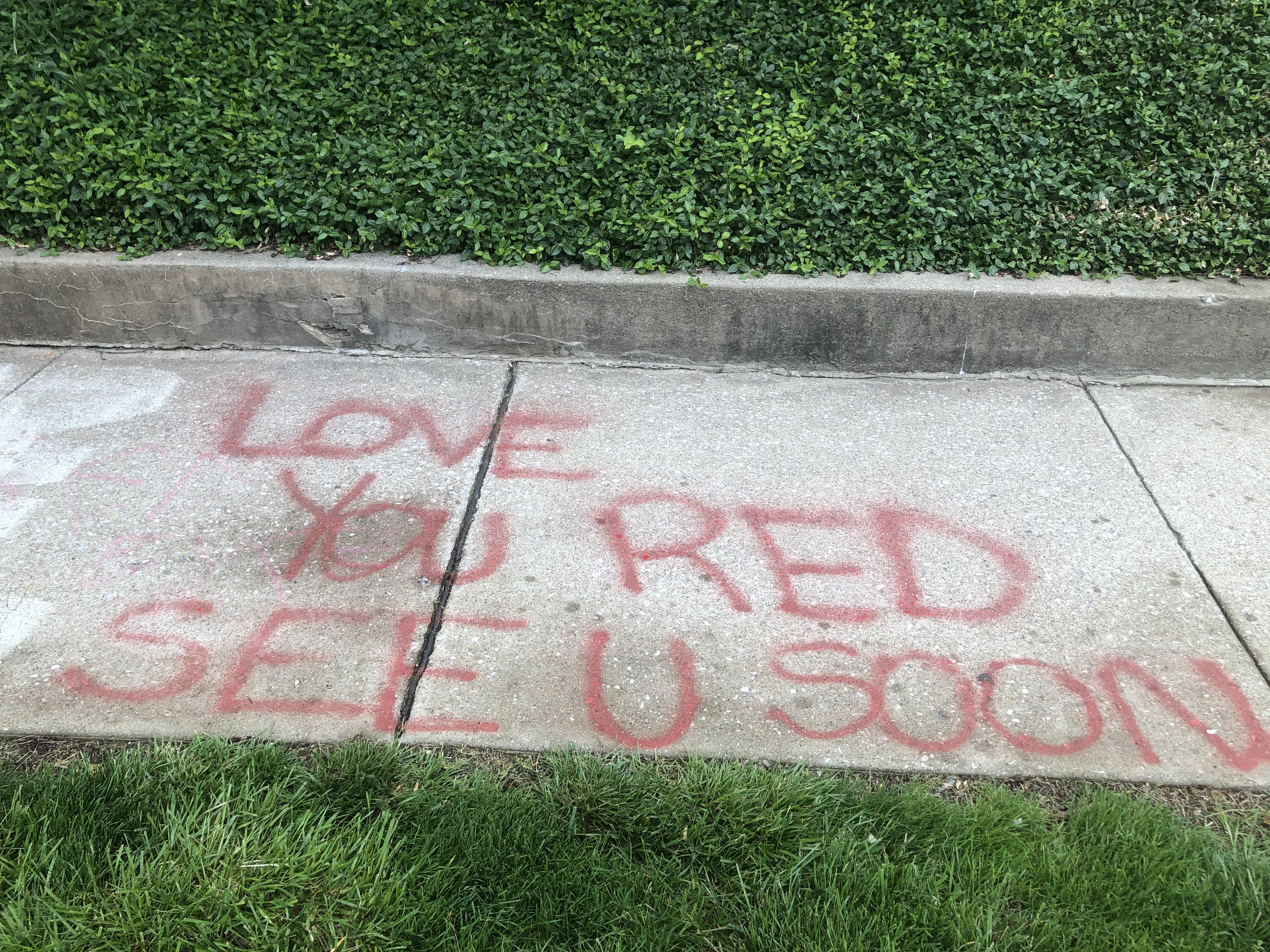
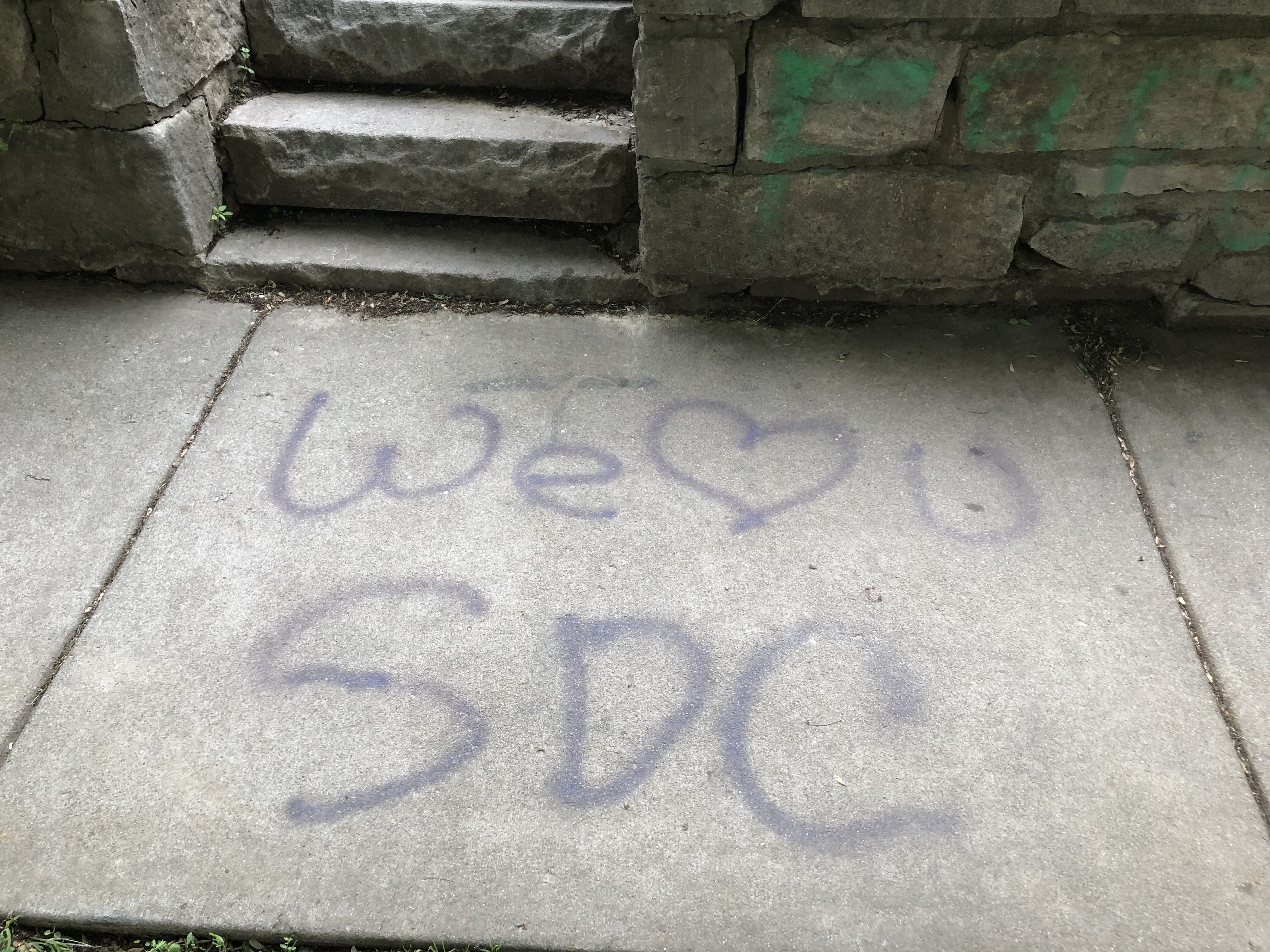
Our county jail is only a few blocks from where I live.  Walking along the sidewalk paralleling the jail I see scrawled messages in chalk or paint.  These are messages of hope, love and encouragement to prisoners who can look out and see what friends and family have written.

Over my decades as a pastor, I have met with, walked alongside, and known far too many who are like the two persons imagined in the opening paragraph. I do not know names of those currently in Rush – or Monroe – County facilities.  I do know these are not only imaginary.  These exist, just as surely as you do, good reader.  I know parents and spouses, children today who have loved ones being held, awaiting trial.  

I may not know or understand all the “crimes,” but I do know there are currently over a half-million such persons held in over 5,000 local jails and youth detention centers in the U.S.  There are another 1.5 to 2 million persons held in state and federal prisons. Our nation consistently has the highest incarceration rates in the world.  Our practices still have the mark of primitive and counterproductive logic.  It is built on monistic, either-or understandings of human behavior and psychology.  It is not far removed from shameful practices of shunning, exclusion, and projecting our fears on the most vulnerable among us.  Are there evil actors? – yes, of course.  Might our systematic response be greatly flawed? – yes, of course.

Frankly, much of what continues is often based on simplistic theologies of good and evil that are subject to manipulation and misuse by the wealthy and powerful.  We have become experts at isolation and seem to know very little about restoration. Our young believe our systems are rigged in favor of the wealthy. Are they not? I find myself thinking of the families who see loved ones locked up for minor crimes of addiction, while at the same time watch a former President of the U.S. use his power and wealth to manipulate the current court systems to avoid trials and dodge accountability. 

We spend more than $182 billion on incarceration each year in the United States.  Increasingly this is built on “for profit” prisons, that turn incarceration into a profit-making venture with the inmates as customers-without-a-choice facing exorbitant expenses for phone calls or other prison “benefits.”

I am far from being an expert on how to best address these concerns.  There are many acronyms for efforts underway, already proposed and practiced. Over the years I have seen us turn to more flexible sentencing, home confinement, halfway houses, drug courts, mental health courts, restorative justice and/or restitution options, community service, etc.  It is a complex system, filled with obstacles and some more enlightened practices.  My appreciation for conscientious judges, defense and prosecuting attorneys, sheriffs, jail and police officers is enormous.  I am grateful for, and applaud, all those who are pushing for reform, for a better way.  Still, too many languish behind bars, weeping alone and waiting for that phone call.