Indiana University is in the midst of troubling acts of racist retrenchment. What is wrong with this picture? Yes, a backsliding into racism at that Indiana University, the one with a flagship campus in Bloomington, Indiana, and regional campuses around the state. Yes, the I.U. that has been shaped by commitments to diversity and inclusion. Tes, the one shaped by the likes of Herman B Wells and persons of academic excellence, integrity, faith and civic pride over the decades.
The great comprehensive university where notable Black alumni, students, faculty and staff are so multiple, it is too challenging to begin a list here. These are a few of the thousands of I.U. greats. In my personal experience, I have been blessed by friendships with folks like Joseph Taylor, LaVerta Terry, James Holland, David Baker, Vi Taliarerro, William McKinney, Camilla Williams, Charlie Nelms, and on and on the list goes.
It is unbelievable to those who know the historic commitments of this school. This racist retrenchments has resulted in the elimination of resources for students of underrepresented groups as well as critical support for faculty and staff. The actions challenge I.U.’s remarkable, historic legacy as a place where all are welcome and offered the opportunity to thrive. In recent months the following actions have taken place:
1. The awarding of scholarships designated for specific students based on ethnicity or sexual orientation have been “paused.”
2. Websites and campus materials have been scrubbed of words and phrases related to diversity or programs seeking racial understanding.
3. Posters around campus with the words “Build a Community Where All Belong” have been removed from bulletin boards and public spaces.
4. Names of programs or offices that provide services or support for underrepresented students are being removed or painted over or removed. The sign OVPDEI (Office of the Vice President for Diversity, Equity and Inclusion) has been painted over and left blank. Programs housed in this now unidentified building include Groups Scholars, FASE Mentoring, Twenty First Century Scholars and Hudson-Holland Scholars. Will all cultural centers face such identity-theft and censure, while programs that serve virtually all White programs and services go unchanged!
5. The essential core of academic freedom is being tested. Faculty face threats to their course materials over the use of language and/or ideas that call for the addressing of systemic or institutional racism.
We, the students, alumni, faculty and staff and friends of Indiana University, demand that on all its campuses, Indiana University STOP this retrenchment of White Racism being treated as normative. We demand that a commitment to the welcoming of ALL immediately be restored no matter race, class, creed or sexual orientation.
Hope, when joined with mutual respect, becomes the oxygen supply for the lungs of a healthy democracy. In these troubled times, 19th Century Danish Philosopher Søren Kierkegaard offers perspective, a challenge, and a way beyond suffocating despair. In his classic “Sickness Unto Death,” this Christian theologian speaks of despair as a sin. Despair is, he suggests, a sin even worse than death. The reader is counseled to find the small pathways ahead, to persist, even when tempted to be captured in the clutches of fear and doubt – even when tempted to be held hostage to despair. While anxiety may be unavoidable; Kierkegaard argues life calls us to continue forward, step by step, with whatever small light available.
Fear and disrespect are endemic in our nation. There is a tariff on HOPE. Many national and state officials are intent on destroying our “Commons” – the institutional trust established over the past two centuries. They act in ways to paralyze, to control, to tie us in contemporary knots of despair. Normality, civility, and decency are submerged in autocratic surges washing across our society.
This deluge is intended to overwhelm, to control, to undermine. Such a “flooding the zone” strategy comes ceaselessly at us and from many tributaries: threats to the funding and governance of our universities: ending humanitarian aid to the poorest in our world; closing of scientific research necessary for public health; attacks on the judiciary and law firms; the deconstruction of a free and independent press; pressures on elected officials that leave one U.S. Senator saying “we are all afraid”; and, at base, there is the undoing of the personal constitutional rights for ordinary citizens and anxious refugees. These all coincide with what can be identified as practiced strategies from an autocratic playbook, one that has been tested and proven effective in other nations.
Alongside this national deluge of intolerance, the Indiana Legislature ended its recent session passing bills that can only be understood as a war on health care, on public education and on the poor. Indiana Senate Bill 289 was adopted as an “anti-DEI measure.” Touted as “bringing balance” to the teaching of history, civics and the social sciences, it instead is designed to censor, punish, place a chilling effect over public school districts or university curricula. It is a threat to any who dare depart from the ‘official truth’ presumed by those in power. It is an effort deny the tragic realities of racial, economic, religious, and sexual discrimination in our past and to end discussion of systemic economic disparities that continue. Limits to funding Medicaid and public health resources will have devastating consequences on the poor in the state, delaying and denying needed care.
Persons without shelter in Indiana can now be placed in jail and/or face a $500 fine for “camping on the streets”! To add insult to injury, the final draft of the state’s budget contained a Trojan Horse, with the insertion, without public input, calling for “productivity reviews” of university faculty. It also included dramatically altered board governance structures for Indiana University giving the governor power to select all the university board members.
Apart from such legislation, other efforts to upend the truth and distort reality are astonishing. Indiana Lieutenant Governor, Micah Beckwith, posted a recent video celebrating what he misleadingly calls a “great compromise” made at the 1787 Constitutional Convention. Beckwith asserts the decision to count persons held as slaves as 3/5ths human (as property) was “a great move forward that led to the abolishment of slavery.” He turns history on its head, ignores the resulting decades of abuse, lynchings, and systemic discrimination. He quite literally whitewashes the dehumanization of slavery, the segregation that followed with Jim Crowe laws, mortgage redlining and the enduring systemic discrimination. Beckwith attempts to tell us that “what is up is down and what is true is false.” He ignores the tragic reality of more than a million men killed or severely wounded in the bloody U. S. Civil War and undercuts the Thirteenth, Fourteenth and Fifteenth Amendments to the constitution passed to assure the rights for all and designed to undergird equality.
A good friend recently said, “For the first time in my adult life, I am embarrassed to be a Hoosier and related to Indiana University.” Referring to the deluge of discriminatory initiatives taken by the governor and state legislature, he was also noting, with sadness, a compliant university administration, that has over and again failed to support academic freedom or stand against the bigotry of supercharged bullies. My friend spoke his sadness over the growing and blatant displays of racism and intolerance. Even so, despite such recent efforts, my friend said he was not giving up or dropping out.
Yes, these are unsettling times. The drift – make that the flood – toward intolerance, deception, and fascism is upon us. We dare not hide or take cover in some false cocoon of isolation, thinking we can somehow choose to avoid the sin of despair.
During the recent Little 500 Weekend in Bloomington horrible, racist posts were placed on social media. They spoke of “the smell of welfare” and “turning Bloomington’s Kirkwood Avenue into Atlanta.” There was more racist language, much worse than this, designed to encourage bigotry and foster white nationalism. These days such social media posts are likely generated by bots, foreign and domestic. They are designed to inflame passions and make false claims about marginalized others and are intentionally framed to spread fear and do harm.
Those of us who have the privileges accompanying “safe” racial identities, or our education, or other accidents of history dare not give in to despair. As Dr. Martin Luther King Jr. put it “We are caught in an inescapable network of mutuality, tied in a single garment of destiny.” King was not simply suggesting all our histories and futures are connected and interdependent; he is also saying the struggles for civil rights for everyone must not end. There continues to be work that needs to be done and injustices to be addressed.
Kirkegaard’s insights 175 years ago still ring true: despair that immobilizes is worse than death. Anxiety is a human given, but despair is a sin. Eleanor Roosevelt proposed “No one can make you feel inferior without your consent.” Social scientists W. I. and Dorothy Thomas offered that “What we perceive to be real becomes real in its consequences.” How then shall we act?
Kirkegaard’s “Instead of Death” is based on the story of Lazarus as told in the eleventh chapter of the Gospel of John. On hearing the news of Lazarus’ passing, Jesus responds, “This sickness will not end in death.” Those captured in despair, will miss the potential for life. We have the power to choose how we react to horrible news, to deadly external influences. Despair is a loss of perspective, a loss of agency, of self-worth. It is a loss of hope.
What now are our choices? What then can we do? We begin by repudiating the climate of fear. We can act and not be washed away in the fascist flood. We can make a difference.
Here are three areas to explore:
When you see something, say something. An African American friend tells of being disrespected while shopping. In checking out, a clerk used clearly disrespectful and demeaning language. To my friend’s surprise, another customer, nearby, overhearing the exchange, gently but firmly in a quiet and clear voice said, “We are all better than this.” Later, in the parking lot, the surprising voice offered support and friendship. We can welcome difference. Maybe it is as simple as responding to a frown with a smile. A phone call, a visit that may help another. We can thank others for what they do. Ask how you might help. Encourage a teacher, a coach, a nurse, a therapist. Express appreciation to those who serve as police officers, fire fighters, local government officials. Support public radio and television now are under attack.
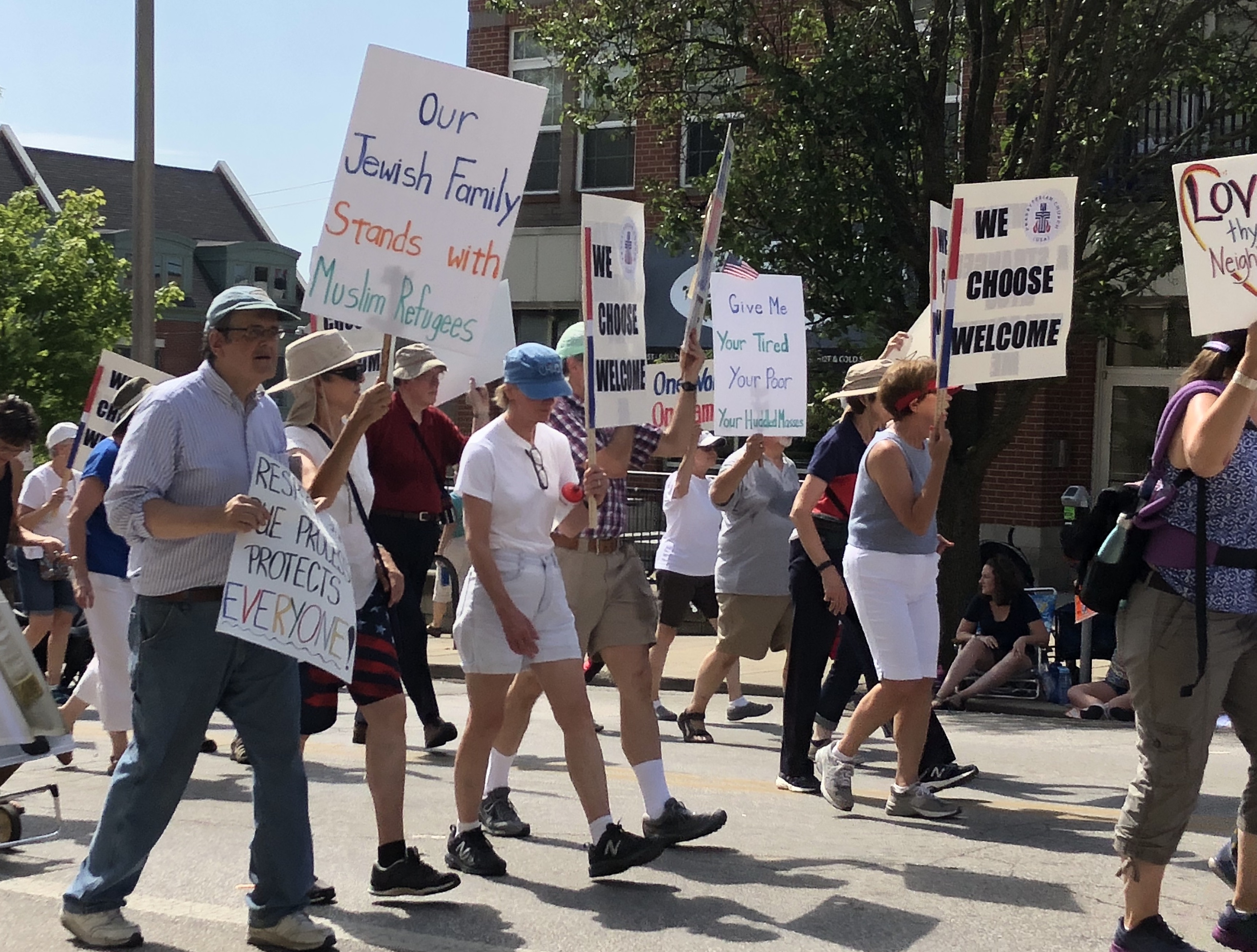
Reach out, make a new friend, and/or make a difference somewhere. Loneliness and fear are often the source of distrust and misunderstanding. This is a time to find ways to support the good work of programs like Exodus Immigration Refugee, NAACP, the Human Rights Commission. Host a dinner or picnic where persons from diverse backgrounds are welcomed and introduced. Perhaps make a new friend and together support our public schools in new ways, perhaps as a tutor or in support of a teacher. In Bloomington there are ways to support the healthcare for those with few resources through groups like HealthNet or by offering gratitude to our After-Hours Ambassadors working with the Community and Family Resource Department. We can write the university president asking why her administration does not better respond to attacks on academic freedom or to racist tweets that damage the sense of wellbeing among our students and other residents. Ask the president why the university doesn’t join in efforts provide more for low-income housing, while it is the university driving up enrollments contributes to housing shortage and expense? Ask your banker, pastor, corporate leader how they might contribute to a more diverse racially community? For some of us, who have the opportunity and occasion, we need to encourage broad representation from marginalized populations on boards and as candidates for leadership positions.
Do one thing daily to challenge bigotry and discrimination. Yes, I am going to say it – call or write your congressional or state representative challenging them to act against the flood of disinformation and intimidation. This is basic. Write a letter to the editor. Some days it may be as simple as being a friend to someone you know or a stranger you meet.
No need to be a crusader – some have that calling. Others of us can do just one thing a day. Every day we can chose action and not fall into the sin of despair.
Full text of Bloomington Rotary Reflection Notes 2-7-24 (Parts were edited out at presentation for brevity.)
Mark Twain once said: “When I was a boy of 14, my father was so ignorant I could hardly stand to have the old man around. But when I got to be 21, I was astonished at how much the old man had learned in seven years.”
There is another side to this wisdom. For me, now that I am in my late 70s, I am often surprised by how little I know. Wendell Berry and Wes Jackson have written we need to often add an “Ignorance-based world view.” Philosophers call this the Principle of Clarity. The administration of Indiana University would benefit from a familiarity with this Principle of Clarity. Clearly the administration’s failure to support the Kinsey Institute and canceling of the exhibition of Palestinian artist Samia Halaby at the last minute after months of planning demonstrate an abandonment of Academic Freedom that is dependent on open conversation and dialogue.
I mention Wes Jackson in honor of our speaker today who, of course, offers much valued alternative perspectives on agriculture. Wes is a geneticist, farmer, winner of MacArthur Genius award for research on perennial polycultures at The Land Institute in Salina Kansas.
As we enter Black History month while facing continuing racism exhibited by candidates for the highest offices in our nation and in a world filled with violent problems that seem intractable, there is need for open-minded clarity. If you are like me, it is too easy to live in an information bubble, supported by confirmation biases. Without looking at events from multiple perspectives, it becomes easier to argue than to respectfully disagree. It leaves us in zero-sum worlds where an understanding the opposite person’s perspective and experiences are disregarded.
Last week, Traci Jovanovic offered a helpful word about knowledge of others related to the war in Gaza. It caused me to think of my second visit (of what I think are now six trips) to Israel/Palestine; this in the 1988. Mickey Mauer invited many civic, corporate, and religious leaders from Indianapolis. We met with Israeli and Palestinian leaders in political, economic, and educational arenas. Near the end of trip, several of the Indy leaders held an unscheduled meeting seeking to come up with a solution they could offer after hearing from a few of the many sides in the region. It was 40th anniversary of State of Israel and in the early years of First Intifada.
My friends, these leaders, were going to suggest ways to fix things. After a few minutes, feeling discouraged by the well-intentioned naivete of some, I left the meeting and sat in the bar with our Israeli tour guide and Palestinian bus driver. We chuckled together about the well-meaning effort to find easy solutions to struggles that had gone on for decades, centuries, well… millennia. Indiana Jones movies were popular in those years. I recall the Palestinian bus driver saying, with a wink to the Israeli tour guide, “Well, maybe these Indiana Joneses can solve things. I wonder have they fixed all the problems in Indiana?”
Humility is a virtue that is enhanced by honoring the Principle of Clarity. For those of us who are Christians, it is worth noting that the keys to the Church of the Holy Sepulcher in Jerusalem have been entrusted to Muslim families for hundreds of years because the various “Christian” denominations and sects struggle and disagree over who should have what spaces in the church. Alas.
One of my friends over the years was Palestinian Christian Rev. Alex Awad. He worked with United Methodists who visited the region, was pastor of the East Jerusalem Baptist Church and taught at the Bethlehem Bible College. Several years ago, Rev. Awad suggested that perhaps the future will need something more connected at the grass roots, something deeper than politics. He said, “People must start dreaming about Palestinian and Jewish children playing together without refugee camps, segregation walls and tanks. Then we can truly call it a Holy Land.”
Israeli peace activist Amos Oz has written “I believe that if one person is watching a huge calamity, let’s say a conflagration, a fire, there are always three options. 1. Run away; 2. Write a very angry letter or hold a demonstration; 3. Bring a bucket of water and throw it on the fire, and if you don’t have a bucket, bring a glass, and if you don’t have a glass, use a teaspoon, everyone has a teaspoon.” In his book “How to Change the World” Oz suggests everyone can join The Order of the Teaspoon.
I am glad there are some people in this room working to find BIG SOLUTIONS to war and violence. There are also small things we can do, right here, now, at home. Welcoming the immigrant, finding shelter for the unhoused, saying no to racial prejudice and discrimination, seeking to mitigate domestic violence and gun play on our streets.
Jon Paul Dilts heads our club’s peace building committee. He reminded me that February is Rotary’s “Peacebuilding and Conflict Prevention Month.” The February issue of Rotary Magazine offers several grass roots ways to seek clarity – to work across differences. Much of the brokenness in our world has been ongoing for centuries, millennia. Big steps and small ones toward peace are required.
I close with the wisdom of my friend Wes Jackson who said, “If your life’s work can be accomplished in your lifetime, you’re not thinking big enough.”
We are off to San Diego in August. Interim lead pastor at San Diego First United Methodist Church, I am nervous and excited. Well-meaning friends upon hearing these plans say, “Oh, lucky you, it is such a beautiful city with great weather, you are really going to enjoy it. You will probably get out there and not miss us at all. You’ll not want to return.”
Well, at this age and stage in life, I know that although my friends mean well, they are both right, AND they are wrong. Yes, we plan to enjoy San Diego to the full, make new friends, discover great culinary and cultural experiences and share ministry with the good folks. As much as we are looking forward to this odyssey, we also know that there will be things we will miss. I have made a list the top ten things I suspect I will miss:
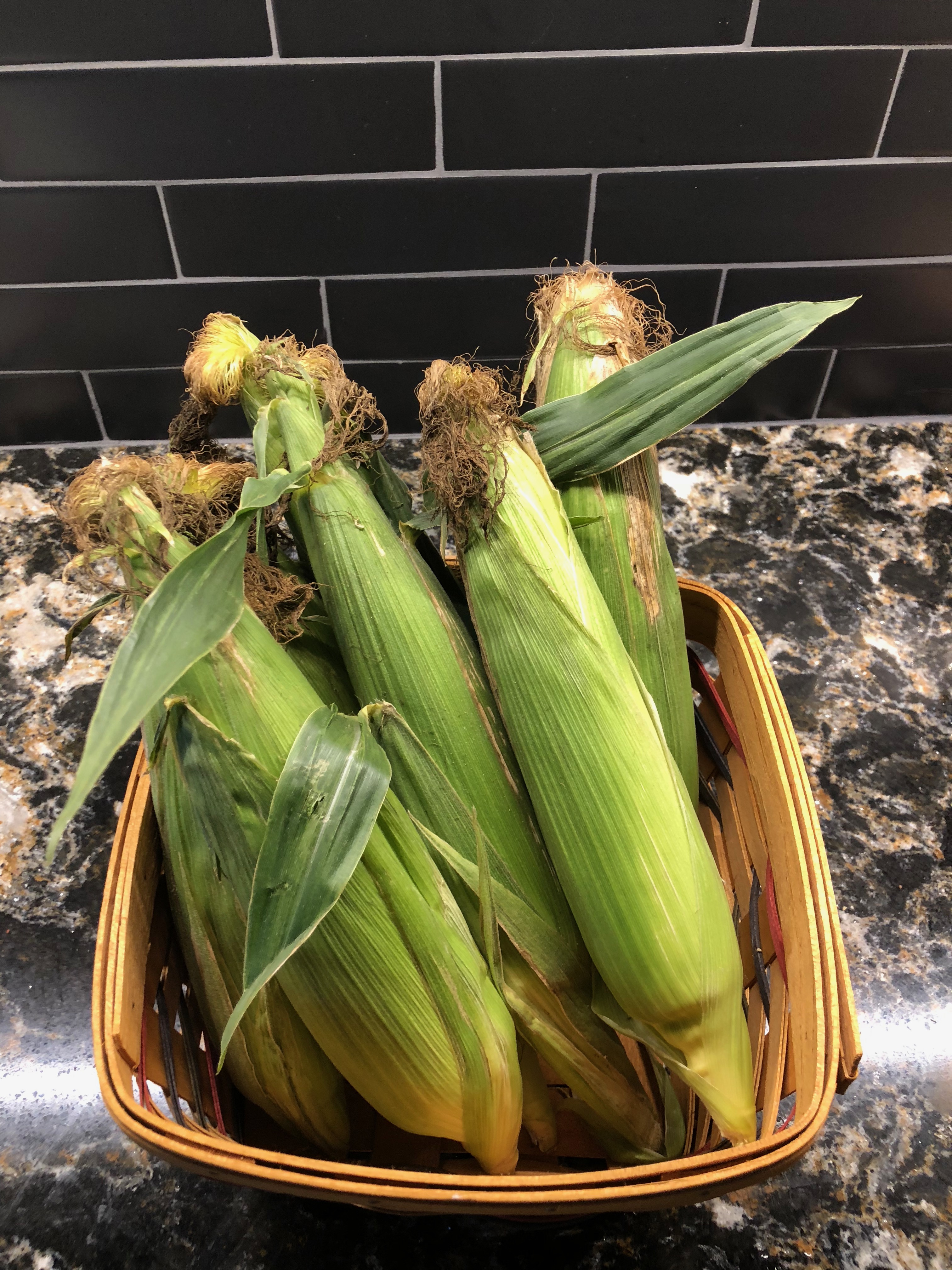
1. Indiana grown, Non-GMO sweet corn, fresh from the field, available at our GRAND farmer’s market each week. Yes, I know they have fresh sweet corn in California. I have lived there, twice, and loved it. However, nothing brings back my childhood like field fresh corn (along with watermelon). And, for Elaine, she will miss fresh from the garden Indiana heirloom tomatoes. Each one of these is “summer candy” and a rare delicacy on hot, humid Indiana days.
Winston and Sue Shindell at Christmas 2017
2. We will miss friends made and nurtured over the decades who are a lot wacky and all the more to be loved. Do they know how to party! There are dozens of them — we have stood by them in times of joy and sorrow — and they have stood by us. It is a dangerous thing to start listing Indiana friends — so, I won’t. It is sufficient to say that Elaine and I would be lost without their laughter, wisdom, patience with my mistakes and willingness to forgive. And they know too many secrets to allow them to think we wouldn’t return!
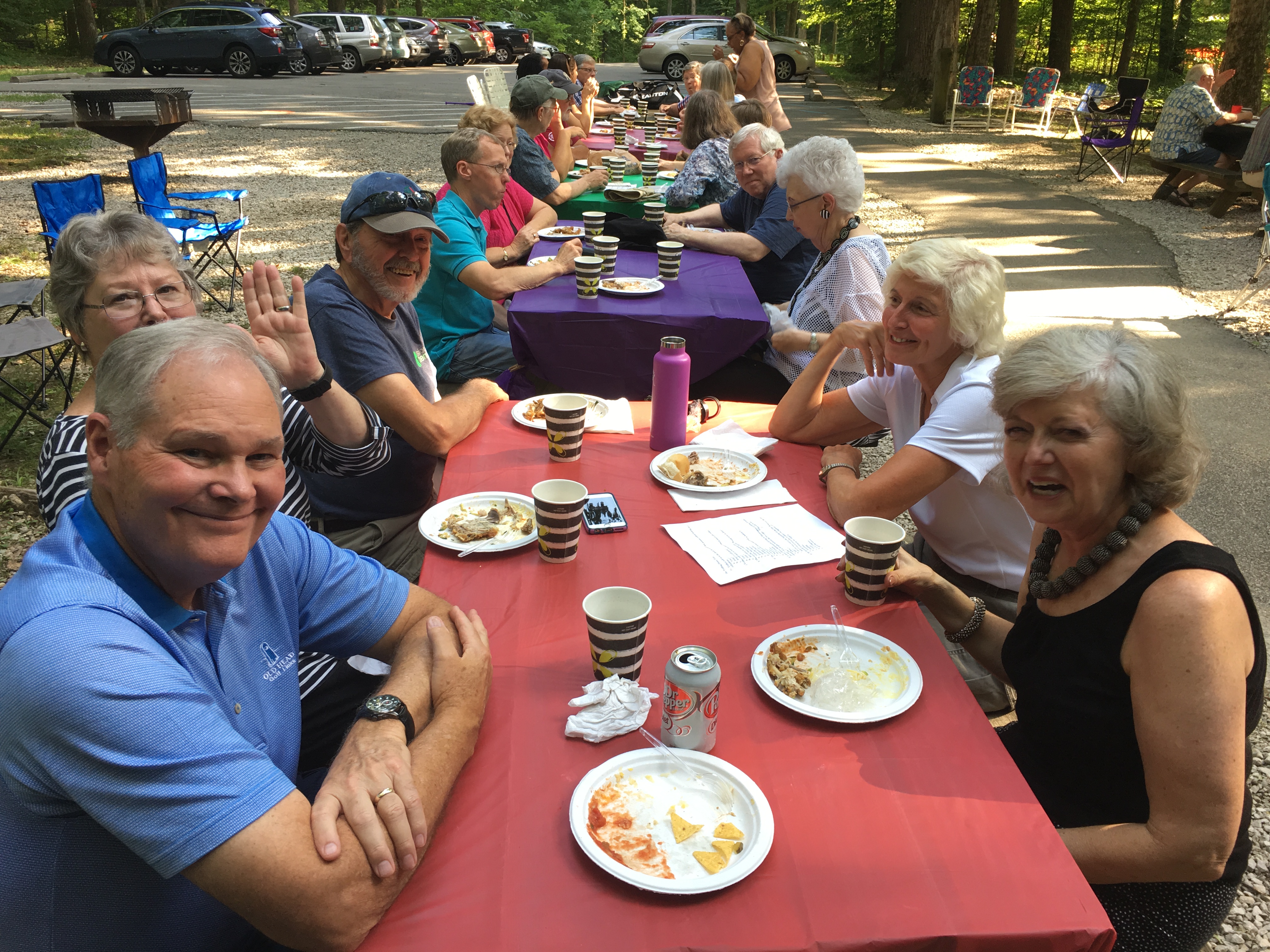
Friends at the Amerson’s 4th Annual Trifling Picnic, August 2017
Maria Gonzalez, Bory Colin, Ruben and Isaiah, June 30, 201
Each year we host our annual “Trifling Picnic.” About 75 to 100 friends normally show up. Yes, we will host the picnic again this year, just before we head to California. What is a “Trifling Picnic? Well, John Wesley counseled that pastors should not be triflingly employed. We offer an opportunity for folks, clergy and lay, Methodist or not to break this rule.
3. We will miss new friends like Maria Gonzelez, Bory Colin, Joshua and Isaiah. This was the dedication of their new home on June 30th. Monroe County Habitat for Humanity will build and dedicate its 200th home later this summer. We will miss that and I will miss the wonderful friends I have on the staff and board of this affiliate!
4. I will miss colleagues in Ministry. Pictured here are Revs. Metheny, Mather, Moman and Beck. We are friends who worked together at Broadway UMC,Indianapolis in the 1980s. What a team! What memories! These colleagues inspire, challenge and allow me to grumble much about the church, particularly our denomination. They know that I refer to the Indiana Annual Conference as the “Northern Dixie Conference” (with apologies to my southern friends). Yes, I will miss grumbling about the foolishness of the latest church development techniques while our congregations are hungry for relationships and respect for the gifts they bring.
5) We will miss the GREAT MUSIC! In Bloomington, much of it free or very reasonable in cost. There are literally hundreds of concerts each year at the Jacobs School of Music at I.U. We recently heard the Student Pops Symphony Orchestra. It was FIRST RATE. Over the holiday week there will be a free concert in the park by our friend and marvelous musician Carrie Newcomer. Then, next week it is violinist Joshua Bell who is in concert on campus. This fall will be the Lotus music festival we will miss. And if you are lucky, our friend ,the incomparable, Sylvia McNair will be featured in a fundraiser for a local charity. Wow… I will miss all of this — and I haven’t mentioned the live theater or the restaurants or performances at the auditorium all in walking distance from our condo!
6) We will miss cheering for the World Champion Chicago Cubs. (Hey, I know that was back in 2016 but we waited a century for this win and should be granted a few years to claim to be champions out of respect for the suffering of Cubs fans over the years.) The Cubbies are looking good in 2018. We will miss what should be an exciting pennant race at Wrigley Field. Elaine and our daughter Lydia Murray in picture — the Cubs won that day!
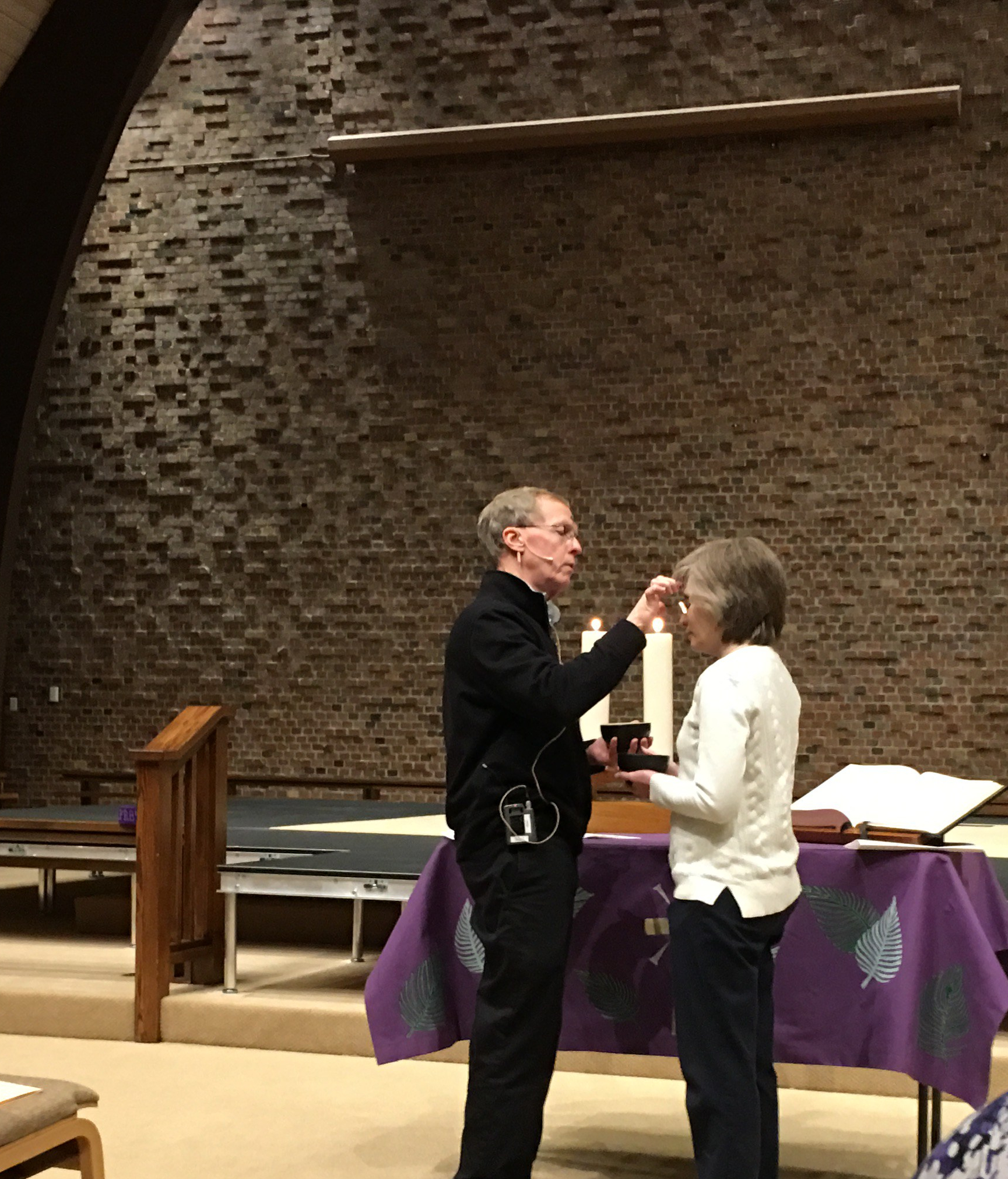
Revs. Mary Beth Morgan and Jimmy Moore, Ash Wednesday, 2017.
7) We will miss our fine pastors, Mary Beth Morgan and Jimmy Moore at St. Marks UMC in Bloomington. We will miss all of our friends in the congregation as well. What a great congregation and place filled with fond memories.
Judge Sarah Evans Barker, photo from the Indianapolis Monthly
8) I will miss GREAT HUMAN BEINGS in so many categories: carpenters, plumbers, farmers, janitors, teachers, physicians, service folks, lawyers, barkeeps, administrators, and a few rogue preachers. I will especially miss our great civic and judicial leaders. Federal Judge Sarah Evans Barker is among the BEST. We have many other such fine civic leaders — Mayor John Hamilton and his uncle, retired Congressman Lee Hamilton.
Indiana also has folks I consider to be less than worthy of admiration (no names please). However, I will miss working for the election of some good folks to replace them. We have persons running for election this fall more committed to creating the beloved community than practicing the fear laced demagoguery evident in our national body politic these days. Some of the demagogues are, sad for me to say, “fellow Hoosiers.” Hopefully we can offer them a free ticket home from Washington this fall. Yes, we are keeping our residence in Indiana as our votes are needed here.
9) I will miss places like New Harmony a wonderful retreat, place for long walks and great educational experiences. There are many such places in the state…. Indiana University in Bloomington is one I count as among the best.
AND # 10 on the list?
Okay, I confess, I am going to miss snow — not the slushy grey-February-type snow. I will miss the bright snowy days of fall and spring when our streets and fields are festooned with new garments of white. Such snow is often gone by afternoon or the next day and that is alright with me. In the meantime — I will enjoy the sunshine of San Diego!
“That Dumb Preacher” and the Gift of Embarrassment
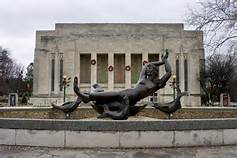
Fifty years ago this past summer I was provisionally ordained as a Methodist pastor. Young and determined to change the world, I was “set aside” for ministry by Bishop Richard C. Raines in a pomp-filled ceremony in the Indiana University Auditorium.
I. U. Auditorium
I was ready to change the world — and I was so little aware of the way the world would change me. Now there is time to look back, to reflect, to laugh and learn anew.
These past five decades as a clergy person have been filled joy and sadness. All in all, it has been good ride, especially as I came to value the whimsy in life. It has been good, in part, because of many moments of embarrassment. Yes, I said embarrassment. It keeps one humble. One sees in these times both the stodgy excesses of organized religion and one’s own foolish efforts at vocational perfection. Here is my top ten list — memories of times I played the role of “that dumb preacher.”
One Saturday in June, presiding at the fourth wedding of the day, at the point of exchanging the vows, I heard myself say, “Will you Jennifer, take Mike, to be your husband.” Even before I saw the confused and terrified look in the bride, Susan’s, eyes, I knew that she was not “Jennifer” and he was not a “Mike.” And, I couldn’t remember their names. I searched papers tucked in my Bible. It took an eternity — probably 20 seconds before I could match the couple with their true identities. I suspect that for years following, maybe even these decades later, Susan must have thought, “that poor, dumb preacher.”
Rushing to complete my daily visits on another day, I decided to drop by the funeral home, speak words of condolence to members of my congregation who had lost a loved one. I was not presiding at the funeral, but as pastor I wanted to support these folks. I entered the visitation room, circulated, greeted several folks not recognizing anyone. As I met the grieving widow and children it became clear that this was the wrong visitation — I was even at the wrong funeral home! Turning to make a quick exit, the daughter asked, “How did you know my father?” No words came for several seconds. Then I muttered, “Oh, I knew of him.” Blushing, I made my rapid exit.
Oh, friends, this is an all too familiar experience for me. More than once I have stopped by a hospital room to visit with a patient only to discover I was engaging the wrong person. Often, in a shared room, I prayed with the roommate before learning he or she was not the person I had intended to visit. I still smile thinking of the nice Jewish man who, after I had prayed, said he appreciated the prayer and knew his rabbi appreciated it too!
Then, there are the multiple misadventures with cordless microphones. On more than one occasion, I continued to “broadcast” when I should have turned the darn thing to “OFF.” Let’s just say that needing some relief, I quickly slipped out of one service as a colleague was praying. Moments later the congregation heard a great flushing sound. These were not the rushing waters from Elijah. These waters poured across the sound system drowning the prayer!
Rarely was I more embarrassed than the time I received a call from a couple in a nearby state park who, with family and friends, waiting for me to officiate at their outdoor wedding. We had visited earlier, done counseling together, and… yes, all was ready. Except, I had the wrong date on my calendar! Fortunately I was able to rush to the park (almost an hour away) in time to confirm what a non-ordained uncle had already done pronouncing them married. I greeted everyone, heard the story of the improvised ceremony, asked the uncle to “say it again” and then confirmed it by shouting “yes, to what he said!” I prayed a prayer, signed the wedding license and was the brunt of multiple jokes as we enjoyed slices of cake.
We were celebrating the 70th wedding anniversary of a dear couple on a Sunday. I broke my unwritten rule of never offering an open microphone to another. This seemed safe enough. Speaking to the couple in front of me I said, “It must be great to have 70 happy years together?” The woman grabbed the mike and before I knew what was happening she said, “Well, actually, he ran around a lot on me during the first years of our marriage.” The congregation roared with laughter. Too late. Nothing else would be remembered by any of us that Sunday.
And, what could go wrong with wearing a new suit to worship? Well… somehow the tailor didn’t tie off the knots along the leg seams. As I greeted folks after the first service, I felt a breeze along my leg up to the crotch. It was, so to speak, open territory. What to do? Fortunately we wore robes in the next two services. Not many noticed my alabaster legs beneath the robe. I wore a robe all the way home that day!
I was a guest pastor, covering worship for a friend who served in a more liturgical tradition than my own. On arrival, I was surprised to learn that I was not only to preach but also to preside at the eucharist — at all five services! Let’s just say I wasn’t prepared. At the first service, I realized too late I had consecrated an empty chalice. More to the point at the end of the morning I learned that I didn’t need to empty the contents of the chalice after every worship service! I don’t recall much of the sermon in service number five — I am certain it was brilliant, even if some words were slurred.
Advice to young pastors — don’t attempt an infant baptism if your hands are already full. As I recall there was a microphone, hymnal, the baptism certificate, a candle for the family, and… oh yes, the baby! I thought it was all balanced and ready just as the baby’s pacifier fell out of her mouth. Just above the baptismal font I reached to catch the pacifier. The baby came down as well. She was baptized on the wrong end! The certificate, hymnal and microphone were also baptized that day. I did catch the pacifier — after all, what is truly important?
Sitting on the steps outside the door of our core-city congregation, I was waiting for a ride home. Before I knew it three small children were beside me… then crawling over my lap and shoulders. Snotty noses and grimy fingers were running through my hair. The papers in folders on my lap were opened and explored. I tried to engage the children, offering a pen to draw on my papers. One little girl who had plopped beside me looked up and said, “You don’t know what to do with us, do you?” Somewhere today that little girl, now an adult, must think back on “that dumb preacher.”
Wesley UMC, University of Illinois
Much has changed over the past fifty years. Mainline denominations, like my own, are regarded by many as more and more “sidelined” denominations. We grow anxious, serious, more determined. We focus on the latest organizational/leadership development programs designed to help us avoid decline. Meanwhile we miss the larger movements of the Spirit that reach over decades. We fail to see the basic demographics of our social settings and, mostly, we miss the joy and humanity all around, and within, us.
Our institutions have much to be embarrassed about. In fact, too often we seek to measure our value by the wrong metric. Last winter I was fortunate enough to preach at one of the grand old churches of our denomination — Wesley UMC at the University of Illinois. I had just attended an event where there was hand wringing about our need to be a global church and about worship attendance in the U.S. continuing to decline. All of this is true. Still, I couldn’t help but laugh out loud after the sermon in Champaign, Illinois, as dozens of international students came by to visit with me after that worship service. I was aware that our global reach might be wider than our limited vision could see. Too serious, too anxious, we should be embarrassed by our clumsy failures to hear the words, “you don’t know what to do with us, do you?”
I would not argue that we should not seek to be relevant. I would, however, suggest a much lighter touch. Some laughter might be good for the soul of the church — some acknowledgement of our embarrassing moments. Maybe more humanity and a focus on awkward, surprising, relationships could help. A little less certitude and a little more embarrassment is in order. I have shared ten of my own embarrassing moments — there are dozens more I could offer. This will do for now. Enjoy… and consider what the little wiggly girl sitting on the church steps said. I think she is right. We just don’t know what to do with all the vibrant and bouncing protoplasm all around us. I think we may miss our embarrassment of riches.
Only yesterday I was thinking of the three words spoken all too often these days — “Of Blessed Memory.” This is a phrase that typically follows the mention of the name of a friend who is now deceased. That list among my friends “of blessed memory,” sadly, continues to grow.
Little did I realize that today, less that 24 hours after this awareness, I would speak those words about two GREAT women — Harper Lee and LaVerta Terry. They were both 89 years old — they certainly experienced life over the same decades, yet in very different ways. I think they probably saw the world – its joys and challenges – in similar ways and would have been dear friends had they met. Both will remain among my greatest teachers.
Harper Lee
Harper Lee 1961 Monroeville Courthouse
Time Life Pictures/Getty Images
Although I met Harper Lee only through her writing and the occasional news stories about her, I felt she was a friend. We had a mutual friend, Thomas Lane Butts. Tom who for years would visit with Harper weekly would keep me updated about Ms. Lee. A treasured book on my shelf is a signed copy of To Kill a Mockingbird that he arranged for me during one of his weekly visits. I did meet Harper Lee’s older sister, Miss Alice Lee, at a church event over twenty years ago. Every United Methodist active in denomination-wide activities knew of Miss Alice. She was that remarkable lay leader and attorney from Monroeville, Alabama.
Harper Lee won a Pulitzer for To Kill a Mockingbird in 1960 which was an immediate success. I can still remember reading late into the night while a senior in high school, caught up in the drama surrounding the trial of Tom Robinson in the fictional town of Maycomb, Alabama. It was fictional but I knew it was about real life, real bigotry, real threats, real racism. I loved picturing Scout, Jem, Boo and and most of all Atticus Finch in my mind’s eye.
So, it was a quite a joy this past year to read Go Set a Watchman, a
Harper Lee 2006
novel that was written prior to Mockingbird. It was not as polished… and less idealistic. It was not published back then. Too bad. In Watchman, Good and evil are not as easily separated… and Atticus? Oh, sadly he turns out to be more true to real life as he buys into the racism of the town — for a larger “good.” Alas.
I must say, however, that I found Watchman to be a great read, full of humor and a clear-eyed view of life.
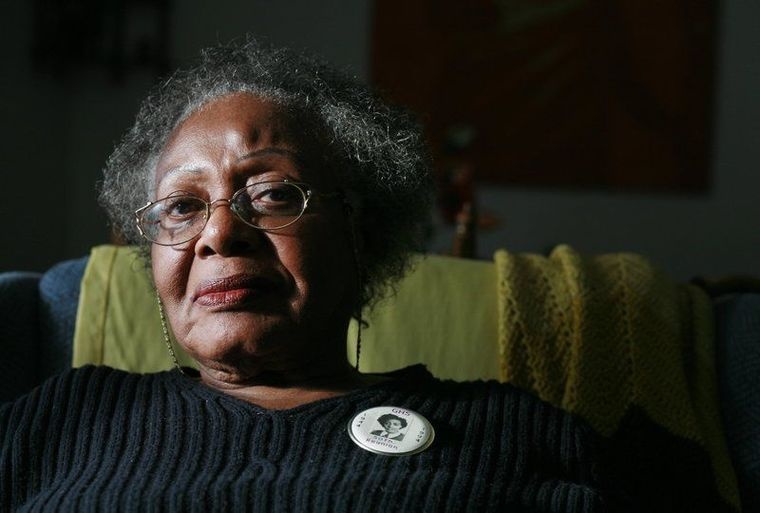
LaVerta Terry
Source: Bloomington, Indiana Herald Times
LaVerta Terry became my friend and mentor when I served as her pastor in Bloomington, Indiana. You can catch a glimpse of her dignity, intellect, her direct manner and memorable presence in this brief piece: https://www.youtube.com/watch?v=oRrZTKik8L8
Nothing was better for me than hearing LaVerta Terry laugh — and usually at my expense. She would tease and I would tease right back. She usually won. However, one evening when Elaine had other commitments, I asked LaVerta to accompany me to the opera at the Indiana University. (The opera is one of the great gifts of I.U. and LaVerta was a fine musician.) When we arrived at the auditorium, LaVerta looked at me and said “What will people think, the two of us out on a date.” I was ready for her and replied, “Don’t worry, they will think you are Elaine.” LaVerta was still laughing at the end of the first act.
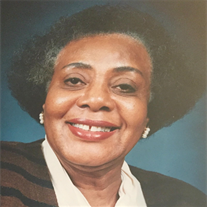
In 1963, LaVerta Terry was the first African American hired by Public Schools in Monroe County. Twenty years earlier, in 1944 she had won a scholarship to the Indiana University School of Music. The remarkably sad story is that she had won first place in auditions with the Metropolitan Opera; however, when she arrived at I.U. with her luggage, she was denied a place in the dormitory because of her race.
Sadly, the persistent racial discrimination she found led her to complete her bachelors degree at Jarvis Christian College after some study at Tuskegee Institute. What a sad story and yet she was a great spirit. Later she became Assistant Director and Director of the Groups program at Indiana University. This program focused on encouraging and supporting racial ethnic minority students, most were the first generation from their family to attend college. Her students now are in places of leadership all around the world. When I was pastor in Bloomington, I would often meet them and hear of the way Mrs. Terry had been a “difference maker” in their succeeding at the university and in life.
My friend La Verta Terry taught me much. Mostly, she tried to teach me to speak the truth about difficult things with grace, elegance and style. I will never match her in this; but often I can hear her voice in my head cheering me on. And, like many of my dearest friends, she knew how to be a loving critic if I said or did something she thought might have been handled better. LaVerta, lived on the other side of the white-privilege Harper wrote about. They both knew the bitterness of racism and shaped beauty and meaning from the ugliness.
There are many, many others about whom I speak of with the words “Of Blessed Memory.” Mostly I speak these words about folks I knew, some very well, and folks who shaped me for the good. People like Daphne Mayorga Solis, Carl Dudley, Earl and Ethel Brewer, Stella Newhouse, Bob Greenleaf, Clarence Jordan, Scott Lawrence, Ernie and Polly Teagle, Ray Dean Davis, Bob Lyon, Gil James, Dow Kirkpatrick, Parker Pengilly, Liz Shindell, David Stewart, Jerry Hyde, Kenda Webb, Will Counts and Jane Tews… I am realizing this list could continue on and on. It does. Yes, the list goes on and on. It is called “the Community of the Saints.” Blessed are we who have known them, in person or otherwise; blessed are we indeed.















 My friend La Verta Terry taught me much. Mostly, she tried to teach me to speak the truth about difficult things with grace, elegance and style. I will never match her in this; but often I can hear her voice in my head cheering me on. And, like many of my dearest friends, she knew how to be a loving critic if I said or did something she thought might have been handled better. LaVerta, lived on the other side of the white-privilege Harper wrote about. They both knew the bitterness of racism and shaped beauty and meaning from the ugliness.
 Hands of the Strong