Shoveling Alone

Shoveling Alone

Shoveling alone. It is the story in almost all our communities in the United States. The poorest of the poor are shuffled to the edges of our economy and end up living on the streets — or in jail!

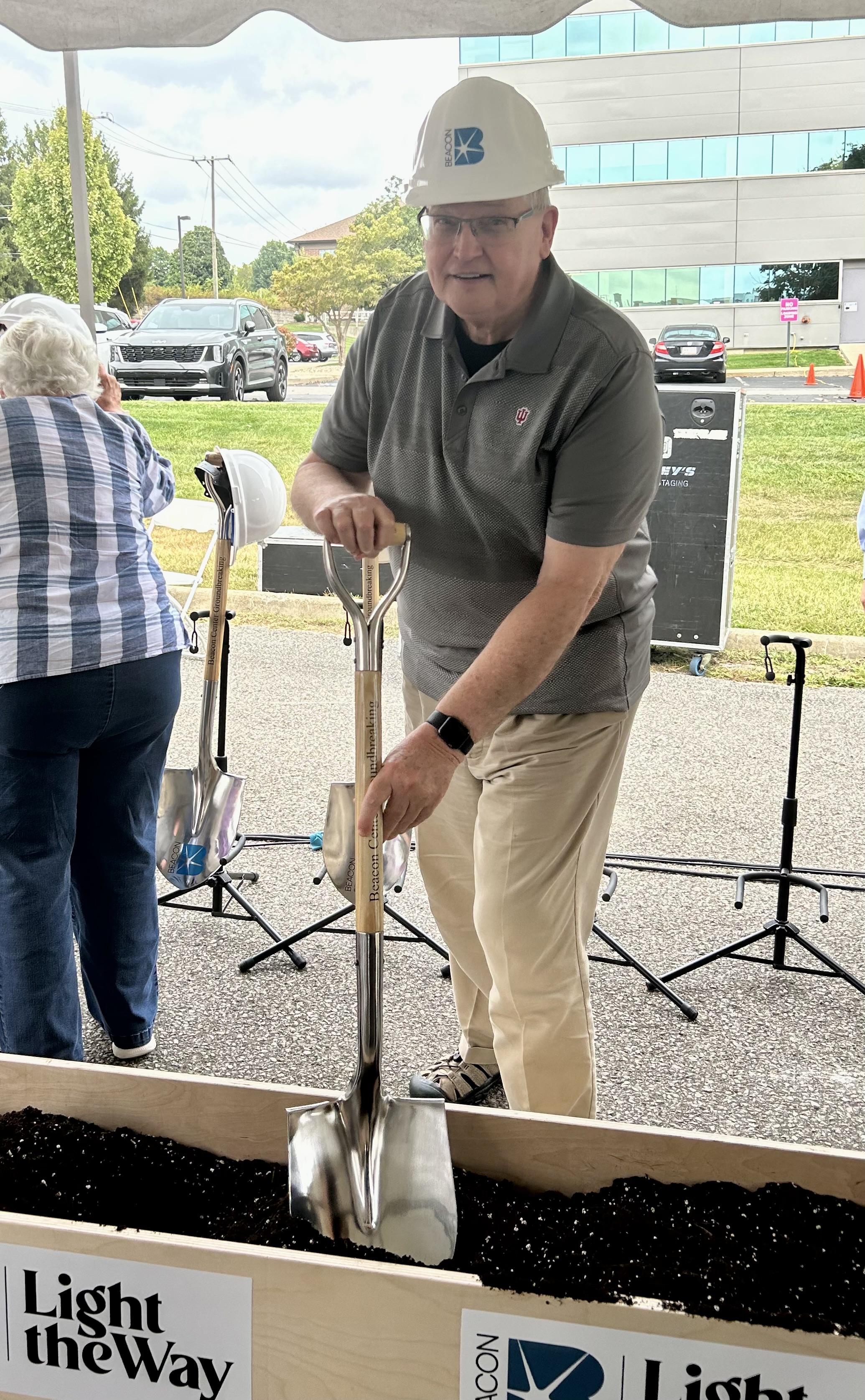
As I turned the shovel in Bloomington on a recent Wednesday, at the groundbreaking for our new Beacon center, I realized I was alone in that moment… no one on either side… but so many had gone ahead, and others would follow. Is it true in your community as well?

Not just on a given afternoon but across the years, I knew others in the faith community and beyond, who didn’t attend this groundbreaking… but who had ‘turned the soil’ of change in many places. They have been at this turning the soil, and turning our souls, in the past and will be in the future. In the process our souls are returned to an original place of hope and sharing among all.

I believe our local faith community, and others whereever you live, will do more in the months ahead, not just for places like Beacon. We must do this because our challenges cannot be fully handled by any one social service agency. Beacon, and similar agencies are a good, but insufficient response.

Bloomington Mayor Thomson is right, a comprehensive response to the challenge of persons without shelter is needed. Rise up now, faith communities and others, show more muscle, join in to assist the Emergency Winter Shelters, programs like Heading Home, the Recovery Alliance, New Leaf/New Life. Offer more mutual respect and support for all! The massive cuts to Medicaid will touch us all and especially the poor. Emergency rooms will be more crowded, retirement homes and clinics will close, healthcare will be rationed and delayed. Time for more to pick up the shovel and turn the soil toward the planting of new seeds of hope.

“When did we see you…?” the scriptures ask. “When you did it to the least among you” comes the answer. I live with the firm knowledge this shelter, even with a “better” setting where healthcare, employment assistance, public safety, addiction recovery and other resources, are provided is but a small beginning. It is not THE answer. Still, it is a needed step. Many can and will raise needed funds, offer to volunteer, and challenge public policy to do better… in God’s name.

The road is long and filled with twists and turns, social detours, myths about addiction, mental health and blindness to our own complicity in the “social welfare” practices in this country, and the misdirected, cruel political impulses and assault of so many in power in this time. Our culture lives with the myth of hero and victim. It is the “Hero Journey” story that Jung and Campbell identified as embedded in all we perceive as possible. It is so fully ingrained in our psyche and social systems that, sadly, we turn others into “clients” rather than “neighbors” and are more comfortable in speaking of THEY rather than with US.

It will take time — this turning the soil. Still as a Christian I recall the hymn refrain “We are not alone, for God is with us.” ‘Naive’ you say, of course it appears that way, of course. Others are using their constructions of false gods to continue cruelty. I know. That is why those who have theologies more tied to the larger, historic faith story must now speak the truth, afresh. Until some have seen a life changed, a person healed from addiction and communities moving away from cruel patterns of greed and domination, we are stuck. And, until a community is seen pulling together to solve such challenges, many will call me naive. I prefer to call it our shared hopes, foundational for the future — that we can care for one another. Check it out. This is a core teaching of Christianity and other great faith traditions. Interdependence is more essential to humanity’s long-term survival than independence.

Paul Farmer, remarkable physician and founder of Partners in Health (PIH) understood his life’s work as “The Long Defeat.” He said, “I have fought the long defeat and brought other people on to fight the long defeat, and I’m not going to stop because we keep losing. Now I actually think sometimes we may win. I don’t dislike victory. … You know, people from our background-like you, like most PIH-ers, like me-we’re used to being on a victory team, and actually what we’re really trying to do in PIH is to make common cause with the losers. Those are two very different things. We want to be on the winning team, but at the risk of turning our backs on the losers, no, it’s not worth it. So you fight the long defeat.” [From Tracy Kidder, “Mountains Beyond Mountains: The Quest of Dr. Paul Farmer, a Man Who Would Cure the World.”]

So, pick up a shovel, write a check, welcome the stranger, say ‘hello’, ask the stranger her/his name, smile… and keep doing it in your community, whereever you are. Keep at it, even when times are tough. My friend Wes Jackson put it this way, “If you think your life’s work can be accomplished in your lifetime, you are not thinking big enough!”

Corn-Bred

Corn-Bred

I’m a Hoosier, Indiana born and bred, on most July Sundays I can be found at church. On the best Sundays, the benediction ended, I then head for sweet corn at home from the farmer’s market.  Bought the day before from a young Amish teen in the City Hall parking lot.  Straw hat, gray shirt, grayer suspenders, blond curls and a sneaky, shiny smile. From down near Paoli most likely, I surmise – the corn and the smile.  “Picked this morning” he offers. “In the moonlight?” I tease, in return. We trade a chortle. The grin and banter worth the entire purchase price alone; but I win, as I carry off a half-dozen ears.  “He smiles with his eyes, he does.” I heard it growing up, like him I bet.

Early July, Indiana sweet corn is extra-scrumptious; I prescribe as it a necessary antidote to the extra-boneheaded politicians who now scour the state dressed in a toxic religious wardrobe. Deceptions attached to their bigotry like the sown-on-shadow of Peter Pan. This summer sweet corn is better. Much needed offset to the racism, so appreciated in the summer heat of ’25.  

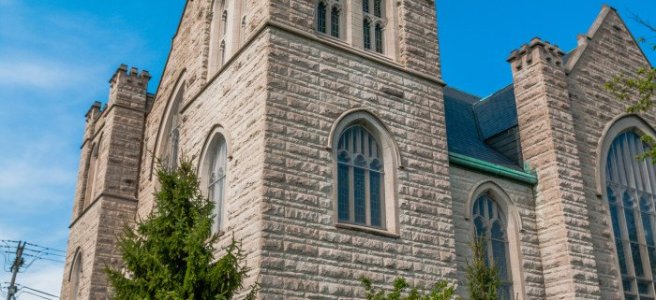
Worship was delicious too this Sabbath. A needed cure offered, beginning with soaring music.  A fanfare for a refurbished organ followed by hymn texts full of ancient, hard-won truths. The anthem is fetched from the apothecary of faith. “It is well with my soul” lingers still. Take that, you many poisons of the soul, you dividers of a nation.

The stage is set by the liturgy – we are called to hope and not despair; and, then a sermon, chasing down our shared deeper story.  Listen again to Naaman’s healing. His trust in his own power, his military hardware, is insufficient to bring peace.  No, no, no, empathy is not “a bug in the system,” Mr. Musk.  Empathy marks true humanity.  A “healed femur is the sign of the beginning of civilization” Margaret Mead once noted.  The wonderful irony of the powerful finding healing and justice by finally heeding the counsel of a young girl.  She brings a four-star general to his knees and his senses… and more than an outer leprosy is healed.  She did it well, both the young girl and the preacher this Sunday.  We are reminded that interdependence is more to be valued than independence.

It’s corn-bred wisdom that hubris and arrogance will end in dust. True in Elisha’s time and a lesson to be relearned now. God’s preference is for the small and marginal ones. The narrative is told over and again.  Let those with ears-to-hear, listen.  Too bad uncle Donald was on the golf course and missed learning how his story will end.  The closing hymn offers again this poetry of hope. Then I head home to sweet corn and a nap.

O God of every nation, Of every race and land,

Redeem the whole creation With your almighty hand. 

Where hate and fear divide us  And bitter threats are hurled,

In love and mercy guide us  And heal our strife torn world.

Rain begins as we walk home… “good for the sweet corn,” I think...

Corn-Bred

Corn-Bred

I’m a Hoosier, Indiana born and bred, on most July Sundays I can be found at church. On the best Sundays, the benediction ended, I then find sweet corn from the farmer’s market.  Bought the day before from a young Amish teen in the City Hall parking lot.  Straw hat, gray shirt, grayer suspenders, blond curls and a sneaky, shiny smile. From down near Paoli most likely, I surmise – the corn and the smile.  “Picked this morning” he offers. “In the moonlight?” I tease, in return. We trade a chortle. The grin and banter worth the entire purchase price alone; but I win, as I carry off a half-dozen ears.  “He smiles with his eyes, he does.” I heard growing up, like him I bet.

Early July, Indiana sweet corn is extra-scrumptious; I prescribe as it a necessary antidote to the extra-boneheaded politicians who now scour the state dressed in a toxic religious wardrobe, attached to their bigotry like the sown-on-shadow of Peter Pan. This summer sweet corn is better. Much needed offset the racism, appreciated in the heat of ’25.  

Worship was delicious too this Sabbath. A needed cure offered, beginning with soaring music.  A fanfare from refurbished organ followed by hymn texts full of ancient, hard-won truths. The anthem is fetched from the apothecary of faith. “It is well with my soul” lingers still. Take that, you many poisons of the soul, you dividers of a nation.

The stage is set by the liturgy – we are called to hope and not despair; and, then a sermon, chasing down our shared deeper story.  Listen again to Naaman’s healing. His trust in his own power, his military hardware, is insufficient to bring peace.  No, no, no, empathy is not “a bug in the system,” Mr. Musk.  Empathy marks true humanity.  A “healed femur is the sign of the beginning of civilization” Margaret Mead noted.  The wonderful irony of the powerful finding healing and justice by finally heeding the counsel of a young girl.  She brings a four-star general to his senses… and more than an outer leprosy is healed.  She did it well, both the young girl and the preacher.  We are reminded that interdependence is more to be valued than independence.

It’s corn-bred wisdom that hubris and arrogance will end in dust.  True in Elisha’s time and a lesson to be relearned now. God’s preference for the small and marginal ones. The narrative is told over and again.  Let those with ears-to-hear, listen.  Too bad uncle Donald was on the golf course and missed learning how his story will end.  The closing hymn offers again this poetry of hope. Then I head home to sweet corn and a nap.

O God of every nation, Of every race and land,

Redeem the whole creation With your almighty hand. 

Where hate and fear divide us  And bitter treats are hurled,

In love and mercy guide us  And heal our strife torn world.

Rain begins as we walk home… “good for the sweet corn,” I think...

Sickness Unto Death

Sickness Unto Death

Philip Amerson                                              May 1, 2025

Hope, when joined with mutual respect, becomes the oxygen supply for the lungs of a healthy democracy. In these troubled times, 19th Century Danish Philosopher Søren Kierkegaard offers perspective, a challenge, and a way beyond suffocating despair. In his classic “Sickness Unto Death,” this Christian theologian speaks of despair as a sin. Despair is, he suggests, a sin even worse than death. The reader is counseled to find the small pathways ahead, to persist, even when tempted to be captured in the clutches of fear and doubt – even when tempted to be held hostage to despair.  While anxiety may be unavoidable; Kierkegaard argues life calls us to continue forward, step by step, with whatever small light available.

Fear and disrespect are endemic in our nation. There is a tariff on HOPE. Many national and state officials are intent on destroying our “Commons” – the institutional trust established over the past two centuries. They act in ways to paralyze, to control, to tie us in contemporary knots of despair. Normality, civility, and decency are submerged in autocratic surges washing across our society.

This deluge is intended to overwhelm, to control, to undermine.  Such a “flooding the zone” strategy comes ceaselessly at us and from many tributaries: threats to the funding and governance of our universities: ending humanitarian aid to the poorest in our world; closing of scientific research necessary for public health; attacks on the judiciary and law firms; the deconstruction of a free and independent press; pressures on elected officials that leave one U.S. Senator saying “we are all afraid”; and, at base, there is the undoing of the personal constitutional rights for ordinary citizens and anxious refugees. These all coincide with what can be identified as practiced strategies from an autocratic playbook, one that has been tested and proven effective in other nations.

Alongside this national deluge of intolerance, the Indiana Legislature ended its recent session passing bills that can only be understood as a war on health care, on public education and on the poor. Indiana Senate Bill 289 was adopted as an “anti-DEI measure.” Touted as “bringing balance” to the teaching of history, civics and the social sciences, it instead is designed to censor, punish, place a chilling effect over public school districts or university curricula. It is a threat to any who dare depart from the ‘official truth’ presumed by those in power. It is an effort deny the tragic realities of racial, economic, religious, and sexual discrimination in our past and to end discussion of systemic economic disparities that continue.  Limits to funding Medicaid and public health resources will have devastating consequences on the poor in the state, delaying and denying needed care.

Persons without shelter in Indiana can now be placed in jail and/or face a $500 fine for “camping on the streets”! To add insult to injury, the final draft of the state’s budget contained a Trojan Horse, with the insertion, without public input, calling for “productivity reviews” of university faculty. It also included dramatically altered board governance structures for Indiana University giving the governor power to select all the university board members.

Apart from such legislation, other efforts to upend the truth and distort reality are astonishing. Indiana Lieutenant Governor, Micah Beckwith, posted a recent video celebrating what he misleadingly calls a “great compromise” made at the 1787 Constitutional Convention. Beckwith asserts the decision to count persons held as slaves as 3/5ths human (as property) was “a great move forward that led to the abolishment of slavery.” He turns history on its head, ignores the resulting decades of abuse, lynchings, and systemic discrimination. He quite literally whitewashes the dehumanization of slavery, the segregation that followed with Jim Crowe laws, mortgage redlining and the enduring systemic discrimination. Beckwith attempts to tell us that “what is up is down and what is true is false.” He ignores the tragic reality of more than a million men killed or severely wounded in the bloody U. S. Civil War and undercuts the Thirteenth, Fourteenth and Fifteenth Amendments to the constitution passed to assure the rights for all and designed to undergird equality. 

A good friend recently said, “For the first time in my adult life, I am embarrassed to be a Hoosier and related to Indiana University.”  Referring to the deluge of discriminatory initiatives taken by the governor and state legislature, he was also noting, with sadness, a compliant university administration, that has over and again failed to support academic freedom or stand against the bigotry of supercharged bullies. My friend spoke his sadness over the growing and blatant displays of racism and intolerance. Even so, despite such recent efforts, my friend said he was not giving up or dropping out.

Yes, these are unsettling times. The drift – make that the flood – toward intolerance, deception, and fascism is upon us.  We dare not hide or take cover in some false cocoon of isolation, thinking we can somehow choose to avoid the sin of despair.

During the recent Little 500 Weekend in Bloomington horrible, racist posts were placed on social media. They spoke of “the smell of welfare” and “turning Bloomington’s Kirkwood Avenue into Atlanta.”  There was more racist language, much worse than this, designed to encourage bigotry and foster white nationalism. These days such social media posts are likely generated by bots, foreign and domestic. They are designed to inflame passions and make false claims about marginalized others and are intentionally framed to spread fear and do harm.

Those of us who have the privileges accompanying “safe” racial identities, or our education, or other accidents of history dare not give in to despair.  As Dr. Martin Luther King Jr. put it “We are caught in an inescapable network of mutuality, tied in a single garment of destiny.” King was not simply suggesting all our histories and futures are connected and interdependent; he is also saying the struggles for civil rights for everyone must not end.  There continues to be work that needs to be done and injustices to be addressed.

Kirkegaard’s insights 175 years ago still ring true: despair that immobilizes is worse than death. Anxiety is a human given, but despair is a sin. Eleanor Roosevelt proposed “No one can make you feel inferior without your consent.” Social scientists W. I. and Dorothy Thomas offered that “What we perceive to be real becomes real in its consequences.”  How then shall we act?

Kirkegaard’s “Instead of Death” is based on the story of Lazarus as told in the eleventh chapter of the Gospel of John. On hearing the news of Lazarus’ passing, Jesus responds, “This sickness will not end in death.” Those captured in despair, will miss the potential for life. We have the power to choose how we react to horrible news, to deadly external influences.  Despair is a loss of perspective, a loss of agency, of self-worth.  It is a loss of hope.

What now are our choices?  What then can we do?  We begin by repudiating the climate of fear.  We can act and not be washed away in the fascist flood.  We can make a difference. 

Here are three areas to explore:

  1. When you see something, say something. An African American friend tells of being disrespected while shopping. In checking out, a clerk used clearly disrespectful and demeaning language. To my friend’s surprise, another customer, nearby, overhearing the exchange, gently but firmly in a quiet and clear voice said, “We are all better than this.”  Later, in the parking lot, the surprising voice offered support and friendship. We can welcome difference.  Maybe it is as simple as responding to a frown with a smile. A phone call, a visit that may help another. We can thank others for what they do. Ask how you might help. Encourage a teacher, a coach, a nurse, a therapist. Express appreciation to those who serve as police officers, fire fighters, local government officials.  Support public radio and television now are under attack.
  2. Reach out, make a new friend, and/or make a difference somewhere. Loneliness and fear are often the source of distrust and misunderstanding. This is a time to find ways to support the good work of programs like Exodus Immigration Refugee, NAACP, the Human Rights Commission. Host a dinner or picnic where persons from diverse backgrounds are welcomed and introduced. Perhaps make a new friend and together support our public schools in new ways, perhaps as a tutor or in support of a teacher. In Bloomington there are ways to support the healthcare for those with few resources through groups like HealthNet or by offering gratitude to our After-Hours Ambassadors working with the Community and Family Resource Department. We can write the university president asking why her administration does not better respond to attacks on academic freedom or to racist tweets that damage the sense of wellbeing among our students and other residents.  Ask the president why the university doesn’t join in efforts provide more for low-income housing, while it is the university driving up enrollments contributes to housing shortage and expense? Ask your banker, pastor, corporate leader how they might contribute to a more diverse racially community?  For some of us, who have the opportunity and occasion, we need to encourage broad representation from marginalized populations on boards and as candidates for leadership positions.
  3. Do one thing daily to challenge bigotry and discrimination.  Yes, I am going to say it – call or write your congressional or state representative challenging them to act against the flood of disinformation and intimidation. This is basic.  Write a letter to the editor.  Some days it may be as simple as being a friend to someone you know or a stranger you meet.

No need to be a crusader – some have that calling.  Others of us can do just one thing a day. Every day we can chose action and not fall into the sin of despair.

Francis: A Broken, Open Man

Francis: A Broken, Open Man

Easter Monday 2025: Pope Francis is dead. I read the headlines, and glancing above my desk, see a copy of what I believe is one of the most important documents of our age. Laudato Si, the encyclical Francis offered a decade ago as a word of concern and hope.

Speaking of the natural world as “our common home” Laudato Si, simply means “praise be to you.” It is offered as a diagnosis, a prayer, a remedy for the health our good earth. Educated as a scientist and theologian, Francis offers carefully researched science linked with finely crafted moral guidelines. Part science, part ethics, and part poetry this is a call for honest attention and constructive action around the changes to our climate.

Here is an example of science and faith in conversation, each respectfully engaging the other. Science, thickly presented; moral theology merged in an appeal for an open “integral ecology.” Environmental activist Bill McKibben writes this “is arguably the most important piece of writing so far this millennium.”

Here is one summary sentence: “We are faced not with two separate crises, one environmental and the other social, but rather with one complex crisis which is both social and environmental.” It is the poor and refugee who already suffer, first and most, from ignoring the treatment to our common home.

Late in 2023 I was privileged to travel to Argentina. The most popular personage was not Pope Francis.  Images of another Argentinian, soccer (futbol) star Lionell Messi, were seen on every block. Shops were full of Messi’s jerseys (#10 or #30). Shops were filled with bobblehead dolls of Messi for sale; and nearby, a few were available of Pope Francis. When I asked a shopkeeper why? She whispered, “some are upset with the pope.”  More on that later.

In Buenos Aires we visited Cardinal Jorge Bergoglio’s assignment prior to the papacy. The Metropolitan Cathedral faces the Plaza de Mayo. At the other end of the plaza is the Casa Rosada (Argentina’s White House). The plaza is where the Mothers of the Disappeared gathered to protest during the “dirty war” (1976 to 1983) when it is estimated 30,000 young people were “disappeared” by the military junta in charge. The Mothers offered a human rights witness, a statement against the dictator.

This plaza is still a place where resistance to authoritarianism is on display. During our visit “stones of remembrance” were being placed around the statue of General Manuel Belgrino, leader of the fight for independence in the early 19th Century.  These stones today are an expression of grief for the more the 100,000 who had died of COVID as national leaders failed to respond.

Pope Francis knew this history, the struggles for human rights and the dilemmas of the poor. He believed in the connection of all people and creation and chose the name “Francis,” as signal St. Francis of Assisi would be a guide star.

In 2023 Argentina’s presidential election saw the ascendency of the flamboyant “anarcho-capitalist” Javier Melei, who lifted a chain saw during his campaign as example of his fight against what he called the evils of “collectivism” and the idiocy of “social justice.” Melei called Francis an “imbecile” for his efforts to aid the poor.

There was said to be a reconciliation in February 2024 when President Melei met with Pope Francis in Rome. Even so, a year later, in early 2025, Elon Musk stood on stage joining with Melei as Musk put on his own chainsaw routine to suggest that social programs in the U.S. should be cut out and destroyed with his DOGE efforts.

Returning to the shop keeper who spoke of some who were disappointed with the pope, she went on to say that Argentinians were most unhappy when in 2019 Francis visited Brazil and Chile but had “flown over” his own nation.  Ah, yes, Francis critiqued for not touching down in Argentina!  Nationalism alive and well… all around the world.

There is irony in the fact that one of the last visitors with Pope Francis prior to his death was U.S. Vice President JD Vance, a recent Catholic convert. Vance disagrees with the witness of Pope Francis on climate change, immigration, refugees, the war in Ukraine, to name only a few. Has JD Vance read Laudato Si?  Does the current U.S. Administration know of this work?  If so, what of the closing of USAID? Do any of the “faith leaders” surrounding our president offer a witness that considers the poor of our world or the climate crisis we face?

Some pundits today suggest Pope Francis has not changed the lyrics of the Catholic Church, just the music.  By this it is meant he didn’t transform specific dogma on abortion, homosexuality, or the role of women.  I believe he nudged us toward the future. Perhaps he moved these concerns from music in minor to a major key.

Changing the structures and practices of millennial old institutions is a one-hundred-year or two-hundred-year endeavor.  What we have been privileged to witness in Francis is one broken, open man, who gave himself fully for others in the hope of healing of our world.

Gospel Conspiracy Cycle

Gospel Conspiracy Cycle

Over the centuries, the followers of Jesus have lived within, and endured, many political regimes. Tyranny is often around the next turn of the calendar. From Herod or Ceasar, through Nero, up to King George or Hitler, the church has survived – sometimes it emerges misshapen or damaged. It has often failed to give clear witness to the priorities of the Gospel.  

Confronted with the current political realities in the United States, how might congregations and disciples offer a faithful response when racism rises, the poor suffer the loss of critical systems of food and healthcare, when the rich act as kleptocrats, autocracy threatens the very underpinnings of democracy? 

For followers of Jesus over the centuries, it is fair to say, this is not new.  We have seen this movie before… in fact, it is a story often rehearsed and replayed in nations.  Current challenges are not Christianity’s first brush with autocracy.  How then shall we respond?  Some of the suggestions below will surprise, as they are simple and personal, others are corporate.  They are based not only on personal experience; they also draw on observing what John Lewis called “good trouble.”  They are found in reading of the Christian Gospels, especially in what we call the Good Samaritan parable. I now prefer to call it the Good Conspirator parable. Below is what I offer as the “Gospel Conspiracy Cycle.”  Each element is best carried out as both a personal and communal activity.

Gospel Conspiracy Cycle: Pray/Meditate, Observe/Listen, Study/Learn, Repent/Reconcile, Join/Support/Praise, Sing/Dance/Laugh, Raise Your Voice, Direct Action/Resist  

Richard Lischer, retired professor at Duke Divinity School reminds us the wider lens of church history: “Older heads have thought through the issues we face today—and with us in mind. We have been to this precipice before, and we have discovered that it’s possible to practice our faith on the very edge of it. Which is where we are today. Christians have been anointed not to rule the world but to sanctify it. Not to dominate but to consecrate. Not to harvest but to sow. And to bless this poor, broken body with some soul.” (February 14, 2025, The Christian Century, “How Then Shall We Render.”)

At the heart of Christian Gospel is the Good Samaritan parable (Luke 10:25-35). It is widely known and often misunderstood. I prefer to call it the “Good Conspirator” story. Some believe Jesus is saying “we should help those in need.” That’s a part of it, but it is also about much more.  There is this, a Samaritan, considered an untrustworthy outsider, is the one who acts as the true neighbor.

Jewish scholar Amy-Jill Levine writes this story demonstrates a commandment to love all, no matter whether stranger or friend. This story was familiar to Jewish listeners. They have heard the plot before – a Priest, a Levite and an everyday Israelite travel past a situation. But wait, Jesus offers a new twist. The third person is not the everyday Israelite. Rather it is a foreigner, a Samaritan. Jesus thereby reframes the lawyer’s question of “who is my neighbor?” The unexpected, stranger, the Samaritan’s actions cut against the grain of expected and typical. The Samaritan is a conspirator for the good

The word “conspire” from the Latin is “conspiratio” which means to “breathe together with spirit.” From the beginning Christianity has valued an alternative perspective on what is normal. Jesus spoke of the paradoxes of the poor being the truly rich and the weakest ones also are the strongest.  Christianity offers an alternative to the “normal” and “expected.”

In my own life, (and I would be bold to say in the history of Christianity), there is a cycle I could call the Gospel conspiracy. This virtuous cycle is often interrupted, diverted for a while or even undercut by Christendom.  It is true in my own life as well. The cycle is this: 1) Pray and meditate; 2) Observe and Listen; 3) Study and Learn; 4) Repent and Reconcile; 5) Join, Support and Praise; 6) Sing, Dance and Laugh; 7) Raise Your Voice; and 8) take Direct Action and Resist – and always return to Prayer. One may move around in the cycle from one space to the next. All are essential.  A return to start, back to prayer is always an option.  The idea is to keep moving. These elements are meant to help followers of Jesus develop Tough Minds, Soft Hearts and Strong Hands.    

For regular updates, subscribe to: BelongingExchange.org

Faith Communities Could Boldly Lead

Faith Communities Could Boldly Lead

Attached below is a column sent to our local newspaper in Bloomington, Indiana, the Herald-Times

While it is local in focus, the situation is repeated in thousands of communities in the United States.  Perhaps there are some thoughts or themes here that could be helpful to you wherever you live and/or work. 

Our nation is amid a mental health crisis where our largest homeless shelters are the local jails.  Until the poor, ill and addicted have places of shelter and care, at minimum, no one should call this a “Christian nation.”

++++++++++++++++++

Faith Communities Could Boldly Lead

What makes Bloomington “BLOOM”? What offers vitality, hope, knowledge and hospitality? We have great institutions: centers of education, health science, manufacturing and culture. Innovation and technology are known to be essential. Still, Monroe County seems in the doldrums, waiting for a new gust of imagination and initiative. A community’s wellbeing in terms of jobs, housing, education, racial diversity and cultural amenities is a complex mix. Not thriving at a high level, we bump along.

Among our disquieting realities:

  • Declining population and lagging diversity. Since 2000, non-university related population is down 1.5%. Surprisingly, racial and ethnic diversity, lags peer communities.
  • Lower wages, productivity. At Futurecast 2025 in November, Philip Powell, director of Indiana Business Research Center noted core worker population (aged 18 to 44) continues to decline, below U.S. and Indiana average wages and productivity. Bloomington will “live and die by the talent that is here,” Professor Philip Powell concluded.[i]
  • Cost of living and housing expenses are among the highest in Indiana with too few homes on the market for demand. Many workers offering essential services must live outside the city.
  • The homeless. With little voice and few options hundreds seek shelter in a tent or doorway. Some live in an automobile. Some do “couch surfing,” others are in jail or healthcare facilities. Scores move every few days, from one unwelcoming location to another.

As I did research something strange happened: the same number, 143, popped up on two different topics. Mere coincidence? The Association of Religious Data Archives reported 143 faith congregations. Another topic showed 143 persons had no shelter at all, and 300 more persons were classified as homeless![ii]  

What if each faith group offered shelter for one person? Too simplistic and unlikely? I think not. Faith communities vary. Numbers vary over time; but not by much. Consider this, if Monroe County seeks more innovation, imagination, growth and productivity, is it solely the work of the corporate, government, service and education sectors? What roles for faith communities?

What if for the next five years, 2025 to 2030, congregations offered 143 additional safe places each year by building, renting or otherwise providing shelter for our poor?  What if each faith group reached out to know a person without shelter, not as a client but neighbor? In these frigid days of January 2025, two churches, First Christian and First United Methodist stepped up offering emergency shelter, a warm space, a small respite, a bite to eat. Beacon Inc. and Wheeler Mission do more as well. Might faith communities cooperate to end the need for such emergency spaces all together?  

Let’s not get carried away, here Phil! If this was a sermon, the Jewish or Christian scripture text could be Isaiah 58:7 or Matthew 25:35-40. (There are many other passages calling persons of faith to shelter the homeless.) In Matthew 25 the hungry, thirsty, or those without shelter are to be treated as if they were Jesus himself.

As some leaders in our community seek new vitality with technology, research and innovation hubs, might imagination also come from our faith communities? Congregations could assist the Housing Authority supporting Section-8 vouchers. They might offer additional volunteers and gifts for Heading Home, New Hope for Families, Habitat for Humanity, Wheeler Mission or Beacon Inc. Bloomington could become known as a place where faith communities offered one critical, stable baseline amenity, HOUSING for the poor along with wise, research-based care that could lead to recovery, employment and fuller citizenship.

A place to start now is with support for Beacon Inc., (https://beaconinc.org/).  The proposed new center will offer a more comprehensive approach: shelter, recovery, job training, space for prayer and meditation, care for physical and psychological difficulties. 

One-hundred-forty-three, 143!  The Rev. Forrest Gilmore, Director of Beacon, heard me speak of #143 and reminded me that it was the favorite number of Fred Rogers, the creator and television host of Mister Rogers’ Neighborhood. Rogers kept his weight at 143 pounds all his adult life!  More importantly, however, he said that 1-4-3 matched the number of letters in his favorite three words “I love you.”

One-hundred-forty-three, 143! Faith groups might join corporations, the city, the community foundation, university innovations and research, and social service groups in modeling a better way for Monroe County, our state and nation. Even if only half, or one third of our congregations, or if only a couple of dozen could boldly act together, they could make a difference so that Bloomington would be widely known as the city in bloom.


[i] Wright, Aubrey, Indiana Public Media, November 7, 2024 

[ii] Keener, Gentry, Indiana Daily Student, October 20, 2024. From the Indiana Housing and Community Development Corporation “point in time” count. 456 persons were homeless, with 143 living no shelter at all.

Brokenhearted, Yet a Wholehearted Hope

Brokenhearted, Yet a Wholehearted Hope

Brokenhearted. In prayer for those suffering the wildfires in Los Angeles area. So many friends there, great folks in wonderful neighborhoods now destroyed or threatened.

Sad to learn the lovely Altadena United Methodist Church building was destroyed. I think of friends in, and nearby, who must be suffering and facing great uncertainty. Altadena UMC is a place where my dear friends, Rev. Mark Trotter and Rev. Yvonne Boyd served in different eras over the years. They built and sustained a strong and welcoming congregation.

In Altadena, the Jet Propulsion Lab and many graceful parks, museums, and educational centers are nearby. It was a place where racial exclusion and redlining was exposed in the 1960s and for many decades has been rich in racially diverse neighborhoods. You see, this fire may be destroying more than homes — also lost is the experience of neighbors who shared gifts brought by differing cultures and life experiences.

Of course, Pasadena is close by – we think of friends there. At Huntington Library and Gardens, Fuller Seminary, several other congregations. There also is the California Pacific UMC conference headquarters.  Dear ones, we treasure, are facing threat in Pasadena… some have been put on alert to prepare to evacuate. We pray for them.

So many, now vulnerable areas, and friends at risk — Glendale, Hollywood, Santa Clarita and, of course, the Palisades. We commit to share our small financial support that can go for ALL those who suffer today.  We are proud to know that United Methodists have offered shelter and outreach to those facing this tragedy.  See: https://www.calpacumc.org/news/cal-pac-fire-updates-january-8-2025/

Other denominations, churches, mosques and synagogues also now offer spaces of refuge and care. In the midst of ongoing infernos, there is a broader and deeper expression of common humanity. Some reports of looters, but these pale in comparison to the expansive acts of neighborly care.

++++++
And one other word… what can be said of the moral depravity of the incoming president? Isn’t he a looter of our commonweal? Aren’t his words robbing us of the chance to honor others and practice neighbor-love in a time of need, absent of ugly incrimination. I say “yes.” He is a looter of the common good.

He, who always presents himself as the greatest of victims, shows little or no empathy for those who are truly suffering. He blames, distorts, creates division and uses this tragedy to score political points. Why this perpetual need to harm? What inferno has burned across his soul and left this abyss that lacks humanity or humility? Is it that he is afraid of a tragedy taking away his place on center stage?

Surely there are many reasons for this tragedy… too little water storage? But there was also too much rain in recent years contributing to increased vegetation. Vegetation that turned into fuel over months of draught. Of course, there are questions of building such large communities in desert areas and diverting water away from natural flow. Ask the folks in Mexico about the trickle of the Colorado River that was once a wide and potent source of life and beauty. There are also profound questions about our national and international dependance on petroleum that contributes to changes in our climate.

In recent years, taking a cue from folks like Wendell Berry and Wes Jackson, I have sought to follow “a way of ignorance.” By this, they mean admitting there is so much we do not know, and MUCH to learn, as we journey ahead. We start with an awareness of much yet to be discovered. It keeps one honest and appropriately humble. Admitting, first, there is much to learn and to love. There is so much that is unknown about persons, communities and the natural world – and it also offers space for growth and discovery – space for delight. 

Sadly, I also see that some chose a differing “way of ignorance.” This one is rooted in fear, arrogance and denial. This is an ignorance based in fear and the need to control. It blocks new insights, transformation, unity and joy.  It persists in brokenness and grievance.  I pray for the incoming president today, that he might be healed of this way of acting and behaving.

Brokenhearted, yet I also will wholeheartedly give my energies, in the limited years I have remaining, to joining the good work of others, like my United Methodist friends, in encouraging our nation and world toward a better way. I will name the “looters of the common good,” persons like Donald Trump, as I give thanks to the millions of witnesses who offer care, hope and new discovery, even in the face of tragedy.

Integrity & Jimmy Carter

Integrity & Jimmy Carter

Integrity and Jimmy Carter are synonymous. For one hundred years he offered his witness. There were ups and downs, missteps and the recognition of a Nobel prize. I see his life as a wonder-filled demonstration of human decency and generosity. A paradoxical mix of pride and humility, intelligence and determination, vision and myopia. This peanut farmer from Plains, Georgia offered a standard, a vision for a better way.

Friends disagree. Some call him naïve, too uncompromising, or too unwilling to make savvy political calls when necessary.  A ‘fluke,’ they say, ‘one who would never have been elected had not the nation become overburdened by the agony of wars in Southeast Asia and the deceptions of Nixon and Watergate.’ I disagree. Carter’s leadership emerges as an immeasurable gift for our nation and the world. Can we learn from, benefit from, the many positives of his life and perhaps, journey carefully around its pitfalls? 

I hold that President Carter, alongside countless others who have recently died, persons like my friends Ruth Duck, Jan Foster, Bill Pannell, John Cobb, and John McKnight, exemplified lives guided by an informed faith, a hunger for truth and a future established in hope rather than fear that our nation and world now desperately need. Their lives, along with millions of unknown or unnamed others, point toward the better path for humanity, a path taught in scripture.

Closing my eyes for a moment, I see Jimmy Carter standing before a Sunday School class at Maranatha Baptist Church in Plains, each Sunday. He had studied the lessons found in scripture, lessons that shaped his daily living and informed his efforts to lead. This image is in stark contrast to that of another president filled with guile, poising in front of a church building, sanctimoniously holding up a Bible as a prop, knowing little of the contents or gifts found in its pages.

One man, Carter, worked to build homes for the impoverished. The other, Trump, gained wealth by building hotels for the rich and casinos that served to impoverish the vulnerable. One worked to end the guinea worm disease and other illnesses in the world. The other used an epidemic to divide and undercut public health initiatives needed by a fearful nation. One worked to encourage care for our fragile earth, protecting more than 150 million acres of wild lands and rivers. The other continues to deny the reality of climate change and lives by the words “drill baby drill.” One was ridiculed as naïve for saying he had committed “adultery in his heart.” The other was convicted of sexual abuse and bragged of his sexual exploits.  One said, “I will not tell a lie.”  The other said, I will offer “alternate facts.” One spoke a hard truth about people torn apart by religion or culture, and scripted peace accords between nations. The other used culture wars to establish new enemy lines and employed exaggeration and falsehood about the immigrant, poor and vulnerable.

Sr. Joan Chittister writes: “At the end, three things measure both our integrity and the harmony of our own lives: self-control, respect, and freedom from self-deception.”  The true value of our living will ultimately surface like a submerged cork in the ocean.  Life comes and passes; nations rise and fall. I hold to the wisdom of scripture: “Whoever walks in integrity walks securely, but whoever takes crooked paths will be found out.” (Proverbs 10:9)

Holding it Together: Being and Doing

Holding It Together: Being and Doing

Knowing of my friend’s health concerns, I asked “how are you doing?”  “I’m barely holding it together,” he responded. “It’s not the aches and pains; I’m not sleeping. I carry a dread for the future.” His insomnia was a fretting over our national trajectory and the deceits that appear to be a “new normal.” I understood. Divisive and demeaning language, dehumanizing others, greed and grifting, scapegoating, talk of retaliation and efforts to upend democratic institutions.  Mostly, my friend’s concerns were the loss of our nation’s moral center.

Women’s Park, Chicago: Jane Addams “Helping Hands” memorial.

“Barely holding it together” – honest, sharp-edged reality. Like the patient waiting to hear that dreaded diagnosis, or the father learning of an active shooter at his child’s school, or the undocumented mother who, after years working in a menial job and proudly sending her children off to college, who now fears deportations. After the 2024 election we live at the edges of hope and dread.

My first U.S. Presidential vote was in 1968. Fifteen elections later, my politics have changed, but not my trust in our future. That is, until now. Has our nation changed?  Will we hold it together?  Did the fear-saturated-campaign of 2024 and promises made with fascist overtones indicate a shift in our body politic?  Has racism, greed, misogyny and xenophobia reshaped our national identity or simply uncovered what was there?  Haven’t these dynamics always played a role? Of course, bigotry has been “background noise” but now, blatant discrimination and retribution are “baked-in” as a publicly endorsed strategy.

Is the seeking of truth sublimated to seeking revenge? Do computer algorithms prevent robust honest, dialogue among citizens?  Are “news” feeds turned into a diet of “ideologically-preprocessed-information-meals.”  Basic civic creeds that “all persons are created as equal,” or “the separation of church and state,” or “equal justice under the law” appear to be devalued, seen as outmoded and divorced from ethical political and civic practice.  As grievance becomes the coin of the realm, an inflation of conspiracy theories, dictatorial impulses, and a sense of helplessness emerges. Can we hold it together?

Pro Democracy Banner, Barcelona, 2019

We are heading into choppy national waters, bouncing along without a shared vision of common-wealth or personal responsibility. The Ship of State as conceived of by Jefferson, Hamilton, Adams and Madison, refined by Lincoln or Susan B Anthony and the wisdom of many more recent leaders is threatened. Our nation may founder on dangerous shoals of division, greed, and authoritarianism.  In his 1960 inaugural address John F. Kennedy challenged, “Ask not what your country can do for you but rather what can you do for your country.” 

My friend, the Rev. David G. Owen, now deceased, spoke of the importance of living a seamless life, where our actions (personal and social) are aligned with our core beliefs. These need to be “held together.”  How shall we live more fully, as if our nation’s creeds and our religious beliefs are reflected in our daily actions? 

Recently, prior to a meeting, a friend advised, “It is best if we leave Jesus in the parking lot.”  Perhaps he feared that as a clergy person I would divert our attention from the stated agenda.  I had heard this “leaving Jesus in the parking lot” talk before. I might have said, “O Jesus is already in that board room, don’t worry” but, instead, I was quiet.

“Holding it together” requires moral, judicial and behavioral consistency – being and doing.  This is not a call to Christian Nationalism, NO!  It is quite the opposite. It is a call to a patriotism linked to virtues taught across the centuries, religious and non-religious. It is a turning away from the threats and abuses commonly practiced by mob bosses toward treating each neighbor as we would choose to be treated. It is a move toward a seamless patriotism and away from the tyrannical. When the allegiances we pledge are not matched by our actions or by facts, trust is impossible, and a civic brokenness inevitable.  Historian Tim Snyder writes in “On Tyranny”: “A nationalist encourages us to be our worst, and then tells us that we are the best… A patriot has universal values, standards by which he judges his nation, always wishing it well—and wishing that it would do better.”

Philip Amerson, November 27, 2024