
That Which Cannot Be Razed

That Which Cannot Be Razed

Admittedly naïve, the Christians at Broadway Church in Indianapolis in 1986 wrote: “As followers of Jesus Christ, responding to God’s love, our mission as the people of Broadway Church is to be a multicultural, Christian community that in its ministry seeks, welcomes, and values ALL people.” We knew it was a challenging aspiration, none-the-less the choice was to be a church that said it welcomed everyone – and acted like it.  No matter. Everyone.  

That congregation hasn’t done it perfectly, but over the decades it has claimed this mission.  Still does.  Yes, we were naïve, about our society, our world and the human condition… or were we? 
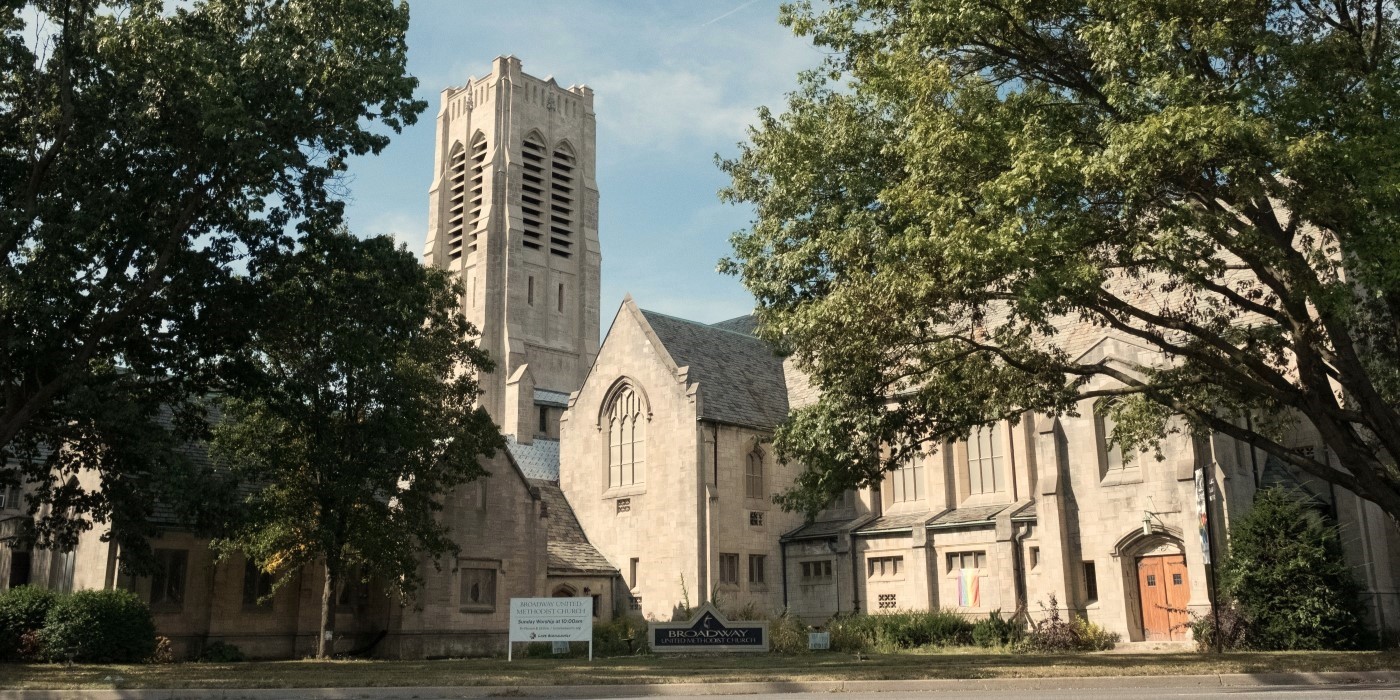
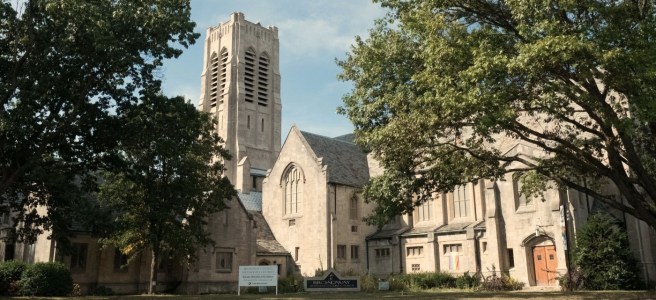
A stone church building with a tall tower and large windows, surrounded by trees and greenery.

Life would teach many lessons, some hard ones.  The power of tribalism and fear-stoked resentment has too often overridden respect for all. It has even undermined alliances among western nations.  Today we see bigotry and discrimination, dressed up as ICE agents with masked faces and camouflaged outfits, terrorizing our cities.  Such threatening realities appear to trample on that simple mission statement. 

Naïve?  Surely so.  Wrong as a witness to the love your neighbor message of Jesus?  Not so then, not so, now. The Apostle Paul wrote of this in the earliest years of the church: In Christ’s family there can be no division into Jew and non-Jew, slave and free, male and female. Among us you are all equal. That is, we are all in a common relationship with Jesus Christ. Also, since you are Christ’s family, then you are Abraham’s famous “descendant,” heirs according to the covenant promises.” (3:28-29 as rendered in The Message).

Twenty years ago, columnist David Brooks wrote of the coming death of multiculturalism. https://www.nytimes.com/2006/04/27/opinion/the-death-of-multiculturalism.html. Brooks spoke of what he saw as the excesses of multiculturalism where diversity was too easily celebrated and sometimes prevented true openness to all voices.  He predicted multiculturalism would pass and we would see a “rebirth of liberal American nationalism.”  I wonder what Brooks would say today of the trajectory he offered then? 

Whether one points to the multiculturalism displayed in the Ruth and Naomi story, or to the multiple ways Jesus of Nazareth broke and transformed deep patterns of race, class or religious exclusion, or to the Pentecost events, multiculturalism and faithful Christian practices are intertwined.

At Broadway, shortly after that mission statement was written, a longtime member told me that grand old building of stone and stained glass might one day be gone, it might be razed, but the gift of knowing others who differed in a community of acceptance could never be erased.  Perhaps that congregation at Broadway was not so naïve.  It continues today as faithful to its mission.  So do thousands of other gatherings and activities in the name of Jesus around the world.  Naïve?  Perhaps, it appears so, in the short term.  However, as Eugene Peterson suggested, Christians are called to “a long obedience in the same direction.”

This Season of Dividing

This Season of Our Dividing

I am often slow to put my deepest convictions into words. Who knew? Folks who know me as a preacher will be surprised to hear this. Even so, finding the right word or words sometimes comes slowly. Then, I am helped when I read another who touches the heart of a matter better than I could.

It has been over two years. I was at a table with folks discussing the future of the United Methodist Church and its splintering into several pieces — some traditional, some progressive and some seeking inclusion of all. I recall being surprised when persons spoke of the need for what they referred to as an “amicable divorce.” They proposed separation, into parts where folks would no longer quarrel and could be in a safe theological home place. Such talk was not new — it was the many who were accepting this season of division that surprised me. They were ready to welcome the schism-movin-company to partial out the pieces of ministry developed over decades.

I wanted to say, “Hey, this is moving in precisely the wrong direction. We ought to be joining with other Christians, not dividing among ourselves.” I was only able to say, “I profoundly disagree.” I was unable to share my deepest conviction that supporting such brokenness in our body was sinful. Such words seemed too harsh and judgemental. I recalled a dear Lutheran friend who amidst the splintering of the Missouri Synod thirty years ago, said simply, “We are, on all sides, sinful.” Okay, I am sometimes a coward — and a sinful one at that! Many United Methodists over the past two years have offered plans for what is called “an amicable separation.” Such talk has gone on for a long time. But now, there are proposals, protocols and new denominations planned. For followers of Jesus to be comfortable with this seems to me to be nonsensical. Still, I didn’t have the words, until I came across a short essay by Eugene Peterson entitled “Comfort Zones” (“Called to Community,” p. 278-280, Plough Publishers, 2016).

Peterson give me language when he wrote: “Sectarianism is a common problem in Christian Community… Sectarianism is to the community what heresy is to theology, a willful removal of a part from the whole. The part is, of course, good — a work of God. But apart from the whole it is out of context and therefore diminished, disengaged from what it needs from the whole and from what the rest of the whole needs from it. We wouldn’t tolerate someone marketing a Bible with some famous preacher’s five favorite books selected from the complete sixty-six and bound in fine leather. We wouldn’t put up with an art dealer cutting up a large Rembrandt canvas into two inch squares and selling them off nicely framed. So why do we so often positively delight and celebrate the dividing up of the Jesus community into contentious and competitive groups? And why does Paul’s rhetorical question, “Has Christ been divided?” (I Cor. 1:13) continue to be ignored century after century after century?”…

There is more as Peterson points to the “selfism” that underlies such divisions. He reminds us “The birthing of the Jesus community on the Day of Pentecost was an implicit but emphatic repudiation and then reversal of Babel sectarianism.” As Peterson starkly puts it “sects are termites in the Father’s house.

Such seasons of dividing are a perpetual threat to Christian community. Just as the Methodist Church divided over slavery in 1844 only to be clumsily reconfigured a century and more later, I am rather certain that one day this season of dividing will pass, and after a time, there will be a Season of Reuniting. I may not live to see it, but believe in the Resurrection.