
The Transformed NonConformist
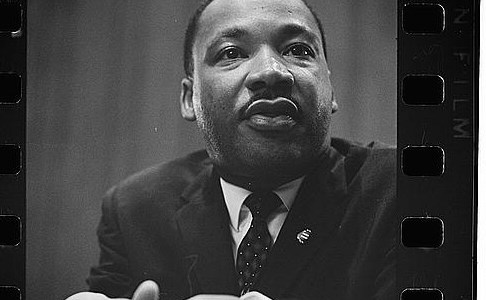
In November 1954, Dr. Martin Luther King Jr. preached his inaugural sermon at Dexter Avenue Baptist Church in Montgomery, Alabama. In retrospect, it was his future ministry’s thesis statement[i]. His text? Romans 12:2: “Do not be conformed to this world, but be transformed by the renewing of your minds, so that you may discern what is the will of God—what is good and acceptable and perfect” (NRSV). The sermon was titled “The Transformed Nonconformist.” He was proposing that Christians sometimes needed to act in ways that didn’t always “go along to get along.” Civil, nonviolent nonconformity, was a preferred option when democratic institutions failed, and discrimination continued unabated.[ii]
There were scores of other faith leaders, expressing such a witness, prior to and alongside of, Dr. King. The church had a rich history of persons acting as Transformed Nonconformists.[iii] Urban Training Centers were active across the nation in the mid-1960s, most notably in Chicago, Detroit, and Cleveland. There were many models unfolding ranging from the East Harlem Protestant Parish in New York to Church of the Savior in Washington D.C., to Operation Push in Chicago. In Boston, Cleveland, Nashville, Atlanta, and Los Angeles such efforts were institutionalized and often funded by mainline denominations. In the rural south there was the witness of the Koinonia Farm in Georgia and Voice of Calvary in Mississippi.[iv]
In Indiana the Rev. Luther Hicks in Indianapolis founded Dignity Unlimited. Hicks, a pastor, also set up work with youth in a storefront outreach effort near Shortridge High School at 34th and Meridian. Hicks was arrested on several occasions for leading nonviolent protests over racial injustices. Urban legend has it that the “Methodist” bishop would call the “Methodist” mayor to intervene. Hicks’ crime? Seeking to de-escalate possible violence and “promoting patience and reason.”[v]
In earlier decades, Gary (Indiana) Central Methodist Church championed racial justice efforts as the Reverend S. Walton Cole encouraged members to confront their own prejudices, welcome new members from diverse backgrounds and march in demonstrations for equal pay and education. At Trinity Church in Muncie, Indiana, Rev. J. C. Williams’ activities in Civil Rights struggles lead to his candidacy for Mayor of Muncie as “Poor People’s Party Candidate”[vi]
Back to Evansville, and to the topic the closing of desegregation and the closing of inner-city schools, the counsel “You cannot fight city hall” was heard, and it was reframed to a need the importance of speaking directly to school administrators.[vii] In the process, changes did come. Culver School was not closed, and a new building was constructed. Elaine Amerson was elected to the county-wide school board where she served for eight years, three of them as board president. Resources that had been heavily directed to suburban schools were shared more equally across the school system. And, yes, county-wide busing did occur, while at the same time several “naturally racially integrated” schools continued to serve a neighborhood.

Despite the range of these efforts, little research, or documentation of the import of such faith-initiated efforts at transformation has been produced. Dr. King’s legacy endures. It has been revived by persons like the Rev. William Barber II. Taking a longer view, while significant advances have occurred, perhaps a deeper and wider story has gone untold.[viii] There has been little reporting on the breadth of the many faith-based activities.[ix]
Denominations have turned inward. The slow and critical work of building up neighborhood parishes appears pushed to the sidelines. Examples of genuinely interracial and multicultural congregational life are little-known or valued only at the margins in Mainline Christianity. The death of Dr. King in 1968 dealt a severe blow to the call made to the church in his “Letter from Birmingham Jail.” The time of Non-conforming Transformationalism abated but it has not disappeared.
In the wider culture, since Dr. King’s death, change has come fast and hard, resulting in questions as to the relevance of the church and much handwringing among church leaders. A decline in attendance began in the late 1960s. Baby Boomers emerged as a new and different demographic. At colleges and congregations on university campuses interest in church attendance declined dramatically at the end of the 1960s. Many campus pastors and priests point to 1967, or thereabouts, as a critical juncture when students who had once filled the pews began to disappear in large numbers from worship. Meanwhile, in urban neighborhoods, those expanded church facilities that had been built in the decades following WWII for all the children, were emptying out.
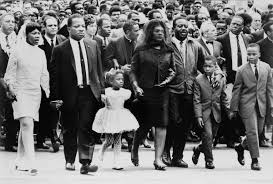
The Vietnam War, the birth control pill, and the weak response by churches to support the civil rights exposed how insular, self-absorbed, and out of touch religious institutions were in the culture. Going along and Getting Along had taken a toll. We were said to be entering “a post-denominational era.” The call of Dr. King and the work of scores of faith-based initiatives designed to engage the church in seeking transformation in society was seen more as an artifact than a calling.
For denominations these realities accelerated the anxious casting about for ways to find or retain relevance. There was a willingness to try many things to stop the growing loss of membership. Ironically, efforts to value and benefit by affirming a core denominational identity and neighborhood parish locations was typically missed or overlooked. The megachurch movement was off and running. It has served as a central hoped-for-solution among denominational bodies.[x] Now, in hindsight, it appears exclusive focus on a megachurch model was destined to be insufficient to the changes that continue.
Less attention was given to taking seriously the need for in-depth lay theological education. Popular narrow cultural ideologies, “seeker-friendly” worship that avoided symbols of sacrifice like a cross, along with contemporary music, mixed with safe political perspectives were the tail that wagged the theological dogs of this era. As church historian Martin E. Marty put it: “To give the whole store away to match what this year’s market says the unchurched want is to have the people who know least about the faith determine most about its expression.”[xi]
Especially notable, in the 1980s through the 2010s, were the more agile, drive in, folk-based religious mega-church expressions. Willow Creek Community Church in the Chicago suburbs or Mars Hill Bible Church in Michigan are often-cited examples. These “independent community church” expressions are now in second or third generations of leadership and appear to be going through their own identity crises — and decline. The recent exclusion of Saddle Back Church from the Southern Baptist Convention is worth considering as persons consider what the future of the megachurch will be.
The story of the megachurch in United Methodism is more complex. At places like the Church of the Resurrection in Kansas, St. Andrew UMC in Colorado, or Ginghamsburg UMC in Ohio, there have been deliberate efforts to encourage thoughtful theological discourse and support for nearby neighborhood parishes. Typically, however, these types of megachurch congregations are the exceptions among the large church expressions.
Anxiety was the driver. There was a widely held belief, a self-fulfilling prophecy in fact, that we had entered a post-denominational era. This anxiety was a symptom of what might be diagnosed as“Church Growth fever.” Such fear-based views and flight to “safe places” continues. There have been few efforts to stop to consider what gifts may already be present in smaller and more local parish settings. Megachurch models were advocated that were too often independent from a denomination’s core identity.[xii]
The response over the past four decades has only reinforced the self-focus and self-concern in many settings. Denominations and philanthropic entities focused attention on leadership training and congregational development. These efforts, while not bad in and of themselves, turn attention toward inwardly directed programs. They also, inadvertently perhaps, set up a system where pastoral performance is measured against the “successes” of the booming megachurch in the suburbs. Looking inward, it was the pastor or the congregation that needed to change to be “more valued.” One might say the time of Non-transformational Conformity had arrived.
Sadly, in many places, the value of neighborhood congregations was lost; the importance churches as a local center of informal gathering and values-production among residents living nearby was sacrificed. Starbucks, neighborhood eateries and bars now filled the civic void left behind in urban neighborhoods.
BUT WAIT, THERE IS MORE!
In many urban neighborhoods, congregations have survived, even prospered. They have persisted despite often being undervalued and overlooked.[xiii] While thousands of neighborhood congregations have disappeared, thousands of others are being transformed. Not all continue as worshipping communities only, or primarily. It is often not the church as known it in the past. Some places are more traditional but in almost all, there is a willingness to be Nonconforming Transformationalists.
There is a remarkable phenomenon, for example, of church buildings being transformed into low-income residences.[xiv] In other places congregations are building tiny houses on church property and are forming communities of care where church members build fellowship with persons finding health and spiritual care for chronic difficulties. There are at the same time new models of faith life bubbling up that don’t require a building, as in coffee shop Bible studies and parenting fellowship groups. There are new forms of believers assembling to “be transformed together” working on immigration reform or providing shelter or health care for low wealth persons that have begun and are beginning. These are signs of hope and joy and celebration. They are places where diversity is celebrated, where multicultural expressions are honored, and where everyone, no matter race or sexual preference, is welcome.
COMING NEXT: Parish-based Renewal and Seeing Christ in the Neighbor and Neighborhood.
[i] McCullough, Marcus, “Go Along to Get Along,” The Graduate Journal of Harvard Divinity School, 2023.
[ii] Passages from Romans chapters 12-15 have been cited to undergird both conformity and nonconformity with government practices across the centuries. In Romans 13:1ff, Paul seems to argue that Christians should simply submit to civil authority. However, King and others suggested Romans 12 set the terms for any such submission. When faced with evil institutions, conformity is predicated on the ever continuing the call for transformation? Discrimination, Jim Crow laws, lynching, unequal economic, societal, employment and education systems could and should be transformed.
[iii] Too often forgotten or overlooked were the many others who were part of Urban Training Centers shaping urban ministry around the country. Gibson Winter’s book The Suburban Captivity of the Churches helped set the stage as did his work with the Urban Training Center in Chicago. There were the folks like Clarence and Florence Jordan at Koinonia Farm and Gordon and Mary Cosby at Church of the Savior in Washington D.C. There was the ministry of Father Jack Egan for the Chicago Catholic Diocese and Vincent Harding with the Mennonite communities in Chicago and Atlanta. Folks like Don Benedict, Archie Hargraves, Bill Webber, and Letty Russell at the East Harlem Protestant Parish New York.
[iv] I mention these few, of many, because much of this history has been overlooked. Dr. King’s work, and that of the Southern Christian Leadership Conference, was essential to the changes brought about by the civil rights struggle. At the same time there were dozens of localized ways people of faith were engaged in taking their faith to the streets.
[v] https://www.connerprairie.org/black-history-month/
[vi] https://digital.library.in.gov/Record/BSU_othermiddle-105
[vii] We heard my supervisor’s admonition that one “can’t fight city hall” as a call “not to turn city leaders into the enemy.” This led to many lunches with school administrators and city officials. Some of the best allies in seeking more equity in public education came from teachers and administrators within the school system.
[viii] Examples come in many dimensions: In housing (Habitat for Humanity grew out of the witness of Koinonia Farm with Millard Fuller and Clarence Jordan in Georgia), with economic structures (e.g., Rev. Faith Fowler at Cass Community in Detroit provides a model, as does John Perkins with Christian Community Development Associations, or incubator businesses out of several congregations), and resources linking spirituality and social action continue (e.g., Fr. Richard Rohr’s at the Center for Action and Contemplation and Rev. Jim Wallis’ leadership at the Sojourners in Washington, D.C.).
[ix] Research waits to be done. In the early 1970s, for example, Project Understanding looked at the efficacy of programs designed to bring racial change through religious congregations – little has followed.
[x] Dr. Scott Thuma at Hartford Seminary has done considerable research on the rise (and decline) of the megachurch phenomena. See: mhttp://hirr.hartsem.edu/megachurch/research.html.
[xi] Marty, Martin E., Goodreads, https://www.goodreads.com/quotes/7201126-to-give-the-whole-store-away-to-match-what-this.
[xii] It is not surprising that many of the same folks who pushed a singular focus on tinkering with the patterns of congregational life warned we were entering “a post-denominational era.” From “Keys to Growth” and the “Habits of Successful Congregations” the remedies proposed included more parking, new member campaigns, management by objectives, leadership training, changing music or moving the location of the congregation to a “better place.” Long established denominational connections or linkages with other institutions in a community were not highlighted. Mostly, the unspoken assumption was that larger congregations of like-minded people were the answer. Seldom was there a focus on the parish surrounding the church – and when there was such a focus, the parish was seen as a place of scarcity, even danger. A place needing outside help rather than a resource for congregational vitality.
[xiii] Some researchers speak of these examples of heath where there is perceived poverty and decline as “positive deviance.” I choose to see it as the work of the Holy Spirit.
[xiv] A remarkable initiative is being carried out by the United Methodist Foundation in the New England Annual Conference where “redundant” church buildings are being evaluated as places for potential residences or for new ministry/mission sites.
 Hands of the Strong