Emptiness. Manger Square, Bethlehem, December 23, 2023, is abandoned. Most years, every square meter of the space would be filled, maneuvering among the crowd, difficult. Christian Palestinians in Bethlehem, in solidarity with those in Gaza, have canceled Christmas. The Lutheran pastor says, “if Jesus were born today, it would be under the rubble of Gaza.” And nearby, among Israelis, the horror and grief of October 6 when families were ripped apart, children murdered, women raped, and hostages taken, and who even now are being tortured persists and widens.
Israelis and Palestinians deserve better. Still, decades long pent-up anger and distrust has erupted in an unimagined violence. Slow boiling political chicanery, terrorism, and bigotries mostly built on lies and prejudices now rob the people on all sides of options. Emptiness. No room left for rational thought or basic humanity.
No room left for recognition of another as a human being. Robbed by millions of deceits, papercuts on the soul, there is no space for mutuality, companionship, or love. The prefrontal cortex is severed from the reptilian parts of the brain. A single option appears the only one — revenge, revenge, revenge. Empty of alternatives, life on all sides is reduced to terror.
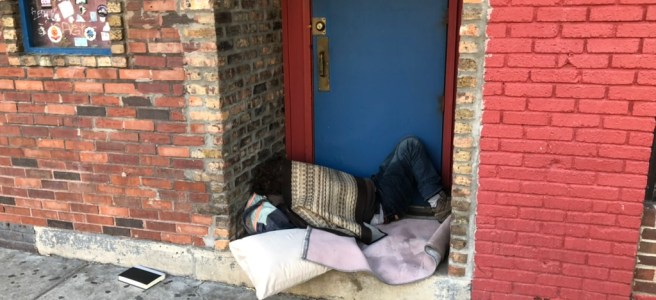
For those of us, observers with broken hearts and conflicted loves, there is another kind of emptiness. Those who know, respect, and love both Jews and Palestinians, live in a wasteland of uninhabited hope. Our carefully crafted dreams and visions for humanity are shattered. And what of our own bigotries and behaviors? What of the ways we discount and exclude those we fear? What of our treatment of those without shelter, who struggle with addictions or who come to us as immigrant?
We suffer with a similar, yet a differing void. For so many Christians, the mangers of our souls will seem vacant, emptied places this Christmas.
The Christmas story speaks of a family without shelter. Mother, father and newborn child they are. The record says they found refuge in a stable, a barn. They were on a journey, seeking a place of safety and stability. In our cities and towns, along our borders and spread across our world are those who seek shelter still. There are many efforts to respond.
Attached is a podcast on homelessness. Our daughter, Lydia Murray, who is a Managing Director with Deloitte consulting is one of those interviewed. Apart from being proud of Lydia and eager to share her wisdom with others, I believe the listener will find a respectful, up-to-date overview of resources and some ancient wisdom in this resource. Perhaps you can take a moment during the Christmas season to listen and learn how to better respond with those on the edges.
I was tempted. This morning. Even in my late 70s, the seduction was strong. Autumn leaves. Raked in a mound. Go for it… jump up and in! I remembered the joy of such flight up and in a mound of crunchy crimson glory as a child.
Walking home from the barber shop, I spied the leaf-dome someone had piled together the day before. At age six or seven or ten, there would have been no doubt about it. Leaves might be designed for photosynthesis and then mulch but in the second week of November, banked high they were meant to be jumped upon, rolled in, and enjoyed! The colors, the smells and cushy landings are autumn’s gift and a child’s hankering. Don’t stop to worry about hidden objects — tree branches, or broken glass, or rocks or… well, a surprise gift from a passing pooch. Go for it?
“Nope,” thought I. Too old, already landed on too many hard realities over the years. I’ll wait until the grandkids arrival for Thanksgiving visits. See then if any autumn offerings are in the neighborhood. Perhaps still dry, piled high and ready for love. Wouldn’t want to miss that joy for my leaping into some foolish temptation now.
Would compassion please step forward and state your name? “We will swear you in. Is the testimony you are about to give the truth, the whole truth, and nothing but the truth?” One by one they came to the podium. It was the city’s Zoning Appeals Board. Eloquent supporters of a new, relocated homeless shelter they were. It would offer services for the thousands living at the ragged end of poverty. Beacon, Inc. (Shalom Community Center), is a frontline community service agency responding to homelessness, hunger, health issues, addiction and more.
One by one they came supporting a larger and better shelter: more beds, food service, health care, employment assistance and more. Supporters cited statistics. Staff offered early architectural plans, reported on meetings with neighborhood residents and shared stories and poems written by persons living-on-the-streets.
Only one couple spoke in opposition They lived nearby and shared concerns about potential dangers and possible loss of property value. Clearly the folks at Beacon, especially the center’s director, the Rev. Forrest Gilmore, were prepared. Gilmore had previously met with the couple who were opposed. He spoke of his commitment to continue to be in communication with them and others in the neighborhood. They were appreciative.
It was an impressive thing to see, this well-planned and open-hearted expression of compassion. Well done, Beacon! There are still more plans to be made and many dollars to be raised. Even so, this is a BIG STEP in the right direction that might open as soon as 2025.
Compassion stepped forward. Still, I left aware many voices were missing-in-action.
Where was the faith community? Yes, Rev. Gilmore is an ordained Unitarian pastor; but, apart from him, there were no other faith representatives speaking. Is this not a concern in our congregations? I might have said a word. After all, Beacon’s earliest manifestation began in the 1990s when I was pastor at First United Methodist Church. A day-center, Shalom, started in the fellowship hall. It grew and improved in outreach. It is a gift to see what has developed over these decades. Even so, there was a hollowness in my chest as I wondered about the absence of other voices of faith today.
Where were the voices of those who struggle with homelessness now? Like so much that goes on in our liberal social service worlds, the truly poor are too often turned into voiceless objects. Recently I asked leaders working on homelessness in our community how those who are currently on the streets, or who have recently found a residence, were given voice in meetings and in planning? I was told it was “difficult to do” and “being worked on.” Okay; but in other cities they have found a way to listen to folks at the margins. I have asked leaders at the hospitals a similar question. Our institutions are better designed to fix someone than to listen to them or know them. The good folks at Beacon listen and respond; they seek to include. Others, many of us, who “care” seem to take the “it’s not my job” approach when it comes to listening to and knowing those who are “being helped.”
Where were the university representatives? Some national experts on homelessness teach in our nationally ranked business and public policy schools. And what of the administration and student leaders? Will they swear to “tell the truth and the whole truth” regarding homelessness in our city? As in many college towns, our real-estate market is overwhelmed, and rents are soaring. Multiple new apartments and condos are occupied by persons who do not work here. The university has backed away from offering more residential space, in large measure because students are wealthier than in the past. They now expect more than a dormitory room. Can the university’s mission be wide enough to teach about justice and good citizenship even while in school? Apartment complexes have mushroomed with rents well beyond what many low-income and even working-class folks can afford. Does the university care about this consequence of their decisions?
Where were the leaders in the current city administration? Where was the mayor or his representative? We have watched as plans and promises for workforce and low-income housing languish and are often placed on the back burner. Meanwhile, out-of-town developers build quickly, take their profits, and have little else to do with this community. Thankfully the likely new mayor has made housing for each, and all, a top priority. She speaks of building coalitions with a vision for a more welcoming and just city.
Perhaps we ALL should have been sworn in and asked to speak “the truth, the whole truth and nothing but the truth.” I left the meeting wondering if there will be a demand for a larger facility twenty-five years from now. Or might we move toward new ways of thinking and acting. As we build this new homeless facility, might we explore more comprehensive and collaborative ways of being a community that welcomes, listens to and values all?
Compassion is a fine attribute and friend. However, this community is going to need more. In the short term, there is the need for financial support so that the new Beacon facility and its programming can become a reality as soon as possible.
Compassion is a good thing. Might the time arrive when we ask the sister of compassion, named “justice,” to come forward and testify on all our behalf?
Whether national politics or elementary school, we observe bullies and victims. It is not a new phenomenon. Seventy years ago, at West Spring Street School in New Albany, Indiana – I saw it – and felt it – on the playground. This ancient human reality goes all the way back to Cain and Abel, Joseph and his brothers, King David and Uriah, Pharoah and the Israelites, or King Herod or his wife murdering John the Baptizer. Bullies and victims are forged deeply into our emotional and moral foundations.
Literature is built on the anti-hero, victim, and hero motiff. It is a delicious formula that fits well in literature, movies, and television series. Still, this easy pattern is missing something critical and complex. It is the place of responsibility. It is the paradox of the cross. As H. Richard Niebuhr noted in his classic “The Responsible Self” (1963) ethical behavior requires sorting through the ambiguity and distortions of real life. Ethical behavior requires attention to a universal community and honest observation of the best intentions and failures brought by each and every actor.
A victim can often turn into the bully; the research is clear. The story of the man bullied at work who comes home to kick the dog is a familiar one. Most adult abusers were abused as children. Limiting our frame to either bully or victim is a gestalt that has gained a wide purchase in our society. It is the core “stuff” of the MAGA movement. It plays out in the courtroom, city halls and, even in the church. Politicians market in meanness. Tough talk and threats are confused as “strong leadership.” On the other side many can only see themselves as victim. So much of our social service efforts and congregational life assumes a primary task to rescue the victim from the bully – and, of course, we are to be cast as heroes rescuing the victim.
In the wake of the trial of United Methodist Bishop MinervaCarcaño there are persons on each side suggesting they have been victimized – and “the other” was a bully. What’s missing? I would argue it is responsibility to the larger community. Was it a struggle over power, gender, culture, money? Perhaps all of these, yes. How did we arrive at the point when good folks on each side are to be sorted into the “bully/victim” divide? Perhaps one party was unwilling to seek a responsible remedy before going to trial. Perhaps both parties were unwilling. But here we are… still living in the bully/victim wilderness.
There are many ways forward. (Many will point to Matthew 18 counsel on how handle a dispute. It is a good place to begin.) However, I will start by borrowing from Robert Greenleaf’s notion of Servant Leadership. He writes of a servant leader’s responsibility in this way: “The best test, and difficult to administer, is: do those served grow as persons; do they, while being served, become healthier, wiser, freer, more autonomous, more likely themselves to become servants? And, what is the effect on the least privileged in society; will he or she benefit, or at least, will he or she not be further deprived?” (The Servant Leader, p. 7)
Might it be that while dollars, publicity, trust and energy were put into a drama of victimhood or bullying, the opportunity to act on the behalf of the least privileged among us has been lost?
There he was. Comfortably situated on the front steps, he was. We will call him “Andy.” I thought I recognized him the first time I passed but didn’t speak.
It was a shady spot. Good place for a breather and a smoke. He wasn’t in anyone’s way. It was Friday and these steps wouldn’t be needed until Sunday. Doors were locked. All the doors locked, each entrance around that church building. Locked. It was Friday noon. I tried an entrance on the other side of the building. Locked. There was a phone number to call. No answer. Disappointed, as I wanted to introduce my friend De’Amon to some of the folks there, we retraced our steps. Andy was still resting on the front steps.
His gear was scattered around him on the steps – helmet, belt pack, notebook, lighter. In front of him, between us, a nice bicycle, a good barrier – just in case. De’Amon and I approached. I caught his eye and opened with “Don’t I know you? You seem so familiar to me.” His eyes sparkled and his handsome ebony features all seemed to join the fun. “No, don’t think so.” I took off my hat so he could catch a clearer view. “You kinda familiar, but I don’t recall. I used to work in a nursing home in town, perhaps you knew me there.”
“Yeh, I think that’s it,” I responded. “I think I knew you back when.” He smiled, “I worked there for almost twenty years – of course that was a while ago.” Laughing I said, “I think you nailed it; I remember you there.” “Good work it was,” he replied, “but I got tired of seeing my friends die.”
De’Amon is pictured with Michael Mather. longtime friend and colleague.
I could have walked by but didn’t. You see, I was with the original “Roving Listener,” De’Amon Harges. He has listened tens of thousands into friendship. He can discover human-buried-treasures. He finds a depth of resources so often overlooked. De’Amon has helped establish networks of mutuality where others saw only poverty, alienation, or separation. He has taught thousands of folks around the world, from all social strata, about the value of social capital, the value of “neighboring.”
What choice did I have? It was like a test, a gift, a challenge, and Andy was there right beside us. I broke the ice. Off we went. De’Amon asked Andy about his work, his history, where he grew up, what he does best, what he is hoping to do in the future. We found out Andy had his own business, cleaning buildings. Had enough work to hire some others as well. “But they better be willing to work. I mean, seriously, it is my name on the business.” We got Andy’s phone number and thanked him for the visit.
As we left, I whispered to De’Amon “There it is, abundance on the doorstep of the church.” We laughed and knew this story would one day be in a sermon. But would such gifts, such opportunities remain outside?
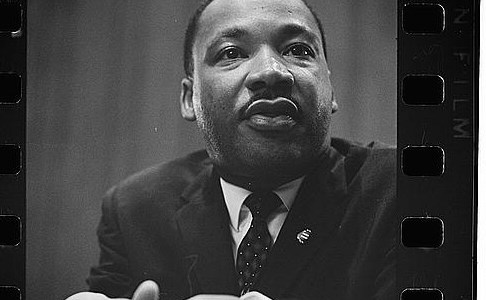
In November 1954, Dr. Martin Luther King Jr. preached his inaugural sermon at Dexter Avenue Baptist Church in Montgomery, Alabama. In retrospect, it was his future ministry’s thesis statement[i]. His text? Romans 12:2: “Do not be conformed to this world, but be transformed by the renewing of your minds, so that you may discern what is the will of God—what is good and acceptable and perfect” (NRSV). The sermon was titled “The Transformed Nonconformist.” He was proposing that Christians sometimes needed to act in ways that didn’t always “go along to get along.” Civil, nonviolent nonconformity, was a preferred option when democratic institutions failed, and discrimination continued unabated.[ii]
There were scores of other faith leaders, expressing such a witness, prior to and alongside of, Dr. King. The church had a rich history of persons acting as Transformed Nonconformists.[iii] Urban Training Centers were active across the nation in the mid-1960s, most notably in Chicago, Detroit, and Cleveland. There were many models unfolding ranging from the East Harlem Protestant Parish in New York to Church of the Savior in Washington D.C., to Operation Push in Chicago. In Boston, Cleveland, Nashville, Atlanta, and Los Angeles such efforts were institutionalized and often funded by mainline denominations. In the rural south there was the witness of the Koinonia Farm in Georgia and Voice of Calvary in Mississippi.[iv]
In Indiana the Rev. Luther Hicks in Indianapolis founded Dignity Unlimited. Hicks, a pastor, also set up work with youth in a storefront outreach effort near Shortridge High School at 34th and Meridian. Hicks was arrested on several occasions for leading nonviolent protests over racial injustices. Urban legend has it that the “Methodist” bishop would call the “Methodist” mayor to intervene. Hicks’ crime? Seeking to de-escalate possible violence and “promoting patience and reason.”[v]
In earlier decades, Gary (Indiana) Central Methodist Church championed racial justice efforts as the Reverend S. Walton Cole encouraged members to confront their own prejudices, welcome new members from diverse backgrounds and march in demonstrations for equal pay and education. At Trinity Church in Muncie, Indiana, Rev. J. C. Williams’ activities in Civil Rights struggles lead to his candidacy for Mayor of Muncie as “Poor People’s Party Candidate”[vi]
Back to Evansville, and to the topic the closing of desegregation and the closing of inner-city schools, the counsel “You cannot fight city hall” was heard, and it was reframed to a need the importance of speaking directly to school administrators.[vii] In the process, changes did come. Culver School was not closed, and a new building was constructed. Elaine Amerson was elected to the county-wide school board where she served for eight years, three of them as board president. Resources that had been heavily directed to suburban schools were shared more equally across the school system. And, yes, county-wide busing did occur, while at the same time several “naturally racially integrated” schools continued to serve a neighborhood.
Despite the range of these efforts, little research, or documentation of the import of such faith-initiated efforts at transformation has been produced. Dr. King’s legacy endures. It has been revived by persons like the Rev. William Barber II. Taking a longer view, while significant advances have occurred, perhaps a deeper and wider story has gone untold.[viii] There has been little reporting on the breadth of the many faith-based activities.[ix]
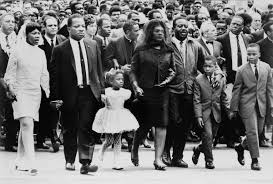
Denominations have turned inward. The slow and critical work of building up neighborhood parishes appears pushed to the sidelines. Examples of genuinely interracial and multicultural congregational life are little-known or valued only at the margins in Mainline Christianity. The death of Dr. King in 1968 dealt a severe blow to the call made to the church in his “Letter from Birmingham Jail.” The time of Non-conforming Transformationalism abated but it has not disappeared.
In the wider culture, since Dr. King’s death, change has come fast and hard, resulting in questions as to the relevance of the church and much handwringing among church leaders. A decline in attendance began in the late 1960s. Baby Boomers emerged as a new and different demographic. At colleges and congregations on university campuses interest in church attendance declined dramatically at the end of the 1960s. Many campus pastors and priests point to 1967, or thereabouts, as a critical juncture when students who had once filled the pews began to disappear in large numbers from worship. Meanwhile, in urban neighborhoods, those expanded church facilities that had been built in the decades following WWII for all the children, were emptying out.
The Vietnam War, the birth control pill, and the weak response by churches to support the civil rights exposed how insular, self-absorbed, and out of touch religious institutions were in the culture. Going along and Getting Along had taken a toll. We were said to be entering “a post-denominational era.” The call of Dr. King and the work of scores of faith-based initiatives designed to engage the church in seeking transformation in society was seen more as an artifact than a calling.
For denominations these realities accelerated the anxious casting about for ways to find or retain relevance. There was a willingness to try many things to stop the growing loss of membership. Ironically, efforts to value and benefit by affirming a core denominational identity and neighborhood parish locations was typically missed or overlooked. The megachurch movement was off and running. It has served as a central hoped-for-solution among denominational bodies.[x] Now, in hindsight, it appears exclusive focus on a megachurch model was destined to be insufficient to the changes that continue.
Less attention was given to taking seriously the need for in-depth lay theological education. Popular narrow cultural ideologies, “seeker-friendly” worship that avoided symbols of sacrifice like a cross, along with contemporary music, mixed with safe political perspectives were the tail that wagged the theological dogs of this era. As church historian Martin E. Marty put it: “To give the whole store away to match what this year’s market says the unchurched want is to have the people who know least about the faith determine most about its expression.”[xi]
Especially notable, in the 1980s through the 2010s, were the more agile, drive in, folk-based religious mega-church expressions. Willow Creek Community Church in the Chicago suburbs or Mars Hill Bible Church in Michigan are often-cited examples. These “independent community church” expressions are now in second or third generations of leadership and appear to be going through their own identity crises — and decline. The recent exclusion of Saddle Back Church from the Southern Baptist Convention is worth considering as persons consider what the future of the megachurch will be.
The story of the megachurch in United Methodism is more complex. At places like the Church of the Resurrection in Kansas, St. Andrew UMC in Colorado, or Ginghamsburg UMC in Ohio, there have been deliberate efforts to encourage thoughtful theological discourse and support for nearby neighborhood parishes. Typically, however, these types of megachurch congregations are the exceptions among the large church expressions.
Anxiety was the driver. There was a widely held belief, a self-fulfilling prophecy in fact, that we had entered a post-denominational era. This anxiety was a symptom of what might be diagnosed as“Church Growth fever.” Such fear-based views and flight to “safe places” continues. There have been few efforts to stop to consider what gifts may already be present in smaller and more local parish settings. Megachurch models were advocated that were too often independent from a denomination’s core identity.[xii]
The response over the past four decades has only reinforced the self-focus and self-concern in many settings. Denominations and philanthropic entities focused attention on leadership training and congregational development. These efforts, while not bad in and of themselves, turn attention toward inwardly directed programs. They also, inadvertently perhaps, set up a system where pastoral performance is measured against the “successes” of the booming megachurch in the suburbs. Looking inward, it was the pastor or the congregation that needed to change to be “more valued.” One might say the time of Non-transformational Conformity had arrived.
Sadly, in many places, the value of neighborhood congregations was lost; the importance churches as a local center of informal gathering and values-production among residents living nearby was sacrificed. Starbucks, neighborhood eateries and bars now filled the civic void left behind in urban neighborhoods.
BUT WAIT, THERE IS MORE!
In many urban neighborhoods, congregations have survived, even prospered. They have persisted despite often being undervalued and overlooked.[xiii] While thousands of neighborhood congregations have disappeared, thousands of others are being transformed. Not all continue as worshipping communities only, or primarily. It is often not the church as known it in the past. Some places are more traditional but in almost all, there is a willingness to be Nonconforming Transformationalists.
There is a remarkable phenomenon, for example, of church buildings being transformed into low-income residences.[xiv] In other places congregations are building tiny houses on church property and are forming communities of care where church members build fellowship with persons finding health and spiritual care for chronic difficulties. There are at the same time new models of faith life bubbling up that don’t require a building, as in coffee shop Bible studies and parenting fellowship groups. There are new forms of believers assembling to “be transformed together” working on immigration reform or providing shelter or health care for low wealth persons that have begun and are beginning. These are signs of hope and joy and celebration. They are places where diversity is celebrated, where multicultural expressions are honored, and where everyone, no matter race or sexual preference, is welcome.
COMING NEXT: Parish-based Renewal and Seeing Christ in the Neighbor and Neighborhood.
[i] McCullough, Marcus, “Go Along to Get Along,” The Graduate Journal of Harvard Divinity School, 2023.
[ii] Passages from Romans chapters 12-15 have been cited to undergird both conformity and nonconformity with government practices across the centuries. In Romans 13:1ff, Paul seems to argue that Christians should simply submit to civil authority. However, King and others suggested Romans 12 set the terms for any such submission. When faced with evil institutions, conformity is predicated on the ever continuing the call for transformation? Discrimination, Jim Crow laws, lynching, unequal economic, societal, employment and education systems could and should be transformed.
[iii] Too often forgotten or overlooked were the many others who were part of Urban Training Centers shaping urban ministry around the country. Gibson Winter’s book The Suburban Captivity of the Churches helped set the stage as did his work with the Urban Training Center in Chicago. There were the folks like Clarence and Florence Jordan at Koinonia Farm and Gordon and Mary Cosby at Church of the Savior in Washington D.C. There was the ministry of Father Jack Egan for the Chicago Catholic Diocese and Vincent Harding with the Mennonite communities in Chicago and Atlanta. Folks like Don Benedict, Archie Hargraves, Bill Webber, and Letty Russell at the East Harlem Protestant Parish New York.
[iv] I mention these few, of many, because much of this history has been overlooked. Dr. King’s work, and that of the Southern Christian Leadership Conference, was essential to the changes brought about by the civil rights struggle. At the same time there were dozens of localized ways people of faith were engaged in taking their faith to the streets.
[vii] We heard my supervisor’s admonition that one “can’t fight city hall” as a call “not to turn city leaders into the enemy.” This led to many lunches with school administrators and city officials. Some of the best allies in seeking more equity in public education came from teachers and administrators within the school system.
[viii] Examples come in many dimensions: In housing (Habitat for Humanity grew out of the witness of Koinonia Farm with Millard Fuller and Clarence Jordan in Georgia), with economic structures (e.g., Rev. Faith Fowler at Cass Community in Detroit provides a model, as does John Perkins with Christian Community Development Associations, or incubator businesses out of several congregations), and resources linking spirituality and social action continue (e.g., Fr. Richard Rohr’s at the Center for Action and Contemplation and Rev. Jim Wallis’ leadership at the Sojourners in Washington, D.C.).
[ix] Research waits to be done. In the early 1970s, for example, Project Understanding looked at the efficacy of programs designed to bring racial change through religious congregations – little has followed.
[x] Dr. Scott Thuma at Hartford Seminary has done considerable research on the rise (and decline) of the megachurch phenomena. See: mhttp://hirr.hartsem.edu/megachurch/research.html.
[xii] It is not surprising that many of the same folks who pushed a singular focus on tinkering with the patterns of congregational life warned we were entering “a post-denominational era.” From “Keys to Growth” and the “Habits of Successful Congregations” the remedies proposed included more parking, new member campaigns, management by objectives, leadership training, changing music or moving the location of the congregation to a “better place.” Long established denominational connections or linkages with other institutions in a community were not highlighted. Mostly, the unspoken assumption was that larger congregations of like-minded people were the answer. Seldom was there a focus on the parish surrounding the church – and when there was such a focus, the parish was seen as a place of scarcity, even danger. A place needing outside help rather than a resource for congregational vitality.
[xiii] Some researchers speak of these examples of heath where there is perceived poverty and decline as “positive deviance.” I choose to see it as the work of the Holy Spirit.
[xiv] A remarkable initiative is being carried out by the United Methodist Foundation in the New England Annual Conference where “redundant” church buildings are being evaluated as places for potential residences or for new ministry/mission sites.
“You can’t fight city hall.” my friend said. After I shared efforts to keep several inner-city schools open, he gave this response. My children attended one school on the docket to be closed – Culver Elementary, in Evansville, Indiana. It was the late 1970s. The Federal Court desegregation orders were being enforced. School busing was underway across the nation. In places like South Boston, there was angry, even violent, resistance. In Evansville folks were uneasy. My friend was also my supervisor.[i] His counsel was appreciated, well-intentioned. In fact, it was considered “progressive” as a support for desegregation efforts.
Public schools in the city were to “adjust” and “comply.” Our children’s school was naturally racially integrated. Along with others, all children could walk to school from home. No school bus needed, thank you. There was a natural racial mix. School desegregation orders, although imperfect, were a response to the prevailing patterns of separation and providing unequal resources based on race. The evil of systemic racism has plagued our nation from its founding, shaping the ecology of our cities. In the wake of this, white flight left thousands of formerly predominantly white urban congregations struggling to survive.[ii]
How to best respond to the effort to “desegregate” schools in my community? On the one hand, my children already attended a racially integrated school; on the other, there were deep systemic problems in cities across the land. In many places – no, in most places – the church lived by the notion “you can’t fight city hall.” It might be called a Go Along and Get Along theology. In earlier posts, I noted the multiplicity of ways congregational life was reshaped, distorted really, by racist activities, after WWII. Housing, transportation, education, and economics were woven together on a loom shaped by deeply racist social designs.
THAT WAS THEN. Alternative voices were also emerging. The Rev. Dr. Martin Luther King Jr. represented the best known of such an alternative vision.
In upcoming posts we will look at Dr. King’s prescription for change and how mainline denominations responded. We will also suggest some ideas for a more hopefilled furture. Perhaps Christendom as it has existed in recent generations in the United States is passing — and, perhaps, there are ways Christianity will flower in surprising new manifestations.
Next: Dr. M.L. King’s Nonconforming Transformationalism.
[i] Clergy supervisors in the Methodist tradition are known as district superintendents and bishops. My district superintendent was a good man and the urban ministry work we were doing at Patchwork Ministries in Evansville was made possible through his connectional support. This support was not primarily money; mostly it was permission for a group of young idealistic pastors to attempt something different in terms of urban ministry.
[ii] Tragically the current US Supreme Court is attacking legislation intended to secure voting rights, affirmative action and equal justice that accompanied these desegregation efforts.
“Politics ain’t beanbag” is an oft used quote about the rough and tumble, often bruising, realities of living and participating in a democracy. The phrase was coined by Finley Peter Dunne, a Chicago author who wrote of a fictional character, Mr. Dooley. Starting in the 1890s, Dunne wrote a column where Dooley offered up a philosophy of life from his perch on a barstool in a Chicago pub. Politics ain’t beanbag is probably the best known of Mr. Dooley’s witticisms.
At my age and stage, I have experienced the truth of this philosophy often. Things can be tough – pick yourself up and move on – is what Mr. Dooley seems to be saying. I recall 1984 when Frank McCloskey won a “landslide election” for Congress in the “Bloody Eighth” Congressional District. The first reported results had McCloskey winning by four votes. Or did the Republican candidate Rick McIntyre win by 34 votes? This is what one of the many “recounts” in the following days claimed?
My memory is that a “true result” was never fully determined, as there were thousands of ballots that were not counted for “technical reasons.” Most of these uncounted votes were in Democratic-leaning precincts. Indiana Republican Secretary of State, Ed Simcox, decided to certify McIntyre as the winner but the Democrats controlled the U.S. House of Representatives and accepted that McCloskey had won – even if only by four votes! And so, the high drama was on!
Thus, in early 1985 Speaker Tip O’Neill swore in and seated McCloskey as a member of Congress. The ensuing full-blown melodrama was worthy of a Shakespeare comedy. Walkouts and shouting and blaming were orchestrated by folks like Newt Gingrich and Dick Cheney. Speaker Tip O’Neill and Texan Democrat Jim Wright took advantage of their power of office.
This election may have helped set the stage for current election denial and conspiracy theories. Of course, one also thinks of the Swiftboating tactics used against John Kerry in the Presidential Campaign in 2004 when lies undercutting a distinguished military career were broadcast widely. In Indiana over recent years, I recall mayoral races marked by dishonest whispering campaigns. In one, a fella was said to be a closeted gay man. In another city, the rumor was that the candidate had a mistress “on the wrong side of town.” This was meant to say she was of another race. I wondered if it would have mattered if the mistress was on the right side of town.
Politics ain’t beanbag is a truism. Bloomington has just finished our primary elections. There are, no doubt, some candidates and members of the electorate still nursing some election bruises. Some candidates were said to be too close to developers, or another to realtors, or another to people who want to block any progress. We even witnessed some rather strange, last-minute, “news coverage” concerning unsubstantiated allegations against a mayoral candidate.
Still, there did seem to be a good exchange of ideas coming from several debates and town hall gatherings. Even so, this should be a moment to “dust ourselves of and move on.” A time to look toward building our future together. Mayor Hamilton’s term has several months ahead when good and cooperative work is possible. More, this is a time to step beyond the meanness and divisions we see on the national level and plan for a positive cooperative governance in the future. Now are the months to appreciate what can still be accomplished by our current elected officials and look to a positive future with new city leadership.
In 2022 Daniel Effron and Beth Anne Helgason published “The Moral Psychology of Misinformation.” They identify a newly emerging danger in our politics, the growing tendency to excuse dishonesty in a post-truth world. They conclude: “As political lies and ‘fake news’ flourish, citizens appear not only to believe misinformation, but also to condone misinformation… We are post-truth in that it is concerningly easy to get a moral pass for dishonesty even when people know you are lying.”
The primary election is over. Maybe it is a time to commit to speaking truth in the elections and governance ahead. Can we be a people who will not believe misinformation? Will we live into truth even while understanding the beanbags will fly.
“I was afraid I might be shot walking from my car into the building.” These were the words of a friend, a denominational leader. He was speaking of work while his office was at Central Avenue UMC in the 1990s.
In recent years I assumed there were few surprises left for me after more than fifty years as a pastor in my particular Protestant denomination. I was wrong.
It was a casual conversation, but a stunning one. My friend’s almost off-hand comment opened a new vista into what I had failed to see those three decades earlier. He was speaking of when his office was in the Central Avenue Church years before. Still, the fear lingered in his voice.
I have written about the decline and closing of the Central Avenue in earlier posts. In the mid-1980s, I joined others in proposing some denominational offices be moved to the unsued space at Central Avenue. Our assumption was it would benefit urban ministry across the state. It would signal and solidify a commitment to valuing of city churches. Surely, if denominational offices and mission activities were located in the core-city, it would guarantee more support and an awareness, a commitment, to city ministry. In an amazing set of circumstances, in that decade, even Governor, Frank O’Bannon, and his wife Judy, United Methodists themselves, chose to live nearby and associate with Central Avenue. They were advocates for urban revitalization.
Still, something was awry. My assumption in hindsight was fool hearty. There was an insufficiency in vision. Locating offices in that building didn’t have the effect we had hoped. Central Avenue officially closed in 1999. The building needed significant repairs. The worshipping congregation was down to only thirty members. Ultimately the grand old structure was given over to Indiana Landmarks and extensive refurbishment was carried out.[i]
What did we fail to understand when it was thought that locating some denominational offices in that place would be a difference maker? Something more basic, more at the core of things, was at play. Offices might be centered in a building, but fear and a lack of a shared vocational clarity as to city ministry overwhelmed the best of intentions.
Earlier I posed the question, why? Why did so many urban parishes seem to evaporate or vanish over the past half century? Central Avenue is representative. In fact, it had more advantages than many others. The many parishes that vanished faced a tsunami of urban change. Long deferred building maintenance and the costs of repairs played a significant role. It will be argued later that an inadequate sense of theological clarity and sense of connection between the congregation and a shifting neighborhood population was a contributor to this decline.
Too few neighbors found a home at the church. Few persons were willing to drive from more distant neighborhoods back into the core-city. There was insufficient interest, skill or insight in re-establishing this as a viable parish. Other factors contributed to this demise (secularization, smaller families, alternative faith communities nearby); even so, I have come to the belief that, at the core, there are two fundamental issues which offer the clearest explanation. These are:
a) the social and political ecology of embedded racism; and
b) Ineffectual denominational and congregational responses lacking in theological clarity.
A Look at the Embedded Racism in Urban Ecologies
My friend who spoke of being afraid of being shot walking between his office and the car was not someone who would fit the label of a racist. Over his career he spoke against racial discrimination. Yet, the fear he experienced belied something deeper, something far more problematic.
Racism is about more than individual attitudes or behaviors. It is embedded in perceptions and expectations. Even more, it is interwoven in the political and economic systems in which we all participate. After speaking of “being afraid of being shot” he went on to say, “I couldn’t invite persons to come to the building for meetings, especially in the evenings, out of concern for their safety. On more than one occasion I heard gunshots near the building.”
As these words were spoken, I thought of the dozen or so United Methodist congregations nearby, several within a couple of miles. I thought of the dozens of churches, around the city and in urban neighborhoods across the state, that were in more “dangerous” settings (with higher crime statistics or gang activity).
Fear is a powerful force in shaping what we see and how we behave. Comments like “we must go to where the people are” or “I couldn’t invite people here” are not intended to carry racist freight on the surface – but they are marioneted in a broadly assumed and unspoken racist gestalt. In truth, in nearby churches congregants gathered in more crime ridden neighborhoods, day-and-night, to carry on their ministries.[ii]
There was a failure to consider a wider array of options than an exit strategy. The resulting reality was a benign neglect of most core-city parishes. The “left behind” congregations were undervalued as to their potential.
There are many factors that underlie WHY neighborhoods changed and parishes slowly vanished. Realities and patterns vary from congregation-to-congregation, city-to-city, and neighborhood-to-neighborhood. Even so, when one considers the common ingredients surrounding neighborhoods that were abandoned and where parish life was ignored, fear of the other (of the stranger) is always present.
Our nation’s history is that of a restless citizenry, moving from place to place, job to job, home to home.[iii] This mobility is assisted by the capitalistic assumptions that social status and a better life can be purchased by a move to a more respected place.
There is a lengthly list of contributors to transitions in urban neighborhoods like those surrounding Central Avenue Church. This recent research on the dynamic of urbanization singles out racist structures as far and away the critical explanatory and discriminatory component. Racism serves as what social scientists call an “independent variable.”
There are now scores of research reports, mostly from the past decade, that document the extent of racial inequity. It permeated our social and economic ecology. It was manifest in the building of interstate highways,[iv] the decline of newspapers and local media,[v] real estate speculation and housing practices,[vi] shopping malls and big-box retail,[vii] employment,[viii] education,[ix] taxation,[x] law enforcement,[xi] urban development,[xii] and, this all reinforced by patterns of governance and political control in cities.[xiii]
To illustrate, here is a quick review of the first factor above, the building of interstate highway systems. It is clear systemic racism shaped the urban landscape. A pervasive, and decades long, reality can be seen in the destroying and/or dividing neighborhoods based on race. The interstate highway system begun in the mid-1950s, and even earlier the parkways built by planners like New York’s Robert Moses, intentionally divided neighborhoods by race and social class.[xiv] In the process it was nearly always the Black and Brown neighborhoods that were destroyed or “isolated off.”
Today the former Central Avenue church building is only a few yards from I-65 as it loops through the middle sections of the city; and, barely two blocks away is another barrier as I-70 separates off heading east. The now gentrified Near Northside neighborhood is, thus, walled off from other, historically poorer neighborhoods in Indianapolis.[xv]
Robert Bullard in 2004 documented how the Interstate Highway System was blatantly and, in most cases, effectively utilized as a tool of “transportation racism”.[xvi] Bullard speaks of the power of transportation inequity. Poorer neighborhoods suffered the consequences that included: isolated poverty detached from needed services, environmental hazards, loss of neighborhood centers (including churches), excessive noise and more difficult access to shopping, parks, entertainment, and other amenities. Bullard posits that “transportation planning has duplicated the discrimination used by other racist government institutions and private entities to maintain white privilege”.[xvii]
Thus, by the 1970s, in Indianapolis, the building of interstate highways, the establishment of Unigov (bringing together city and county government), the desegregation of schools and taxation policies were powerful reinforces of an often-covert racism. It was a racism that was deeply embedded in urban planning activities and in the souls of well-meaning but fearful citizens, even church leaders. It is little wonder that congregations like Central Avenue were in trouble. It is a story deeply embedded in racial fear. But the story is even more nuanced, more complex.
If racism was a primary cause, the response to this time of transition and the vanishing of parishes by the denominations was also due to largely ineffectual and misguided practices. We turn to this in the next posting. There is more. There are words of hope offered by two other questions beyond the “why?” In future we will also ask about the “what if?” and “why not?” options before us.
[ii] I was serving as one of the pastors at Broadway United Methodist under two miles north of Central Avenue from 1986 to 1992. Yes, there were gun shots heard and even violent exchanges on that parking lot; however, the lay people, who lived near and far away, and the nearby neighbors were beginning to forge bonds of cooperation and respect. It was hard won – and was filled with the challenges of mistrust and paternalistic behaviors.
[iii] Frederick Jackson Turner had hypothesized all the way back in 1893 that the American Spirit was one of always moving into a new frontier. Turner spoke of the idea of an exceptionalism that sought to “win against the wilderness.” Mobility came naturally to the settlement and resettlement of our cities.
[iv] Bullard, R. D. (2004). The anatomy of transportation racism. Bullard, R., Johnson, G., & Torres, A. (Eds.). Cambridge, MA: South End Press.
[v] There is a clear and growing research on the decline in civic engagement as related to the decline of a local press. See for example Madeline Price, “No Longer Black and White and Read All Over: How the Disappearance of America’s Local News Threatens Our Democracy,” Democratic Erosion, February 13, 2022.
[vi] Rothstein, Richard and Leah, Just Action: How to Challenge Segregation Enacted Under the Color of Law, Liveright Publishers, 2023.
[vii] Dunlap, Michelle, Retail Racism: Shopping While Black and Brown in America, Rowman and Littlefield, 2021. See also: Drost, Philip, “How Malls and Freeways helped segregate America, CBC Radio, June 26, 2022; and, Young, Michael and Peter Willmott, Family and Kinship in East London, The Free Press, 1957. This remarkable early study of two communities. The decline in civic engagement and community involvement anticipated the losses of parish awareness ahead for places where suburban development was underway. undermining the viability of neighborhood shops and shopping.
[viii] Wilson, Valerie and William Darity Jr., Understanding black-white disparities in labor market outcomes requires models that account for persistent discrimination and unequal bargaining power, Economic Policy Institute, March 25, 2022.
[ix] Ramsey, Sonya, The Troubled History of American Education after the Brown Decision, The American Historian, March 2021.
[x] Davis, Carl and Wiehe, Meg, Taxes and Racial Equity: An Overview of State and Local Policy Impacts, Institute on Taxation and Economic Policy, , March 31, 2021. See: https://itep.org/taxes-and-racial-equity/
[xii] Baker-Smith, Christine, Lourdes German, Samantha Pedrosa and Stacy Richardson, Racial Equity and Municipal Bond Markets, National League of Cities. 2022.
[xiii] “Unigov: Unifying Indianapolis and Marion County,” Digital Civil Rights Museum, accessed May 8, 2023, https://www.digitalresearch.bsu.edu/digitalcivilrightsmuseum/items/show/42.In Indianapolis the dramatic shift in governance came with the adoption of Unigov – a merger of multiple city and county agencies. While presented as a way to streamline the work of overlapping government agencies, the Indiana Conference on Human and Civil Rights also served to dilute and weaken the voice and representation of the poor and black citizens of Indianapolis.







 Hands of the Strong