Faith Communities Could Boldly Lead

Faith Communities Could Boldly Lead

Attached below is a column sent to our local newspaper in Bloomington, Indiana, the Herald-Times

While it is local in focus, the situation is repeated in thousands of communities in the United States.  Perhaps there are some thoughts or themes here that could be helpful to you wherever you live and/or work. 

Our nation is amid a mental health crisis where our largest homeless shelters are the local jails.  Until the poor, ill and addicted have places of shelter and care, at minimum, no one should call this a “Christian nation.”

++++++++++++++++++

Faith Communities Could Boldly Lead

What makes Bloomington “BLOOM”? What offers vitality, hope, knowledge and hospitality? We have great institutions: centers of education, health science, manufacturing and culture. Innovation and technology are known to be essential. Still, Monroe County seems in the doldrums, waiting for a new gust of imagination and initiative. A community’s wellbeing in terms of jobs, housing, education, racial diversity and cultural amenities is a complex mix. Not thriving at a high level, we bump along.

Among our disquieting realities:

  • Declining population and lagging diversity. Since 2000, non-university related population is down 1.5%. Surprisingly, racial and ethnic diversity, lags peer communities.
  • Lower wages, productivity. At Futurecast 2025 in November, Philip Powell, director of Indiana Business Research Center noted core worker population (aged 18 to 44) continues to decline, below U.S. and Indiana average wages and productivity. Bloomington will “live and die by the talent that is here,” Professor Philip Powell concluded.[i]
  • Cost of living and housing expenses are among the highest in Indiana with too few homes on the market for demand. Many workers offering essential services must live outside the city.
  • The homeless. With little voice and few options hundreds seek shelter in a tent or doorway. Some live in an automobile. Some do “couch surfing,” others are in jail or healthcare facilities. Scores move every few days, from one unwelcoming location to another.

As I did research something strange happened: the same number, 143, popped up on two different topics. Mere coincidence? The Association of Religious Data Archives reported 143 faith congregations. Another topic showed 143 persons had no shelter at all, and 300 more persons were classified as homeless![ii]  

What if each faith group offered shelter for one person? Too simplistic and unlikely? I think not. Faith communities vary. Numbers vary over time; but not by much. Consider this, if Monroe County seeks more innovation, imagination, growth and productivity, is it solely the work of the corporate, government, service and education sectors? What roles for faith communities?

What if for the next five years, 2025 to 2030, congregations offered 143 additional safe places each year by building, renting or otherwise providing shelter for our poor?  What if each faith group reached out to know a person without shelter, not as a client but neighbor? In these frigid days of January 2025, two churches, First Christian and First United Methodist stepped up offering emergency shelter, a warm space, a small respite, a bite to eat. Beacon Inc. and Wheeler Mission do more as well. Might faith communities cooperate to end the need for such emergency spaces all together?  

Let’s not get carried away, here Phil! If this was a sermon, the Jewish or Christian scripture text could be Isaiah 58:7 or Matthew 25:35-40. (There are many other passages calling persons of faith to shelter the homeless.) In Matthew 25 the hungry, thirsty, or those without shelter are to be treated as if they were Jesus himself.

As some leaders in our community seek new vitality with technology, research and innovation hubs, might imagination also come from our faith communities? Congregations could assist the Housing Authority supporting Section-8 vouchers. They might offer additional volunteers and gifts for Heading Home, New Hope for Families, Habitat for Humanity, Wheeler Mission or Beacon Inc. Bloomington could become known as a place where faith communities offered one critical, stable baseline amenity, HOUSING for the poor along with wise, research-based care that could lead to recovery, employment and fuller citizenship.

A place to start now is with support for Beacon Inc., (https://beaconinc.org/).  The proposed new center will offer a more comprehensive approach: shelter, recovery, job training, space for prayer and meditation, care for physical and psychological difficulties. 

One-hundred-forty-three, 143!  The Rev. Forrest Gilmore, Director of Beacon, heard me speak of #143 and reminded me that it was the favorite number of Fred Rogers, the creator and television host of Mister Rogers’ Neighborhood. Rogers kept his weight at 143 pounds all his adult life!  More importantly, however, he said that 1-4-3 matched the number of letters in his favorite three words “I love you.”

One-hundred-forty-three, 143! Faith groups might join corporations, the city, the community foundation, university innovations and research, and social service groups in modeling a better way for Monroe County, our state and nation. Even if only half, or one third of our congregations, or if only a couple of dozen could boldly act together, they could make a difference so that Bloomington would be widely known as the city in bloom.


[i] Wright, Aubrey, Indiana Public Media, November 7, 2024 

[ii] Keener, Gentry, Indiana Daily Student, October 20, 2024. From the Indiana Housing and Community Development Corporation “point in time” count. 456 persons were homeless, with 143 living no shelter at all.

Brokenhearted, Yet a Wholehearted Hope

Brokenhearted, Yet a Wholehearted Hope

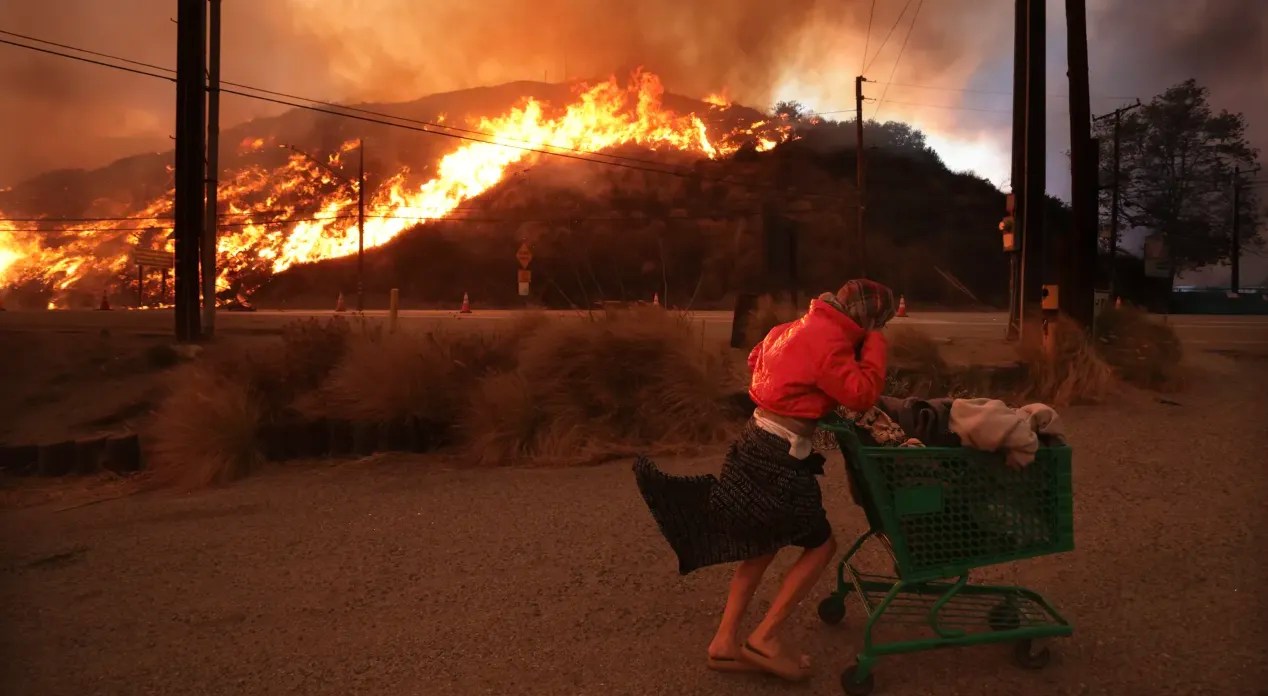
Brokenhearted. In prayer for those suffering the wildfires in Los Angeles area. So many friends there, great folks in wonderful neighborhoods now destroyed or threatened.

Sad to learn the lovely Altadena United Methodist Church building was destroyed. I think of friends in, and nearby, who must be suffering and facing great uncertainty. Altadena UMC is a place where my dear friends, Rev. Mark Trotter and Rev. Yvonne Boyd served in different eras over the years. They built and sustained a strong and welcoming congregation.

In Altadena, the Jet Propulsion Lab and many graceful parks, museums, and educational centers are nearby. It was a place where racial exclusion and redlining was exposed in the 1960s and for many decades has been rich in racially diverse neighborhoods. You see, this fire may be destroying more than homes — also lost is the experience of neighbors who shared gifts brought by differing cultures and life experiences.

Of course, Pasadena is close by – we think of friends there. At Huntington Library and Gardens, Fuller Seminary, several other congregations. There also is the California Pacific UMC conference headquarters.  Dear ones, we treasure, are facing threat in Pasadena… some have been put on alert to prepare to evacuate. We pray for them.

So many, now vulnerable areas, and friends at risk — Glendale, Hollywood, Santa Clarita and, of course, the Palisades. We commit to share our small financial support that can go for ALL those who suffer today.  We are proud to know that United Methodists have offered shelter and outreach to those facing this tragedy.  See: https://www.calpacumc.org/news/cal-pac-fire-updates-january-8-2025/

Other denominations, churches, mosques and synagogues also now offer spaces of refuge and care. In the midst of ongoing infernos, there is a broader and deeper expression of common humanity. Some reports of looters, but these pale in comparison to the expansive acts of neighborly care.

++++++
And one other word… what can be said of the moral depravity of the incoming president? Isn’t he a looter of our commonweal? Aren’t his words robbing us of the chance to honor others and practice neighbor-love in a time of need, absent of ugly incrimination. I say “yes.” He is a looter of the common good.

He, who always presents himself as the greatest of victims, shows little or no empathy for those who are truly suffering. He blames, distorts, creates division and uses this tragedy to score political points. Why this perpetual need to harm? What inferno has burned across his soul and left this abyss that lacks humanity or humility? Is it that he is afraid of a tragedy taking away his place on center stage?

Surely there are many reasons for this tragedy… too little water storage? But there was also too much rain in recent years contributing to increased vegetation. Vegetation that turned into fuel over months of draught. Of course, there are questions of building such large communities in desert areas and diverting water away from natural flow. Ask the folks in Mexico about the trickle of the Colorado River that was once a wide and potent source of life and beauty. There are also profound questions about our national and international dependance on petroleum that contributes to changes in our climate.

In recent years, taking a cue from folks like Wendell Berry and Wes Jackson, I have sought to follow “a way of ignorance.” By this, they mean admitting there is so much we do not know, and MUCH to learn, as we journey ahead. We start with an awareness of much yet to be discovered. It keeps one honest and appropriately humble. Admitting, first, there is much to learn and to love. There is so much that is unknown about persons, communities and the natural world – and it also offers space for growth and discovery – space for delight. 

Sadly, I also see that some chose a differing “way of ignorance.” This one is rooted in fear, arrogance and denial. This is an ignorance based in fear and the need to control. It blocks new insights, transformation, unity and joy.  It persists in brokenness and grievance.  I pray for the incoming president today, that he might be healed of this way of acting and behaving.

Brokenhearted, yet I also will wholeheartedly give my energies, in the limited years I have remaining, to joining the good work of others, like my United Methodist friends, in encouraging our nation and world toward a better way. I will name the “looters of the common good,” persons like Donald Trump, as I give thanks to the millions of witnesses who offer care, hope and new discovery, even in the face of tragedy.

Integrity & Jimmy Carter

Integrity & Jimmy Carter

Integrity and Jimmy Carter are synonymous. For one hundred years he offered his witness. There were ups and downs, missteps and the recognition of a Nobel prize. I see his life as a wonder-filled demonstration of human decency and generosity. A paradoxical mix of pride and humility, intelligence and determination, vision and myopia. This peanut farmer from Plains, Georgia offered a standard, a vision for a better way.

Friends disagree. Some call him naïve, too uncompromising, or too unwilling to make savvy political calls when necessary.  A ‘fluke,’ they say, ‘one who would never have been elected had not the nation become overburdened by the agony of wars in Southeast Asia and the deceptions of Nixon and Watergate.’ I disagree. Carter’s leadership emerges as an immeasurable gift for our nation and the world. Can we learn from, benefit from, the many positives of his life and perhaps, journey carefully around its pitfalls? 

I hold that President Carter, alongside countless others who have recently died, persons like my friends Ruth Duck, Jan Foster, Bill Pannell, John Cobb, and John McKnight, exemplified lives guided by an informed faith, a hunger for truth and a future established in hope rather than fear that our nation and world now desperately need. Their lives, along with millions of unknown or unnamed others, point toward the better path for humanity, a path taught in scripture.

Closing my eyes for a moment, I see Jimmy Carter standing before a Sunday School class at Maranatha Baptist Church in Plains, each Sunday. He had studied the lessons found in scripture, lessons that shaped his daily living and informed his efforts to lead. This image is in stark contrast to that of another president filled with guile, poising in front of a church building, sanctimoniously holding up a Bible as a prop, knowing little of the contents or gifts found in its pages.

One man, Carter, worked to build homes for the impoverished. The other, Trump, gained wealth by building hotels for the rich and casinos that served to impoverish the vulnerable. One worked to end the guinea worm disease and other illnesses in the world. The other used an epidemic to divide and undercut public health initiatives needed by a fearful nation. One worked to encourage care for our fragile earth, protecting more than 150 million acres of wild lands and rivers. The other continues to deny the reality of climate change and lives by the words “drill baby drill.” One was ridiculed as naïve for saying he had committed “adultery in his heart.” The other was convicted of sexual abuse and bragged of his sexual exploits.  One said, “I will not tell a lie.”  The other said, I will offer “alternate facts.” One spoke a hard truth about people torn apart by religion or culture, and scripted peace accords between nations. The other used culture wars to establish new enemy lines and employed exaggeration and falsehood about the immigrant, poor and vulnerable.

Sr. Joan Chittister writes: “At the end, three things measure both our integrity and the harmony of our own lives: self-control, respect, and freedom from self-deception.”  The true value of our living will ultimately surface like a submerged cork in the ocean.  Life comes and passes; nations rise and fall. I hold to the wisdom of scripture: “Whoever walks in integrity walks securely, but whoever takes crooked paths will be found out.” (Proverbs 10:9)

Alsatian Christmas

Alsatian Christmas

Brain emptying vertigo;
blank excepting, images of a choir, no bells
and the most amazing alto ever.
Sitting in Alsatian darkness
there is a toll
from the eglises in Lampertheim.
Two parishes, dueling spires, reach for heaven.

What stories of love and life linger still,
birthed from the Protestante with a fine churchyard,
from the Catholique on the main road?
They share the Lampertheim Eglise Bus Stop
for those heading to the new train.

And a stork flies off a centered high perch
circling the village.
Avian ancestors flew here,
over the three patisseries,
closed tomorrow for a celebrated birth.
These things shared and enduring –
like bread broken and wine spilled.

Choose Abundance in 2025

Choose ABUNDANCE in 2025

Christmas Eve 2024. National Public Radio’s Lisa Desjardins reports on political word of the year. The public suggested: Broken, Unstable, Whiplash, Banjaxed (Irish slang meaning broken, not working, messed up), along with Polarized, Divided, Determined and Trumped.

Choices were then narrowed to three: Weird, Shift and Exhausted. The overwhelming winning descriptor of the year? EXHAUSTED!  It won with 56% of the vote!  No surprise: we have lived with incessant chatter, blaming, misinformation, false choices designed to gaslight and/or diminish others.  It has been a wearying time, a fraying at the edges of social and psychological well-being. 

For me, it is a spiritual vertigo. Things true, good, right, virtuous and just, seem tossed aside. Christmas 2024 finds our nation and world displaying an overwhelming appetite for grievance, retaliation and greed. Is this the new normal or the old normal? I say “NO.” Such national and cultural behaviors are cyclical, washing over nations and cultures tragically, all too frequently, leaving behind wounds that last for generations.  When politicians display toddler’s temper-tantrums whining “It’s mine,” it is time to return to a better script. Our nation deserves leaders who, like a wise parent, counsel “our household practices fairness for all.”  

On the first Christmas, King Herod employed brute force, exclusion and scarcity as the preferred instruments of power and authority. Who could have guessed an immigrant family, left to find shelter in a humble stable, would offer a more enduring and flourishing way of life to future generations?

One cannot avoid the reality that much of human history including the “development” of the United States has come from a selfishness and domination like that practiced by King Herod or the Roman overlords. OUR story carries uncomfortable, yet true, episodes of abuse, violence and betrayal. However, this is not OUR only story. There is another national narrative. It is the notion of the Commonwealth, of a nation begun on the premise that “We hold these truths to be self-evident, that all men are created equal, that they are endowed by their Creator with certain unalienable Rights, that among these are Life, Liberty and the pursuit of Happiness.” Reaffirmed by Lincoln at Gettysburg and Dr. King in the pursuit of civil rights and lived out by millions of faith-filled and honorable women and men across the decades. 

We have a choice. There is a spiritual and a civic “better way.”  It is the way of sharing, of seeking an abundance resulting from welcoming the gifts resident across all the people in establishing the common good.  I write as a person who has been blessed by privilege, so it might be understood that these are easy words to say.  Still, I know others sacrificed and shared so that I could now have such privilege. The virtuous act is not hording more for myself but sharing with others, understanding true wealth is gained when my neighbors are also secure. In the Biblical story Abraham and Sarah had the choice of seeing the world with abundance or scarcity. At their best they chose abundance to benefit following generations. The parables told by Jesus and the miracle stories reported teach that everyone is neighbor and all who hunger are to be fed. 

In their forthcoming book Abundance (March 2025), Ezra Klein and Derek Thompson point out the virtues of such living. They note our ability to see problems in terms of scarcity has grown over recent decades, while our imagination for new systemic interventions has diminished. 

What if instead of promoting individual grievance, we sought to improve and extend our systems of immigration, healthcare, housing, employment, transportation and education? What if we acted so that every child was offered an opportunity to learn a trade or have access to quality higher education?  What if instead of seeing professors as “the enemy” we valued the sharing of knowledge as critical to human flourishing.  Engage in debate, of course, still listening and learning from all. What if healthcare systems assumed the discovery of new ways to expand and include neighborhood-based delivery systems and worked alongside the native healers in a community? What if we made a commitment to safely house everyone and not leave those suffering from addiction or poor mental health to find cardboard bedding on the sidewalk?

Yes, the world’s resources are limited. I hold there is enough intelligence and imagination to act our way to a place beyond greed and scarcity.  What paradigm shall we choose: scarcity or abundance? Here is wishing you an early Merry Christmas 2025. May it be a time to look back and say we chose to value again the way of ABUNDANCE.

Philip Amerson, Christmas Day, 2024

Holding it Together: Being and Doing

Holding It Together: Being and Doing

Knowing of my friend’s health concerns, I asked “how are you doing?”  “I’m barely holding it together,” he responded. “It’s not the aches and pains; I’m not sleeping. I carry a dread for the future.” His insomnia was a fretting over our national trajectory and the deceits that appear to be a “new normal.” I understood. Divisive and demeaning language, dehumanizing others, greed and grifting, scapegoating, talk of retaliation and efforts to upend democratic institutions.  Mostly, my friend’s concerns were the loss of our nation’s moral center.

Women’s Park, Chicago: Jane Addams “Helping Hands” memorial.

“Barely holding it together” – honest, sharp-edged reality. Like the patient waiting to hear that dreaded diagnosis, or the father learning of an active shooter at his child’s school, or the undocumented mother who, after years working in a menial job and proudly sending her children off to college, who now fears deportations. After the 2024 election we live at the edges of hope and dread.

My first U.S. Presidential vote was in 1968. Fifteen elections later, my politics have changed, but not my trust in our future. That is, until now. Has our nation changed?  Will we hold it together?  Did the fear-saturated-campaign of 2024 and promises made with fascist overtones indicate a shift in our body politic?  Has racism, greed, misogyny and xenophobia reshaped our national identity or simply uncovered what was there?  Haven’t these dynamics always played a role? Of course, bigotry has been “background noise” but now, blatant discrimination and retribution are “baked-in” as a publicly endorsed strategy.

Is the seeking of truth sublimated to seeking revenge? Do computer algorithms prevent robust honest, dialogue among citizens?  Are “news” feeds turned into a diet of “ideologically-preprocessed-information-meals.”  Basic civic creeds that “all persons are created as equal,” or “the separation of church and state,” or “equal justice under the law” appear to be devalued, seen as outmoded and divorced from ethical political and civic practice.  As grievance becomes the coin of the realm, an inflation of conspiracy theories, dictatorial impulses, and a sense of helplessness emerges. Can we hold it together?

Pro Democracy Banner, Barcelona, 2019

We are heading into choppy national waters, bouncing along without a shared vision of common-wealth or personal responsibility. The Ship of State as conceived of by Jefferson, Hamilton, Adams and Madison, refined by Lincoln or Susan B Anthony and the wisdom of many more recent leaders is threatened. Our nation may founder on dangerous shoals of division, greed, and authoritarianism.  In his 1960 inaugural address John F. Kennedy challenged, “Ask not what your country can do for you but rather what can you do for your country.” 

My friend, the Rev. David G. Owen, now deceased, spoke of the importance of living a seamless life, where our actions (personal and social) are aligned with our core beliefs. These need to be “held together.”  How shall we live more fully, as if our nation’s creeds and our religious beliefs are reflected in our daily actions? 

Recently, prior to a meeting, a friend advised, “It is best if we leave Jesus in the parking lot.”  Perhaps he feared that as a clergy person I would divert our attention from the stated agenda.  I had heard this “leaving Jesus in the parking lot” talk before. I might have said, “O Jesus is already in that board room, don’t worry” but, instead, I was quiet.

“Holding it together” requires moral, judicial and behavioral consistency – being and doing.  This is not a call to Christian Nationalism, NO!  It is quite the opposite. It is a call to a patriotism linked to virtues taught across the centuries, religious and non-religious. It is a turning away from the threats and abuses commonly practiced by mob bosses toward treating each neighbor as we would choose to be treated. It is a move toward a seamless patriotism and away from the tyrannical. When the allegiances we pledge are not matched by our actions or by facts, trust is impossible, and a civic brokenness inevitable.  Historian Tim Snyder writes in “On Tyranny”: “A nationalist encourages us to be our worst, and then tells us that we are the best… A patriot has universal values, standards by which he judges his nation, always wishing it well—and wishing that it would do better.”

Philip Amerson, November 27, 2024

John L. McKnight: A Tribute

John L. McKnight: Mentor, Friend and Spiritual Pumice Stone

All Saints Sunday, November 3, 2024

John L. McKnight died on Friday (11/1/24).  I grieve… even as I celebrate a life given to striving after the best in human undertakings.  Another loss, another bushel of memories gathered, another mixture of gratitude and grief stirred in my spirit.  I had last spoken with John by phone two weeks before his death.

In the mid-1970s, I stood in the back of a conference room in the Bismark Hotel in Chicago as John spoke of changes in our national economy and institutional life over prior decades.  Our society was transitioning from production of goods (agricultural, mining, manufacturing) toward a primary product of human services.  People were objectified, turned into clients.  Shared community being lost, relationships were turned into the “servers” and “the served.” Our economy needed “the needy.”  We specialists could be the fixers of individuals; as the righteous we could offer service without knowing much about the other, beyond an assumption, a diagnosis, a project that meant they were different: poor or sick, addicted or uneducated, in trouble or in some other way needing our expertise, knowledge and assistance.

As I listened those fifty years ago, I was surprised to look down and see the front of my shirt was damp.  Tears rolled off my chin.  John named my arrogance and ignorance.  My education was about needs surveys, prediction, best practice, control and the intervention of strategies to improve “their” lives. That day was one of my many conversion experiences.  John named the sin of trying to fix others without relationship, without knowing the gifts and talents others bring, without looking for a caring community, without learning the assets and capacities my professionally trained eyes too often failed to see.

John and Ann Livingston, Vancouver, B.C. 2017

There is more to say about John.  I have done so in the past and will again in the future.  I recall times he gently challenged my thinking.  Usually with a Socratic probing question. He was an intellectual and spiritual pumice stone removing the calluses of my professional and academic skin.  I think of it now as cataract surgery for my soul.

As I have written in earlier reflections: John McKnight reminds that too often our institutional responses, well-meaning as they are meant to be, can become twisted and up-side-down in outcome.  Self-understandings are molded by interactions with others like those I shared with John over the past fifty years.  My mentors are too many to name; however, on this All Saints Day, I will mention Ms. Stella Newhouse, Gilbert James, Daphne Mayorga, Clarence Smart, Pat Davis, Earl Brewer, Walt Wangerin Jr., Bill Pannell and John McKnight.

When John and I talked two weeks ago he surprised me by saying he was worried about the coming national election.  As I remember it, he said, “I fear the goodness assumed about the the American People is being undercut by the ugliness, fear and hatred in this presidential election.”  I share these anxieties as we head into Tuesday’s election.  Still, I know, whatever the outcome, John’s legacy can serve as a pumice stone on this democracy.  We remember and honor all our saints, as the hymn “Rejoice in God’s Saints” lyric puts it “a world without saints forgets how to praise.” 

We will remember and we will praise.

The Ugliest Four Letter Word

The Ugliest of All the Four Letter Words?

News came of the death of my dear friend Bill Pannell, evangelist, retired professor at Fuller Seminary. Our nation and the church have lost a great leader, a remarkable person. His clarity, his witness, helped hundreds-of-thousands of Christians follow the path of Jesus of Nazareth.

So many memories: I last spoke with Bill in the spring. We recalled a worship service at Goshen College Mennonite Church several years ago. Bill preached. The sermon was on “the ugliest four-letter word of them all. ” That word? “THEM.” Turning others into an enemy — separating one another from God’s purposes. “THEM.” This, Bill preached, was the ugliest of all words in the English language.

Bill offered another way, the Jesus way. He spoke of a nonviolent welcoming of the stranger. He called for an inviting all to our tables of conversation and care. Bill was not naive. He knew deeply and personally the pain of exclusion and bigotry. Even so, he understood that hate, revenge and retribution were only a road to human tragedy. Turning others into “them” contridictied the core of the Christian message.

His books “My Friend the Enemy” and “The Coming Race Wars” call for a discipleship that includes ALL. Today, Jemar Tisby carries on much of Bill’s witness.

Forgive me this prideful note, but I still remember that as Bill stood to preach in Goshen College Church that Sunday, he looked out and said, “Phil, is that you?” I was stunned. There were several hundred others there. It had been several years since we had last spoken. I nodded “yes.” He then said, “How good to fellowship with one another!” Neither of us were Mennonites; although we loved their faithful witness. I didn’t know Bill was going to be the preacher that morning. Elaine and I went to hear the glorious harmonies of Mennonite hymn singing. Bill, understood and expresed a note of the gift of the Anabaptist witness — “How good it is to be in fellowship with all.”

Today, I give thanks for the witness of William Pannell — Our nation needs his wisdom and faithful word today, perhaps more than ever. Jim Wallis captures this in his recent article about our mutural friend, Bill Pannell:

https://religionnews.com/2024/10/18/the-gospel-according-to-bill-pannell/?utm_source=RNS+Updates&utm_campaign=e19d65e382-EMAIL_CAMPAIGN_2024_10_20_06_10&utm_medium=email&utm_term=0_c5356cb657-e19d65e382-%5BLIST_EMAIL_ID%5D

And I Did Not Speak

And I Did Not Speak*

  • First they came for the immigrants
  • And I did not speak
  • Because I was not an immigrant
  • Then they came for election poll workers
  • And I did not speak
  • Because I was not an election worker
  • Then they came for the journalists
  • And I did not speak
  • Because I was not a journalist
  • Then they came for prosecutors and judges
  • And I did not speak
  • Because I was not a prosecutor or judge
  • Then then came for teachers
  • And I did not speak
  • Because I was not a teacher
  • Then they came for me
  • And there was no one left
  • To speak for me

*[In these perilous times for our nation I recall the words of Lutheran pastor Martin Niemöller on January 6, 1946.  The “Then they came” poem speaks to the silence of the German church during the rise of Nazism.  Below is a poetic rendering of the original.]

“First they came for the Communists
And I did not speak out
Because I was not a Communist

Then they came for the Socialists
And I did not speak out
Because I was not a Socialist

Then they came for the trade unionists
And I did not speak out
Because I was not a trade unionist

Then they came for the Jews
And I did not speak out
Because I was not a Jew

Then they came for me
And there was no one left
To speak out for me”

[German Lutheran pastor Martin Niemöller]