Doubts are the ants in the pants of faith. This well known aphorism from Frederick Buechner comes to mind as the presidential election approaches. Four days now, four days until the presidential election. Few things puzzle me more than the rigid certitude I hear from so many voters. They trust their candidate, without doubts, even when there is evidence to the contrary. Many seem to live in a world “beyond the shadow of doubt.” Has grievance erased the ability to doubt?
A fuller quote from Buechner’s volume Wishful Thinking reads: “Whether your faith is that there is a God or that there is not a God, if you don’t have any doubts you are either kidding yourself or asleep. Doubts are the ants in the pants of faith. They keep it awake and moving.” (Wishful Thinking, p. 20). So, today I pray for an awakening in our body politic. No matter who is elected (and it is clear I have my preference) we need a good dose of skepticism at play in the future of our democracy. We have gone for too many years with a president who asks, “Who you gonna believe? Me or your lying eyes?”
Doubt is a gift when paired with hope — for religious faith and for a vibrant democracy. The opposite of faith is not certainty. Rather it is lively and discernment that rests in hope. I would argue a healthy democracy isn’t secured by uncritical allegiance to one leader or one ideology, rather healthy democracy requires healthy doubt. Such doubt rests in hope. Doubting is a gift that other institutions (the press, the faith community, the educational, judicial and the heath care institutions, the corporate and research worlds) must also provide. Doubt builds heft into democratic behaviors… especially if it can move us to be more trusting. Hope and doubt are the oppositional muscles needed for a healthy democracy.
Perhaps the apparent reduction in “doubters” is a sign of confirmation bias. Receiving information (news, sermons, radio talk shows, social media, etc.) from sources that almost exclusively support a person’s preconceived beliefs. It is astonishing that as the band-width of information available has dramatically increased in our digital worlds, our circles of received information tend to become more and more narrow. Much of this is due to the algorithm that pres-sorts what shows up on our screens. As Google has learned, why expand the options for a person when you can own their choices through their data?
It is reported that Albert Einstein regarded scientists who were unimaginative as “stamp collectors” of science. He then quickly apologized to stamp collectors. Einstein regarded science as brittle and dreary without doubts, imagination, vision and creativity.
Vance Morgan writes of Confronting the Sin of Certainty, Patheos, June 16, 2020: “Certainty without doubt has been the argumentative gold standard for centuries in logical arguments, and such arguments have their place—but not in the life of faith. A lived example is far more convincing.”
J Ruth Gendler, in The Book of Qualities, “Doubt camped out in the living room last week. I told him that we had too many house guests. Doubt doesn’t listen. He keeps saying the same thing again and again and again until I completely forget what I am trying to tell him. Doubt is demanding and not very generous, but I appreciate his honesty.” (p21)
Tennyson wrote “There lives more faith in honest doubt than in half the creeds put together.”
Whatever ever happens in the coming election, I will look for a doubting that rests in hope as an indicator of vitality. We need more doubters, more agnostics. Along with hope, we will need people who will suspend judgment and then see the signs more clearly.
++++++++++++
Natalie Sleeth offered language for people of faith in Hymn of Promise (#707 in the United Methodist Hymnal):
In the end is our beginning;
in our time, infinity;
in our doubt there is believing;
in our life, eternity.
In our death, a resurrection;
at the last, a victory,
unrevealed until its season,
something God alone can see.
(From Hymn of Promise, Natalie Sleeth, #707 in U.M. Hymnal)
++++++++++++++
My God my bright abyssInto which all my longing will not goOnce more I come to the edge of all I knowAnd believing nothing believe in this.
-- Christian Wiman
Forgiveness is the last thing I want to be reminded of with five days until the 2020 presidential election in the United States. When considering the racism, the lying, the demeaning of women, the denial of climate change, the damage to our national and international reputation done by Donald Trump and his minions, I find little room for the idea of forgiveness. It is a word I don’t want to hear, a concept I want to deny, a theological category I don’t want to consider. Still, I must. I must consider and pray toward forgiveness BUT I cannot forget.
Tragic as it is, the human dilemma remains — we can be shaped as much, or more, by what we hate as by what we love.
One of the liberators of a Nazi death camp found a note near the body of a child — written on a piece of wrapping paper, ” O Lord,remember not only the men and women of goodwillbut also those of ill will.But do not remember the suffering they haveinflicted on us.Remember the fruits we brought to this suffering,our comradeship, our loyalty, our humility,the courage, the generosity,the greatness of heart which has grown out of all this.And when they come to judgment,let all the fruits that we have bornebe their forgiveness. Amen. (Passion for Pilgrimage, Alan Jones, p. 134)
I am haunted by such prayers and the one I pray often: “Forgive us our trespasses as we forgive those who trespass against us.” It seems so complex and then I recall J. Ruth Gendler’s opening sentence in a reflection on Forgiveness: “Forgiveness” she writes, “is a strong woman, tender and earthy, direct.” (Gendler, The Book of Qualities, p. 54).
DIRECT — right in front of me — Forgive? Can I ever? Will I ever, forgive? I have preached so many sermons on forgiveness and counseled so many people toward that act that I should know the way. However, I don’t. Perhaps it is the shrill voices all around and the wounds to our body politic that I see that have been inflicted. I can’t muster the desire or energy to forgive the damage that has been done to our nation, to democratic institutions but mostly to people. Of course, forgiveness doesn’t mean acceptance. Forgiveness doesn’t mean I won’t continue to confront those who seek to destroy or wound. It doesn’t mean I won’t oppose evil and injustice. Forgiveness is not the same as reconciliation.
So, it is paradoxical — I wish to forgive and I will remember not to forgive. David Augsburger spoke to this dilemma in book, published nearly forty years ago. If you have seen it, you will know it is two books in one binding. Reading in one direction there is attention to the idea of “Caring Enough to Forgive” and turning the book around is another set of ideas entitled “Caring Enough to NOT Forgive.” [Later, Augsburger wrote a companion piece entitled “Caring Enough to Confront.”]
In the Epilogue of the volume Augsburger offers these insights:
Although in "forgiving", release unfortunately may be easier to achieve than reconciliation-- Although one in error may choose to move over, away from, against the other -- Although one in weakness may attempt to live off of, without, in spite of the other -- Yet we dare not hesitate to take any step toward forgiving, no matter how faltering or fallible. Yet we must not refuse to move toward another in seeking mutual repentance and renewed trust. Yet we cannot despair of forgiveness and lose hope that reconciliation is possible. So let us forgive as gently and genuinely as is possible in any situation of conflict between us. So let us forgive as fully and as completely as we are able in the circumstances of our misunderstandings. So let us reach out for reconciliation as openly and authentically as possible for the levels of maturity we have each achieved. So let us forgive freely, fully, at times even foolishly, but with all the integrity that is within us.[David Augsburger, Caring Enough to (Not) Forgive, 1981.]
++++++++++++++++
EnemiesIf you are not to become a monster, you must care what they think. If you care what they think, how will you not hate them, and so become a monster of the opposite kind? From where then is love to come — love for your enemy that is the way of liberty? From forgiveness. Forgiven, they go free of you, and you of them; they are to you as sunlight on a green branch. You must not think of them again, except as monsters like yourself, pitiable because unforgiving.
-- Wendell Berry
+++++++++++++
“I take literally the statement in the Gospel of John that God loves the world. I believe that the world was created and approved by love, that it subsists, coheres, and endures by love, and that, insofar as it is redeemable, it can be redeemed only by love. I believe that divine love, incarnate and indwelling in the world, summons the world always toward wholeness, which ultimately is reconciliation and atonement with God.” (Berry, Wendell, The Art of the Commonplace: the Agrarian Essays)
Restoration is a powerfully motivating message — as is evidenced in 2020 by Joe Biden’s call to “restore the Soul of America.” When Donald Trump ran for president in 2016 his slogan was “Make America Great Again.” With clever marketing, the shorthand MAGA brand appeared on baseball caps, flags and t-shirts. Of course, he was borrowing from the vision Ronald Reagan offered in 1980, the difference being that Reagan spoke of American as “a shining city on the hill” and Mr. Trump focused on “American carnage.”
The discerning reader, as I am certain you are, is asking “restored to what?” Not all restorations are desirable — we don’t want to return to the racism, violence, misogyny or other bigotries of the past. I am speaking of those things that would restore strength, health and joy where they are lacking. It is a restoration toward flourishing. Restoration, in every understanding of the word, needs to be shaped in terms of the values and virtues mentioned early on in this series: the good, the true and the beautiful. It is in the implementation of such restoration that difficult conversations will be required. How might there be polycentric options for flourishing in our society?
The focus on this the ninth day of the fortnight before the 2020 election will be threefold: Natural Environment, Justice System and the Common Good.
NATURAL ENVIRONMENT:If you haven’t already discovered it, I encourage you to view the series The Age of Nature currently showing on the Public Broadcasting System (PBS) and produced jointly with The Nature Conservancy. The first episode is entitled “Awakening” and to my way of thinking stands as a master metaphor for the restoration needed across all of our systems — humanly constructed and the natural world.
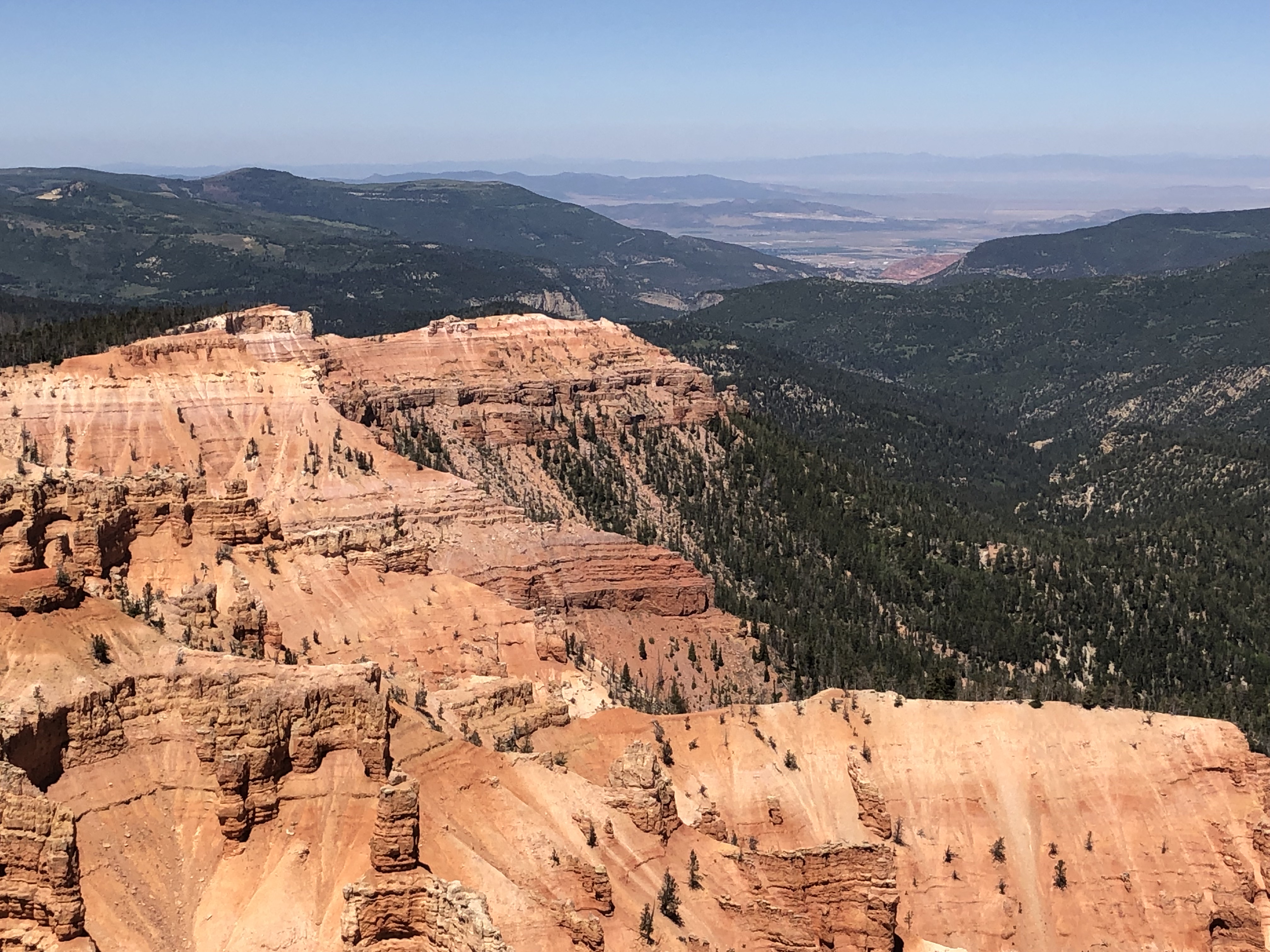
Brice Canyon, Utah
This Awakening episode includes stories of how ecosystems are restored, with a little human assistance, around the globe. Natural ecological “awakenings” are highlighted from Panama to China to Norway to the coral reff off of the Bikini Atoll. I found particularly compelling the efforts of philanthropist Greg Carr in putting his wealth and knowledge to work assisting in the restoration of Gorongosa National Park in Mozambique. (You can read more about the early high stakes effort by Carr in the May 2004 issue of Smithsonian Magazine, https://www.smithsonianmag.com/travel/greg-carrs-big-gamble-153081070/). This is but one of the astonishing examples of restoration shared in Awakenings.
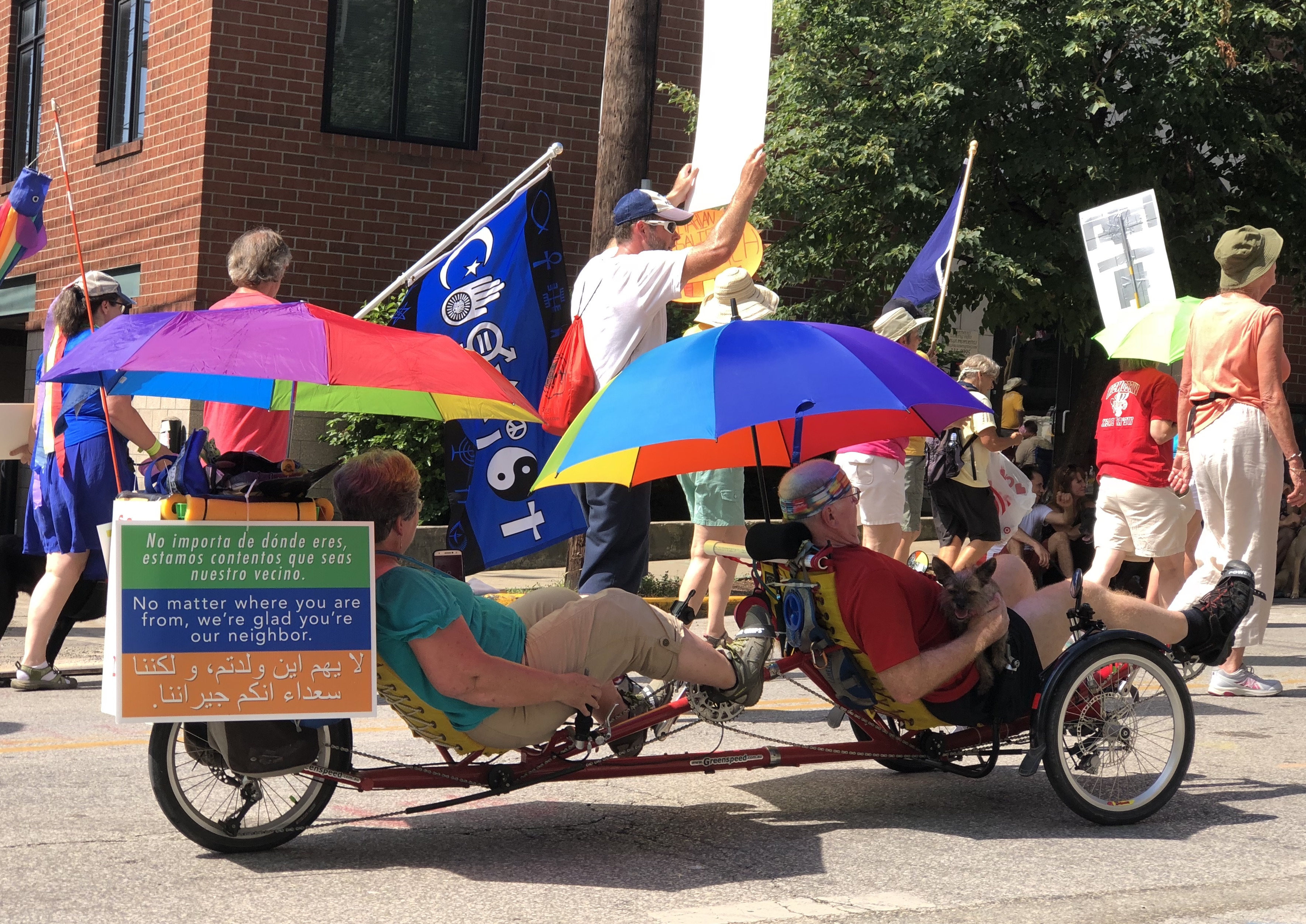
July 4th, 2017 Parade, Bloomington
RESTORATIVE JUSTICE: For too long the criminal justice system in the United States has focused on punishment only, on retribution. Even though there was lip-service to the idea about “rehabilitation,” the core motivation was to punish someone for a crime. However, restorative justice is about more than prisons or a court system. It can be as basic as how discipline is handled in school or at camp. Restorative justice involves restitution by the offender in a process that includes the victim and often representatives of the wider community. Rupert Ross’ book “Return to the Teachings” explores the ways Aboriginal cultures have been effectively incorporated into restorative justice.
COMMON GOOD: Rabbi Jonathan Sacks has offered a remarkable resource in his work Morality: Restoring the Common Good in Divided Times (Basic Books, September 2020). Sacks offers a framework for the public task of reconstructing a shared sense of virtue and values. He writes that we need to look beyond the perceived solutions found in politics and economics toward the deeper, bedrock set of moral assumptions. He shows “that there is no liberty without morality and no freedom without responsibility, arguing that we all must play our part in rebuilding a common moral foundation.”
Again, I mention the more accessible and excellent resource for congregational study, Mark Feldmeir’s A House Divided: Engaging Issues through the Politics of Compassion. Earlier this week, my local congregation held an online discussion about Feldmeir’s work in which serious and respectful agreement came that we all have a responsibility to work at reweaving the torn fabric or our democracy.
There are currently scores efforts across the nation to encourage a stronger civil community. Good reader, you have probably thought of a several. This is our work, the responsibility ahead as we seek to RESTORE a commitment to seeking the Beloved Community.
So, on Day Nine — with five days remaining between now and the election — I would seek restoration of that which leads to strength, health and joy for persons, communities and nation.
Today, consider please, the presumed dichotomy between the personal and the social, the individual and community. For too long our politics, religion, economics and charity have been misshapen by this fraudulent binary. At a fundamental level, there is a web of mutuality between one’s self and others. Americans tend to live with a heavy focus on individualism and “individual rights.” This is a good thing — however, if this is the sum total of what is valued or the singular basis for action– it will lead to trouble.
Social Psychologists George Herbert Meade and George Cooley posited decades ago the understanding that every human being is a Social Self. From the beginning, we learn who we are by interacting with others, as if in a looking glass. The language we learn, the games we play, our habits and our pains are fundamentally shaped in social contexts. It was from these insights that H. Richard Niebuhr wrote the ethics classic, “The Responsible Self.” Niebuhr suggested that the reflexive self could act as the responsible self.
In 1947, Mahatma Gandhi gave his grandson a slip of paper listing “the seven blunders that human society commits, and that cause all the violence.” These were:
Politics without principles.
Wealth without work.
Pleasure without conscience.
Knowledge without character.
Commerce without morality.
Science without humanity.
Worship without sacrifice.
(see Donella Meadows, Gandhi’s Seven Blunders — And Then Some, Sustainability Institute, August, 18, 1994)
++++++++++++
In the United States this week (10/25/20), a young man, the president’s son-in-law and advisor, stood on the White House lawn in an interview on “Fox and Friends.” He dismissively suggested that in response to the George Floyd “situation,” individuals “in the Black community” were unwilling “to break out of the problems they were complaining about.” He expressed doubt that African Americans “want to be successful.” Upon hearing the interview with Jared Kushner, I thought of Gandhi’s Seven Social Sins.
As abhorrent as Mr. Kushner’s words are, I recognize their ideological fountainhead. It is the reductive belief that only “personal responsibility” is required for the thriving of a community or nation. Individual liberty is the supreme goal and good and personal responsibility is the tool. Fix individuals and everything else will fall in line.
At this juncture, I have sat beside too many persons who worked hard, risked much, withstood adversity and still were crushed by immoral constructs in the social order. A wise front-porch, neighborhood philosopher, named Doris Danner once taught me, “You can build a crocked wall with perfectly straight blocks.” In a pandemic, is “personal responsibility” sufficient? Shouldn’t there be a societal expectation, even a mandate, that everyone wear a mask? Sadly, we are seeing, living with, and many dying from, the results of a mistaken notion of individual freedom as the ultimate and exclusive good.
I recognize Mr. Kushner’s perspective. You see, as an adolescent, my religious understandings were focused on personal salvation. I had to want to have a personal relationship with Jesus and that would fix everything else. Personal salvation was separate from justice. Yes, I was taught that if I was saved, I should be compassionate toward others. It was however, always with the motive that I could see that they were a saved individual, just like me. Whether I would admit it or not, racial segregation, economic or educational discrimination, or poor health care were best overcome if persons were saved and then “wanted to be successful.”
In my individualistic understandings, my paternalistic role was to see that others were “fixed” like me. There was little awareness that others, who saw things differently, might have something to teach me; nor was there the sense that God was at work for the the common good, for the realm of God.
While I prayed the “Lord’s Prayer” in those years; I failed to hear that it was a communal prayer. It was a prayer filed with the corporate words, “our,” “us” and “we;” a prayer about our neighbor and our world.
Jane Addams Helping Hands Memorial, Chicago
Years after receiving the note with the Seven Blunders listed, Arun added an eighth: Rights without responsibilities.
+++++++++++++++
Dr. Donella Meadows was an environmental scientist and early writer on sustainability who added to the list of social sins. A professor at MIT and McArthur award winner, sadly, she died too young, in 2001. Still her words fall in line with the call of H. Richard Neibuhr that we are to act as a Social Self — a Responsible Self!
“Somehow our public discussion has become dominated by either-or simplicities... This simplistic thinking seems incapable of embracing the idea of BALANCE, which was Gandhi’s central point. He wasn’t calling for work without wealth or humanity without science, he was calling for work AND wealth. Science AND humanity. Commerce AND morality. Pleasure AND conscience.
Life is full of unsolvable problems. Pretending to have solved them by choosing just one or another of profound opposites can generate even more blunders than the ones Gandhi listed. Justice without mercy. Order without freedom. Talking without listening. Individuality without community. Stability without change. Private interest without public interest. Liberty without equality. Or, in every case, vice versa. Listen to our public debates about health care, crime, taxation, regulation. You will hear the Gandhian blunders, the frantic search for a permanent simplicity, the passive violence that leads to active violence. There’s no point in taking sides in these debates. There’s only an opportunity to point out that balance, discovered through love, is what we should be seeking — and what we will always have to be seeking. (Donella Meadows, Sustainability Institute, 1994)
On this the seventh day of the fortnight prior to the 2020 presidential election in the United States, I recall the story Bob Greenleaf* enjoyed telling. The first time I heard it we were sitting on his sun porch at a retirement community in Kennett Square, Pennsylvania. It was the mid-1980s. I have discovered he shared this anecdote in several places.
“There was an elderly couple who seldom ventured from their isolated home. Although comfortable in their reclusive world, one day the man took a day trip into the city. He returned carrying an old and battered cello with but one string. The bow had only a few hairs. That evening the fellow seated himself in a corner and began to saw away on the single open string. He played only one note and that rather badly. This went on day after day until one day his wife could stand it no longer and set out for the city to learn more about this object that had captivated her husband.
That evening, upon return, she confronted him. ‘See here, I have gone to the city and found other people playing instruments like yours. It is called a cello. Cellos are meant to have four strings and a bow with many strands. What’s more, cello players move their fingers around playing many notes on each string. And further, cellos often are played with other instruments, sometimes in small ensembles and sometimes in large orchestras. Why do you sit here day after day playing that one raspy note?’
He gave his wife a cold look and replied, ‘I would expect that of you, a woman. Those people you saw are still trying to find the right note, I have found it!'”
Note the importance of curiosity and imagination; even more, there is the value of “seeing things whole” or “holistically.” There is benefit in other perspectives. One can have more insight if listening to persons who have heard more notes played; they might have even heard a string quartet or an entire orchestra. In selecting the one to sit in the White House during the next administration, will the American people select someone who can listen to and learn from others?
Curiosity in leadership will also lead to a valuing of paradox. Paradox is the rather astonishing and beneficial awareness that in life and in institutions, two things, that appear to be opposites, can both be true at the same time. There can be sunshine and rain together — and often this leads to a rainbow.
I still see Bob’s smile as he spoke of the mistake of institutions caught up in one narrow perspective or focus. Whether a corporation, church, or charity, the need for curiosity and seeing things in a wide frame was needed.
In politics, he spoke of the mistake of Prohibition in the 1920s and 30s. Temperance was collapsed into abstinence. A broader conversation was needed about the cultural and economic realities that existed among impoverished folks during Prohibition. More awareness of the medical realities surrounding addiction was needed. The irony, of course, is that many leaders then in the Women’s Christian Temperance Union (WCTU) understood this wider vision. As part of their piety, they held progressive (even radical) views on economics, war, education and gender equality. Today, these pious women would be dismissed as Socialists. Their larger set of concerns were lost then, in an effort to do the impossible — legislate against the consumption of alcohol.
Greenleaf suggested that one day, perhaps in the distant future, the mistake of using single issue, pressure politics to prohibit abortion would become evident. (That day has not yet arrived.)
It was two decades later, Benedictine sister Joan Chittister observed, “I do not believe that just because you are opposed to abortion, that that makes you pro-life. In fact, I think in many cases, your morality is deeply lacking if all you want is a child born but not a child fed, a child educated, a child housed. And why would I think that you don’t? Because you don’t want any tax money to go there. That’s not pro-life. That’s pro-birth. We need a much broader conversation on what the morality of pro-life is.” (Interview with Bill Moyers, 2004)
++++++++++++
“When I die I’m sure I will have a Big Funeral.
Curiosity seekers… coming to see if I am really Dead or just trying to make Trouble.”
— Mari Evans
+++++++++++++
*Bob is known as the founder of the Servant Leadership movement. For decades was an executive with American Telephone and Telegraph, involved in leadership development and research. It was in his later years that he wrote on servant leadership and worked as a consultant with the Ford Foundation and the Lilly Endowment.
And we pray, not for new earth or heaven, but to be quiet in heart, and in eye, clear. What we need is here. (Wendell Berry)
If the presidential election, nine days hence, is to address the anxieties and despairing so many carry, it will require more than replacing one person with another. It will require more than changing the nameplates on office doors. It will require a transformation in us. It will require Sabbath. While many swamps may need to be drained, the primary swamp needing attention may be within the human heart.
Whatever the outcome of the vote, whether known in a few hours or several weeks, the temptation then will be to continue in the patterns and habits established out of anxiety, grievance and distrust. Sabbath will be required. Walter Brueggemann reminds: “Sabbath is the occasion to reimagine all of social life away from coercion and competition to compassionate solidarity. Sabbath is not simply the pause that refreshes. It is the pause that transforms.” (Brueggemann, Sabbath as Resistance, p. 44)
Lily Pond, The Huntington Gardens, 2015
I fear many things. I am anxious about much. Mostly, however, I desire to move from patterns of constant anxiety to another way of life. A way where I know the gifts of sabbath. The joy of rest, restoration, re-imagination and resistance. Joan Chittister wrote: “Sabbath is that period for holy leisure when I take time to look at life in fresh, new ways.” She encourages “contemplative leisure.”
Sabbath can serve as the great equalizer — it is a time when we are freed to set competition aside. As a great equalizer we are freed to recall that all share in creation; each other person is neighbor. Again Walter Brueggemann writes: The task is to SEVEN our lives. — On the Sabbath Day these vulnerable neighbors shall be like you. Sabbath is not simply a pause, but the occasion to re-imagine all of society away from coercion and competition. (Sabbath as Resistance, p. 43)
++++++++++++++++
A Jewish Sabbath Prayer:
Days pass,
Years vanish,
And we walk sightless among miracles.
October 21, has been designated Global Ethics Day by the Carnegie Council for International Affairs. It’s a good and timely thing to give attention to virtue as we approach the selection of leaders in our nation. In this fortnight we reflect on virtue or ethics. What is “the best” way forward? What values, principles, intentions should be reflected in our personal and corporate actions? Where do we see evidence of the good, the true and the beautiful?
Virtue is born of our deepest beliefs, values, attitudes and desires. It finds expression and shape in our habits, our learned behaviors as these are repeated over and again until they are taken-for-granted as the “right” way. In this second fortnight post, we focus on the care that needs to be given in challenging what some believe is to be normative. I would ask, where is the virtue of immigrant children who have been separated from parents? What is valued in the denial of climate change? Should wearing a mask be a political statement when others may face harm by a neglect? Can any ethical person, let alone a Christian person, ignore the value of the health and well-being of another?
Aren’t these critical questions for all persons of faith — who is my neighbor? — how shall I therefore live my life? Will deception or lie be seen as normal? Will perpetual shading or spinning of the truth, or “gas lighting” (offering false stories) become appropriate for our leaders?
Aristotle offered four virtues: prudence, justice, temperance and fortitude. These have become known as the “cardinal virtues.” The church later added the three “theological virtues:” faith, hope and charity (from I Corinthians 13). These became “the seven virtues.” Others have said virtue is evidenced in that which is good, true and beautiful. Okay — nice overview — but how will we therefore live? And what is the test for these seven virtues or this this triad? How will we know the good, the true, the beautiful?
Few ethicists have shaped my thoughts more than Glen Stassen. He spoke of the guidance offered in the Sermon on the Mount where over and again Jesus points to the fruit borne in lives well-lived. In his work Living the Sermon on the Mount he writes: “I am suggesting that even though we do not know all there is to know, and we do not have the certitude of a universal viewpoint, we can see within our own history what kind of ethic comes through, which is truer because of the fruits it bears.” The theme throughout the Sermon on the Mount is “doing,” “producing,” “acting.” Here is joy and deliverance from deceit. (See Living the Sermon on the Mount, pp. 192-199).
Ivan Illich spoke of virtue as the “habitual facility of doing the good thing.” With a sharp and critical eye on our institutions (schools, hospitals, church and our politics), Illich notes a failure to accomplish primary stated purposes. Other values, he suggests, are given preferred over that which is truly the good. The love of neighbor is somewhere lost in the maze of social interaction. Some are excluded. “No category, neither law or custom, language or culture can define in advance who the neighbor might be.” (see David Cayley’s The Rivers North of the Future, p. 30). Illich often points to the parable in Luke’s Gospel spoken of as “The Good Samaritan.” It is the “expert in the law” who says he has kept all the customs and rules who challenges with “And who is my neighbor?” There is a rupturing of traditional categories in the answer Jesus gives. There is a call to conversion, to change.
Theologian Nancy Bedford calls on Christians “To Speak of God from More than One Place.” When leaders are reluctant to speak against White Supremacy or suggest that other nation’s and peoples are to be disrespected, there is an effort to link God’s purposes to my small, small world of my self interest… to my unwillingness to share. There is a signpost along a country road not far from my home. I chuckle each time I pass. It simply reads “Entering-Leaving Gatesville.” A single sign, same message, front and back, all on one post. For many, the reach of virtue, of ethical concern, begins and ends in one place.
The folks of Gatesville are lovely people I suspect. They clearly have a good sense of humor an perspective. This is important. Sadly, when awareness and care for the neighbor is lost, when our beginning and ending is at the edge of our own skin and ego, then we lose an ability to know the gifts we are offered in community, in diversity, in journeying to new understandings.
When thinking about practical virtues of in daily life, I am also helped by folks like Shirley Duncanson, a retired United Methodist pastor in Minnesota. Her posts in “A Pastor’s Heart: Thoughts on Life and Faith” offer clear and practical assistance. Writing on “Recovering Christian Ethics in an Age of COVID-19,” Rev. Duncanson offers cites the work of Barbara Brown Taylor’s pastoral experience in wise counsel: “The only way out of a pandemic is by all of us working together . . . Each of us doing our part . . . Each of us caring for people around us . . . Each of us using the means available to us to protect one another . . . Each of us holding tight, (in our hearts) to one another . . . And all the while, making sure that no one, but no one, is left behind.” (see: https://shirleyhobsonduncanson.com/tag/barbara-brown-taylor/).
+++++++++++
“Love does no wrong to it’s neighbor; therefore, love is the fulfillment of the law.” Romans 13:10.
++++++++++++
Poem by Linda Ori, 2004
The Time of Truth

The time is now
Let change begin,
Blend heaven and earth
In an endless spin,
Wherever you're going,
Wherever you've been
Now change your direction
And travel within;

The time is now
To take a good look
Examine your life
And the roads that you took,
From cover to cover
You've written your book
Did you swim in the river
Or sleep by the brook?

The time is now
Get your head on straight
No more indecision
To love or to hate,
Since you are the author
Don't blame it on Fate,
Take control of your future
Before it's too late.
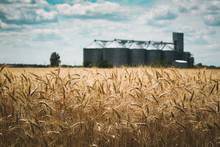
Each autumn, as harvest-time nears, I re-live a surprise. Now, in early walks on crisp, chilled October mornings, I am reminded anew. I look to see if Jack Frost has spray-painted fresh abstract art on meadows. Recollections of other autumns come: hayrides, jack-o-lanterns, golden, maroon and salmon colored maple leaves gathered and pressed in the pages of an old encyclopedia. Or, I recall watching children “bob for apples” in an old wash tub or remember sweet, steaming cider served by a fireplace.
PublicDomainPictures.net
As I gaze to discover if hoarfrost has tinted a field in a crystalline hue, a rime-like shadow reaches across my consciousness. Perhaps the year was 2011; or thereabouts. A lovely autumn day and I am traveling across the nation’s farm-belt from of a distant meeting to my home, several hundred miles away. It promises to be a leisurely drive.
There being no urgency, I think of long-time friends. They work a large family farm. I will pass nearby. Hospitable folks, these. We exchange annual Christmas greetings. Every few years, some special event might bring us together. Each time — scribbled on a holiday card or spoken in a face-to-face visit — is the same gracious invitation: “Please, come visit; just drop by, anytime; no need to plan ahead.” I would nod, saying I would love to see their place; and, mean it. Still, years passed and the visit was never made. This would be a day I could stop. Surprise them.
PublicDomainPictures.net
This visit was the first of several unforeseen miscues that day! Readers familiar with the ebb and flow of agricultural life already know my error, my blunder. My surprise landed right in the middle of harvest. From sunup to sundown, and sometimes longer, combines whirled, rumbled and slashed. Farm trucks carried grain to the elevator cycling back and forth and back again unloading their bounty. This “surprise” visit was a first unforced error of the day.
When I greeted her on the phone, I should have picked up the overwhelm in her tentative voice. “Yes, so good to hear from you. Today? Well, yes, we would love to see you. The fellas will be gathering in the barn at noon. Can you make it by then? It is quicker if you take the county road over to our place. Come to the house first. You can help me carry over the lunch.”
Slow witted me! It was only as the call ended I realized I had bushwhacked them right in the middle of harvest! I was the city-slicker dropping by announced from the outskirts of hell.
I made it to the farm with a few minutes to spare and immediately offered my apologies. My friend only smiled and said, “It’s okay. You can help carry these things to the car.”
Arriving at the barn a half mile away, we pass the Pioneer Seed signs, the fuel pumps and grain storage elevator. Parking by an old John Deere we walk into a large structure with huge sliding doors at each end. It is full of implements: tractors, planters, harrows and several charts and computers along the western wall next to a small office. I am reminded that farming is an ever more sophisticated business.
We set out the lunch on a long table. Slowly others, family and farm hands, gathered. My friends introduce me as “a preacher friend who came by to pray for us today.” Okay, my turn to be surprised. So, I pray for a good harvest, for safety and well-being of all in our world during this harvest. I kept the prayer short knowing folks were eager to get back in the fields before rain might arrive.
Ample portions of chipped ham sandwiches, potato salad and iced tea are served. Some peanut butter cookies followed. There is teasing, talk about the weather, feeding the barn cats, and a few questions about mutual friends and grandchildren. Knowing the need to return to combines and trucks soon, I am amazed when my friend goes to his small office and returns handing me some papers. “Your going to enjoy this,” he chuckled.
It is a printout from an old dot matrix printer. Here before me were a collection of “jokes.” Reading the blue inked words, were some of the most offensive, racist jokes imaginable. They were about the President of the United States. Surprise hardly captures my emotions. It was closer to horror.
Still, I care for these people. My friend thought I would be amused, but this had burst across a divide in our worlds. I was confused, sad, disgusted, tongue-tied. I knew there was racial animus and bigotry toward Barack Obama, but surely not here. These were my friends, my good Christian friends.
I wish I could tell you of my courageous response, of my righteous witness. As I remember it now I didn’t say much, only mumbling “I don’t find this very funny.” A human hoarfrost was now stretching across our faces, our conversation, challenging the core of our friendship.
Soon, I was off, watching the dust of the combines in my rear view mirror. I was on my way home — back to another world, my natural habitat, an urban setting, on a university campus.
This surprising harvest occurred nearly a decade ago. Each autumn its memory returns and I realize it was a harbinger of much that has unfolded in our nation, especially in the last four years. Without any sense of irony, these are “good Christian folks,” at least in the way the see themselves and are seen by others. Even so they had burst open my easy assumptions.
They had reached out with hospitality to me — at least before I made my raid on their assumptions and routines. Racism is not the exclusive property of country folks. Many, many rural folks do not accept such bigotry; but many do. And yes, racism is alive and well in our cities and suburbs too. Still it seems to wait along the corridors of everyday activities to suddenly startle and divide us.
I have thought much about the culture that shapes these friends and their religious and political perspectives. Through study and conversations with many farmers, I know more of the stresses on those who today seek to make a living following a plow. I better understand the racial and cultural divides that can so easily be manpulated into fearful mistrust and misinformation.
I have learned that agriculture is changing dramatically, at an ever more rapid pace. Industrial-style agriculture is extraordinarily expensive and risky. Debt is high and weather is increasingly unpredictable. It is destined to change. It will ultimately be replaced by models more attune to sustaining the land, water and soils. Efforts to farm with perennial polycultures, like those being researched at The Land Institute in Salina, Kansas, will hopefully offer new options.
I am sad for my friends who carry the heavy load of racism and fear (and probably economic threat) that limits their ability to see the depths of racism that damage the soul of our nation. I pray they learn — in their church or social gatherings — of the ability to see others as persons of worth and dignity. I am saddened by the urban/rural and cosmopolitan/ localist divides in our nation and world.
I suspect my farm friends think me to be a “latte drinking urban elitist.” Even though, I don’t like latte! And, I am mindful of my own limited vision and fears that shape my understandings.
Richard Longworth’s fine book “Caught in the Middle: America’s Heartland in the Age of Globalism” offers compelling insights into the challenges of those who currently farm in America. He notes the phenomenon of vertical integration wherein every element of farm activity, from selecting seeds to spreading fertilizer to selling in a market is controlled by a large agribusiness — and not the farmer. As Longworth puts it, “Why own the farm when you can own the farmer?”
I don’t excuse the racism of my “friends.” Not at all. Nor do I miss the reality that a deep social/cultural divide was already emerging on the day I burst in on them. I fear such racism has only taken up greater residence in the minds of good people who now share their “jokes” on Instagram or Facebook rather than on a dot matrix printouts.
Something else was harvested on that October day a decade ago. My unacceptable silence was surfaced. It is the silence of too many of our churches, too many of our cultural and political leaders. What might I do better to express theology that valued all as Children of a loving God? How might I do better at harvesting respect, hope, love for the neighbor AND the stranger?
Perhaps I am overly optimistic, but it appears a harvest is underway in our society regarding racism. In the midst of the tragic deaths of folks like Breonna Taylor and George Floyd a new awareness seems to be possible. I suspect my farm friends don’t see anti-racism activities in the same hopeful light that I do. I see these as a sign of a potential harvest of hope — a sign that increasing racial justice might some day arrive… a time when the frozen assumptions and categories of our common life are thawed. It is not easy, not for my friends or for so many others caught up in the swirl of human distrust.
As I write a national election is only days away. I pray the current patterns of racism and ugly vitriol encouraged by the current national administration will be rejected and fresh sense of respect and the valuing of our common life can be harvested.
No matter the outcome, I will plan to make another visit to my farm friends — it has been too long since I saw them. Be assured I won’t bushwhack them again during harvest!
Of course, first we pray for all of those who are infected with COVID 19, including especially the president and those around him. Sincerely, as a person of faith, my heart and prayers go out to those who have learned and are learning of their real or potential infection with this virus. We pray for Melania Trump, Hope Hicks and others around them.
Second thoughts go to lessons learned as a child. This wisdom is drawn from Proverbs 16:18 (“Pride goeth before destruction“). When did I first hear the expression “Pride goes before the fall”? I suspect it was at some point in elementary school. Over and again in life, this wisdom has been illustrated. This ancient wisdom asks us to live with humble respect for knowledge and the care of others.
Sadly the president is disrespectful of science and the well-being of others. Only a day or so before his infection was discovered, Mr. Trump said “the end of the pandemic is in sight.”
This is a tragic morality tale. I suspect Mr. Trump’s words and behaviors over the past nine months will become a core illustration of the scriptural proverb. Pride does go before the fall. Hubris, in action and/or words, can boomerang back on the head of those too arrogant to accept such a basic human reality.
Now, a proud man, a stubborn man, one who with arrogant pride ridiculed others, illustrates this truth. He who thumbed his nose at medical experts; he who spoke dismissively of others who wore masks; is coming to terms with his overblown hubris. Gallons of hydroxycloriquine can’t fix this. What a strange new test this is for our democracy that is already being severely tested. There is no bunker to protect him from his own pride.
The virus was politicized but the virus wasn’t political. This is not a reality show. Children will be learning this real-life-example of hubris and linking it to this Biblical wisdom for decades to come.
Yes, we pray for our president and for all of his maladies.
“Take time to grieve.” I have offered such counsel while standing with families and friends at the time of loss. Take time. I have counseled myself when facing crises. Time to pray, time to reflect, to breath deeply; take time to embrace family and friends; time to gain perspective for the journey ahead. It will take months, years perhaps, decades maybe. Time is necessary to better understand the whole of pain and healing.
On Friday last, on the eve of Rosh Hashanah, Supreme Court Justice Ruth Bader Ginsberg died. She was 87.
On July 17th, Congressman and Civil Rights leader, John Robert Lewis died. He was 80.
Over the past six months, in the United States’ more than 200,000 folks have died of COVID-19. Of these more than 150,000 were fellow citizens over the age 65.
We have much grief work to do as a nation. We have lost leaders and icons. Many of us have lost loved ones and dear friends to coronavirus.
We have grief work to do!
Cormic McCarthy’s 2005 novel No Country for Old Men, and the movie that followed, comes to mind in this moment. It is a powder keg of a book. Played out on the Southwest Texas border with Mexico. It is a tale that moves all too quickly and violently upending the quiet lives of those caught in the unwelcome drama. Like James Lee Burke’s recent novel A Private Cathedral, McCarthy’s story plumbs the depths of human good and evil and the world of truth and lies.
Our nation’s future appears to reside in the hands of many old men (and a few old women). Some are seeking to rush past the national grief work so needed now. This is needed grief work to celebrate the service of Justice Ginsberg or Congressman Lewis — grief work that remembers the lives of those hundreds of thousands struck down by the coronavirus.
Let this also be added to our grief work: to stand against the corruption and lies offered by those who seek only to hold on to power. Let our grief work be to move our nation beyond the grievance of bigotry; let us move past unproductive racial, religious and cultural divisions. Let our grief work seek compassion for all, young and old. Let our grief work involve prayer, reflection, reaching to friends and family. And, mostly, let our grief work be to join those who will work and protest and vote for a society that values all people.






 I still see Bob’s smile as he spoke of the mistake of institutions caught up in one narrow perspective or focus. Whether a corporation, church, or charity, the need for curiosity and seeing things in a wide frame was needed.




 Hands of the Strong