Locked up in the Rush County Jail

Locked Up in the Rush County Jail

Tears fall from her chin; she carries a never ending uneasiness. Ashamed she waits.  In a nearby cell, he fidgets, knees bouncing uncontrollably, repentant without a path to forgiveness, he waits for a phone call.  Both have made serious mistakes. Life-altering condemnation results, closing off future options. I do not know these two personally, but I can “see” them sitting alone, or with a cellmate, or standing in shackles in a courtroom.  Such scenes continue across my state and our nation.  Each person has a name, a history, a family, friends, and enemies waiting on the outside.

They have “done harm.”  Some crimes are extremely serious, I understand.  Much of the damage, however, has been done to themselves and their loved ones. This self-harm is often rooted in addiction or psychological illness. Some are dangerous to themselves and others.  Sometimes, not always, these who sit and wait have journeyed through poverty, homelessness and/or abuse. We all lose. In Indiana alone the estimates are that opioid addictions cost the state between $4 billion and $5 billion in lost revenue, incarceration, and recovery expenses every year.

I write of “Rush County” jail more as metaphor than the actual place. There is a Rush County; Rushville, Indiana is the county seat. It is grand old town, where Wendell Willkie headquartered his 1940 campaign as the Republican candidate for the President.  It is east and south of Indianapolis.  Traveling south and east it is on the way to Cincinnati. With a population of roughly 6,200, it is like hundreds of towns dealing with the scourge of addiction and other illness. It is a symbol that across the board, once arrested, so many are rushed to vilification, only to languish in jail.  It is quick judgement and slow justice. The wheels of our legal system grind ever more slowly as so many weep and wait for that phone call.

In Monroe County, my home, our jail is a disgrace – overcrowded, unhealthy, and understaffed. Monroe is regarded as one of the most progressive counties in Indiana, yet every month seems to find another incident reflecting the horrors of our jail. We have a fast train into jail and a slow walk to trial. This, despite a sheriff, judges and commissioners who diligently seek to change the situation and build a safer facility.  It is already too late for so many. 

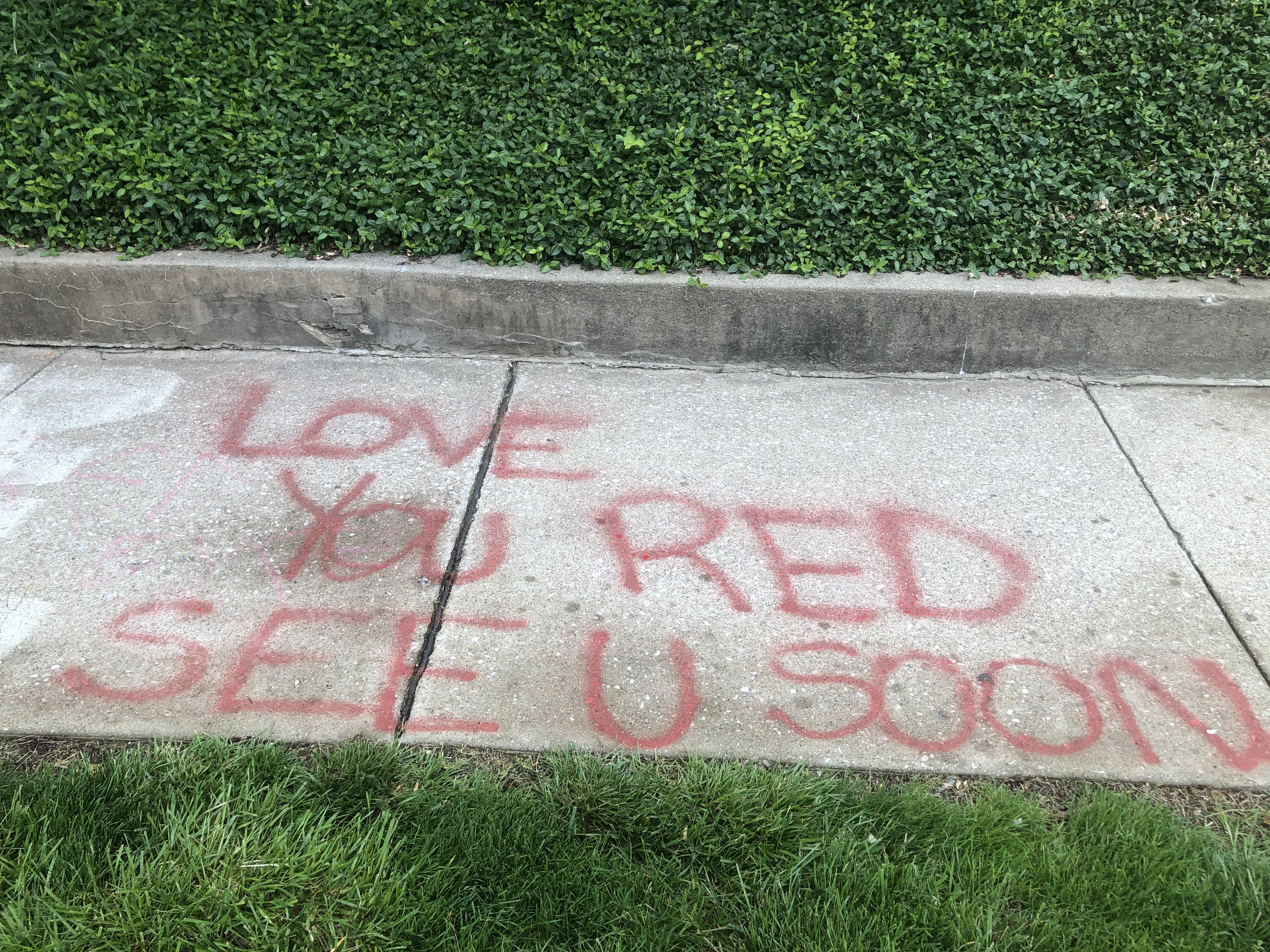
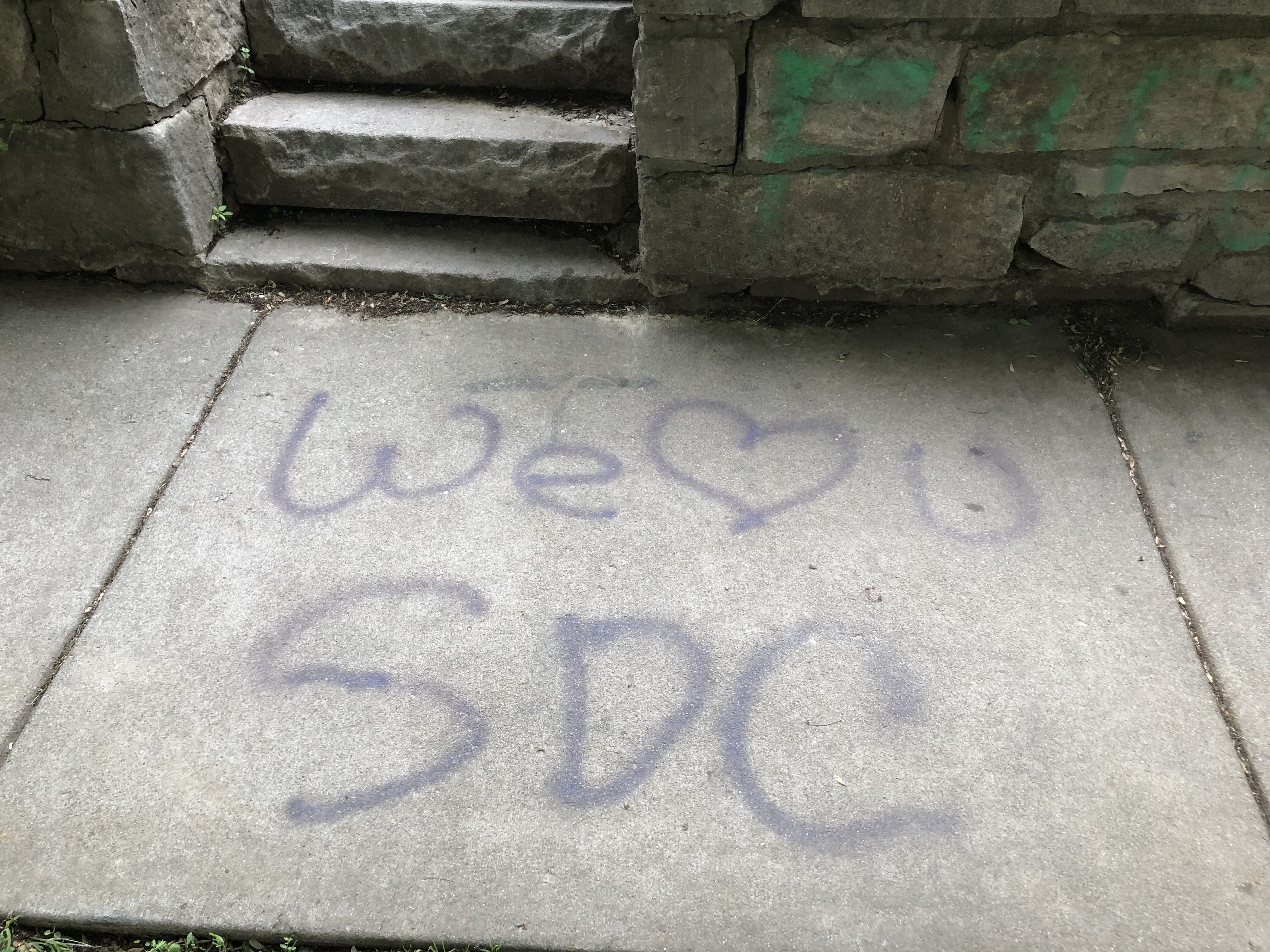
Our county jail is only a few blocks from where I live.  Walking along the sidewalk paralleling the jail I see scrawled messages in chalk or paint.  These are messages of hope, love and encouragement to prisoners who can look out and see what friends and family have written.

Over my decades as a pastor, I have met with, walked alongside, and known far too many who are like the two persons imagined in the opening paragraph. I do not know names of those currently in Rush – or Monroe – County facilities.  I do know these are not only imaginary.  These exist, just as surely as you do, good reader.  I know parents and spouses, children today who have loved ones being held, awaiting trial.  

I may not know or understand all the “crimes,” but I do know there are currently over a half-million such persons held in over 5,000 local jails and youth detention centers in the U.S.  There are another 1.5 to 2 million persons held in state and federal prisons. Our nation consistently has the highest incarceration rates in the world.  Our practices still have the mark of primitive and counterproductive logic.  It is built on monistic, either-or understandings of human behavior and psychology.  It is not far removed from shameful practices of shunning, exclusion, and projecting our fears on the most vulnerable among us.  Are there evil actors? – yes, of course.  Might our systematic response be greatly flawed? – yes, of course.

Frankly, much of what continues is often based on simplistic theologies of good and evil that are subject to manipulation and misuse by the wealthy and powerful.  We have become experts at isolation and seem to know very little about restoration. Our young believe our systems are rigged in favor of the wealthy. Are they not? I find myself thinking of the families who see loved ones locked up for minor crimes of addiction, while at the same time watch a former President of the U.S. use his power and wealth to manipulate the current court systems to avoid trials and dodge accountability. 

We spend more than $182 billion on incarceration each year in the United States.  Increasingly this is built on “for profit” prisons, that turn incarceration into a profit-making venture with the inmates as customers-without-a-choice facing exorbitant expenses for phone calls or other prison “benefits.”

I am far from being an expert on how to best address these concerns.  There are many acronyms for efforts underway, already proposed and practiced. Over the years I have seen us turn to more flexible sentencing, home confinement, halfway houses, drug courts, mental health courts, restorative justice and/or restitution options, community service, etc.  It is a complex system, filled with obstacles and some more enlightened practices.  My appreciation for conscientious judges, defense and prosecuting attorneys, sheriffs, jail and police officers is enormous.  I am grateful for, and applaud, all those who are pushing for reform, for a better way.  Still, too many languish behind bars, weeping alone and waiting for that phone call.

The Principle of Clarity

Full text of Bloomington Rotary Reflection Notes 2-7-24 (Parts were edited out at presentation for brevity.)

Mark Twain once said: “When I was a boy of 14, my father was so ignorant I could hardly stand to have the old man around. But when I got to be 21, I was astonished at how much the old man had learned in seven years.”

There is another side to this wisdom.  For me, now that I am in my late 70s, I am often surprised by how little I know.  Wendell Berry and Wes Jackson have written we need to often add an “Ignorance-based world view.”  Philosophers call this the Principle of Clarity.  The administration of Indiana University would benefit from a familiarity with this Principle of Clarity.  Clearly the administration’s failure to support the Kinsey Institute and canceling of the exhibition of Palestinian artist Samia Halaby at the last minute after months of planning demonstrate an abandonment of Academic Freedom that is dependent on open conversation and dialogue.

I mention Wes Jackson in honor of our speaker today who, of course, offers much valued alternative perspectives on agriculture. Wes is a geneticist, farmer, winner of MacArthur Genius award for research on perennial polycultures at The Land Institute in Salina Kansas.

As we enter Black History month while facing continuing racism exhibited by candidates for the highest offices in our nation and in a world filled with violent problems that seem intractable, there is need for open-minded clarity.  If you are like me, it is too easy to live in an information bubble, supported by confirmation biases. Without looking at events from multiple perspectives, it becomes easier to argue than to respectfully disagree. It leaves us in zero-sum worlds where an understanding the opposite person’s perspective and experiences are disregarded.

Last week, Traci Jovanovic offered a helpful word about knowledge of others related to the war in Gaza.  It caused me to think of my second visit (of what I think are now six trips) to Israel/Palestine; this in the 1988.  Mickey Mauer invited many civic, corporate, and religious leaders from Indianapolis. We met with Israeli and Palestinian leaders in political, economic, and educational arenas.  Near the end of trip, several of the Indy leaders held an unscheduled meeting seeking to come up with a solution they could offer after hearing from a few of the many sides in the region.  It was 40th anniversary of State of Israel and in the early years of First Intifada.

My friends, these leaders, were going to suggest ways to fix things. After a few minutes, feeling discouraged by the well-intentioned naivete of some, I left the meeting and sat in the bar with our Israeli tour guide and Palestinian bus driver. We chuckled together about the well-meaning effort to find easy solutions to struggles that had gone on for decades, centuries, well… millennia.  Indiana Jones movies were popular in those years.  I recall the Palestinian bus driver saying, with a wink to the Israeli tour guide, “Well, maybe these Indiana Joneses can solve things.  I wonder have they fixed all the problems in Indiana?”

Humility is a virtue that is enhanced by honoring the Principle of Clarity. For those of us who are Christians, it is worth noting that the keys to the Church of the Holy Sepulcher in Jerusalem have been entrusted to Muslim families for hundreds of years because the various “Christian” denominations and sects struggle and disagree over who should have what spaces in the church.  Alas.

One of my friends over the years was Palestinian Christian Rev. Alex Awad.  He worked with United Methodists who visited the region, was pastor of the East Jerusalem Baptist Church and taught at the Bethlehem Bible College. Several years ago, Rev. Awad suggested that perhaps the future will need something more connected at the grass roots, something deeper than politics. He said, “People must start dreaming about Palestinian and Jewish children playing together without refugee camps, segregation walls and tanks.  Then we can truly call it a Holy Land.”

Israeli peace activist Amos Oz has written “I believe that if one person is watching a huge calamity, let’s say a conflagration, a fire, there are always three options. 1. Run away; 2. Write a very angry letter or hold a demonstration; 3. Bring a bucket of water and throw it on the fire, and if you don’t have a bucket, bring a glass, and if you don’t have a glass, use a teaspoon, everyone has a teaspoon.” In his book “How to Change the World” Oz suggests everyone can join The Order of the Teaspoon.

I am glad there are some people in this room working to find BIG SOLUTIONS to war and violence.  There are also small things we can do, right here, now, at home.  Welcoming the immigrant, finding shelter for the unhoused, saying no to racial prejudice and discrimination, seeking to mitigate domestic violence and gun play on our streets.

Jon Paul Dilts heads our club’s peace building committee.  He reminded me that February is Rotary’s “Peacebuilding and Conflict Prevention Month.” The February issue of Rotary Magazine offers several grass roots ways to seek clarity – to work across differences.  Much of the brokenness in our world has been ongoing for centuries, millennia.  Big steps and small ones toward peace are required.

I close with the wisdom of my friend Wes Jackson who said, “If your life’s work can be accomplished in your lifetime, you’re not thinking big enough.”

America’s UnCivil Wars

Republican Presidential Candidate Nikki Haley, campaigning in New Hampshire at the end of 2023, was asked a simple question “What caused the U.S. Civil War?” Haley’s response was word-salad. It was mumbo-jumbo talk about differing theories of governance. We hear you loudly and clearly Nikki Haley. One hundred and fifty-eight years after the end of the U.S. Civil War, she was unable to give the clear one-word answer to the question.  It was SLAVERY.

If anyone believes racism isn’t deeply embedded in our national psyche, our politics and civic discourse these more than fifteen decades later, they are either ignorant of history and/or unwilling to confess a sin that continues to erode our best future. There is considerable irony, of course, that the question was asked in New Hampshire.  New Hampshire is a state from which thousands of brave young men gave their lives to end slavery.

The answer Nikki Haley gives – or fails to give – underlines our need for national confession of sin, repentance, and reconciliation. It exemplifies our continuing Un-Civil Wars. If the Confederacy had prevailed in 1865, would someone like Haley be able to hold political office today?  One wonders. Yes, there are several auxiliary causal factors to U.S. Civil War; however, why avoid the basic truth?  It was, and is, wrong for human beings to be treated as property to be held and sold? This was the crux of the war — the evils of racism as evidenced in slavery.

On April 9th, 1865, General Robert E. Lee and the Confederate Army of Northern Virginia surrendered to General Ulysses S. Grant at Appomattox Courthouse, Virginia. Five days later President Abraham Lincoln was assassinated in Washington, D.C. A surface telling of the history misses that thousands of troops continued fighting after April 9th and April 14th

It also misses the continuing Un-Civil Wars across these past fifteen decades (Reconstruction, Lynchings, Jim Crow Laws, Segregation, Red-lining in housing, Unequal school funding and dozens of other discriminatory acts). The UnCivil Wars continue today as is evidenced clearly in voter suppression efforts and racial gerrymandering. Racist impulses and ideologies continue to shape our political conversation and actions, national values, and self-understandings. If one believes otherwise, please explain why Haley’s answer could not have included one simple word?

Christmas Emptiness

Christmas Emptiness

Emptiness. Manger Square, Bethlehem, December 23, 2023, is abandoned.  Most years, every square meter of the space would be filled, maneuvering among the crowd, difficult. Christian Palestinians in Bethlehem, in solidarity with those in Gaza, have canceled Christmas. The Lutheran pastor says, “if Jesus were born today, it would be under the rubble of Gaza.”  And nearby, among Israelis, the horror and grief of October 6 when families were ripped apart, children murdered, women raped, and hostages taken, and who even now are being tortured persists and widens.

Israelis and Palestinians deserve better. Still, decades long pent-up anger and distrust has erupted in an unimagined violence. Slow boiling political chicanery, terrorism, and bigotries mostly built on lies and prejudices now rob the people on all sides of options. Emptiness. No room left for rational thought or basic humanity.

No room left for recognition of another as a human being. Robbed by millions of deceits, papercuts on the soul, there is no space for mutuality, companionship, or love. The prefrontal cortex is severed from the reptilian parts of the brain. A single option appears the only one — revenge, revenge, revenge.  Empty of alternatives, life on all sides is reduced to terror. 

For those of us, observers with broken hearts and conflicted loves, there is another kind of emptiness. Those who know, respect, and love both Jews and Palestinians, live in a wasteland of uninhabited hope. Our carefully crafted dreams and visions for humanity are shattered. And what of our own bigotries and behaviors? What of the ways we discount and exclude those we fear? What of our treatment of those without shelter, who struggle with addictions or who come to us as immigrant?

We suffer with a similar, yet a differing void.  For so many Christians, the mangers of our souls will seem vacant, emptied places this Christmas.

Some Seek Shelter Still

Some Seek Shelter Still

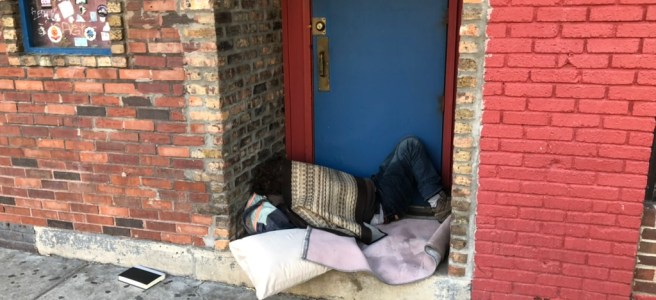
The Christmas story speaks of a family without shelter. Mother, father and newborn child they are. The record says they found refuge in a stable, a barn. They were on a journey, seeking a place of safety and stability. In our cities and towns, along our borders and spread across our world are those who seek shelter still. There are many efforts to respond. 

Attached is a podcast on homelessness. Our daughter, Lydia Murray, who is a Managing Director with Deloitte consulting is one of those interviewed. Apart from being proud of Lydia and eager to share her wisdom with others, I believe the listener will find a respectful, up-to-date overview of resources and some ancient wisdom in this resource. Perhaps you can take a moment during the Christmas season to listen and learn how to better respond with those on the edges.

https://podcasts.apple.com/us/podcast/governments-future-frontiers/id1708237666?i=1000639030791

Remembering those who seek shelter still, Merry Christmas.

Autumn’s Sweet Temptation

Autumn’s Sweet Temptation

I was tempted.  This morning.  Even in my late 70s, the seduction was strong.  Autumn leaves. Raked in a mound. Go for it… jump up and in!  I remembered the joy of such flight up and in a mound of crunchy crimson glory as a child.

Walking home from the barber shop, I spied the leaf-dome someone had piled together the day before.  At age six or seven or ten, there would have been no doubt about it.  Leaves might be designed for photosynthesis and then mulch but in the second week of November, banked high they were meant to be jumped upon, rolled in, and enjoyed!  The colors, the smells and cushy landings are autumn’s gift and a child’s hankering.  Don’t stop to worry about hidden objects — tree branches, or broken glass, or rocks or… well, a surprise gift from a passing pooch. Go for it?

“Nope,” thought I. Too old, already landed on too many hard realities over the years.  I’ll wait until the grandkids arrival for Thanksgiving visits.  See then if any autumn offerings are in the neighborhood. Perhaps still dry, piled high and ready for love.  Wouldn’t want to miss that joy for my leaping into some foolish temptation now.

Compassion is Great. Is there More?

Compassion is Great. Is there More?

Would compassion please step forward and state your name?  “We will swear you in. Is the testimony you are about to give the truth, the whole truth, and nothing but the truth?” One by one they came to the podium.  It was the city’s Zoning Appeals Board.  Eloquent supporters of a new, relocated homeless shelter they were.  It would offer services for the thousands living at the ragged end of poverty.  Beacon, Inc. (Shalom Community Center), is a frontline community service agency responding to homelessness, hunger, health issues, addiction and more.

One by one they came supporting a larger and better shelter: more beds, food service, health care, employment assistance and more. Supporters cited statistics. Staff offered early architectural plans, reported on meetings with neighborhood residents and shared stories and poems written by persons living-on-the-streets. 

Only one couple spoke in opposition They lived nearby and shared concerns about potential dangers and possible loss of property value. Clearly the folks at Beacon, especially the center’s director, the Rev. Forrest Gilmore, were prepared.  Gilmore had previously met with the couple who were opposed. He spoke of his commitment to continue to be in communication with them and others in the neighborhood.  They were appreciative.

It was an impressive thing to see, this well-planned and open-hearted expression of compassion. Well done, Beacon!  There are still more plans to be made and many dollars to be raised. Even so, this is a BIG STEP in the right direction that might open as soon as 2025.

Compassion stepped forward. Still, I left aware many voices were missing-in-action.

Where was the faith community? Yes, Rev. Gilmore is an ordained Unitarian pastor; but, apart from him, there were no other faith representatives speaking. Is this not a concern in our congregations?  I might have said a word.  After all, Beacon’s earliest manifestation began in the 1990s when I was pastor at First United Methodist Church. A day-center, Shalom, started in the fellowship hall. It grew and improved in outreach. It is a gift to see what has developed over these decades. Even so, there was a hollowness in my chest as I wondered about the absence of other voices of faith today.

Where were the voices of those who struggle with homelessness now?  Like so much that goes on in our liberal social service worlds, the truly poor are too often turned into voiceless objects. Recently I asked leaders working on homelessness in our community how those who are currently on the streets, or who have recently found a residence, were given voice in meetings and in planning?  I was told it was “difficult to do” and “being worked on.”  Okay; but in other cities they have found a way to listen to folks at the margins.  I have asked leaders at the hospitals a similar question. Our institutions are better designed to fix someone than to listen to them or know them. The good folks at Beacon listen and respond; they seek to include.  Others, many of us, who “care” seem to take the “it’s not my job” approach when it comes to listening to and knowing those who are “being helped.”

Where were the university representatives?  Some national experts on homelessness teach in our nationally ranked business and public policy schools. And what of the administration and student leaders? Will they swear to “tell the truth and the whole truth” regarding homelessness in our city?  As in many college towns, our real-estate market is overwhelmed, and rents are soaring.  Multiple new apartments and condos are occupied by persons who do not work here. The university has backed away from offering more residential space, in large measure because students are wealthier than in the past.  They now expect more than a dormitory room.  Can the university’s mission be wide enough to teach about justice and good citizenship even while in school?  Apartment complexes have mushroomed with rents well beyond what many low-income and even working-class folks can afford. Does the university care about this consequence of their decisions?

Where were the leaders in the current city administration?  Where was the mayor or his representative?  We have watched as plans and promises for workforce and low-income housing languish and are often placed on the back burner.  Meanwhile, out-of-town developers build quickly, take their profits, and have little else to do with this community.  Thankfully the likely new mayor has made housing for each, and all, a top priority. She speaks of building coalitions with a vision for a more welcoming and just city.

Perhaps we ALL should have been sworn in and asked to speak “the truth, the whole truth and nothing but the truth.”  I left the meeting wondering if there will be a demand for a larger facility twenty-five years from now.  Or might we move toward new ways of thinking and acting. As we build this new homeless facility, might we explore more comprehensive and collaborative ways of being a community that welcomes, listens to and values all?

Compassion is a fine attribute and friend.  However, this community is going to need more.  In the short term, there is the need for financial support so that the new Beacon facility and its programming can become a reality as soon as possible. 

Compassion is a good thing. Might the time arrive when we ask the sister of compassion, named “justice,” to come forward and testify on all our behalf?

Abundance on the Doorstep

Abundance at the Doorstep

There he was.  Comfortably situated on the front steps, he was.  We will call him “Andy.”  I thought I recognized him the first time I passed but didn’t speak.

It was a shady spot.  Good place for a breather and a smoke.  He wasn’t in anyone’s way. It was Friday and these steps wouldn’t be needed until Sunday. Doors were locked. All the doors locked, each entrance around that church building. Locked. It was Friday noon. I tried an entrance on the other side of the building. Locked. There was a phone number to call. No answer. Disappointed, as I wanted to introduce my friend De’Amon to some of the folks there, we retraced our steps. Andy was still resting on the front steps. 

His gear was scattered around him on the steps – helmet, belt pack, notebook, lighter. In front of him, between us, a nice bicycle, a good barrier – just in case.  De’Amon and I approached. I caught his eye and opened with “Don’t I know you?  You seem so familiar to me.” His eyes sparkled and his handsome ebony features all seemed to join the fun. “No, don’t think so.” I took off my hat so he could catch a clearer view. “You kinda familiar, but I don’t recall.  I used to work in a nursing home in town, perhaps you knew me there.” 

“Yeh, I think that’s it,” I responded. “I think I knew you back when.”  He smiled, “I worked there for almost twenty years – of course that was a while ago.”  Laughing I said, “I think you nailed it; I remember you there.”  “Good work it was,” he replied, “but I got tired of seeing my friends die.”

De’Amon is pictured with Michael Mather. longtime friend and colleague.

I could have walked by but didn’t. You see, I was with the original “Roving Listener,” De’Amon Harges. He has listened tens of thousands into friendship. He can discover human-buried-treasures. He finds a depth of resources so often overlooked. De’Amon has helped establish networks of mutuality where others saw only poverty, alienation, or separation. He has taught thousands of folks around the world, from all social strata, about the value of social capital, the value of “neighboring.” 

What choice did I have? It was like a test, a gift, a challenge, and Andy was there right beside us.  I broke the ice.  Off we went. De’Amon asked Andy about his work, his history, where he grew up, what he does best, what he is hoping to do in the future.  We found out Andy had his own business, cleaning buildings.  Had enough work to hire some others as well. “But they better be willing to work. I mean, seriously, it is my name on the business.”  We got Andy’s phone number and thanked him for the visit.

As we left, I whispered to De’Amon “There it is, abundance on the doorstep of the church.”  We laughed and knew this story would one day be in a sermon. But would such gifts, such opportunities remain outside?

Political Beanbag

Political Beanbag

Politics ain’t beanbag” is an oft used quote about the rough and tumble, often bruising, realities of living and participating in a democracy.  The phrase was coined by Finley Peter Dunne, a Chicago author who wrote of a fictional character, Mr. Dooley.  Starting in the 1890s, Dunne wrote a column where Dooley offered up a philosophy of life from his perch on a barstool in a Chicago pub. Politics ain’t beanbag is probably the best known of Mr. Dooley’s witticisms.

At my age and stage, I have experienced the truth of this philosophy often.  Things can be tough – pick yourself up and move on – is what Mr. Dooley seems to be saying.  I recall 1984 when Frank McCloskey won a “landslide election” for Congress in the “Bloody Eighth” Congressional District.  The first reported results had McCloskey winning by four votes. Or did the Republican candidate Rick McIntyre win by 34 votes?  This is what one of the many “recounts” in the following days claimed?

My memory is that a “true result” was never fully determined, as there were thousands of ballots that were not counted for “technical reasons.” Most of these uncounted votes were in Democratic-leaning precincts.  Indiana Republican Secretary of State, Ed Simcox, decided to certify McIntyre as the winner but the Democrats controlled the U.S. House of Representatives and accepted that McCloskey had won – even if only by four votes!  And so, the high drama was on! 

Thus, in early 1985 Speaker Tip O’Neill swore in and seated McCloskey as a member of Congress. The ensuing full-blown melodrama was worthy of a Shakespeare comedy.  Walkouts and shouting and blaming were orchestrated by folks like Newt Gingrich and Dick Cheney.  Speaker Tip O’Neill and Texan Democrat Jim Wright took advantage of their power of office. 

This election may have helped set the stage for current election denial and conspiracy theories.  Of course, one also thinks of the Swiftboating tactics used against John Kerry in the Presidential Campaign in 2004 when lies undercutting a distinguished military career were broadcast widely.  In Indiana over recent years, I recall mayoral races marked by dishonest whispering campaigns. In one, a fella was said to be a closeted gay man.  In another city, the rumor was that the candidate had a mistress “on the wrong side of town.”  This was meant to say she was of another race.  I wondered if it would have mattered if the mistress was on the right side of town.

Politics ain’t beanbag is a truism. Bloomington has just finished our primary elections.  There are, no doubt, some candidates and members of the electorate still nursing some election bruises.  Some candidates were said to be too close to developers, or another to realtors, or another to people who want to block any progress. We even witnessed some rather strange, last-minute, “news coverage” concerning unsubstantiated allegations against a mayoral candidate. 

Still, there did seem to be a good exchange of ideas coming from several debates and town hall gatherings.  Even so, this should be a moment to “dust ourselves of and move on.” A time to look toward building our future together.  Mayor Hamilton’s term has several months ahead when good and cooperative work is possible.  More, this is a time to step beyond the meanness and divisions we see on the national level and plan for a positive cooperative governance in the future.  Now are the months to appreciate what can still be accomplished by our current elected officials and look to a positive future with new city leadership.

In 2022 Daniel Effron and Beth Anne Helgason published “The Moral Psychology of Misinformation.”  They identify a newly emerging danger in our politics, the growing tendency to excuse dishonesty in a post-truth world.  They conclude: “As political lies and ‘fake news’ flourish, citizens appear not only to believe misinformation, but also to condone misinformation… We are post-truth in that it is concerningly easy to get a moral pass for dishonesty even when people know you are lying.” 

The primary election is over.  Maybe it is a time to commit to speaking truth in the elections and governance ahead.  Can we be a people who will not believe misinformation?  Will we live into truth even while understanding the beanbags will fly.

Evaporating Parish and Racism (Part 2-B)

Philip Amerson, May 2023

The Ecology of Racial Discrimination

I was afraid I might be shot walking from my car into the building.”  These were the words of a friend, a denominational leader. He was speaking of work while his office was at Central Avenue UMC in the 1990s.

In recent years I assumed there were few surprises left for me after more than fifty years as a pastor in my particular Protestant denomination. I was wrong.

It was a casual conversation, but a stunning one. My friend’s almost off-hand comment opened a new vista into what I had failed to see those three decades earlier. He was speaking of when his office was in the Central Avenue Church years before. Still, the fear lingered in his voice.

I have written about the decline and closing of the Central Avenue in earlier posts. In the mid-1980s, I joined others in proposing some denominational offices be moved to the unsued space at Central Avenue. Our assumption was it would benefit urban ministry across the state. It would signal and solidify a commitment to valuing of city churches. Surely, if denominational offices and mission activities were located in the core-city, it would guarantee more support and an awareness, a commitment, to city ministry.  In an amazing set of circumstances, in that decade, even Governor, Frank O’Bannon, and his wife Judy, United Methodists themselves, chose to live nearby and associate with Central Avenue. They were advocates for urban revitalization.

Still, something was awry. My assumption in hindsight was fool hearty.  There was an insufficiency in vision. Locating offices in that building didn’t have the effect we had hoped. Central Avenue officially closed in 1999. The building needed significant repairs. The worshipping congregation was down to only thirty members.  Ultimately the grand old structure was given over to Indiana Landmarks and extensive refurbishment was carried out.[i]  

What did we fail to understand when it was thought that locating some denominational offices in that place would be a difference maker? Something more basic, more at the core of things, was at play. Offices might be centered in a building, but fear and a lack of a shared vocational clarity as to city ministry overwhelmed the best of intentions.

Earlier I posed the question, why?  Why did so many urban parishes seem to evaporate or vanish over the past half century? Central Avenue is representative. In fact, it had more advantages than many others. The many parishes that vanished faced a tsunami of urban change. Long deferred building maintenance and the costs of repairs played a significant role. It will be argued later that an inadequate sense of theological clarity and sense of connection between the congregation and a shifting neighborhood population was a contributor to this decline. 

Too few neighbors found a home at the church. Few persons were willing to drive from more distant neighborhoods back into the core-city.  There was insufficient interest, skill or insight in re-establishing this as a viable parish. Other factors contributed to this demise (secularization, smaller families, alternative faith communities nearby); even so, I have come to the belief that, at the core, there are two fundamental issues which offer the clearest explanation. These are:

a) the social and political ecology of embedded racism; and

b) Ineffectual denominational and congregational responses lacking in theological clarity. 

A Look at the Embedded Racism in Urban Ecologies

My friend who spoke of being afraid of being shot walking between his office and the car was not someone who would fit the label of a racist. Over his career he spoke against racial discrimination. Yet, the fear he experienced belied something deeper, something far more problematic.

Racism is about more than individual attitudes or behaviors.  It is embedded in perceptions and expectations. Even more, it is interwoven in the political and economic systems in which we all participate. After speaking of “being afraid of being shot” he went on to say, “I couldn’t invite persons to come to the building for meetings, especially in the evenings, out of concern for their safety.  On more than one occasion I heard gunshots near the building.”

As these words were spoken, I thought of the dozen or so United Methodist congregations nearby, several within a couple of miles. I thought of the dozens of churches, around the city and in urban neighborhoods across the state, that were in more “dangerous” settings (with higher crime statistics or gang activity).

Fear is a powerful force in shaping what we see and how we behave. Comments like “we must go to where the people are” or “I couldn’t invite people here” are not intended to carry racist freight on the surface – but they are marioneted in a broadly assumed and unspoken racist gestalt.  In truth, in nearby churches congregants gathered in more crime ridden neighborhoods, day-and-night, to carry on their ministries.[ii]

There was a failure to consider a wider array of options than an exit strategy. The resulting reality was a benign neglect of most core-city parishes. The “left behind” congregations were undervalued as to their potential.

There are many factors that underlie WHY neighborhoods changed and parishes slowly vanished. Realities and patterns vary from congregation-to-congregation, city-to-city, and neighborhood-to-neighborhood.  Even so, when one considers the common ingredients surrounding neighborhoods that were abandoned and where parish life was ignored, fear of the other (of the stranger) is always present.

Our nation’s history is that of a restless citizenry, moving from place to place, job to job, home to home.[iii] This mobility is assisted by the capitalistic assumptions that social status and a better life can be purchased by a move to a more respected place.

There is a lengthly list of contributors to transitions in urban neighborhoods like those surrounding Central Avenue Church. This recent research on the dynamic of urbanization singles out racist structures as far and away the critical explanatory and discriminatory component. Racism serves as what social scientists call an “independent variable.”

There are now scores of research reports, mostly from the past decade, that document the extent of racial inequity. It permeated our social and economic ecology. It was manifest in the building of interstate highways,[iv] the decline of newspapers and local media,[v] real estate speculation and housing practices,[vi] shopping malls and big-box retail,[vii] employment,[viii] education,[ix] taxation,[x] law enforcement,[xi] urban development,[xii] and, this all reinforced by patterns of governance and political control in cities.[xiii]

To illustrate, here is a quick review of the first factor above, the building of interstate highway systems. It is clear systemic racism shaped the urban landscape. A pervasive, and decades long, reality can be seen in the destroying and/or dividing neighborhoods based on race. The interstate highway system begun in the mid-1950s, and even earlier the parkways built by planners like New York’s Robert Moses, intentionally divided neighborhoods by race and social class.[xiv] In the process it was nearly always the Black and Brown neighborhoods that were destroyed or “isolated off.”

Today the former Central Avenue church building is only a few yards from I-65 as it loops through the middle sections of the city; and, barely two blocks away is another barrier as I-70 separates off heading east. The now gentrified Near Northside neighborhood is, thus, walled off from other, historically poorer neighborhoods in Indianapolis.[xv]

Robert Bullard in 2004 documented how the Interstate Highway System was blatantly and, in most cases, effectively utilized as a tool of “transportation racism”.[xvi]  Bullard speaks of the power of transportation inequity. Poorer neighborhoods suffered the consequences that included: isolated poverty detached from needed services, environmental hazards, loss of neighborhood centers (including churches), excessive noise and more difficult access to shopping, parks, entertainment, and other amenities. Bullard posits that “transportation planning has duplicated the discrimination used by other racist government institutions and private entities to maintain white privilege”.[xvii]

Thus, by the 1970s, in Indianapolis, the building of interstate highways, the establishment of Unigov (bringing together city and county government), the desegregation of schools and taxation policies were powerful reinforces of an often-covert racism.  It was a racism that was deeply embedded in urban planning activities and in the souls of well-meaning but fearful citizens, even church leaders.  It is little wonder that congregations like Central Avenue were in trouble. It is a story deeply embedded in racial fear. But the story is even more nuanced, more complex. 

If racism was a primary cause, the response to this time of transition and the vanishing of parishes by the denominations was also due to largely ineffectual and misguided practices.  We turn to this in the next posting.  There is more. There are words of hope offered by two other questions beyond the “why?”  In future we will also ask about the “what if?” and “why not?” options before us.


ENDNOTES:

[i] More information on the renovation of Central Avenue and transition to the Centrum by Indiana Landmarks can be found at: https://savingplaces.org/stories/nineteenth-century-church-receives-enlightened-renovation-indiana-landmarks-center

[ii] I was serving as one of the pastors at Broadway United Methodist under two miles north of Central Avenue from 1986 to 1992. Yes, there were gun shots heard and even violent exchanges on that parking lot; however, the lay people, who lived near and far away, and the nearby neighbors were beginning to forge bonds of cooperation and respect.  It was hard won – and was filled with the challenges of mistrust and paternalistic behaviors. 

[iii] Frederick Jackson Turner had hypothesized all the way back in 1893 that the American Spirit was one of always moving into a new frontier.  Turner spoke of the idea of an exceptionalism that sought to “win against the wilderness.”  Mobility came naturally to the settlement and resettlement of our cities.

[iv] Bullard, R. D. (2004). The anatomy of transportation racism. Bullard, R., Johnson, G., & Torres, A. (Eds.). Cambridge, MA: South End Press.

[v] There is a clear and growing research on the decline in civic engagement as related to the decline of a local press.  See for example Madeline Price, “No Longer Black and White and Read All Over: How the Disappearance of America’s Local News Threatens Our Democracy,” Democratic Erosion, February 13, 2022.

[vi] Rothstein, Richard and Leah, Just Action: How to Challenge Segregation Enacted Under the Color of Law, Liveright Publishers, 2023.

[vii] Dunlap, Michelle, Retail Racism: Shopping While Black and Brown in America, Rowman and Littlefield, 2021.  See also: Drost, Philip, “How Malls and Freeways helped segregate America, CBC Radio, June 26, 2022; and, Young, Michael and Peter Willmott, Family and Kinship in East London, The Free Press, 1957.  This remarkable early study of two communities. The decline in civic engagement and community involvement anticipated the losses of parish awareness ahead for places where suburban development was underway. undermining the viability of neighborhood shops and shopping.

[viii] Wilson, Valerie and William Darity Jr., Understanding black-white disparities in labor market outcomes requires models that account for persistent discrimination and unequal bargaining power, Economic Policy Institute, March 25, 2022.

[ix] Ramsey, Sonya, The Troubled History of American Education after the Brown Decision, The American Historian, March 2021.

[x] Davis, Carl and Wiehe, Meg, Taxes and Racial Equity: An Overview of State and Local Policy Impacts, Institute on Taxation and Economic Policy, , March 31, 2021. See: https://itep.org/taxes-and-racial-equity/

[xi] Valentine, Ashish, NPR, July 5, 2020, “The Wrong Complexion for Protection: How Race Shaped Americas Roadways and Cities.  See: https://www.npr.org/2020/07/05/887386869/how-transportation-racism-shaped-america

[xii] Baker-Smith, Christine, Lourdes German, Samantha Pedrosa and Stacy Richardson, Racial Equity and Municipal Bond Markets, National League of Cities. 2022.

[xiii] “Unigov: Unifying Indianapolis and Marion County,” Digital Civil Rights Museum, accessed May 8, 2023, https://www.digitalresearch.bsu.edu/digitalcivilrightsmuseum/items/show/42.In Indianapolis the dramatic shift in governance came with the adoption of Unigov – a merger of multiple city and county agencies. While presented as a way to streamline the work of overlapping government agencies, the Indiana Conference on Human and Civil Rights also served to dilute and weaken the voice and representation of the poor and black citizens of Indianapolis.

[xiv] Karas, David, “Highway to Inequality: The Disparate Impact of the Interstate Highway System on Poor and Minority Communities in American Cities,” New Visions for Public Affairs, Volume 7, April 2015, pp. 9 – 21.  See: https://www.ce.washington.edu/files/pdfs/about/Highway-to-inequity.pdf

[xv] Valentine, Ashish, NPR, July 5, 2020, “The Wrong Complexion for Protection: How Race Shaped Americas Roadways and Cities.  See: https://www.npr.org/2020/07/05/887386869/how-transportation-racism-shaped-america

[xvi] Bullard, Robert, Op. Cit., p. 15.

[xvii] Bullard, Robert Op. Cit. p. 20.