
Uncategorized
Little Donkey Sunday
Little Donkey Sunday
Little Donkey Sunday: this is what pastor Dan Caldwell at the Sacred Heart congregation in Bloomington, Indiana called it. Dan suggested this was a better name for the Sunday before Easter than Palm Sunday. I think he is right. Dan explained the waving of palms was mentioned only in John’s Gospel, but the picture of Jesus mounting a little donkey or colt is offered each of the gospels.
The parade for Jesus took place on the east side of Jerusalem, coming in from the Mount of Olives. The crowd gathered and shouted their hosannas. Jesus, feet dragging the ground, was riding a small donkey. What a picture! Is this a sign of conquest? On the other side of town, the Roman legions were riding their stallions and marching in columns to display their strength. The Romans were there to control any disturbances during Passover observances. One featured a man on a little donkey, a humble king as portrayed by the prophet Zechariah (Zechariah 9:9); the other was a spectacle of might, it was the military power of empire.
Over fifty years ago, my friend, Bill Wiley-Kellermann wrote of these two parades. Bill reminded us then – and now – of these two choices. People of faith face these today. Two divergent understandings of power, strength and right. Some like Secretary of Defense Pete Hegseth pray for “overwhelming violence” against the people of Iran. He marries the strength of empire with a half-baked-Christian-theology that suggests faith is defended by Patriot Missiles. Missiles that smash the homes and lives of innocent people, killing thousands, even children, what power do they display? On the other side of our nation there are the little donkey people. More humble, even silly, these people march in No Kings demonstrations.
Pastor Dan has it right. He helps me as I struggle with the many empires of my world. I struggle to place my faith in the love of neighbor demonstrated by Jesus, riding on a little donkey. I struggle with more than empires of national or world politics. There are the empires of the social service industry, of university leaders who succumb to racism and narrow ideology, of social-media-billionaires with algorithms that do harm, or of religious denominational authorities.
In our religious denominational empires, that come replete with bishops, general secretaries, synod execs, and superintendents there are too few who seem to remember the power of the little donkey. Instead, not all – but too many, march into town parading new structures and corporate plans that are detached from common sense and grass roots relationships. There is little or no listening to those members in the pew. With top-down stylings and business-shaped designs, they hunger to consolidate power. Frightened by a loss of market share, these religious leaders miss the glory all-around of little donkeys ridden by the faithful.
Let me close with Mary Oliver’s poem “The Poet Thinks of the Donkey”
On the outskirts of Jerusalem
the donkey waited.
Not especially brave, or filled with understanding,
he stood and waited.
How horses, turned out into the meadow,
leap with delight!
How doves, released from their cages,
clatter away, splashed with sunlight.
But the donkey, tied to a tree as usual, waited.
Then he let himself be led away.
Then he let the stranger mount.
Never had he seen such crowds!
And I wonder if he at all imagined what was to happen.
Still, he was what he had always been: small, dark, obedient.
I hope, finally, he felt brave.
I hope, finally, he loved the man who rode so lightly upon him,
as he lifted one dusty hoof and stepped, as he had to, forward.
+ Mary Oliver
+++++++
Too often, I am “tethered by the tree as usual.” That tree is named EMPIRE. I miss the little donkeys and their riders all around me. Might I be brave, along with the donkey.
That Which Cannot Be Razed
That Which Cannot Be Razed
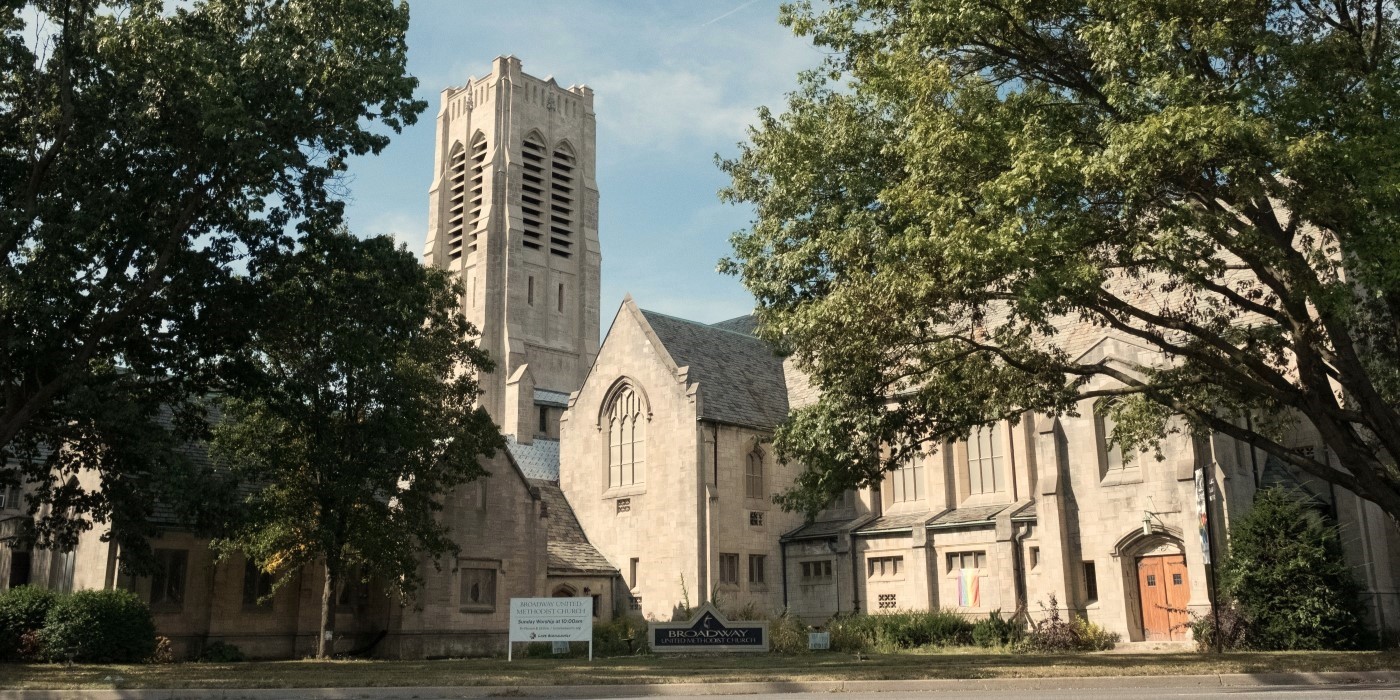
Admittedly naïve, the Christians at Broadway Church in Indianapolis in 1986 wrote: “As followers of Jesus Christ, responding to God’s love, our mission as the people of Broadway Church is to be a multicultural, Christian community that in its ministry seeks, welcomes, and values ALL people.” We knew it was a challenging aspiration, none-the-less the choice was to be a church that said it welcomed everyone – and acted like it. No matter. Everyone.
That congregation hasn’t done it perfectly, but over the decades it has claimed this mission. Still does. Yes, we were naïve, about our society, our world and the human condition… or were we?
Life would teach many lessons, some hard ones. The power of tribalism and fear-stoked resentment has too often overridden respect for all. It has even undermined alliances among western nations. Today we see bigotry and discrimination, dressed up as ICE agents with masked faces and camouflaged outfits, terrorizing our cities. Such threatening realities appear to trample on that simple mission statement.
Naïve? Surely so. Wrong as a witness to the love your neighbor message of Jesus? Not so then, not so, now. The Apostle Paul wrote of this in the earliest years of the church: “In Christ’s family there can be no division into Jew and non-Jew, slave and free, male and female. Among us you are all equal. That is, we are all in a common relationship with Jesus Christ. Also, since you are Christ’s family, then you are Abraham’s famous “descendant,” heirs according to the covenant promises.” (3:28-29 as rendered in The Message).
Twenty years ago, columnist David Brooks wrote of the coming death of multiculturalism. https://www.nytimes.com/2006/04/27/opinion/the-death-of-multiculturalism.html. Brooks spoke of what he saw as the excesses of multiculturalism where diversity was too easily celebrated and sometimes prevented true openness to all voices. He predicted multiculturalism would pass and we would see a “rebirth of liberal American nationalism.” I wonder what Brooks would say today of the trajectory he offered then?
Whether one points to the multiculturalism displayed in the Ruth and Naomi story, or to the multiple ways Jesus of Nazareth broke and transformed deep patterns of race, class or religious exclusion, or to the Pentecost events, multiculturalism and faithful Christian practices are intertwined.
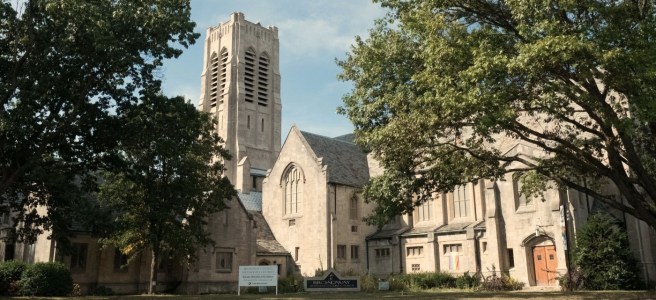
At Broadway, shortly after that mission statement was written, a longtime member told me that grand old building of stone and stained glass might one day be gone, it might be razed, but the gift of knowing others who differed in a community of acceptance could never be erased. Perhaps that congregation at Broadway was not so naïve. It continues today as faithful to its mission. So do thousands of other gatherings and activities in the name of Jesus around the world. Naïve? Perhaps, it appears so, in the short term. However, as Eugene Peterson suggested, Christians are called to “a long obedience in the same direction.”
And the Nation Shrugged

And the Nation Shrugged
On CBS 60 Minutes, 9/28/25, Dana White, of cage boxing fame, challenges interviewer John Wertheim who asks about “toxic masculinity.” White responds: “You tell me what ‘toxic masculinity’ means. There is no such thing.” Wertheim shurgs. The day before two homeless men were beaten on the streets in my city by young men showing off their “masculinity” brutalizing those without shelter. Across the nation last night hundreds of women sought shelter from abusive partners. This morning hundreds of police officers and social workers seek to protect children from violence in their homes. Wertheim and the nation shrugs. Today the “Secretary of War” is gathering all senior leaders of the U.S. Military to encourage a “warrior mentality.”
There was a time when “be a man” meant tell the truth, take responsibility to do the right thing, be courteous and look out for the weak or vulnerable. As Dana White acknowledged he prefers to be seen as a bully! And the nation shrugs.
Shoveling Alone

Shoveling Alone
Shoveling alone. It is the story in almost all our communities in the United States. The poorest of the poor are shuffled to the edges of our economy and end up living on the streets — or in jail!
As I turned the shovel in Bloomington on a recent Wednesday, at the groundbreaking for our new Beacon center, I realized I was alone in that moment… no one on either side… but so many had gone ahead, and others would follow. Is it true in your community as well?
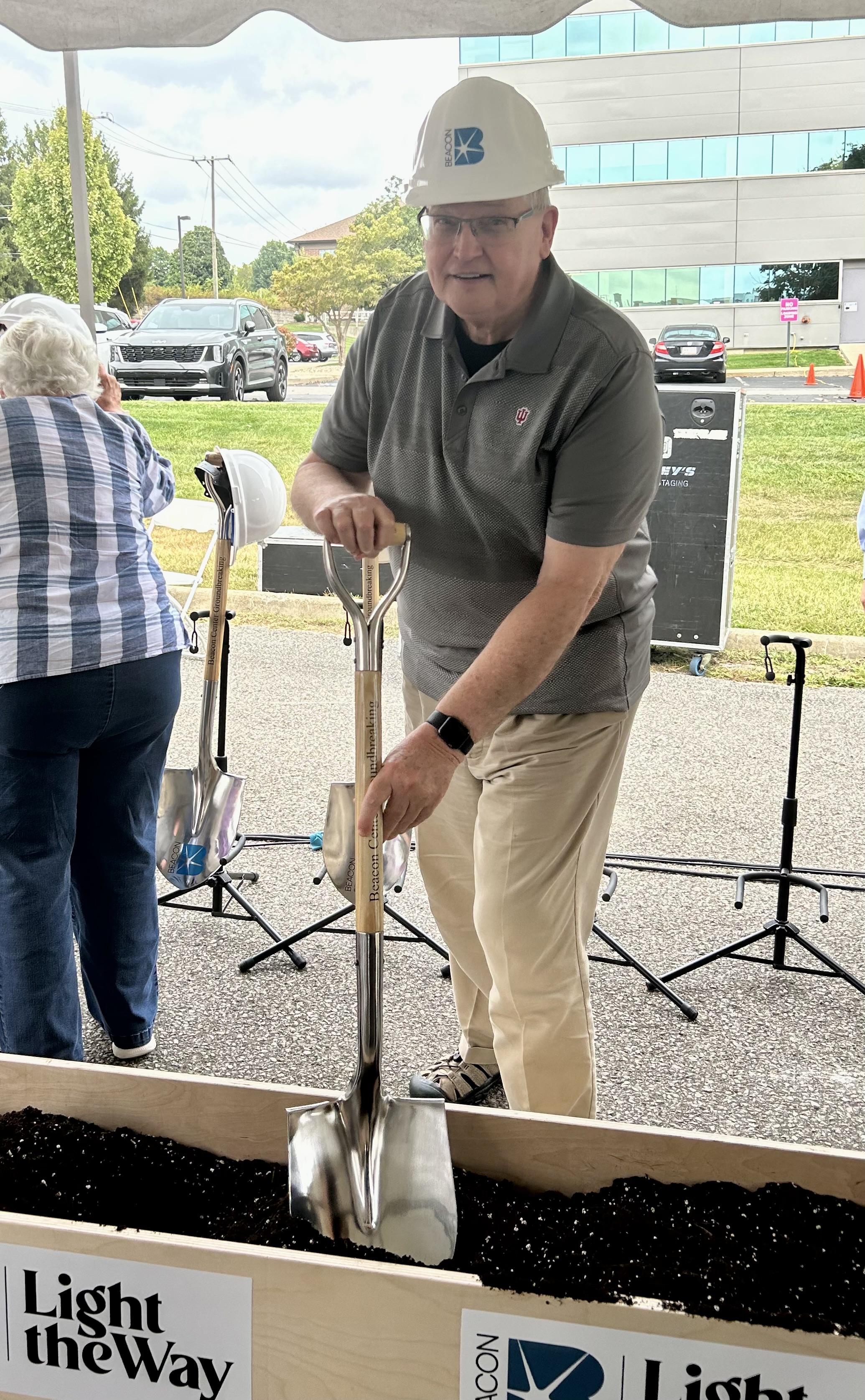
Not just on a given afternoon but across the years, I knew others in the faith community and beyond, who didn’t attend this groundbreaking… but who had ‘turned the soil’ of change in many places. They have been at this turning the soil, and turning our souls, in the past and will be in the future. In the process our souls are returned to an original place of hope and sharing among all.
I believe our local faith community, and others whereever you live, will do more in the months ahead, not just for places like Beacon. We must do this because our challenges cannot be fully handled by any one social service agency. Beacon, and similar agencies are a good, but insufficient response.
Bloomington Mayor Thomson is right, a comprehensive response to the challenge of persons without shelter is needed. Rise up now, faith communities and others, show more muscle, join in to assist the Emergency Winter Shelters, programs like Heading Home, the Recovery Alliance, New Leaf/New Life. Offer more mutual respect and support for all! The massive cuts to Medicaid will touch us all and especially the poor. Emergency rooms will be more crowded, retirement homes and clinics will close, healthcare will be rationed and delayed. Time for more to pick up the shovel and turn the soil toward the planting of new seeds of hope.
“When did we see you…?” the scriptures ask. “When you did it to the least among you” comes the answer. I live with the firm knowledge this shelter, even with a “better” setting where healthcare, employment assistance, public safety, addiction recovery and other resources, are provided is but a small beginning. It is not THE answer. Still, it is a needed step. Many can and will raise needed funds, offer to volunteer, and challenge public policy to do better… in God’s name.
The road is long and filled with twists and turns, social detours, myths about addiction, mental health and blindness to our own complicity in the “social welfare” practices in this country, and the misdirected, cruel political impulses and assault of so many in power in this time. Our culture lives with the myth of hero and victim. It is the “Hero Journey” story that Jung and Campbell identified as embedded in all we perceive as possible. It is so fully ingrained in our psyche and social systems that, sadly, we turn others into “clients” rather than “neighbors” and are more comfortable in speaking of THEY rather than with US.
It will take time — this turning the soil. Still as a Christian I recall the hymn refrain “We are not alone, for God is with us.” ‘Naive’ you say, of course it appears that way, of course. Others are using their constructions of false gods to continue cruelty. I know. That is why those who have theologies more tied to the larger, historic faith story must now speak the truth, afresh. Until some have seen a life changed, a person healed from addiction and communities moving away from cruel patterns of greed and domination, we are stuck. And, until a community is seen pulling together to solve such challenges, many will call me naive. I prefer to call it our shared hopes, foundational for the future — that we can care for one another. Check it out. This is a core teaching of Christianity and other great faith traditions. Interdependence is more essential to humanity’s long-term survival than independence.
Paul Farmer, remarkable physician and founder of Partners in Health (PIH) understood his life’s work as “The Long Defeat.” He said, “I have fought the long defeat and brought other people on to fight the long defeat, and I’m not going to stop because we keep losing. Now I actually think sometimes we may win. I don’t dislike victory. … You know, people from our background-like you, like most PIH-ers, like me-we’re used to being on a victory team, and actually what we’re really trying to do in PIH is to make common cause with the losers. Those are two very different things. We want to be on the winning team, but at the risk of turning our backs on the losers, no, it’s not worth it. So you fight the long defeat.” [From Tracy Kidder, “Mountains Beyond Mountains: The Quest of Dr. Paul Farmer, a Man Who Would Cure the World.”]
So, pick up a shovel, write a check, welcome the stranger, say ‘hello’, ask the stranger her/his name, smile… and keep doing it in your community, whereever you are. Keep at it, even when times are tough. My friend Wes Jackson put it this way, “If you think your life’s work can be accomplished in your lifetime, you are not thinking big enough!”
New Jails? The Fictions and True Costs of our Dependence on Punishment

New Jails? The Fiction and a Generational Mistake
Unless the citizens of Monroe County Indiana make a U-turn, we are heading toward a huge, generational mistake. (Others have made such mistakes recently: Grant County, Kentucky; Terrebonne Parish, Louisiana; Santa Fe, New Mexico; Indianapolis, Indiana and Douglas County, Kansas to name a few.) Building the proposed new jail in Bloomington Indiana will undercut resources for our children’s children. Construction, interest and maintenance will cost over $330 million dollars! The drive to build this jail is based on several myths: 1) our current jail cannot be renovated; 2) there are no good alternatives to incarceration; 3) the current jail isn’t large enough; 4) the 2008 ACLU lawsuit requires a larger jail.
NONE IS TRUE. Renovating and caring for the Bloomington current jail is one-fourth the cost of a new build (under $70 million). Alternatives to prison are demonstrating significantly better approaches. Monroe County’s current jail capacity is 294 while average population is 225. In her 2025 State of the City address, Mayor Kerry Thompson noted violent crime was down 24.3% in the community last year. There are multiple actions already being taken to respond to the ACLU lawsuit. It is rinse, wash and repeat with these myths, often hiding other motivations like those encouraged by the entities standing to benefit from the construction of a new jail. A majority of human service groups oppose a new jail based on their day-to-day service efforts. Yes, there is a troubling problem with mold in the building. Correction is underway.
Finally, there are many other troublesome dimensions to this drive for a new jail. Here are three:
1) A large majority (over 75%) of those held in jail are there because they are poor (can’t afford a bond), suffer from addictions or mental health issues, or are persons without shelter. Most are pretrial – they have been convicted of nothing. How does incarcerating them provide a way out of difficulty or build a stronger community? While in jail the indebtedness of those incarcerated grows! The expense to inmates for phone calls, room and board fees, commissary charges all add up, and up.
2) Access to the newly proposed location is limited to those with an automobile. There is currently no public transportation to the location. If courts and public defender’s offices are there, the visits and support of family and friends is further compromised. Many of the services currently available to the incarcerated, family and friends are downtown.
3) Finally, and deeply troubling, locating a new jail in Tax Increment Finance (TIF) is an attept to hide the way local governments can spur commercial and other development in the area based off the new and extended services put in place for the jail.
We ALL will pay more, but the debt burden on the poorest among us will be the highest.
Gospel Conspiracy Cycle
Gospel Conspiracy Cycle
Over the centuries, the followers of Jesus have lived within, and endured, many political regimes. Tyranny is often around the next turn of the calendar. From Herod or Ceasar, through Nero, up to King George or Hitler, the church has survived – sometimes it emerges misshapen or damaged. It has often failed to give clear witness to the priorities of the Gospel.
Confronted with the current political realities in the United States, how might congregations and disciples offer a faithful response when racism rises, the poor suffer the loss of critical systems of food and healthcare, when the rich act as kleptocrats, autocracy threatens the very underpinnings of democracy?
For followers of Jesus over the centuries, it is fair to say, this is not new. We have seen this movie before… in fact, it is a story often rehearsed and replayed in nations. Current challenges are not Christianity’s first brush with autocracy. How then shall we respond? Some of the suggestions below will surprise, as they are simple and personal, others are corporate. They are based not only on personal experience; they also draw on observing what John Lewis called “good trouble.” They are found in reading of the Christian Gospels, especially in what we call the Good Samaritan parable. I now prefer to call it the Good Conspirator parable. Below is what I offer as the “Gospel Conspiracy Cycle.” Each element is best carried out as both a personal and communal activity.
| Gospel Conspiracy Cycle: Pray/Meditate, Observe/Listen, Study/Learn, Repent/Reconcile, Join/Support/Praise, Sing/Dance/Laugh, Raise Your Voice, Direct Action/Resist |
Richard Lischer, retired professor at Duke Divinity School reminds us the wider lens of church history: “Older heads have thought through the issues we face today—and with us in mind. We have been to this precipice before, and we have discovered that it’s possible to practice our faith on the very edge of it. Which is where we are today. Christians have been anointed not to rule the world but to sanctify it. Not to dominate but to consecrate. Not to harvest but to sow. And to bless this poor, broken body with some soul.” (February 14, 2025, The Christian Century, “How Then Shall We Render.”)
At the heart of Christian Gospel is the Good Samaritan parable (Luke 10:25-35). It is widely known and often misunderstood. I prefer to call it the “Good Conspirator” story. Some believe Jesus is saying “we should help those in need.” That’s a part of it, but it is also about much more. There is this, a Samaritan, considered an untrustworthy outsider, is the one who acts as the true neighbor.
Jewish scholar Amy-Jill Levine writes this story demonstrates a commandment to love all, no matter whether stranger or friend. This story was familiar to Jewish listeners. They have heard the plot before – a Priest, a Levite and an everyday Israelite travel past a situation. But wait, Jesus offers a new twist. The third person is not the everyday Israelite. Rather it is a foreigner, a Samaritan. Jesus thereby reframes the lawyer’s question of “who is my neighbor?” The unexpected, stranger, the Samaritan’s actions cut against the grain of expected and typical. The Samaritan is a conspirator for the good.
The word “conspire” from the Latin is “conspiratio” which means to “breathe together with spirit.” From the beginning Christianity has valued an alternative perspective on what is normal. Jesus spoke of the paradoxes of the poor being the truly rich and the weakest ones also are the strongest. Christianity offers an alternative to the “normal” and “expected.”
In my own life, (and I would be bold to say in the history of Christianity), there is a cycle I could call the Gospel conspiracy. This virtuous cycle is often interrupted, diverted for a while or even undercut by Christendom. It is true in my own life as well. The cycle is this: 1) Pray and meditate; 2) Observe and Listen; 3) Study and Learn; 4) Repent and Reconcile; 5) Join, Support and Praise; 6) Sing, Dance and Laugh; 7) Raise Your Voice; and 8) take Direct Action and Resist – and always return to Prayer. One may move around in the cycle from one space to the next. All are essential. A return to start, back to prayer is always an option. The idea is to keep moving. These elements are meant to help followers of Jesus develop Tough Minds, Soft Hearts and Strong Hands.
For regular updates, subscribe to: BelongingExchange.org
Faith Communities Could Boldly Lead
Faith Communities Could Boldly Lead
Attached below is a column sent to our local newspaper in Bloomington, Indiana, the Herald-Times.
While it is local in focus, the situation is repeated in thousands of communities in the United States. Perhaps there are some thoughts or themes here that could be helpful to you wherever you live and/or work.
Our nation is amid a mental health crisis where our largest homeless shelters are the local jails. Until the poor, ill and addicted have places of shelter and care, at minimum, no one should call this a “Christian nation.”
++++++++++++++++++
Faith Communities Could Boldly Lead
What makes Bloomington “BLOOM”? What offers vitality, hope, knowledge and hospitality? We have great institutions: centers of education, health science, manufacturing and culture. Innovation and technology are known to be essential. Still, Monroe County seems in the doldrums, waiting for a new gust of imagination and initiative. A community’s wellbeing in terms of jobs, housing, education, racial diversity and cultural amenities is a complex mix. Not thriving at a high level, we bump along.
Among our disquieting realities:
- Declining population and lagging diversity. Since 2000, non-university related population is down 1.5%. Surprisingly, racial and ethnic diversity, lags peer communities.
- Lower wages, productivity. At Futurecast 2025 in November, Philip Powell, director of Indiana Business Research Center noted core worker population (aged 18 to 44) continues to decline, below U.S. and Indiana average wages and productivity. Bloomington will “live and die by the talent that is here,” Professor Philip Powell concluded.[i]
- Cost of living and housing expenses are among the highest in Indiana with too few homes on the market for demand. Many workers offering essential services must live outside the city.
- The homeless. With little voice and few options hundreds seek shelter in a tent or doorway. Some live in an automobile. Some do “couch surfing,” others are in jail or healthcare facilities. Scores move every few days, from one unwelcoming location to another.
As I did research something strange happened: the same number, 143, popped up on two different topics. Mere coincidence? The Association of Religious Data Archives reported 143 faith congregations. Another topic showed 143 persons had no shelter at all, and 300 more persons were classified as homeless![ii]
What if each faith group offered shelter for one person? Too simplistic and unlikely? I think not. Faith communities vary. Numbers vary over time; but not by much. Consider this, if Monroe County seeks more innovation, imagination, growth and productivity, is it solely the work of the corporate, government, service and education sectors? What roles for faith communities?
What if for the next five years, 2025 to 2030, congregations offered 143 additional safe places each year by building, renting or otherwise providing shelter for our poor? What if each faith group reached out to know a person without shelter, not as a client but neighbor? In these frigid days of January 2025, two churches, First Christian and First United Methodist stepped up offering emergency shelter, a warm space, a small respite, a bite to eat. Beacon Inc. and Wheeler Mission do more as well. Might faith communities cooperate to end the need for such emergency spaces all together?
Let’s not get carried away, here Phil! If this was a sermon, the Jewish or Christian scripture text could be Isaiah 58:7 or Matthew 25:35-40. (There are many other passages calling persons of faith to shelter the homeless.) In Matthew 25 the hungry, thirsty, or those without shelter are to be treated as if they were Jesus himself.
As some leaders in our community seek new vitality with technology, research and innovation hubs, might imagination also come from our faith communities? Congregations could assist the Housing Authority supporting Section-8 vouchers. They might offer additional volunteers and gifts for Heading Home, New Hope for Families, Habitat for Humanity, Wheeler Mission or Beacon Inc. Bloomington could become known as a place where faith communities offered one critical, stable baseline amenity, HOUSING for the poor along with wise, research-based care that could lead to recovery, employment and fuller citizenship.
A place to start now is with support for Beacon Inc., (https://beaconinc.org/). The proposed new center will offer a more comprehensive approach: shelter, recovery, job training, space for prayer and meditation, care for physical and psychological difficulties.
One-hundred-forty-three, 143! The Rev. Forrest Gilmore, Director of Beacon, heard me speak of #143 and reminded me that it was the favorite number of Fred Rogers, the creator and television host of Mister Rogers’ Neighborhood. Rogers kept his weight at 143 pounds all his adult life! More importantly, however, he said that 1-4-3 matched the number of letters in his favorite three words “I love you.”
One-hundred-forty-three, 143! Faith groups might join corporations, the city, the community foundation, university innovations and research, and social service groups in modeling a better way for Monroe County, our state and nation. Even if only half, or one third of our congregations, or if only a couple of dozen could boldly act together, they could make a difference so that Bloomington would be widely known as the city in bloom.
[i] Wright, Aubrey, Indiana Public Media, November 7, 2024
[ii] Keener, Gentry, Indiana Daily Student, October 20, 2024. From the Indiana Housing and Community Development Corporation “point in time” count. 456 persons were homeless, with 143 living no shelter at all.
Brokenhearted, Yet a Wholehearted Hope
Brokenhearted, Yet a Wholehearted Hope
Brokenhearted. In prayer for those suffering the wildfires in Los Angeles area. So many friends there, great folks in wonderful neighborhoods now destroyed or threatened.

Sad to learn the lovely Altadena United Methodist Church building was destroyed. I think of friends in, and nearby, who must be suffering and facing great uncertainty. Altadena UMC is a place where my dear friends, Rev. Mark Trotter and Rev. Yvonne Boyd served in different eras over the years. They built and sustained a strong and welcoming congregation.
In Altadena, the Jet Propulsion Lab and many graceful parks, museums, and educational centers are nearby. It was a place where racial exclusion and redlining was exposed in the 1960s and for many decades has been rich in racially diverse neighborhoods. You see, this fire may be destroying more than homes — also lost is the experience of neighbors who shared gifts brought by differing cultures and life experiences.
Of course, Pasadena is close by – we think of friends there. At Huntington Library and Gardens, Fuller Seminary, several other congregations. There also is the California Pacific UMC conference headquarters. Dear ones, we treasure, are facing threat in Pasadena… some have been put on alert to prepare to evacuate. We pray for them.
So many, now vulnerable areas, and friends at risk — Glendale, Hollywood, Santa Clarita and, of course, the Palisades. We commit to share our small financial support that can go for ALL those who suffer today. We are proud to know that United Methodists have offered shelter and outreach to those facing this tragedy. See: https://www.calpacumc.org/news/cal-pac-fire-updates-january-8-2025/
Other denominations, churches, mosques and synagogues also now offer spaces of refuge and care. In the midst of ongoing infernos, there is a broader and deeper expression of common humanity. Some reports of looters, but these pale in comparison to the expansive acts of neighborly care.
++++++
And one other word… what can be said of the moral depravity of the incoming president? Isn’t he a looter of our commonweal? Aren’t his words robbing us of the chance to honor others and practice neighbor-love in a time of need, absent of ugly incrimination. I say “yes.” He is a looter of the common good.
He, who always presents himself as the greatest of victims, shows little or no empathy for those who are truly suffering. He blames, distorts, creates division and uses this tragedy to score political points. Why this perpetual need to harm? What inferno has burned across his soul and left this abyss that lacks humanity or humility? Is it that he is afraid of a tragedy taking away his place on center stage?

Surely there are many reasons for this tragedy… too little water storage? But there was also too much rain in recent years contributing to increased vegetation. Vegetation that turned into fuel over months of draught. Of course, there are questions of building such large communities in desert areas and diverting water away from natural flow. Ask the folks in Mexico about the trickle of the Colorado River that was once a wide and potent source of life and beauty. There are also profound questions about our national and international dependance on petroleum that contributes to changes in our climate.
In recent years, taking a cue from folks like Wendell Berry and Wes Jackson, I have sought to follow “a way of ignorance.” By this, they mean admitting there is so much we do not know, and MUCH to learn, as we journey ahead. We start with an awareness of much yet to be discovered. It keeps one honest and appropriately humble. Admitting, first, there is much to learn and to love. There is so much that is unknown about persons, communities and the natural world – and it also offers space for growth and discovery – space for delight.
Sadly, I also see that some chose a differing “way of ignorance.” This one is rooted in fear, arrogance and denial. This is an ignorance based in fear and the need to control. It blocks new insights, transformation, unity and joy. It persists in brokenness and grievance. I pray for the incoming president today, that he might be healed of this way of acting and behaving.
Brokenhearted, yet I also will wholeheartedly give my energies, in the limited years I have remaining, to joining the good work of others, like my United Methodist friends, in encouraging our nation and world toward a better way. I will name the “looters of the common good,” persons like Donald Trump, as I give thanks to the millions of witnesses who offer care, hope and new discovery, even in the face of tragedy.
Integrity & Jimmy Carter
Integrity & Jimmy Carter
Integrity and Jimmy Carter are synonymous. For one hundred years he offered his witness. There were ups and downs, missteps and the recognition of a Nobel prize. I see his life as a wonder-filled demonstration of human decency and generosity. A paradoxical mix of pride and humility, intelligence and determination, vision and myopia. This peanut farmer from Plains, Georgia offered a standard, a vision for a better way.
Friends disagree. Some call him naïve, too uncompromising, or too unwilling to make savvy political calls when necessary. A ‘fluke,’ they say, ‘one who would never have been elected had not the nation become overburdened by the agony of wars in Southeast Asia and the deceptions of Nixon and Watergate.’ I disagree. Carter’s leadership emerges as an immeasurable gift for our nation and the world. Can we learn from, benefit from, the many positives of his life and perhaps, journey carefully around its pitfalls?
I hold that President Carter, alongside countless others who have recently died, persons like my friends Ruth Duck, Jan Foster, Bill Pannell, John Cobb, and John McKnight, exemplified lives guided by an informed faith, a hunger for truth and a future established in hope rather than fear that our nation and world now desperately need. Their lives, along with millions of unknown or unnamed others, point toward the better path for humanity, a path taught in scripture.
Closing my eyes for a moment, I see Jimmy Carter standing before a Sunday School class at Maranatha Baptist Church in Plains, each Sunday. He had studied the lessons found in scripture, lessons that shaped his daily living and informed his efforts to lead. This image is in stark contrast to that of another president filled with guile, poising in front of a church building, sanctimoniously holding up a Bible as a prop, knowing little of the contents or gifts found in its pages.
One man, Carter, worked to build homes for the impoverished. The other, Trump, gained wealth by building hotels for the rich and casinos that served to impoverish the vulnerable. One worked to end the guinea worm disease and other illnesses in the world. The other used an epidemic to divide and undercut public health initiatives needed by a fearful nation. One worked to encourage care for our fragile earth, protecting more than 150 million acres of wild lands and rivers. The other continues to deny the reality of climate change and lives by the words “drill baby drill.” One was ridiculed as naïve for saying he had committed “adultery in his heart.” The other was convicted of sexual abuse and bragged of his sexual exploits. One said, “I will not tell a lie.” The other said, I will offer “alternate facts.” One spoke a hard truth about people torn apart by religion or culture, and scripted peace accords between nations. The other used culture wars to establish new enemy lines and employed exaggeration and falsehood about the immigrant, poor and vulnerable.
Sr. Joan Chittister writes: “At the end, three things measure both our integrity and the harmony of our own lives: self-control, respect, and freedom from self-deception.” The true value of our living will ultimately surface like a submerged cork in the ocean. Life comes and passes; nations rise and fall. I hold to the wisdom of scripture: “Whoever walks in integrity walks securely, but whoever takes crooked paths will be found out.” (Proverbs 10:9)
 Hands of the Strong