It was Alice Roosevelt Longworth, who in speaking of her father, Teddy, said he wanted to be the corpse at every funeral, the bride at every wedding and the baby at every christening. I first heard this from my friend Thomas Lane Butts, a remarkable United Methodist pastor from Monroeville, Alabama. Yes, that Monroeville! In fact, over the decades Tom would have breakfast every week, at Hardees fast food restaurant, with Harper Lee. Yes, that Harper Lee!
It took a while to discover that Tom, who would often speak of “a bride at every wedding and corpse at every funeral,” had borrowed and reshaped the quote to his purpose. I remember Tom’s sonorous southern cadence as he would identify some attention-starved politician, bishop, power hungry legislator, university administrator or professor, or pompous preacher or rabbi, as one who fit the category.
My prayers in recent months often have been that a narcissism-neutralizer could be invented. It could be marketed as a humility-pepper-spray and deodorize any power-hungry-stench. I have prayed that an election, a court verdict, a news editorial, an honest phone call from a friend, a speeding ticket, a failed speech, or a glance in some other “reality mirror” might burst all pomposity balloons. I’ve looked in a few such mirrors myself over the years. I recall the Sunday I thought I had preached a fine sermon, and a woman took my hand at the door and said, “Every sermon you preach is better than the next.” Great timing – a glance in the reality mirror. I was remembering the true meaning and joy of worship.
My dream of some ego-adjusting-comeuppance is likely not to happen… probably can’t happen given all that is at play in our day. Our national-body-politic, gerrymandered-legislatures, embattled-universities, overly-cautious-conflicted-churches, profit-only-driven-corporations, or ideologically-ensconced-media-enterprises are in their own protective enclosures.
In the meantime, sadly, attention is taken from those who genuinely deserve our honor, memorials, respect and shared joy. Here is an invitation to you to join in remembering and celebrating those who have died, those getting married and all those we name as children of God.
This morning (1/1/24) I wake at the beginning of my 78th orbit around the sun. What a journey! Earthbound all the while, I didn’t notice the spinning while traveling roughly 30 kilometers a second. Thankfully, gravity prevailed along with the persistent tugs of other gravities like tradition and creature comfort. As 2024 begins, I make no New Year’s Resolutions. Instead, I will look to the delights ahead; 366 days to enjoy (it’s a Leap Year). Here are eight “in-joy-ments” I anticipate, let’s call them Orbits of Delight drawn from life lessons thus far and based on emerging hunches in a journey toward hope. You can keep the change. I will:
Delight in laughter – remembering the foolish things I say and do, more than suffering over the nonsense of others (especially the U.S. Congress).
Delight in weaving community — looking more peripherally making fresh connections with friends, neighbors, and strangers.
Delight in the currency of the Spirit – spending and saving a different form of wealth; banking on common humanity through greetings, stories, smiles and hugs.
Delight in tables of fellowship — hosting picnics, parties, and meals to listen for laughter or reach out in care for fear or grief.
Delight in welcoming the poor and immigrant – as Rev. Murphy Davis put it, welcoming others “not as a problem to be solved but as a mystery to be loved.”
Delight in the achievements of friends – making a phone call or sending a note of celebration.
Delight in the beauty of nature – walking and marveling in the land, vegetation, animals, and the sky (including a near total solar eclipse on April 8th where I live).
Delight in being a member of the extended household of God – while patriotism, has it’s merit, it is a puny, second-rate, counterfeit to God’s intentions for me, for us all.
What’s the old adage? “The best time to plant a tree was twenty years ago and the next best time is today.” Top of mind today are events in Afghanistan, hurricanes in the Gulf of Mexico and COVID hospitalizations and deaths around the world. Perhaps, like me, these tragedies overwhelm and despair has taken up residence in your thoughts. What was planted twenty years ago – and longer – is now being harvested. What has brought us to this point? Where is there a hopeful way forward?
As a nation, as a world, we seem unable to consider long-term implications of actions taken today. The all-too-natural-human tendency to prefer the tools of retaliation, blame, distrust, greed, fear or bigotry have served as a modus operandi in most of human history. Too seldom has the wisdom of an Abraham Lincoln been displayed. As the terrible years of the Civil War were ending he spoke the remarkable words “with malice toward none and charity for all.” Such a guiding vision and telos for our wars is astonishing. There is a dangerous and disastrous inability to view our political, global and cultural situations with a longer view. Retaliation has produced what fruit? Distrust of government, health and religious institutions, broken, fragile and in need of reformation as they all are, has yielded exactly what fruit?
Grain in Southern Indiana
As we approach the autumn harvest season in North America, farmers are doing more than combining grain and gathering the harvest. They are planning ahead for the crops they will plant next year, and the years following. I think of the words of Jesus in the Gospel of Matthew, chapter 7:
16 You will know them by their fruits. Are grapes gathered from thorns, or figs from thistles? 17 In the same way, every good tree bears good fruit, but the bad tree bears bad fruit. 18 A good tree cannot bear bad fruit, nor can a bad tree bear good fruit. 19 Every tree that does not bear good fruit is cut down and thrown into the fire. 20 Thus you will know them by their fruits.
As I grieved the deaths of our thirteen young military personnel this past week and more than one-hundred-and-seventy Afghanistan persons murdered at the Kabul airport, I thought of the twenty plus year toll on our world and nation and my heart was broken. Still, the words of the U.S. President in response this horrific attack in Kubal by promising retaliation and saying “we will not forgive,” brought small comfort. Today, exactly what are we reaping and what are we sowing for the future? We should not forget, and should act wisely in the future, but what fruit does this retaliation bring? This talk was, for me, a kind of virtue-signaling of the worst order as the president needed to let anyone listening know that he (we) were tough and could be as cruel as any terrorists in response.
Out of fear, revenge, and no small hubris, we have spent thousands of precious lives and billions of dollars with apparently too little knowledge of the people and culture and less wisdom as to our mission. Afghanistan was already a broken Humpty Dumpty of a place when U.S. troops entered in 2001. My appreciation for those in the military and civilians who diligently sought to build a better place is enormous. Thanks for their service knows no limit. However, this still begs the question, was violence the best tool in our toolkit? Is it now?
Many people of faith over generations understood that retaliation was not the way of Jesus. They understood the importance of making our institutions humane and strong rather than stirring up animus against government or leaders with whom one disagrees. Many taught the path of nonviolence and restorative justice. For people of faith, especially my own Christian family, we have great traditions of reconciliation and grace upon which to draw. Sadly, in my denomination, many have been caught up in tribal warfare over these twenty years. What if we had spent this energy on planting a better future for our world, for Afghanistan, together? Our vision has been reduced to a sickening institutional battle over the next two years or four years. Our passions have focused more on proving another party wrong, gaining control of congregations and a denomination, rather than on planting the good seed of Christ for the future. We think too small and hope too little. Kyrie Elieson — may God have mercy and forgive.
Whether it is war, hurricane, or disease, a future of hope requires deeper, wiser, more hope-filled and generous behaviors. Our decisions now about war and peace will require thoughtful critique and retooling. Our fragile social, cultural and religious institutions — those intended to build up and not destroy — call on us to plant seeds of renewal designed to bring good fruit. And, living our lives in more environmentally sustainable ways on this precious planet require new life patterns for the sake of our grandchildren and their grandchildren. I believe this is possible. There is an ecology of hope we can practice, a living in ways that plant good seed for the future, so that others may receive an abundant and good harvest.
First, a confession. As important as protecting sea turtles is, I hadn’t thought much about them. I didn’t intend to make a gift to this charity in 2020. In fact, saving turtles was not on a top ten list in my charity giving. Why, then, did I just make a gift to the National Save the Sea Turtle Foundation? (http://savetheseaturtle.org/.)
Grandpa’s Lesson in Turtle Saving
Why sea turtles? There is a young woman behind it named Eleanor. She is seven and lives in Oakland, California. Sea turtles? Why? Eleanor Amerson, you see, is my grand daughter. We asked our grandchildren what charity they wanted to support this Christmas. Eleanor’s older brother, Gus, said give to a group that helps feed hungry people. Good on you, Gus. So a gift is sent to Phil’s Kitchen at the Beacon Center (Shalom Center) in Bloomington, Indiana (http://beaconinc.org). Phil’s kitchen is named for Dr. Philip Saunders, a friend and former economics professor at Indiana University. Phil, now deceased, left the legacy of a commitment to feeding the hungry.
Our other grandchildren, Colin and Zach Murry will let us know soon their preferences as to charities they wish to support. I suspect one of them will be the Lincoln Park Community Services in Chicago where their mom serves on the board. (https://lpcschicago.org/)
In recent years, each year, we have selected the gift to charity in honor of our grandchildren. We have given to Heifer International (https://www.heifer.org) which assists persons around the world toward food security and the acquisition of live stock or The Land Institute (https://landinstitute.org) where research is underway for more sustainable agricultural models around the world.
This year, we are asking our grandchildren what they want to support. And, we are being schooled by them as to what is important — for them.
You get the point!!
There are many worthy organizations. Most (many) need our attention and support in the economic realities emerging in the wake of the COVID pandemic. I understand the limits of charity and the ways a systemic reordering of our political, religious an service institutions is needed. I do. We must move away from such a heavy dependence of fossil fuels. There is no reason for persons in the United States to face homelessness, food insecurity or the deficits we face in educational resources. Of equal importance is the climate crises and tragedies related to immigration and refugees around the world. There is much to be done — systemically, long-term and immediately through charities. Turtle saving is one of these.
At this juncture I have learned that the temptation for many is to allow “the perfect to be the enemy of the good.” Okay — right. This doesn’t mean we stop giving effort to make deep change in our systems, in our communities and even our personal lives. We do what we can, now and at the same time aspire to a more just and sustainable world.
Sea turtles were not top of mind for me when December 2020 came. Thanks to Eleanor, I will be more attentive and learn more about sea turtles. What lessons will you learn during this holiday season?
All Saints Day 2020 arrives two days ahead of the Presidential Election. We remember lives well lived — and others lived not so well. We consider the fraying of our national identity and the evident threats to our commonweal. Mortality lurks as a backdrop on the nation’s theatrical stage this year. I think of the friends who have died. Many wonderful folks. There are 230,000 others in the United States and 1.2 million around the world who have died in the COVID-19 pandemic since February. We know only a handful of their names or life stories. Still, this is ALL SAINTS DAY.
The New York Times today (11/1/2020) carried an opinion piece entitled “Obituaries for the The American Dream 1931-2020.” It was inspired by Lizania Cruz, a Dominican artist and museum curator, who asked other artists When and How The American Dream Died For You? The Times opened the question to a wider audience and invited readers to respond.
One of the original responses was from, Marsha McDonald who wrote: “The American Dream died for me when I realized how many of my fellow Americans valued selfishness over community, power over justice, prejudice over generosity, demagoguery over science. For me, the 2020 pandemic is very real, but also a metaphor. How sick our national soul is! The old dream should pass away. Isn’t it time for us to dream new dreams, better dreams, that include us all?“
Since All Saints Sunday 2019, I have spent countless hours looking into the history of Methodism and the Ku Klux Klan in Indiana.** This research led to libraries, books and articles, old newspapers along with dozens of conversations and email exchanges. There are mysteries yet to be solved. Even so, I have sadly learned more of the broad swath of racism and religious bigotry that infected (and still infects) the church. At the same time my research uncovered the lives and witness of dozens of remarkable persons of faith in the early 20th Century who opposed the Klan and worked against this corruption of the Gospel and human dignity. In their day, these women and men dreamed “new dreams, better dreams, that included us all.”
If I were I to write my letter as a part of an Obituary for the American Dream today it would be a rolling set of dates — times of death, trauma and despair — and times of hoped for rebirth. Scores of times, a refrain, recurring rhythms of loss and return. Times when the dream died – along with Dr. King or the Kennedy brothers in the 1960s, or the twenty children and six adults at Sandy Hook Elementary School in 2012, or the treacheries of hunger, violence, betrayal and death witnessed while working in impoverished settings filled with saintly people in the U.S. and Latin America, and on and on and on. THEN – times when hope was rekindled.
Shortly after the death of Pope John XXIII in 1963 author Morris West wrote an appreciation titled “Good Pope John” for Life Magazine in which he wondered: “Will they canonize him and make him, officially, a saint in the calendar? In a way, I hope not… I want to remember him for what he was — a loving man, a simple priest, a good pastor and a builder of bridges across which we poor devils may one day hope to scramble across to salvation.” In 2014, Pope John XXIII was canonized — so much for the wishes of Mr. West.
I don’t know that any one American Dream should be canonized. In truth all of our best dreams will end up in some graveyard of good intentions. In fundamental ways, our society and culture are flawed and destined to continuing corruptions — as are all human political and institutional designs. Our hope is not in finding the perfect president, or political ideology or government program. In truth, there is no “draining of the swamp”; instead we require an honest assessment of the human dilemma and self-critical response — where better oversight and care of all of our swampy places is required — social and personal. The future is not yet clear, even so I join in cautious hope.
I pray that Jon Meachem is correct in offering that: “In our finest hours…the soul of the country manifests itself in an inclination to open our arms rather than to clench our fists; to look out rather than to turn inward; to accept rather than to reject. In so doing, America has grown ever stronger, confident that the choice of light over dark is the means by which we pursue progress.” (The Soul of America: The Battle for Our Better Angels)
+++++++++++++++++++
Thomas Merton wrote: “What makes the saints saints is a clarity of compassion that can find good in the most terrible criminals. It delivers them from the burden of judging others, condemning others. It teaches them to bring the good out of others by compassion, mercy and pardon. We become saints not by conviction that we are better than sinners but by the realization that we are one of them, and that all together we need the mercy of God.” (Merton, Thomas. New Seeds of Contemplation, p 57)
+++++++++++
Ordinary Saints, Malcolm Guite
The ordinary saints, the ones we know,
Our too-familiar family and friends,
When shall we see them?
Who can truly show
Whilst still rough-hewn,
the God who shapes our ends?
Who will unveil the presence, glimpse the gold
That is and always was our common ground,
Stretch out a finger, feel, along the fold
To find the flaw, to touch and search that wound
From which the light we never noticed fell
Into our lives?
Remember how we turned
To look at them, and they looked back?
That full- -eyed love unselved us, and we turned around,
Unready for the wrench and reach of grace.
But one day we will see them face to face.
(Malcolm Guite, From Plough, March 22, 2018)
++++++++++++++++++
**[My interest was in part linked to my appreciation for the research by retired Indiana University Professor James Madison, whose book The Ku Klux Klan in the Heartland arrived in September 2020. Madison rightly argues that the Klan was made up by more than the “hillbillies and Great Unteachables” as some claimed. Klan membership extended into the ranks of community and church leaders. My interest, of course, was given more urgency by the tragic murders of George Floyd and Breonna Taylor in the past year.]
Restoration is a powerfully motivating message — as is evidenced in 2020 by Joe Biden’s call to “restore the Soul of America.” When Donald Trump ran for president in 2016 his slogan was “Make America Great Again.” With clever marketing, the shorthand MAGA brand appeared on baseball caps, flags and t-shirts. Of course, he was borrowing from the vision Ronald Reagan offered in 1980, the difference being that Reagan spoke of American as “a shining city on the hill” and Mr. Trump focused on “American carnage.”
The discerning reader, as I am certain you are, is asking “restored to what?” Not all restorations are desirable — we don’t want to return to the racism, violence, misogyny or other bigotries of the past. I am speaking of those things that would restore strength, health and joy where they are lacking. It is a restoration toward flourishing. Restoration, in every understanding of the word, needs to be shaped in terms of the values and virtues mentioned early on in this series: the good, the true and the beautiful. It is in the implementation of such restoration that difficult conversations will be required. How might there be polycentric options for flourishing in our society?
The focus on this the ninth day of the fortnight before the 2020 election will be threefold: Natural Environment, Justice System and the Common Good.
NATURAL ENVIRONMENT:If you haven’t already discovered it, I encourage you to view the series The Age of Nature currently showing on the Public Broadcasting System (PBS) and produced jointly with The Nature Conservancy. The first episode is entitled “Awakening” and to my way of thinking stands as a master metaphor for the restoration needed across all of our systems — humanly constructed and the natural world.
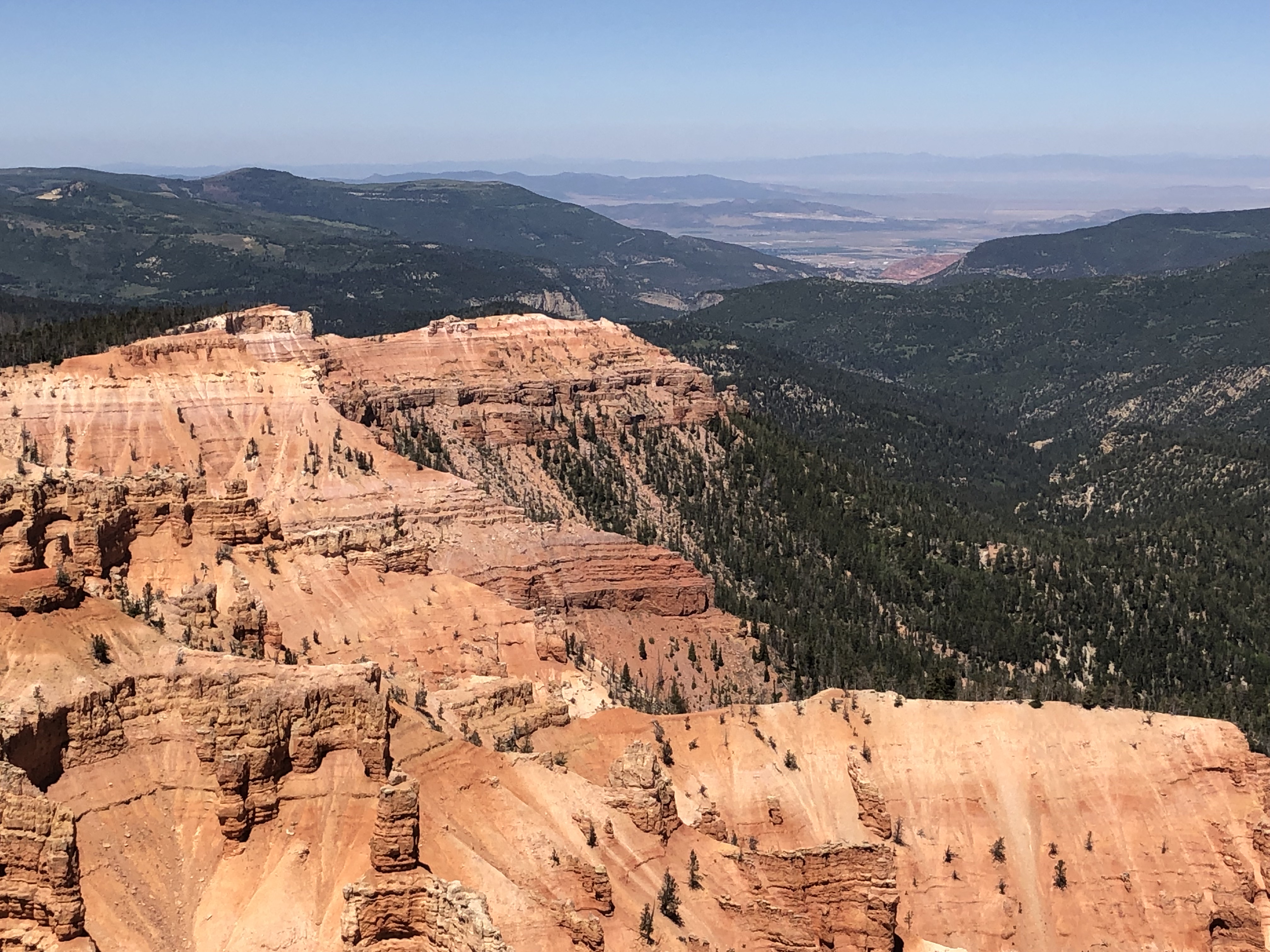
Brice Canyon, Utah
This Awakening episode includes stories of how ecosystems are restored, with a little human assistance, around the globe. Natural ecological “awakenings” are highlighted from Panama to China to Norway to the coral reff off of the Bikini Atoll. I found particularly compelling the efforts of philanthropist Greg Carr in putting his wealth and knowledge to work assisting in the restoration of Gorongosa National Park in Mozambique. (You can read more about the early high stakes effort by Carr in the May 2004 issue of Smithsonian Magazine, https://www.smithsonianmag.com/travel/greg-carrs-big-gamble-153081070/). This is but one of the astonishing examples of restoration shared in Awakenings.
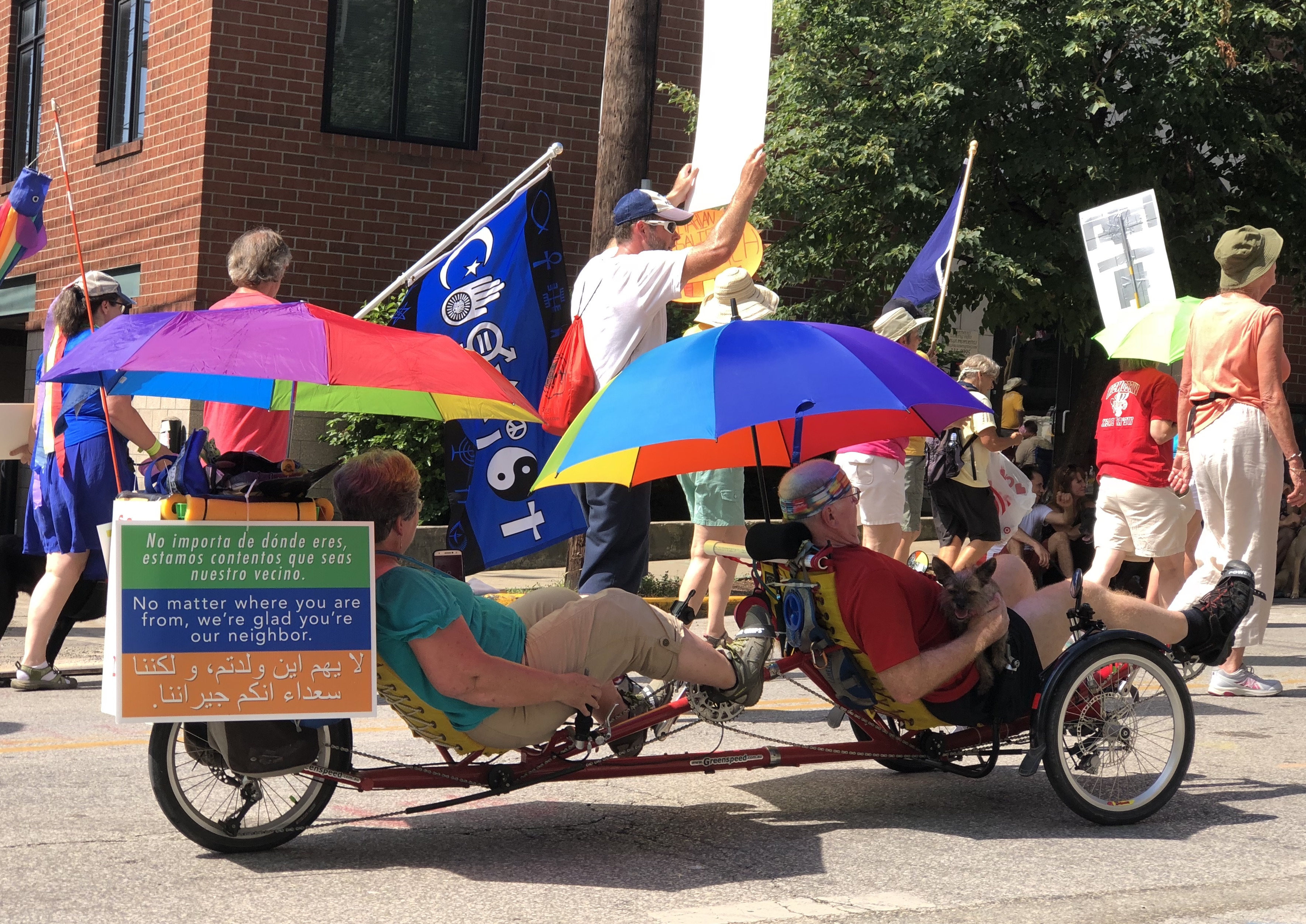
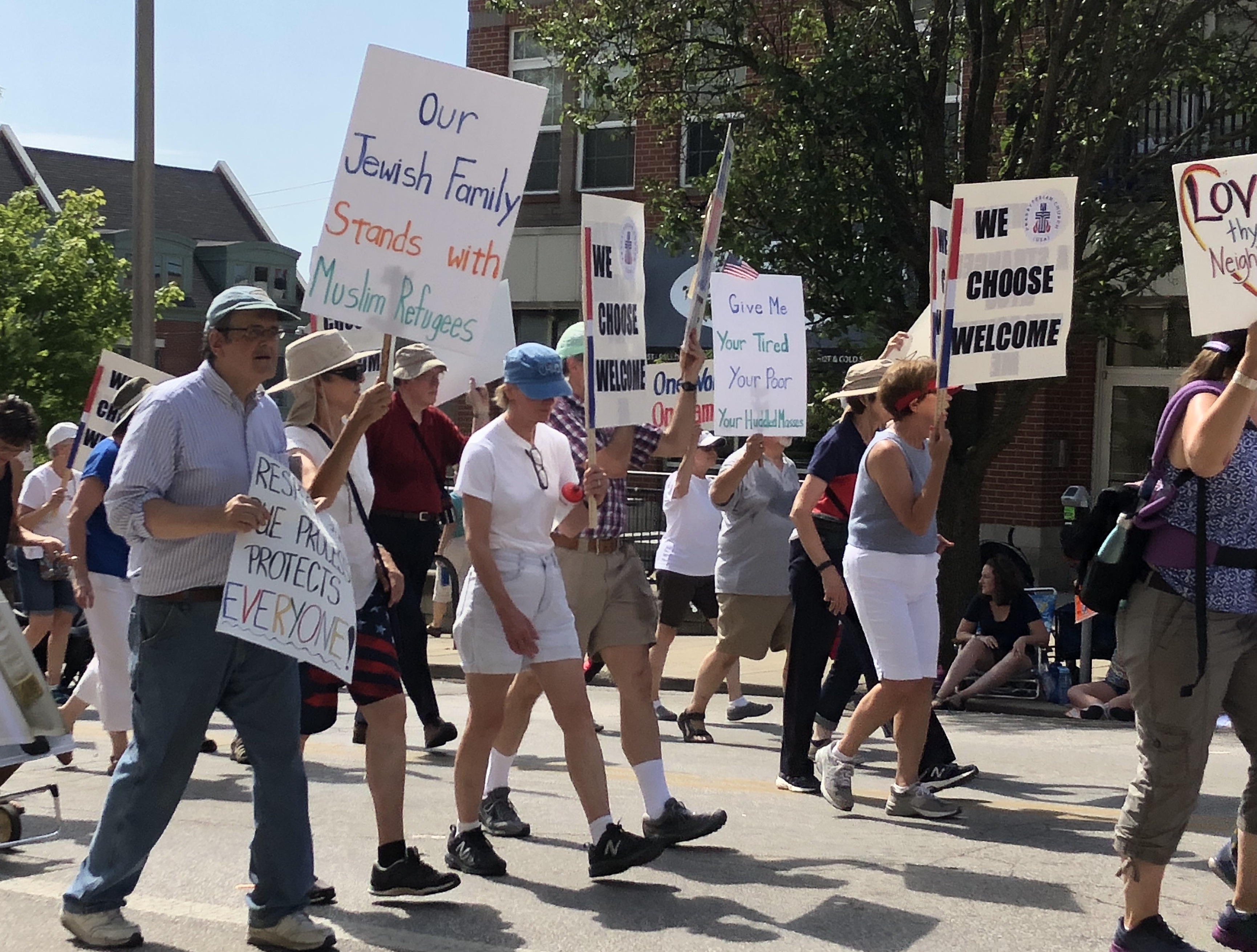
July 4th, 2017 Parade, Bloomington
RESTORATIVE JUSTICE: For too long the criminal justice system in the United States has focused on punishment only, on retribution. Even though there was lip-service to the idea about “rehabilitation,” the core motivation was to punish someone for a crime. However, restorative justice is about more than prisons or a court system. It can be as basic as how discipline is handled in school or at camp. Restorative justice involves restitution by the offender in a process that includes the victim and often representatives of the wider community. Rupert Ross’ book “Return to the Teachings” explores the ways Aboriginal cultures have been effectively incorporated into restorative justice.
COMMON GOOD: Rabbi Jonathan Sacks has offered a remarkable resource in his work Morality: Restoring the Common Good in Divided Times (Basic Books, September 2020). Sacks offers a framework for the public task of reconstructing a shared sense of virtue and values. He writes that we need to look beyond the perceived solutions found in politics and economics toward the deeper, bedrock set of moral assumptions. He shows “that there is no liberty without morality and no freedom without responsibility, arguing that we all must play our part in rebuilding a common moral foundation.”
Again, I mention the more accessible and excellent resource for congregational study, Mark Feldmeir’s A House Divided: Engaging Issues through the Politics of Compassion. Earlier this week, my local congregation held an online discussion about Feldmeir’s work in which serious and respectful agreement came that we all have a responsibility to work at reweaving the torn fabric or our democracy.
There are currently scores efforts across the nation to encourage a stronger civil community. Good reader, you have probably thought of a several. This is our work, the responsibility ahead as we seek to RESTORE a commitment to seeking the Beloved Community.
So, on Day Nine — with five days remaining between now and the election — I would seek restoration of that which leads to strength, health and joy for persons, communities and nation.
Today, consider please, the presumed dichotomy between the personal and the social, the individual and community. For too long our politics, religion, economics and charity have been misshapen by this fraudulent binary. At a fundamental level, there is a web of mutuality between one’s self and others. Americans tend to live with a heavy focus on individualism and “individual rights.” This is a good thing — however, if this is the sum total of what is valued or the singular basis for action– it will lead to trouble.
Social Psychologists George Herbert Meade and George Cooley posited decades ago the understanding that every human being is a Social Self. From the beginning, we learn who we are by interacting with others, as if in a looking glass. The language we learn, the games we play, our habits and our pains are fundamentally shaped in social contexts. It was from these insights that H. Richard Niebuhr wrote the ethics classic, “The Responsible Self.” Niebuhr suggested that the reflexive self could act as the responsible self.
In 1947, Mahatma Gandhi gave his grandson a slip of paper listing “the seven blunders that human society commits, and that cause all the violence.” These were:
Politics without principles.
Wealth without work.
Pleasure without conscience.
Knowledge without character.
Commerce without morality.
Science without humanity.
Worship without sacrifice.
(see Donella Meadows, Gandhi’s Seven Blunders — And Then Some, Sustainability Institute, August, 18, 1994)
++++++++++++
In the United States this week (10/25/20), a young man, the president’s son-in-law and advisor, stood on the White House lawn in an interview on “Fox and Friends.” He dismissively suggested that in response to the George Floyd “situation,” individuals “in the Black community” were unwilling “to break out of the problems they were complaining about.” He expressed doubt that African Americans “want to be successful.” Upon hearing the interview with Jared Kushner, I thought of Gandhi’s Seven Social Sins.
As abhorrent as Mr. Kushner’s words are, I recognize their ideological fountainhead. It is the reductive belief that only “personal responsibility” is required for the thriving of a community or nation. Individual liberty is the supreme goal and good and personal responsibility is the tool. Fix individuals and everything else will fall in line.
At this juncture, I have sat beside too many persons who worked hard, risked much, withstood adversity and still were crushed by immoral constructs in the social order. A wise front-porch, neighborhood philosopher, named Doris Danner once taught me, “You can build a crocked wall with perfectly straight blocks.” In a pandemic, is “personal responsibility” sufficient? Shouldn’t there be a societal expectation, even a mandate, that everyone wear a mask? Sadly, we are seeing, living with, and many dying from, the results of a mistaken notion of individual freedom as the ultimate and exclusive good.
I recognize Mr. Kushner’s perspective. You see, as an adolescent, my religious understandings were focused on personal salvation. I had to want to have a personal relationship with Jesus and that would fix everything else. Personal salvation was separate from justice. Yes, I was taught that if I was saved, I should be compassionate toward others. It was however, always with the motive that I could see that they were a saved individual, just like me. Whether I would admit it or not, racial segregation, economic or educational discrimination, or poor health care were best overcome if persons were saved and then “wanted to be successful.”
In my individualistic understandings, my paternalistic role was to see that others were “fixed” like me. There was little awareness that others, who saw things differently, might have something to teach me; nor was there the sense that God was at work for the the common good, for the realm of God.
While I prayed the “Lord’s Prayer” in those years; I failed to hear that it was a communal prayer. It was a prayer filed with the corporate words, “our,” “us” and “we;” a prayer about our neighbor and our world.
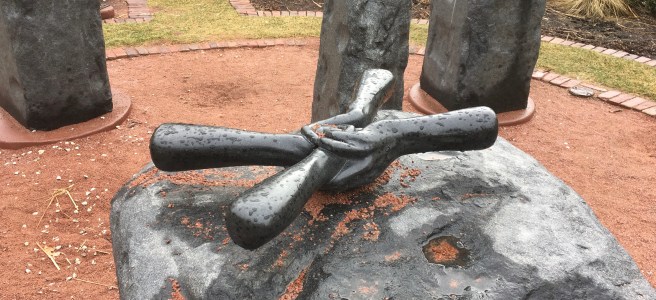
Jane Addams Helping Hands Memorial, Chicago
Years after receiving the note with the Seven Blunders listed, Arun added an eighth: Rights without responsibilities.
+++++++++++++++
Dr. Donella Meadows was an environmental scientist and early writer on sustainability who added to the list of social sins. A professor at MIT and McArthur award winner, sadly, she died too young, in 2001. Still her words fall in line with the call of H. Richard Neibuhr that we are to act as a Social Self — a Responsible Self!
“Somehow our public discussion has become dominated by either-or simplicities... This simplistic thinking seems incapable of embracing the idea of BALANCE, which was Gandhi’s central point. He wasn’t calling for work without wealth or humanity without science, he was calling for work AND wealth. Science AND humanity. Commerce AND morality. Pleasure AND conscience.
Life is full of unsolvable problems. Pretending to have solved them by choosing just one or another of profound opposites can generate even more blunders than the ones Gandhi listed. Justice without mercy. Order without freedom. Talking without listening. Individuality without community. Stability without change. Private interest without public interest. Liberty without equality. Or, in every case, vice versa. Listen to our public debates about health care, crime, taxation, regulation. You will hear the Gandhian blunders, the frantic search for a permanent simplicity, the passive violence that leads to active violence. There’s no point in taking sides in these debates. There’s only an opportunity to point out that balance, discovered through love, is what we should be seeking — and what we will always have to be seeking. (Donella Meadows, Sustainability Institute, 1994)
And we pray, not for new earth or heaven, but to be quiet in heart, and in eye, clear. What we need is here. (Wendell Berry)
If the presidential election, nine days hence, is to address the anxieties and despairing so many carry, it will require more than replacing one person with another. It will require more than changing the nameplates on office doors. It will require a transformation in us. It will require Sabbath. While many swamps may need to be drained, the primary swamp needing attention may be within the human heart.
Whatever the outcome of the vote, whether known in a few hours or several weeks, the temptation then will be to continue in the patterns and habits established out of anxiety, grievance and distrust. Sabbath will be required. Walter Brueggemann reminds: “Sabbath is the occasion to reimagine all of social life away from coercion and competition to compassionate solidarity. Sabbath is not simply the pause that refreshes. It is the pause that transforms.” (Brueggemann, Sabbath as Resistance, p. 44)
Lily Pond, The Huntington Gardens, 2015
I fear many things. I am anxious about much. Mostly, however, I desire to move from patterns of constant anxiety to another way of life. A way where I know the gifts of sabbath. The joy of rest, restoration, re-imagination and resistance. Joan Chittister wrote: “Sabbath is that period for holy leisure when I take time to look at life in fresh, new ways.” She encourages “contemplative leisure.”
Sabbath can serve as the great equalizer — it is a time when we are freed to set competition aside. As a great equalizer we are freed to recall that all share in creation; each other person is neighbor. Again Walter Brueggemann writes: The task is to SEVEN our lives. — On the Sabbath Day these vulnerable neighbors shall be like you. Sabbath is not simply a pause, but the occasion to re-imagine all of society away from coercion and competition. (Sabbath as Resistance, p. 43)
++++++++++++++++
A Jewish Sabbath Prayer:
Days pass,
Years vanish,
And we walk sightless among miracles.
The final presidential debate of 2020 was held last evening. I didn’t watch. Couldn’t watch really. Not because I had already dropped my ballot in the box with the County Clerk. More than anything else, I suspected it would be a pretty joyless exchange. Wasn’t interested in more distraction, grievance, dreary argument, spin, grumbling or blaming others.
Joylessness — this is what I anticipated from the debate. I am fatigued by it all. If the follow-up analysis offered by pundits is accurate, I guessed right. Apparently Mr. Biden attempted to tease Mr. Trump about being Abraham Lincoln. The president missed the humor, as he does about many things, especially if his fragile ego is threatened. The reruns from the debate seemed to confirm that even though Mr. Trump seemed to use his “in door voice” more than in the past, he still seemed to offer more vinegar and acid than balm.
Thinking back over the years, to sermons I have preached or talks I have given, I often spoke of joy, laughter, or delight. Why? Well, I think joy, laughter and delight are recurring marks of faithful living. We all face suffering, pain, burdens and betrayals, but at the core of it all, God offers us JOY. Or, as C.S. Lewis puts it “Joy is the serious business of heaven” (Letters to Malcolm: Chiefly on Prayer, p. 93).
Serving as an interim pastor in a couple of congregations that had passed through some challenging times, it was clear that in the face of difficulty, humor can help. Laughter can offer an antidote to despairing. After one wise layperson observed “we have forgotten how to laugh in our parish,” we offered an entire series of sermons entitled “Count it all joy: Faith Crowned with Laughter.” I invited other friends to come and join me in the sermon series and we each shared stories of times joy made a difference in our work. As Steve Allen once put it, “Humor is the social lubricant that helps us get over some of the bad spots.”
I was not attempting to follow the current trend suggesting that worship should be a time of entertainment or avoiding challenging topics. Heaven forbid! Just the opposite, in fact. Humor often is a good way to approach difficult topics. More than three decades ago, in the late 1980s, when a congregation I served made the decision to fully welcome LGBTQ persons, it was the laughter and joy that helped us move forward. It was joy and an ability to delight in the gifts others might share and the abundance already present that offered us hope. We didn’t do it perfectly, but we did act with respect for the variety of beliefs in that church. Someone recently asked, “how did the people in that parish act in such a courageous way?” I didn’t reply, but I know they didn’t act out of courage so much as JOY.
Meister Eckhart, the 14th Century mystic said, “God laughs out of an abundance of life, energy and love. I believe in a pleasurable, joyful, laughing God.“
++++++++++++
A favorite reflection comes from Wendell Berry’s collection of Sabbath Poems (A Timbered Choir, p. 18).
Whatever is foreseen in joy
Must be lived out from day to day.
Vision held open in the dark
By our ten thousand days of work.
Harvest will fill the barn; for that
The hand must ache, the face must sweat.
And yet no leaf or grain is filled
By work of ours; the field is tilled
And left to grace. That we may reap,
Great work is done while we’re asleep.

When we work well, a Sabbath mood
Rests on our day, and finds it good.

+++++++++++
Whatever happens on November 3rd, we have work to do. Our joy must “be lived out from day to day.” It is a relief that there are no more presidential debates to avoid. Now, could someone do something about all of the email, television spots and fliers that seem to appear daily in the mail?
This is my goal for the remainder of this Fortnight of our Nation’s Soul. I will remember the JOY of living as a child of God. I will sing (not in a public choir of course), I will dance a little, I will laugh, read poetry, call friends, encourage persons to vote and give generously to good causes. I will choose to be joyful.
In this fortnight of our nation’s soul, we reflect on Compassion, the human virtue of seeing the world as others do — and when there is distress — acting to alleviate the suffering of others.
There appears to be operative in some places of power and privilege a callousness toward others. One cause is what I would call a hardening of the categories. It is an atherosclerosis of imagination. It is a different type of heart disease, hardheartedness, the inability to see the world as others do and understand the challenges they face. More than a lack of awareness or lost sense of common humanity, it is a lack of desire to reach out to others. Not long ago we heard a lot about compassion fatigue. I wonder, was this an easy excuse to go on one’s way ignoring others in trouble?
Thomas Merton wrote “What makes the saints saints is a clarity of compassion that can find good in the most terrible criminals. It delivers them from the burden of judging others, condemning others. It teaches them to bring the good out of others by compassion, mercy and pardon. We become saints not by conviction that we are better than sinners but by the realization that we are one of them, and that all together we need the mercy of God.” (New Seeds of Contemplation and Connections 11/1/92)
As I pulled into the grocery parking lot I am confronted by competing categories of understanding. On either side are two cars festooned with bumper stickers. On my left among the stickers are the words “Christians for President Trump” and “Let’s Pray for America.” On my right a car with even more stickers. Not certain the political ideology of this driver, but “Are You Kind,” “Human Being,” and “Live the Life You Love,” cause me to believe the two drivers function in very different universes of reality. (Okay — it’s a university town — sometimes the stickers appear to be all that hold a vehicle together!)
In such a world filled with divided loyalties, how does one proceed? Frederick Buechner suggests, “There is only your own heart, and whatever by God’s grace it has picked up in the way of insight, honesty courage, humility, and maybe above everything else, compassion.” (Frederick Buechner, Whistling in the Dark, 81-82.)
Mark Feldmeir, pastor of St. Andrew United Methodist Church in Highlands Ranch, Colorado provides us with an outstanding resource during this Fortnight of our Nation’s Soul. His book A House Divided: Engaging the Issues through the Politics of Compassion offers wise counsel on how love of neighbor can be put into action (Chalice Press, 2020). You can read more at http://www.markfeldmeir.com/blog/.
Pando Aspen – actually a single tree.
Speaking of our commonality, Feldmeir employs the metaphor of the large Pando of Aspen, which is actually a single tree spreading over miles in Fish Lake, Utah. He writes: “Universal care, concern, and commitment fueled by creativity and collaboration are the keys to the salvation of the aspen grove. And to our own. We need the wisdom and compassion of the aspen that can only come from a deeper sense of connectedness and belonging, and a deeper commitment to the common good.”
The question before our nation in the Fortnight is whether we will have sufficient imagination to truly value and care for this gift, our shared life, this place of belonging where we all, already reside.
Thomas Merton put it simply (excuse the gender language insensitivity of the 1950s): “The man who lives in division is living in death. He cannot find himself because he is lost; he has ceased to be a reality. The person he believes himself to be in a bad dream.” (New Seeds of Contemplation, p.48)
Compassion is the circular system of human imagination, distributing hope to a world where hearts are open — to others — to all. For, like it or not, we are all one family.
In these days when the COVID 19 pandemic threatens and divides, the remarkable hymn writer, Ruth Duck, offers this verse of hope:
In Fear the World is Weeping
In fear the world is weeping, and longs with every breath. For life and hope and seeking, new paths beyond this death. And loving hearts are risking, their lives that we may thrive. Praise God for those who labor. O may they stay alive.
Our lives are bound together, in sorrow and in prayer.
In life and hope and nature the Holy One gives air.
Around the world show wisdom; with open hearts give care.A new world calls us onward; sing hope now everywhere.















 Hands of the Strong