Shoveling alone. It is the story in almost all our communities in the United States. The poorest of the poor are shuffled to the edges of our economy and end up living on the streets — or in jail!
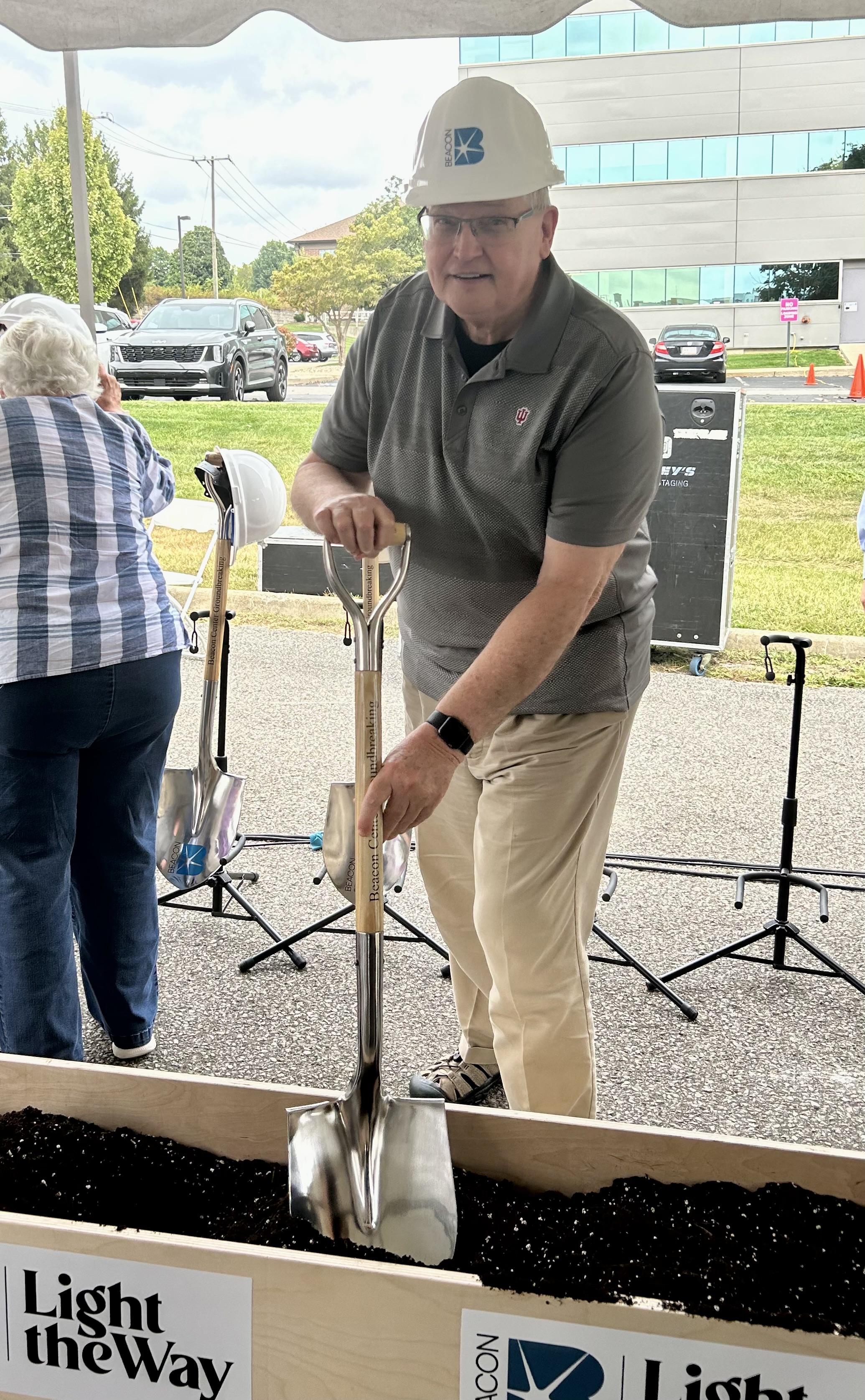
As I turned the shovel in Bloomington on a recent Wednesday, at the groundbreaking for our new Beacon center, I realized I was alone in that moment… no one on either side… but so many had gone ahead, and others would follow. Is it true in your community as well?
Not just on a given afternoon but across the years, I knew others in the faith community and beyond, who didn’t attend this groundbreaking… but who had ‘turned the soil’ of change in many places. They have been at this turning the soil, and turning our souls, in the past and will be in the future. In the process our souls are returned to an original place of hope and sharing among all.
I believe our local faith community, and others whereever you live, will do more in the months ahead, not just for places like Beacon. We must do this because our challenges cannot be fully handled by any one social service agency. Beacon, and similar agencies are a good, but insufficient response.
Bloomington Mayor Thomson is right, a comprehensive response to the challenge of persons without shelter is needed. Rise up now, faith communities and others, show more muscle, join in to assist the Emergency Winter Shelters, programs like Heading Home, the Recovery Alliance, New Leaf/New Life. Offer more mutual respect and support for all! The massive cuts to Medicaid will touch us all and especially the poor. Emergency rooms will be more crowded, retirement homes and clinics will close, healthcare will be rationed and delayed. Time for more to pick up the shovel and turn the soil toward the planting of new seeds of hope.
“When did we see you…?” the scriptures ask. “When you did it to the least among you” comes the answer. I live with the firm knowledge this shelter, even with a “better” setting where healthcare, employment assistance, public safety, addiction recovery and other resources, are provided is but a small beginning. It is not THE answer. Still, it is a needed step. Many can and will raise needed funds, offer to volunteer, and challenge public policy to do better… in God’s name.
The road is long and filled with twists and turns, social detours, myths about addiction, mental health and blindness to our own complicity in the “social welfare” practices in this country, and the misdirected, cruel political impulses and assault of so many in power in this time. Our culture lives with the myth of hero and victim. It is the “Hero Journey” story that Jung and Campbell identified as embedded in all we perceive as possible. It is so fully ingrained in our psyche and social systems that, sadly, we turn others into “clients” rather than “neighbors” and are more comfortable in speaking of THEY rather than with US.
It will take time — this turning the soil. Still as a Christian I recall the hymn refrain “We are not alone, for God is with us.” ‘Naive’ you say, of course it appears that way, of course. Others are using their constructions of false gods to continue cruelty. I know. That is why those who have theologies more tied to the larger, historic faith story must now speak the truth, afresh. Until some have seen a life changed, a person healed from addiction and communities moving away from cruel patterns of greed and domination, we are stuck. And, until a community is seen pulling together to solve such challenges, many will call me naive. I prefer to call it our shared hopes, foundational for the future — that we can care for one another. Check it out. This is a core teaching of Christianity and other great faith traditions. Interdependence is more essential to humanity’s long-term survival than independence.
Paul Farmer, remarkable physician and founder of Partners in Health (PIH) understood his life’s work as “The Long Defeat.” He said, “I have fought the long defeat and brought other people on to fight the long defeat, and I’m not going to stop because we keep losing. Now I actually think sometimes we may win. I don’t dislike victory. … You know, people from our background-like you, like most PIH-ers, like me-we’re used to being on a victory team, and actually what we’re really trying to do in PIH is to make common cause with the losers. Those are two very different things. We want to be on the winning team, but at the risk of turning our backs on the losers, no, it’s not worth it. So you fight the long defeat.” [From Tracy Kidder, “Mountains Beyond Mountains: The Quest of Dr. Paul Farmer, a Man Who Would Cure the World.”]
So, pick up a shovel, write a check, welcome the stranger, say ‘hello’, ask the stranger her/his name, smile… and keep doing it in your community, whereever you are. Keep at it, even when times are tough. My friend Wes Jackson put it this way, “If you think your life’s work can be accomplished in your lifetime, you are not thinking big enough!”
A block ahead of me, she slowly trod. She wears a blanket falling from her shoulders like a train dragging behind as if a royal gown. She turns at the corner, and I notice her bare feet. No crown, just matted hair from a rough night on the streets. Late March, evening temps were cool, but tolerable, I guess. Still a blanket helped warm from to the chilly breeze. Her gait made me think of her as “royalty on these mean streets” and I decided to name her ‘Elizabeth Rex.’
Another block, I have caught up and pass as we cross the street together. At the corner of Kirkwood and Walnut, she stops and slowly turns. The grimy blanket end has gathered sidewalk debris. Across from the Courthouse, near a restaurant I frequent, Elizabeth looked my way. Our eyes met and she quietly asks, “Do you know where I can get some shoes?” I asked her name and where she was staying. She said she lives on the streets. Had for nine years. I doubted that, but I didn’t want to argue.
Then from nowhere she says, “I’m an addict… a drug addict.” I nod and ask what she was using. “Meth, and some other stuff.” “It can be dangerous,” I say. I tell her that I have lost some friends to addiction. She nods. “What size shoes do you need? She stares into space for a long moment, then answers “nine-and-a-half.” I doubt this as well. Then, catching her eye again, I say there is a place nearby that can help. Have you heard of Beacon? She stares off in the distance and nods “no.”
Calling her name, which was not Elizabeth, I said I would ask someone to bring some shoes if she wished. She nod “yes.” I call Elaine and ask if she could find something in our closet. Elaine agrees and heads our way in her car.
I tell ‘Elizabeth’ that shoes and socks were on the way. I then said again, “We can take you to a place that can offer more help.” There was no sign of recognition, just that distant stare. We sat quietly for a few minutes near the crosswalk. Shortly a horn was sounding nearby. It was Elaine. I asked my new friend “Elizabeth,” if we could give her a ride to a place where she could have more help. Over and again, I pointed and told her about Beacon, a place only a few blocks away that could help. I opened the front door of Elaine’s Prius and invited her to take a seat. “No, no,” she said, “God doesn’t want me to ride in cars, NO!”
Taking the bag from Elaine the woman and I sat on a nearby bench. I gave her the bag with socks and shoes and a few other healthcare aids. She slowing pulled on the socks. The shoes were TOO LARGE but the best we had to offer. She put them on. I smiled, and feeling very Christian, I handed her a $20 bill. She walked away – and I, experiencing an all too familiar voyeur’s guilt, took a photo.
Then, to my surprise she turned and walked back. “Will you pray for me?” she asks. “Yes, yes,” I reply, “How about now?” We stood in the middle of the sidewalk and with my hand touching the royal blanket over her shoulder, I pray. I prayed for her as a beloved child of God. I pray that she would be delivered from her addiction. I pray that she would know health and the love of others and discover places where she would not be harmed. “Amen” we said together.
Then to my surprise she said, “I cannot take this, none of it.”. Handing me the $20, she sat down and removed shoes and socks. Putting them back in the small sack, she stood replacing the blanket over her shoulder she started away. I tried to persuade, “Please keep them, the socks and shoes.” There was that glazed stare, birthed from addiction, abuse, fear, illness, poverty, or all-of-the-above… and more. I tried again. “Why don’t I sit the bag over there?” pointing to a nearby site. “You can have it when I go away.”
“That would work,” she mumbled, repeating it over. I was pleased and sat the full bag on a step about 10 feet away. I left. Or I pretended to leave. I crossed to the other side of the street and hurried down the block. Using the corner of the old Ladyman’s Restaurant as a shield, I watched. I saw her pick up the sack. She stood a long time at the corner, then crossed to my side of the street. “Yes!” I whispered as I saw her carrying the bag. When she turned and headed my way I quickly retreated, out of sight.
I hustled past a church where I once served as the pastor, a quarter of a century ago, where we had begun a day center for persons without shelter. Turning east at the next corner, Fourth Street. I was out of sight, but “Elizabeth” and the millions of others like her, was not out of my thoughts.
What does it mean that our society cannot do better to aid persons without shelter, persons who struggle with addictions or mental illness? What does it say about effectiveness of congregations, like this good one, that there are more persons on the streets without shelter than there were twenty-five years ago? What does it say about me? My city? This university town filled with all our so-called experts? Why am I still so clumsy in honoring the humanity, the divinity, the royalty, of persons like Elizabeth?
Like hundreds of cities across the United States, Bloomington, Indiana, my home, is a place where we face the challenge of unhoused persons surviving on our streets. Because we are a generous and caring community, our town is seen as a place of welcome. Sadly, it is also a place where the number of persons facing chonic homelessness continues to grow and our resources fail to offer hopeful ways forward.
What follows is a column for our local newspaper, The Herald Times. Perhaps there are some ideas here that could be of value as you seek to offer responses in your communities. Perhaps you have some suggestions that you can share to be helpful to us. Here is the column:
Missing Ingredients in Housing Assistance Plans
On Tuesday evening August 6th the Bloomington City Council received a “comprehensive” Housing Action Plan. It was presented by Bloomington Mayor Kerry Thomson, Mary Morgan, the director of Heading Home of South Central Indiana, and advocates from several service groups. It is an ambitious six-year plan designed to make street homelessness “brief, rare and non-repeating.” It is indeed a dramatic and critical step in the right direction, but comprehensive?
The plan is bold. As The Herald Times reports, it proposes “significant” investments coming from “multiple” sources. It will require increased dollars, imagination and durable civic commitment. The report is found at: headinghomeindiana.org/news/housing-action-plan/. It deserves the community’s immediate endorsement and financial investment. Seeking 1,000 low-rent housing units by 2027, and 3,000 such units by 2030, is a HUGE challenge. Adding ten additional Healthnet street outreach staff and many more case workers at existing homeless services is appropriate. We need such a commitment.
The idea of a moratorium on helping unhoused persons from out of town for a period is strong and distasteful medicine. Even so, it may be what is required while other communities, and the State of Indiana, do not act in more caring ways for the vulnerable among us all. A temporary moratorium to regain a balance and offer sufficient safe housing, healthcare and see an end to persons living on the streets deserves exploration. Such a step, so long as the commitment to dramatically increase low-income housing is also accomplished, could serve as a model for other communities in Indiana and beyond.
STILL, this is not a “comprehensive” plan. It is good. It is bold. It includes parties that have stood too long on the sidelines, parties like Indiana University and I. U. Health. But is it “comprehensive”? Nope, don’t think so.
Three elements are noticeably missing:
First, how will each of us, as citizens, in Bloomington, act in new and meaningful ways to support such a plan? More basically, how will we behave to understand that “these people” seen as “problems,” and “outsiders,” are part of us, our tribe, our social network, our family? As Kevin Adler and Don Burnes write in “When We Walk By: Broken Systems and the Role We Can Each Play in Ending Homeless in America,” the people we see as foreigners are persons with families – often they come from nearby biological families, and all are certainly a part of our larger human family. What reading, thinking, acting, praying might we do together as citizens to provide a witness as to a better way?
Second, aren’t faith communities essential in providing motivation, resources, volunteers, leadership, imagination and even shelter space (emergency and longer-term)? Why are they not at the planning table? Yes, a few “religious groups” are mentioned as “providers;” but I would argue any comprehensive plan would include faith communities as essential “stake holders” and critical to the designing and implementing any sustainable plan. What if this is not simply an economic, addiction or heath care issue? What if it is a spiritual one as well? By this I do not mean to suggest a moral failing of those without shelter, but rather, a spiritual failure of our community and nation. The irony, of course, is that many, dare I say most, of homeless assistance resources in Bloomington were initiated and have been largely undergirded by faith-based vision, volunteers and financial support. A good case can be made that faith groups and leaders have been missing-in-action in recent years as we have been too focused on our own congregations with too little focus on being good neighbors. Oh, there are some fine individual congregational programs, but working with others in a coordinated way? Not so much.
Finally, and perhaps most importantly, there is no mention of how persons identified as “homeless” will be engaged in envisioning and implementing a “comprehensive” plan. Many, many, who are currently living on the streets bring gifts, insights, connections and experience to assist in making homelessness “brief, rare and non-repeating.” These folks without shelter have names. Any plan needs to be imbued with an understanding that working with vulnerable persons is critically different from doing for “them.” Rather than clients, patients or “the needy,” what might we do to act in ways that find a space where all of us can act as fellow citizens?
The Christmas story speaks of a family without shelter. Mother, father and newborn child they are. The record says they found refuge in a stable, a barn. They were on a journey, seeking a place of safety and stability. In our cities and towns, along our borders and spread across our world are those who seek shelter still. There are many efforts to respond.
Attached is a podcast on homelessness. Our daughter, Lydia Murray, who is a Managing Director with Deloitte consulting is one of those interviewed. Apart from being proud of Lydia and eager to share her wisdom with others, I believe the listener will find a respectful, up-to-date overview of resources and some ancient wisdom in this resource. Perhaps you can take a moment during the Christmas season to listen and learn how to better respond with those on the edges.
Would compassion please step forward and state your name? “We will swear you in. Is the testimony you are about to give the truth, the whole truth, and nothing but the truth?” One by one they came to the podium. It was the city’s Zoning Appeals Board. Eloquent supporters of a new, relocated homeless shelter they were. It would offer services for the thousands living at the ragged end of poverty. Beacon, Inc. (Shalom Community Center), is a frontline community service agency responding to homelessness, hunger, health issues, addiction and more.
One by one they came supporting a larger and better shelter: more beds, food service, health care, employment assistance and more. Supporters cited statistics. Staff offered early architectural plans, reported on meetings with neighborhood residents and shared stories and poems written by persons living-on-the-streets.
Only one couple spoke in opposition They lived nearby and shared concerns about potential dangers and possible loss of property value. Clearly the folks at Beacon, especially the center’s director, the Rev. Forrest Gilmore, were prepared. Gilmore had previously met with the couple who were opposed. He spoke of his commitment to continue to be in communication with them and others in the neighborhood. They were appreciative.
It was an impressive thing to see, this well-planned and open-hearted expression of compassion. Well done, Beacon! There are still more plans to be made and many dollars to be raised. Even so, this is a BIG STEP in the right direction that might open as soon as 2025.
Compassion stepped forward. Still, I left aware many voices were missing-in-action.
Where was the faith community? Yes, Rev. Gilmore is an ordained Unitarian pastor; but, apart from him, there were no other faith representatives speaking. Is this not a concern in our congregations? I might have said a word. After all, Beacon’s earliest manifestation began in the 1990s when I was pastor at First United Methodist Church. A day-center, Shalom, started in the fellowship hall. It grew and improved in outreach. It is a gift to see what has developed over these decades. Even so, there was a hollowness in my chest as I wondered about the absence of other voices of faith today.
Where were the voices of those who struggle with homelessness now? Like so much that goes on in our liberal social service worlds, the truly poor are too often turned into voiceless objects. Recently I asked leaders working on homelessness in our community how those who are currently on the streets, or who have recently found a residence, were given voice in meetings and in planning? I was told it was “difficult to do” and “being worked on.” Okay; but in other cities they have found a way to listen to folks at the margins. I have asked leaders at the hospitals a similar question. Our institutions are better designed to fix someone than to listen to them or know them. The good folks at Beacon listen and respond; they seek to include. Others, many of us, who “care” seem to take the “it’s not my job” approach when it comes to listening to and knowing those who are “being helped.”
Where were the university representatives? Some national experts on homelessness teach in our nationally ranked business and public policy schools. And what of the administration and student leaders? Will they swear to “tell the truth and the whole truth” regarding homelessness in our city? As in many college towns, our real-estate market is overwhelmed, and rents are soaring. Multiple new apartments and condos are occupied by persons who do not work here. The university has backed away from offering more residential space, in large measure because students are wealthier than in the past. They now expect more than a dormitory room. Can the university’s mission be wide enough to teach about justice and good citizenship even while in school? Apartment complexes have mushroomed with rents well beyond what many low-income and even working-class folks can afford. Does the university care about this consequence of their decisions?
Where were the leaders in the current city administration? Where was the mayor or his representative? We have watched as plans and promises for workforce and low-income housing languish and are often placed on the back burner. Meanwhile, out-of-town developers build quickly, take their profits, and have little else to do with this community. Thankfully the likely new mayor has made housing for each, and all, a top priority. She speaks of building coalitions with a vision for a more welcoming and just city.
Perhaps we ALL should have been sworn in and asked to speak “the truth, the whole truth and nothing but the truth.” I left the meeting wondering if there will be a demand for a larger facility twenty-five years from now. Or might we move toward new ways of thinking and acting. As we build this new homeless facility, might we explore more comprehensive and collaborative ways of being a community that welcomes, listens to and values all?
Compassion is a fine attribute and friend. However, this community is going to need more. In the short term, there is the need for financial support so that the new Beacon facility and its programming can become a reality as soon as possible.
Compassion is a good thing. Might the time arrive when we ask the sister of compassion, named “justice,” to come forward and testify on all our behalf?
Matthew was gone. I was heading back from my morning walk. He had been there an hour earlier, just pulling back his bedroll and stretching from his “outdoor shelter” on the porch of the old train station downtown.
Earlier, when I passed him, I spoke “Good morning.” He smiled and said “morning.” I saw his lovely blue eyes and his gaunt frame. “What’s your name?” I opened. “Matthew” he answered. “I’m Philip.” He laughed and said “Two disciples.” I replied, “Yep, two followers of Jesus.” “Right, right” he affirmed, “You or I wouldn’t be here without Jesus,” he said. He paused and chuckling went on “Or, our mom and dad!” We did a fist bump as I headed on to meet my walking partner for the morning. Looking back I said, “I’ll see you later.” “You bet, Philip, nice to meet you.”
When I returned to the place, an hour later, Matthew was gone.
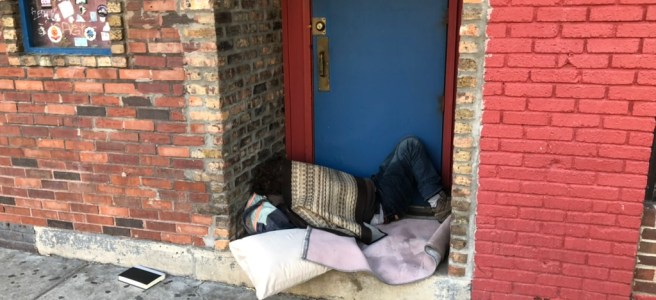
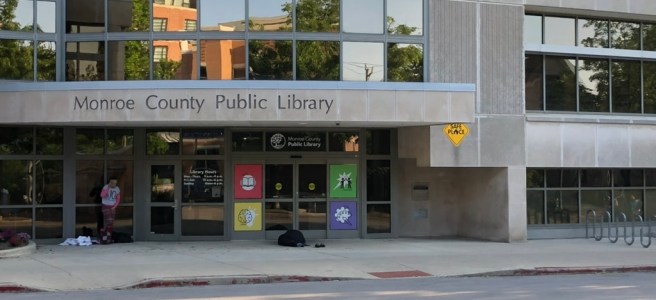
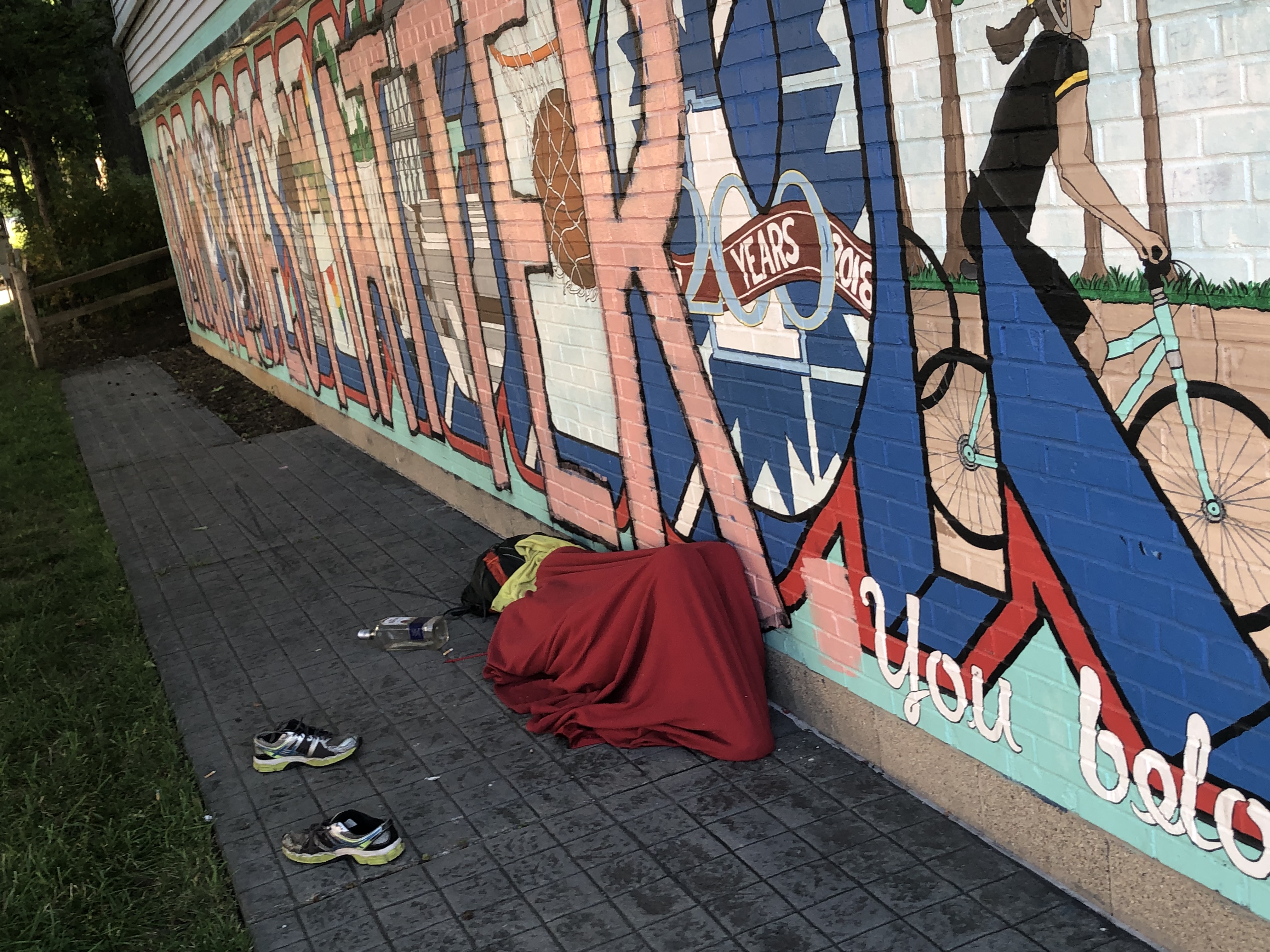
Like cities all across the nation our streets and wooded edges of neighborhoods or shopping areas are filling with unsheltered folks. Oh…Bloomington has plans… lots of pie-in-the-sky plans. Meanwhile the unsheltered sleep on the streets and in doorways of our public buildings. (See photo of one early morning this summer in the doorway of our public library.)
Maybe there will be more support for our existing shelters, and residences, maybe. These PLANS talk of “housing first.” But, where is the housing? We build great high-rise plans but little low-income housing. Thanks to the Chamber, Mayor and Community Foundation we have PLANS, Plans, plans… but not shelters. Dozens and dozens of new higher-income housing developments spouting up all over town. The university expands its enrollment dramatically but has done NOTHING to address the residential challenges it has helped create for low income persons.
Could we consider looking at models like Community Solutions that use abandoned spaces to make an immediate difference. We have lot’s of empty buildings, that, well, sit empty — with bathrooms in each (some former retirement centers, former medical facilities) that will “someday be razed” as the old hospital site is being “redeveloped.” Buildings are sitting empty during these years. We have empty buildings and PLANS but no facilities for my new friend Matthew. (https://community.solutions/)
Here is my challenge, my question for today. Where will Matthew sleep come December? I think we know. So, let me challenge the Mayor and City Council, County Council and Chamber and Community Foudation and Police Chief and leaders of our hospitals and health care centers. Will you make a commitment to spend a night or two sleeping on the street come December 16 and 17th? It’s the weekend before Christmas — good time to meet some other persons who are “disciples” and experience what they experience each evening. OR, perhaps some of your PLANS might include finding shelter (old or new, re-purposed or not) NOW! Can you include doing something NOW for the unsheltered in our city. Matthew, the disciple is asking.
Bloomington, Indiana is a lovely college town; I’m an unabashed booster. The name “Bloomington” is no accident. Tree-lined streets, parks and flower gardens are in abundance. Playgrounds and walking trails dot the city. At the community’s heart is the lovely campus of Indiana University. There is abundant and diverse fine music performed. Museums, libraries and theaters, research centers and multiple dining options are sprinkled in the mix. Surrounded by forests, lakes, farms, vineyards and orchards it is where natural beauty finds a home.
“Welcome Gates” Downtown Post Office
Natural beauty resides comfortably in Bloomington – Beauty resides here more easily than some of our people. People without shelter, who due to heath or economic realities, are left with no option other than life on the street. Perhaps the ugliest addition to our community is the 8-10 foot fence that has been placed around the downtown post office. The fence is festooned with threatening signs. Gates are locked tightly every evening. “No trespasing” is posted and one can’t even find a place to drop a letter in the mail. Forget it if you wish to walk up to a drop box or pass a drive-through box after hours. Why the ugly high fencing and all the horrible signs?
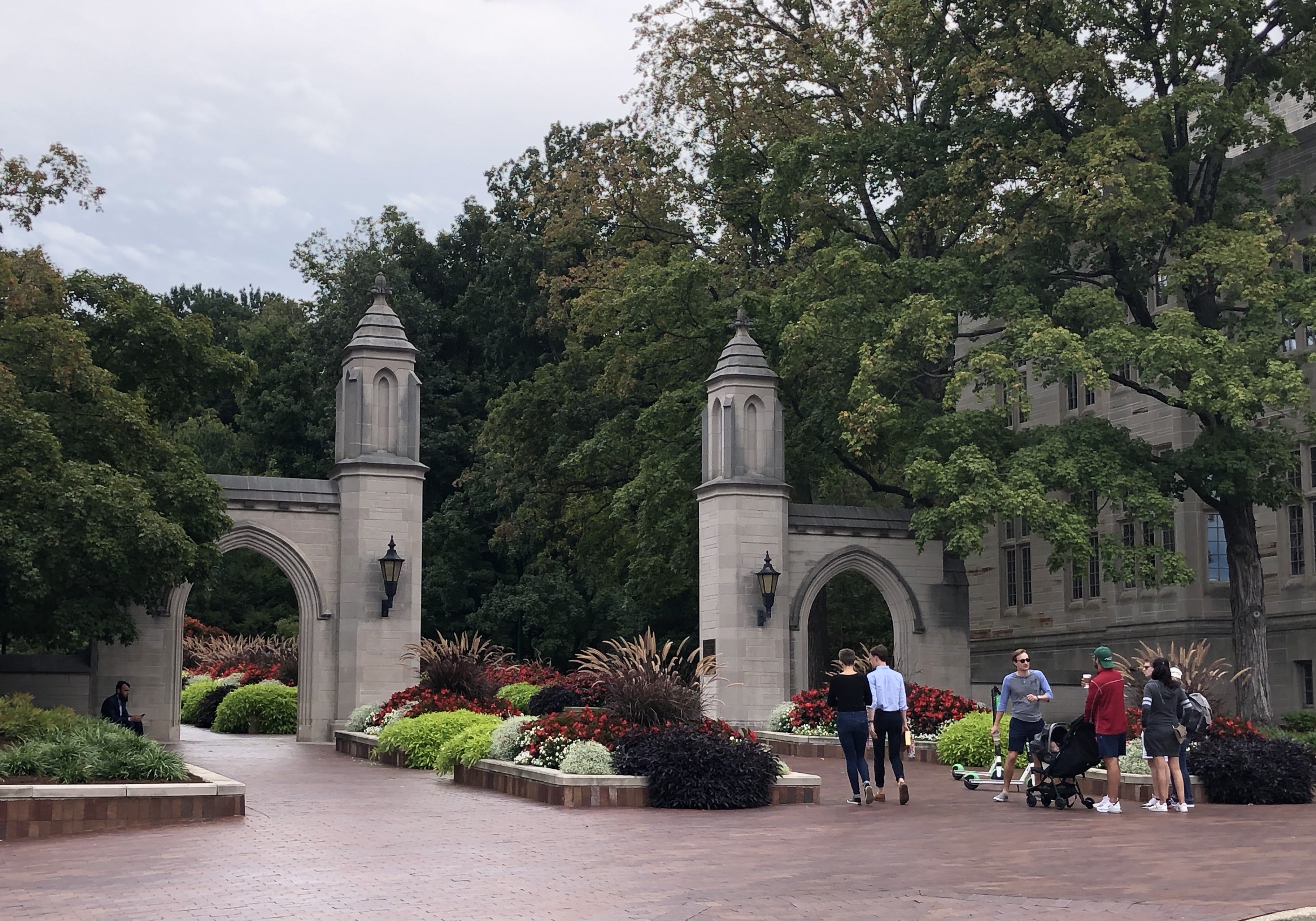
Near Sample Gates 6-27-22
You see, this post office is now “off limits” in the evenings because it is next to Seminary Square Park. Seminary Square is registered as a national historic site. It is the location of the first campus for what would became Indiana Univeristy. In recent years Seminary Square is where many unsheltered persons chose to gather; many camped there until city officials began to disperse them. The result? Folks are now scattered, sleeping on sidewalks and being rousted from one doorway or storefront to another. Where are efforts to bring ALL the stake holders together — including the unsheltered — to find new ways forward? I am told “there are plans”. If so they are not well known in the city. How many millions of dollars have been spent on street improvements so that streets can now be closed off for dining, or for new bikeways to encourage such travel? And, why has such little thought been given to developing more places for the unsheltered? There are wonderful nonprofit programs designed to assist unhoused persons (Beacon Inc. – Shalom Center and New Hope for Families, for example) but these folks have limited palliative options and must focus on the most dramatic examples of this challenge.
People’s Park, near Sample Gates, 6-27-22
A first-rate new IU Health Bloomington Hospital facility recently opened on the east side of the city; the hospital having completely abandoned its downtown location. Now that old facility is… you guessed it… FENCED off. Plans for re-use or redevelopment are slow to unfold and little has thus far been announced. Yes, redevelopment is complicated, and to do it well takes time, but what of those who could benefit from a dry and safer space to sleep in the meantime? And what of any new outreach initiatives from the fancy new I.U. Health facility? Any annoucement of outreach to address mental health and addiction issues faced by many of the unsheltered sleeping on the street? What of outreach to those no longer at the hospital’s doorway? If the past is prologue, in ten years, the old hospital site will become commercial property or another upscale housing site — and we will still have the unsheltered fenced out.
WE CAN AND MUST DO BETTER. Bloomington claims to be a civically engaged and imaginative place where democracy is valued. Let’s prove it by the way we live together. Ugly fences do us no pride. Hundreds of millions of dollars have been, and will be spent, on building new apartment/condo complexes. The university is spending millions to provide shelter for students. Where are plans to include alternative housing options for the unsheltered now and in future? Other cities face similiar dilemmas and are offering creative alternatives. I have never thought of our Bloomington as a laggard… until recently.
Now, please understand, as an pastor for more than fifty years, one who has lived and worked in impoverished areas, and with many persons without shelter much of my adult life, I get it. I have no doubts that the troubling reality of insufficient shelter and healhy options FOR ALL is extraordinarily demanding work. And I know there were incidents near the downtown post office (perhaps dangerous ones) that lead to the fence being errected and the park being cleared each evening. Even so, let’s be clear, this is the message being sent: “If you are an unsheltered person, you are unwelcome — you are locked out.” Bloomington is a beautiful city, mostly. It’s time to do better.
Dateline: September 30, 2021, Bloomington, Indiana.
There is an old adage “success has many parents, while failure is an orphan.” Last evening folks gathered on the lawn of the county courthouse in our town to remember the thirty-two persons who had died without adequate shelter over the past year. No doubt others threatened by poverty, addiction, or hunger had also passed away. They were not known. This likelihood was mentioned; homelessness cycles for millions continually in our society. Where is there hope?
Joe Emerson and Sylvia McNair at the Service of Remembrance, September 29, 2021
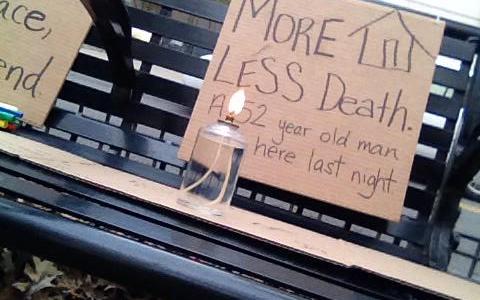
Candles were lit and small placards with the names of the known deceased were placed on the courthouse lawn. There were prayers, poetry and singing as several dozen folks lifted their candles in remembrance. The Rev. Forrest Gilmore, Director of Beacon Inc in Bloomington (an antipoverty program that grew out of, and includes, the Shalom Center Shelter) lead the service. Politicians spoke and a family member shared the important words, “We miss her. A hole is left in our hearts. Forgive yourself and others.”
It was an inspiring evening. The Rev. Joe Emerson, now approaching his 90th birthday, opened in prayer. He had first suggested such a service of remembrance back in 2004. Joe prayed. My thoughts went back to the United Methodist General Conference in 1992 in Louisville, to the beginnings of what became known as Shalom Zones. The 1992 Louisville Conference occurred as the trial of four police officers involved in the tragic arrest and beating of Rodney King was concluding. As the “not guilty” verdict was read, rioting broke out in Los Angeles. It was April 29th, midway into the two-week denominational conference, held every four years. How should the church respond? Those gathered in Louisville took their cue from the Rev. Joe Hyun-Seung Yang, a pastor in Los Angeles’ Koreatown, near the riots. Yang had set up a “relief center” that became known as the Shalom Community Center. Shalom, a word from the Hebrew Scriptures meaning peace, wholeness, safety, health.
In Louisville that week the Rev. Joseph Sprague from Columbus, Ohio (later a bishop serving in Chicago) proposed a Shalom Initiative. Civil rights leader the Rev. James Lawson and his brother the Rev. Philip Lawson, both delegates, rose to speak in support. The vote was overwhelmingly in favor. Within hours a denomination-wide program calling for “Shalom Zones” was adopted and funded. Shalom Zones were to be established around the world as places where persons in poverty could find safe space to build communities of hope and restoration.
In Bloomington, later that year and in years following, we began to pray, confess our failings, study and hold conversations on the biblical notion of Shalom. We challenged one another to address the broken places in our society, in our city. How might we respond? Make a difference? Many initiatives followed. Financial offerings were taken and shared; the church kitchen was used to provide meals for the hungry, clothing was collected and shared. In 1999 the church provided funds for one of the early Habitat for Humanity houses built in the city.
A day center for the homeless was up and running in First United Methodist Church’s fellowship hall by 1999. Here, persons could get mail, use a phone, have a meal and simply stay safe and warm. The need for more overnight shelter remained. Many incredible lay people in the congregation, and beyond, struggled to make a difference for those on the streets. Change, enduring change, needed a persistence practiced by the actions of lay persons. This was much more crucial than sermons or study times led by the pastor. The day center was given a name — it would be the, naturally, the “Shalom Center.” Lay persons, like Indiana University Economics professor Philip Saunders, joined dozens of others who began to widen the vision for what might be possible. In fact, the feeding program at the Shalom Shelter, in 2021, twenty-four year’s later, is known as Phil’s Kitchen.
At the service last night, a fellow approached and surprisingly called my name. It had been more than twenty years since we met in the late 1990s. Having overcome the challenges of addiction he had faced earlier, this man was now helping others. We laughed as he reminded me that many on the streets didn’t adopt the name “Shalom Center.” Instead they slurred the words, using street humor, they teasingly called the fellowship hall arrangement the “Slum Center.” These folks knew, and we knew, we could do better. Thankfully as the years passed many others joined together to do better. They persisted. Something much better has emerged.
I hear other origin stories about these beginnings of the Shalom Center in Bloomington. Each narrative holds its own truth… there have been many sources of action and investment. The sacrifices and generosity of so many since 1992 have made a difference. Prior to the 1990s there were already many fine service organizations (e.g., Monroe County United Ministries and Community Kitchen) assisting persons facing the brutal results of relentless poverty and non-available shelter. Today, even more organized resources are offered in the community through social service groups and government programs.
Yes, success has many parents. One must ask, has this truly been a success? Well, yes… and no. No doubt many lives have been saved and new beginnings discovered. Still, at least thirty-two of God’s children died on the streets in our town over the last year. That’s not the mark of success. Such an assessment is true in almost every city in the nation. Last night, I heard the politicians speak of aid that has been offered and I often read annual reports of the organizations in our city like Habitat for Humanity, New Hope for Families, Wheeler Mission and the Bloomington Housing Authority. Good, good and very good on them all. Still, still, still, there is yet a shadow over us. Thirty-two died without housing last year — this we know. Shalom Zone activities begun in Louisville in 1992 continue around the world. Scores of places have benefited through dozens of projects in the U.S., Asia, Africa, Europe and Latin America.
Rev. Ingrid McIntyre, Glenncliff Village, Nashville
Even so, in this nation and in my community, homelessness persists. We seem stuck, forever overshadowed by the tragedy of persons without safe housing. Many in our nation seem forever caught up in ignorance, bad theology and lousy public policy, devoid of humane responses to addiction and poor mental health. We must not fall into the trap of believing homelessness is about an individual’s moral failings, as so many seem to think; rather, these without shelter are evidence of our society’s moral failings, failings of our community, our economic and political choices.
How to move beyond the shadow? There is, as the scriptures say, a “great cloud of witnesses” showing us pathways forward. There are persons with a broader vision, a better response. In my city there is a “Heading Home” proposal that offers the better linkage of resources, more housing and earlier, more appropriate, and sustainable, interventions to persons in such crisis.
Across the nation, others point the way, typically these days initiatives are ecumenical and/or interfaith in nature. For example, note the work of folks like Ingrid McIntyre in Nashville, the Rev. Ingrid McIntyre, co-founder of Open Table Nashville, which seeks to “break the mold of what people call the church.” Rev. McIntyre led in the building of twenty-two micro homes in a Nashville neighborhood known as The Village at Glencliff. These are shelters for “medically vulnerable neighbors who are chronically homeless” as they wait for permanent housing. The homes form a sacred halo around Glencliff United Methodist Church. I can’t help but think about other churches, scores of them, where tiny houses might be built and homeless persons having interim shelter and linking the gifts of the congregation with those who need shelter.
Lincoln Park Community Services, 2020
In Dallas, an ecumenical initiative known as CitySquare has over these past twenty-five years grown from a food pantry into offerings of legal aid, to job development, housing rehab and the building more fifty tiny houses for those needing short-term housing while persons deal with addictions and other health issues.
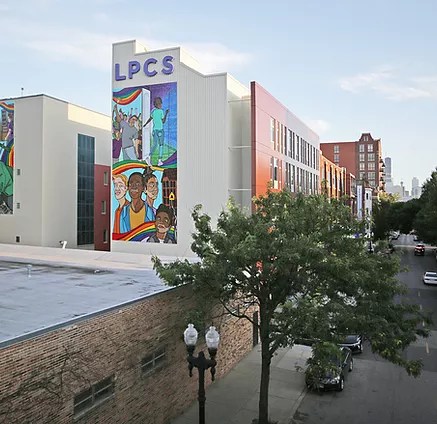
In Chicago a group of churches joined together to build a new facility for Lincoln Park Community Service offering interim housing and job counseling for more than 120 residents.
This is a tiny window into the work of persons who are working to end homelessness. Each one is essential to ultimately addressing the challenge.
Finding room for the unsheltered can seem overwhelming, I understand. Even so, I join the Israeli novelist Amos Oz who suggests that when confronted by huge, seemingly intractable problems (like the fanaticism and hatred held by many Palestinians and many Jews in Israel), a productive option is to join The Order of the Teaspoon.
Oz writes that when facing an enormous, tragic situation, like a conflagration, a fire burning out of control, there are three options: 1) Run away; 2) Write an angry letter to the editor; 3) “Bring a bucket of water and throw it on the fire.” He goes on, “and if you don’t have a bucket, bring a glass, and if you don’t have a glass, use a teaspoon — almost everyone has a teaspoon.” Oz Amos [“how to cure a fanatic,” Princeton University Press, 2006, pp. 93-95] asserts that if millions who have a teaspoon form the Order of the Teaspoon to join in taking on enormous challenges, dramatic change is possible. [Homelessness is an enormous problem but small when compared with others like the Jewish/Palestinian divide which is the conflagration to which Oz Amos is pointing.]
Too many will sleep unhoused tonight on the streets of my city or town, and yours. Might we continue the vision of Shalom Zones begun thirty years ago — and, actually, centuries before that — [insert your own scripture here — there are dozens from which to chose]. What if we each brought our teaspoon to dose the fires that leave us in the shadow of the unhoused? So, please, find a place near seeking to make a difference. Persist, you and your a bucket of difference-making support, or add glassful or a teaspoon of support toward ending homelessness.
It offers insight into the ways human kindness can shape our future. Do more that wait on election returns or some miracle cure. Call a neighbor today, or find a place where you can help, or sponsor a viewing of this film even if it is via an online format.
Among other initiatives it provides a view of the work of The Learning Tree with DeAmon Harges in Indianapolis.
We have been offered a magic pill — Hydroxycloroquine. We are told by “him-who-will-not-be-named” that he takes “a pill daily” to protect from infection by the COVID-19 virus. This simplistic prescription is mimicked by Brazil’s President Jair Bolsonaro. Both men share certain anti-scientific, anti-democratic tendencies that result in disasters for their nations whether environmentally or in terms of public health. Brazil and the U.S. now lead the world in deaths from the corona virus, surpassing Italy, Spain, Russia and the United Kingdom. Still, these two men propose simplistic answers to complex challenges. Sadly this is accepted by millions as reasonable. Why not? It is easier than taking the time or thought to offer complex options that are more difficult to implement.
This prescription of C₁₈H₂₆ClN₃O as the magic pill would be sad enough, if it didn’t point to the multiple ways good science is being undercut in other human arenas. Quality scientific work is complex and, if done properly, usually doesn’t result in a single, easy-to-use form. However, hucksters across time and around the world still suggest they have the magic potent, “the cure.”
Like the salesman “Professor Harold Hill” in the Broadway Show The Music Man, contemporary hucksters abound. Often what is being sold can be beneficial, if used wisely. Hydroxycloroquine, medical research has demonstrated, can be beneficial to folks struggling with malaria or lupus. Now research shows that “this magic pill” may do more damage than good. Just as young people learning to play band instruments, as “Professor Harold Hill” prescribed to the good folks of the fictional River City, Iowa the remedy misses the mark. However, seventy-six trombones, new band uniforms or even one-hundred-and-ten-coronets are hardly effective cures to the so called social diseases as diagnosed by the huckster. A marching band might engender appreciation for music and even civic pride but will do little to change the behavior of young folks hanging out in pool halls or gambling on horse races.
Every day, I am amazed by the hucksters who deny research, good science and even basic logic. The simplistic solution is offered where other positive actions could be taken. There are so many ways we could act rationally that can make a difference. Instead of taking a daily pill, what if “he-who-will-not-be-named” modeled a healthier alternative and actually wore a mask, worked to provide a national testing and vaccine options, let medical experts speak openly to the nation or demonstrated compassion and wisdom for those who are suffering. No — that would be too complex, too scientifically informed.
I watch phony cures being offered in other venues. We keep seeking the “magic pill,” the simple answer to complex problems. For example:
What if we decided to seek a well-reasoned response to climate change? This would mean a comprehensive program moving away from fossil fuels. It would mean rebuilding infrastructure so some future tragedies like the dam failure this month in Michigan might be avoided as altered weather patterns bring more rain and floods.
Or, what if we addressed the need for universal health care? Tens of millions are suddenly out of work and without health insurance, isn’t this the occasion to move as a nation to address health care for all rather than simple encouraging “reopening” to get back to a “normal” that will leave tens of millions without health benefits?
Or, what if religious leaders stopped prescribing the “magic pill” of congregational development, or the perfect traditional doctrine, or a new leadership initiative or a restructuring? What if instead we focused on listening to and connecting with others, especially the poor? What if focus turned outward rather than seeking the one magic remedy of propping up their ever more irrelevant institutions?
What if as a nation we decided to offer safe housing to every citizen and stopped relying on shelters for those who languish in our alleyways, out-of-sight skid rows, or living out of a car?
What if we followed the excellent research available regarding opioid addiction and instead of making it a moral failure, or something that leads to imprisonment, we understood this as a health and medial problem?
We have done many remarkable and complex things before as a nation, in our corporate life, in our health care and religious institutions. There are examples like establishing the interstate highway system, public education, the Marshall Plan, the polio vaccine, the G. I. Bill, religious and legal circuit riders, or Medicare. The list goes on and on.
For now, however, I fear we are destined to a future where the small mindedness of magic pill thinking will prevail. We have moved the small-minded, ideologically rigid to the front of the line in too many arenas. It is the choice offered by too many political, corporate, healthcare and religious hucksters all eager to protect their power and profits.











 Hands of the Strong