The Transformed NonConformist (#4)

The Transformed NonConformist

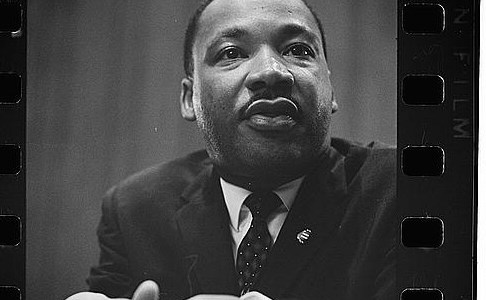
In November 1954, Dr. Martin Luther King Jr. preached his inaugural sermon at Dexter Avenue Baptist Church in Montgomery, Alabama. In retrospect, it was his future ministry’s thesis statement[i].  His text?  Romans 12:2: “Do not be conformed to this world, but be transformed by the renewing of your minds, so that you may discern what is the will of God—what is good and acceptable and perfect” (NRSV). The sermon was titled “The Transformed Nonconformist.” He was proposing that Christians sometimes needed to act in ways that didn’t always “go along to get along.” Civil, nonviolent nonconformity, was a preferred option when democratic institutions failed, and discrimination continued unabated.[ii]

There were scores of other faith leaders, expressing such a witness, prior to and alongside of, Dr. King.  The church had a rich history of persons acting as Transformed Nonconformists.[iii]  Urban Training Centers were active across the nation in the mid-1960s, most notably in Chicago, Detroit, and Cleveland. There were many models unfolding ranging from the East Harlem Protestant Parish in New York to Church of the Savior in Washington D.C., to Operation Push in Chicago. In Boston, Cleveland, Nashville, Atlanta, and Los Angeles such efforts were institutionalized and often funded by mainline denominations.  In the rural south there was the witness of the Koinonia Farm in Georgia and Voice of Calvary in Mississippi.[iv]

In Indiana the Rev. Luther Hicks in Indianapolis founded Dignity Unlimited. Hicks, a pastor, also set up work with youth in a storefront outreach effort near Shortridge High School at 34th and Meridian. Hicks was arrested on several occasions for leading nonviolent protests over racial injustices. Urban legend has it that the “Methodist” bishop would call the “Methodist” mayor to intervene.  Hicks’ crime?  Seeking to de-escalate possible violence and “promoting patience and reason.”[v]

In earlier decades, Gary (Indiana) Central Methodist Church championed racial justice efforts as the Reverend S. Walton Cole encouraged members to confront their own prejudices, welcome new members from diverse backgrounds and march in demonstrations for equal pay and education. At Trinity Church in Muncie, Indiana, Rev. J. C. Williams’ activities in Civil Rights struggles lead to his candidacy for Mayor of Muncie as “Poor People’s Party Candidate”[vi]

Back to Evansville, and to the topic the closing of desegregation and the closing of inner-city schools, the counsel “You cannot fight city hall” was heard, and it was reframed to a need the importance of speaking directly to school administrators.[vii]  In the process, changes did come.  Culver School was not closed, and a new building was constructed. Elaine Amerson was elected to the county-wide school board where she served for eight years, three of them as board president. Resources that had been heavily directed to suburban schools were shared more equally across the school system. And, yes, county-wide busing did occur, while at the same time several “naturally racially integrated” schools continued to serve a neighborhood.

Despite the range of these efforts, little research, or documentation of the import of such faith-initiated efforts at transformation has been produced. Dr. King’s legacy endures. It has been revived by persons like the Rev. William Barber II. Taking a longer view, while significant advances have occurred, perhaps a deeper and wider story has gone untold.[viii]  There has been little reporting on the breadth of the many faith-based activities.[ix]  

Denominations have turned inward. The slow and critical work of building up neighborhood parishes appears pushed to the sidelines. Examples of genuinely interracial and multicultural congregational life are little-known or valued only at the margins in Mainline Christianity. The death of Dr. King in 1968 dealt a severe blow to the call made to the church in his “Letter from Birmingham Jail.”  The time of Non-conforming Transformationalism abated but it has not disappeared.

In the wider culture, since Dr. King’s death, change has come fast and hard, resulting in questions as to the relevance of the church and much handwringing among church leaders. A decline in attendance began in the late 1960s. Baby Boomers emerged as a new and different demographic. At colleges and congregations on university campuses interest in church attendance declined dramatically at the end of the 1960s. Many campus pastors and priests point to 1967, or thereabouts, as a critical juncture when students who had once filled the pews began to disappear in large numbers from worship. Meanwhile, in urban neighborhoods, those expanded church facilities that had been built in the decades following WWII for all the children, were emptying out.
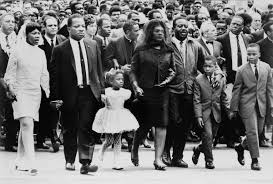
The Vietnam War, the birth control pill, and the weak response by churches to support the civil rights exposed how insular, self-absorbed, and out of touch religious institutions were in the culture.  Going along and Getting Along had taken a toll. We were said to be entering “a post-denominational era.” The call of Dr. King and the work of scores of faith-based initiatives designed to engage the church in seeking transformation in society was seen more as an artifact than a calling. 

For denominations these realities accelerated the anxious casting about for ways to find or retain relevance. There was a willingness to try many things to stop the growing loss of membership. Ironically, efforts to value and benefit by affirming a core denominational identity and neighborhood parish locations was typically missed or overlooked. The megachurch movement was off and running.  It has served as a central hoped-for-solution among denominational bodies.[x]  Now, in hindsight, it appears exclusive focus on a megachurch model was destined to be insufficient to the changes that continue.

Less attention was given to taking seriously the need for in-depth lay theological education.  Popular narrow cultural ideologies, “seeker-friendly” worship that avoided symbols of sacrifice like a cross, along with contemporary music, mixed with safe political perspectives were the tail that wagged the theological dogs of this era.  As church historian Martin E. Marty put it: “To give the whole store away to match what this year’s market says the unchurched want is to have the people who know least about the faith determine most about its expression.”[xi]

Especially notable, in the 1980s through the 2010s, were the more agile, drive in, folk-based religious mega-church expressions.  Willow Creek Community Church in the Chicago suburbs or Mars Hill Bible Church in Michigan are often-cited examples. These “independent community church” expressions are now in second or third generations of leadership and appear to be going through their own identity crises — and decline. The recent exclusion of Saddle Back Church from the Southern Baptist Convention is worth considering as persons consider what the future of the megachurch will be. 

The story of the megachurch in United Methodism is more complex.  At places like the Church of the Resurrection in Kansas, St. Andrew UMC in Colorado, or Ginghamsburg UMC in Ohio, there have been deliberate efforts to encourage thoughtful theological discourse and support for nearby neighborhood parishes. Typically, however, these types of megachurch congregations are the exceptions among the large church expressions.

Anxiety was the driver. There was a widely held belief, a self-fulfilling prophecy in fact, that we had entered a post-denominational era.  This anxiety was a symptom of what might be diagnosed as“Church Growth fever.” Such fear-based views and flight to “safe places” continues. There have been few efforts to stop to consider what gifts may already be present in smaller and more local parish settings. Megachurch models were advocated that were too often independent from a denomination’s core identity.[xii]

The response over the past four decades has only reinforced the self-focus and self-concern in many settings. Denominations and philanthropic entities focused attention on leadership training and congregational development. These efforts, while not bad in and of themselves, turn attention toward inwardly directed programs. They also, inadvertently perhaps, set up a system where pastoral performance is measured against the “successes” of the booming megachurch in the suburbs.  Looking inward, it was the pastor or the congregation that needed to change to be “more valued.”  One might say the time of Non-transformational Conformity had arrived.

Sadly, in many places, the value of neighborhood congregations was lost; the importance churches as a local center of informal gathering and values-production among residents living nearby was sacrificed. Starbucks, neighborhood eateries and bars now filled the civic void left behind in urban neighborhoods.

BUT WAIT, THERE IS MORE! 

In many urban neighborhoods, congregations have survived, even prospered. They have persisted despite often being undervalued and overlooked.[xiii]  While thousands of neighborhood congregations have disappeared, thousands of others are being transformed. Not all continue as worshipping communities only, or primarily. It is often not the church as known it in the past. Some places are more traditional but in almost all, there is a willingness to be Nonconforming Transformationalists.

There is a remarkable phenomenon, for example, of church buildings being transformed into low-income residences.[xiv] In other places congregations are building tiny houses on church property and are forming communities of care where church members build fellowship with persons finding health and spiritual care for chronic difficulties. There are at the same time new models of faith life bubbling up that don’t require a building, as in coffee shop Bible studies and parenting fellowship groups. There are new forms of believers assembling to “be transformed together” working on immigration reform or providing shelter or health care for low wealth persons that have begun and are beginning.  These are signs of hope and joy and celebration. They are places where diversity is celebrated, where multicultural expressions are honored, and where everyone, no matter race or sexual preference, is welcome.

COMING NEXT: Parish-based Renewal and Seeing Christ in the Neighbor and Neighborhood.


[i] McCullough, Marcus, “Go Along to Get Along,” The Graduate Journal of Harvard Divinity School, 2023.

[ii] Passages from Romans chapters 12-15 have been cited to undergird both conformity and nonconformity with government practices across the centuries. In Romans 13:1ff, Paul seems to argue that Christians should simply submit to civil authority. However, King and others suggested Romans 12 set the terms for any such submission. When faced with evil institutions, conformity is predicated on the ever continuing the call for transformation? Discrimination, Jim Crow laws, lynching, unequal economic, societal, employment and education systems could and should be transformed.

[iii] Too often forgotten or overlooked were the many others who were part of Urban Training Centers shaping urban ministry around the country.  Gibson Winter’s book The Suburban Captivity of the Churches helped set the stage as did his work with the Urban Training Center in Chicago. There were the folks like Clarence and Florence Jordan at Koinonia Farm and Gordon and Mary Cosby at Church of the Savior in Washington D.C.  There was the ministry of Father Jack Egan for the Chicago Catholic Diocese and Vincent Harding with the Mennonite communities in Chicago and Atlanta. Folks like Don Benedict, Archie Hargraves, Bill Webber, and Letty Russell at the East Harlem Protestant Parish New York.

[iv] I mention these few, of many, because much of this history has been overlooked.  Dr. King’s work, and that of the Southern Christian Leadership Conference, was essential to the changes brought about by the civil rights struggle. At the same time there were dozens of localized ways people of faith were engaged in taking their faith to the streets.

[v] https://www.connerprairie.org/black-history-month/

[vi] https://digital.library.in.gov/Record/BSU_othermiddle-105

[vii] We heard my supervisor’s admonition that one “can’t fight city hall” as a call “not to turn city leaders into the enemy.”  This led to many lunches with school administrators and city officials.  Some of the best allies in seeking more equity in public education came from teachers and administrators within the school system. 

[viii] Examples come in many dimensions: In housing (Habitat for Humanity grew out of the witness of Koinonia Farm with Millard Fuller and Clarence Jordan in Georgia), with economic structures (e.g., Rev. Faith Fowler at Cass Community in Detroit provides a model, as does John Perkins with Christian Community Development Associations, or incubator businesses out of several congregations), and resources linking spirituality and social action continue (e.g., Fr. Richard Rohr’s at the Center for Action and Contemplation and Rev. Jim Wallis’ leadership at the Sojourners in Washington, D.C.).

[ix] Research waits to be done. In the early 1970s, for example, Project Understanding looked at the efficacy of programs designed to bring racial change through religious congregations – little has followed.

[x] Dr. Scott Thuma at Hartford Seminary has done considerable research on the rise (and decline) of the megachurch phenomena. See: mhttp://hirr.hartsem.edu/megachurch/research.html.

[xi] Marty, Martin E., Goodreads, https://www.goodreads.com/quotes/7201126-to-give-the-whole-store-away-to-match-what-this.

[xii] It is not surprising that many of the same folks who pushed a singular focus on tinkering with the patterns of congregational life warned we were entering “a post-denominational era.” From “Keys to Growth” and the “Habits of Successful Congregations” the remedies proposed included more parking, new member campaigns, management by objectives, leadership training, changing music or moving the location of the congregation to a “better place.”  Long established denominational connections or linkages with other institutions in a community were not highlighted. Mostly, the unspoken assumption was that larger congregations of like-minded people were the answer.  Seldom was there a focus on the parish surrounding the church – and when there was such a focus, the parish was seen as a place of scarcity, even danger. A place needing outside help rather than a resource for congregational vitality.

[xiii] Some researchers speak of these examples of heath where there is perceived poverty and decline as “positive deviance.”  I choose to see it as the work of the Holy Spirit.

[xiv] A remarkable initiative is being carried out by the United Methodist Foundation in the New England Annual Conference where “redundant” church buildings are being evaluated as places for potential residences or for new ministry/mission sites.

United Methodism’s Long Division Problem

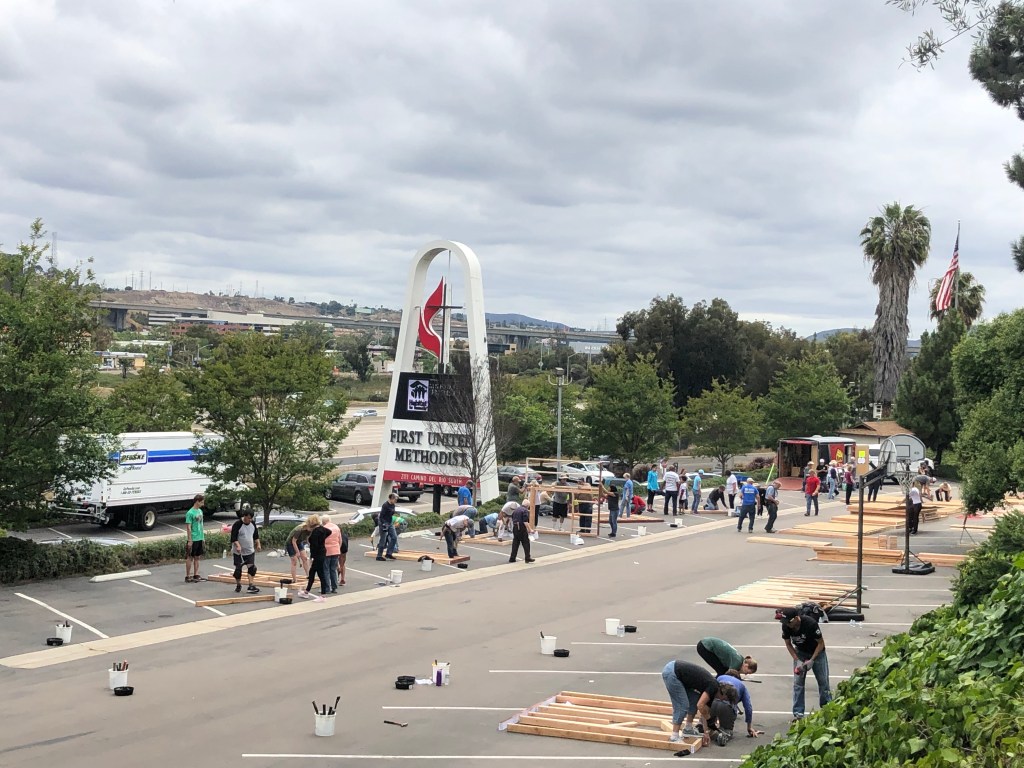
First United Methodist of San Diego — Habitat for Humanity Work Day

United Methodism’s Long Division Problem

My daily morning dyspepsia is, I believe, related to long division problems. I am awake in the early morning, unable to find rest amid puzzles I can’t seem to solve. At about age eight, a teacher taught me “to do long division.” The moment was delicious — I could solve big numbers that before seemed too large. In my early teens, I discovered algebraic long division. Another revelation, a gift, a tool.

Today, my morning dyspepsia, is not so simple. This problem requires an institutional calculus. It is not division I seek: rather, it is the seeking ways to avoid so much dividing — it is greater unity I would like to cipher. Every theological and social instinct within me calls out for linkage, for connection, for common ground rather than a land of separation. Am I simply foolish, nostalgic, tied to some ancient vision of St. Francis bargaining with the wolf or his meeting with the enemies during the Crusades to discover ways of peace?

Why is our nation so tribal, so insistent on becoming a splintering galaxy of spinning ideological enclaves? In ways I suspect most of us don’t fully see, the corollary exists in the divisions of the United Methodist Church. Both nation and church are pursuing long division problems. They are here now, in part because in both nation and church, we have been on a path too long-dividing. Many forces and fractions have brought us to this point: the rise of social media and loss of common language; new cultural and economic ecologies where unemployment and poor community resources persist; much focus on personal and social grievance; churches that avoid their prophetic voice as they fear the loss of market share and numerical decline — all these additives, and more, have brought us to this whirlpool of distrust.

Let’s focus on United Methodism. Maybe if we untangle this a bit, or at least untie some of these knots, it will assist with other riddles. Hardly a week goes by that someone doesn’t ask for a division solution. It often happens like this – I am walking through fellowship hall at church and someone says, “What are we going to do?” I know what is meant but can’t help myself, I reply, “About what?” The answers are: “About the church.” “About the harm being done to LGBTQI persons.” “About damage to the United Methodist brand. ” “About the loss of our children who already think the church is out of touch with their worlds.” Or, I am entering a store downtown, a friend greets me and says, “What do you think is going to happen?” I play out the scene again. “About what?” I respond and I hear the same list of concerns.

Or, I get phone calls from friends around the country. (And, yes, I sometimes call them.) “What’s the latest you have heard?” “Which plan should we support?”

Add this to the daily news about presidential impeachments or government conspiracy and the result is dyspepsia along with a certain emotional and spiritual vertigo — right?

United Methodism’s Long Division isn’t this easy!

So, here are some thoughts about our long division problem in the church — these are a collection of hunches, perceptions, experiences, frequent early morning musings based on my faith journey and desire to be a follower of Jesus. Please note, these are not a plan, nor the son of a plan — no long division solution here. In fact, the PLANS I have seen are, to my mind, part of the problem. I almost chuckle at the plan of the week unveiled from some official or unofficial grouping of problem-solvers and I weep at the theological vacuity often evidenced.

I wonder if there aren’t several million plans out there among United Methodists around the world — one plan for each of the members of the denomination. Individualism and self-centered privilege lead us to find our corner with the like minded. We can shape things along with our gang and the lines of our personal preference. I think of Thomas Jefferson who in a letter to Ezra Stiles Ely on June 25, 1819 wrote: “You say you are a Calvinist. I am not. I am of a sect by myself, as far as I know.” My memory is that on another occasion Jefferson opined that he “carried his religious denomination under his hat.

Well-meaning people (and some not so well-meaning) offer up new plans weekly. Some would divide the church into two groups, some three, some four. I have even heard of a plan for seven new denominations. At the same time I hear little of how these plans correspond with the great ecumenical prayer of Jesus that “they would be one” (John 17) or the message from Paul about the church as a body with many members (I Corinthians 12).

Most of the proposals that are trumpeted seem unaware of the lessons of church history or from Christians of other denominational families who have struggled with divisions in recent years. What might we learn from the Cooperative Baptist Fellowship that still speaks, five decades later, of “Forming Together” after the splintering of Southern Baptists? What lessons might our Pan Methodist friends teach us as some large congregations have split off from their fellowships? Or, what of the Lutherans, the Seminex story from the Missouri Synod Church, or the merger resulting in the ELCA (Evangelical Lutheran Church in America) and the challenges they have faced? What lessons from the Assembly of God and splintering there? The Wesleyan Church? What might we learn from the United or Uniting Churches around the world (India, Canada, etc.) Or, what of lessons from our older sibling, the Episcopal Church.

Rather than a plan, I would offer some paradoxical thoughts, some ecclesiological assumptions, some prayerful hints for how we might proceed… with or without a plan. Paradoxical, yes, I propose them as cruciform. For they are. One clear assertion I will make is this: there will be no resurrection for us, no renewal apart from the cross. (In the gospels of Mark, Luke and Matthew there are the words like these “Those who try to gain their own life will lose it; but those who lose their life for my sake… you will find it..) Here are seven paradoxes to explore.

I pray that any reshaping or re-imagining of the United Methodist Church will be: Centered in the Christ of scripture and Christ alive in our world today; shaped by prayer and a humble mystic spirit; a seeking of unity among all believers even as we resist efforts to harm; focused locally as essential to a global witness; open to the long-haul of history in order to be relevant today; ready for sacrifice in order to find abundance in unexpected places; and, opening our hearts to the story of others within and beyond our daily routines so as to sharpen our Wesleyan distinctives.

Bishop Grant Hagiya, 2019

When have I seen us at our best? Not when we are arguing or devising our long division plans but rather when we are in mission with others. I see it when the gospel is shared and persons and communities are changed. I see it when bishops pray and invite all, especially those who disagree to a common table. When those who join that table represent the extraordinary array of those from multiple cultures and classes modeling together an invitation to live in our time and place in terms of God’s emerging kin-dom.

FUMC San Diego Acting as Witnesses

I see it in the thousands of places where our actions speak louder than our words. Where the “theology of the hammer” brings people together. I see it when the church works along the Mexican border and says in the name of Jesus, we will welcome these who are in need of sanctuary and we will not bear false witness against them. I see it when the church takes seriously its commitment to care for all creation.

A Blessing Indeed

I see it when I meet another United Methodist, from Africa, Zimbabwe. He tells me his name is “Blessing” and we laugh together when we talk about our mutual friends. Yes, he had taken some classes at Africa University. Yes, he was a student there when I visited that campus. We join in conversation about how we might heal a broken church, in order to set about healing a broken world. It is in surprises like this that my dyspepsia finds relief.

Pentecost Lost… and found

Pentecost Lost… and found

Light the candles, sing the songs, cut the cake, burst the piñata — it’s a birthday.  Laugh, dance, tease, shout out “Many Happy Returns!!”  WAIT A MINUTE… Which Birthday is it?  PENTECOST?  Where?  What if the gifts of Pentecost go missing this year?  Shouldn’t we send out a missing feast day alert?

Pentecost is said to be the birthday of the church.  Why celebrate the Spirit first unleashed two millenia ago?  Should I wear red on Pentecost Sunday, May 20, 2018 as in other years?  Perhaps not.  Scanning the international, national and ecclesial horizon, there is little evidence such celebration is in order or that Pentecost will have much of a season in our world today.  Pentecost has gone missing.

The Pentecost Season in the church is to last several months.  It is when we read some of the greatest chapters in Christian scripture —  Acts 2, Ezekiel 37, Romans 8, Psalm 104, Galatians 3.  And, the most reiterated word (and theme) in these passages? It is “ALL,” as in “EVERYONE,” “EACH TOGETHER.” 

Here is the core identity of church, the basic DNA of God’s people.  In these texts it is made clear — God includes all persons.  Further, we are to love and protect ALL of creation.  Francis of Assisi had it right — we indeed are relatives to brother sun and sister moon.  Pentecost is about including, renewing, accepting, out-reaching.  It is about creating community and not simply talking about community. In Pentecost we learn the meaning of neighboring with God and with one another.

Romans 8 speaks of all creation groaning in B+Pentecost+Acts+02_17+No+2new birth.  The work of the Spirit is about new life, addition to our social fabric and our communities of friends.  It is not an excluding or dividing.  Rather, Pentecost passages include, extend, restore.  Like the dry bones in Ezekiel, this is a focus on that which has been separated or torn asunder being made whole.  God’s heart in any Pentecost celebration is about inclusion. 

If the word “All” were to be left out of these passages, they turn to gibberish.  Or, if words like “everyone,” “each,” or “every nation,” “every tongue” or “all flesh” were to be omitted, Pentecost vanishes.  No need for celebration, no call for many happy returns — Pentecost would drift away, vaporize, disappear.circle-312343_960_720

At a national level, in the U.S. today, Pentecost may have gone missing.  The preachers who affirm the mean and divisive ways of this president, have missed the story and meaning of Pentecost for our world.  Instead of a Pentecost vision we are offered border walls, white nationalist rhetoric, the separating of children from undocumented parents, thinly veiled racism that smoothly falls from the lips of national leaders.  Pentecost seems hidden by ugly bigotries.  On so many fronts the vision of Pentecost seems erased. 

Racism and Patriarchy continue to plague our nation and blind us to the story of Pentecost.  We are still discovering the enormity of these curses on our national psyche and our people.  Racism and sexism is baked into all we do and who we are as a nation — it masks any signs of Pentecost among us. 

Take for example the tragedy of the maternal and infant mortality rates in the United States.  These percentages are growing and are almost exclusively due to the increased percentage of deaths among African-American mothers and their children.  “We are the only developed country the [mortality] rate is going up.” (https://www.nytimes.com/podcasts/the-daily.  The Daily, New York Times podcast, May 11,2018).

Our “infant mortality rate is high…  It is 32nd out of the 35 most developed countries… A black woman is 2 to 3 times more likely to die in child-birth than a white woman and a black baby 2.2 times more likely to die than a white baby… This racial disparity is larger now than it was in 1850!” (Listen to “A Life-or-Death Crises for Black Mothers” on The Daily podcast, May 11, 2018 at https://www.nytimes.com/podcasts/the-daily).   

Today there is now overwhelming research that demonstrates this disparity in mortality is grounded in the racism of our institutions and cultural life in the United States.  Such disparity does not exist to this extent in other countries.  One of the most astonishing discoveries has been named the “weathering” of African-American women.  (Again, Listen to “A Life-or-Death Crises for Black Mothers” on The Daily podcast, May 11, 2018.) Weathering is language that speaks of the results of chronic toxic stress on African-American women.  This is the impact of racism on the body of women facing day-in and day-out challenges and diminishment in this society due to their racial identity.  Put simply, our racism damages the bodies of our sisters.

stained-glass-cross-morristownumc-450x412

Or take, for example, the patriarchy that still distorts the church from genuine expressions of the gospel — from the meaning of Pentecost.  Southern Baptist leader Paige Patterson has finally apologized from insensitive and dangerous remarks about women needing to stay in homes where they are being physically abused so that “they might be a witness” to abusive husbands.  Patterson only recently also acknowledged that some sermon illustrations about young women were “hurtful.”  It is tragic.  Still this denomination and many others exclude women in leadership in multiple ways.

In my own denomination, United Methodism, we live under our own distortions of Pentecost.  Jeremy Smith has argued that “the Gay Panic” has also harmed women and equality throughout the denomination.  In his most recent posting Smith outlines the ways the United Methodist Church is damaged by an inability to welcome all people. (Gay Panic Harms Women and Equality, Jeremy Smith, May 11, 2018.)

In a stunning, dispiriting outcome this past week, United Methodists learned that a constitutional amendment stating that woman and girls were to be equals in the church, narrowly failed to receive the two-thirds vote from the world-wide denomination necessary for its approval.  A re-vote is scheduled due to some mistakes in the original stated language of the amendment.  Still, no matter.  Damage done.  Patriarchy clearly asserted, riding the coattails of Gay Panic in the church.  Where is Pentecost in this?

Still I confess to being a prisoner of hope.  Just when I believe Pentecost has been lost or gone into permanent hiding, there are experiences that renew and restore.

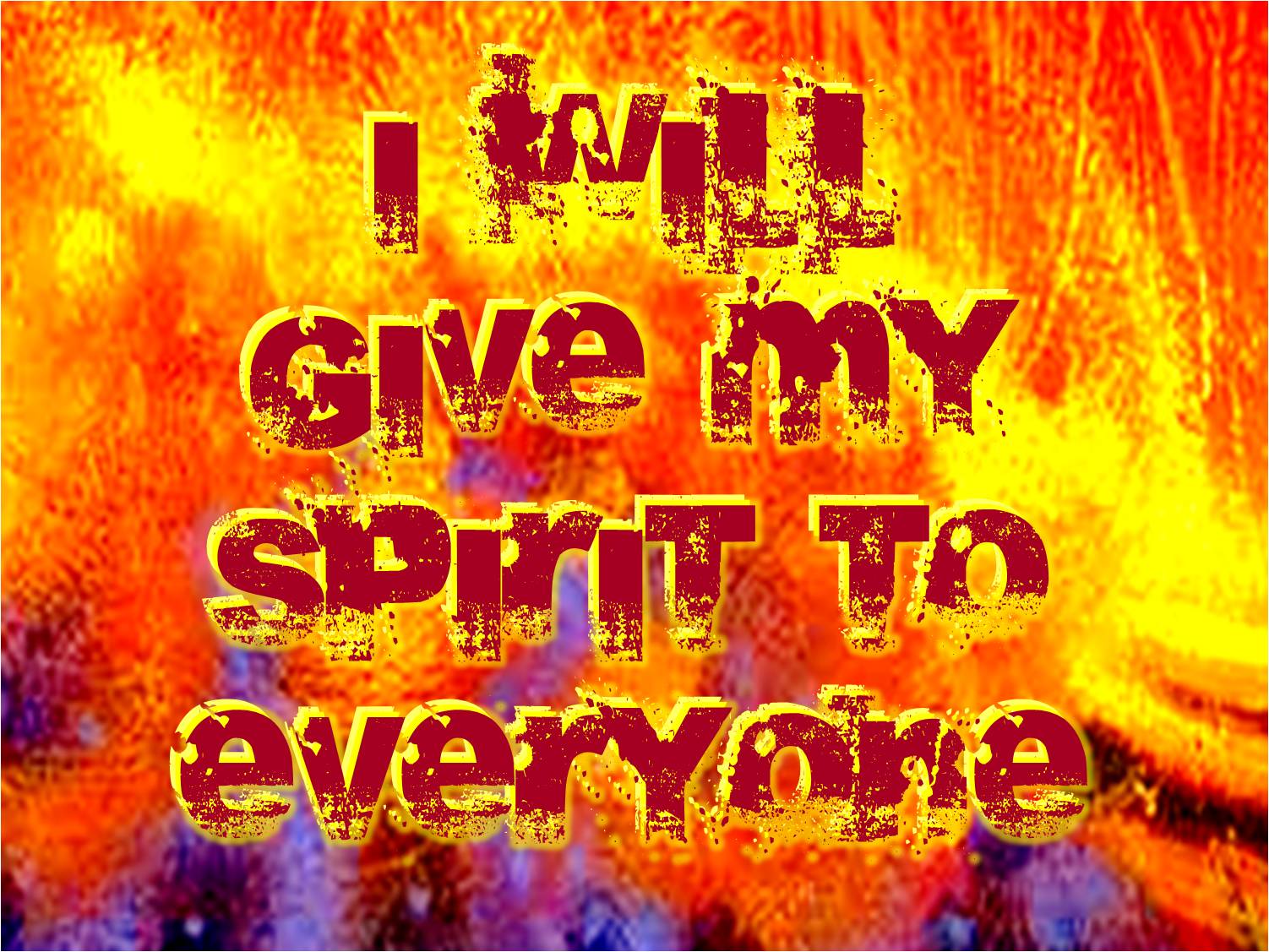
As in so many other places in my life, I have discovered that I was looking for Pentecost in all the wrong places.  Our nation and our churches seem to be drifting away from the SPIRIT BEING A GIFT TO EVERYONE.  Still there are Pentecost tracks and genuine sightings all around.  Last Sunday I saw evidences of Pentecost at St. Paul United Church of Christ in Chicago.  And, I know that such signs are bubbling up in churches like Broadway United Methodist in Indianapolis and St. Marks United Methodist in Bloomington Indiana (where I worship).  I see it there — almost weekly.  There it is — the Spirit given to ALL.

IMG_0045.jpg

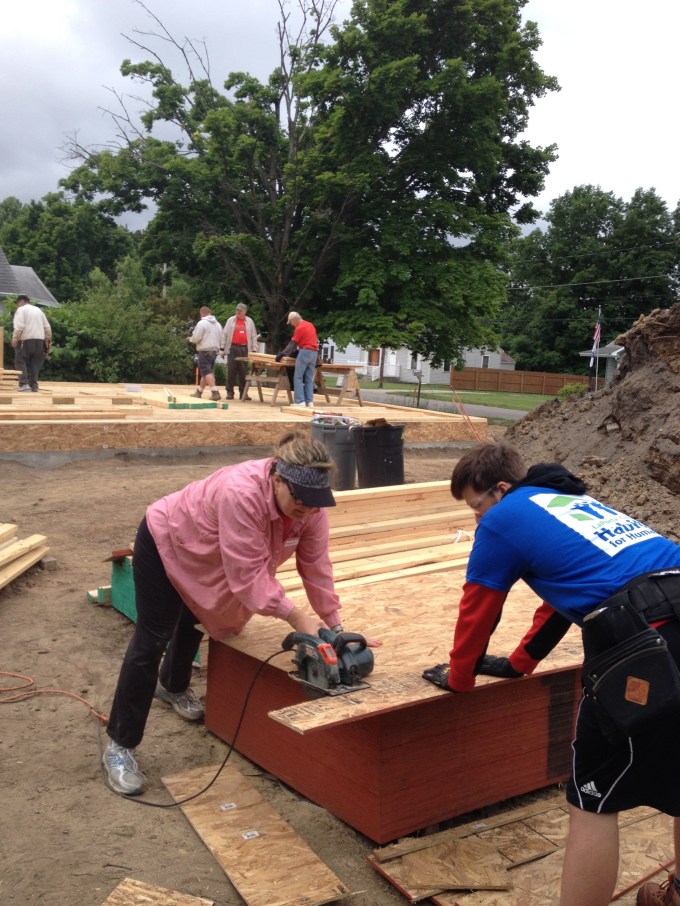
Then today, I caught what will be an enduring glimpse of Pentecost for me.  It was the dedication of two Habitat for Humanity Houses in my town.  Two homes — one for Colleen and her daughter Juliana;  another for Rachel.  Two houses — built by women and for women.  There were women crew chiefs and three-hundred-and-forty (340) local women working on these builds!  These women raised the money, hammered the nails, put on the roof, painted the walls and finished these homes.  They completed two homes in two weeks (take that Paige Patterson)! 

I watched as the crew leaders passed the keys along a line of celebration — each one a contributor — and then to the new owners.  I watched Colleen and Juliana accepted the keys to their home.  They have worked hard to get to this point — their own homes, their own mortgages — after years of living it difficult, counter productive situations. 

Then keys were passed to Rachel.  When I heard Rachel say “I have worked hard but you women have taught me more than building, you have taught that we need each other.  Hey, this is MY House but your love is in every board,” I caught a glimpse of Pentecost.  It has been in hiding for me, but I might see it more clearly yet.  I may even wear red on May 20, Pentecost Sunday!


Lessons from the House on Park Street

Lessons from the “Soon to Be” House on Park Street

logoHabitat

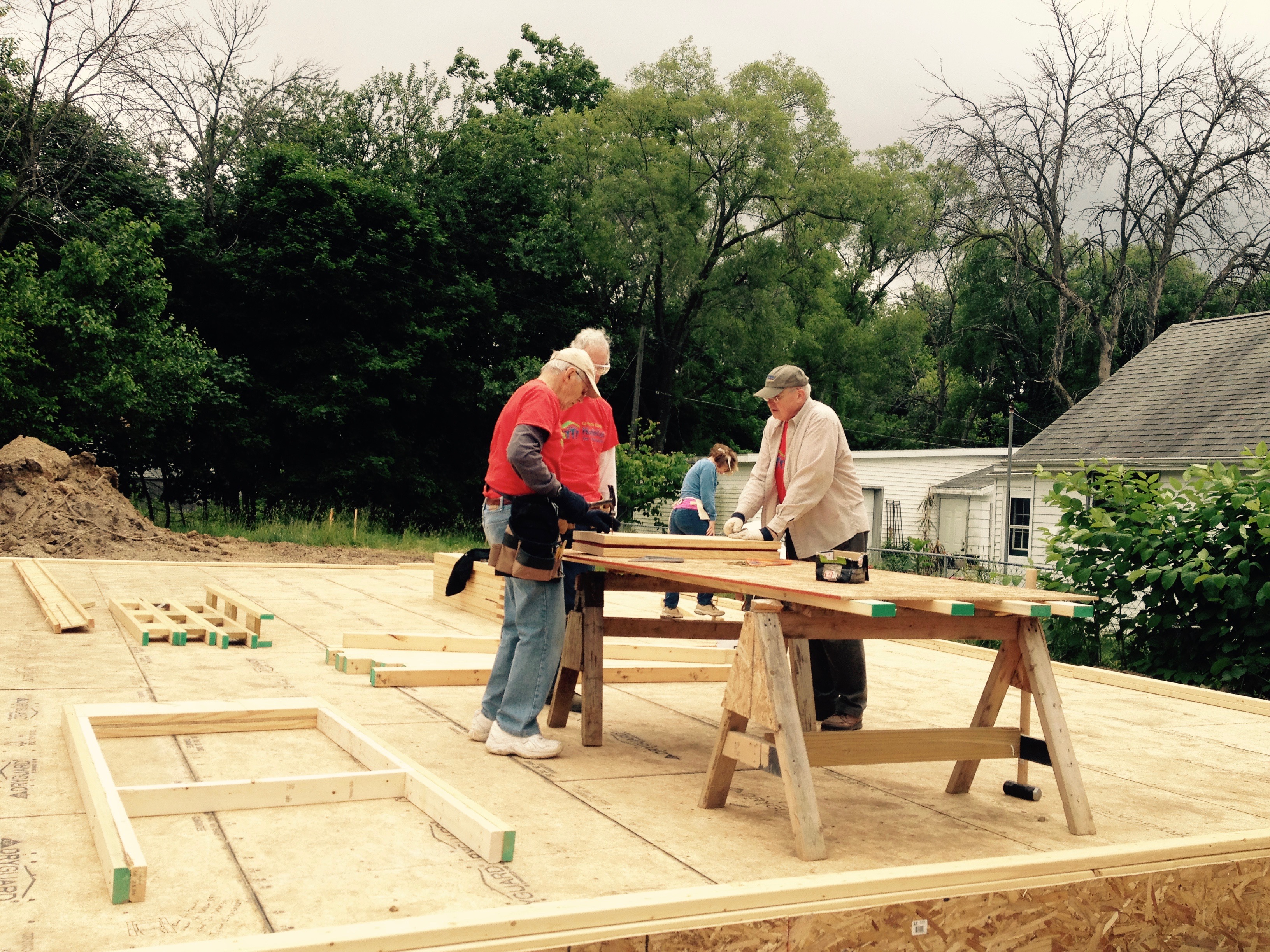
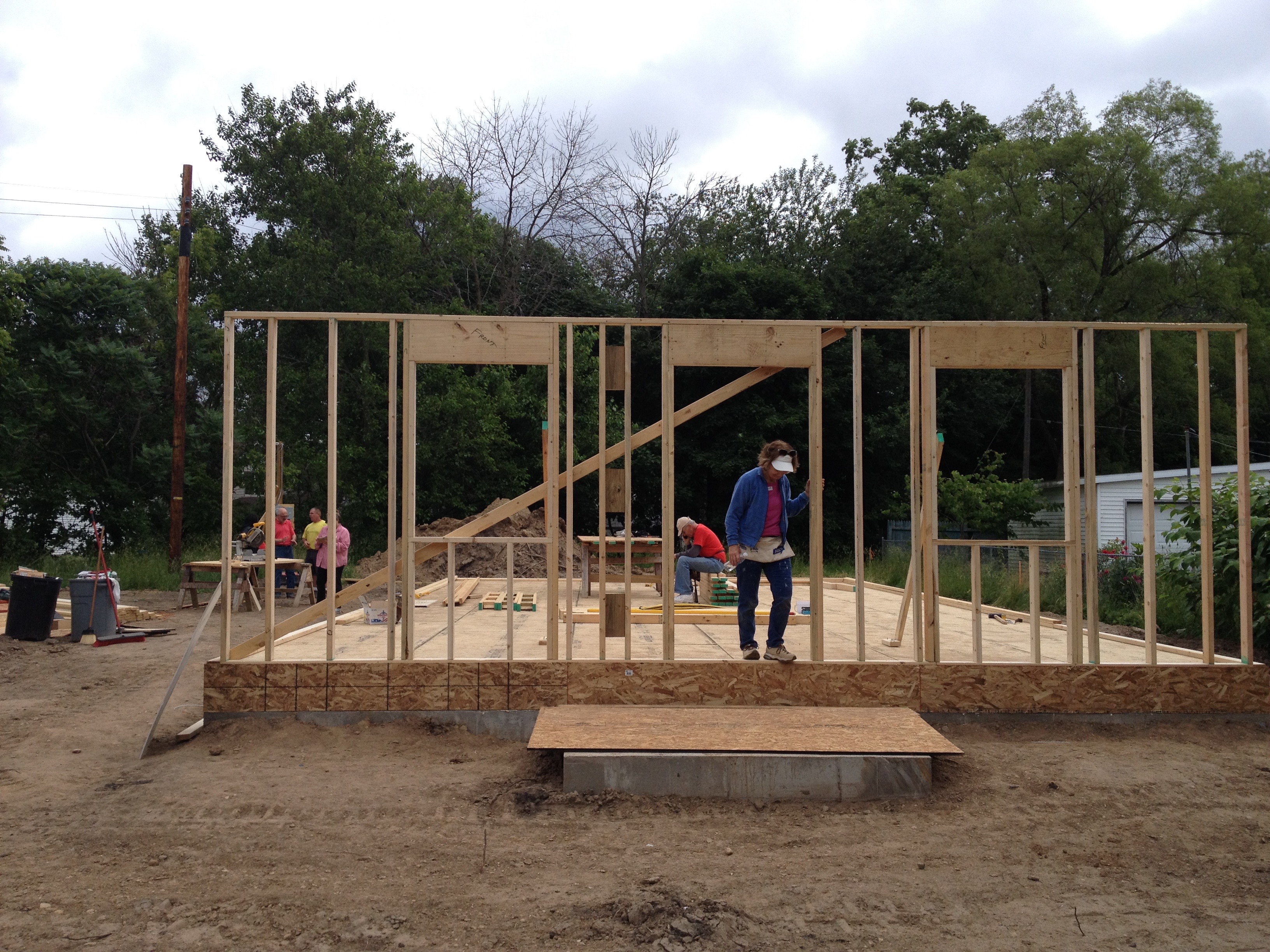
Some of you have asked about the house I am building this summer.  Well, not me exactly… but the house I am helping our local Habitat affiliate build as a way to celebrate my 70th year.  This, of course, is not “my house” or “my build.”  Soon, some deserving neighbor will call it home — after putting in hundreds of hours of “sweat equity,” they too will have the joy of a home with a manageable mortgage!  Still, I am grateful for those of you who have made a gift so that this work could go forward this summer.  Thank you!

IMG_1464

IT IS GOING WELL!  So much is happening so quickly.  The construction manager Keith Hite is a marvelous teacher.  (Keith teaches building trades at New Prairie High School.)  And thanks to groups like the folks from Alcoa Howmet Corporation in La Porte, the decking was in place and so much more was ready for those of us who were volunteering.  As a result, we are further along than we anticipated at this point.  We are ready for the dozens of volunteers coming over the next several weeks.  (Yes, you can come and help — just contact us at: LaPorte County Habitat website.)

It will surprise no one who has ever been a “Habitat Build” that there is always a great deal of laughter and lessons to be learned.  My great joy was to work with Bill, Jim, Sharon, Carter, Mike and Suzie.  Dozens more will help this summer.  It was Bill who offered me two lessons on my first day as a volunteer.

IMG_1461Lesson #1:  As we were beginning to put together the frames for windows in the walls, Bill looked over and asked “Did you pay for the whole hammer or just part of it?”  I immediately started to laugh because I knew the old joke.  I knew that it would be a good day.  My teacher had arrived.  “Hold the hammer lower and let it swing,” Bill said.  “Use it like you own the whole thing!”  That got us started talking and laughing.  Bill was a marvel to watch and joy with whom to work.

I discovered that Bill had been a volunteer on over TWO HUNDRED HABITAT FOR HUMANITY BUILDS!  He knew both Millard Fuller, the founder of Habitat for Humanity, and Clarence Jordan, Fuller’s co-conspirator at Koinonia Farm in Georgia.  As it turned out I had known both Millard and Clarence as well, and so the morning was filled with stories of how they taught that the gospel should be viewed as a radical document — especially when it comes to how we live our every day lives. We spoke of the “theology of the hammer,” and how Christian action spoke louder than all our words.

Bill told me of his church in Michigan.  He said Millard Fuller had challenged them to build ten houses in one of the early Habitat builds in Africa.  The churches in town were asked to stretch, dream big, and raise $15,000 so that ten (10) houses could be built in Africa.  It took a few months Bill said, but before long they did better than ten houses “We gave Habitat a check for $150,000 so that one hundred (100) houses might be built,” Bill said!  Yes, the gospel should challenge us to think radically and big about our resources and how we use them.

IMG_1468Lesson #2: As lunch time approached and we were expressing gratitude for the volunteers who were by this time raising the front wall together, Bill looked at me and said, “You know, there is only one time I have seen any volunteer asked to leave a build site.”  “When?” I asked.  He said, “there was once a fellow who when asked to clean up a small mistake in a wall being built responded with the words ‘Why? this will be good enough for the type folks who will be living in this house.'”  Bill said it didn’t take long for the construction manager to tell the fella to gather up his tools and not to return.

As to the fuller meaning of Lesson #2, I couldn’t help but consider the comparison with a leading political candidate who engages in racist statements, refuses to apologize and is still “on the scene” as a leader.  Why doesn’t Donald Trump’s political party have the courage to say, “Leave and don’t return until you are able to apologize.”   The morning paper today carries the powerful statement by Thomas Friedman entitled “Dump the G.O.P. for a Grand New Party.” (See: Thomas Friedman, June 8, 2016, NYTimes).  Here it is, the “Party of Lincoln” saying, “Well, yes, Trump is a racist but we will support him anyway.”  Amazing.  I want to ask, “Are you going to use all of the courage and moral legacy you claim or just a small part of it?”

Thanks to Bill — for his life given to gospel realities.  For me, these will always be treasured as my “Lessons from the ‘Soon to Be’ House on Park Street.”  Let’s keep Building!