
Seeing the Unhoused: One City’s Proposal
Like hundreds of cities across the United States, Bloomington, Indiana, my home, is a place where we face the challenge of unhoused persons surviving on our streets. Because we are a generous and caring community, our town is seen as a place of welcome. Sadly, it is also a place where the number of persons facing chonic homelessness continues to grow and our resources fail to offer hopeful ways forward.
What follows is a column for our local newspaper, The Herald Times. Perhaps there are some ideas here that could be of value as you seek to offer responses in your communities. Perhaps you have some suggestions that you can share to be helpful to us. Here is the column:
Missing Ingredients in Housing Assistance Plans
On Tuesday evening August 6th the Bloomington City Council received a “comprehensive” Housing Action Plan. It was presented by Bloomington Mayor Kerry Thomson, Mary Morgan, the director of Heading Home of South Central Indiana, and advocates from several service groups. It is an ambitious six-year plan designed to make street homelessness “brief, rare and non-repeating.” It is indeed a dramatic and critical step in the right direction, but comprehensive?
The plan is bold. As The Herald Times reports, it proposes “significant” investments coming from “multiple” sources. It will require increased dollars, imagination and durable civic commitment. The report is found at: headinghomeindiana.org/news/housing-action-plan/. It deserves the community’s immediate endorsement and financial investment. Seeking 1,000 low-rent housing units by 2027, and 3,000 such units by 2030, is a HUGE challenge. Adding ten additional Healthnet street outreach staff and many more case workers at existing homeless services is appropriate. We need such a commitment.
The idea of a moratorium on helping unhoused persons from out of town for a period is strong and distasteful medicine. Even so, it may be what is required while other communities, and the State of Indiana, do not act in more caring ways for the vulnerable among us all. A temporary moratorium to regain a balance and offer sufficient safe housing, healthcare and see an end to persons living on the streets deserves exploration. Such a step, so long as the commitment to dramatically increase low-income housing is also accomplished, could serve as a model for other communities in Indiana and beyond.
STILL, this is not a “comprehensive” plan. It is good. It is bold. It includes parties that have stood too long on the sidelines, parties like Indiana University and I. U. Health. But is it “comprehensive”? Nope, don’t think so.
Three elements are noticeably missing:
- First, how will each of us, as citizens, in Bloomington, act in new and meaningful ways to support such a plan? More basically, how will we behave to understand that “these people” seen as “problems,” and “outsiders,” are part of us, our tribe, our social network, our family? As Kevin Adler and Don Burnes write in “When We Walk By: Broken Systems and the Role We Can Each Play in Ending Homeless in America,” the people we see as foreigners are persons with families – often they come from nearby biological families, and all are certainly a part of our larger human family. What reading, thinking, acting, praying might we do together as citizens to provide a witness as to a better way?
- Second, aren’t faith communities essential in providing motivation, resources, volunteers, leadership, imagination and even shelter space (emergency and longer-term)? Why are they not at the planning table? Yes, a few “religious groups” are mentioned as “providers;” but I would argue any comprehensive plan would include faith communities as essential “stake holders” and critical to the designing and implementing any sustainable plan. What if this is not simply an economic, addiction or heath care issue? What if it is a spiritual one as well? By this I do not mean to suggest a moral failing of those without shelter, but rather, a spiritual failure of our community and nation. The irony, of course, is that many, dare I say most, of homeless assistance resources in Bloomington were initiated and have been largely undergirded by faith-based vision, volunteers and financial support. A good case can be made that faith groups and leaders have been missing-in-action in recent years as we have been too focused on our own congregations with too little focus on being good neighbors. Oh, there are some fine individual congregational programs, but working with others in a coordinated way? Not so much.
- Finally, and perhaps most importantly, there is no mention of how persons identified as “homeless” will be engaged in envisioning and implementing a “comprehensive” plan. Many, many, who are currently living on the streets bring gifts, insights, connections and experience to assist in making homelessness “brief, rare and non-repeating.” These folks without shelter have names. Any plan needs to be imbued with an understanding that working with vulnerable persons is critically different from doing for “them.” Rather than clients, patients or “the needy,” what might we do to act in ways that find a space where all of us can act as fellow citizens?



 Berry says that it is “only by restoring the broken connections in our society that we will be healed.” It is not just the edges of institutions that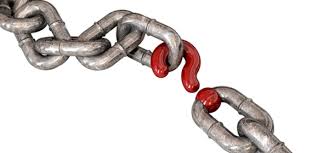
 Hands of the Strong