Harvesting Surprise

Harvesting Surprise

Each autumn, as harvest-time nears, I re-live a surprise. Now, in early walks on crisp, chilled October mornings, I am reminded anew. I look to see if Jack Frost has spray-painted fresh abstract art on meadows. Recollections of other autumns come: hayrides, jack-o-lanterns, golden, maroon and salmon colored maple leaves gathered and pressed in the pages of an old encyclopedia. Or, I recall watching children “bob for apples” in an old wash tub or remember sweet, steaming cider served by a fireplace.

PublicDomainPictures.net

As I gaze to discover if hoarfrost has tinted a field in a crystalline hue, a rime-like shadow reaches across my consciousness. Perhaps the year was 2011; or thereabouts. A lovely autumn day and I am traveling across the nation’s farm-belt from of a distant meeting to my home, several hundred miles away. It promises to be a leisurely drive.

There being no urgency, I think of long-time friends. They work a large family farm. I will pass nearby. Hospitable folks, these. We exchange annual Christmas greetings. Every few years, some special event might bring us together. Each time — scribbled on a holiday card or spoken in a face-to-face visit — is the same gracious invitation: “Please, come visit; just drop by, anytime; no need to plan ahead.” I would nod, saying I would love to see their place; and, mean it. Still, years passed and the visit was never made. This would be a day I could stop. Surprise them.

PublicDomainPictures.net

This visit was the first of several unforeseen miscues that day! Readers familiar with the ebb and flow of agricultural life already know my error, my blunder. My surprise landed right in the middle of harvest. From sunup to sundown, and sometimes longer, combines whirled, rumbled and slashed. Farm trucks carried grain to the elevator cycling back and forth and back again unloading their bounty. This “surprise” visit was a first unforced error of the day.

When I greeted her on the phone, I should have picked up the overwhelm in her tentative voice. “Yes, so good to hear from you. Today? Well, yes, we would love to see you. The fellas will be gathering in the barn at noon. Can you make it by then? It is quicker if you take the county road over to our place. Come to the house first. You can help me carry over the lunch.”

Slow witted me! It was only as the call ended I realized I had bushwhacked them right in the middle of harvest! I was the city-slicker dropping by announced from the outskirts of hell.

I made it to the farm with a few minutes to spare and immediately offered my apologies. My friend only smiled and said, “It’s okay. You can help carry these things to the car.”

Arriving at the barn a half mile away, we pass the Pioneer Seed signs, the fuel pumps and grain storage elevator. Parking by an old John Deere we walk into a large structure with huge sliding doors at each end. It is full of implements: tractors, planters, harrows and several charts and computers along the western wall next to a small office. I am reminded that farming is an ever more sophisticated business.

We set out the lunch on a long table. Slowly others, family and farm hands, gathered. My friends introduce me as “a preacher friend who came by to pray for us today.” Okay, my turn to be surprised. So, I pray for a good harvest, for safety and well-being of all in our world during this harvest. I kept the prayer short knowing folks were eager to get back in the fields before rain might arrive.

Ample portions of chipped ham sandwiches, potato salad and iced tea are served. Some peanut butter cookies followed. There is teasing, talk about the weather, feeding the barn cats, and a few questions about mutual friends and grandchildren. Knowing the need to return to combines and trucks soon, I am amazed when my friend goes to his small office and returns handing me some papers. “Your going to enjoy this,” he chuckled.

It is a printout from an old dot matrix printer. Here before me were a collection of “jokes.” Reading the blue inked words, were some of the most offensive, racist jokes imaginable. They were about the President of the United States. Surprise hardly captures my emotions. It was closer to horror.

Still, I care for these people. My friend thought I would be amused, but this had burst across a divide in our worlds. I was confused, sad, disgusted, tongue-tied. I knew there was racial animus and bigotry toward Barack Obama, but surely not here. These were my friends, my good Christian friends.

I wish I could tell you of my courageous response, of my righteous witness. As I remember it now I didn’t say much, only mumbling “I don’t find this very funny.” A human hoarfrost was now stretching across our faces, our conversation, challenging the core of our friendship.

Soon, I was off, watching the dust of the combines in my rear view mirror. I was on my way home — back to another world, my natural habitat, an urban setting, on a university campus.

This surprising harvest occurred nearly a decade ago. Each autumn its memory returns and I realize it was a harbinger of much that has unfolded in our nation, especially in the last four years. Without any sense of irony, these are “good Christian folks,” at least in the way the see themselves and are seen by others. Even so they had burst open my easy assumptions.

They had reached out with hospitality to me — at least before I made my raid on their assumptions and routines. Racism is not the exclusive property of country folks. Many, many rural folks do not accept such bigotry; but many do. And yes, racism is alive and well in our cities and suburbs too. Still it seems to wait along the corridors of everyday activities to suddenly startle and divide us.

I have thought much about the culture that shapes these friends and their religious and political perspectives. Through study and conversations with many farmers, I know more of the stresses on those who today seek to make a living following a plow. I better understand the racial and cultural divides that can so easily be manpulated into fearful mistrust and misinformation.

I have learned that agriculture is changing dramatically, at an ever more rapid pace. Industrial-style agriculture is extraordinarily expensive and risky. Debt is high and weather is increasingly unpredictable. It is destined to change. It will ultimately be replaced by models more attune to sustaining the land, water and soils. Efforts to farm with perennial polycultures, like those being researched at The Land Institute in Salina, Kansas, will hopefully offer new options.

I am sad for my friends who carry the heavy load of racism and fear (and probably economic threat) that limits their ability to see the depths of racism that damage the soul of our nation. I pray they learn — in their church or social gatherings — of the ability to see others as persons of worth and dignity. I am saddened by the urban/rural and cosmopolitan/ localist divides in our nation and world.

I suspect my farm friends think me to be a “latte drinking urban elitist.” Even though, I don’t like latte! And, I am mindful of my own limited vision and fears that shape my understandings.

Richard Longworth’s fine book “Caught in the Middle: America’s Heartland in the Age of Globalism” offers compelling insights into the challenges of those who currently farm in America. He notes the phenomenon of vertical integration wherein every element of farm activity, from selecting seeds to spreading fertilizer to selling in a market is controlled by a large agribusiness — and not the farmer. As Longworth puts it, “Why own the farm when you can own the farmer?”

I don’t excuse the racism of my “friends.” Not at all. Nor do I miss the reality that a deep social/cultural divide was already emerging on the day I burst in on them. I fear such racism has only taken up greater residence in the minds of good people who now share their “jokes” on Instagram or Facebook rather than on a dot matrix printouts.

Something else was harvested on that October day a decade ago. My unacceptable silence was surfaced. It is the silence of too many of our churches, too many of our cultural and political leaders. What might I do better to express theology that valued all as Children of a loving God? How might I do better at harvesting respect, hope, love for the neighbor AND the stranger?

Perhaps I am overly optimistic, but it appears a harvest is underway in our society regarding racism. In the midst of the tragic deaths of folks like Breonna Taylor and George Floyd a new awareness seems to be possible. I suspect my farm friends don’t see anti-racism activities in the same hopeful light that I do. I see these as a sign of a potential harvest of hope — a sign that increasing racial justice might some day arrive… a time when the frozen assumptions and categories of our common life are thawed. It is not easy, not for my friends or for so many others caught up in the swirl of human distrust.

As I write a national election is only days away. I pray the current patterns of racism and ugly vitriol encouraged by the current national administration will be rejected and fresh sense of respect and the valuing of our common life can be harvested.

No matter the outcome, I will plan to make another visit to my farm friends — it has been too long since I saw them. Be assured I won’t bushwhack them again during harvest!

Pride Goes Before… COVID19

Pride Goes Before…

Of course, first we pray for all of those who are infected with COVID 19, including especially the president and those around him. Sincerely, as a person of faith, my heart and prayers go out to those who have learned and are learning of their real or potential infection with this virus. We pray for Melania Trump, Hope Hicks and others around them.

Second thoughts go to lessons learned as a child. This wisdom is drawn from Proverbs 16:18 (“Pride goeth before destruction“). When did I first hear the expression “Pride goes before the fall”? I suspect it was at some point in elementary school. Over and again in life, this wisdom has been illustrated. This ancient wisdom asks us to live with humble respect for knowledge and the care of others.

Sadly the president is disrespectful of science and the well-being of others. Only a day or so before his infection was discovered, Mr. Trump said “the end of the pandemic is in sight.”

This is a tragic morality tale. I suspect Mr. Trump’s words and behaviors over the past nine months will become a core illustration of the scriptural proverb. Pride does go before the fall. Hubris, in action and/or words, can boomerang back on the head of those too arrogant to accept such a basic human reality.

Now, a proud man, a stubborn man, one who with arrogant pride ridiculed others, illustrates this truth. He who thumbed his nose at medical experts; he who spoke dismissively of others who wore masks; is coming to terms with his overblown hubris. Gallons of hydroxycloriquine can’t fix this. What a strange new test this is for our democracy that is already being severely tested. There is no bunker to protect him from his own pride.

The virus was politicized but the virus wasn’t political. This is not a reality show. Children will be learning this real-life-example of hubris and linking it to this Biblical wisdom for decades to come.

Yes, we pray for our president and for all of his maladies.

No Country for Old Folks

No Country for Old Folks

Take time to grieve.” I have offered such counsel while standing with families and friends at the time of loss. Take time. I have counseled myself when facing crises. Time to pray, time to reflect, to breath deeply; take time to embrace family and friends; time to gain perspective for the journey ahead. It will take months, years perhaps, decades maybe. Time is necessary to better understand the whole of pain and healing.

On Friday last, on the eve of Rosh Hashanah, Supreme Court Justice Ruth Bader Ginsberg died. She was 87.

On July 17th, Congressman and Civil Rights leader, John Robert Lewis died. He was 80.

Over the past six months, in the United States’ more than 200,000 folks have died of COVID-19. Of these more than 150,000 were fellow citizens over the age 65.

We have much grief work to do as a nation. We have lost leaders and icons. Many of us have lost loved ones and dear friends to coronavirus.

We have grief work to do!

Cormic McCarthy’s 2005 novel No Country for Old Men, and the movie that followed, comes to mind in this moment. It is a powder keg of a book. Played out on the Southwest Texas border with Mexico. It is a tale that moves all too quickly and violently upending the quiet lives of those caught in the unwelcome drama. Like James Lee Burke’s recent novel A Private Cathedral, McCarthy’s story plumbs the depths of human good and evil and the world of truth and lies.

Our nation’s future appears to reside in the hands of many old men (and a few old women). Some are seeking to rush past the national grief work so needed now. This is needed grief work to celebrate the service of Justice Ginsberg or Congressman Lewis — grief work that remembers the lives of those hundreds of thousands struck down by the coronavirus.

Let this also be added to our grief work: to stand against the corruption and lies offered by those who seek only to hold on to power. Let our grief work be to move our nation beyond the grievance of bigotry; let us move past unproductive racial, religious and cultural divisions. Let our grief work seek compassion for all, young and old. Let our grief work involve prayer, reflection, reaching to friends and family. And, mostly, let our grief work be to join those who will work and protest and vote for a society that values all people.

Words, Words, Words…

Words, Words, Words: Hamlet

As I watched the tragic scenes unfold across our nation in the wake of the murder of George Floyd, I remembered the phrase scratched on a napkin and slid toward me: “Words, words, words: Hamlet.” This writer of the quote in 1992 was Bill Hudnut, former long-time mayor of Indianapolis. Bill was a friend. I was pastor at Broadway United Methodist Church. We often had to agree to disagree. In considering the wounds to our nation’s soul just now, I think of Bill.

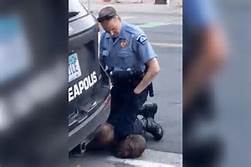
Officer Derek Chauvin on neck of George Floyd from Daily Guide Network, May 28, 2020

There have been too many words. I believe this is a message the rioters are tying to communicate — in imperfect ways, yes, but there have been too many words… words of promise, words to placate, words to delay. And, there have been too many words from the highest office in the land that harm and destroy. More, even worse, there have been words designed to incite violence. There are words tweeted in short attacks or enshrined in policies that reinforce the systemic racism of a nation that has never recovered from slavery, segregation and centuries of discrimination and shame.

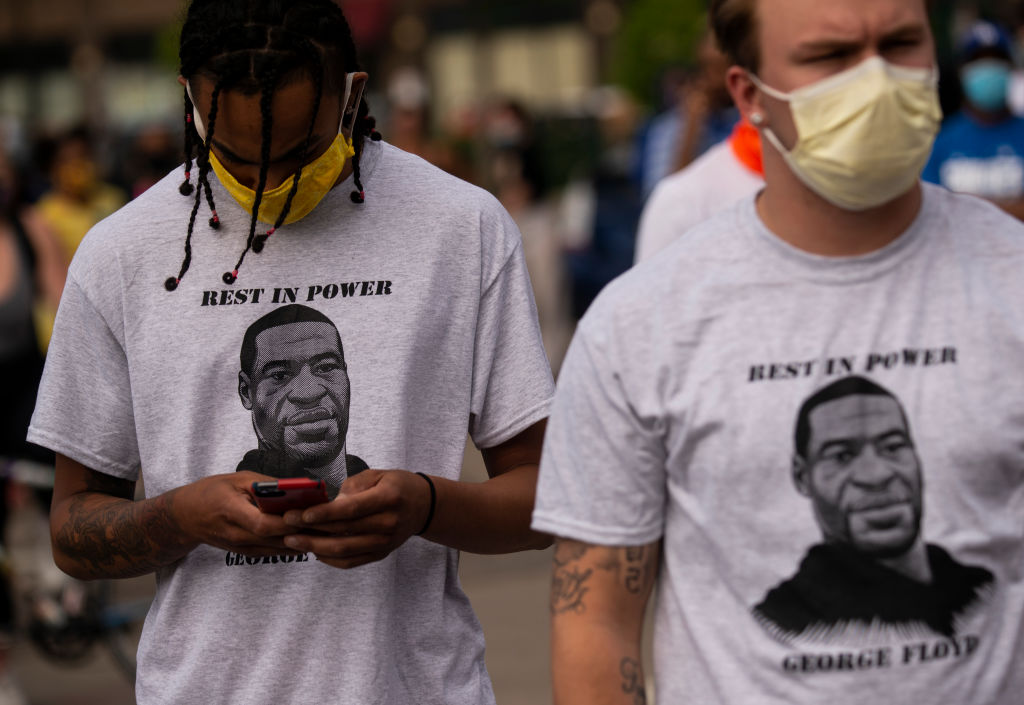
MINNEAPOLIS, MN – MAY 27: Two men wear shirts stating “Rest in Power George Floyd” outside the Third Police Precinct on May 27, 2020 in Minneapolis, Minnesota. (Photo by Stephen Maturen/Getty Images as shared in United Methodist Insight, May 28, 2020)

Hudnut wrote the note “words, words, words” as we listened to the remarks of a popular young governor. The speaker was his opponent in 1992, as Bill challenged the young governor for his seat. Hudnut lost that race. The governor went on to another term; then was elected senator, like his father before him. As I recall all these years later, Hudnut was reacting to the governor’s word-salad related to a question about law enforcement and tragedies like the death of Michael Taylor. How might we better address police abuse? In 1987, Michael Taylor, a 16 year old, was handcuffed and in the custody of Indianapolis police officers when he was shot and killed. The officers claimed Taylor had somehow, with hands in cuffs, behind his back, grabbed one of their weapons. — So, they said, “they had to kill him.”

Michael Taylor’s murder remains an open sore for many in Indianapolis, myself included. George Floyd’s murder and the national response only displays that we have a pervasive and longtime pattern of such abuse. We have only formalized the “lynching culture” prevalent a century ago. In 1987 Bill Hudnut and I publicly disagreed about Indianapolis’ response in the Michael Taylor case.

William Hudnut
GreatLakesMetros.wordpress.com

Don’t get me wrong — Hudnut was a wise voice, took a lot of heat for not being tough enough on crime and too friendly with the minority community. At the time, Bill challenged some prevalent police practices. Still, he was the mayor and thought his primary job was to keep the peace and the support of his party. In private, we talked on several occasions, we prayed together and he shared his profound sadness. Behind the scenes Bill took actions to improve police practices, including better public review — something that is still not sufficiently dealt with today.

Words, words, words: Hamlet” is remembered now. At the time they were first shared with me, neither of us knew how much “the Rev. Bill Hudnut,” graduate of Princeton University and Union Theological Seminary, was a part of a dying breed. He was a Republican committed to racial justice and civil rights in word and DEED. A part of his story is told in Indiana History, “William Hudnut III versus the Reagan Administration” (https://indianahistory.org/stories/william-hudnut-iii-versus-the-reagan-administration/).

Hudnut with Oscar Robertson
Indianapolis Star

The Republican Party lost its way. How can they claim to be the party of Lincoln or Grant? How? I wish it was this easy. If one can just blame someone else, it is too easy. Our nation has lost its way as well. Bill Hudnut was a practical politician — yes, he made compromises. He was right to have a jaundiced view of the language of the Democrats.

We have all lost our way. We somehow think that there is some easy way to undo the massive damage of racial injustice that is four centuries old in our land. “Words, words, words” Bill Hudnut rightly quoted from Shakespeare’s Hamlet. In every arena related to racial justice we have talked too much and accomplished too little. The deceit was implicit in the opening words to our constitution, written by a slave owner, who knew better but never emancipated his own slaves. “We hold these truths to be self evident, that all men (and women) all are created equal…” Perhaps our generation can do some bold things to make these sentiments more than words.

Hucksters and Magic Pills

Hydroxycloroquine and Hucksters Everywhere

We have been offered a magic pill — Hydroxycloroquine. We are told by “him-who-will-not-be-named” that he takes “a pill daily” to protect from infection by the COVID-19 virus. This simplistic prescription is mimicked by Brazil’s President Jair Bolsonaro. Both men share certain anti-scientific, anti-democratic tendencies that result in disasters for their nations whether environmentally or in terms of public health. Brazil and the U.S. now lead the world in deaths from the corona virus, surpassing Italy, Spain, Russia and the United Kingdom. Still, these two men propose simplistic answers to complex challenges. Sadly this is accepted by millions as reasonable. Why not? It is easier than taking the time or thought to offer complex options that are more difficult to implement.

This prescription of C₁₈H₂₆ClN₃O as the magic pill would be sad enough, if it didn’t point to the multiple ways good science is being undercut in other human arenas. Quality scientific work is complex and, if done properly, usually doesn’t result in a single, easy-to-use form. However, hucksters across time and around the world still suggest they have the magic potent, “the cure.”

Like the salesman “Professor Harold Hill” in the Broadway Show The Music Man, contemporary hucksters abound. Often what is being sold can be beneficial, if used wisely. Hydroxycloroquine, medical research has demonstrated, can be beneficial to folks struggling with malaria or lupus. Now research shows that “this magic pill” may do more damage than good. Just as young people learning to play band instruments, as “Professor Harold Hill” prescribed to the good folks of the fictional River City, Iowa the remedy misses the mark. However, seventy-six trombones, new band uniforms or even one-hundred-and-ten-coronets are hardly effective cures to the so called social diseases as diagnosed by the huckster. A marching band might engender appreciation for music and even civic pride but will do little to change the behavior of young folks hanging out in pool halls or gambling on horse races.

Across history and around the world hucksters sell their wares. No doubt some of these salespersons even believed in the efficacy of the remedy they offered. Many others were simply hyping up a conspiracy that could benefit them economically. (See Dana Milbank’s satarical commentary on such hucksters at https://www.washingtonpost.com/opinions/2020/05/19/if-trump-likes-hydroxychloroquine-hell-love-camel-urine/).

Every day, I am amazed by the hucksters who deny research, good science and even basic logic. The simplistic solution is offered where other positive actions could be taken. There are so many ways we could act rationally that can make a difference. Instead of taking a daily pill, what if “he-who-will-not-be-named” modeled a healthier alternative and actually wore a mask, worked to provide a national testing and vaccine options, let medical experts speak openly to the nation or demonstrated compassion and wisdom for those who are suffering. No — that would be too complex, too scientifically informed.

I watch phony cures being offered in other venues. We keep seeking the “magic pill,” the simple answer to complex problems. For example:

  • What if we decided to seek a well-reasoned response to climate change? This would mean a comprehensive program moving away from fossil fuels. It would mean rebuilding infrastructure so some future tragedies like the dam failure this month in Michigan might be avoided as altered weather patterns bring more rain and floods.
  • Or, what if we addressed the need for universal health care? Tens of millions are suddenly out of work and without health insurance, isn’t this the occasion to move as a nation to address health care for all rather than simple encouraging “reopening” to get back to a “normal” that will leave tens of millions without health benefits?
  • Or, what if religious leaders stopped prescribing the “magic pill” of congregational development, or the perfect traditional doctrine, or a new leadership initiative or a restructuring? What if instead we focused on listening to and connecting with others, especially the poor? What if focus turned outward rather than seeking the one magic remedy of propping up their ever more irrelevant institutions?
  • What if as a nation we decided to offer safe housing to every citizen and stopped relying on shelters for those who languish in our alleyways, out-of-sight skid rows, or living out of a car?
  • What if we followed the excellent research available regarding opioid addiction and instead of making it a moral failure, or something that leads to imprisonment, we understood this as a health and medial problem?

We have done many remarkable and complex things before as a nation, in our corporate life, in our health care and religious institutions. There are examples like establishing the interstate highway system, public education, the Marshall Plan, the polio vaccine, the G. I. Bill, religious and legal circuit riders, or Medicare. The list goes on and on.

For now, however, I fear we are destined to a future where the small mindedness of magic pill thinking will prevail. We have moved the small-minded, ideologically rigid to the front of the line in too many arenas. It is the choice offered by too many political, corporate, healthcare and religious hucksters all eager to protect their power and profits.

Hydroxycloroquine anyone?

Back to “Normal”?

What Shall We Consider Normal?

When I hear politicians say “we must get back to normal,” I can barely contain my laughter — or my tears. Good reader, would you suggest that what we were experiencing as a nation, as a world, in 2019 was “normal?” If so, we may need to have a little chat about faith, science, reason and being a society of constitutional law. We would need to talk about the meaning of “life, liberty and the pursuit of happiness.”

This question about normalcy is the second of three questions we are considering in this time of pandemic. Here they are again: 1) What livelihoods will we love or treasure? 2) What shall we consider to be normal? 3) What shall we truly love and treasure in the future?

Blizzard, Long Winter or New Mini Ice Age?

In early March I began to see newsletters and opinion pieces that offered a metaphor regarding the changes the COVID-19 pandemic would bring. By now, dozens have used these images. Here is how it is framed: Is this pandemic going to be more like a blizzard, a long winter or a new mini ice age? In other words, How long will it last? How bad will it get? How much will we be changed?

Award winning journalist Laurie Garrett, a highly respected scientist and author of The Coming Plague has been warning of the possibility of a world pandemic for more than three decades. Garrett has emerged as someone who can offer us clues as to what may be ahead. In an interview with Frank Bruni in the New York Times on May 2, 2020 Garrett was asked: So, is “back to normal,” a phrase that so many people cling to, a fantasy?

Her answer: “This is history right in front of us,” Garrett said. “Did we go ‘back to normal’ after 9/11? No. We created a whole new normal. We scrutinized the United States. We turned into an anti-terror state. And it affected everything. We couldn’t go into a building without showing ID and walking through a metal detector, and couldn’t get on airplanes the same way ever again. That’s what’s going to happen with this.”

When asked in a CNN interview on May 7th if this situation is worse than she had predicted and feared, Garrett’s response was clear. She warned that things will not be the same and that five years from now we would still be dealing with the changes across all of our society brought by this pandemic. She noted that in every other viral outbreak over recent years, the CDC (Center for Disease Control) was a scientific center of good information and strategic thinking. However, now they have been reduced in scope, their guidelines are being set aside and this will only lead to a wider spread of the virus and deeper damage to our society and other societies around the world.

So… what shall we consider normal? Sadly, I believe that even with a change at the top of our government, the damage has been done and over the next year will continue with a result that…. well, at least a long winter of discontent is ahead, or, I hate to write this, but we may be entering another mild ice age like our world experienced from roughly 1300 to 1900 AD. As one writer has put it: For 600 years the earth was colder than average. This affected farming practices, house designs, and pushed Europeans to search for warmer areas and more fertile lands to farm, such as in North America. This was a multi-generational event that shaped the history of the world. People lived their entire lives in this ice age (Jeff Clark, “Blizzards, Winters and Ice Ages,”Rural Matters Institute, April 14, 2020).

Is Normal Our Best?

My sixteen year old grandson and I recently talked about societal norms in our weekly zoom chat. (“A weekly zoom chat with a 16 year old?” you say. Okay, I guess this is a new normal — at least for a while.) In our conversation, I rehearsed the sociological categories of social norms: folkways, mores, taboos and laws. He politely listened and then with appropriate doubt to the sufficiency of these categories, observed, “But none of those things can measure what is truly ‘normal,’ right? Don’t we need to also think about what things are ethical, I mean like moral?” Of course… such a smart grandson I have!

In the mid-1980s, I faced some powerful questions about norms and ethics. It was during the HIV-AIDS epidemic. I was pastor of Broadway United Methodist Church in Indianapolis. Suddenly there were many young men in that congregation and community who were getting very sick. They were dying from this strange new disease. First a few, then dozens. Our congregation had welcomed many gay and lesbian persons into membership. Actually, it may be better said that many LGBTQ folks were generous enough to welcome us. We were connected, the phony barriers and bigotries of religious tradition and being closeted were set aside for a new normal of common humanity. It was a marvelous time as I grew in understanding and faith. I learned many things about my own ignorance and unrecognized biases; and, it was a painful time as well when many of my superiors in the denomination were upset that we were breaking with what was their “normal.”

In the midst of this, a phone call came from the father of one of the young men who had been worshiping with us. He started by introducing himself as the young man’s father and then said, “I am a pastor in Ohio and I want you to know that I don’t agree with your theology or my son’s choices.” There was a long pause… I was expecting a theological harangue. Still, I could tell this might be different. Even over the phone from hundreds of miles away I knew the man was holding back tears. With a breaking voice this father went on. “I guess part of me thinks your church offers too much grace, but another part of me is so grateful you have found each other. I am glad he is connected even if it is not normal.”

As a pastor, I was grateful that that congregation had decided it would be normal to live in terms of too much grace… grace for all. John Wesley, Methodism’s founder often pointed to Psalm 145:9 which reads, “The Lord is good to all and his compassion is over all he has made” (NRSV), or from another source it is translated “God is good to one and all; everything he does is suffused with grace” (The Message).

Surely, my denomination is still very broken over how we align our ethics and our norms. I often ponder what John Wesley would think of our quarrels these days. For me, at least, I make the choice to come down on the side of Too Much Grace — for me and for all.

I have been warned by my psychologist and psychoanalyst friends to take care when speaking of any thing as “normal.” One of them was bold enough to say, “Well, I may be normal but you look pretty sketchy to me!” I replied, “this is what keeps folks like you employed.” Anyone who has read E.B. White’s delightful short story “The Second Tree From the Corner” will appreciate that, like beauty, normal is in the eye of the beholder.

If a healthy way forward, beyond this pandemic is to be discovered, it will require honesty about the scientific data, more good research, testing and tracking… and perhaps a vaccine. It will require more, I believe. It will require that we see that God’s compassion extends over all and to all.

Or, we can pretend that we can “go back” to a fantasy world, where science is diminished, bigotries are encouraged as normal, and God’s care for all is ignored.

Such a move backwards from the fact that we are all connected one to another and to creation is a possibility. Let’s choose another option. Wendell Berry wrote: “Only by restoring broken connections can we be healed. Connection is health.” (Berry, Wendell, Essays: 1969 to 1990). (See also https://wordpress.com/block-editor/post/philipamerson.com/6682)

So choose your metaphor: blizzard, long winter or ice age? What will be a compass and a guide as we seek to better align the normal with the ethical? I fear we are in a long winter at least; probably a mild ice age. John Wesley offered this overarching way of proceeding: “Do no harm, Do Good, Stay in Love with God.” I will look, in these ways, to restoring broken connections — to getting to a new normal or a “daily harmony” as one therapist friend suggests — and to living with others in terms of our common humanity and the sufficiency of God’s grace as we journey together.

Even if we could go “back to normal,” I would work and pray that we could do better than that.

Treasured and Loved: Whose Life? Which Livelihoods?

Treasured and Loved: Whose Life? Which Livelihoods?

Who will take responsibility? Is there a voice of ethical clarity among the leaders in the White House?

As a six-year-old I accompanied my father to a religious bookstore in Louisville, Kentucky. To my preschool eyes, the counters were a wonderland — filled with lovely trinkets — “notions,” as the store owners called them. I saw dozens of inviting small treasures designed, no doubt, by someone in post-war Japan to appeal to a six-year-old American child. One of these items, a small two inch pocket knife somehow, mysteriously, ended up in MY pocket. The imitation pearl handle carried the inscription “God is Love.” Those were the same words beautifully stenciled in the front of the sanctuary of the antebellum church where my father was pastor. In fact, those words, “God is Love,” were among the first three words I had learned to read.

Heading home, back across the old K & I bridge that separated Louisville from New Albany, I took out my new prized possession, opening the blade and reading the words again. Then I heard, “where did you get that?” I was jolted from my revere. I remember that my heart leaped and there was a noticeable wetness in my six-year-old pants. Again, “Where did you get that?” my papa asked. Through tears, I told him that it was beautiful and it had the words “God is Love” printed on it just like in the front of the church. “See,” I held it up, trembling and then handing my booty over. Within a half-an-hour we were back in the store. After paying for the knife, papa explained that he had given me a loan and I would be paying him back out of my allowance, with interest!

I learned a lot that day… and on many other days, as I learned personal habits of responsibility and about the lifestyle to be expected of followers of Jesus.

As the COVID-19 virus lumbers across our nation destroying the lives, health and the future of millions, I wonder if our president ever learned such a basic ethical lesson. As our healthcare, educational, commercial and technological strength is sapped away, instead of a clear taking-of-responsibility, instead of a plan, we are offered up excuses, phony narratives, wagons-full of diversions, and, most troubling we are given binary options as to who is to blame and how we are to proceed. We are told again and again — and shifting from day to day — that one idea, or group, or preference must be sacrificed to another in order to recover from this scourge.

I wonder — did anyone ever hold the six-year-old Donald Trump accountable that made a difference in his sense of the value of himself and others? Or, how about when he was twelve, or twenty-five, or sixty? Has this sad, sad man ever been asked to move toward healthy adulthood? It is precisely this that would help him now lead a nation in answering the questions, “Whose lives are to be saved and what is to be treasured?” Did he ever have to look past his own self-interests to know that life is complex and most things are NOT a simple either/or choice?

With the virus, a veil has been lifted that makes evident what was present but unseen by too many prior to this pandemic. It is much more than the narcissism and deceitfulness of the White House that is exposed. It is a revealing of the inequalities in healthcare access and economic resources available to our citizens. [I will not rehearse the data here as to which groups of persons are currently suffering the most from this virus. I will suggest that ultimately, we ALL face difficulties due to these inequities.]

The disparities in healthy options for care based on social class or race have become painfully clear. Who are suffering the most? Will we treasure these? As the statistics from this pandemic are presented it is clear that the essential front line workers, healthcare providers, AND public service personnel are also those who are the most economically challenged. They are the lower-middle class, the poor, the immigrant and those without shelter or healthcare options.

The United States represents less than five percent of the world population and current reporting has us with more than twenty-five percent of the reported cases in the world! Something is amiss. Something more than the way the counting is done — here or elsewhere!

Where is Our Treasure? If God is Love, what does it mean for us?

Persons familiar with Christian scriptures will have already anticipated that I will point to the teaching of Jesus found in Luke 12:34 and Matthew 6:21. Jesus offers this observation, “Where your treasure is, there will your heart be also.” Jesus goes on and teaches, in these passages and throughout the gospels, that it is the neighbor, the weak ones, the stranger, the immigrant, the poor, the wealthy — ALL are to be treasured. All are a part of God’s household of love.

What do we believe should be valued and who should be sacrificed? These are matters of the heart — they are core values. For most they are learned in childhood. Sadly, for some, these are never learned. They may also reflect our ability as a nation to stand tall and take responsibility now.

A second answer, found throughout scripture is our kinship with all others and all of creation. Every other person is a child of God and they should have BOTH a life and a livelihood.

In Genesis 4:9 after killing his brother Abel, Cain responds to the question, “Where is your brother?” He answers with those famous words, “Am I my brother’s keeper?” Some translate this as “Am I my brother’s guardian, my brother’s baby-sitter, or my brother’s brother?” In this exchange of questions, it is the next question asked of Cain by God that we now face. It is “What have you done?” Are we our brother and sister’s kin?

I believe the answer for our citizens and responsible adults everywhere is, and must be, a resounding “YES.” Who is my neighbor? Who is the one who should receive my care? Every other person!

Sadly, I have known some pastors, rabbis and imams who read their scriptures differently. They would say the answer to the question “Where is your brother or sister?” is “they are only those who are in my congregation or who are truly Christian, Jew or Muslim. Only these are to be considered my neighbor,” they would suggest. Think of the story of the Good Samaritan (Luke 10). How can we not see that the three words “God is Love” apply to all, everywhere?

This is NOT a screed against the wealthy. Some of the most generous folks I have met are blessed with many resources and they share them wisely and widely. At the same time, some of the stingiest people I have known are persons who always, in every action and decision, seek to selfishly add to their possessions. In a year, or perhaps two, the answer will be clearer as to what we have truly treasured. We will see how some of those who have taken political actions in these months were also benefiting their own status, portfolios and bank accounts. This is, sadly, too often the human behavior.

We can love our livelihoods — but not if we sacrifice the neighbor.

For me, as a Christian, I continue to learn the core lesson that “God is Love.”

Loves and Treasures

Loves and Treasures

Late in 2019, prior to the COVID-19 pandemic, I came across a surprising passage from an economics text. Edmund Phelps, winner of the Nobel Prize in economics, and professor at both Columbia and MIT, edited a book back in 1975 (Altruism, Morality, and Economic Theory). In his introduction he writes, “When Sir Dennis Robertson lectured at the bicentennial celebrations for Columbia University, it was therefore expected that he would address a question of grandeur: What Do Economists Economize?” His unexpected answer: We economize on love.”

We economize on love. How apparent this has become in recent weeks. What or who do we love most truly? What or who do we treasure most dearly? It is an ancient religious question that has been raised to the highest levels of our consciousness by this pandemic.

Life or Livelihood? The debate ramps up. Will we preference saving lives or saving livelihoods? My congressman, Trey Hollingsworth, was an early voice (April 14) proposing we should “put on our big boy pants” and accept some loss of life to secure the ‘American way of life.’ The genie was out of the bottle — there would soon be a wider call to sacrifice some people to the benefit of others. We shouldn’t let the “cure be worse than the disease,” meaning, of course, that a national effort to shelter-at-home shouldn’t get in the way of quickly returning to “business as usual.”

Since that time, in a rising crescendo, the American people have been called on by folks like Larry Kudlow, Chris Christie, Donald Trump, and the governors of Texas, Georgia, Florida and other states, to “wage a war” on COVID-19 by… you guessed it — restarting the economy. It is that simple? Really? These folks admit such actions will threaten the lives of many, especially the most vulnerable, still they persist. Why? The true purpose, in far too many cases, is the protection of wealth, property and businesses of those who are at the top of our economic system. I am not unaware of the damage that is being done to small businesses — what I do argue is that we can find a better way.

How far we have come from early American leaders like William Penn who wrote: “A good end cannot sanctify evil means: nor must we ever do evil that good may come of it… let us then try what love will do.” What might love do differently? What might faithful people seek in this time. As a Christian, I ask myself, “isn’t there a better way to proceed?”

Life or livelihood is, of course, a false choice. Why are we not approaching this with a third option? Why are we not asking how can we save as many lives as possible and at the same time do as much to stabilize economic interests as well? The answer may be that what we truly love, what we most deeply cherish, is exposed by this pandemic.

What do we treasure?

Like so many of the choices offered, things are being boiled down to simplistic dichotomies – either/or – either the wealth some have accumulated or the life of many others. In some places (New York, New Jersey, Massachusetts, California), after the tragic loss of life, there seems to be a slowing of new infections. Yet, even this is at risk, if we are not prudent.

In other places where the COVID-19 virus is only now appearing, governors and mayors are being urged “open up the economy and immediately get back to normal.” My fear, based on considerable experience and research, is that we will see, not only many persons in poor and/or rural and/or isolated communities succumb to this virus, and in the process we will see the destruction of the economic life of these poor and already weakened communities, their businesses, hospitals, social services and safety personnel. All of this will be due to this false choice that has been unevenly conceived with a preemptive “restart” and “return normal.”

A few days ago Donald Trump projected that “tragic as it is” we will “ONLY” lose about 60,000 lives, then a few days later it was “ONLY” 75,000, and as I write, he suggests “tragic as it is” we will “ONLY” see perhaps 125,000 die but, he argues “we must all fight the war and restart our economy.” One wonders what will be the “tragic as it is” number of lives that will be counted among the dead from this virus by mid-summer? One wonders what is most loved and most treasured?

All of this begs several questions for people of faith, and especially for those of us who are Christians. Here are three that come to mind today; questions we will consider in the days ahead:

1) Which livelihoods are to be preferred and saved?

2) What shall we consider to be normal?

3) What do we truly love and what do we treasure?

For This We Pray

My awakening came after the National Prayer Breakfast on the morning of February 6th. The annual prayer breakfast was heavily covered by the news media. For the wrong reasons. You see, following Arthur Brooks’ message about Jesus’ command to love our enemies, President Trump began his remarks with “I don’t know if I agree with Arthur,” and proceeded to question the faith commitments and prayers of those who disagree with him. It was a direct dismissal of Brooks’ message that our nation needed to move beyond a “culture of contempt.”

These are difficult days. Prayer is in short supply. Rationed? No, I fear it has “been disappeared.” Taken to the outskirts of our commonweal and imprisoned in our ideological certainties. Lost in rancor amplified by competing messages of contempt sent across social media and cable news.

The impeachment trial had ended only a few hours prior to the breakfast. The Senate voted for acquittal. Senator Mitt Romney had spoken movingly of his own deep faith commitments and these ethical commitments lead him to vote for removal of the president based on one of the charges. So, this prayer breakfast, this annual event to increase mutual respect and deepen faith, was turned into a sad spewing of invective and malice.

The national news reports missed the lead story — the truly critical message of the morning. The true-north of the gathering was Brooks’ call to step beyond our culture of contempt and ending with a video-linked benediction offered by Congressman John Lewis who reminded those present of Dr. Martin Luther King Jr.’s words, “I have decided to stick with love, for hate is too heavy a burden to bear.” O God, teach me to pray.

As the day went on, I kept thinking of the missed opportunity, the deeper story. The call to move past all the grievance and fear. To clearly name the lies and still act as neighbor with those who disagree. This is difficult work. O God, teach us to pray.

I found myself wondering what would happen if, despite what the president believes about the prayers and faith commitments of folks like me (or even Mitt Romney or Nancy Pelosi) — what if — what if my prayers, our prayers were ever more publicly visible and shaped around the core commitment to neighbor love. O God teach me how to pray.

What if there was a daily call to prayer for millions of us, as a preparing of our nation’s heart and mind shaped for acts of love? What if these were prayers of confession for my (our) failures? What if daily, there was a national call to prayer, challenging the retributive policies that require the making enemies, the telling of lies about others, the ridiculing of those who differ, the establishment of dichotomies? Such prayers could not be carried in the shibboleth of nice, soft words. They would include prayers of judgement and for deliverance from the evil of these days. O God, teach me to pray?

Such prayers will require acts of resistance and demand the courage to speak both with respect and still with clear critiques of the falsehoods and damage being done to others and to our republic. O God, teach us how to pray.

With this on my mind I came across the passage below in Peter Storey’s autobiography, “I Beg to Differ.” Storey, a Methodist pastor in South Africa, who fought the good and courageous fight against Apartheid, knew how to pray this kind of prayer — the prayer that I was now seeking to discover in this time and place. He speaks of the call to those with whom he worked in this way:

“I reminded them that “John Wesley’s theology was beaten out on the anvil of his daily battle with personal and social evil in a brutalised society very much like our own.” Real hope was born in the inward life of the soul because “hope’s final fortress is the heart”, but needed to be realised in concrete action. Rather than being part of the nation’s disease, the Church had to be the place where “the love of God leaps across the parallel lines drawn by history.” ― [from Peter Storey’s, “I Beg to Differ: Ministry amid the teargas.”]

“Hope’s final fortress is the heart,” O God, teach me how to pray.

A Crack in Everything

On Wednesday, December 18th the House of Representatives voted to impeach Donald Trump. It was a day of sadness and a day of hope. For me the hope didn’t ensue from the debate on the floor of congress or even the the vote to impeach. Rather it came from a surprising place, Christianity Today magazine.

Mark Galli, longtime editor of the magazine who is about to retire, wrote an editorial that gave voice to a bubbling discontent that has marinated among Evangelical Christians for years. In short, Galli asserted that Donald Trump should be impeached and removed. https://www.christianitytoday.com/ct/2019/december-web-only/trump-should-be-removed-from-office.html.

Galli writes, this president’s actions and words are “profoundly immoral.” Trump, Mr. Galli asserts, “has admitted to immoral actions in business and his relationship with women, about which he remains proud. His Twitter feed alone—with its habitual string of mischaracterizations, lies, and slanders—is a near perfect example of a human being who is morally lost and confused.”

Was I surprised? Well, in truth my surprise was only that it has taken this long for an Evangelical leader with moral courage to surface. Over the past three years my Evangelical friends have lowered their gaze and voices when speaking of the wholesale surrender of Christian virtue to Donald Trump. They spoke of his enablers, like Franklin Graham and Jerry Falwell Jr., having strayed far from any biblically normative ethic. Just how solid is the support for Mr. Trump?

There has been growing discontent and concern near the heart of important parts of the Evangelical universe. For years, words of concern have come from Fuller Seminary that the racist language and the horrific immigration policies of the Trump administration are not to be endorsed. Respected Evangelical colleges across the nation, places like Point Loma Nazarene in San Diego, Wheaton in Illinois, Seattle Pacific, Houghton in New York have seen a growing willingness to say “enough, this is not who we are!”

In May 2019 there was widely expressed faculty and student discontent at Taylor University in Indiana when Vice President Pence was selected as commencement speaker. Thousands signed a petition of concern regarding the racism and bigotry of the administration. There was a request to rescind the invitation, to no avail. Mr. Pence spoke; but dozens of the graduates and faculty did not participate or wore symbols of protest saying “We Are Taylor Too.”

In the state universities, like in my hometown, Evangelical student organizations are finding young Christian students who are embarrassed by the claims that Trump represents an Evangelical agenda. They discover alternative voices and perspectives.

I listen to the pundits who say the Evangelical support is a solid wall, eighty percent (80%) or more of the Evangelicals will support this administration. I doubt it. I doubt it will be there in November. O yes, I suspect a majority of those who wear the “Evangelical” label will march in line. However, there is dissent, especially among the young.

So, my belief, my hope at least, is that December 18, 2019 was an inflection point, a crack in the silence, a step by the honest adventurers away from all of the aiding and abetting. The gift of truth was spoken even amid the threats to “stay in line.” This crack in the facade of official Evangelicalism is an opening for small virtues like manners, and greater virtues like truth, altruism and beauty. I want to express gratitude ahead of time to our courageous Evangelical sisters and brothers speaking words of truth in the new year. May your tribe increase.

I am reminded of words of Leonard Cohen: Ring the bells that still can ring, Forget your perfect offering. There is a crack in everything. That’s how the light gets in. (From Anthem by Leonard Cohen.  See also The Soul’s Journey, Alan Jones, p. 219)

Prayer: O Christ of Christmas, lite our way in the year ahead that we may see your pathways of hope.  Amen