Fortnight – Day9: Restoration

Fortnight – Day 9: Restoration

Restoration is a powerfully motivating message — as is evidenced in 2020 by Joe Biden’s call to “restore the Soul of America.” When Donald Trump ran for president in 2016 his slogan was “Make America Great Again.” With clever marketing, the shorthand MAGA brand appeared on baseball caps, flags and t-shirts. Of course, he was borrowing from the vision Ronald Reagan offered in 1980, the difference being that Reagan spoke of American as “a shining city on the hill” and Mr. Trump focused on “American carnage.”

The discerning reader, as I am certain you are, is asking “restored to what?” Not all restorations are desirable — we don’t want to return to the racism, violence, misogyny or other bigotries of the past. I am speaking of those things that would restore strength, health and joy where they are lacking. It is a restoration toward flourishing. Restoration, in every understanding of the word, needs to be shaped in terms of the values and virtues mentioned early on in this series: the good, the true and the beautiful. It is in the implementation of such restoration that difficult conversations will be required. How might there be polycentric options for flourishing in our society?

The focus on this the ninth day of the fortnight before the 2020 election will be threefold: Natural Environment, Justice System and the Common Good.

NATURAL ENVIRONMENT:If you haven’t already discovered it, I encourage you to view the series The Age of Nature currently showing on the Public Broadcasting System (PBS) and produced jointly with The Nature Conservancy. The first episode is entitled “Awakening” and to my way of thinking stands as a master metaphor for the restoration needed across all of our systems — humanly constructed and the natural world.

Brice Canyon, Utah

This Awakening episode includes stories of how ecosystems are restored, with a little human assistance, around the globe. Natural ecological “awakenings” are highlighted from Panama to China to Norway to the coral reff off of the Bikini Atoll. I found particularly compelling the efforts of philanthropist Greg Carr in putting his wealth and knowledge to work assisting in the restoration of Gorongosa National Park in Mozambique. (You can read more about the early high stakes effort by Carr in the May 2004 issue of Smithsonian Magazine, https://www.smithsonianmag.com/travel/greg-carrs-big-gamble-153081070/). This is but one of the astonishing examples of restoration shared in Awakenings.

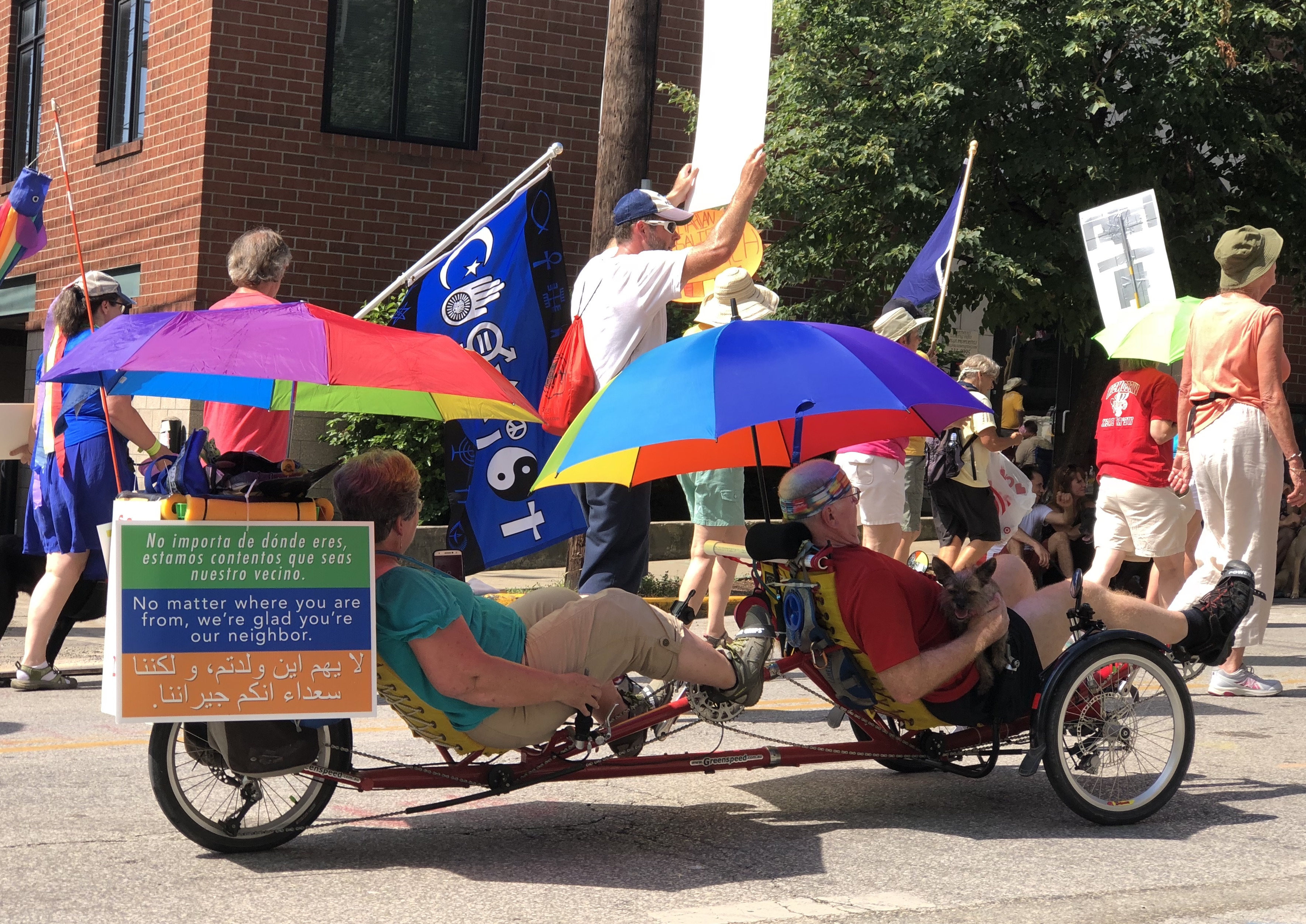
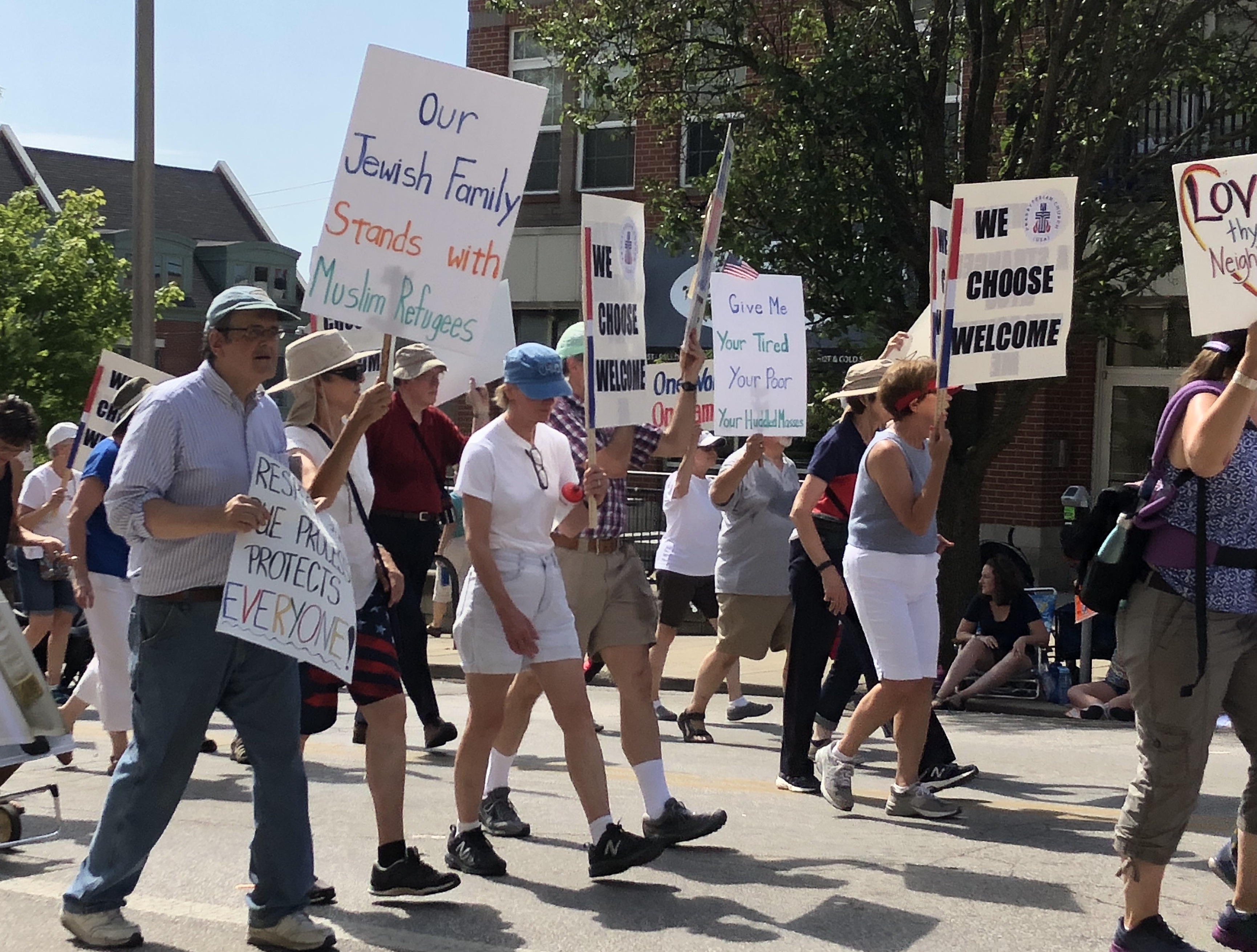
July 4th, 2017 Parade, Bloomington

RESTORATIVE JUSTICE: For too long the criminal justice system in the United States has focused on punishment only, on retribution. Even though there was lip-service to the idea about “rehabilitation,” the core motivation was to punish someone for a crime. However, restorative justice is about more than prisons or a court system. It can be as basic as how discipline is handled in school or at camp. Restorative justice involves restitution by the offender in a process that includes the victim and often representatives of the wider community. Rupert Ross’ book “Return to the Teachings” explores the ways Aboriginal cultures have been effectively incorporated into restorative justice.

COMMON GOOD: Rabbi Jonathan Sacks has offered a remarkable resource in his work Morality: Restoring the Common Good in Divided Times (Basic Books, September 2020). Sacks offers a framework for the public task of reconstructing a shared sense of virtue and values. He writes that we need to look beyond the perceived solutions found in politics and economics toward the deeper, bedrock set of moral assumptions. He shows “that there is no liberty without morality and no freedom without responsibility, arguing that we all must play our part in rebuilding a common moral foundation.”

Again, I mention the more accessible and excellent resource for congregational study, Mark Feldmeir’s A House Divided: Engaging Issues through the Politics of Compassion. Earlier this week, my local congregation held an online discussion about Feldmeir’s work in which serious and respectful agreement came that we all have a responsibility to work at reweaving the torn fabric or our democracy.

There are currently scores efforts across the nation to encourage a stronger civil community. Good reader, you have probably thought of a several. This is our work, the responsibility ahead as we seek to RESTORE a commitment to seeking the Beloved Community.

So, on Day Nine — with five days remaining between now and the election — I would seek restoration of that which leads to strength, health and joy for persons, communities and nation.

Fortnight – Day6: Sabbath

Fortnight Day6: Sabbath

And we pray, not
for new earth or heaven, but to be
quiet in heart, and in eye,
clear. What we need is here.
(Wendell Berry)

If the presidential election, nine days hence, is to address the anxieties and despairing so many carry, it will require more than replacing one person with another. It will require more than changing the nameplates on office doors. It will require a transformation in us. It will require Sabbath. While many swamps may need to be drained, the primary swamp needing attention may be within the human heart.

Whatever the outcome of the vote, whether known in a few hours or several weeks, the temptation then will be to continue in the patterns and habits established out of anxiety, grievance and distrust. Sabbath will be required. Walter Brueggemann reminds: “Sabbath is the occasion to reimagine all of social life away from coercion and competition to compassionate solidarity.  Sabbath is not simply the pause that refreshes.  It is the pause that transforms.” (Brueggemann, Sabbath as Resistance, p. 44)

Lily Pond, The Huntington Gardens, 2015

I fear many things. I am anxious about much. Mostly, however, I desire to move from patterns of constant anxiety to another way of life. A way where I know the gifts of sabbath. The joy of rest, restoration, re-imagination and resistance. Joan Chittister wrote: “Sabbath is that period for holy leisure when I take time to look at life in fresh, new ways.” She encourages “contemplative leisure.”

Sabbath can serve as the great equalizer — it is a time when we are freed to set competition aside. As a great equalizer we are freed to recall that all share in creation; each other person is neighbor. Again Walter Brueggemann writes: The task is to SEVEN our lives. — On the Sabbath Day these vulnerable neighbors shall be like you.  Sabbath is not simply a pause, but the occasion to re-imagine all of society away from coercion and competition. (Sabbath as Resistance, p. 43)

++++++++++++++++

A Jewish Sabbath Prayer:  
Days pass, 
Years vanish,  
And we walk sightless among miracles.

Fortnight – Day5: Joy #2

Fortnight – Day5: Joy #2

When I read that comedy clubs were not allowed to be open in certain cities due to the corona virus, I confess to being sad. This was a time when the good medicine of humor was needed. We had already lost the joy of choral groups singing together and now, now comedy clubs!

As we face the presidential elections what evidence is there that Donald Trump or Joe Biden might encourage joy? Too often, when a little lightness of heart might be a gift for our nation, we instead are offered a tour of potential fear and places of distrust. I am eager to have comedy clubs open again — even more — I am ready for congregations that help us know the joy of faith. For now, this may be limited to online worship.

There should be more laughter in our congregations; not necessarily the comedy club type but not excluding that either. This is a sign of liberation, of healing, of joy. (I am not speaking of what was called “Holy Laughter,” associated with the phenomenon known as the “Toronto Blessing,” popular a few years back. That always seemed to me to be contrived.) I am speaking of joy related to the everyday lives and troubles of a people… things that can be best spoken of in worship, with other believers. Some of the best laughter I remember occurred at a funeral.

I was reminded of an exercise on discovering more joyful living prepared for persons at a spiritual retreat. A copy is attached below.

The scriptures are filled with joy and rejoicing. There are parables of Luke 15, where there is rejoicing over the return of the lost sheep, the coin, the son. As Psalm 30:5 observes God’s intentions are that we should discover that, “Weeping may endure for the night, but joy comes in the morning.”

In the early 1980s I traveled with a group called Witness for Peace to the war zone between Honduras and Nicaragua. One evening we joined a group of villagers for worship. Even as there were distant rumblings from mortars exploding a few miles away, I was struck by the joyous character of the outdoor worship. There were songs accompanied by guitars and drums and tambourines. At one point in the liturgy a woman came to the center of circle. Barefoot, in a frayed, modest dress, she called us to prayer. She began, “And now we remember all the poor and suffering of our world.” It was a prayer of gratitude for the goodness of God. As the prayer ended, and the congregation shouted “AMEN,” a mortar shell echoed across the valley. It was as if in refrain. We all laughed. In that moment we saw the absurdity of war and violence so nearby as we gathered at the table of the Lord!

++++++++++++++

Mary Oliver’s Mindful

Everyday
I see or hear
something
that more or less

kills me
with delight,
that leaves me
like a needle

in the haystack
of light.
It was what I was born for —
to look, to listen,

to lose myself
inside this soft world —
to instruct myself
over and over

in joy,
and acclamation.
Nor am I talking
about the exceptional,

the fearful, the dreadful,
the very extravagant —
but of the ordinary,
the common, the very drab,

the daily presentations.
Oh, good scholar,
I say to myself,
how can you help

but grow wise
with such teachings
as these —
the untrimmable light

of the world,
the ocean’s shine,
the prayers that are made
out of grass?

“Mindful” by Mary Oliver from Why I Wake Early, Beacon Press, 2005.

+++++++++++++

From the Epistle of James, “My brothers and sisters, whenever you face trials of any kind, consider it nothing but joy, because you know that the testing of your faith produces endurance; and let endurance have its full effect, so that you may be mature and complete, lacking in nothing.” (Vs 1:2-4)

Fortnight – Day4: Joy #1

Fortnight – Day4: Joy #1

The final presidential debate of 2020 was held last evening. I didn’t watch. Couldn’t watch really. Not because I had already dropped my ballot in the box with the County Clerk. More than anything else, I suspected it would be a pretty joyless exchange. Wasn’t interested in more distraction, grievance, dreary argument, spin, grumbling or blaming others.

Joylessness — this is what I anticipated from the debate. I am fatigued by it all. If the follow-up analysis offered by pundits is accurate, I guessed right. Apparently Mr. Biden attempted to tease Mr. Trump about being Abraham Lincoln. The president missed the humor, as he does about many things, especially if his fragile ego is threatened. The reruns from the debate seemed to confirm that even though Mr. Trump seemed to use his “in door voice” more than in the past, he still seemed to offer more vinegar and acid than balm.

Thinking back over the years, to sermons I have preached or talks I have given, I often spoke of joy, laughter, or delight. Why? Well, I think joy, laughter and delight are recurring marks of faithful living. We all face suffering, pain, burdens and betrayals, but at the core of it all, God offers us JOY. Or, as C.S. Lewis puts it “Joy is the serious business of heaven” (Letters to Malcolm: Chiefly on Prayer, p. 93).

Serving as an interim pastor in a couple of congregations that had passed through some challenging times, it was clear that in the face of difficulty, humor can help. Laughter can offer an antidote to despairing. After one wise layperson observed “we have forgotten how to laugh in our parish,” we offered an entire series of sermons entitled “Count it all joy: Faith Crowned with Laughter.” I invited other friends to come and join me in the sermon series and we each shared stories of times joy made a difference in our work. As Steve Allen once put it, “Humor is the social lubricant that helps us get over some of the bad spots.”

I was not attempting to follow the current trend suggesting that worship should be a time of entertainment or avoiding challenging topics. Heaven forbid! Just the opposite, in fact. Humor often is a good way to approach difficult topics. More than three decades ago, in the late 1980s, when a congregation I served made the decision to fully welcome LGBTQ persons, it was the laughter and joy that helped us move forward. It was joy and an ability to delight in the gifts others might share and the abundance already present that offered us hope. We didn’t do it perfectly, but we did act with respect for the variety of beliefs in that church. Someone recently asked, “how did the people in that parish act in such a courageous way?” I didn’t reply, but I know they didn’t act out of courage so much as JOY.

Meister Eckhart, the 14th Century mystic said, “God laughs out of an abundance of life, energy and love.  I believe in a pleasurable, joyful, laughing God.

++++++++++++

A favorite reflection comes from Wendell Berry’s collection of Sabbath Poems (A Timbered Choir, p. 18).

Whatever is foreseen in joy
Must be lived out from day to day.
Vision held open in the dark
By our ten thousand days of work.
Harvest will fill the barn; for that
The hand must ache, the face must sweat.
And yet no leaf or grain is filled
By work of ours; the field is tilled
And left to grace. That we may reap,
Great work is done while we’re asleep.

When we work well, a Sabbath mood
Rests on our day, and finds it good.

+++++++++++

Whatever happens on November 3rd, we have work to do. Our joy must “be lived out from day to day.” It is a relief that there are no more presidential debates to avoid. Now, could someone do something about all of the email, television spots and fliers that seem to appear daily in the mail?

This is my goal for the remainder of this Fortnight of our Nation’s Soul. I will remember the JOY of living as a child of God. I will sing (not in a public choir of course), I will dance a little, I will laugh, read poetry, call friends, encourage persons to vote and give generously to good causes. I will choose to be joyful.

Fortnight – Day3: Compassion

Fortnight – Day3: Compassion

In this fortnight of our nation’s soul, we reflect on Compassion, the human virtue of seeing the world as others do — and when there is distress — acting to alleviate the suffering of others.

There appears to be operative in some places of power and privilege a callousness toward others. One cause is what I would call a hardening of the categories. It is an atherosclerosis of imagination. It is a different type of heart disease, hardheartedness, the inability to see the world as others do and understand the challenges they face. More than a lack of awareness or lost sense of common humanity, it is a lack of desire to reach out to others. Not long ago we heard a lot about compassion fatigue. I wonder, was this an easy excuse to go on one’s way ignoring others in trouble?

Thomas Merton wrote “What makes the saints saints is a clarity of compassion that can find good in the most terrible criminals.  It delivers them from the burden of judging others, condemning others.  It teaches them to bring the good out of others by compassion, mercy and pardon.  We become saints not by conviction that we are better than sinners but by the realization that we are one of them, and that all together we need the mercy of God.” (New Seeds of Contemplation and Connections 11/1/92)

As I pulled into the grocery parking lot I am confronted by competing categories of understanding. On either side are two cars festooned with bumper stickers. On my left among the stickers are the words “Christians for President Trump” and “Let’s Pray for America.” On my right a car with even more stickers. Not certain the political ideology of this driver, but “Are You Kind,” “Human Being,” and “Live the Life You Love,” cause me to believe the two drivers function in very different universes of reality. (Okay — it’s a university town — sometimes the stickers appear to be all that hold a vehicle together!)

In such a world filled with divided loyalties, how does one proceed? Frederick Buechner suggests, “There is only your own heart, and whatever by God’s grace it has picked up in the way of insight, honesty courage, humility, and maybe above everything else, compassion.”  (Frederick Buechner, Whistling in the Dark, 81-82.)

Mark Feldmeir, pastor of St. Andrew United Methodist Church in Highlands Ranch, Colorado provides us with an outstanding resource during this Fortnight of our Nation’s Soul. His book A House Divided: Engaging the Issues through the Politics of Compassion offers wise counsel on how love of neighbor can be put into action (Chalice Press, 2020). You can read more at http://www.markfeldmeir.com/blog/.

Pando Aspen – actually a single tree.

Speaking of our commonality, Feldmeir employs the metaphor of the large Pando of Aspen, which is actually a single tree spreading over miles in Fish Lake, Utah. He writes: “Universal care, concern, and commitment fueled by creativity and collaboration are the keys to the salvation of the aspen grove. And to our own. We need the wisdom and compassion of the aspen that can only come from a deeper sense of connectedness and belonging, and a deeper commitment to the common good.”

The question before our nation in the Fortnight is whether we will have sufficient imagination to truly value and care for this gift, our shared life, this place of belonging where we all, already reside.

Thomas Merton put it simply (excuse the gender language insensitivity of the 1950s): “The man who lives in division is living in death. He cannot find himself because he is lost; he has ceased to be a reality. The person he believes himself to be in a bad dream.” (New Seeds of Contemplation, p.48)

Compassion is the circular system of human imagination, distributing hope to a world where hearts are open — to others — to all. For, like it or not, we are all one family.

In these days when the COVID 19 pandemic threatens and divides, the remarkable hymn writer, Ruth Duck, offers this verse of hope:

In Fear the World is Weeping

In fear the world is weeping, and longs with every breath.
For life and hope and seeking, new paths beyond this death.
And loving hearts are risking, their lives that we may thrive.
Praise God for those who labor. O may they stay alive.

Our lives are bound together, in sorrow and in prayer.
In life and hope and nature the Holy One gives air.
Around the world show wisdom; with open hearts give care.
A new world calls us onward; sing hope now everywhere.

Fortnight – Day1: Leadership

Fortnight – Day1: Leadership

This fortnight, unlike any other of my lifetime, seems a good time to post thoughts on faith and human flourishing; a time to review gifts of hope, community, love, conviviality, and grace. This fortnight, as the cold wind of autumn arrives, a sharing of this folio of reflections seems apt. Why? This fortnight will culminate on November 3rd; if one counts the days, that’s fourteen. If one ponders epochs, however, this fortnight faces into a test for a nation’s soul. This fortnight culminates with a pivot point.

Samuel Johnson wrote “When a man knows he is to be hanged in a fortnight, it concentrates his mind wonderfully. This fortnight for me, then, is a time when the mind is wonderfully focused!

In the fortnight ahead, leadership is on the ballot in the United States. We will better know what Americans prefer in terms of a leader — not just the “who,” but the “how” of leading. What will be seen as leadership strength? What vision, language and actions are seen as most desirable?

Leadership or Connectorship?

All the focus on leadership development over the past two decades has left me bemused. One can only guess at the resources (dollars, graduate courses, research, coaching and consulting) that been given to teaching leadership. I do not doubt there is some benefit; still I am unconvinced the fruit harvested has been worth the expense.

Just as there are times when listening is more valuable than speaking, there are times when following is required in order to later lead. Jesus put it this way, “if you would be master, first be a servant.” On occasion I preached sermons suggesting follower-ship is every bit as important as leadership.

Years ago, in a visit with Robert Greenleaf, I asked if he thought leadership could be taught. He had been an executive with ATT and had written a popular book on Servant Leadership. He had consulted with a wide array of foundations, religious and civic institutions. Bob smiled at my question, paused and said he was “an institution watcher, simply a student of human behavior, noting what I see and not intending to change anybody or anything.” He went on, “Being a leader,” he suggested is “a little like playing violin. If you can’t hear the pitch you shouldn’t try to play.” [There will be more lessons from Bob Greenleaf later in these fortnight briefs].

I was at lunch with a couple of friends. One, the president of a fine academic institution; the other was John McKnight, proponent of asset based community development among communities around the globe.  The academic leader spoke in glowing terms of a new leadership development initiative at the school.  McKnight, the wise observer of institutions and advocacy efforts over the years, waited until lunch was ending to comment. With good humor and a kind smile he offered, “You know, you may want to consider giving attention to connector-ship more than leadership.”  Connecting people is likely to have a longer term pay off… and allow the new, the not yet foreseen, the leaders already present to join the effort.”

Connecting has been much in my thoughts as a critical element of community as we enter this fortnight; even more, CONNECTING is an essential in not only claiming a faith but living it. Faith as a verb, a way of life, is what is missing from so much of the religious lingo and posturing around leadership.

From the Gospel of Mark, 10:42-43 we read: Jesus got them together to settle things down. “You’ve observed how godless rulers throw their weight around,” he said, “and when people get a little power how quickly it goes to their heads. It’s not going to be that way with you. Whoever wants to be great must become a servant. [The Message].

As this fortnight continues, it is worth considering who seeks to serve and who seeks to be served? It is worth considering who seeks to connect and who seeks to divide? Even as the leaves fall from the trees this autumn revealing what has been hidden in the hills across the valley, may clarity come to our nation as to how to follow and how to lead.

Autumn Overdue

Edna St Vincent Millay’s poem “Autumn Overdue” is identified as a “Fortnight Poem“:

Autumn Overdue

Cold wind of autumn, blowing loud  
At dawn, a fortnight overdue, 
Jostling the doors, and tearing through 
My bedroom to rejoin the cloud, 
I know—for I can hear the hiss 
And scrape of leaves along the floor— 
How many boughs, lashed bare by this, 
Will rake the cluttered sky once more. 

Tardy, and somewhat south of east, 
The sun will rise at length, made known 
More by the meagre light increased 
Than by a disk in splendour shown; 
When, having but to turn my head, 
Through the stripped maple I shall see, 
Bleak and remembered, patched with red, 
The hill all summer hid from me.

The Antidote

The Antidote

Be on the lookout for this documentary film THE ANTIDOTEhttps://theantidotemovie.com/about-us/. It is opening in multiple venues this month.

It offers insight into the ways human kindness can shape our future. Do more that wait on election returns or some miracle cure. Call a neighbor today, or find a place where you can help, or sponsor a viewing of this film even if it is via an online format.

Among other initiatives it provides a view of the work of The Learning Tree with DeAmon Harges in Indianapolis.

Pride Goes Before… COVID19

Pride Goes Before…

Of course, first we pray for all of those who are infected with COVID 19, including especially the president and those around him. Sincerely, as a person of faith, my heart and prayers go out to those who have learned and are learning of their real or potential infection with this virus. We pray for Melania Trump, Hope Hicks and others around them.

Second thoughts go to lessons learned as a child. This wisdom is drawn from Proverbs 16:18 (“Pride goeth before destruction“). When did I first hear the expression “Pride goes before the fall”? I suspect it was at some point in elementary school. Over and again in life, this wisdom has been illustrated. This ancient wisdom asks us to live with humble respect for knowledge and the care of others.

Sadly the president is disrespectful of science and the well-being of others. Only a day or so before his infection was discovered, Mr. Trump said “the end of the pandemic is in sight.”

This is a tragic morality tale. I suspect Mr. Trump’s words and behaviors over the past nine months will become a core illustration of the scriptural proverb. Pride does go before the fall. Hubris, in action and/or words, can boomerang back on the head of those too arrogant to accept such a basic human reality.

Now, a proud man, a stubborn man, one who with arrogant pride ridiculed others, illustrates this truth. He who thumbed his nose at medical experts; he who spoke dismissively of others who wore masks; is coming to terms with his overblown hubris. Gallons of hydroxycloriquine can’t fix this. What a strange new test this is for our democracy that is already being severely tested. There is no bunker to protect him from his own pride.

The virus was politicized but the virus wasn’t political. This is not a reality show. Children will be learning this real-life-example of hubris and linking it to this Biblical wisdom for decades to come.

Yes, we pray for our president and for all of his maladies.

No Country for Old Folks

No Country for Old Folks

Take time to grieve.” I have offered such counsel while standing with families and friends at the time of loss. Take time. I have counseled myself when facing crises. Time to pray, time to reflect, to breath deeply; take time to embrace family and friends; time to gain perspective for the journey ahead. It will take months, years perhaps, decades maybe. Time is necessary to better understand the whole of pain and healing.

On Friday last, on the eve of Rosh Hashanah, Supreme Court Justice Ruth Bader Ginsberg died. She was 87.

On July 17th, Congressman and Civil Rights leader, John Robert Lewis died. He was 80.

Over the past six months, in the United States’ more than 200,000 folks have died of COVID-19. Of these more than 150,000 were fellow citizens over the age 65.

We have much grief work to do as a nation. We have lost leaders and icons. Many of us have lost loved ones and dear friends to coronavirus.

We have grief work to do!

Cormic McCarthy’s 2005 novel No Country for Old Men, and the movie that followed, comes to mind in this moment. It is a powder keg of a book. Played out on the Southwest Texas border with Mexico. It is a tale that moves all too quickly and violently upending the quiet lives of those caught in the unwelcome drama. Like James Lee Burke’s recent novel A Private Cathedral, McCarthy’s story plumbs the depths of human good and evil and the world of truth and lies.

Our nation’s future appears to reside in the hands of many old men (and a few old women). Some are seeking to rush past the national grief work so needed now. This is needed grief work to celebrate the service of Justice Ginsberg or Congressman Lewis — grief work that remembers the lives of those hundreds of thousands struck down by the coronavirus.

Let this also be added to our grief work: to stand against the corruption and lies offered by those who seek only to hold on to power. Let our grief work be to move our nation beyond the grievance of bigotry; let us move past unproductive racial, religious and cultural divisions. Let our grief work seek compassion for all, young and old. Let our grief work involve prayer, reflection, reaching to friends and family. And, mostly, let our grief work be to join those who will work and protest and vote for a society that values all people.

Words, Words, Words…

Words, Words, Words: Hamlet

As I watched the tragic scenes unfold across our nation in the wake of the murder of George Floyd, I remembered the phrase scratched on a napkin and slid toward me: “Words, words, words: Hamlet.” This writer of the quote in 1992 was Bill Hudnut, former long-time mayor of Indianapolis. Bill was a friend. I was pastor at Broadway United Methodist Church. We often had to agree to disagree. In considering the wounds to our nation’s soul just now, I think of Bill.

Officer Derek Chauvin on neck of George Floyd from Daily Guide Network, May 28, 2020

There have been too many words. I believe this is a message the rioters are tying to communicate — in imperfect ways, yes, but there have been too many words… words of promise, words to placate, words to delay. And, there have been too many words from the highest office in the land that harm and destroy. More, even worse, there have been words designed to incite violence. There are words tweeted in short attacks or enshrined in policies that reinforce the systemic racism of a nation that has never recovered from slavery, segregation and centuries of discrimination and shame.

MINNEAPOLIS, MN – MAY 27: Two men wear shirts stating “Rest in Power George Floyd” outside the Third Police Precinct on May 27, 2020 in Minneapolis, Minnesota. (Photo by Stephen Maturen/Getty Images as shared in United Methodist Insight, May 28, 2020)

Hudnut wrote the note “words, words, words” as we listened to the remarks of a popular young governor. The speaker was his opponent in 1992, as Bill challenged the young governor for his seat. Hudnut lost that race. The governor went on to another term; then was elected senator, like his father before him. As I recall all these years later, Hudnut was reacting to the governor’s word-salad related to a question about law enforcement and tragedies like the death of Michael Taylor. How might we better address police abuse? In 1987, Michael Taylor, a 16 year old, was handcuffed and in the custody of Indianapolis police officers when he was shot and killed. The officers claimed Taylor had somehow, with hands in cuffs, behind his back, grabbed one of their weapons. — So, they said, “they had to kill him.”

Michael Taylor’s murder remains an open sore for many in Indianapolis, myself included. George Floyd’s murder and the national response only displays that we have a pervasive and longtime pattern of such abuse. We have only formalized the “lynching culture” prevalent a century ago. In 1987 Bill Hudnut and I publicly disagreed about Indianapolis’ response in the Michael Taylor case.

William Hudnut
GreatLakesMetros.wordpress.com

Don’t get me wrong — Hudnut was a wise voice, took a lot of heat for not being tough enough on crime and too friendly with the minority community. At the time, Bill challenged some prevalent police practices. Still, he was the mayor and thought his primary job was to keep the peace and the support of his party. In private, we talked on several occasions, we prayed together and he shared his profound sadness. Behind the scenes Bill took actions to improve police practices, including better public review — something that is still not sufficiently dealt with today.

Words, words, words: Hamlet” is remembered now. At the time they were first shared with me, neither of us knew how much “the Rev. Bill Hudnut,” graduate of Princeton University and Union Theological Seminary, was a part of a dying breed. He was a Republican committed to racial justice and civil rights in word and DEED. A part of his story is told in Indiana History, “William Hudnut III versus the Reagan Administration” (https://indianahistory.org/stories/william-hudnut-iii-versus-the-reagan-administration/).

Hudnut with Oscar Robertson
Indianapolis Star

The Republican Party lost its way. How can they claim to be the party of Lincoln or Grant? How? I wish it was this easy. If one can just blame someone else, it is too easy. Our nation has lost its way as well. Bill Hudnut was a practical politician — yes, he made compromises. He was right to have a jaundiced view of the language of the Democrats.

We have all lost our way. We somehow think that there is some easy way to undo the massive damage of racial injustice that is four centuries old in our land. “Words, words, words” Bill Hudnut rightly quoted from Shakespeare’s Hamlet. In every arena related to racial justice we have talked too much and accomplished too little. The deceit was implicit in the opening words to our constitution, written by a slave owner, who knew better but never emancipated his own slaves. “We hold these truths to be self evident, that all men (and women) all are created equal…” Perhaps our generation can do some bold things to make these sentiments more than words.