Corn-Bred

Corn-Bred

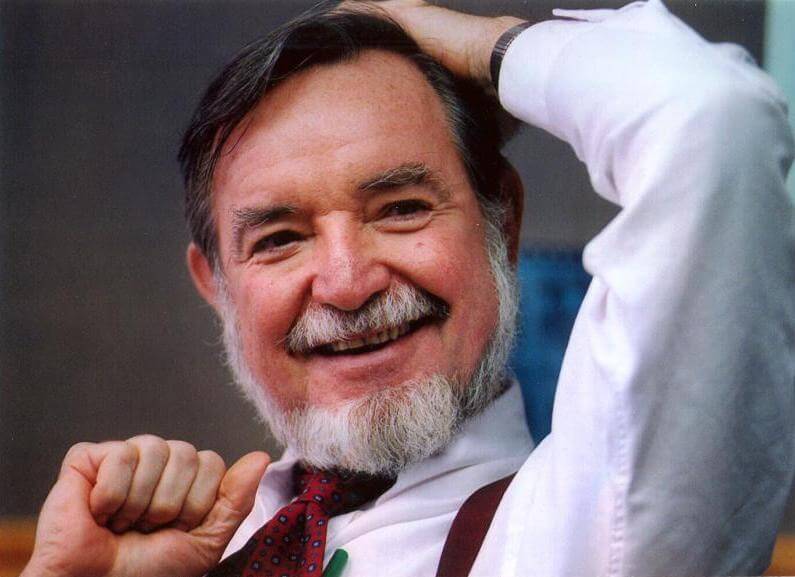
I’m a Hoosier, Indiana born and bred, on most July Sundays I can be found at church. On the best Sundays, the benediction ended, I then head for sweet corn at home from the farmer’s market.  Bought the day before from a young Amish teen in the City Hall parking lot.  Straw hat, gray shirt, grayer suspenders, blond curls and a sneaky, shiny smile. From down near Paoli most likely, I surmise – the corn and the smile.  “Picked this morning” he offers. “In the moonlight?” I tease, in return. We trade a chortle. The grin and banter worth the entire purchase price alone; but I win, as I carry off a half-dozen ears.  “He smiles with his eyes, he does.” I heard it growing up, like him I bet.

Early July, Indiana sweet corn is extra-scrumptious; I prescribe as it a necessary antidote to the extra-boneheaded politicians who now scour the state dressed in a toxic religious wardrobe. Deceptions attached to their bigotry like the sown-on-shadow of Peter Pan. This summer sweet corn is better. Much needed offset to the racism, so appreciated in the summer heat of ’25.  

Worship was delicious too this Sabbath. A needed cure offered, beginning with soaring music.  A fanfare for a refurbished organ followed by hymn texts full of ancient, hard-won truths. The anthem is fetched from the apothecary of faith. “It is well with my soul” lingers still. Take that, you many poisons of the soul, you dividers of a nation.

The stage is set by the liturgy – we are called to hope and not despair; and, then a sermon, chasing down our shared deeper story.  Listen again to Naaman’s healing. His trust in his own power, his military hardware, is insufficient to bring peace.  No, no, no, empathy is not “a bug in the system,” Mr. Musk.  Empathy marks true humanity.  A “healed femur is the sign of the beginning of civilization” Margaret Mead once noted.  The wonderful irony of the powerful finding healing and justice by finally heeding the counsel of a young girl.  She brings a four-star general to his knees and his senses… and more than an outer leprosy is healed.  She did it well, both the young girl and the preacher this Sunday.  We are reminded that interdependence is more to be valued than independence.

It’s corn-bred wisdom that hubris and arrogance will end in dust. True in Elisha’s time and a lesson to be relearned now. God’s preference is for the small and marginal ones. The narrative is told over and again.  Let those with ears-to-hear, listen.  Too bad uncle Donald was on the golf course and missed learning how his story will end.  The closing hymn offers again this poetry of hope. Then I head home to sweet corn and a nap.

O God of every nation, Of every race and land,

Redeem the whole creation With your almighty hand. 

Where hate and fear divide us  And bitter threats are hurled,

In love and mercy guide us  And heal our strife torn world.

Rain begins as we walk home… “good for the sweet corn,” I think...

Corn-Bred

Corn-Bred

I’m a Hoosier, Indiana born and bred, on most July Sundays I can be found at church. On the best Sundays, the benediction ended, I then find sweet corn from the farmer’s market.  Bought the day before from a young Amish teen in the City Hall parking lot.  Straw hat, gray shirt, grayer suspenders, blond curls and a sneaky, shiny smile. From down near Paoli most likely, I surmise – the corn and the smile.  “Picked this morning” he offers. “In the moonlight?” I tease, in return. We trade a chortle. The grin and banter worth the entire purchase price alone; but I win, as I carry off a half-dozen ears.  “He smiles with his eyes, he does.” I heard growing up, like him I bet.

Early July, Indiana sweet corn is extra-scrumptious; I prescribe as it a necessary antidote to the extra-boneheaded politicians who now scour the state dressed in a toxic religious wardrobe, attached to their bigotry like the sown-on-shadow of Peter Pan. This summer sweet corn is better. Much needed offset the racism, appreciated in the heat of ’25.  

Worship was delicious too this Sabbath. A needed cure offered, beginning with soaring music.  A fanfare from refurbished organ followed by hymn texts full of ancient, hard-won truths. The anthem is fetched from the apothecary of faith. “It is well with my soul” lingers still. Take that, you many poisons of the soul, you dividers of a nation.

The stage is set by the liturgy – we are called to hope and not despair; and, then a sermon, chasing down our shared deeper story.  Listen again to Naaman’s healing. His trust in his own power, his military hardware, is insufficient to bring peace.  No, no, no, empathy is not “a bug in the system,” Mr. Musk.  Empathy marks true humanity.  A “healed femur is the sign of the beginning of civilization” Margaret Mead noted.  The wonderful irony of the powerful finding healing and justice by finally heeding the counsel of a young girl.  She brings a four-star general to his senses… and more than an outer leprosy is healed.  She did it well, both the young girl and the preacher.  We are reminded that interdependence is more to be valued than independence.

It’s corn-bred wisdom that hubris and arrogance will end in dust.  True in Elisha’s time and a lesson to be relearned now. God’s preference for the small and marginal ones. The narrative is told over and again.  Let those with ears-to-hear, listen.  Too bad uncle Donald was on the golf course and missed learning how his story will end.  The closing hymn offers again this poetry of hope. Then I head home to sweet corn and a nap.

O God of every nation, Of every race and land,

Redeem the whole creation With your almighty hand. 

Where hate and fear divide us  And bitter treats are hurled,

In love and mercy guide us  And heal our strife torn world.

Rain begins as we walk home… “good for the sweet corn,” I think...

John L. McKnight: A Tribute

John L. McKnight: Mentor, Friend and Spiritual Pumice Stone

All Saints Sunday, November 3, 2024

John L. McKnight died on Friday (11/1/24).  I grieve… even as I celebrate a life given to striving after the best in human undertakings.  Another loss, another bushel of memories gathered, another mixture of gratitude and grief stirred in my spirit.  I had last spoken with John by phone two weeks before his death.

In the mid-1970s, I stood in the back of a conference room in the Bismark Hotel in Chicago as John spoke of changes in our national economy and institutional life over prior decades.  Our society was transitioning from production of goods (agricultural, mining, manufacturing) toward a primary product of human services.  People were objectified, turned into clients.  Shared community being lost, relationships were turned into the “servers” and “the served.” Our economy needed “the needy.”  We specialists could be the fixers of individuals; as the righteous we could offer service without knowing much about the other, beyond an assumption, a diagnosis, a project that meant they were different: poor or sick, addicted or uneducated, in trouble or in some other way needing our expertise, knowledge and assistance.

As I listened those fifty years ago, I was surprised to look down and see the front of my shirt was damp.  Tears rolled off my chin.  John named my arrogance and ignorance.  My education was about needs surveys, prediction, best practice, control and the intervention of strategies to improve “their” lives. That day was one of my many conversion experiences.  John named the sin of trying to fix others without relationship, without knowing the gifts and talents others bring, without looking for a caring community, without learning the assets and capacities my professionally trained eyes too often failed to see.

John and Ann Livingston, Vancouver, B.C. 2017

There is more to say about John.  I have done so in the past and will again in the future.  I recall times he gently challenged my thinking.  Usually with a Socratic probing question. He was an intellectual and spiritual pumice stone removing the calluses of my professional and academic skin.  I think of it now as cataract surgery for my soul.

As I have written in earlier reflections: John McKnight reminds that too often our institutional responses, well-meaning as they are meant to be, can become twisted and up-side-down in outcome.  Self-understandings are molded by interactions with others like those I shared with John over the past fifty years.  My mentors are too many to name; however, on this All Saints Day, I will mention Ms. Stella Newhouse, Gilbert James, Daphne Mayorga, Clarence Smart, Pat Davis, Earl Brewer, Walt Wangerin Jr., Bill Pannell and John McKnight.

When John and I talked two weeks ago he surprised me by saying he was worried about the coming national election.  As I remember it, he said, “I fear the goodness assumed about the the American People is being undercut by the ugliness, fear and hatred in this presidential election.”  I share these anxieties as we head into Tuesday’s election.  Still, I know, whatever the outcome, John’s legacy can serve as a pumice stone on this democracy.  We remember and honor all our saints, as the hymn “Rejoice in God’s Saints” lyric puts it “a world without saints forgets how to praise.” 

We will remember and we will praise.

Crowd Size, Not So Much

Crowd Size, Not So Much

I know the tyranny of numbers. How many?  How much? In my work-life there were always such questions: What is the average in worship attendance, pastor?  How large is your enrollment, seminary administrator?

Counting is deeply embedded in our culture; math is essential for a strong citizenry. I recall my children delighting in Sesame Street’s Muppet Count Von Count. Even so, the oft overlooked and more critical understandings are based in asking “what should be counted and to what purpose?”  What are the essential measures for the health of a congregation, school, government program or social service agency? A hospital can report the number of beds, or the financial bottom line, but what of the morale of the staff, or trust patents have in a nurse or physician?

My dear colleague, Walter Wangerin, Jr., first alerted me to an overlooked theme in scripture. Reminding me that the fourth book of the Christian Bible is the “Book of Numbers” Walt noted that throughout the narratives, when the focus shifts from knowing the people to numbering them, danger is ahead.

In an astonishing fabrication, former President Donald Trump, claimed “No one has spoken to crowds bigger than me.” He said more people attended his January 6th, 2020 event prior to the attack on the capital building, than attended Dr. Martin Luther King, Jr.’s “I Have a Dream” speech.  Truth is 250,000 gathered on the Capital Mall on August 28, 1963. It was a crowd five times larger. Think on this: how do these two speeches differ in purpose? Crowds gathered to do what? Was it to enrich and extend our democracy or to upend it?

The Gospels are filled with stories of crowds following Jesus, anticipating his every move. Some first century census taker reported 4,000 and 5,000 at meals. One of these stories breaks open the myth that size matters, as a small boy gives his lunch of five barley loaves and two fish (John 6) toward the feeding of everyone.

There is no doubt that crowd size is seen as an indicator of popularity and power.  Adolf Hitler loved to brag about the size of his crowds in World War II Germany. However, there is another way to think of the gathering of people around a leader. Jesus of Nazareth, who often faced the press of crowds said: “For where two or three are gathered together in my name, there am I in the midst of them (Matthew 18:20 KJV).  As to power and authority, this Jesus said, “You’ve observed how godless rulers throw their weight around, how quickly a little power goes to their heads. It’s not going to be that way with you. Whoever wants to be great must become a servant” (Matthew 20:26, MSG). 

Those in our time who suggest Mr. Trump is God’s choice, have a problem bigger than his persistent lies; they have a Jesus problem. Jesus spoke of small gifts, shared in hope, as core indicators of God’s true purposes. God’s realm often was understood as yeast, seed, salt and light. Jesus looked out on the crowds with compassion and taught that love of God and neighbor was the highest good. Everyone counted. Bragging about crowd size and seeking division and fear for personal gain, not so much.

UnFlagging Jesus

UnFLAGging Jesus

I once was joined for lunch by two friends. One was head of a theological school. Our conversation was amicable enough. Although the seminary president took up much of our visit promoting a wide array of initiatives focused on leadership. Future pastors, chaplains, counselors and social service providers were being trained to be leaders! It appeared an effort to impress the other friend at the table — John McKnight. 

John is one of the founders of the Asset Based Community Development approach to community organizing, (often abbreviated as ABCD).  A primary assumption of ABCD is that good leaders start by listening to others and discovering gifts, passions, assumptions and assets. After lunch as we were saying our “good-byes,” John took the hand of the seminary president and kindly offered, “Maybe we should focus a little more on connector-ship and a little less on leadership.” 

Connector-ship! That’s a missing ingredient in so much of human exchange. Universities, businesses, denominations and governments spend tens of millions of dollars and valuable personnel time training for leadership. This is not without merit and benefit. Still if one begins with a belief that energy and initiatives all flow from a top-down direction, a needed element for change is missing. Too often, there is the assumption that if the leader just has the right idea, program, language, skill set or practices, success will inevitably follow. McKnight, understands and teaches that human connection is a critical initial step in developing effective institutions and civil communities.

Don’t start identifying the needs of others you plan to fix without listening. First, listen to find the gifts, the capacities, the assets that folks already possess. Secondly, find that inner moral compass that must continually be developed throughout life by study, seeking fact-based reality, and interacting responsibly with others. This is a more enduring pathway forward.  

I know a remarkable corporate leader who upon arriving at a troubled firm, went to folks on the picket line, the hourly workers, not just upper management and he listened. A follower of Jesus, he continued in prayer, study and worship. Leadership meant connector-ship, listening, learning and finding a moral compass. Shortly thereafter, he gathered the employees in the parking lot. Taking a copy of the company’s unfair policies and procedures manual, he dropped it into the flames of a barrel used those standing in the cold. It was not a concession; it was a modeling of connection. Hard work followed.  He was saying, “We are listening, let’s talk.”

Recently I wrote a piece titled “Jesus Wrapped in a Flag.” Today’s Christian Nationalism promotes a fraudulent version of Christianity, and profoundly flawed revision of American History.  Lovett Weems offered a set of counter recommendations titled Leading Amidst Christian Nationalism.  While helpful, these are overly cautious words and appeared to assume there is only one paradigm for congregational life. It is a soft version of the very American Civil Religion that the author critiques. It is more of a starting point than a guide.

I thought of all the congregations and courageous religious leaders who are doing much more. They listen and share the hard truths discovered in their study and prayers about our responsibilities as Christians. They offer a more robust response to the profound dangers and misinformation widely dispensed by White Christian Nationalism and American Catholic Integralism.

The American church, Protestant and Catholic, needs to remove the American Flag from the shoulders of Jesus. It doesn’t belong there; never has. If U.S. policies and practices aren’t held under the judgement of the Gospel, why be a Christian at all?  Why not just pledge primary allegiance to anything our nation does and forget Jesus?  Just diminish our discipleship. 

Some U.S. “leaders” have done just that. Congresswoman Laureen Boebert said, “Jesus didn’t have enough AR-15 rifles to keep the government from killing him.”  What? Jesus is remolded into a grievance filled, revenge seeking and bully. What does the congresswoman do with the Sermon on the Mount, the words, “Love your enemies” or in the Garden of Gethsemane, “Nevertheless, thy will be done”?  The paradox, of course, as Reinhold Niebuhr argued, while international ethics are messy, they begin with morality in human expression.

The witness of Jesus of Nazareth, Jesus the Christ, isn’t limited to the foolish, mean-spirited and ill-informed theologies of some in congress these days. Jesus of scripture says “Come to me, all you who are weary and carrying heavy burdens, and I will give you rest.  Take my yoke upon you, and learn from me, for I am gentle and humble in heart, and you will find rest for your souls.[iv]” 

The witness of Jesus is UnFlagging!  It is persistent – enduring. It calls leaders to leave their C-Suite offices and learn from the folks in the parking lot.  It calls on congregations to speak with and learn from folks not in the pews on Sunday.

In the mid-1980s my family lived in a low-wealth neighborhood in Evansville, Indiana. One fall, fear gripped neighbors as vicious rapes were reported. The assailant was said to be African American in our multiracial community. Soon we learned the Ku Klux Klan was sending patrols to protect our white citizens, especially the women.  What should our small core-city ministry do? How might we offer a safe alternative to this violation and the hate-based response?

Someone suggested we talk with Will Campbell. Mississippi born, Baptist minister, graduate of Yale Divinity School, author, and Civil Rights advocate, Will was known for friendships with a wide range of people, including members of the Ku Klux Klan. Will took this dwelling together stuff seriously!

I called and left phone messages for Will. It took a few days, and he returned my call. Hearing of our situation, he said, “First thing you need to say to the Klan is “no, your activities are not welcome.'” That sounded good to me — We had already done that. Then, Will, stumped me, surprised me. He asked, “What are their names?” 

NAMES?  “What do you mean?” I responded, “Whose names? Our neighbors?”  “No.” Will said, thinking I would already know the Klansmen. Their names.  I confessed that I didn’t know any of those folks.  He said, “Well, then, what the hell you been doing?  Who are they?”  Interesting, our need to limit where repentance, reconciliation and renewal might occur. Perhaps some changes, some weaving of new relationships could happen in my own life, not only in the lives of Klan members. Might there be a bridging to new relationship, even there? A renewal larger than my imagining?

South African Methodist Bishop Peter Story noted that “America’s preachers have a task more difficult, perhaps, than those faced byus under apartheid. We had obvious evils to engage; you [on the other hand] have to unwrap your culture from years of red, white and blue myth, You have to expose and confront the great disconnect between the kindness, compassion and caring of most Americans and the ruthless way American power is experienced, directly and indirectly, by the poor of the earth. You have to help people see how they have let their institutions do their sinning for them.


@font-face
{font-family:”Cambria Math”;
panose-1:2 4 5 3 5 4 6 3 2 4;
mso-font-charset:0;
mso-generic-font-family:roman;
mso-font-pitch:variable;
mso-font-signature:-536870145 1107305727 0 0 415 0;}@font-face
{font-family:Aptos;
panose-1:2 11 0 4 2 2 2 2 2 4;
mso-font-charset:0;
mso-generic-font-family:swiss;
mso-font-pitch:variable;
mso-font-signature:536871559 3 0 0 415 0;}p.MsoNormal, li.MsoNormal, div.MsoNormal
{mso-style-unhide:no;
mso-style-qformat:yes;
mso-style-parent:””;
margin-top:0in;
margin-right:0in;
margin-bottom:0in;
margin-left:.5in;
mso-pagination:widow-orphan;
font-size:12.0pt;
font-family:”Aptos”,sans-serif;
mso-ascii-font-family:Aptos;
mso-ascii-theme-font:minor-latin;
mso-fareast-font-family:Aptos;
mso-fareast-theme-font:minor-latin;
mso-hansi-font-family:Aptos;
mso-hansi-theme-font:minor-latin;
mso-bidi-font-family:”Times New Roman”;
mso-bidi-theme-font:minor-bidi;
mso-font-kerning:1.0pt;
mso-ligatures:standardcontextual;}.MsoChpDefault
{mso-style-type:export-only;
mso-default-props:yes;
mso-ascii-font-family:Aptos;
mso-ascii-theme-font:minor-latin;
mso-fareast-font-family:Aptos;
mso-fareast-theme-font:minor-latin;
mso-hansi-font-family:Aptos;
mso-hansi-theme-font:minor-latin;
mso-bidi-font-family:”Times New Roman”;
mso-bidi-theme-font:minor-bidi;}div.WordSection1
{page:WordSection1;}


[i] Weems, Lovett H. Jr. Leading Amidst Christian Nationalism, LEADING IDEAS, Lewis Center for Church Leadership, June 25, 2024).

[ii] Matthew 5:43-48.

[iii] Luke 22:42

[iv] Matthew 11:28-30.

[v] Storey, Peter, Sojourners Magazine, Oct. 18, 2006.

Jesus Wrapped in a Flag

Jesus Wrapped in a Flag

So-called Christian Nationalism appears to have mushroomed in our body politic. Books like Taking Back America for God (Andrew Whitehead and Samuel Perry) and The Kingdom, The Power and The Glory (Tim Alberta) document the spread and extent of this ideology across American faith communities. Is this new? Or is it reappearing after years buried in the subsoils of our common life?

Do your recall the l-o-n-g word Antidisestablishmentarianism? In elementary school I learned it was the longest word in the English language. Well, not quite. At only 28 letters, it now is said to be the fourth longest. I won’t try to spell or pronounce the top three. The folks at Merriam-Webster say it doesn’t qualify for a dictionary; it is so little used. Okay – but I have burned too many brain cells learning to spell it. Antidisestablishmentarianism arises from historic struggles in Britain over the role of religion in government. This word argues religion (the Church of England in this case) should receive special government benefits, support, patronage.

Increasingly unmerited claims that the United States was to be an exclusive Christian Nation are made. Stephen Wolfe’s book The Case for Christian Nationalism, widely read and oft cited, is a core effort in this “restorationist” project. This desire to return a simplistic narrative about our nation’s founding, our diverse communities of faith, and multiple cultural expressions is misleading, even antithetical to what Jefferson referred to as our “Great Experiment.” In fact, the First Amendment to the U.S. Constitution (known as the Establishment clause) opens with the words, “Congress shall make no law respecting an establishment of religion, or prohibiting the free exercise thereof.” Something fresh, never seen before, was being birthed with the American experiment. Something untethered to a monarch, or a single faith tradition was begun.

Evangelical scholar Kevin DeYoung acknowledges an understandable hunger among some Christians for something like Christian Nationalism; however, after reviewing Wolfe’s book, he concludes “Biblical instincts are better than nationalist ones, and the ethos of the Christian Nationalism project fails the biblical smell test.”

DeYoung offers a clear window on the rootage of Wolfe’s narrowly drawn and grievance informed “research” as he writes “The message—that ethnicities shouldn’t mix, that heretics can be killed, that violent revolution is already justified, and that what our nation needs is a charismatic Caesar-like leader to raise our consciousness and galvanize the will of the people—may bear resemblance to certain blood-and-soil nationalisms of the 19th and 20th centuries, but it’s not a nationalism that honors and represents the name of Christ.” He concludes“Christian Nationalism isn’t the answer the church or our nation needs.” (DeYoung, Kevin, “The Rise of Right-Wing Wokeism”, Christian Living, Nov. 28,2022)

As a teenager, in the early 1960s, I recall sermons warning if John Kennedy were elected, our first Roman Catholic President, he would receive orders directly from the Pope and the Vatican. Fortunately, a majority of U.S. voters didn’t buy that argument. Today, the benefits of Kennedy’s presidency and the tragedy of his assassination continues to shape and haunt our national self-understanding.

In my early adulthood (late 1960s and early 1970s), I heard the black evangelist Tom Skinner preach. He said “All the pictures of Christ were pictures of an Anglo-Saxon, middle-class, Protestant Republican. There is no way that I can relate to that kind of Christ.” (See Jamar Tisby, Footnotes, October 24, 2023.). Skinner painted the image of a white Jesus wrapped in an American flag. He was saying “the Jesus long marketed by the American church wasn’t a faithful representation of the Jesus of the Gospels.” Teaching in a United Methodist school in the Republic of Panama in these years further sharpened my awareness. Skinner was right.

Today’s Christian Nationalism continues to market a fraudulent version of the Christ. It is often linked to the “great replacement” theory that rests on the notion that immigrants and nonwhite, nonChristian persons (especially “Jewish elites”), are engaged in an international plot to take power away from those with birthright privilege in the United States. Do you remember the torchlight parade and the chant “Jews will not replace us” in Charlottesville, Virginia in 2017? Such entitlement beliefs are not only profoundly racist and antisemitic, but they are also neither faithful to U.S. history nor the Christian message.

Whether as Christians or patriotic Americans, or both, how shall we respond?

My friend, Lovett H. Weems, has outlined seven strategies “for responding to Christian Nationalism in measured and faithful ways.” (Leading Amidst Christian Nationalism, LEADING IDEAS, Lewis Center for Church Leadership, June 25, 2024).  Weems offers a helpful overview especially reflecting on the church’s historic endorsement of a civil religion. He is clear about the dangerous ties to the racist agenda of many that Christian Nationalism brings. The strategies offered start with “Be Cautious” and conclude with advice to “Understand the broader social, historical and political landscape.” In between are calls to love of country, to be humble, to stay positive and focused, and to remind others that Christians are called to give witness. These are more a starting point than a guide.

Missed is an awareness of the multiple and diverse contexts and callings of Christian congregations. Few people understand this more than Weems. In many places a more robust response is appropriate. The cautious tone of these “strategies” reflects the tendency of many denominational leaders in recent years to avoid conflict. It reminds one of the crouching stances that have marked too many “leaders” in handling the recent divisions in United Methodism. Perhaps it is, as Weems admits, a “soft civil religion,” but it can none-the-less be misunderstood as a draping of the American flag across the shoulders of the cautious contemporary U.S. church. I suspect the author knows the suggestions offered focus more on what should be avoided and miss some options of what Can Be Done to faithfully respond to Christian Nationalism.

In future days I will offer what I believe may be more effectual responses. I close remembering the words of British Methodist leader Donald English when he said, “The world has enough salesmen of the Gospel.  What we need is more free samples.

A Corpse at Every Funeral…

The Corpse at Every Funeral…

It was Alice Roosevelt Longworth, who in speaking of her father, Teddy, said he wanted to be the corpse at every funeral, the bride at every wedding and the baby at every christening. I first heard this from my friend Thomas Lane Butts, a remarkable United Methodist pastor from Monroeville, Alabama.  Yes, that Monroeville! In fact, over the decades Tom would have breakfast every week, at Hardees fast food restaurant, with Harper Lee.  Yes, that Harper Lee!

It took a while to discover that Tom, who would often speak of “a bride at every wedding and corpse at every funeral,” had borrowed and reshaped the quote to his purpose. I remember Tom’s sonorous southern cadence as he would identify some attention-starved politician, bishop, power hungry legislator, university administrator or professor, or pompous preacher or rabbi, as one who fit the category.

My prayers in recent months often have been that a narcissism-neutralizer could be invented. It could be marketed as a humility-pepper-spray and deodorize any power-hungry-stench. I have prayed that an election, a court verdict, a news editorial, an honest phone call from a friend, a speeding ticket, a failed speech, or a glance in some other “reality mirror” might burst all pomposity balloons. I’ve looked in a few such mirrors myself over the years. I recall the Sunday I thought I had preached a fine sermon, and a woman took my hand at the door and said, “Every sermon you preach is better than the next.”  Great timing – a glance in the reality mirror.  I was remembering the true meaning and joy of worship.

My dream of some ego-adjusting-comeuppance is likely not to happen… probably can’t happen given all that is at play in our day.  Our national-body-politic, gerrymandered-legislatures, embattled-universities, overly-cautious-conflicted-churches, profit-only-driven-corporations, or ideologically-ensconced-media-enterprises are in their own protective enclosures. 

In the meantime, sadly, attention is taken from those who genuinely deserve our honor, memorials, respect and shared joy.  Here is an invitation to you to join in remembering and celebrating those who have died, those getting married and all those we name as children of God.


Political Beanbag

Political Beanbag

Politics ain’t beanbag” is an oft used quote about the rough and tumble, often bruising, realities of living and participating in a democracy.  The phrase was coined by Finley Peter Dunne, a Chicago author who wrote of a fictional character, Mr. Dooley.  Starting in the 1890s, Dunne wrote a column where Dooley offered up a philosophy of life from his perch on a barstool in a Chicago pub. Politics ain’t beanbag is probably the best known of Mr. Dooley’s witticisms.

At my age and stage, I have experienced the truth of this philosophy often.  Things can be tough – pick yourself up and move on – is what Mr. Dooley seems to be saying.  I recall 1984 when Frank McCloskey won a “landslide election” for Congress in the “Bloody Eighth” Congressional District.  The first reported results had McCloskey winning by four votes. Or did the Republican candidate Rick McIntyre win by 34 votes?  This is what one of the many “recounts” in the following days claimed?

My memory is that a “true result” was never fully determined, as there were thousands of ballots that were not counted for “technical reasons.” Most of these uncounted votes were in Democratic-leaning precincts.  Indiana Republican Secretary of State, Ed Simcox, decided to certify McIntyre as the winner but the Democrats controlled the U.S. House of Representatives and accepted that McCloskey had won – even if only by four votes!  And so, the high drama was on! 

Thus, in early 1985 Speaker Tip O’Neill swore in and seated McCloskey as a member of Congress. The ensuing full-blown melodrama was worthy of a Shakespeare comedy.  Walkouts and shouting and blaming were orchestrated by folks like Newt Gingrich and Dick Cheney.  Speaker Tip O’Neill and Texan Democrat Jim Wright took advantage of their power of office. 

This election may have helped set the stage for current election denial and conspiracy theories.  Of course, one also thinks of the Swiftboating tactics used against John Kerry in the Presidential Campaign in 2004 when lies undercutting a distinguished military career were broadcast widely.  In Indiana over recent years, I recall mayoral races marked by dishonest whispering campaigns. In one, a fella was said to be a closeted gay man.  In another city, the rumor was that the candidate had a mistress “on the wrong side of town.”  This was meant to say she was of another race.  I wondered if it would have mattered if the mistress was on the right side of town.

Politics ain’t beanbag is a truism. Bloomington has just finished our primary elections.  There are, no doubt, some candidates and members of the electorate still nursing some election bruises.  Some candidates were said to be too close to developers, or another to realtors, or another to people who want to block any progress. We even witnessed some rather strange, last-minute, “news coverage” concerning unsubstantiated allegations against a mayoral candidate. 

Still, there did seem to be a good exchange of ideas coming from several debates and town hall gatherings.  Even so, this should be a moment to “dust ourselves of and move on.” A time to look toward building our future together.  Mayor Hamilton’s term has several months ahead when good and cooperative work is possible.  More, this is a time to step beyond the meanness and divisions we see on the national level and plan for a positive cooperative governance in the future.  Now are the months to appreciate what can still be accomplished by our current elected officials and look to a positive future with new city leadership.

In 2022 Daniel Effron and Beth Anne Helgason published “The Moral Psychology of Misinformation.”  They identify a newly emerging danger in our politics, the growing tendency to excuse dishonesty in a post-truth world.  They conclude: “As political lies and ‘fake news’ flourish, citizens appear not only to believe misinformation, but also to condone misinformation… We are post-truth in that it is concerningly easy to get a moral pass for dishonesty even when people know you are lying.” 

The primary election is over.  Maybe it is a time to commit to speaking truth in the elections and governance ahead.  Can we be a people who will not believe misinformation?  Will we live into truth even while understanding the beanbags will fly.

Saving Our Institutional Souls

Saving our Institutional Souls

A familiar folk axiom is as follows, “institutions are designed to serve the needs of people, but before long those people serve the needs of the institution.”  In my experience, this truism is evident in a variety of settings and across every organizational type. 

Let me affectionately pick on a category of institutions I value and have come to know rather well – theological schools. Seminaries are established by religious denominations to teach, prepare leaders, develop resources, and do research. A midwestern seminary, with which I am very familiar, recently invited me to join a “video conversation” scheduled for the evening of February 22, 2023.  A “select group” of us were asked to learn about exciting initiatives of the field education program.  I opened my calendar to add the date, stopped, double checked, and laughed out loud. 

The event was scheduled for Ash Wednesday evening, when most congregations I know will be holding a worship service. Ash Wednesday is the beginning of Lent leading up to Easter.  In many Christian traditions it is among the more significant days in the liturgical calendar. The scheduling of this event was an unforced error; more, it was a sign of disconnection.  Since then, the date of this seminary’s video conference was rescheduled.  To repeat, seminaries were begun to serve congregations and denominations, but… well, the seasons and gifts of congregational ministry, are sometimes missed in the planning.  This was a failure in awareness as to who was serving whom.

At another seminary where I was in leadership, I visited a gathering of interfaith congregations in Tucson Arizona. It included a wide range of faith traditions who engaged in regular, innovative joint gatherings. A young faculty member was with me on this visit.  A few days later, back on campus, a faculty committee shared their plans to “teach congregations how to do interfaith work.” Sadly, this committee had failed to explore what was already taking place among congregations in places like Tucson. I waited before speaking, expecting my young professor friend to share her experience. Later she confessed she didn’t want to challenge the plans of more senior professors. Instead of discovering the gifts already evident in the ecology of existing congregations like those in Tucson these well-meaning faculty folks had seen their role as being the producers of knowledge, the source of innovation. Sadly, the connective tissue, the patterns of reciprocity and mutuality were missing.

I could write of dozens of other examples where institutional expectations and design missed the mark. Denominations often exhibit this blindness as to gifts already present at their own seminaries or their own congregations.  I think of denominational efforts to establish in house “leadership training” or “research programs” when the very schools they started and support, offer some of the best resources in the nation.  To be fair, we shouldn’t miss the reality that congregations themselves are too often quick to start projects without knowing the gifts in the neighborhoods or cities where they are located. 

A very different example is evident as a “new denomination” is being formed among dissidents from the United Methodist Church. Who is serving whom?  Are some seminaries and powerful caucus groups misrepresenting the denomination’s institutional practices for their own purposes?  Have congregations been being encouraged to disaffiliate based on the needs of institutions who have little or no awareness of the context and neighborhoods where the congregations are in ministry?

At the outset I suggested our world is full of similar examples of this disconnection. In government, health care, education, law, agriculture, economics and on and on we see it.  The Dilbert comic strip by Scott Adams was built around such institutional blind spots.  I have no sympathy for anarchy; I do not suggest all institutions inevitably fail and should be abandoned. To the contrary we have seen the tragic results of the “deep state” myth and conspiracy nonsense in our local, state, and national governmental institutions. I am arguing that sometimes basic linkages and necessary relationships are lost.  Not all institutions should be saved.  Slavery is an example. Institutions designed to exclude other humans of basic rights should be ended.  

I am suggesting that the connective tissue allowing for mutuality and dialogue needs to be exercised, like the muscles of a human body. Our human institutions need to be continually, evaluated, strengthened, and open to democratic reform. In the process, a complex web of reciprocal teaching and learning is essential. All healthy institutions will seek democratic renewal and will be attentive to what can be learned from the gifts and assets of those at the grass roots of society. 

Powering Democracy and Replacing Redundant Lighthouses

Powering Democracy and Replacing Redundant Lighthouses

Bornholm, Denmark is an island in the middle of the Baltic Sea. Lovely place; a center point for one of the green power initiaitives in this small nation. In Denmark today over 50% of current electrical energy comes from renewable wind and solar power – a marked increase in recent decades. Denmark’s goal is to be 100% free of fossil fuels by 2030! This small nation is showing the rest of us a possible future. What is required for such dramatic change?

Denmark is a nation built out of a web of islands and distinct communities. While language and history, economic opportunuties, war and domination, have woven the Danes together, there is more to the story. There is imagination – an opnness to work together for new approaches to challenges. Currently, on Bornholm island, in order to make space for the windmills, new landfill projects are emering along some of the shore. Hundreds of windmills will be constructed. Has there been opposition? Of course. Still, all this is part of a national effort to, not only supply Denmark’s energy needs, but become a nation that produces its own electric power and sells energy to others. Rather astonishing. Along with thousands of miles of shoreline, the Danes have wind, and more, imagination is at play.

Rønne Lighthouse, Bornholm, Denmark

On some islands, a few former lighthouses, will now be further from shore and less visible to aid those sailing. These lighthouses are being replaced, made redundant. Some would argue that modern satellite GPS systems have eliminated the value of and need for lighthouses altogether; even so, new light sources will be installed.

This would not be the first time Denmark has led Europe, and the world, with imagination for desperately needed change. Little known is the story of the Danish Folk School Movement begun in the early 1800s. In that time, a wide majority of the pesantry living in the region were impoverished. Illiteracy was among the highest in Europe. Only a wealthy few had access to representation in government. The situation was bleak, trust in others to make change was low.

A remarkable man, Nikolaj Frederik Severin Grundtvig (1783 -1872), a Lutheran theologian saw Denmark’s future based on the construction of a system of universal literacy and the development of common trust. His vision led to the Folk School Movement. The goal was not to build a stratified society based on test results and university degrees. Rather, he focused on enriching comminities with educational options to nurture the human spirit through song, poetry, crafts, literature. It was a celebrating the giftedness of the people. Gruntvig saw renewal coming from the “bottom up.” Some of the “students” could also teach — they were weavers, cooks, farmers, fishers. Gardening, dance, practical uses of math and science were taught. Yes, there were classes in spiritual matters that were a part of the whole. Grundtvig’s goal was the preparing of persons for more enlightened citizenship and the development of networks of community trust. The folk school movement offered a place where those with limited money and time could learn new and more democratic habits, values and skills that would be needed for a healthy future society.

One hundred years later, by the early 1900s, Denmark enjoyed one of the highest literacy rates in Europe. At the same time a vibrant emerging democracy was electing representatives to the Folketinget, or the house of commoners. A majority of these folks representing districts from across Denmark at the time, had studied in the Danish Folk School system. Today, Denmark has a unicameral government with representatives serving in the Folketing. Not all is, or has been, perfect in this story — there was the Nazi occupation and times of political corruption and turmoil. Still the folk school movement, wind mills and redundant lighthouses can serve as valued metaphors for us and others who seek a way to proceed to a more democratic and literate world.

In many places there is need for the renewal of trust, and a way to learn a new literacy based on a knowledge that is accurate and inclusive of others. It is difficult to think of the situation faced by Denmark in the early 1800s and not compare it to the malaise of our modern time. Distrust of institutions and a sense of brokenness in so many of our communities is evident and threatening to our futures. One measure of this malaise is offered in the Edelman Trusts Barometer https://www.edelman.com/trust/2021-trust-barometer. Across the world, trust in our institutions, and one another, is at an all time low. Perhaps our “democratic lighthouses” are placed too far from our current shorelines. We do not see the light that might offer us a better set of bearings for the future.

Taken as a practical example and metaphor, what might one learn from the Danish experience? A few possible lessons would include:

  1. As to energy independence from fossil fuels, Denmark is showing us that dramatic and rapid change is possible. They have the attribute of wind; others of us have the prospect of, along with wind, adding many more solar power options to our resources
  2. Perhaps some of our cultural, commercial, social, educational, healthcare and religious “lighthouses” need to be moved or rebuilt and re-imagined. How might we relocate the work of the press (news and social media), churches, the schools, healthcare systems, theaters, museums, etc. so that they are closer and more relevant to the journeys of those traveling in the future?
  3. Are there ways to think systemicly about how to move ahead to encourage a more trusting and democratic common life? (In the U.S. I am of the opinion that a program of universal service options for our young would be such an institutional initiative.)
  4. What gifts of the people, across our communities, can be brought to places that seek to enrich the common life. Do we have imagination for such systemic and constructive change? These will be needed to do some Cultural Land Fill work as new ecologies of democracy emerge. I think of the excellent resource of the Tamarack Institute: https://www.tamarackcommunity.ca/?hsLang=en and the Asset Based Community Development projects:https://www.nurturedevelopment.org/asset-based-community-development/.

As a child, I learned an old hymn and often sang it. It was about the importance of lighthouses for people who lacked the light of faith.

The first verse was:

Brightly beams our Father’s mercy from His lighthouse evermore,
But to us He gives the keeping of the lights along the shore.
Let the lower lights be burning! Send a gleam across the wave!
For to us He gives the keeping of the lights along the shore.

Perhaps people of faith can join folks in other arenas to build new light sources for imagination, democracy and spirituality. It seems the church has put too much of its focus for too long, too far from where the light of imaginative faith is needed. We have offered little spiritual light and what is offered is shining in the wrong places. Rather than a faith that builds up trust and community, too much time has spent dividing, excluding and relegating those who differ to another separate island.

For the imagination already offering us hope in Denmark and beyond, I give thanks.