Shoveling Alone

Shoveling Alone

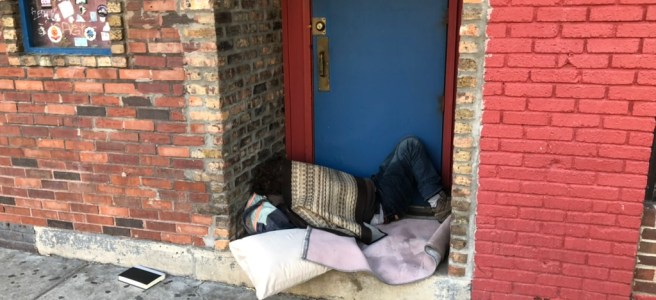
Shoveling alone. It is the story in almost all our communities in the United States. The poorest of the poor are shuffled to the edges of our economy and end up living on the streets — or in jail!

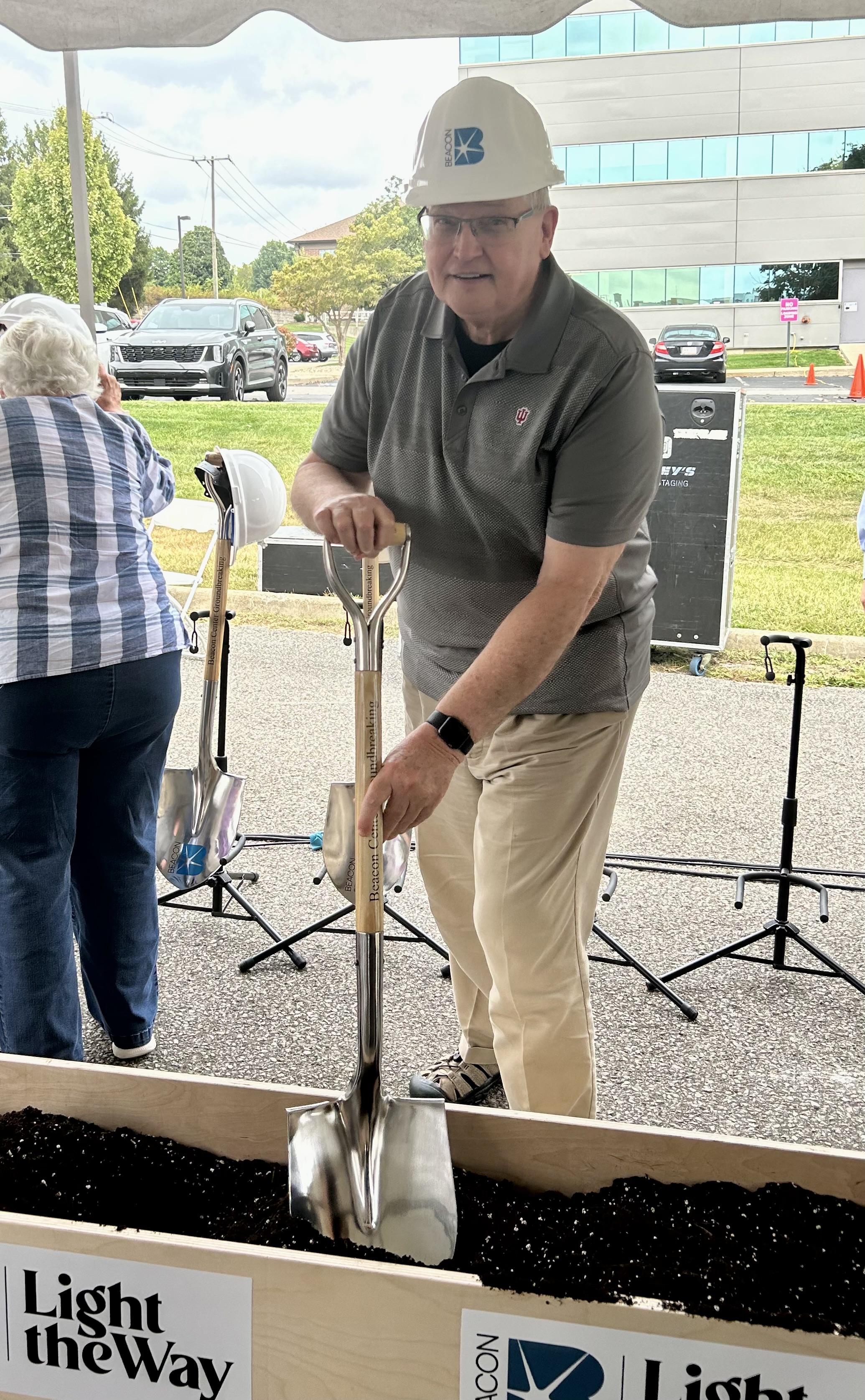
As I turned the shovel in Bloomington on a recent Wednesday, at the groundbreaking for our new Beacon center, I realized I was alone in that moment… no one on either side… but so many had gone ahead, and others would follow. Is it true in your community as well?

Not just on a given afternoon but across the years, I knew others in the faith community and beyond, who didn’t attend this groundbreaking… but who had ‘turned the soil’ of change in many places. They have been at this turning the soil, and turning our souls, in the past and will be in the future. In the process our souls are returned to an original place of hope and sharing among all.

I believe our local faith community, and others whereever you live, will do more in the months ahead, not just for places like Beacon. We must do this because our challenges cannot be fully handled by any one social service agency. Beacon, and similar agencies are a good, but insufficient response.

Bloomington Mayor Thomson is right, a comprehensive response to the challenge of persons without shelter is needed. Rise up now, faith communities and others, show more muscle, join in to assist the Emergency Winter Shelters, programs like Heading Home, the Recovery Alliance, New Leaf/New Life. Offer more mutual respect and support for all! The massive cuts to Medicaid will touch us all and especially the poor. Emergency rooms will be more crowded, retirement homes and clinics will close, healthcare will be rationed and delayed. Time for more to pick up the shovel and turn the soil toward the planting of new seeds of hope.

“When did we see you…?” the scriptures ask. “When you did it to the least among you” comes the answer. I live with the firm knowledge this shelter, even with a “better” setting where healthcare, employment assistance, public safety, addiction recovery and other resources, are provided is but a small beginning. It is not THE answer. Still, it is a needed step. Many can and will raise needed funds, offer to volunteer, and challenge public policy to do better… in God’s name.

The road is long and filled with twists and turns, social detours, myths about addiction, mental health and blindness to our own complicity in the “social welfare” practices in this country, and the misdirected, cruel political impulses and assault of so many in power in this time. Our culture lives with the myth of hero and victim. It is the “Hero Journey” story that Jung and Campbell identified as embedded in all we perceive as possible. It is so fully ingrained in our psyche and social systems that, sadly, we turn others into “clients” rather than “neighbors” and are more comfortable in speaking of THEY rather than with US.

It will take time — this turning the soil. Still as a Christian I recall the hymn refrain “We are not alone, for God is with us.” ‘Naive’ you say, of course it appears that way, of course. Others are using their constructions of false gods to continue cruelty. I know. That is why those who have theologies more tied to the larger, historic faith story must now speak the truth, afresh. Until some have seen a life changed, a person healed from addiction and communities moving away from cruel patterns of greed and domination, we are stuck. And, until a community is seen pulling together to solve such challenges, many will call me naive. I prefer to call it our shared hopes, foundational for the future — that we can care for one another. Check it out. This is a core teaching of Christianity and other great faith traditions. Interdependence is more essential to humanity’s long-term survival than independence.

Paul Farmer, remarkable physician and founder of Partners in Health (PIH) understood his life’s work as “The Long Defeat.” He said, “I have fought the long defeat and brought other people on to fight the long defeat, and I’m not going to stop because we keep losing. Now I actually think sometimes we may win. I don’t dislike victory. … You know, people from our background-like you, like most PIH-ers, like me-we’re used to being on a victory team, and actually what we’re really trying to do in PIH is to make common cause with the losers. Those are two very different things. We want to be on the winning team, but at the risk of turning our backs on the losers, no, it’s not worth it. So you fight the long defeat.” [From Tracy Kidder, “Mountains Beyond Mountains: The Quest of Dr. Paul Farmer, a Man Who Would Cure the World.”]

So, pick up a shovel, write a check, welcome the stranger, say ‘hello’, ask the stranger her/his name, smile… and keep doing it in your community, whereever you are. Keep at it, even when times are tough. My friend Wes Jackson put it this way, “If you think your life’s work can be accomplished in your lifetime, you are not thinking big enough!”

Racism at Indiana University

Racism and Indiana University

Indiana University is in the midst of troubling acts of racist retrenchment. What is wrong with this picture? Yes, a backsliding into racism at that Indiana University, the one with a flagship campus in Bloomington, Indiana, and regional campuses around the state. Yes, the I.U. that has been shaped by commitments to diversity and inclusion. Tes, the one shaped by the likes of Herman B Wells and persons of academic excellence, integrity, faith and civic pride over the decades.

The great comprehensive university where notable Black alumni, students, faculty and staff are so multiple, it is too challenging to begin a list here. These are a few of the thousands of I.U. greats. In my personal experience, I have been blessed by friendships with folks like Joseph Taylor, LaVerta Terry, James Holland, David Baker, Vi Taliarerro, William McKinney, Camilla Williams, Charlie Nelms, and on and on the list goes.

It is unbelievable to those who know the historic commitments of this school. This racist retrenchments has resulted in the elimination of resources for students of underrepresented groups as well as critical support for faculty and staff. The actions challenge I.U.’s remarkable, historic legacy as a place where all are welcome and offered the opportunity to thrive. In recent months the following actions have taken place:

1. The awarding of scholarships designated for specific students based on ethnicity or sexual orientation have been “paused.”

2. Websites and campus materials have been scrubbed of words and phrases related to diversity or programs seeking racial understanding.

3. Posters around campus with the words “Build a Community Where All Belong” have been removed from bulletin boards and public spaces.

4. Names of programs or offices that provide services or support for underrepresented students are being removed or painted over or removed.  The sign OVPDEI (Office of the Vice President for Diversity, Equity and Inclusion) has been painted over and left blank. Programs housed in this now unidentified building include Groups Scholars, FASE Mentoring, Twenty First Century Scholars and Hudson-Holland Scholars. Will all cultural centers face such identity-theft and censure, while programs that serve virtually all White programs and services go unchanged!

5. The essential core of academic freedom is being tested.  Faculty face threats to their course materials over the use of language and/or ideas that call for the addressing of systemic or institutional racism.

We, the students, alumni, faculty and staff and friends of Indiana University, demand that on all its campuses, Indiana University STOP this retrenchment of White Racism being treated as normative.  We demand that a commitment to the welcoming of ALL immediately be restored no matter race, class, creed or sexual orientation.

John L. McKnight: A Tribute

John L. McKnight: Mentor, Friend and Spiritual Pumice Stone

All Saints Sunday, November 3, 2024

John L. McKnight died on Friday (11/1/24).  I grieve… even as I celebrate a life given to striving after the best in human undertakings.  Another loss, another bushel of memories gathered, another mixture of gratitude and grief stirred in my spirit.  I had last spoken with John by phone two weeks before his death.

In the mid-1970s, I stood in the back of a conference room in the Bismark Hotel in Chicago as John spoke of changes in our national economy and institutional life over prior decades.  Our society was transitioning from production of goods (agricultural, mining, manufacturing) toward a primary product of human services.  People were objectified, turned into clients.  Shared community being lost, relationships were turned into the “servers” and “the served.” Our economy needed “the needy.”  We specialists could be the fixers of individuals; as the righteous we could offer service without knowing much about the other, beyond an assumption, a diagnosis, a project that meant they were different: poor or sick, addicted or uneducated, in trouble or in some other way needing our expertise, knowledge and assistance.

As I listened those fifty years ago, I was surprised to look down and see the front of my shirt was damp.  Tears rolled off my chin.  John named my arrogance and ignorance.  My education was about needs surveys, prediction, best practice, control and the intervention of strategies to improve “their” lives. That day was one of my many conversion experiences.  John named the sin of trying to fix others without relationship, without knowing the gifts and talents others bring, without looking for a caring community, without learning the assets and capacities my professionally trained eyes too often failed to see.

John and Ann Livingston, Vancouver, B.C. 2017

There is more to say about John.  I have done so in the past and will again in the future.  I recall times he gently challenged my thinking.  Usually with a Socratic probing question. He was an intellectual and spiritual pumice stone removing the calluses of my professional and academic skin.  I think of it now as cataract surgery for my soul.

As I have written in earlier reflections: John McKnight reminds that too often our institutional responses, well-meaning as they are meant to be, can become twisted and up-side-down in outcome.  Self-understandings are molded by interactions with others like those I shared with John over the past fifty years.  My mentors are too many to name; however, on this All Saints Day, I will mention Ms. Stella Newhouse, Gilbert James, Daphne Mayorga, Clarence Smart, Pat Davis, Earl Brewer, Walt Wangerin Jr., Bill Pannell and John McKnight.

When John and I talked two weeks ago he surprised me by saying he was worried about the coming national election.  As I remember it, he said, “I fear the goodness assumed about the the American People is being undercut by the ugliness, fear and hatred in this presidential election.”  I share these anxieties as we head into Tuesday’s election.  Still, I know, whatever the outcome, John’s legacy can serve as a pumice stone on this democracy.  We remember and honor all our saints, as the hymn “Rejoice in God’s Saints” lyric puts it “a world without saints forgets how to praise.” 

We will remember and we will praise.

Seeing The Unhoused: One City’s Proposal

Seeing the Unhoused: One City’s Proposal

Like hundreds of cities across the United States, Bloomington, Indiana, my home, is a place where we face the challenge of unhoused persons surviving on our streets. Because we are a generous and caring community, our town is seen as a place of welcome. Sadly, it is also a place where the number of persons facing chonic homelessness continues to grow and our resources fail to offer hopeful ways forward.

What follows is a column for our local newspaper, The Herald Times. Perhaps there are some ideas here that could be of value as you seek to offer responses in your communities. Perhaps you have some suggestions that you can share to be helpful to us. Here is the column:

Missing Ingredients in Housing Assistance Plans

On Tuesday evening August 6th the Bloomington City Council received a “comprehensive” Housing Action Plan. It was presented by Bloomington Mayor Kerry Thomson, Mary Morgan, the director of Heading Home of South Central Indiana, and advocates from several service groups. It is an ambitious six-year plan designed to make street homelessness “brief, rare and non-repeating.”  It is indeed a dramatic and critical step in the right direction, but comprehensive?

The plan is bold.  As The Herald Times reports, it proposes “significant” investments coming from “multiple” sources.  It will require increased dollars, imagination and durable civic commitment.  The report is found at: headinghomeindiana.org/news/housing-action-plan/.   It deserves the community’s immediate endorsement and financial investment. Seeking 1,000 low-rent housing units by 2027, and 3,000 such units by 2030, is a HUGE challenge.  Adding ten additional Healthnet street outreach staff and many more case workers at existing homeless services is appropriate. We need such a commitment.

The idea of a moratorium on helping unhoused persons from out of town for a period is strong and distasteful medicine.  Even so, it may be what is required while other communities, and the State of Indiana, do not act in more caring ways for the vulnerable among us all.  A temporary moratorium to regain a balance and offer sufficient safe housing, healthcare and see an end to persons living on the streets deserves exploration.  Such a step, so long as the commitment to dramatically increase low-income housing is also accomplished, could serve as a model for other communities in Indiana and beyond.

STILL, this is not a “comprehensive” plan.  It is good.  It is bold.  It includes parties that have stood too long on the sidelines, parties like Indiana University and I. U. Health.  But is it “comprehensive”?  Nope, don’t think so.

Three elements are noticeably missing: 

  • First, how will each of us, as citizens, in Bloomington, act in new and meaningful ways to support such a plan?  More basically, how will we behave to understand that “these people” seen as “problems,” and “outsiders,” are part of us, our tribe, our social network, our family?  As Kevin Adler and Don Burnes write in “When We Walk By: Broken Systems and the Role We Can Each Play in Ending Homeless in America,” the people we see as foreigners are persons with families – often they come from nearby biological families, and all are certainly a part of our larger human family.  What reading, thinking, acting, praying might we do together as citizens to provide a witness as to a better way?
  • Second, aren’t faith communities essential in providing motivation, resources, volunteers, leadership, imagination and even shelter space (emergency and longer-term)?  Why are they not at the planning table?  Yes, a few “religious groups” are mentioned as “providers;” but I would argue any comprehensive plan would include faith communities as essential “stake holders” and critical to the designing and implementing any sustainable plan. What if this is not simply an economic, addiction or heath care issue?  What if it is a spiritual one as well? By this I do not mean to suggest a moral failing of those without shelter, but rather, a spiritual failure of our community and nation. The irony, of course, is that many, dare I say most, of homeless assistance resources in Bloomington were initiated and have been largely undergirded by faith-based vision, volunteers and financial support. A good case can be made that faith groups and leaders have been missing-in-action in recent years as we have been too focused on our own congregations with too little focus on being good neighbors. Oh, there are some fine individual congregational programs, but working with others in a coordinated way?  Not so much. 
  • Finally, and perhaps most importantly, there is no mention of how persons identified as “homeless” will be engaged in envisioning and implementing a “comprehensive” plan.  Many, many, who are currently living on the streets bring gifts, insights, connections and experience to assist in making homelessness “brief, rare and non-repeating.”  These folks without shelter have names.  Any plan needs to be imbued with an understanding that working with vulnerable persons is critically different from doing for “them.”  Rather than clients, patients or “the needy,” what might we do to act in ways that find a space where all of us can act as fellow citizens?

UnFlagging Jesus

UnFLAGging Jesus

I once was joined for lunch by two friends. One was head of a theological school. Our conversation was amicable enough. Although the seminary president took up much of our visit promoting a wide array of initiatives focused on leadership. Future pastors, chaplains, counselors and social service providers were being trained to be leaders! It appeared an effort to impress the other friend at the table — John McKnight. 

John is one of the founders of the Asset Based Community Development approach to community organizing, (often abbreviated as ABCD).  A primary assumption of ABCD is that good leaders start by listening to others and discovering gifts, passions, assumptions and assets. After lunch as we were saying our “good-byes,” John took the hand of the seminary president and kindly offered, “Maybe we should focus a little more on connector-ship and a little less on leadership.” 

Connector-ship! That’s a missing ingredient in so much of human exchange. Universities, businesses, denominations and governments spend tens of millions of dollars and valuable personnel time training for leadership. This is not without merit and benefit. Still if one begins with a belief that energy and initiatives all flow from a top-down direction, a needed element for change is missing. Too often, there is the assumption that if the leader just has the right idea, program, language, skill set or practices, success will inevitably follow. McKnight, understands and teaches that human connection is a critical initial step in developing effective institutions and civil communities.

Don’t start identifying the needs of others you plan to fix without listening. First, listen to find the gifts, the capacities, the assets that folks already possess. Secondly, find that inner moral compass that must continually be developed throughout life by study, seeking fact-based reality, and interacting responsibly with others. This is a more enduring pathway forward.  

I know a remarkable corporate leader who upon arriving at a troubled firm, went to folks on the picket line, the hourly workers, not just upper management and he listened. A follower of Jesus, he continued in prayer, study and worship. Leadership meant connector-ship, listening, learning and finding a moral compass. Shortly thereafter, he gathered the employees in the parking lot. Taking a copy of the company’s unfair policies and procedures manual, he dropped it into the flames of a barrel used those standing in the cold. It was not a concession; it was a modeling of connection. Hard work followed.  He was saying, “We are listening, let’s talk.”

Recently I wrote a piece titled “Jesus Wrapped in a Flag.” Today’s Christian Nationalism promotes a fraudulent version of Christianity, and profoundly flawed revision of American History.  Lovett Weems offered a set of counter recommendations titled Leading Amidst Christian Nationalism.  While helpful, these are overly cautious words and appeared to assume there is only one paradigm for congregational life. It is a soft version of the very American Civil Religion that the author critiques. It is more of a starting point than a guide.

I thought of all the congregations and courageous religious leaders who are doing much more. They listen and share the hard truths discovered in their study and prayers about our responsibilities as Christians. They offer a more robust response to the profound dangers and misinformation widely dispensed by White Christian Nationalism and American Catholic Integralism.

The American church, Protestant and Catholic, needs to remove the American Flag from the shoulders of Jesus. It doesn’t belong there; never has. If U.S. policies and practices aren’t held under the judgement of the Gospel, why be a Christian at all?  Why not just pledge primary allegiance to anything our nation does and forget Jesus?  Just diminish our discipleship. 

Some U.S. “leaders” have done just that. Congresswoman Laureen Boebert said, “Jesus didn’t have enough AR-15 rifles to keep the government from killing him.”  What? Jesus is remolded into a grievance filled, revenge seeking and bully. What does the congresswoman do with the Sermon on the Mount, the words, “Love your enemies” or in the Garden of Gethsemane, “Nevertheless, thy will be done”?  The paradox, of course, as Reinhold Niebuhr argued, while international ethics are messy, they begin with morality in human expression.

The witness of Jesus of Nazareth, Jesus the Christ, isn’t limited to the foolish, mean-spirited and ill-informed theologies of some in congress these days. Jesus of scripture says “Come to me, all you who are weary and carrying heavy burdens, and I will give you rest.  Take my yoke upon you, and learn from me, for I am gentle and humble in heart, and you will find rest for your souls.[iv]” 

The witness of Jesus is UnFlagging!  It is persistent – enduring. It calls leaders to leave their C-Suite offices and learn from the folks in the parking lot.  It calls on congregations to speak with and learn from folks not in the pews on Sunday.

In the mid-1980s my family lived in a low-wealth neighborhood in Evansville, Indiana. One fall, fear gripped neighbors as vicious rapes were reported. The assailant was said to be African American in our multiracial community. Soon we learned the Ku Klux Klan was sending patrols to protect our white citizens, especially the women.  What should our small core-city ministry do? How might we offer a safe alternative to this violation and the hate-based response?

Someone suggested we talk with Will Campbell. Mississippi born, Baptist minister, graduate of Yale Divinity School, author, and Civil Rights advocate, Will was known for friendships with a wide range of people, including members of the Ku Klux Klan. Will took this dwelling together stuff seriously!

I called and left phone messages for Will. It took a few days, and he returned my call. Hearing of our situation, he said, “First thing you need to say to the Klan is “no, your activities are not welcome.'” That sounded good to me — We had already done that. Then, Will, stumped me, surprised me. He asked, “What are their names?” 

NAMES?  “What do you mean?” I responded, “Whose names? Our neighbors?”  “No.” Will said, thinking I would already know the Klansmen. Their names.  I confessed that I didn’t know any of those folks.  He said, “Well, then, what the hell you been doing?  Who are they?”  Interesting, our need to limit where repentance, reconciliation and renewal might occur. Perhaps some changes, some weaving of new relationships could happen in my own life, not only in the lives of Klan members. Might there be a bridging to new relationship, even there? A renewal larger than my imagining?

South African Methodist Bishop Peter Story noted that “America’s preachers have a task more difficult, perhaps, than those faced byus under apartheid. We had obvious evils to engage; you [on the other hand] have to unwrap your culture from years of red, white and blue myth, You have to expose and confront the great disconnect between the kindness, compassion and caring of most Americans and the ruthless way American power is experienced, directly and indirectly, by the poor of the earth. You have to help people see how they have let their institutions do their sinning for them.


@font-face
{font-family:”Cambria Math”;
panose-1:2 4 5 3 5 4 6 3 2 4;
mso-font-charset:0;
mso-generic-font-family:roman;
mso-font-pitch:variable;
mso-font-signature:-536870145 1107305727 0 0 415 0;}@font-face
{font-family:Aptos;
panose-1:2 11 0 4 2 2 2 2 2 4;
mso-font-charset:0;
mso-generic-font-family:swiss;
mso-font-pitch:variable;
mso-font-signature:536871559 3 0 0 415 0;}p.MsoNormal, li.MsoNormal, div.MsoNormal
{mso-style-unhide:no;
mso-style-qformat:yes;
mso-style-parent:””;
margin-top:0in;
margin-right:0in;
margin-bottom:0in;
margin-left:.5in;
mso-pagination:widow-orphan;
font-size:12.0pt;
font-family:”Aptos”,sans-serif;
mso-ascii-font-family:Aptos;
mso-ascii-theme-font:minor-latin;
mso-fareast-font-family:Aptos;
mso-fareast-theme-font:minor-latin;
mso-hansi-font-family:Aptos;
mso-hansi-theme-font:minor-latin;
mso-bidi-font-family:”Times New Roman”;
mso-bidi-theme-font:minor-bidi;
mso-font-kerning:1.0pt;
mso-ligatures:standardcontextual;}.MsoChpDefault
{mso-style-type:export-only;
mso-default-props:yes;
mso-ascii-font-family:Aptos;
mso-ascii-theme-font:minor-latin;
mso-fareast-font-family:Aptos;
mso-fareast-theme-font:minor-latin;
mso-hansi-font-family:Aptos;
mso-hansi-theme-font:minor-latin;
mso-bidi-font-family:”Times New Roman”;
mso-bidi-theme-font:minor-bidi;}div.WordSection1
{page:WordSection1;}


[i] Weems, Lovett H. Jr. Leading Amidst Christian Nationalism, LEADING IDEAS, Lewis Center for Church Leadership, June 25, 2024).

[ii] Matthew 5:43-48.

[iii] Luke 22:42

[iv] Matthew 11:28-30.

[v] Storey, Peter, Sojourners Magazine, Oct. 18, 2006.

Compassion is Great. Is there More?

Compassion is Great. Is there More?

Would compassion please step forward and state your name?  “We will swear you in. Is the testimony you are about to give the truth, the whole truth, and nothing but the truth?” One by one they came to the podium.  It was the city’s Zoning Appeals Board.  Eloquent supporters of a new, relocated homeless shelter they were.  It would offer services for the thousands living at the ragged end of poverty.  Beacon, Inc. (Shalom Community Center), is a frontline community service agency responding to homelessness, hunger, health issues, addiction and more.

One by one they came supporting a larger and better shelter: more beds, food service, health care, employment assistance and more. Supporters cited statistics. Staff offered early architectural plans, reported on meetings with neighborhood residents and shared stories and poems written by persons living-on-the-streets. 

Only one couple spoke in opposition They lived nearby and shared concerns about potential dangers and possible loss of property value. Clearly the folks at Beacon, especially the center’s director, the Rev. Forrest Gilmore, were prepared.  Gilmore had previously met with the couple who were opposed. He spoke of his commitment to continue to be in communication with them and others in the neighborhood.  They were appreciative.

It was an impressive thing to see, this well-planned and open-hearted expression of compassion. Well done, Beacon!  There are still more plans to be made and many dollars to be raised. Even so, this is a BIG STEP in the right direction that might open as soon as 2025.

Compassion stepped forward. Still, I left aware many voices were missing-in-action.

Where was the faith community? Yes, Rev. Gilmore is an ordained Unitarian pastor; but, apart from him, there were no other faith representatives speaking. Is this not a concern in our congregations?  I might have said a word.  After all, Beacon’s earliest manifestation began in the 1990s when I was pastor at First United Methodist Church. A day-center, Shalom, started in the fellowship hall. It grew and improved in outreach. It is a gift to see what has developed over these decades. Even so, there was a hollowness in my chest as I wondered about the absence of other voices of faith today.

Where were the voices of those who struggle with homelessness now?  Like so much that goes on in our liberal social service worlds, the truly poor are too often turned into voiceless objects. Recently I asked leaders working on homelessness in our community how those who are currently on the streets, or who have recently found a residence, were given voice in meetings and in planning?  I was told it was “difficult to do” and “being worked on.”  Okay; but in other cities they have found a way to listen to folks at the margins.  I have asked leaders at the hospitals a similar question. Our institutions are better designed to fix someone than to listen to them or know them. The good folks at Beacon listen and respond; they seek to include.  Others, many of us, who “care” seem to take the “it’s not my job” approach when it comes to listening to and knowing those who are “being helped.”

Where were the university representatives?  Some national experts on homelessness teach in our nationally ranked business and public policy schools. And what of the administration and student leaders? Will they swear to “tell the truth and the whole truth” regarding homelessness in our city?  As in many college towns, our real-estate market is overwhelmed, and rents are soaring.  Multiple new apartments and condos are occupied by persons who do not work here. The university has backed away from offering more residential space, in large measure because students are wealthier than in the past.  They now expect more than a dormitory room.  Can the university’s mission be wide enough to teach about justice and good citizenship even while in school?  Apartment complexes have mushroomed with rents well beyond what many low-income and even working-class folks can afford. Does the university care about this consequence of their decisions?

Where were the leaders in the current city administration?  Where was the mayor or his representative?  We have watched as plans and promises for workforce and low-income housing languish and are often placed on the back burner.  Meanwhile, out-of-town developers build quickly, take their profits, and have little else to do with this community.  Thankfully the likely new mayor has made housing for each, and all, a top priority. She speaks of building coalitions with a vision for a more welcoming and just city.

Perhaps we ALL should have been sworn in and asked to speak “the truth, the whole truth and nothing but the truth.”  I left the meeting wondering if there will be a demand for a larger facility twenty-five years from now.  Or might we move toward new ways of thinking and acting. As we build this new homeless facility, might we explore more comprehensive and collaborative ways of being a community that welcomes, listens to and values all?

Compassion is a fine attribute and friend.  However, this community is going to need more.  In the short term, there is the need for financial support so that the new Beacon facility and its programming can become a reality as soon as possible. 

Compassion is a good thing. Might the time arrive when we ask the sister of compassion, named “justice,” to come forward and testify on all our behalf?

The Wilderness of Bullies and Victims

The Wilderness of Bullies and Victims

Whether national politics or elementary school, we observe bullies and victims. It is not a new phenomenon.  Seventy years ago, at West Spring Street School in New Albany, Indiana – I saw it – and felt it – on the playground. This ancient human reality goes all the way back to Cain and Abel, Joseph and his brothers, King David and Uriah, Pharoah and the Israelites, or King Herod or his wife murdering John the Baptizer.  Bullies and victims are forged deeply into our emotional and moral foundations.

Literature is built on the anti-hero, victim, and hero motiff.  It is a delicious formula that fits well in literature, movies, and television series.  Still, this easy pattern is missing something critical and complex.  It is the place of responsibility. It is the paradox of the cross. As H. Richard Niebuhr noted in his classic “The Responsible Self” (1963) ethical behavior requires sorting through the ambiguity and distortions of real life.  Ethical behavior requires attention to a universal community and honest observation of the best intentions and failures brought by each and every actor.

A victim can often turn into the bully; the research is clear.  The story of the man bullied at work who comes home to kick the dog is a familiar one. Most adult abusers were abused as children. Limiting our frame to either bully or victim is a gestalt that has gained a wide purchase in our society. It is the core “stuff” of the MAGA movement. It plays out in the courtroom, city halls and, even in the church. Politicians market in meanness. Tough talk and threats are confused as “strong leadership.”  On the other side many can only see themselves as victim. So much of our social service efforts and congregational life assumes a primary task to rescue the victim from the bully – and, of course, we are to be cast as heroes rescuing the victim.

In the wake of the trial of United Methodist Bishop Minerva Carcaño there are persons on each side suggesting they have been victimized – and “the other” was a bully.  What’s missing? I would argue it is responsibility to the larger community. Was it a struggle over power, gender, culture, money?  Perhaps all of these, yes. How did we arrive at the point when good folks on each side are to be sorted into the “bully/victim” divide?  Perhaps one party was unwilling to seek a responsible remedy before going to trial. Perhaps both parties were unwilling.  But here we are… still living in the bully/victim wilderness.

There are many ways forward.  (Many will point to Matthew 18 counsel on how handle a dispute. It is a good place to begin.)  However, I will start by borrowing from Robert Greenleaf’s notion of Servant Leadership.  He writes of a servant leader’s responsibility in this way: “The best test, and difficult to administer, is: do those served grow as persons; do they, while being served, become healthier, wiser, freer, more autonomous, more likely themselves to become servants?  And, what is the effect on the least privileged in society; will he or she benefit, or at least, will he or she not be further deprived?” (The Servant Leader, p. 7)

Might it be that while dollars, publicity, trust and energy were put into a drama of victimhood or bullying, the opportunity to act on the behalf of the least privileged among us has been lost?

Abundance on the Doorstep

Abundance at the Doorstep

There he was.  Comfortably situated on the front steps, he was.  We will call him “Andy.”  I thought I recognized him the first time I passed but didn’t speak.

It was a shady spot.  Good place for a breather and a smoke.  He wasn’t in anyone’s way. It was Friday and these steps wouldn’t be needed until Sunday. Doors were locked. All the doors locked, each entrance around that church building. Locked. It was Friday noon. I tried an entrance on the other side of the building. Locked. There was a phone number to call. No answer. Disappointed, as I wanted to introduce my friend De’Amon to some of the folks there, we retraced our steps. Andy was still resting on the front steps. 

His gear was scattered around him on the steps – helmet, belt pack, notebook, lighter. In front of him, between us, a nice bicycle, a good barrier – just in case.  De’Amon and I approached. I caught his eye and opened with “Don’t I know you?  You seem so familiar to me.” His eyes sparkled and his handsome ebony features all seemed to join the fun. “No, don’t think so.” I took off my hat so he could catch a clearer view. “You kinda familiar, but I don’t recall.  I used to work in a nursing home in town, perhaps you knew me there.” 

“Yeh, I think that’s it,” I responded. “I think I knew you back when.”  He smiled, “I worked there for almost twenty years – of course that was a while ago.”  Laughing I said, “I think you nailed it; I remember you there.”  “Good work it was,” he replied, “but I got tired of seeing my friends die.”

De’Amon is pictured with Michael Mather. longtime friend and colleague.

I could have walked by but didn’t. You see, I was with the original “Roving Listener,” De’Amon Harges. He has listened tens of thousands into friendship. He can discover human-buried-treasures. He finds a depth of resources so often overlooked. De’Amon has helped establish networks of mutuality where others saw only poverty, alienation, or separation. He has taught thousands of folks around the world, from all social strata, about the value of social capital, the value of “neighboring.” 

What choice did I have? It was like a test, a gift, a challenge, and Andy was there right beside us.  I broke the ice.  Off we went. De’Amon asked Andy about his work, his history, where he grew up, what he does best, what he is hoping to do in the future.  We found out Andy had his own business, cleaning buildings.  Had enough work to hire some others as well. “But they better be willing to work. I mean, seriously, it is my name on the business.”  We got Andy’s phone number and thanked him for the visit.

As we left, I whispered to De’Amon “There it is, abundance on the doorstep of the church.”  We laughed and knew this story would one day be in a sermon. But would such gifts, such opportunities remain outside?

Political Beanbag

Political Beanbag

Politics ain’t beanbag” is an oft used quote about the rough and tumble, often bruising, realities of living and participating in a democracy.  The phrase was coined by Finley Peter Dunne, a Chicago author who wrote of a fictional character, Mr. Dooley.  Starting in the 1890s, Dunne wrote a column where Dooley offered up a philosophy of life from his perch on a barstool in a Chicago pub. Politics ain’t beanbag is probably the best known of Mr. Dooley’s witticisms.

At my age and stage, I have experienced the truth of this philosophy often.  Things can be tough – pick yourself up and move on – is what Mr. Dooley seems to be saying.  I recall 1984 when Frank McCloskey won a “landslide election” for Congress in the “Bloody Eighth” Congressional District.  The first reported results had McCloskey winning by four votes. Or did the Republican candidate Rick McIntyre win by 34 votes?  This is what one of the many “recounts” in the following days claimed?

My memory is that a “true result” was never fully determined, as there were thousands of ballots that were not counted for “technical reasons.” Most of these uncounted votes were in Democratic-leaning precincts.  Indiana Republican Secretary of State, Ed Simcox, decided to certify McIntyre as the winner but the Democrats controlled the U.S. House of Representatives and accepted that McCloskey had won – even if only by four votes!  And so, the high drama was on! 

Thus, in early 1985 Speaker Tip O’Neill swore in and seated McCloskey as a member of Congress. The ensuing full-blown melodrama was worthy of a Shakespeare comedy.  Walkouts and shouting and blaming were orchestrated by folks like Newt Gingrich and Dick Cheney.  Speaker Tip O’Neill and Texan Democrat Jim Wright took advantage of their power of office. 

This election may have helped set the stage for current election denial and conspiracy theories.  Of course, one also thinks of the Swiftboating tactics used against John Kerry in the Presidential Campaign in 2004 when lies undercutting a distinguished military career were broadcast widely.  In Indiana over recent years, I recall mayoral races marked by dishonest whispering campaigns. In one, a fella was said to be a closeted gay man.  In another city, the rumor was that the candidate had a mistress “on the wrong side of town.”  This was meant to say she was of another race.  I wondered if it would have mattered if the mistress was on the right side of town.

Politics ain’t beanbag is a truism. Bloomington has just finished our primary elections.  There are, no doubt, some candidates and members of the electorate still nursing some election bruises.  Some candidates were said to be too close to developers, or another to realtors, or another to people who want to block any progress. We even witnessed some rather strange, last-minute, “news coverage” concerning unsubstantiated allegations against a mayoral candidate. 

Still, there did seem to be a good exchange of ideas coming from several debates and town hall gatherings.  Even so, this should be a moment to “dust ourselves of and move on.” A time to look toward building our future together.  Mayor Hamilton’s term has several months ahead when good and cooperative work is possible.  More, this is a time to step beyond the meanness and divisions we see on the national level and plan for a positive cooperative governance in the future.  Now are the months to appreciate what can still be accomplished by our current elected officials and look to a positive future with new city leadership.

In 2022 Daniel Effron and Beth Anne Helgason published “The Moral Psychology of Misinformation.”  They identify a newly emerging danger in our politics, the growing tendency to excuse dishonesty in a post-truth world.  They conclude: “As political lies and ‘fake news’ flourish, citizens appear not only to believe misinformation, but also to condone misinformation… We are post-truth in that it is concerningly easy to get a moral pass for dishonesty even when people know you are lying.” 

The primary election is over.  Maybe it is a time to commit to speaking truth in the elections and governance ahead.  Can we be a people who will not believe misinformation?  Will we live into truth even while understanding the beanbags will fly.

Othering Prayer II: Individualism and Its Distortions

Othering Prayer at Advent 2022 – II

Individualism and Its Distortions

Do you recall looking at your image in one of those fun house mirrors, concave and convex and otherwise bent, in an amusement park? It can illustrate the way we might miss-image ourselves based on an out-of-whack, taken-for-granted, reality. It is a distortion, a skewed reflection of what is real. What if our spiritual quests and faith understandings are vulnerable to the concave and convex bends in our worlds taken-for-granted. 

In contemporary North American society, frames of reference are constrained by the dominant role individualism plays. It distorts. Societal understandings, economics, politics, culture, even language are limited. Cormac Russell and John McKnight compare this with the African notion of Ubuntu and write: “Individualism is a superhighway to a sick, depressed, and dissatisfied life and a fragmented society. Ubuntu, by contrast, says we are not self-reliant, we are other reliant: that life is not about self-fulfillment and leaning into work and money. Instead, a satisfying life is largely about leaning into our relationships and investing in our communities; it is about interdependence, not independence, (The Connected Community, Berrett-Koehler Publishers, 2022, p. xiv).

I would suggest our views of prayer have been focused too narrowly as an individualistic practice, to be personal prayer or meditation, primarily.  There is Corporate Prayer, typically in a worship service or as the Invocation or Benediction in religious or civic gatherings. 

Recently I wrote that the focus on Centering Prayer has gained much acceptance in religious life. While of value; still, I ask if it might be balanced by what I would call Othering Prayer

To my mind, Othering Prayer is rooted in the prayer Jesus taught the disciples (Luke 11 and Matthew 6). What we refer to as The Lord’s Prayer draws on elements from multiple earlier Hebrew prayers. In English translations the opening word “Our” says a great deal. It begins with an awareness that we are part of a community. 

I do not write this to suggest Centering Prayer, or deep personal religious experience is not of equal or often greater value.  Rather, it is to suggest that there is reflection to be done on how Othering Prayer might carry benefits in acting toward God’s purposes in our world.

It was Trappist Abbot Thomas Keating, St. Joseph’s Abbey Trappist Monastery who played a significant role in opening awareness to the value of Centering Prayer more than fifty years ago.  For Keating, Christian Centering Prayer was in continuity with the practices of other religious traditions.

I am assisted by the insights of Richard Rohr and the good folks at the Center for Action and Contemplation.  Since 1987 this Center has sought to integrate contemplation and action with Rohr arguing they are inseparable.  In fact, Rohr emphasizes this when he says the most important word in the Center’s name is neither Action or Contemplation but the small word “and.” 

Recently a friend commented that her experience is that when she practices quiet, contemplative, centering prayer, it seems richer when done as part of a community. Hmmn.

Enough for now — more to come…