UnFlagging Jesus

UnFLAGging Jesus

I once was joined for lunch by two friends. One was head of a theological school. Our conversation was amicable enough. Although the seminary president took up much of our visit promoting a wide array of initiatives focused on leadership. Future pastors, chaplains, counselors and social service providers were being trained to be leaders! It appeared an effort to impress the other friend at the table — John McKnight. 

John is one of the founders of the Asset Based Community Development approach to community organizing, (often abbreviated as ABCD).  A primary assumption of ABCD is that good leaders start by listening to others and discovering gifts, passions, assumptions and assets. After lunch as we were saying our “good-byes,” John took the hand of the seminary president and kindly offered, “Maybe we should focus a little more on connector-ship and a little less on leadership.” 

Connector-ship! That’s a missing ingredient in so much of human exchange. Universities, businesses, denominations and governments spend tens of millions of dollars and valuable personnel time training for leadership. This is not without merit and benefit. Still if one begins with a belief that energy and initiatives all flow from a top-down direction, a needed element for change is missing. Too often, there is the assumption that if the leader just has the right idea, program, language, skill set or practices, success will inevitably follow. McKnight, understands and teaches that human connection is a critical initial step in developing effective institutions and civil communities.

Don’t start identifying the needs of others you plan to fix without listening. First, listen to find the gifts, the capacities, the assets that folks already possess. Secondly, find that inner moral compass that must continually be developed throughout life by study, seeking fact-based reality, and interacting responsibly with others. This is a more enduring pathway forward.  

I know a remarkable corporate leader who upon arriving at a troubled firm, went to folks on the picket line, the hourly workers, not just upper management and he listened. A follower of Jesus, he continued in prayer, study and worship. Leadership meant connector-ship, listening, learning and finding a moral compass. Shortly thereafter, he gathered the employees in the parking lot. Taking a copy of the company’s unfair policies and procedures manual, he dropped it into the flames of a barrel used those standing in the cold. It was not a concession; it was a modeling of connection. Hard work followed.  He was saying, “We are listening, let’s talk.”

Recently I wrote a piece titled “Jesus Wrapped in a Flag.” Today’s Christian Nationalism promotes a fraudulent version of Christianity, and profoundly flawed revision of American History.  Lovett Weems offered a set of counter recommendations titled Leading Amidst Christian Nationalism.  While helpful, these are overly cautious words and appeared to assume there is only one paradigm for congregational life. It is a soft version of the very American Civil Religion that the author critiques. It is more of a starting point than a guide.

I thought of all the congregations and courageous religious leaders who are doing much more. They listen and share the hard truths discovered in their study and prayers about our responsibilities as Christians. They offer a more robust response to the profound dangers and misinformation widely dispensed by White Christian Nationalism and American Catholic Integralism.

The American church, Protestant and Catholic, needs to remove the American Flag from the shoulders of Jesus. It doesn’t belong there; never has. If U.S. policies and practices aren’t held under the judgement of the Gospel, why be a Christian at all?  Why not just pledge primary allegiance to anything our nation does and forget Jesus?  Just diminish our discipleship. 

Some U.S. “leaders” have done just that. Congresswoman Laureen Boebert said, “Jesus didn’t have enough AR-15 rifles to keep the government from killing him.”  What? Jesus is remolded into a grievance filled, revenge seeking and bully. What does the congresswoman do with the Sermon on the Mount, the words, “Love your enemies” or in the Garden of Gethsemane, “Nevertheless, thy will be done”?  The paradox, of course, as Reinhold Niebuhr argued, while international ethics are messy, they begin with morality in human expression.

The witness of Jesus of Nazareth, Jesus the Christ, isn’t limited to the foolish, mean-spirited and ill-informed theologies of some in congress these days. Jesus of scripture says “Come to me, all you who are weary and carrying heavy burdens, and I will give you rest.  Take my yoke upon you, and learn from me, for I am gentle and humble in heart, and you will find rest for your souls.[iv]” 

The witness of Jesus is UnFlagging!  It is persistent – enduring. It calls leaders to leave their C-Suite offices and learn from the folks in the parking lot.  It calls on congregations to speak with and learn from folks not in the pews on Sunday.

In the mid-1980s my family lived in a low-wealth neighborhood in Evansville, Indiana. One fall, fear gripped neighbors as vicious rapes were reported. The assailant was said to be African American in our multiracial community. Soon we learned the Ku Klux Klan was sending patrols to protect our white citizens, especially the women.  What should our small core-city ministry do? How might we offer a safe alternative to this violation and the hate-based response?

Someone suggested we talk with Will Campbell. Mississippi born, Baptist minister, graduate of Yale Divinity School, author, and Civil Rights advocate, Will was known for friendships with a wide range of people, including members of the Ku Klux Klan. Will took this dwelling together stuff seriously!

I called and left phone messages for Will. It took a few days, and he returned my call. Hearing of our situation, he said, “First thing you need to say to the Klan is “no, your activities are not welcome.'” That sounded good to me — We had already done that. Then, Will, stumped me, surprised me. He asked, “What are their names?” 

NAMES?  “What do you mean?” I responded, “Whose names? Our neighbors?”  “No.” Will said, thinking I would already know the Klansmen. Their names.  I confessed that I didn’t know any of those folks.  He said, “Well, then, what the hell you been doing?  Who are they?”  Interesting, our need to limit where repentance, reconciliation and renewal might occur. Perhaps some changes, some weaving of new relationships could happen in my own life, not only in the lives of Klan members. Might there be a bridging to new relationship, even there? A renewal larger than my imagining?

South African Methodist Bishop Peter Story noted that “America’s preachers have a task more difficult, perhaps, than those faced byus under apartheid. We had obvious evils to engage; you [on the other hand] have to unwrap your culture from years of red, white and blue myth, You have to expose and confront the great disconnect between the kindness, compassion and caring of most Americans and the ruthless way American power is experienced, directly and indirectly, by the poor of the earth. You have to help people see how they have let their institutions do their sinning for them.


@font-face
{font-family:”Cambria Math”;
panose-1:2 4 5 3 5 4 6 3 2 4;
mso-font-charset:0;
mso-generic-font-family:roman;
mso-font-pitch:variable;
mso-font-signature:-536870145 1107305727 0 0 415 0;}@font-face
{font-family:Aptos;
panose-1:2 11 0 4 2 2 2 2 2 4;
mso-font-charset:0;
mso-generic-font-family:swiss;
mso-font-pitch:variable;
mso-font-signature:536871559 3 0 0 415 0;}p.MsoNormal, li.MsoNormal, div.MsoNormal
{mso-style-unhide:no;
mso-style-qformat:yes;
mso-style-parent:””;
margin-top:0in;
margin-right:0in;
margin-bottom:0in;
margin-left:.5in;
mso-pagination:widow-orphan;
font-size:12.0pt;
font-family:”Aptos”,sans-serif;
mso-ascii-font-family:Aptos;
mso-ascii-theme-font:minor-latin;
mso-fareast-font-family:Aptos;
mso-fareast-theme-font:minor-latin;
mso-hansi-font-family:Aptos;
mso-hansi-theme-font:minor-latin;
mso-bidi-font-family:”Times New Roman”;
mso-bidi-theme-font:minor-bidi;
mso-font-kerning:1.0pt;
mso-ligatures:standardcontextual;}.MsoChpDefault
{mso-style-type:export-only;
mso-default-props:yes;
mso-ascii-font-family:Aptos;
mso-ascii-theme-font:minor-latin;
mso-fareast-font-family:Aptos;
mso-fareast-theme-font:minor-latin;
mso-hansi-font-family:Aptos;
mso-hansi-theme-font:minor-latin;
mso-bidi-font-family:”Times New Roman”;
mso-bidi-theme-font:minor-bidi;}div.WordSection1
{page:WordSection1;}


[i] Weems, Lovett H. Jr. Leading Amidst Christian Nationalism, LEADING IDEAS, Lewis Center for Church Leadership, June 25, 2024).

[ii] Matthew 5:43-48.

[iii] Luke 22:42

[iv] Matthew 11:28-30.

[v] Storey, Peter, Sojourners Magazine, Oct. 18, 2006.

A Corpse at Every Funeral…

The Corpse at Every Funeral…

It was Alice Roosevelt Longworth, who in speaking of her father, Teddy, said he wanted to be the corpse at every funeral, the bride at every wedding and the baby at every christening. I first heard this from my friend Thomas Lane Butts, a remarkable United Methodist pastor from Monroeville, Alabama.  Yes, that Monroeville! In fact, over the decades Tom would have breakfast every week, at Hardees fast food restaurant, with Harper Lee.  Yes, that Harper Lee!

It took a while to discover that Tom, who would often speak of “a bride at every wedding and corpse at every funeral,” had borrowed and reshaped the quote to his purpose. I remember Tom’s sonorous southern cadence as he would identify some attention-starved politician, bishop, power hungry legislator, university administrator or professor, or pompous preacher or rabbi, as one who fit the category.

My prayers in recent months often have been that a narcissism-neutralizer could be invented. It could be marketed as a humility-pepper-spray and deodorize any power-hungry-stench. I have prayed that an election, a court verdict, a news editorial, an honest phone call from a friend, a speeding ticket, a failed speech, or a glance in some other “reality mirror” might burst all pomposity balloons. I’ve looked in a few such mirrors myself over the years. I recall the Sunday I thought I had preached a fine sermon, and a woman took my hand at the door and said, “Every sermon you preach is better than the next.”  Great timing – a glance in the reality mirror.  I was remembering the true meaning and joy of worship.

My dream of some ego-adjusting-comeuppance is likely not to happen… probably can’t happen given all that is at play in our day.  Our national-body-politic, gerrymandered-legislatures, embattled-universities, overly-cautious-conflicted-churches, profit-only-driven-corporations, or ideologically-ensconced-media-enterprises are in their own protective enclosures. 

In the meantime, sadly, attention is taken from those who genuinely deserve our honor, memorials, respect and shared joy.  Here is an invitation to you to join in remembering and celebrating those who have died, those getting married and all those we name as children of God.


America’s UnCivil Wars

Republican Presidential Candidate Nikki Haley, campaigning in New Hampshire at the end of 2023, was asked a simple question “What caused the U.S. Civil War?” Haley’s response was word-salad. It was mumbo-jumbo talk about differing theories of governance. We hear you loudly and clearly Nikki Haley. One hundred and fifty-eight years after the end of the U.S. Civil War, she was unable to give the clear one-word answer to the question.  It was SLAVERY.

If anyone believes racism isn’t deeply embedded in our national psyche, our politics and civic discourse these more than fifteen decades later, they are either ignorant of history and/or unwilling to confess a sin that continues to erode our best future. There is considerable irony, of course, that the question was asked in New Hampshire.  New Hampshire is a state from which thousands of brave young men gave their lives to end slavery.

The answer Nikki Haley gives – or fails to give – underlines our need for national confession of sin, repentance, and reconciliation. It exemplifies our continuing Un-Civil Wars. If the Confederacy had prevailed in 1865, would someone like Haley be able to hold political office today?  One wonders. Yes, there are several auxiliary causal factors to U.S. Civil War; however, why avoid the basic truth?  It was, and is, wrong for human beings to be treated as property to be held and sold? This was the crux of the war — the evils of racism as evidenced in slavery.

On April 9th, 1865, General Robert E. Lee and the Confederate Army of Northern Virginia surrendered to General Ulysses S. Grant at Appomattox Courthouse, Virginia. Five days later President Abraham Lincoln was assassinated in Washington, D.C. A surface telling of the history misses that thousands of troops continued fighting after April 9th and April 14th

It also misses the continuing Un-Civil Wars across these past fifteen decades (Reconstruction, Lynchings, Jim Crow Laws, Segregation, Red-lining in housing, Unequal school funding and dozens of other discriminatory acts). The UnCivil Wars continue today as is evidenced clearly in voter suppression efforts and racial gerrymandering. Racist impulses and ideologies continue to shape our political conversation and actions, national values, and self-understandings. If one believes otherwise, please explain why Haley’s answer could not have included one simple word?

Christmas Emptiness

Christmas Emptiness

Emptiness. Manger Square, Bethlehem, December 23, 2023, is abandoned.  Most years, every square meter of the space would be filled, maneuvering among the crowd, difficult. Christian Palestinians in Bethlehem, in solidarity with those in Gaza, have canceled Christmas. The Lutheran pastor says, “if Jesus were born today, it would be under the rubble of Gaza.”  And nearby, among Israelis, the horror and grief of October 6 when families were ripped apart, children murdered, women raped, and hostages taken, and who even now are being tortured persists and widens.

Israelis and Palestinians deserve better. Still, decades long pent-up anger and distrust has erupted in an unimagined violence. Slow boiling political chicanery, terrorism, and bigotries mostly built on lies and prejudices now rob the people on all sides of options. Emptiness. No room left for rational thought or basic humanity.

No room left for recognition of another as a human being. Robbed by millions of deceits, papercuts on the soul, there is no space for mutuality, companionship, or love. The prefrontal cortex is severed from the reptilian parts of the brain. A single option appears the only one — revenge, revenge, revenge.  Empty of alternatives, life on all sides is reduced to terror. 

For those of us, observers with broken hearts and conflicted loves, there is another kind of emptiness. Those who know, respect, and love both Jews and Palestinians, live in a wasteland of uninhabited hope. Our carefully crafted dreams and visions for humanity are shattered. And what of our own bigotries and behaviors? What of the ways we discount and exclude those we fear? What of our treatment of those without shelter, who struggle with addictions or who come to us as immigrant?

We suffer with a similar, yet a differing void.  For so many Christians, the mangers of our souls will seem vacant, emptied places this Christmas.

Abundance on the Doorstep

Abundance at the Doorstep

There he was.  Comfortably situated on the front steps, he was.  We will call him “Andy.”  I thought I recognized him the first time I passed but didn’t speak.

It was a shady spot.  Good place for a breather and a smoke.  He wasn’t in anyone’s way. It was Friday and these steps wouldn’t be needed until Sunday. Doors were locked. All the doors locked, each entrance around that church building. Locked. It was Friday noon. I tried an entrance on the other side of the building. Locked. There was a phone number to call. No answer. Disappointed, as I wanted to introduce my friend De’Amon to some of the folks there, we retraced our steps. Andy was still resting on the front steps. 

His gear was scattered around him on the steps – helmet, belt pack, notebook, lighter. In front of him, between us, a nice bicycle, a good barrier – just in case.  De’Amon and I approached. I caught his eye and opened with “Don’t I know you?  You seem so familiar to me.” His eyes sparkled and his handsome ebony features all seemed to join the fun. “No, don’t think so.” I took off my hat so he could catch a clearer view. “You kinda familiar, but I don’t recall.  I used to work in a nursing home in town, perhaps you knew me there.” 

“Yeh, I think that’s it,” I responded. “I think I knew you back when.”  He smiled, “I worked there for almost twenty years – of course that was a while ago.”  Laughing I said, “I think you nailed it; I remember you there.”  “Good work it was,” he replied, “but I got tired of seeing my friends die.”

De’Amon is pictured with Michael Mather. longtime friend and colleague.

I could have walked by but didn’t. You see, I was with the original “Roving Listener,” De’Amon Harges. He has listened tens of thousands into friendship. He can discover human-buried-treasures. He finds a depth of resources so often overlooked. De’Amon has helped establish networks of mutuality where others saw only poverty, alienation, or separation. He has taught thousands of folks around the world, from all social strata, about the value of social capital, the value of “neighboring.” 

What choice did I have? It was like a test, a gift, a challenge, and Andy was there right beside us.  I broke the ice.  Off we went. De’Amon asked Andy about his work, his history, where he grew up, what he does best, what he is hoping to do in the future.  We found out Andy had his own business, cleaning buildings.  Had enough work to hire some others as well. “But they better be willing to work. I mean, seriously, it is my name on the business.”  We got Andy’s phone number and thanked him for the visit.

As we left, I whispered to De’Amon “There it is, abundance on the doorstep of the church.”  We laughed and knew this story would one day be in a sermon. But would such gifts, such opportunities remain outside?

We are the Antidote to Hate

February 25, 2023: a “National Day of Hate.” Astonishing, this headline!

I doubted anyone would be this publicly misguided, this wrong-headed, this evil. Still, the call for public displays of antisemitism, racism and the hate mongering are genuine phenomena. 

A quick online search found law enforcement agencies across the country, from New York to Miami to Seattle, are extending this warning.  A coalition of neo-Nazi and White Supremacists are calling for hate-filled speech and actions on Saturday.  It is not new; it is a more open call for abuse against anyone who differs. Sadly, this is a part of a freshly emerging pattern.

Only two days ago, on Ash Wednesday, Christians were reminded of our common humanity and our need for repentance.  Ashes symbolize a “humas,” central to our identity.  From “dust you have come and to dust you shall return.” All of us; we hold this in common.  We are but temporal and temporary vessels, each carrying the potential for hope and healing or harm and hatred. 

In her book “People Love Dead Jews,” Dara Horn points poignantly to the ways antisemitism is deeply embedded and intertwined in our culture.  Among the haunting illustrations is the story of a Jewish child visiting a Christian church and while there asking the mother, “Where are the security guards?”  It was for this Jewish child normal for any space of worship, like his own synagogue, to always need security guards present.

There has been much news about a spiritual awakening at my alma mater Asbury University. Honestly, I have been fearful that this phenomenon offers a simplistic, pietistic, and personalistic response to the divisions, deceits and challenges we face as a nation. Folks quite rightly say that the impact of this spiritual awakening will not be known for decades. True enough. Still there is a good test to be had on Saturday, February 25th. Will we stand against hatred and turn the so-called National Day of Hate into a Day to Overcome Hatred with Words and Acts of Love of Neighbor. All neighbors!

A North American Distortion of the Lord’s Prayer

A North American Adaptation of the Lord’s Prayer – for too many Christians

A “Distortion” of The Lord’s Prayer as understood by too many North American Christians

(With interpretive notes)

Matthew 6:9-15

Pray then in this way:
Our* MY Father in heaven,
hallowed be MY UNDERSTANDING OF your name.
Your SPIRITUALIZED kingdom come,
Your SPIRITUALIZED will be done,
On earth** AMONG MY TRIBE as it is in heaven.
Give us ME this day our daily MORE EXCESS bread,
And forgive us our ME MY debts,
as we I also have forgiven our MY debtor FRIENDs WHO DESERVE IT.
And do not bring us ME to the time of trial,
but rescue us ME from the evil ones WHO DISAGREE WITH ME.
For if you forgive*** CONDEMN others of their trespasses,

your heavenly Father will also ESPECIALLY forgive you;

but if you do not forgive others,

neither will your Father WILL forgive your trespasses ANYWAY.
–Matthew 6:9-15

Interpretive Aids:

*This prayer is distorted to fit “modern” North American individualistic sensibilities held by many Christians.  Toby Keith’s song “I Want to Talk About Me” can be sung after the prayer.  It is based on the message preached and believed that all the followeres of Jesus are to focus on is individual salvation. This view forgets any mention of love of neighbor, the Year of Jubilee, Gospel stories about welcoming the outsider and stranger, Paul’s mention of each having gifts needed to be a part of whole community, historic practices of social-justice or ideas of covenant and commonweal.

** Faith in this view is all about heaven and the hereafter. It has little reference to daily life on earth. My current life is to get me ready for the “sweet by-and-by.” God’s will is meant only for those who think like me and believe the same theology and creeds that I hold.  In other words, “on earth” is about how I treat those who are part of my tribe.  This means, climate change is a myth, any government aid the poor is “evil socialism,” the earth’s resources are to be dominated and used up for my benefit and those who are like me. The earth is not our “Common Home” as Pope Francis proclaims. The United Methodist bishops calling for “environmental holiness” was wrong.

*** Forgiveness in this view is a sign of weakness… unless it is asking for a pardon for crimes.  The individual praying the prayer doesn’t need forgiveness because he or she has the right answer on two or three critical issues (e.g., against homosexuality and all abortions) and all else is “up to God.” I don’t really need to ask for forgiveness as my way is the only way to salvation. The story about the prodigal returning home is always about “them” and never about “me.”

Powering Democracy and Replacing Redundant Lighthouses

Powering Democracy and Replacing Redundant Lighthouses

Bornholm, Denmark is an island in the middle of the Baltic Sea. Lovely place; a center point for one of the green power initiaitives in this small nation. In Denmark today over 50% of current electrical energy comes from renewable wind and solar power – a marked increase in recent decades. Denmark’s goal is to be 100% free of fossil fuels by 2030! This small nation is showing the rest of us a possible future. What is required for such dramatic change?

Denmark is a nation built out of a web of islands and distinct communities. While language and history, economic opportunuties, war and domination, have woven the Danes together, there is more to the story. There is imagination – an opnness to work together for new approaches to challenges. Currently, on Bornholm island, in order to make space for the windmills, new landfill projects are emering along some of the shore. Hundreds of windmills will be constructed. Has there been opposition? Of course. Still, all this is part of a national effort to, not only supply Denmark’s energy needs, but become a nation that produces its own electric power and sells energy to others. Rather astonishing. Along with thousands of miles of shoreline, the Danes have wind, and more, imagination is at play.

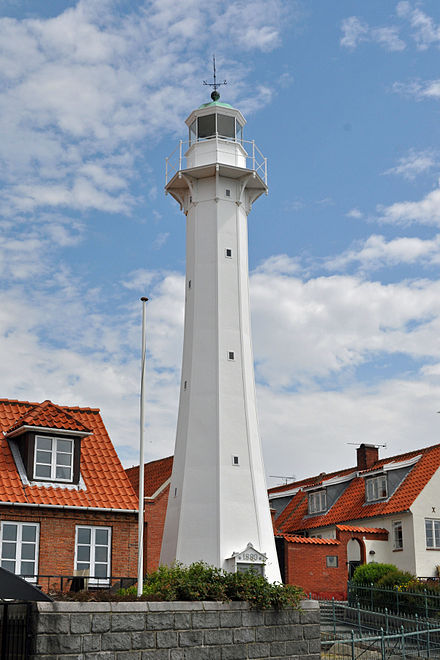
Rønne Lighthouse, Bornholm, Denmark

On some islands, a few former lighthouses, will now be further from shore and less visible to aid those sailing. These lighthouses are being replaced, made redundant. Some would argue that modern satellite GPS systems have eliminated the value of and need for lighthouses altogether; even so, new light sources will be installed.

This would not be the first time Denmark has led Europe, and the world, with imagination for desperately needed change. Little known is the story of the Danish Folk School Movement begun in the early 1800s. In that time, a wide majority of the pesantry living in the region were impoverished. Illiteracy was among the highest in Europe. Only a wealthy few had access to representation in government. The situation was bleak, trust in others to make change was low.

A remarkable man, Nikolaj Frederik Severin Grundtvig (1783 -1872), a Lutheran theologian saw Denmark’s future based on the construction of a system of universal literacy and the development of common trust. His vision led to the Folk School Movement. The goal was not to build a stratified society based on test results and university degrees. Rather, he focused on enriching comminities with educational options to nurture the human spirit through song, poetry, crafts, literature. It was a celebrating the giftedness of the people. Gruntvig saw renewal coming from the “bottom up.” Some of the “students” could also teach — they were weavers, cooks, farmers, fishers. Gardening, dance, practical uses of math and science were taught. Yes, there were classes in spiritual matters that were a part of the whole. Grundtvig’s goal was the preparing of persons for more enlightened citizenship and the development of networks of community trust. The folk school movement offered a place where those with limited money and time could learn new and more democratic habits, values and skills that would be needed for a healthy future society.

One hundred years later, by the early 1900s, Denmark enjoyed one of the highest literacy rates in Europe. At the same time a vibrant emerging democracy was electing representatives to the Folketinget, or the house of commoners. A majority of these folks representing districts from across Denmark at the time, had studied in the Danish Folk School system. Today, Denmark has a unicameral government with representatives serving in the Folketing. Not all is, or has been, perfect in this story — there was the Nazi occupation and times of political corruption and turmoil. Still the folk school movement, wind mills and redundant lighthouses can serve as valued metaphors for us and others who seek a way to proceed to a more democratic and literate world.

In many places there is need for the renewal of trust, and a way to learn a new literacy based on a knowledge that is accurate and inclusive of others. It is difficult to think of the situation faced by Denmark in the early 1800s and not compare it to the malaise of our modern time. Distrust of institutions and a sense of brokenness in so many of our communities is evident and threatening to our futures. One measure of this malaise is offered in the Edelman Trusts Barometer https://www.edelman.com/trust/2021-trust-barometer. Across the world, trust in our institutions, and one another, is at an all time low. Perhaps our “democratic lighthouses” are placed too far from our current shorelines. We do not see the light that might offer us a better set of bearings for the future.

Taken as a practical example and metaphor, what might one learn from the Danish experience? A few possible lessons would include:

  1. As to energy independence from fossil fuels, Denmark is showing us that dramatic and rapid change is possible. They have the attribute of wind; others of us have the prospect of, along with wind, adding many more solar power options to our resources
  2. Perhaps some of our cultural, commercial, social, educational, healthcare and religious “lighthouses” need to be moved or rebuilt and re-imagined. How might we relocate the work of the press (news and social media), churches, the schools, healthcare systems, theaters, museums, etc. so that they are closer and more relevant to the journeys of those traveling in the future?
  3. Are there ways to think systemicly about how to move ahead to encourage a more trusting and democratic common life? (In the U.S. I am of the opinion that a program of universal service options for our young would be such an institutional initiative.)
  4. What gifts of the people, across our communities, can be brought to places that seek to enrich the common life. Do we have imagination for such systemic and constructive change? These will be needed to do some Cultural Land Fill work as new ecologies of democracy emerge. I think of the excellent resource of the Tamarack Institute: https://www.tamarackcommunity.ca/?hsLang=en and the Asset Based Community Development projects:https://www.nurturedevelopment.org/asset-based-community-development/.

As a child, I learned an old hymn and often sang it. It was about the importance of lighthouses for people who lacked the light of faith.

The first verse was:

Brightly beams our Father’s mercy from His lighthouse evermore,
But to us He gives the keeping of the lights along the shore.
Let the lower lights be burning! Send a gleam across the wave!
For to us He gives the keeping of the lights along the shore.

Perhaps people of faith can join folks in other arenas to build new light sources for imagination, democracy and spirituality. It seems the church has put too much of its focus for too long, too far from where the light of imaginative faith is needed. We have offered little spiritual light and what is offered is shining in the wrong places. Rather than a faith that builds up trust and community, too much time has spent dividing, excluding and relegating those who differ to another separate island.

For the imagination already offering us hope in Denmark and beyond, I give thanks.

Summer Reading Bouquet

A Summer Reading Bouquet

Among my summer bouquet of reading — or re-reading, I have put two in my backpack to carry along with others. These are meant to be devotional books. I plan to carry them as devotional resources to be read and re-read as gifts in these challenging days. These are valuable starting points for reflection and meditation… a stopping to smell spiritual flowers.

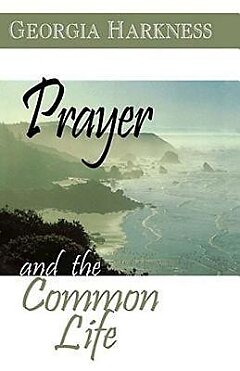
For persons of faith, or those interested in exploring Christianity, I recommend these two theologian/prophets from the mid-twentieth Century as among the best of the witnesses of their time. First, take a look at a book about E. Stanley Jones and second, a book penned by Georgia Harkness. Both were essential Christian figures writing during our nation’s troubled times of war, depression, racial injustice and rapid social change.

Dr. Georgia Harkness

In the recently publishedThirty Days with E. Stanley Jones Jack Harnish offers a fresh look into the life of Jones – the mystic, prophet, missionary, peace activist, evangelist, ecumenist and global ambassador. Georgia Harkness’ Prayer and the Common Life is written for folks in that mid-Twentieth Century, socially moble, economically bubbling and globally expanding culture. Professor Harkness, theologian and philosopher, authored more than thirty books, some scholarly and many others, like Prayer and the Common Life, are meant to be accessible to the lay audience. I believe both have much to teach us, today.

By reading these two together one can see the hoped for seeds of renewal and unity anticipated in the church and society in those years, and at the same time, they point to the troubles ahead for Christendom caught up in narrow cultural understandings. For Christians inclined to devotional reading that comes from an earlier time and yet speaks with profundity to our current dilemmas, I lift these two remarkable people of faith for our personal and common benefit.

For believers, doubters or just plan folks interested, I share these two suggestions as remarkable additions to a good summer reading boquet.

Patterns of Division and Disrespect

How May I Disrespect “THEM” – Let Me Count the Ways

Over my 76 years I have watched… and hopefully learned… that there is a pattern for perpetuating and using social/cultural/religious divisions in tragic ways. Here is a simplified overview of the ten most often practiced ways of encoruaging division in a family, denomination, nation or city:

1) Set up a ‘straw man’ (group or institution) from a disagreement, misunderstanding, mistakes, or with half-truths or complete lies about another who differs;

2) Lump everyone into two groups (those on the straw man’s side and those on your ‘righteous’ side);

3) Label those with whom you disagree as evil, heretics or fools. (This is the “process of dehumanization”);

4) Set up triangles by talking about (nor with) those with whom you disagree. Select others who share your position and persons you hope to convert to your position. Avoid talkling with those with whom you disagree. (This step is even more powerful in an age of social media, where algorithms do the selecting for you.)

5) Avoid learning, reading widely, hearing other points of view; and, be closed to paradox, nuance or the prospect that two things can be thought at the same time. Define all “terms” to best suit your arguments;

6) Use authorities to support your claims (Scriptures, The U.S. Constitution, ideology, perspectives of thought leaders or spokespersons) and ignore alternative interpretations.

7) Act as the Victim. Become the victim. Point to the ways “the other” is harming you and others.

8) Refuse any call for compromise and ignore any weakness in your own perspective and actions;

9) Nurse you grievance and turn it into one of the most important issues ever and a shield that denies any alternative point of view.

10) Rinse and repeat — ad nauseam.

I have seen this tragic pattern played out in broken marriages, families, nations, and religious denominations. There is money to be made by fueling division at each level and power to be (temporarily) gained. And there is community to be destroyed and loving respect for others to be lost. We see it today in Ukraine, in the U.S. Congress, and in religious denominations like the United Methodist Church.