Five Queries on a Fine September Day

Five Queries on a Fine September Day

Autumn is in the air.  Just a touch in some places.   Still enough to know change is ahead.  So, change.  I awoke this morning with five questions about change on my mind.  As the leaves turn color and the fresh garden tomatoes dwindle, it seems right to wonder about the future. These are my provincial, idiosyncratic musings in mid-September.  Call these my “dancing with irony” questions.  Both autumn and anomaly are in the air.  So, here goes:

1.  Will it jinx the Chicago Cub’s chances for a world series victory, after waiting over a century, by talking about their great year with marvelous pitching and fine young players?  Woops, I may have just done it!

2. Should Simone Biles, the astonishing 19-year-old gymnast, be given an additional gold medal (or two or three more, and a lot more press coverage) for just being an extraordinary athlete and remarkable human being in a world where Ryan Lochte captures more headlines?

3.  Why are so many of the folks eager to protect the United Methodist Church from changing the Book of Discipline, the very same ones who take any mention of being United Methodists out of their congregation’s names and off their websites and church signage?

4.  Are the people who believe President Obama is a secret Muslim the same folks who believe Donald Trump is a practicing Christian?

5.  How is it that a recent CNN/ORC poll found 50% of respondents asserting that Donald Trump was “more honest and trustworthy” and only 35% thought Hillary Clinton was “more honest and trustworthy,” when careful analysis by PolitiFacts says that 53% of Trumps statements should be rated “false” or “pants on fire” and only 13% of Secretary Clinton’s statements should have this rating?

Might misogyny have something to do with it?   Forgive me, sorry, I promised only five questions. 

Surely things will improve tomorrow!

ReCentering Methodism

ReCentering Methodism

These are days of discontent and disruption (even despair) in United Methodism in the United States. Earlier this week, my friend Professor Ted Campbell speaking to a gathering of World Methodists said the following about the United Methodist denomination: “The question at this point is not whether we divide or not,” said Campbell, standing under a “One” sign that signified the unity theme of the conference. “That I fear is a given now.”[United Methodist News, 9-1-16

As a “cradle Methodist,” one who has lived and loved this Wesleyan expression of the church for more than seven decades, I have watched our common story as it is shattered apart.  As it unfolds I watch with the horrid fascination of someone who fears she is seeing a train wreck about to occur.   “A given?”  So says my friend.  I pray and hope Ted is WRONG.  Really, are we to divide over this?  This? 

Still, Professor Campbell’s comment has caused me to do much thinking about our denomination.  If we are going to speak of “givens,” I have a few to add.   Here are a few “givens” that have been firmly in place for too long and I would suggest have led to my friend’s stark assessment of our situation.

In his fine book Beauty Will Save the World, Gregory Wolfe reflects on the cultural battles in our nation.  He notes James Davison Hunter’s statement that culture wars consist of “competing utopian politics that will not rest until there is complete victory.”  Wolfe continues regretfully, “The very metaphor of war ought to make us pause. The phrase ‘culture wars’ is an oxymoron: culture is about nourishment and cultivation, whereas war inevitably involves destruction and the abandonment of the creative impulse.”

Gregory Wolfe summarizes further: “Somewhere in our history we passed a divide where politics began to be more highly valued than culture.” Borrowing from Wolfe, I would adapt his statement to read that somewhere in our denomination’s history we passed a divide where politics began to be more highly valued than theology –especially our understanding of the church.  We stopped caring for the health of our institution and began to seek total victory through our politics.  Humility took a back seat to triumph.  Years ago, it became a given — raw politics replaced more generous theological discourse.  Outside forces played a role.  If “culture wars” are an oxymoron, shouldn’t theological wars be equally onerous?  (More on this in future.)

So, there is the previous “given” of politics being more salient than respectful theological discourse.  I would suggest two other “givens” that underpin this. 

It is increasingly scientifically clear that there are biological, hereditary contributors to  a person’s sexual orientation.  Year by year, the science keeps mounting — this research is a “given.”  It is not that United Methodists have been unaware.  In the 1980s and 1990s biological scientists like Sally Geiss were encouraging a more scientifically based view of human genetics.  However, by narrow majorities, the General Conference chose to ignore this work.  This, my friends, is another “given” that should be set along side the one Professor Campbell mentions.  We have been MADE by our creator to have differing sexual proclivities and desires.  I believe this is a “given” that should inform our theological reflection and transcend the political and the theological divisiveness we face.  I fear on this issue our denomination continues to operate with the ignorance of those who once believed the earth was flat, even in the face of solid scientific evidence to the contrary.

Finally, I suggest it is a “given” that the true disagreement among us, the issue that divides, isn’t primarily human sexuality but how we interpret scripture.  For years I have asked my friends, who wish to exclude homosexual persons from full participation in the church, to share with me their hermeneutic of scripture.  I ask on what basis they interpret the five or six passages of all of scripture that MIGHT refer to what we understand today as homosexuality?  How is it that my colleagues, with whom I disagree on this one matter, find more space to interpret scripture in less literal ways when it comes to divorce, the role of women in the church, support for slavery, polygamy, the eating of pork or even being left-handed?   How is there this latitude in interpretation on some important matters like divorce, slavery, the role of women and at the same time a restrictive interpretation of passages on homosexuality? 

I believe it is a “given” that until we can sit down respectfully and reason together about our interpretive approaches and differences, we will live more by political strategies than by theological respect.  As one wag recently confided in me, “I wonder if this increasingly openness to schism, to the dividing of the body of Christ first rests in an openness to divorce, even though Jesus spoke against it?  Perhaps once you accept divorce as normal, you are more open to a dividing of the church!”  Interesting and troubling thought, this — even as I find it slightly off key.

Another friend has said that there can be grace-filled endings of marriages, but there seem never to be grace-filled divisions of a congregation or denomination.  In this I fully agree.  Over the years I have watched the damage done by the exclusionary practices, theologies and splintering activities of the Missouri Synod Lutheran and Southern Baptist denominations.  It is clear that the seeking of some mythical purity has left both groups less focused on mission and imaginative ministry.

It is my belief that United Methodism has been shaped by too many “givens” already, without our easily accepting another, even if it is proposed by the good Professor Campbell.  What if we worked on some other prior givens like: politics being more highly valued than theology, the scientific evidence we have at hand, or the inability to speak constructively about differing hermeneutical interpretations.  What if folks in the emerging Wesley Covenant Association were to include all of these givens in their upcoming deliberations?  What then?


Ten Predictions – United Methodism Summer 2016

Ten Predictions – United Methodism Summer 2016

[July 10, 2016 — First, an apology — many of you are not United Methodists and care little about the ecclesial wars underway in the denomination of my birth and my ordination.  Forgive my need to offer this set of predictions at this time.  More importantly, what is happening in our nation now, following the tragic murders and wounding of police officers in Dallas, along with the police shootings of African American men in Minneapolis and Baton Rouge (and beyond), only places in sharp relief the relative insignificant meanderings, bigoted and contradictory activities of United Methodism these days. We UM’s are in search of our true identity.  Would that we might find again ways to speak to the nation of the power of love to overcome fear.  So, I write this perspective, these predictions on United Methodism 2016.  We are a denomination in search of our soul.  Pray for us.]

Ten Predictions about United Methodism — summer of 2016:

United Methodism’s structure is akin to the old cosmological suggestion that the world rested on the back of a turtle.  And what is beneath that turtle?  The answer comes, of course, it is said, “it’s turtles all the way down!”  In United Methodism it is conferences all the way down!

This spring and summer, in the United States, there are conferences on top of conferences (General Conference was in Portland in May), on top of this are Annual Conferences (56 in the U.S) and this week we will have five Jurisdictional Conferences where bishops will be elected.  I will spare the reader my perspectives on each of these, except as they lead to the ten predictions outlined below:

Prediction #1. For the next decade at least, the word “omnishambled,” a new word to recent editions of the Oxford English Dictionary, will describe the denomination.  There will be very little that can be said to be “United.”  I recall the wedding bulletin nicely printed for a ceremony many years ago.  It read that the wedding was being held at the First Untied Methodist Church.  Spell check missed it — UNTIED rather than UNITED.  Well, we are headed into a decade of Untied Methodism.


Prediction #2:  More and more annual conferences will be acting independently.  They will be rejecting the bigoted constraints adopted by the recent and future General Conferences.  This is already well underway.  This summer several annual conferences voted to act in ways that are contrary to the “official stances” of the church.  These conferences will refuse to act against pastors performing same-sex weddings, they will support the ordination of GLBTQ persons, they will act in support of reproductive rights organizations and they will seek a more just way forward in the relationship between Israel and Palestine.
Prediction #3: The 2016 Jurisdictional Conferences held in five regions of the U.S. this week will be an “inflection point” for leadership change in the church.  The theological and leadership commitments of the fifteen new bishops will shift the church to a more centrist and left-of-center place in the U.S.  While the power of right-wing groups like the Institute for Religion and Democracy, the Good News Movement and the Confessing Movement were evident in Portland at General Conference, the reality is that such locked-down opposition to alternative perspectives will not carry over to these Jurisdictional gatherings.  Look for several, perhaps a majority, of courageous centrists and progressives to be elected.
Predication #4:  The Western Jurisdiction will elect the first openly gay bishop in the denomination.  There are currently two strong candidates.  This will produce widely spreading ripples across the denomination both of approval and dissent.
Predication #5: In reaction to these developments (annual conferences challenging the official stances of the church and the election of the first openly gay bishop), a small group of U.S. United Methodist bishops will seek to hold punitive church trials against pastors who perform same-sex ceremonies.  One such trial is already underway in Kansas at the urging of Bishop Scott Jones. 
Prediction #6: Increasingly these clergy trials will become more problematic and counterproductive for the traditionalists.   They will be opposed and dismissed as foolish by a majority of folks in the pew, younger clergy and Christian friends outside the denomination.  Instead, in most U.S. annual conferences, so-called “just resolutions” will be worked out with clergy who disobey the strictures of the church.
Prediction #7:  There will be ever more organized efforts to hold the denomination together, with the hope of keeping as many at the table as possible.  One such group is the United Methodist Centrist Movement that is growing in strength especially in the North Central Jurisdiction (see: UMCM).  They speak clearly of the need to welcome a broader range of voices, against church trials and for support of local congregations.
Predication #8:  The old and sadly familiar pattern of scapegoating the Western Jurisdiction as a place of rebellion will increase in many quarters.  However, there will be growing appreciation of the way the Western Jurisdiction has remained steadfast in its witness to an alternative vision for the church.  One compelling and insightful voice from the West is the Rev. Jeremy Smith.  His recent reflections on the role of the Western Jurisdiction are, to my mind, prescient (see: Jeremy Smith’s Hacking Christianity)
Prediction #9: The cost of doing general church business for boards, agencies, council of bishops (travel, staff, meetings, programming) will become ever more burdensome, even overwhelming.  Attempts to do institutional work out of the same ‘global church’ paradigm as in the past, will cause the 2020 General Conference to make dramatic cuts in budget, program design and staffing.
Prediction #10:  Slowly, over the next decade, the United Methodist church in the U.S., at least the church that remains (there will no doubt be some splintering) will focus more on relationship and less on programs, more on conversation and less on spectacle, less on top down decision-making and more in the building of communities of support, and more on finding a third way forward.
Yes, these predictions do project an omnishambled future for United Methodism; still they are in the end hopeful.  The move to a place where relationships are valued over program and conversations over spectacle will require new leaders — like those I pray will be elected bishops this next week.  Conferences of the future will be less about performers on stage and more about those who gather around tables to share, listen and learn. 
We have reached the limits of the strategies by those who would seek to impose corporate systems and lockstep programs for growth on the church and her clergy.  There has been too much “talking down to” and too little listening to the genuine articles, the clergy and laity who carry out ministry in local settings. We will discover the value of what some social scientists call “positive deviance.”  It will require a looking for and listening for different perspectives on the church and ministry.
At one recent annual conference as hundreds of the clergy gathered for what is called the “clergy session,” there came a need for conversation among those gathered.  (Such conversation is, by the way, the basic idea behind a “conference.”  It is, in United Methodist-speak, “watching over one another in love.”)  However, as it became painfully clear, in this session clergy couldn’t converse — there were no microphones available in large hall of the convention center.  Clergy colleagues wishing to raise a question or make a suggestion couldn’t hear one another.  The bishop seemed surprised that there would be a question or a conversation needed.  He simply said, “We didn’t anticipate this.”
We shall see which of these ten predictions come true — I would bet on most of them — but I am especially clear that conversation, genuine and respectful conversation, will make a return in the next decade if there is any hope for renewal.


Harvesting Weeds

Harvesting Weeds


IMG_1423
Allium in Bloom, Walstead Farm 2016

Early June – daffodils and tulips have dropped their blooms.  Now the purple allium flowers, gorgeous, stand proudly over the “weeds.”

Funny how I can miss the beauty by seeing only the weeds.  Beauty — this year I saw it all around our home in the flower or vegetable beds.  The allium amidst the weeds remind me of wisdom of a friend long ago — the Rev. Esther Angel.

I first met Esther in 1992 in Louisville.  We were both clergy delegates to the United Methodist General Conference working in the same legislative group.  That year Esther’s quiet and deeply spiritual presence made a difference.  During a break in our legislative group, Esther, speaking softly, asked if she should say something to the entire group.  Several of us encouraged her and then she said something that has lingered with me since.  She simply and calmly said, “I fear the United Methodist Church is in a time of self-loathing.  It is diminishing and replacing the joy of our work.”  She went on “we are forgetting to celebrate the harvest, focusing too much on the weeds.

That day, in the next hour, Esther rose and moved to the middle of the circle in which our legislative group was sitting.  The topic was the denomination’s support for a woman’s right to have a choice when facing the tragedy of abortion.  Up to this point, it was mainly men who had spoken.  Raising her hand, moving to the center, turning and continuing to slowing circle, she began, “I would sing you my heart…” 

She spoke of the women she had counseled facing difficult, almost impossible pregnancies and life situations.  Saying she had never counseled a woman or her partner to proceed with an abortion — she could still understand how in some cases this would be a tragic yet appropriate choice.  Esther spoke in a beautiful way of other ways we sought to be a denomination that brought healing and hope.   She rehearsed the ways United Methodists had led over the years in civil rights struggles.  She spoke on the behalf of a woman’s right to choose and wondering why none of the men, who had spoken with such strong views that week, had asked to hear from women in the room. 

I thought of Esther this year when the 2016 General Conference voted to abandon our denomination’s long term support for the Religious Coalition for Reproductive Choice.   In 1992, Esther spoke about the importance of welcoming gay and lesbian persons in our churches.  She ended her solilloquy, her word-dance with the words, “Let’s stop harvesting the weeds.”  In 1992, Esther’s quiet, yet prophetic, spirit made a difference.  We missed her in 2016 — but her spirit remains.

The 2016 General Conference of the church “spent a lot of time harvesting weeds.”  Esther, who died, too young several years ago, had a capacity for quiet communication. In 1992 Esther passed out a poem printed on a 4 X 6 note card.  Here is a link to a copy: Re-Imagining — Esther Angel, 1992.

IMG_1457

To my mind she captured something in speaking of our “denominational self-loathing.” She perceived then that we were forgetting to celebrate the good harvest related to who we are as Wesleyans as United Methodists.  In too many places we forget our great legacy and are literally getting lost in the weeds. 

Often when I hear of congreations who try to hide their United Methodist identity on signage or websites, I think of Esther.  When I learn of congregations who ignore our theology of baptism or communion, who offer meager financial support to the denomination and prefer to identify themselves “post-denominational” or “community” churches rather than United Methodists, I think of Esther’s witness.  When I see the stong waves of the so called New Room Calvinism seeking to capture the future theological direction of our denomination, I think of Esther.

In her poem Esther spoke of the energy expended on attacking and defending and then wrote:  “Meanwhile, The poor hear bad news, Captives stay in prisons, The blind remain unsighted.  Satan laughs.  Wouldn’t you in his/her shoes?  “Left”; “Right, both the same, in tactics and in what remains — Undone.”

At our house we are now harvesting vegetables.  What joy!  Still, it’s difficult not to focus on the weeds, no matter our best intentions.  The same is true, I fear, in the church. 

My own bishop writes compellingly that United Methodists are about so much more than dealing with issues of sexuality.  Sadly, he then spends nearly every communication, every month, talking about the church and homosexuality.  He may be trying to do penance for the years he has quietly aided and abetted our bigotry.  Perhaps.  Still, until we hear of the beauty of faithful, loving homosexual relationships or about the gift of the witness of congregations that are courageously focusing on welcome and reconciliation and rituals of support for all people, it all stays in the weeds.

We all have a responsibility.  Will we speak of the beauty all around?  Will we speak of the delights of the harvest?  Will we speak about our denomination’s commitments to addressing poverty?  Addressing racism?  Our ongoing commitments to threatened immigrants in our nation and world?  Will we have a constructive word about addressing the dilemmas of climate change?  Will we hear about the ways the lives of persons in our communities are being changed through the love of Christ?

Esther had it right, let’s stop harvesting weeds!

Phil A

Count it All JOY!

Joy in It!

I am told that Thomas Langford when dean at Duke Divinity School had a license plate on his pick-up truck that read “JOY N IT.”  My suspicion is that folks who didn’t know Tom, might have mistakenly thought he was expressing his joy in driving that truck.  Others of us who knew Tom, knew better.  He was perhaps speaking of the joy of the truck, but suspect he was also talking about the joy of a life of faith, of living and leaning forward, of imagining the joy of a life of gospel relevance.

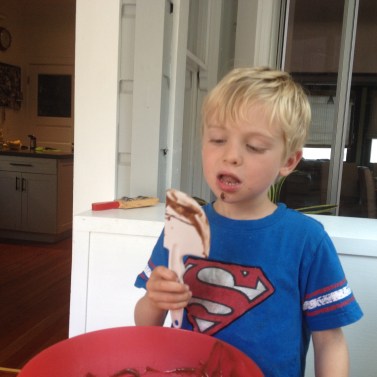
After writing about the current United Methodist General Conference an email came that challenged my call for repentance and accountability on the part of all of us, if we are to find a way forward.  The writer said he had no complicity in the current impasse and didn’t IMG_1003need to repent.  He said I offered no positive alternative.  Or, as he put it, “you call us to a whimper and a pout in our separate corners.”  Yikes, I thought.  Whimpering and pouting?  People who know me, know I like little more than a GOOD “conversation” — a solid and respectful debate often helps all sides come to fresh understanding, new truth.  There is, for me, Joy In It.  For me, a good learning experience is akin to my grandson Gus’ delight in cleaning up a bowl of chocolate cookie mix.

Conference gatherings for Methodists began in 1744.  The goal was to reason together about what should be taught, how it should be taught and how Methodists should live.  In recent decades our annual conferences leave little space for such conversations.

Annual Conferences are held in expensive (and expansive) convention centers where various interest groups and caucuses meet to plan on how to “win.”  Candidate slates are put together, text messages fly through the ether as partisans do their work.  Little time to listen to others here.  Worship becomes a show where some, up front, perform and we are to passively listen, or perhaps clap along.  I wonder when it was last suggested that we might sing together in harmony?

In my annual conference the expense of the big convention center means that we need to shorten the length of annual conference to avoid any extra expense.  Thereby we avoid more floor debate, time in small legislative gatherings and time for the inadvertent joy of making new friends.  “Come let us reason together” has been turned into “come-let-us-pass-the-budget, hear-reports, nominate-and-elect, have-performers-on-stage-and-avoid-lengthy-controversial-conversation.”  And then, a dear brother assigned to the role of speeding things up, comes to the microphone and moves to limit the number and length of speeches.  We are reminded of the expense of meeting in the convention center and we press onward and downward.

There is growing evidence of the health benefits associated with choral singing, the value of listening and harmonizing in song.  During our debates over human sexuality I have been aware that our Mennonite brothers and sisters are in the midst of a similar controversy.  Yet, they seem more able to hear those who differ, to make a welcoming space for diverse points of view.  Along with the Mennonite commitment to peacemaking, I can’t help but wonder if their practice of singing hymns in harmony (and not just having only performers on stage) might be of benefit to the health of the whole body gathered.

Today, J. Steven Harper wrote a hopeful piece regarding the decision made to support the U.M. bishops in hosting another meeting in a couple of years based on recommendations of a study commission on human sexuality (Steven Harper).  While I am more doubtful about a positive outcome, I join Steve in believing any positive way forward will require those who are involved to come with a humble and contrite spirit — a willingness to listen and set aside preconceived agendas.  If this could happen — what joy there might be.

Joy in it!  Hear the words from the epistle of James 1:2-5:  My brothers and sisters, whenever you face trials of any kind, consider it nothing but joy, because you know that the testing of your faith produces endurance; and let endurance have its full effect, so that you may be mature and complete, lacking in nothing.  If any of you is lacking in wisdom, ask God, who gives to all generously and ungrudgingly, and it will be given you. (NRSV)

Compass&BibleAt root, our differences will call for us to struggle with our interpretation of scripture and our various “captivities to local cultures” and step away from the worlds of narrow experience.  Folks like me will need to know how we can focus so narrowly on excluding gay folks based on a limited and questionable scriptural basis, and at the same time ignore other scripture “rules.” There are also “scriptural rules” on the role of women, divorce, the eating of pork, the wearing of synthetic clothing or the call to stone folks to death for many of our modern practices.

Fortunately there are good people who differ and yet who can joyfully engage in conversation with others who can provide us with helpful interpretive guidance.  Knowledge, reflection, empathy, relationship with those who differ can be helpful. I would like such a group to respond to questions about the dimensions of a scriptural hermaneutic behind the exclusionary paragraphs in our current Book of Discipline.

So… I offer to my friend ,who sent his email critique, more than a whimper or a pout.  My response might come with singing — learning again to sing in harmony.  It might come in talking and moving our annual conferences beyond being just about budgets, reports and votes.  It might change the ways we do charge conferences.   Might we sing and offer constructive conversations?  If we could, we just might be that we could again find JOY in being together.  If we could learn how to have annual conferences and charge conferences that offered space for relationship and for honest debate and conversation, we might lay the groundwork for more constructive general conference gatherings.  The burden is not just on the as yet unnamed study commission — it is on all of us.


1434 words

The Wrong Tool — General Conference

United Methodist General Conference Is A Lousy Tool

A friend who grew up in a Midwestern farm family speaks of the way his father would care for the farm implements.  After each use of a plow, a shovel or a hoe, the tool would be cleaned and sharpened.  It would be oiled, re-calibrated and made ready for the next chore, the next planting or cultivation. In this way, would the wise farmer care, year on year, for the tending of God’s good creation.

Recently I wrote of the value of having the right tool for work on my small remodeling project at home.  At the time, I was not just thinking about “the right tool” for carpentry and remodeling.  I was also thinking about institutions that are our tools as we seek to end homelessness and inadequate housing.  In my thoughts, there were other tools that are essential to our our common life, our health as a society and a church.

For example, our health care systems and our public education in the United States are examples of tools when properly cared for can be of benefit to all.  Instead of these tools being improved and used to assist, my sense is that in many places they have been cynically and actively undermined and misused.

This week, we have seen the dysfunction and inadequacy of the United Methodist General Conference as a helpful instrument.  General Conference is a dull and unwieldy tool that to my eyes destroys more than it builds up.  General Conference, built as it is on Roberts Rules of Order, could hardly be a more inappropriate tool for the tasks facing the contemporary church — especially a church that seeks to be global AND also inclusive.

Since the failed conference of 2012, I feared this would be another waste of the time, treasure and talents of many good people.  And so it appears to have been.  It has become more of a test of raw power and competing caucus groups seeking to win by any means available.  Hospitality has been replaced with tactics, legislative maneuvering and strategy wars.

This is not new to our denomination.  In fact, many of the wounds we now suffer go back to the racism and patriarchy of the past.  The whole notion of “jurisdictions” in the church in the U.S. goes back to a fundamental distrust rooted in differing views of racial segregation and fear of regional dominance.

Efforts to use a different tool, one identified at this conference as “Rule 44” were defeated by the body early in the conference.  It was perhaps not the best instrument — but it was an effort to try another approach for making difficult decisions.  It failed and no “better way” was offered.  So — now other ways to do our work are proposed.  A vague outline by the bishops — a call to prayer, a study commission and another gathering of the body in a couple of years.

Let me confess my doubts that this will bring success.  Not now, not in two years, not in four, not in ten years.  Why?  Because there are many different  tasks confronting the many constituencies and cultures of the church.  These each will require different instruments… not a one style fits all polity or theology.

However, there is another reason I have doubts about the efforts to use General Conference as a tool.  It is not the conference itself.  It is not Robert’s Rules. It is not Rule 44.  It is not the wisdom of our bishops or a study commission.  It is, the inability of us ALL to admit our sinfulness and culpability in contributing to the omnishambled morass we now experience.

Back in 1971, Elaine and I returned to the United States after an appointment as missionaries in the Republic of Panama.  The experience for was transformative.  We left as young idealistic Evangelicals.  Living among great people engaged in significant mission, we also saw the colonialism and paternalism of the church’s well intended efforts.  We saw the ways indigenous people would damage one another.  We saw the jealousies among missionaries and international aid workers.  We saw the ways governmental foreign aid was abused and misdirected toward benefiting U.S. corporations rather than truly assisting the needs of the people.

We were changed, and in this change we experienced something deeper than words or theology.  We were newly aware of our own complicity, our own sinfulness, our own addictions to the wealth and privilege.  And, we saw the lives of great people who likewise could acknowledge their failings and still keep seeking to live ever more responsibly even in confusing situations.  These were people who knew that the tools at their disposal (schools, churches, clinics, social service), might be small and dull, but they could be cared for, sharpened and re-calibrated.  They were also people who could argue well and respectfully and welcome persons who differed.

We saw great and good people (missionaries and indigenous leaders) whose lives modeled a way of integrity that was exemplary.  They were life-shaping models for us.  They were United Methodist missionaries, Catholic priests and lay people, Lutheran missionaries, Pentecostal fathers who would bring bags of nickels to school to pay a daughter’s tuition and mothers who would pray dawn to dusk for their children.  They knew a brokenness in their institutions, their nations and within themselves.  They modeled something deeper — something too rare in our world.  As the great leader, Bishop J. Waskom Pickett wrote from his missionary experience, “in the places where it was least expected the lives of believers became confirmations of the gospel.”  We watched with joy as Baptists, Catholics, United Methodists, Lutherans and Nazarenes worked together on evangelization teams.

In our first month back in the U.S. in 1971, I found myself speaking at an early gathering of the Good News organization.  In trying to tell of the integrity of people of faith (from many traditions) and of the pain of seeing our own personal complicity, I was struck by the response.  It was a dualism, the sense that no one wanted to hear such talk.  As it turned out, for many in the Good News movement, there were only two ways to view every matter — It was their way and the wrong way.

In one session that week, I listened to a leader who spoke of his visit to Panama and then critiqued United Methodist missionary efforts in Latin America.  I listened, astonished, as some of the persons we had come to love, were said to be communists and heretics because of their theologies or divergent political views.  It was all untrue, about being heretics or communists, but spoken with a certainty in these public gatherings.  I was amazed.  I was even more amazed when I spoke to one of the leaders of the Good News Movement about the misinformation being spread.  His response? “Sometimes things get a little overstated, but it is for a larger good.”  I asked what this good might be?  And was told it was the reformation of the church and to gain power in the denomination.  In other words,  it was about control.

Stunned, I simply muttered… “And, when you win, if you control the denomination as it is, what will you have?”

Today, May 18, 2016 it is clear that the Good News folks, forty-five years later, have WON.  The denomination is now in your hands.  I would ask, will you join in acknowledging the many ways good people have been harmed, truth has been shaved and repentance is required on all sides?   It is my view that the simplistic, either/or ways of proceeding have not changed over the decades.  And, yes, it is not just this one caucus that is shamefully one-sided and works with dull, broken and inappropriate instruments.

Today, I wrote my bishop and asked if he could join me in understanding that “complicity” is spelled with the letter “I” in it.  I acknowledge ways I have been complicit in the brokenness we now experience.  Can he?  I suspect not, because the spiritual muscle of dialogue with those who differ and disagree has atrophied.

How will we read scripture?

My reading of scripture and my theological study over the years brings me to the belief that until we ALL acknowledge our complicity and sin, the denomination will stay stuck.  And as long as we are stuck, my question from 1971 stands — “If you control the denomination as it is, what exactly will you have?”  Wesleyan “holiness,” you see, good Methodists, was always in the context of repentance and accountability.

It is how we kept our spiritual (and organizational) tools sharpened and in good working order.