Conjectures from This Guilty Bystander – Part I

Conjectures from This Guilty Bystander — Part I

A preliminary note: It is June, season of personal anniversaries, marriage (53 years) and ordination (51 years). 

For United Methodists, this is a time when regional gatherings called Annual Conferences meet and plan– or at least that is the theory.  After a fractious and harmful called Special General Conference in February, it appears that the denomination which I have served for over five decades is headed for a nervous breakdown – or an amputation of various body parts.  Who knows what will survive and in what form?

I find myself thinking there must be some way to think about this in a larger context than “my denomination” and “my years of ministry.”  I am reminded of the marvelous quote by Wes Jackson of the Land Institute, “If your life’s work can be accomplished in your lifetime, then you are not thinking big enough.”

So, I turn first to Thomas Merton for a larger frame on the world and the church — then over the next several postings (don’t know as yet how many) I will share some reflections from the view outside my window.

Thomas Merton’s Conjectures of a Guilty Bystander was published in 1965.  This wide-ranging collection of snippets from his notebooks is a rich resource.  Merton wrote, “We believe, not because we want to know, but because we want to beand spoke of the importance of “living fully in the condition of limited knowledge.

I recall the day a van load of us, young seminarians, were carted off to Gethsemani Abby near Bardstown, Kentucky. The Vietnam War was raging; I remember the compelling call from “Father Louis” to live fully into our Protestantism.  We should offer our delight in this struggle as “way-finders to the peaceable kingdom,” he said. Imagine my embarrassment upon learning later that this remarkable, robust monk, was in fact, Merton.
tmerton.jpg

When I read Merton I read a provocateur, a convivialist, whose insights push me forward.  My paltry, pale insights offered here are but wisps of smoke in comparison.  He writes as a “bystander” from the monastic life.  He shares “personal reflections, insights, metaphors, observations, judgements on readings and events.”  I write from the balcony of retirement — or at least my several recent attempts to retire.  I pray that while my thoughts will not match this master, I might have the vulnerability and a bit of the humility he displays in his work. Throughout Conjectures Merton reminds us of our vulnerability and that “We need not seek happiness, but, rather, discover that we are already happy.”

I will say more about near encounters with Merton and those who knew him in future posts. Before a few reflections on my denomination, United Methodism, and its current fracturing, this passage below from Conjuctures seems apt.

“I will be a better Catholic,” Merton writes, “not if I can refute every shade of Protestantism, but if I can affirm the truth in it and still go further. So, too, with the Muslims, the Hindus, the Buddhists, etc. This does not mean syncretism, indifferentism, the vapid and careless friendliness that accepts everything by thinking of nothing. There is much that one cannot affirm and accept, but first one must say “yes” where one can. If I affirm myself as a Catholic merely by denying all that is Muslim, Jewish, Protestant, Hindu, Buddhist, etc., in the end I will find that there is not much left for me to affirm as a Catholic: and certainly no breath of the Spirit with which to affirm it.” (Conjectures of a Guilty Bystander, p. 133)

++++++++++

I’m having that sinking feeling — “Help, help,” United Methodist’s cry, “we’re Melting!”  For me, these weeks of United Methodist Annual Conferences

IMG_1950

Disappearing Glacier on Columbia Ice field in Canadian Rockies

around the U.S. have been times of Despair and Delight.  United Methodism in  2019 feels like a glacier confronted with rapid climate change.  We are, as the Brits would put it, in omnishambles.  There are fissures all around.  I delight because each week in May and June from many Annual Conferences has come good news.  We are electing delegates to the next regular General Conference in the spring of 2020. Delight — a strong majority thus far, as represented by the delegates elected from Texas to Missouri to Florida to North Carolina want to turn away from the punitive past regarding our homosexual siblings.

Across the south and Midwest there is  change.  Trends strongly favor of Centrists and Progressives (as they have been labeled) picking up dozens of delegates.  Will it be enough to change things?  Well, probably not.  Legislation may change, but hearts and minds are less pliable.  It may be that we are stuck.  Many of these new delegates are folks who seek to reverse the harmful and mean-spirited actions take at the February 2019 Special General Conference —  reclaiming a more open stance for the church on issues of LGBTQI acceptance. The General Conference in February uncovered the ugly divisions that have been dividing the church for more that four decades.  The presenting issue is homosexuality but it is so much deeper than this. 

++++++++++++

Truth is the denomination in the U.S. has been melting for years and we have been seeking answers in all the wrong places.  Hearts and minds will never be changed so long as we see one another in categories, rather than as fellow children of God.

++++++++++++

I am told by friends I trust on all sides that there is no mending this shattered church.  “This broken family must now be dissolved,” they say.  Many families, kinship networks are already stressed and separated.  “Divorce is painful but it is not all bad,” I hear.  I am told “Methodists have done this before” — remember we divided over slavery in 1844!  I am told that United Methodism must be abandoned so that a new church can emerge.  To my ears some of this talk sounds a bit like the language from Vietnam when some foolishly said “We had to destroy the village to save it.”  Frankly, the talk of division comes too easily — Disaffiliation for what?  Toward what end?  It is the old metaphor of a glass half full and focusing on the empty part of the glass.  What is the value, the potential, of that which is already in place?  Yes, I will say it, there is a kind of naivete abroad when folks quickly say it is time to separate.

++++++++++

Nor does this talk of division ring true theologically for me.  I think of I Corinthians 12 and 13 or the message to the early church found in Galatians.  This month our Gospel lections were from John 14 and John 17.  Are these not calls for the followers of Jesus to stay together?   The prayer of Jesus presented in John 17 has been called the High Priestly prayer and the Great Ecumenical Prayer.  Of course, Richard Rohr reminds us that United in Christ is not the same as the unity of the church.  I know.  Even more, however, I am shaped by Dietrich Bonhoeffer who even in the face of the division of his Lutheran Evangelical home in Germany between the Confessing Church and State church called on the focus to be on “Christ the Center” and not on the boundary lines of time and place.” Shall we separate now so that we can re-affiliate in twenty or thirty years?  Have the so-called traditionalists listened to their adult children and grandchildren about this issue?  A majority of young persons who call themselves “Evangelicals” don’t buy the desire to exclude  others based on sexual orientation.

+++++++++++

What might we do?  This is the question many have pondered and most (including bishops and congregational leaders) have felt powerless to answer.   It is about agency.  By this, I mean, no one seems to have sufficient influence to make a difference.  I am told that there are folks working on solutions behind the scenes.  This is precisely my worry — how many groups are there?  Doing what?  Trading what for what? It feels very “in house” and based on old paradigms.  Still, I acknowledge my ‘guilt’ in this whole mess.  Even more, I grieve the pain caused by a church that for so long did such damage to persons based on the bigotry and discrimination of homophobia.  I struggle with the question of what more might I have done?

My sense is that we are thinking too small, we are talking too much to ourselves, we are working in the star chambers called the Caucus Groups, General Conference, Annual Conference and Boards and Agencies. 

Isn’t there a larger frame?  Can we admit that we are asking the wrong questions? I think of Roseanne Haggerty’s Community Solutions and her emphasis on Housing First.  She shows the need to “flip the script” on homelessness.  First, she argues, provide a place to live!  Stop believing persons much first earn safe shelter.  Then work on the other social and emotional needs.  In the wider economy and ecology, this is a better, more cost effective way of approaching things.  And it also happens to be Christian!

What if instead of dividing up the church we saw the great potential of having tens of thousands of communities where we worked in new ways to offer a witness?  What difference might be made regarding our ecological crises?  What if we used funds for community environmental renewal ministries and didn’t funnel everyone though some sausage-making congregational development matrix?  What might we learn from economists? Health Care specialists?  What new patterns of citizenry? — make that discipleship — might be modeled?  Might United Methodists seek to live more fully into our heritage and be way-finders to the peaceable kingdom?  Well that is a dream that certainly extends beyond my life time.


Balance, Imperfect but Balance

Balance, Imperfect but Balance

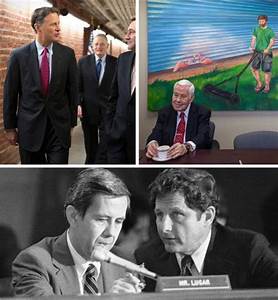
News of the death of Senator Richard Lugar arrives.  Not surprising, but saddening.  Coming two months after the death of Senator Birch Bayh it causes me to think about the gift of balance. 

Balance — that which allows us to stand  upright and walk forward.  Balance — that which keeps us from being overwhelmed by vertigo — whether physical or ethical.  Being Hoosiers, of a certain generation, for many years in the later half of the twentieth century, we United Methodists knew these two, one a Republican and the other a Democrat.  Each different, yet each shared our common Methodist heritage.  We United Methodists watched and lived with a balance displayed in our public/political lives — and in our churches.

th.jpg

Lugar and Bayh were different — yet they seemed to come as a matching set.  Lugar modeled modesty and graciousness; an intellect – a political and ethical realism; an openness to bipartisan solutions to complex national and world situations.  Bayh was passionate, a natural leader, and could light up a room with his rhetoric; he too was an informed realist, and when prepared, could debate with the best, and his drive to make a difference saw him take a lead in essential societal changes.

RUTGE_.jpg

Bayh’s leadership on Title 9 legislation guaranteeing equal rights for women in education, sports and commerce was a difference maker.  Lugar’s commitment to disarmament resulted in much of the nuclear arms control that emerged and his persuasion finally lead to the ending of South African Apartheid.  They both clearly understood that the “perfect could be the enemy of the good.”

Balance: it is missing from our body politic as a nation.  It is missing from United Methodism.  One cannot help but wonder as to how the nation and church moved to our current state of mean-spirited dysfunction.  As a clergy person, I can say that I have watched much of United Methodism in Indiana move away from the welcoming of difference, the welcoming balance, in our faith life and practice.  I have watched as we have had bishops and pastors who were too fearful of conflict to understand the gifts Lugar and Bayh modeled for us as a nation and a church. 

One recent bishop in Indiana now wonders what happened to the “Methodist Middle” and I chuckle.  I watched as honest debate was stifled and only one limited model for being church promoted.  Cautious theological conservatism and focus on seeking the magic formula for “congregational development” was promoted over emphasis on the denomination’s social witness and honest public debate or support for church ministries with the poor or marginalized persons.  We increasingly became a church in Indiana that placed our resources and commitments toward white, suburban, conservative enclaves.  Expressed differences, and openness to other views  — like those modeled by Lugar and Bayh — were discouraged. 

Why for example were certain “preferred,” certain “more conservative” congregations allowed to thumb their noses at the giving to larger denominational causes (something we call a tithe or an apportionment)?  This preference and lack of accountability didn’t go on for a year or two, no, but for decades. Meanwhile such giving was expected by ALL others.  Other congregations, progressives and moderates, were never offered this same “tolerance.” In other words — the progressives and moderate congregations carried the financial responsibilities for all — freeing up resources for those who were more exclusionary in their perspectives and practices to invest.

I watched as decisions were made that moved United Methodism in Indiana to a more fundamentalist and exclusionary stance — preferred over encouraging honest listening and learning from one another about our differences and a seeking of balance.   I am not naive enough to miss the fact that the nation as a whole was drifting toward more bitter language and divisive understandings.  Or, that some leaders do their best to avoid as much conflict as possible — meaning they give more space to the louder voices of “so-called-traditionalists” backed by the political and media sway of the Institute for Religion and Democracy or the so-called Good News or Confessing organizations.  So, it is understandable that leaders might surround themselves with persons who did not search for the balance valued by a Lugar or a Bayh — an ability to seek compromise while still moving ahead.

It required balance to move forward and not end up in a cul-de-sac of narrow-mindedness — something our denomination is seeking just now.  I fear it may be too late… but if there is a way forward, we do have the gift, the model, of two men, Lugar and Bayh, both United Methodists, who brought very different gifts and perspectives.  Yet both made our nation better for their service.  I give thanks for them — and pray for balance to be regained in our nation and our church.

th-1.jpg


Reflections and Prayer for United Methodists, Transfiguration Sunday 2019

Reflections and Prayer for United Methodists

Reflection: John Wesley’s guide for living has been distilled down to Three Simple Rules: 1) Do Good; 2) Do No Harm; 3) Stay in Love with God.*  On Tuesday of this past week, in St. Louis, the United Methodist Church walked away from one of our core commitments: “Do no harm.”  The actions taken at that gathering have done immeasurable damage to many, especially friends and family who are in the LGBTQ community and to the United Methodist Church’s witness among the young in future generations. 

Eight-hundred-sixty-four (864) delegates gathered to consider plans related to our stance on same-sex marriage and matters of ordination. Two-thirds of the delegates from the United States did not support this punitive and restrictive plan.  Even so, 53% of all delegates did.  Delegates from other nations voted overwhelming “to do harm” to millions.

Those gathered could not agree to join what this congregation has already agreed to do – which is to leave room for loving disagreement about how we interpret scripture.  Five (5) passages of scripture, out of 31,000, are cited to offer sanctions against same-sex relationships.  Those who voted in favor of the new restrictions believe these verses capture the entirety of God’s timeless will and purposes.  We know that scriptures have been misused in the past.  There are more than two hundred (200) verses on slavery.  There are dozens that have been used to marginalize women — even suggesting they should “keep silent in church.” (Can you imagine!?). In this congregation and thousands of others, we have studied, grown and learned – over the decades.  We understand that some beliefs reflect a limited cultural frame.  In some cultures, capital punishment may be practiced against those engaged in same-sex relationships.  We believe, in this church, just as our fore-bearers did regarding slavery, that there are truths that call us to a greater understanding of God’s purposes than the narrow reading of a few verses.

Sadly, those of us who are Centrists, or who seek a Generously Orthodoxy, or who are Progressive in theology, we who represent the clear majority of United Methodists in the US, are now left with a sense of being exiles in our own denomination.  This matter is not resolved.  It will take many months, probably years to sort out where the denomination is truly heading.  It is messy just now.  Here at SD – FUMC, as a leading congregation in the nation and in the west, we are called on to resist, to pray, to think, to give witness, to lead; but more than anything else we will display, here and now, the depth and breadth of God’s love for ALL people.

Our congregation IS NOT CHANGING.  We will not be turning back the clock.  We will resist being a church that does harm in this way.  We will not treat LGBTQ people as second class.  We will welcome everyone.  There has been much pain  — and much grace displayed this week.  I have seen tears and also heard whispers of hope for the future… hope that grows stronger and louder each day.  Of all the grace, the greatest I have comes from LGBTQ folks. 

Join one of the conversations next week or in Trotter Chapel tomorrow evening at 7:00.  On June 2nd, on Ascension Sunday, we will focus our worship on the gifts LGBTQ persons bring to the church and this congregation in particular. One final word to all our members, especially our LGBTQ members, their family and friends: I love you., we love you.  The great pain the General Conference has caused you is not who we Methodists in this place are – nor who we will be.

Prayer:  O God, even in our darkest hours, you surprise us.  You lead us into new glimpses of your glory each day… yet we often fail notice.  Often, we are caught up in the mundane musings of everyday routines.  Then, there are other times, when we overwhelmed by the brokenness of our church and the fractured realities of your world.  Today, our prayer is that we will experience a break through, a renewed awareness of your glory.  We commit anew to resist the forces that would exclude and harm – that we will stand on the side of faith rather than fear, of acts of love rather than rigid rules that exclude – and, even then, we will open our hearts to those who hold a different view.

We pray that you will give us imagination for the future, strength for our weakness, hope where there is fear, light for the way and grace in the times of trail.  We are called to be a people who love one another, a people of grace, a people who seek to do no harm, a people who now that our final home and hope is in your care.  Move us today from houses of fear to houses of love.   

Knowing that there are many burdens, joys and thanksgivings we bring today, we now pray in silence seeking to better know your purposes for our church, the church universal and our world. 

  • Silence –

Might we see the world with new eyes – We pray for your church, understanding that we are a small part of your people.  Forgive our arrogance for thinking our little disagreements hold any ultimate significance in your kin-dom.  Open our eyes and minds and hearts to your guidance.  Might we dream new dreams for the church, new openness to others in our ministry and new hope for the future.

Amen.

  • (See Rueben Job’s Three Simple Rules: A Wesleyan Way of Living.)


Orphaned or Exiled?

Orphaned or Exiled?

This will not be long.  I have been avoiding adding to the verbiage surrounding the United Methodist Special General Conference in St. Louis.  Perhaps I know too much, or is it too little?  I awoke this morning considering the actions taken yesterday by the United Methodists gathered in St. Louis.  It is certainly one of the most painful days in my more than fifty years of ordained ministry.  Whatever, I was even more painfully aware of the ways my many LGBTQI friends have been spiritually brutalized by the language and actions of this gathering.

I saw it coming… and I understood what it will likely mean for the future.  As the conference voted to continue to exclude gay and lesbian folks from the full ministry of the church and to punish anyone who would join in seeking a more open church, I found myself wondering what has happened to the denomination I joined as a young man.  Yes, I felt orphaned by mother church… or, perhaps it is that I felt exiled.

Let’s just say that as an elected delegate to four General Conferences in the past, I have been in the room and seen the “sausage made.”  The result is our guidebook, the Book of Discipline.  However, words are insufficient to capture the whole human story and the ways God keeps leading the faithful forward.  This is, after all, evidenced in the unfolding story of our scriptures.  God’s people learn and learn again of God’s faithfulness and love.

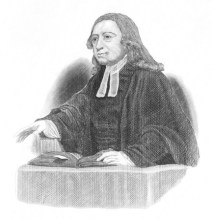
John Wesley
John Wesley – Methodism’s Founder

More to the point, I have seen the ways we United Methodists have struggled to live our lives together over the past fifty years.  The intrigues, the deceits, the political distortions — yes.  I have also seen the affection and generosity of persons who come together from many places geographically and theologically to seek to discover what God had in store for a church that was willing to take risks — to be a messy church on the behalf of sharing the transforming love of Christ in the world.


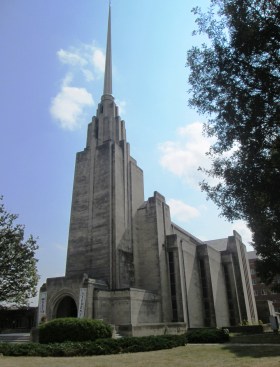
Wesley_United_Methodist_Church_Urbana_Illinois

John Wesley suggested that Methodists should begin and end our work with a “watching over one another in love.”  Let me recommend a fine sermon by Dr. Robert Hill that looked at what is called the Wesleyan Quadrilateral (Scripture, Tradition, Reason and Experience) as our way to know God’s will.  (see http://www.fumcsd.org)

N.T. Wright suggests that the church is merely the scaffolding for God’s Kin-dom work in our world.  This helps.  But not much this morning.  I confess to feeling orphaned in the face of decisions being made by this “special general conference” in St. Louis this week.  Or, perhaps it is an exiling that is underway.  This is a more helpful image — from scripture.  What shall I do? — well, it is time to listen, watch and look for new connections with old friends.  I think of the dozens, make that hundreds of churches where a Methodism of the heart and mind continue to be practiced.   I think of places like Wesley United Methodist Church in Urbana, Illinois or… the list goes on, by the hundreds it goes on, in the U.S. and around the world.  Here gather people who are not afraid to think AND pray.  To welcome and include.  To be open to changes they need to make rather than seeking to make other fit into their categories.  Maybe there will be a gathering-of-orphans — or exiles — that will become the next chapter in our faith journey.  Would that I could stay in the familiar world of mother church.  Sometimes, however, we must leave home (or be pushed out) to grow in ways God would desire.


Bishop Judith Craig

Recalling Greatness: Bishop Judith Craig

th.jpg

So many memories, joyful ones, of Bishop Judith Craig. That laugh — so often laughing at herself.  Those hands on your shoulder as she teased or counseled or intermingled the two and you didn’t realize you had been “schooled” until the next afternoon.  Those eyes — that voice.  That wisdom — cutting through the antics of clergy or lay person who would seek to damage the whole. 

I think of her as one always open to delight — she lived with an expectancy of something better.  And could she preach and pray — yes, my Lord, she could!  Losing dear Judy in this hour in the life of our United Methodist Church is heartrending.  I salute you, dear sister and beloved friend.  May perpetual light shine on you.

I remember how moved I was when Judy was the first woman to give the episcopal address for the denomination back in 1996.  She called for a church that could be bigger than the narrow bigotry that entrapped us.  She was unashamedly a champion of full inclusion of our LGBTQ siblings.

At the time (1996), I thought the church would make a transition to a more accepting and courageous witness quickly.  I was wrong.  It has now been over twenty years of regressive movement.  Twenty years of narrow interest caucus groups using the scriptures and our guiding documents as a blunt instrument of exclusion and harm.  How can the good news of Jesus have been so disfigured into another kind of news?  What hermeneutic can justify this push to separate and move away from one another in a time when the gospel is so relevant to a hurting world? 

We seem to have been “trading down” as a denomination for these two decades. Giving away our legacy, our commitment to loving acceptance for all. Open hearts, minds and doors of welcome has been replaced by a move for the withering of the church by exclusion.  It is fostered by those who build fences of fear and use the very resources and structures of the church against it. The church has lost a great visionary leader.  She was mentored in East Ohio by another great, Bishop James Thomas. They were of an uncommon kind.  I see them together — one testimony to our church at its very best.  Both were able to stand tall for justice and piety.  Neither would sell out for a false sense of peace.  I saw both of them stand tall in difficult circumstances.  Each possessed a wisdom that would not accept the ill-considered proposal, the seeking of unfair advantage of others, or the mean-spirited tactics of a caucus group.

th-1.jpg
Mary Oliver

Judy’s death comes within hours of poet Mary Oliver.  Two women, two singular voices.  I wonder if they ever met?  Let me suggest that Judy offered us the poetry of a life-well-lived and of poetry-in-action. Or, as Mary Oliver might say, Judy “didn’t end up simply visiting the world.” She was indeed “a bride married to amazement.


I give thanks for the witness, the joy, the friendship of Judith Craig… I now laugh through my tears.  I have been touched by greatness and I know her expansive witness will endure and thrive in places we do not yet see, no matter the petty politics of the current United Methodist Church.

Why Seek a King Cyrus?

Why Seek a King Cyrus When We have a King Jesus?

In a recent piece in the New York Times, Katherine Stewart writes of what she has been discovering among many right wing, Christian Nationalist groups.  [See Katherine Stewart, NY Times.]  Having read her thought-provoking report, I can’t help but wonder why Christians would seek the re-emergence of a King Cyrus when we have the far more appropriate witness in life, death and resurrection of King Jesus, as our guide?  

I also stop and consider what recent socio-cultural trends mean for the church.  While United Methodism has been distracted by folks seeking a heretofore undesired “doctrinal purity” on issues like “homosexuality,” our core message of multiple ways for faithful disciples to “Know God in Christ” has languished… and in some places nearly disappeared. All the while, our distractions have kept our attentions from the deeper cultural realities. Basic assumptions about liberty and faith provided by folks like the Niebuhrs, ML King, Jr., E. Stanley Jones, Georgia Harkness and Dietrich Bonhoeffer have been undercut. A profound shift in understanding of the nature of Christian citizenship has eroded beneath our feet.

This, I believe, was (and continues to be) a well-planned, well-funded and well-executed effort by persons who have little or no interest in encouraging a Wesleyan spirit. I don’t believe many of my sisters and brothers caught up in the so-called “Good News” movement or the so-called “Wesleyan Covenant Association” intended this. Even so, they are in my view the seminal actors in this tragedy. I do also wonder, at the same time, if they (and we) haven’t “been played” by nationalistic and anti-democratic forces over the past several decades. Have we unwittingly made space for some to suggest that POTUS is a modern “King Cyrus?” Alas.

I believe our foolish warfare over welcoming our gay brothers and sisters has contributed, in some significant measure, to the current season of intolerance and authoritarianism that passes for Christianity. Can United Methodism recover it’s voice? Can we move back to a focus on living lives based on the teachings of Jesus? Can we again practice basic democratic, respectful and honorable civic dialogue? This was once a part of Methodist annual conference sessions — in many places in recent years it has been lost.  Can we mend the soul and witness of our church?  The soul of our nation may stand in the balance.


Blood Letters — Faith Faces Despotism

Blood Letters — A Witness to the Church

Earlier this year, the book “Blood Letters: The Untold Story of Lin Zhao, A Martyr in Mao’s China” written by Lian Xi was published (New York: Basic Books, 2018).  I commend it to you.  Lin Zhao’s story is that of a young woman who confronted with tyranny, regained a centering point by reexamining and recommitting to her Christian faith.  She moved from being a dedicated member of the Communist Party, then experiencing the tyranny of Mao Zedong, to become a voice against totalitarianism.  Awakened again to her Christian faith she rejected the deceits and brutality around her exhibited by authorities. 

In seeking to find a life of integrity and truth amid the brutality and despotism, this remarkable woman drew on the Christian faith she had learned as a youth when educated in Methodist Schools.  Her faith became the source of hope — and truth.  She wrote letters and essays that circulated among the faithful outside of prison.

blood letters cover

In prison, authorities took away her paper and pens.  Lin Zhao continued to write.  She wrote on torn pieces of bedding, using her own hair and blood from pricked fingers to compose her letters and reflections.  Later, when she was given writing implements again, she often continued to write with her blood.  Lin Zhao was martyred in 1968 for her beliefs.  She is seen as the most famous of the martyrs of this time. Today, thousands in China continue to be inspired by her resistance to evil.

As intolerance, bigotry and suppression of descent rise in our world today, the witness of Lian Zhao becomes especially significant.  As attacks on a free press surge threatening to overtake truth and decency, this singular voice is a gift to us all.

My sermon on November 25th referencing her story — and that of many others.  If you wish, you can read it here: God’sMirrorforChurch 11-25-18.

We give thanks for the courage and witness for all of God’s people, especially for the witness of Lin Zhao.

Strong Leaders Serve

Strong Leaders Serve

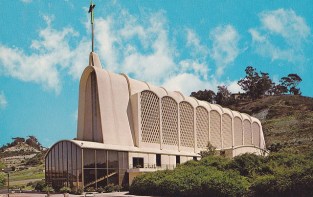
8661153044_41a654cfbe_zWeek by week we gather at First United Methodist Church in San Diego.  I learn more about this good congregation and the ministries they provide.  The photo shown here is of the church shortly after it moved to the Mission Valley area over 50 years ago.  At the time it moved to a place of dairy farms and orchards. 

Today, it can truly be said this is a place that reflects the old hymn “Where Cross the Crowded Ways of Life.”

This past Sunday we spoke of the importance of leaders who serve — HANDS OF THE STRONG.  Little did I know when I chose this topic back in June that it would also be a week of indictments, guilty pleas, new disclosures of the abuses of Catholic clergy or the tragic misguided leadership at Willow Creek Church, the well-known and influential mega church in Illinois.  Nor, did I know that this would be the weekend we would grieve the passing of Senator John McCain.  In the sermon preached on 8/26 we spoke of leadership and remembered the remarkable life of integrity and humility lived by Senator McCain.  It can be read here: HandsofStrong BLOG 8-26-18.

IMG_0860
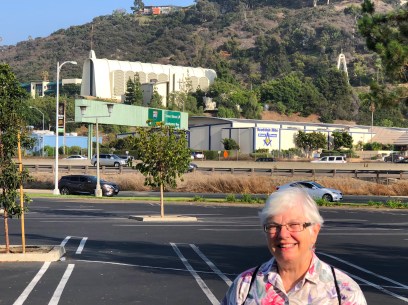
Elaine beside “The 8” Freeway and the Church Beyond. Where Cross the Crowded Ways of Life

So, what of the future?  The photo to the right was taken last week.  It is image of the church taken from a department store parking lot across the busy I-8 freeway.  Elaine, my spouse, is pictured here.  As I consider our future and the leadership that will be required, my prayers go out to the people who will continue the great ministries of this congregation long into the future.  As the United Methodist denomination seems to have lost its way — and is caught up internal controversy — in what Bishop Ken Carder has rightly described as “tacky” (with attribution to Will Campbell).  It is places like San Diego FUMC — and hundreds of churhes across the nation —  in the middle of the busyness all around that offer hope.  Here the vision of a world beyond the corrupt present will endure.  In such places.


Forever Abiding

FUMCSD-01.jpgForever Abiding

My God my bright abyss                                  Into which all my longing will not go        Once more I come to the edge of all I know And believing nothing believe in this.    Christian Wiman

Abiding.  In a new place, with new people.  New friends.  Our second Sunday at San Diego First United Methodist Church. 

Attached is the sermon entitled “Forever Abiding” preached on August 19, 2018.

Prayers are appreciated for this fine congregation.  Forward we go.

Shalom,    Philip Amerson

++++++++++++++++++++++++++++++++

Sermon — Forever Abiding 8-19-18 BLOG


Forever Beginning

67.jpgForever Beginning

From T.S. Eliot’s poem Little Gidding:

We shall not cease from exploration
And the end of all our exploring
Will be to arrive where we started
And know the place for the first time.

Exploring, this time, lands me in the pulpit at First United Methodist Church in San Diego as Interim Pastor.  I have preached in this great church in the past; however, this time is different.  This time, I will have a weekly assignment.  To show up, listen, learn, study and then seek to share truths about the transforming love of God.

This is not an easy task in any season.  Yet, as I face the task now, it seems more challenging than any time in my 52 years of ministry.  Attached is the sermon entitled “Simply Beginning” preached on August 12, 2018. 

Prayers are appreciated for this fine congregation — and for the “weak reed” who will be giving his best in the year ahead.

Shalom,

Philip Amerson

++++++++++++++++++++++++++++++++

Sermon — Forever Beginning 8-12-18 PRINT