Emptiness. Manger Square, Bethlehem, December 23, 2023, is abandoned. Most years, every square meter of the space would be filled, maneuvering among the crowd, difficult. Christian Palestinians in Bethlehem, in solidarity with those in Gaza, have canceled Christmas. The Lutheran pastor says, “if Jesus were born today, it would be under the rubble of Gaza.” And nearby, among Israelis, the horror and grief of October 6 when families were ripped apart, children murdered, women raped, and hostages taken, and who even now are being tortured persists and widens.
Israelis and Palestinians deserve better. Still, decades long pent-up anger and distrust has erupted in an unimagined violence. Slow boiling political chicanery, terrorism, and bigotries mostly built on lies and prejudices now rob the people on all sides of options. Emptiness. No room left for rational thought or basic humanity.
No room left for recognition of another as a human being. Robbed by millions of deceits, papercuts on the soul, there is no space for mutuality, companionship, or love. The prefrontal cortex is severed from the reptilian parts of the brain. A single option appears the only one — revenge, revenge, revenge. Empty of alternatives, life on all sides is reduced to terror.
For those of us, observers with broken hearts and conflicted loves, there is another kind of emptiness. Those who know, respect, and love both Jews and Palestinians, live in a wasteland of uninhabited hope. Our carefully crafted dreams and visions for humanity are shattered. And what of our own bigotries and behaviors? What of the ways we discount and exclude those we fear? What of our treatment of those without shelter, who struggle with addictions or who come to us as immigrant?
We suffer with a similar, yet a differing void. For so many Christians, the mangers of our souls will seem vacant, emptied places this Christmas.
Whether national politics or elementary school, we observe bullies and victims. It is not a new phenomenon. Seventy years ago, at West Spring Street School in New Albany, Indiana – I saw it – and felt it – on the playground. This ancient human reality goes all the way back to Cain and Abel, Joseph and his brothers, King David and Uriah, Pharoah and the Israelites, or King Herod or his wife murdering John the Baptizer. Bullies and victims are forged deeply into our emotional and moral foundations.
Literature is built on the anti-hero, victim, and hero motiff. It is a delicious formula that fits well in literature, movies, and television series. Still, this easy pattern is missing something critical and complex. It is the place of responsibility. It is the paradox of the cross. As H. Richard Niebuhr noted in his classic “The Responsible Self” (1963) ethical behavior requires sorting through the ambiguity and distortions of real life. Ethical behavior requires attention to a universal community and honest observation of the best intentions and failures brought by each and every actor.
A victim can often turn into the bully; the research is clear. The story of the man bullied at work who comes home to kick the dog is a familiar one. Most adult abusers were abused as children. Limiting our frame to either bully or victim is a gestalt that has gained a wide purchase in our society. It is the core “stuff” of the MAGA movement. It plays out in the courtroom, city halls and, even in the church. Politicians market in meanness. Tough talk and threats are confused as “strong leadership.” On the other side many can only see themselves as victim. So much of our social service efforts and congregational life assumes a primary task to rescue the victim from the bully – and, of course, we are to be cast as heroes rescuing the victim.
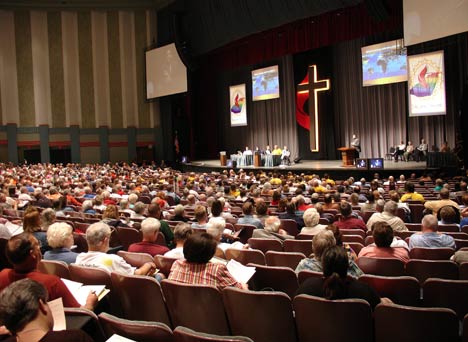
In the wake of the trial of United Methodist Bishop MinervaCarcaño there are persons on each side suggesting they have been victimized – and “the other” was a bully. What’s missing? I would argue it is responsibility to the larger community. Was it a struggle over power, gender, culture, money? Perhaps all of these, yes. How did we arrive at the point when good folks on each side are to be sorted into the “bully/victim” divide? Perhaps one party was unwilling to seek a responsible remedy before going to trial. Perhaps both parties were unwilling. But here we are… still living in the bully/victim wilderness.
There are many ways forward. (Many will point to Matthew 18 counsel on how handle a dispute. It is a good place to begin.) However, I will start by borrowing from Robert Greenleaf’s notion of Servant Leadership. He writes of a servant leader’s responsibility in this way: “The best test, and difficult to administer, is: do those served grow as persons; do they, while being served, become healthier, wiser, freer, more autonomous, more likely themselves to become servants? And, what is the effect on the least privileged in society; will he or she benefit, or at least, will he or she not be further deprived?” (The Servant Leader, p. 7)
Might it be that while dollars, publicity, trust and energy were put into a drama of victimhood or bullying, the opportunity to act on the behalf of the least privileged among us has been lost?
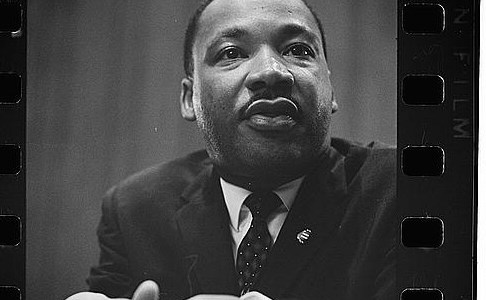
In November 1954, Dr. Martin Luther King Jr. preached his inaugural sermon at Dexter Avenue Baptist Church in Montgomery, Alabama. In retrospect, it was his future ministry’s thesis statement[i]. His text? Romans 12:2: “Do not be conformed to this world, but be transformed by the renewing of your minds, so that you may discern what is the will of God—what is good and acceptable and perfect” (NRSV). The sermon was titled “The Transformed Nonconformist.” He was proposing that Christians sometimes needed to act in ways that didn’t always “go along to get along.” Civil, nonviolent nonconformity, was a preferred option when democratic institutions failed, and discrimination continued unabated.[ii]
There were scores of other faith leaders, expressing such a witness, prior to and alongside of, Dr. King. The church had a rich history of persons acting as Transformed Nonconformists.[iii] Urban Training Centers were active across the nation in the mid-1960s, most notably in Chicago, Detroit, and Cleveland. There were many models unfolding ranging from the East Harlem Protestant Parish in New York to Church of the Savior in Washington D.C., to Operation Push in Chicago. In Boston, Cleveland, Nashville, Atlanta, and Los Angeles such efforts were institutionalized and often funded by mainline denominations. In the rural south there was the witness of the Koinonia Farm in Georgia and Voice of Calvary in Mississippi.[iv]
In Indiana the Rev. Luther Hicks in Indianapolis founded Dignity Unlimited. Hicks, a pastor, also set up work with youth in a storefront outreach effort near Shortridge High School at 34th and Meridian. Hicks was arrested on several occasions for leading nonviolent protests over racial injustices. Urban legend has it that the “Methodist” bishop would call the “Methodist” mayor to intervene. Hicks’ crime? Seeking to de-escalate possible violence and “promoting patience and reason.”[v]
In earlier decades, Gary (Indiana) Central Methodist Church championed racial justice efforts as the Reverend S. Walton Cole encouraged members to confront their own prejudices, welcome new members from diverse backgrounds and march in demonstrations for equal pay and education. At Trinity Church in Muncie, Indiana, Rev. J. C. Williams’ activities in Civil Rights struggles lead to his candidacy for Mayor of Muncie as “Poor People’s Party Candidate”[vi]
Back to Evansville, and to the topic the closing of desegregation and the closing of inner-city schools, the counsel “You cannot fight city hall” was heard, and it was reframed to a need the importance of speaking directly to school administrators.[vii] In the process, changes did come. Culver School was not closed, and a new building was constructed. Elaine Amerson was elected to the county-wide school board where she served for eight years, three of them as board president. Resources that had been heavily directed to suburban schools were shared more equally across the school system. And, yes, county-wide busing did occur, while at the same time several “naturally racially integrated” schools continued to serve a neighborhood.
Despite the range of these efforts, little research, or documentation of the import of such faith-initiated efforts at transformation has been produced. Dr. King’s legacy endures. It has been revived by persons like the Rev. William Barber II. Taking a longer view, while significant advances have occurred, perhaps a deeper and wider story has gone untold.[viii] There has been little reporting on the breadth of the many faith-based activities.[ix]
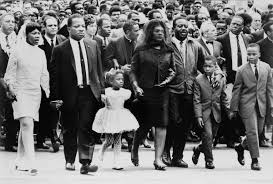
Denominations have turned inward. The slow and critical work of building up neighborhood parishes appears pushed to the sidelines. Examples of genuinely interracial and multicultural congregational life are little-known or valued only at the margins in Mainline Christianity. The death of Dr. King in 1968 dealt a severe blow to the call made to the church in his “Letter from Birmingham Jail.” The time of Non-conforming Transformationalism abated but it has not disappeared.
In the wider culture, since Dr. King’s death, change has come fast and hard, resulting in questions as to the relevance of the church and much handwringing among church leaders. A decline in attendance began in the late 1960s. Baby Boomers emerged as a new and different demographic. At colleges and congregations on university campuses interest in church attendance declined dramatically at the end of the 1960s. Many campus pastors and priests point to 1967, or thereabouts, as a critical juncture when students who had once filled the pews began to disappear in large numbers from worship. Meanwhile, in urban neighborhoods, those expanded church facilities that had been built in the decades following WWII for all the children, were emptying out.
The Vietnam War, the birth control pill, and the weak response by churches to support the civil rights exposed how insular, self-absorbed, and out of touch religious institutions were in the culture. Going along and Getting Along had taken a toll. We were said to be entering “a post-denominational era.” The call of Dr. King and the work of scores of faith-based initiatives designed to engage the church in seeking transformation in society was seen more as an artifact than a calling.
For denominations these realities accelerated the anxious casting about for ways to find or retain relevance. There was a willingness to try many things to stop the growing loss of membership. Ironically, efforts to value and benefit by affirming a core denominational identity and neighborhood parish locations was typically missed or overlooked. The megachurch movement was off and running. It has served as a central hoped-for-solution among denominational bodies.[x] Now, in hindsight, it appears exclusive focus on a megachurch model was destined to be insufficient to the changes that continue.
Less attention was given to taking seriously the need for in-depth lay theological education. Popular narrow cultural ideologies, “seeker-friendly” worship that avoided symbols of sacrifice like a cross, along with contemporary music, mixed with safe political perspectives were the tail that wagged the theological dogs of this era. As church historian Martin E. Marty put it: “To give the whole store away to match what this year’s market says the unchurched want is to have the people who know least about the faith determine most about its expression.”[xi]
Especially notable, in the 1980s through the 2010s, were the more agile, drive in, folk-based religious mega-church expressions. Willow Creek Community Church in the Chicago suburbs or Mars Hill Bible Church in Michigan are often-cited examples. These “independent community church” expressions are now in second or third generations of leadership and appear to be going through their own identity crises — and decline. The recent exclusion of Saddle Back Church from the Southern Baptist Convention is worth considering as persons consider what the future of the megachurch will be.
The story of the megachurch in United Methodism is more complex. At places like the Church of the Resurrection in Kansas, St. Andrew UMC in Colorado, or Ginghamsburg UMC in Ohio, there have been deliberate efforts to encourage thoughtful theological discourse and support for nearby neighborhood parishes. Typically, however, these types of megachurch congregations are the exceptions among the large church expressions.
Anxiety was the driver. There was a widely held belief, a self-fulfilling prophecy in fact, that we had entered a post-denominational era. This anxiety was a symptom of what might be diagnosed as“Church Growth fever.” Such fear-based views and flight to “safe places” continues. There have been few efforts to stop to consider what gifts may already be present in smaller and more local parish settings. Megachurch models were advocated that were too often independent from a denomination’s core identity.[xii]
The response over the past four decades has only reinforced the self-focus and self-concern in many settings. Denominations and philanthropic entities focused attention on leadership training and congregational development. These efforts, while not bad in and of themselves, turn attention toward inwardly directed programs. They also, inadvertently perhaps, set up a system where pastoral performance is measured against the “successes” of the booming megachurch in the suburbs. Looking inward, it was the pastor or the congregation that needed to change to be “more valued.” One might say the time of Non-transformational Conformity had arrived.
Sadly, in many places, the value of neighborhood congregations was lost; the importance churches as a local center of informal gathering and values-production among residents living nearby was sacrificed. Starbucks, neighborhood eateries and bars now filled the civic void left behind in urban neighborhoods.
BUT WAIT, THERE IS MORE!
In many urban neighborhoods, congregations have survived, even prospered. They have persisted despite often being undervalued and overlooked.[xiii] While thousands of neighborhood congregations have disappeared, thousands of others are being transformed. Not all continue as worshipping communities only, or primarily. It is often not the church as known it in the past. Some places are more traditional but in almost all, there is a willingness to be Nonconforming Transformationalists.
There is a remarkable phenomenon, for example, of church buildings being transformed into low-income residences.[xiv] In other places congregations are building tiny houses on church property and are forming communities of care where church members build fellowship with persons finding health and spiritual care for chronic difficulties. There are at the same time new models of faith life bubbling up that don’t require a building, as in coffee shop Bible studies and parenting fellowship groups. There are new forms of believers assembling to “be transformed together” working on immigration reform or providing shelter or health care for low wealth persons that have begun and are beginning. These are signs of hope and joy and celebration. They are places where diversity is celebrated, where multicultural expressions are honored, and where everyone, no matter race or sexual preference, is welcome.
COMING NEXT: Parish-based Renewal and Seeing Christ in the Neighbor and Neighborhood.
[i] McCullough, Marcus, “Go Along to Get Along,” The Graduate Journal of Harvard Divinity School, 2023.
[ii] Passages from Romans chapters 12-15 have been cited to undergird both conformity and nonconformity with government practices across the centuries. In Romans 13:1ff, Paul seems to argue that Christians should simply submit to civil authority. However, King and others suggested Romans 12 set the terms for any such submission. When faced with evil institutions, conformity is predicated on the ever continuing the call for transformation? Discrimination, Jim Crow laws, lynching, unequal economic, societal, employment and education systems could and should be transformed.
[iii] Too often forgotten or overlooked were the many others who were part of Urban Training Centers shaping urban ministry around the country. Gibson Winter’s book The Suburban Captivity of the Churches helped set the stage as did his work with the Urban Training Center in Chicago. There were the folks like Clarence and Florence Jordan at Koinonia Farm and Gordon and Mary Cosby at Church of the Savior in Washington D.C. There was the ministry of Father Jack Egan for the Chicago Catholic Diocese and Vincent Harding with the Mennonite communities in Chicago and Atlanta. Folks like Don Benedict, Archie Hargraves, Bill Webber, and Letty Russell at the East Harlem Protestant Parish New York.
[iv] I mention these few, of many, because much of this history has been overlooked. Dr. King’s work, and that of the Southern Christian Leadership Conference, was essential to the changes brought about by the civil rights struggle. At the same time there were dozens of localized ways people of faith were engaged in taking their faith to the streets.
[vii] We heard my supervisor’s admonition that one “can’t fight city hall” as a call “not to turn city leaders into the enemy.” This led to many lunches with school administrators and city officials. Some of the best allies in seeking more equity in public education came from teachers and administrators within the school system.
[viii] Examples come in many dimensions: In housing (Habitat for Humanity grew out of the witness of Koinonia Farm with Millard Fuller and Clarence Jordan in Georgia), with economic structures (e.g., Rev. Faith Fowler at Cass Community in Detroit provides a model, as does John Perkins with Christian Community Development Associations, or incubator businesses out of several congregations), and resources linking spirituality and social action continue (e.g., Fr. Richard Rohr’s at the Center for Action and Contemplation and Rev. Jim Wallis’ leadership at the Sojourners in Washington, D.C.).
[ix] Research waits to be done. In the early 1970s, for example, Project Understanding looked at the efficacy of programs designed to bring racial change through religious congregations – little has followed.
[x] Dr. Scott Thuma at Hartford Seminary has done considerable research on the rise (and decline) of the megachurch phenomena. See: mhttp://hirr.hartsem.edu/megachurch/research.html.
[xii] It is not surprising that many of the same folks who pushed a singular focus on tinkering with the patterns of congregational life warned we were entering “a post-denominational era.” From “Keys to Growth” and the “Habits of Successful Congregations” the remedies proposed included more parking, new member campaigns, management by objectives, leadership training, changing music or moving the location of the congregation to a “better place.” Long established denominational connections or linkages with other institutions in a community were not highlighted. Mostly, the unspoken assumption was that larger congregations of like-minded people were the answer. Seldom was there a focus on the parish surrounding the church – and when there was such a focus, the parish was seen as a place of scarcity, even danger. A place needing outside help rather than a resource for congregational vitality.
[xiii] Some researchers speak of these examples of heath where there is perceived poverty and decline as “positive deviance.” I choose to see it as the work of the Holy Spirit.
[xiv] A remarkable initiative is being carried out by the United Methodist Foundation in the New England Annual Conference where “redundant” church buildings are being evaluated as places for potential residences or for new ministry/mission sites.
“You can’t fight city hall.” my friend said. After I shared efforts to keep several inner-city schools open, he gave this response. My children attended one school on the docket to be closed – Culver Elementary, in Evansville, Indiana. It was the late 1970s. The Federal Court desegregation orders were being enforced. School busing was underway across the nation. In places like South Boston, there was angry, even violent, resistance. In Evansville folks were uneasy. My friend was also my supervisor.[i] His counsel was appreciated, well-intentioned. In fact, it was considered “progressive” as a support for desegregation efforts.
Public schools in the city were to “adjust” and “comply.” Our children’s school was naturally racially integrated. Along with others, all children could walk to school from home. No school bus needed, thank you. There was a natural racial mix. School desegregation orders, although imperfect, were a response to the prevailing patterns of separation and providing unequal resources based on race. The evil of systemic racism has plagued our nation from its founding, shaping the ecology of our cities. In the wake of this, white flight left thousands of formerly predominantly white urban congregations struggling to survive.[ii]
How to best respond to the effort to “desegregate” schools in my community? On the one hand, my children already attended a racially integrated school; on the other, there were deep systemic problems in cities across the land. In many places – no, in most places – the church lived by the notion “you can’t fight city hall.” It might be called a Go Along and Get Along theology. In earlier posts, I noted the multiplicity of ways congregational life was reshaped, distorted really, by racist activities, after WWII. Housing, transportation, education, and economics were woven together on a loom shaped by deeply racist social designs.
THAT WAS THEN. Alternative voices were also emerging. The Rev. Dr. Martin Luther King Jr. represented the best known of such an alternative vision.
In upcoming posts we will look at Dr. King’s prescription for change and how mainline denominations responded. We will also suggest some ideas for a more hopefilled furture. Perhaps Christendom as it has existed in recent generations in the United States is passing — and, perhaps, there are ways Christianity will flower in surprising new manifestations.
Next: Dr. M.L. King’s Nonconforming Transformationalism.
[i] Clergy supervisors in the Methodist tradition are known as district superintendents and bishops. My district superintendent was a good man and the urban ministry work we were doing at Patchwork Ministries in Evansville was made possible through his connectional support. This support was not primarily money; mostly it was permission for a group of young idealistic pastors to attempt something different in terms of urban ministry.
[ii] Tragically the current US Supreme Court is attacking legislation intended to secure voting rights, affirmative action and equal justice that accompanied these desegregation efforts.
“I was afraid I might be shot walking from my car into the building.” These were the words of a friend, a denominational leader. He was speaking of work while his office was at Central Avenue UMC in the 1990s.
In recent years I assumed there were few surprises left for me after more than fifty years as a pastor in my particular Protestant denomination. I was wrong.
It was a casual conversation, but a stunning one. My friend’s almost off-hand comment opened a new vista into what I had failed to see those three decades earlier. He was speaking of when his office was in the Central Avenue Church years before. Still, the fear lingered in his voice.
I have written about the decline and closing of the Central Avenue in earlier posts. In the mid-1980s, I joined others in proposing some denominational offices be moved to the unsued space at Central Avenue. Our assumption was it would benefit urban ministry across the state. It would signal and solidify a commitment to valuing of city churches. Surely, if denominational offices and mission activities were located in the core-city, it would guarantee more support and an awareness, a commitment, to city ministry. In an amazing set of circumstances, in that decade, even Governor, Frank O’Bannon, and his wife Judy, United Methodists themselves, chose to live nearby and associate with Central Avenue. They were advocates for urban revitalization.
Still, something was awry. My assumption in hindsight was fool hearty. There was an insufficiency in vision. Locating offices in that building didn’t have the effect we had hoped. Central Avenue officially closed in 1999. The building needed significant repairs. The worshipping congregation was down to only thirty members. Ultimately the grand old structure was given over to Indiana Landmarks and extensive refurbishment was carried out.[i]
What did we fail to understand when it was thought that locating some denominational offices in that place would be a difference maker? Something more basic, more at the core of things, was at play. Offices might be centered in a building, but fear and a lack of a shared vocational clarity as to city ministry overwhelmed the best of intentions.
Earlier I posed the question, why? Why did so many urban parishes seem to evaporate or vanish over the past half century? Central Avenue is representative. In fact, it had more advantages than many others. The many parishes that vanished faced a tsunami of urban change. Long deferred building maintenance and the costs of repairs played a significant role. It will be argued later that an inadequate sense of theological clarity and sense of connection between the congregation and a shifting neighborhood population was a contributor to this decline.
Too few neighbors found a home at the church. Few persons were willing to drive from more distant neighborhoods back into the core-city. There was insufficient interest, skill or insight in re-establishing this as a viable parish. Other factors contributed to this demise (secularization, smaller families, alternative faith communities nearby); even so, I have come to the belief that, at the core, there are two fundamental issues which offer the clearest explanation. These are:
a) the social and political ecology of embedded racism; and
b) Ineffectual denominational and congregational responses lacking in theological clarity.
A Look at the Embedded Racism in Urban Ecologies
My friend who spoke of being afraid of being shot walking between his office and the car was not someone who would fit the label of a racist. Over his career he spoke against racial discrimination. Yet, the fear he experienced belied something deeper, something far more problematic.
Racism is about more than individual attitudes or behaviors. It is embedded in perceptions and expectations. Even more, it is interwoven in the political and economic systems in which we all participate. After speaking of “being afraid of being shot” he went on to say, “I couldn’t invite persons to come to the building for meetings, especially in the evenings, out of concern for their safety. On more than one occasion I heard gunshots near the building.”
As these words were spoken, I thought of the dozen or so United Methodist congregations nearby, several within a couple of miles. I thought of the dozens of churches, around the city and in urban neighborhoods across the state, that were in more “dangerous” settings (with higher crime statistics or gang activity).
Fear is a powerful force in shaping what we see and how we behave. Comments like “we must go to where the people are” or “I couldn’t invite people here” are not intended to carry racist freight on the surface – but they are marioneted in a broadly assumed and unspoken racist gestalt. In truth, in nearby churches congregants gathered in more crime ridden neighborhoods, day-and-night, to carry on their ministries.[ii]
There was a failure to consider a wider array of options than an exit strategy. The resulting reality was a benign neglect of most core-city parishes. The “left behind” congregations were undervalued as to their potential.
There are many factors that underlie WHY neighborhoods changed and parishes slowly vanished. Realities and patterns vary from congregation-to-congregation, city-to-city, and neighborhood-to-neighborhood. Even so, when one considers the common ingredients surrounding neighborhoods that were abandoned and where parish life was ignored, fear of the other (of the stranger) is always present.
Our nation’s history is that of a restless citizenry, moving from place to place, job to job, home to home.[iii] This mobility is assisted by the capitalistic assumptions that social status and a better life can be purchased by a move to a more respected place.
There is a lengthly list of contributors to transitions in urban neighborhoods like those surrounding Central Avenue Church. This recent research on the dynamic of urbanization singles out racist structures as far and away the critical explanatory and discriminatory component. Racism serves as what social scientists call an “independent variable.”
There are now scores of research reports, mostly from the past decade, that document the extent of racial inequity. It permeated our social and economic ecology. It was manifest in the building of interstate highways,[iv] the decline of newspapers and local media,[v] real estate speculation and housing practices,[vi] shopping malls and big-box retail,[vii] employment,[viii] education,[ix] taxation,[x] law enforcement,[xi] urban development,[xii] and, this all reinforced by patterns of governance and political control in cities.[xiii]
To illustrate, here is a quick review of the first factor above, the building of interstate highway systems. It is clear systemic racism shaped the urban landscape. A pervasive, and decades long, reality can be seen in the destroying and/or dividing neighborhoods based on race. The interstate highway system begun in the mid-1950s, and even earlier the parkways built by planners like New York’s Robert Moses, intentionally divided neighborhoods by race and social class.[xiv] In the process it was nearly always the Black and Brown neighborhoods that were destroyed or “isolated off.”
Today the former Central Avenue church building is only a few yards from I-65 as it loops through the middle sections of the city; and, barely two blocks away is another barrier as I-70 separates off heading east. The now gentrified Near Northside neighborhood is, thus, walled off from other, historically poorer neighborhoods in Indianapolis.[xv]
Robert Bullard in 2004 documented how the Interstate Highway System was blatantly and, in most cases, effectively utilized as a tool of “transportation racism”.[xvi] Bullard speaks of the power of transportation inequity. Poorer neighborhoods suffered the consequences that included: isolated poverty detached from needed services, environmental hazards, loss of neighborhood centers (including churches), excessive noise and more difficult access to shopping, parks, entertainment, and other amenities. Bullard posits that “transportation planning has duplicated the discrimination used by other racist government institutions and private entities to maintain white privilege”.[xvii]
Thus, by the 1970s, in Indianapolis, the building of interstate highways, the establishment of Unigov (bringing together city and county government), the desegregation of schools and taxation policies were powerful reinforces of an often-covert racism. It was a racism that was deeply embedded in urban planning activities and in the souls of well-meaning but fearful citizens, even church leaders. It is little wonder that congregations like Central Avenue were in trouble. It is a story deeply embedded in racial fear. But the story is even more nuanced, more complex.
If racism was a primary cause, the response to this time of transition and the vanishing of parishes by the denominations was also due to largely ineffectual and misguided practices. We turn to this in the next posting. There is more. There are words of hope offered by two other questions beyond the “why?” In future we will also ask about the “what if?” and “why not?” options before us.
[ii] I was serving as one of the pastors at Broadway United Methodist under two miles north of Central Avenue from 1986 to 1992. Yes, there were gun shots heard and even violent exchanges on that parking lot; however, the lay people, who lived near and far away, and the nearby neighbors were beginning to forge bonds of cooperation and respect. It was hard won – and was filled with the challenges of mistrust and paternalistic behaviors.
[iii] Frederick Jackson Turner had hypothesized all the way back in 1893 that the American Spirit was one of always moving into a new frontier. Turner spoke of the idea of an exceptionalism that sought to “win against the wilderness.” Mobility came naturally to the settlement and resettlement of our cities.
[iv] Bullard, R. D. (2004). The anatomy of transportation racism. Bullard, R., Johnson, G., & Torres, A. (Eds.). Cambridge, MA: South End Press.
[v] There is a clear and growing research on the decline in civic engagement as related to the decline of a local press. See for example Madeline Price, “No Longer Black and White and Read All Over: How the Disappearance of America’s Local News Threatens Our Democracy,” Democratic Erosion, February 13, 2022.
[vi] Rothstein, Richard and Leah, Just Action: How to Challenge Segregation Enacted Under the Color of Law, Liveright Publishers, 2023.
[vii] Dunlap, Michelle, Retail Racism: Shopping While Black and Brown in America, Rowman and Littlefield, 2021. See also: Drost, Philip, “How Malls and Freeways helped segregate America, CBC Radio, June 26, 2022; and, Young, Michael and Peter Willmott, Family and Kinship in East London, The Free Press, 1957. This remarkable early study of two communities. The decline in civic engagement and community involvement anticipated the losses of parish awareness ahead for places where suburban development was underway. undermining the viability of neighborhood shops and shopping.
[viii] Wilson, Valerie and William Darity Jr., Understanding black-white disparities in labor market outcomes requires models that account for persistent discrimination and unequal bargaining power, Economic Policy Institute, March 25, 2022.
[ix] Ramsey, Sonya, The Troubled History of American Education after the Brown Decision, The American Historian, March 2021.
[x] Davis, Carl and Wiehe, Meg, Taxes and Racial Equity: An Overview of State and Local Policy Impacts, Institute on Taxation and Economic Policy, , March 31, 2021. See: https://itep.org/taxes-and-racial-equity/
[xii] Baker-Smith, Christine, Lourdes German, Samantha Pedrosa and Stacy Richardson, Racial Equity and Municipal Bond Markets, National League of Cities. 2022.
[xiii] “Unigov: Unifying Indianapolis and Marion County,” Digital Civil Rights Museum, accessed May 8, 2023, https://www.digitalresearch.bsu.edu/digitalcivilrightsmuseum/items/show/42.In Indianapolis the dramatic shift in governance came with the adoption of Unigov – a merger of multiple city and county agencies. While presented as a way to streamline the work of overlapping government agencies, the Indiana Conference on Human and Civil Rights also served to dilute and weaken the voice and representation of the poor and black citizens of Indianapolis.
In June 1979, the Indiana United Methodist Annual Conference met in the I.U. Auditorium. The presiding bishop, Leroy Hodapp,[i] set an agenda for the future “We must go to where the people are!” The subtext was clear, we must go to the suburbs and invest talent, time, and resources there. As pastor in a core-city neighborhood at the time, I leaned to a friend beside me and whispered, “What are the people in our neighborhoods? Chopped liver?
The post-WWII Baby Boom population surge was slowing. A “population shock wave[ii]” or “Agequake”[iii] disrupted assumed church practices. Denominational anxiety about the future was on the upswing. In 1970 Alvin Toffler, with his wife Adelaide, published the popular Future Shock.[iv] It spoke of the events of these years as “too much change in too short a period of time.”
Urban neighborhoods, perceived as dangerous and in inevitable decline, were changing rapidly. Homes were abandoned by families, mostly of European ancestry and sold to real estate speculators. The houses left behind were often subdivided into multiapartment residences. The new arrivals came mostly from non-Caucasian ancestry. Typically, they were families with lower wealth. Dramatic population and neighborhood changes continued, wavelike over the next decades, as residences and local businesses were turned into rental properties. Only a couple of decades later, change came again as younger folks who were given the rather ironic label of “urban pioneers”[v] arrived and refurbished the older houses again into single-family dwellings.
In an earlier post,[vi] I wrote of the demise of the Central Avenue United Methodist Church in Indianapolis. A version of Central Avenue’s story was replicated in thousands of churches in the U. S. during the middle-and-late Twentieth Century. The underpinnings of parish life were vanishing as linkages with surrounding neighborhoods diminished. This pattern, like rolling ocean waves, washed across city neighborhoods. Social connections withered, were then rebuilt, and again diminished, and then reestablished again.
Gentrification was only beginning. White flight had speeded changes.[vii] The none-to-subtle subtext of the bishop’s counsel in 1979 was that primary attention should be directed to those leaving the core-city and refocused on suburban church growth. Ironically, of course, the population density in core-city neighborhoods was growing to levels higher than ever.
The good bishop’s analysis and strategy failed to perceive the ways in which the “left behind” neighborhoods were becoming more global, more multicultural.[viii] There was also a failure to discern the gifts being brought by the new residents. Even as new Asian, Hispanic enclaves emerged, and African American communities were enlarged, at the same time many of these “re-establishing” neighborhoods became more multiethnic in composition.[ix]
A listening to, visiting with, and welcoming of the people of the neighborhoods near the church buildings by church leaders was rarely practiced. The focus was on who was leaving, following “our” people. There was a blindness. Importantly, and in truth determinatively, the financial base for many city congregations was diminishing as members left for the suburbs. In the Baby Boom years of the middle 1950s and early 1960s, many church buildings were expanded beyond what could be afforded by those left behind or newly arriving in the following decades.
The call to “go to where the people are” failed to consider options other than an exit strategy. Left behind were paternalistic responses welcoming the new arrivals. If there was an outreach to the newcomer, it was typically an effort to “fix” these new in-migrants. Rather than seeing these persons as resources, with gifts to share, they were thought of as “the needy” and as such, well-meaning ministries like food pantries, thrift shops, and tutoring programs became the primary mission of many inner-city churches.
As was noted in the previous post, “It is one thing to restore buildings and houses, quite another to re-establish (or perhaps rediscover) a parish.”[x] What lessons might we discover from this history? We ask: why?what if? and why not?
Why did these parishes evaporate or vanish? In the next two postings I will offer what I believe are the two primary reasons for this phenomenon: 1) the social and political ecology of embedded racism in the nation; and 2) Ineffectual denominational and congregational responses to these changes lacking in theological clarity.
Coming Next: 2-B, The Social and Political Ecology of Embedded Racism in the Nation.
Your thoughts? — Please enter these in the comment section.
ENDNOTES:
[i] Bishop Leroy Hodapp was a good and intelligent man and a good friend. Still, he was a product of the mid-twentieth century church culture that selected him and shaped him for leadership. He would be considered a Christian “progressive” and generally friendly to many urban ministry efforts at the time. However, the pressures of office and desire to balance competing expectations of over 1,100 congregations and 300,000 Hoosier United Methodists limited what he perceived to be the best way forward. There were dozens of urban congregations and pastors that might have helped widen his vision, but the dye was set by the prevailing myths of the inevitability of suburban growth and urban decay.
[ii] Rizvi, Abul, Population Shock, Monash University Publishing, 2022.
[iii] Wallace, Paul, Agequake: Riding the Demographic Rollercoaster, Shaking Business, Finance and Our World, UNKNO, 1999.
[iv] Toffler, Alvin and Adelaide, Future Shock, Random House, 1970. Society was said to move through the three stages: agrarian, industrial, and post-industrial and with each transition there was a period of societal disruption and stress. Toffler’s analysis followed in follow-up books, The Third Wave and Powershift.
[v] Hwang, Jackelyn, Pioneers of Gentrification: Transformation in Global Neighborhoods in Urban America in the Late Twentieth Century, Demography, February 2016, 189-213.
[vi] Amerson, Philip, Recentering the Parish – Part 1, see: https://wp.me/p5lzr1-3Kc. Upon reading the earlier piece on the decline of Central Avenue church a friend reminded me of other changes including the interstate highway system where Interstate Highways I-64 and I-70 sectored off neighborhoods from one another. He also noted the consolidation many city and county functions in a new structure known as Unigov in Indianapolis. He was right. There are multiple other contributors as noted in this essay and each one seems shaped by racial discrimination.
[vii] Semuels, Alana, White Flight Never Ended, THE ATLANTIC, July 30, 2015.
[viii] Buccitelli, Anthony, Bak, City of Neighborhoods: Memory, Folklore, and Ethnic Place in Boston, University of Wisconsin Press, 2016.
You don’t have to go to Pharoah to design a course on freedom, so says Professor Michael Eric Dyson, of Vanderbilt University. Per usual, Dyson puts the pith into pithy. We need his clarity as we enter Black History Month 2023. Right on time, Michael Eric Dyson nails the ugliness, the meanness and inappropriateness of Florida Governor Ron DeSantis’ efforts to block the content of AP African American Studies curriculum.
This is but a contemporary example of a governor standing in the schoolhouse door. It is like George Wallace in 1963 who sought to block African American students Vivian Malone Jones, Dave McGlathery, and James Hood from enrolling in the University of Alabama. This time it is a governor seeking to block the free exchange of ideas and a shared knowledge of a painful history. It is an attempt to keep us from acting like respectful adults, as people open to the free expression of differing ideas.
But, what about us? Easy to pick on a demagogue stirring up racial animosity as he prepares to run for the presidency. How might churches faithfully respond in this time? Let me speak for my group, the United Methodists. We, who are heirs to John Wesley’s legacy, have a ready response built into our theological DNA.
Sadly, many of our congregations and denominational institutions have forgotten and others often don’t display it. Early Methodists, in cities like London and Newcastle, formed a Strangers Friend Society. Wesley taught Christians “should meet strangers in their own habitation.” These societies designed “to visit and relieve the sick and distressed” were expressions of acceptance and inclusion. One such society still meets, weekly, in John Wesley’s New Room in Bristol near a clock identified as the Strangers’ Friend clock.
In the United States, the distressing chronic illness of racism continues – sometimes it seems to overwhelm. The tragic death of Tyre Nichols in Memphis in recent days is an expression of our dilemma. Let me suggest it is time for United Methodists to turn STRANGERS INTO FRIENDS. What if United Methodist congregations across the nation and world offered classes in Critical Race Theory or on Being “Woke” to Racial Injustice? Okay, not realistic, you say. Well, what if… oh, let’s say 50%, or 25%, or even 10% of United Methodist congregations offered such courses? What if pastors and lay leaders in these places taught complementary classes based on Biblical sources and drawing on curriculum already developed by fine faculty in our seminaries?
In a time when all Christians, especially United Methodists, are too focused on much less relevant matters like institutional survival, or on how to handle our divisions, what if we called for healing of the disease of racism in our nation. What if we acted like we believed in a conversion (a wokeness). What if we called for the need of repentance and conversion from our chronic racism?
I can imagine certain politicians’ discomfort when they passed the church with the sign “Critical Race Theory Taught Here, Monday Evening at 7:00 PM, Register NOW.” It’s about time!
A familiar folk axiom is as follows, “institutions are designed to serve the needs of people, but before long those people serve the needs of the institution.” In my experience, this truism is evident in a variety of settings and across every organizational type.
Let me affectionately pick on a category of institutions I value and have come to know rather well – theological schools. Seminaries are established by religious denominations to teach, prepare leaders, develop resources, and do research. A midwestern seminary, with which I am very familiar, recently invited me to join a “video conversation” scheduled for the evening of February 22, 2023. A “select group” of us were asked to learn about exciting initiatives of the field education program. I opened my calendar to add the date, stopped, double checked, and laughed out loud.
The event was scheduled for Ash Wednesday evening, when most congregations I know will be holding a worship service. Ash Wednesday is the beginning of Lent leading up to Easter. In many Christian traditions it is among the more significant days in the liturgical calendar. The scheduling of this event was an unforced error; more, it was a sign of disconnection. Since then, the date of this seminary’s video conference was rescheduled. To repeat, seminaries were begun to serve congregations and denominations, but… well, the seasons and gifts of congregational ministry, are sometimes missed in the planning. This was a failure in awareness as to who was serving whom.
At another seminary where I was in leadership, I visited a gathering of interfaith congregations in Tucson Arizona. It included a wide range of faith traditions who engaged in regular, innovative joint gatherings. A young faculty member was with me on this visit. A few days later, back on campus, a faculty committee shared their plans to “teach congregations how to do interfaith work.” Sadly, this committee had failed to explore what was already taking place among congregations in places like Tucson. I waited before speaking, expecting my young professor friend to share her experience. Later she confessed she didn’t want to challenge the plans of more senior professors. Instead of discovering the gifts already evident in the ecology of existing congregations like those in Tucson these well-meaning faculty folks had seen their role as being the producers of knowledge, the source of innovation. Sadly, the connective tissue, the patterns of reciprocity and mutuality were missing.
I could write of dozens of other examples where institutional expectations and design missed the mark. Denominations often exhibit this blindness as to gifts already present at their own seminaries or their own congregations. I think of denominational efforts to establish in house “leadership training” or “research programs” when the very schools they started and support, offer some of the best resources in the nation. To be fair, we shouldn’t miss the reality that congregations themselves are too often quick to start projects without knowing the gifts in the neighborhoods or cities where they are located.
A very different example is evident as a “new denomination” is being formed among dissidents from the United Methodist Church. Who is serving whom? Are some seminaries and powerful caucus groups misrepresenting the denomination’s institutional practices for their own purposes? Have congregations been being encouraged to disaffiliate based on the needs of institutions who have little or no awareness of the context and neighborhoods where the congregations are in ministry?
At the outset I suggested our world is full of similar examples of this disconnection. In government, health care, education, law, agriculture, economics and on and on we see it. The Dilbert comic strip by Scott Adams was built around such institutional blind spots. I have no sympathy for anarchy; I do not suggest all institutions inevitably fail and should be abandoned. To the contrary we have seen the tragic results of the “deep state” myth and conspiracy nonsense in our local, state, and national governmental institutions. I am arguing that sometimes basic linkages and necessary relationships are lost. Not all institutions should be saved. Slavery is an example. Institutions designed to exclude other humans of basic rights should be ended.
I am suggesting that the connective tissue allowing for mutuality and dialogue needs to be exercised, like the muscles of a human body. Our human institutions need to be continually, evaluated, strengthened, and open to democratic reform. In the process, a complex web of reciprocal teaching and learning is essential. All healthy institutions will seek democratic renewal and will be attentive to what can be learned from the gifts and assets of those at the grass roots of society.
Do you recall looking at your image in one of those fun house mirrors, concave and convex and otherwise bent, in an amusement park? It can illustrate the way we might miss-image ourselves based on an out-of-whack, taken-for-granted, reality. It is a distortion, a skewed reflection of what is real. What if our spiritual quests and faith understandings are vulnerable to the concave and convex bends in our worlds taken-for-granted.
In contemporary North American society, frames of reference are constrained by the dominant role individualism plays. It distorts. Societal understandings, economics, politics, culture, even language are limited. Cormac Russell and John McKnight compare this with the African notion of Ubuntu and write: “Individualism is a superhighway to a sick, depressed, and dissatisfied life and a fragmented society. Ubuntu, by contrast, says we are not self-reliant, we are other reliant: that life is not about self-fulfillment and leaning into work and money. Instead, a satisfying life is largely about leaning into our relationships and investing in our communities; it is about interdependence, not independence, (The Connected Community, Berrett-Koehler Publishers, 2022, p. xiv).
I would suggest our views of prayer have been focused too narrowly as an individualistic practice, to be personal prayer or meditation, primarily. There is Corporate Prayer, typically in a worship service or as the Invocation or Benediction in religious or civic gatherings.
Recently I wrote that the focus on Centering Prayer has gained much acceptance in religious life. While of value; still, I ask if it might be balanced by what I would call Othering Prayer.
To my mind, Othering Prayer is rooted in the prayer Jesus taught the disciples (Luke 11 and Matthew 6). What we refer to as The Lord’s Prayer draws on elements from multiple earlier Hebrew prayers. In English translations the opening word “Our” says a great deal. It begins with an awareness that we are part of a community.
I do not write this to suggest Centering Prayer, or deep personal religious experience is not of equal or often greater value. Rather, it is to suggest that there is reflection to be done on how Othering Prayer might carry benefits in acting toward God’s purposes in our world.
It was Trappist Abbot Thomas Keating, St. Joseph’s Abbey Trappist Monastery who played a significant role in opening awareness to the value of Centering Prayer more than fifty years ago. For Keating, Christian Centering Prayer was in continuity with the practices of other religious traditions.
I am assisted by the insights of Richard Rohr and the good folks at the Center for Action and Contemplation. Since 1987 this Center has sought to integrate contemplation and action with Rohr arguing they are inseparable. In fact, Rohr emphasizes this when he says the most important word in the Center’s name is neither Action or Contemplation but the small word “and.”
Recently a friend commented that her experience is that when she practices quiet, contemplative, centering prayer, it seems richer when done as part of a community. Hmmn.
They asked to pray. Out of the blue it came. Now? Right here in the middle of an otherwise “perfectly normal” conversation? Twice, in as many days. Two friends, very different in backgrounds and experience, who had no other connection asked if we could pray together. After not seeing each other for months, years, we were able to easily speak, share, laugh, confess, and delight in the goodness of friendship. Then, prayer.
Not in church, or in a “spiritual” conversation. The request stopped me… cold. On both occasions, then and there, we shared concerns and prayed. While I didn’t have a mystical experience, when we departed that day, there was a deeper sense of connection. It was, I believe what Brother Lawrence spoke of as God’s presence arising amid the routine activities of life — a deeper sense of joy and mutual love. (Brother Lawrence was a 17th century lay Carmelite monk whose small book “The Practice of the Presence of God” has been treasured by believers across the centuries as a call to seek God’s presence everywhere from the chapel to the kitchen.)
Yes, prayer has been misused by charlatans and abused by spiritual pretenders. Prayer has also been reduced to a magical formula, a one-time “believer’s prayer” for example sold as a one-way ticket to heaven, separate from any daily life of faith.
A day or so before these two serendipitous prayers, another friend wrote mentioning he was reading The Spiritual Brain: Science and Religious Experience by Professor Andrew Newberg. I ordered the book, part of The Great Courses lecture series. Again, was this a coincidence? Newberg’s research looks at the way prayer, especially what might be called “Centering Prayer,” contemplative prayer, or mystical experience can shape human perception. There are measurable changes in perceptions of reality and often a sense of joy, unity with the universe and purposefulness. My look at Newberg’s rich research linking individual prayer with brain research, however, left me with a whole other set of questions.
I am not particularly well-schooled in a wide range of spiritual practices. I know some basics but can’t distinguish, say, among types of contemplative prayer. In fact, over recent years much of my praying has occurred on “prayer walks.” I am not very practiced at what is referred to and valued as “Centering Prayer.” Most of my praying is better described as “Othering Prayer.” Not exclusively, I do prayer that my personal intentions and understandings align with God’s purposes. I also seek the heart of God on the behalf of others in the world beyond my own interests. As I walk the streets of my city, I pray for those in prison as I walk by the jail, or the judges who are passing sentences, or families of those being incarcerated. I pray for the bakers passing the bagel shop; the bankers as I pass an ATM machine; those without shelter who spread their blankets in front of the library and churches.
So much of our culture’s understanding of prayer is individualistic in focus. It is decanted into a magical thinking drink… a negotiation with God… or a shaking of the begger’s cup in the face of the Almighty. What if contemplative prayer were seen as always caught up in the prayers of a community — prayers that were joined with, and for, others. This Advent we will think further about the potential of Othering Prayer.








 Hands of the Strong