Shoveling Alone

Shoveling Alone

Shoveling alone. It is the story in almost all our communities in the United States. The poorest of the poor are shuffled to the edges of our economy and end up living on the streets — or in jail!

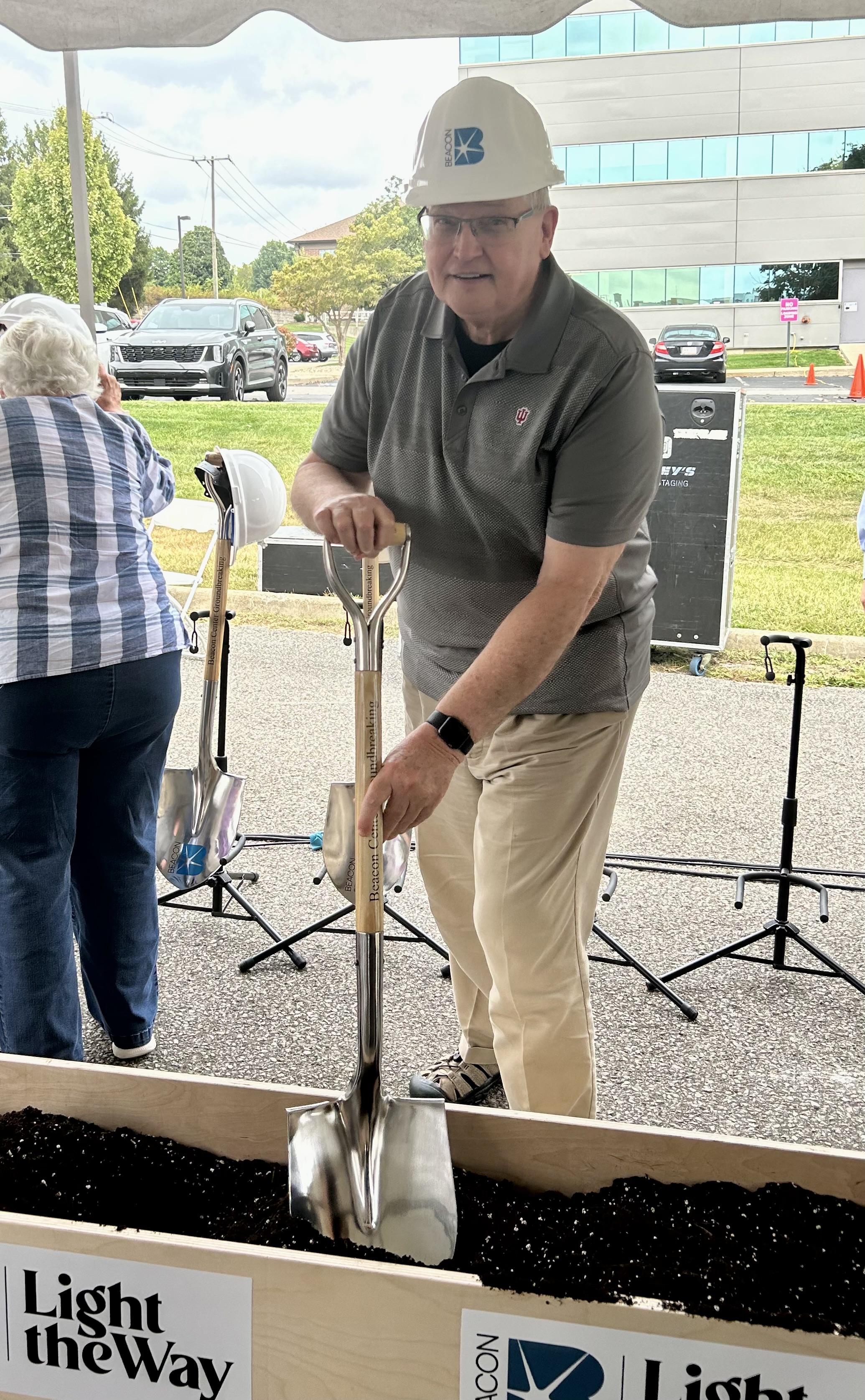
As I turned the shovel in Bloomington on a recent Wednesday, at the groundbreaking for our new Beacon center, I realized I was alone in that moment… no one on either side… but so many had gone ahead, and others would follow. Is it true in your community as well?

Not just on a given afternoon but across the years, I knew others in the faith community and beyond, who didn’t attend this groundbreaking… but who had ‘turned the soil’ of change in many places. They have been at this turning the soil, and turning our souls, in the past and will be in the future. In the process our souls are returned to an original place of hope and sharing among all.

I believe our local faith community, and others whereever you live, will do more in the months ahead, not just for places like Beacon. We must do this because our challenges cannot be fully handled by any one social service agency. Beacon, and similar agencies are a good, but insufficient response.

Bloomington Mayor Thomson is right, a comprehensive response to the challenge of persons without shelter is needed. Rise up now, faith communities and others, show more muscle, join in to assist the Emergency Winter Shelters, programs like Heading Home, the Recovery Alliance, New Leaf/New Life. Offer more mutual respect and support for all! The massive cuts to Medicaid will touch us all and especially the poor. Emergency rooms will be more crowded, retirement homes and clinics will close, healthcare will be rationed and delayed. Time for more to pick up the shovel and turn the soil toward the planting of new seeds of hope.

“When did we see you…?” the scriptures ask. “When you did it to the least among you” comes the answer. I live with the firm knowledge this shelter, even with a “better” setting where healthcare, employment assistance, public safety, addiction recovery and other resources, are provided is but a small beginning. It is not THE answer. Still, it is a needed step. Many can and will raise needed funds, offer to volunteer, and challenge public policy to do better… in God’s name.

The road is long and filled with twists and turns, social detours, myths about addiction, mental health and blindness to our own complicity in the “social welfare” practices in this country, and the misdirected, cruel political impulses and assault of so many in power in this time. Our culture lives with the myth of hero and victim. It is the “Hero Journey” story that Jung and Campbell identified as embedded in all we perceive as possible. It is so fully ingrained in our psyche and social systems that, sadly, we turn others into “clients” rather than “neighbors” and are more comfortable in speaking of THEY rather than with US.

It will take time — this turning the soil. Still as a Christian I recall the hymn refrain “We are not alone, for God is with us.” ‘Naive’ you say, of course it appears that way, of course. Others are using their constructions of false gods to continue cruelty. I know. That is why those who have theologies more tied to the larger, historic faith story must now speak the truth, afresh. Until some have seen a life changed, a person healed from addiction and communities moving away from cruel patterns of greed and domination, we are stuck. And, until a community is seen pulling together to solve such challenges, many will call me naive. I prefer to call it our shared hopes, foundational for the future — that we can care for one another. Check it out. This is a core teaching of Christianity and other great faith traditions. Interdependence is more essential to humanity’s long-term survival than independence.

Paul Farmer, remarkable physician and founder of Partners in Health (PIH) understood his life’s work as “The Long Defeat.” He said, “I have fought the long defeat and brought other people on to fight the long defeat, and I’m not going to stop because we keep losing. Now I actually think sometimes we may win. I don’t dislike victory. … You know, people from our background-like you, like most PIH-ers, like me-we’re used to being on a victory team, and actually what we’re really trying to do in PIH is to make common cause with the losers. Those are two very different things. We want to be on the winning team, but at the risk of turning our backs on the losers, no, it’s not worth it. So you fight the long defeat.” [From Tracy Kidder, “Mountains Beyond Mountains: The Quest of Dr. Paul Farmer, a Man Who Would Cure the World.”]

So, pick up a shovel, write a check, welcome the stranger, say ‘hello’, ask the stranger her/his name, smile… and keep doing it in your community, whereever you are. Keep at it, even when times are tough. My friend Wes Jackson put it this way, “If you think your life’s work can be accomplished in your lifetime, you are not thinking big enough!”

Racism at Indiana University

Racism and Indiana University

Indiana University is in the midst of troubling acts of racist retrenchment. What is wrong with this picture? Yes, a backsliding into racism at that Indiana University, the one with a flagship campus in Bloomington, Indiana, and regional campuses around the state. Yes, the I.U. that has been shaped by commitments to diversity and inclusion. Tes, the one shaped by the likes of Herman B Wells and persons of academic excellence, integrity, faith and civic pride over the decades.

The great comprehensive university where notable Black alumni, students, faculty and staff are so multiple, it is too challenging to begin a list here. These are a few of the thousands of I.U. greats. In my personal experience, I have been blessed by friendships with folks like Joseph Taylor, LaVerta Terry, James Holland, David Baker, Vi Taliarerro, William McKinney, Camilla Williams, Charlie Nelms, and on and on the list goes.

It is unbelievable to those who know the historic commitments of this school. This racist retrenchments has resulted in the elimination of resources for students of underrepresented groups as well as critical support for faculty and staff. The actions challenge I.U.’s remarkable, historic legacy as a place where all are welcome and offered the opportunity to thrive. In recent months the following actions have taken place:

1. The awarding of scholarships designated for specific students based on ethnicity or sexual orientation have been “paused.”

2. Websites and campus materials have been scrubbed of words and phrases related to diversity or programs seeking racial understanding.

3. Posters around campus with the words “Build a Community Where All Belong” have been removed from bulletin boards and public spaces.

4. Names of programs or offices that provide services or support for underrepresented students are being removed or painted over or removed.  The sign OVPDEI (Office of the Vice President for Diversity, Equity and Inclusion) has been painted over and left blank. Programs housed in this now unidentified building include Groups Scholars, FASE Mentoring, Twenty First Century Scholars and Hudson-Holland Scholars. Will all cultural centers face such identity-theft and censure, while programs that serve virtually all White programs and services go unchanged!

5. The essential core of academic freedom is being tested.  Faculty face threats to their course materials over the use of language and/or ideas that call for the addressing of systemic or institutional racism.

We, the students, alumni, faculty and staff and friends of Indiana University, demand that on all its campuses, Indiana University STOP this retrenchment of White Racism being treated as normative.  We demand that a commitment to the welcoming of ALL immediately be restored no matter race, class, creed or sexual orientation.

Corn-Bred

Corn-Bred

I’m a Hoosier, Indiana born and bred, on most July Sundays I can be found at church. On the best Sundays, the benediction ended, I then head for sweet corn at home from the farmer’s market.  Bought the day before from a young Amish teen in the City Hall parking lot.  Straw hat, gray shirt, grayer suspenders, blond curls and a sneaky, shiny smile. From down near Paoli most likely, I surmise – the corn and the smile.  “Picked this morning” he offers. “In the moonlight?” I tease, in return. We trade a chortle. The grin and banter worth the entire purchase price alone; but I win, as I carry off a half-dozen ears.  “He smiles with his eyes, he does.” I heard it growing up, like him I bet.

Early July, Indiana sweet corn is extra-scrumptious; I prescribe as it a necessary antidote to the extra-boneheaded politicians who now scour the state dressed in a toxic religious wardrobe. Deceptions attached to their bigotry like the sown-on-shadow of Peter Pan. This summer sweet corn is better. Much needed offset to the racism, so appreciated in the summer heat of ’25.  

Worship was delicious too this Sabbath. A needed cure offered, beginning with soaring music.  A fanfare for a refurbished organ followed by hymn texts full of ancient, hard-won truths. The anthem is fetched from the apothecary of faith. “It is well with my soul” lingers still. Take that, you many poisons of the soul, you dividers of a nation.

The stage is set by the liturgy – we are called to hope and not despair; and, then a sermon, chasing down our shared deeper story.  Listen again to Naaman’s healing. His trust in his own power, his military hardware, is insufficient to bring peace.  No, no, no, empathy is not “a bug in the system,” Mr. Musk.  Empathy marks true humanity.  A “healed femur is the sign of the beginning of civilization” Margaret Mead once noted.  The wonderful irony of the powerful finding healing and justice by finally heeding the counsel of a young girl.  She brings a four-star general to his knees and his senses… and more than an outer leprosy is healed.  She did it well, both the young girl and the preacher this Sunday.  We are reminded that interdependence is more to be valued than independence.

It’s corn-bred wisdom that hubris and arrogance will end in dust. True in Elisha’s time and a lesson to be relearned now. God’s preference is for the small and marginal ones. The narrative is told over and again.  Let those with ears-to-hear, listen.  Too bad uncle Donald was on the golf course and missed learning how his story will end.  The closing hymn offers again this poetry of hope. Then I head home to sweet corn and a nap.

O God of every nation, Of every race and land,

Redeem the whole creation With your almighty hand. 

Where hate and fear divide us  And bitter threats are hurled,

In love and mercy guide us  And heal our strife torn world.

Rain begins as we walk home… “good for the sweet corn,” I think...

Corn-Bred

Corn-Bred

I’m a Hoosier, Indiana born and bred, on most July Sundays I can be found at church. On the best Sundays, the benediction ended, I then find sweet corn from the farmer’s market.  Bought the day before from a young Amish teen in the City Hall parking lot.  Straw hat, gray shirt, grayer suspenders, blond curls and a sneaky, shiny smile. From down near Paoli most likely, I surmise – the corn and the smile.  “Picked this morning” he offers. “In the moonlight?” I tease, in return. We trade a chortle. The grin and banter worth the entire purchase price alone; but I win, as I carry off a half-dozen ears.  “He smiles with his eyes, he does.” I heard growing up, like him I bet.

Early July, Indiana sweet corn is extra-scrumptious; I prescribe as it a necessary antidote to the extra-boneheaded politicians who now scour the state dressed in a toxic religious wardrobe, attached to their bigotry like the sown-on-shadow of Peter Pan. This summer sweet corn is better. Much needed offset the racism, appreciated in the heat of ’25.  

Worship was delicious too this Sabbath. A needed cure offered, beginning with soaring music.  A fanfare from refurbished organ followed by hymn texts full of ancient, hard-won truths. The anthem is fetched from the apothecary of faith. “It is well with my soul” lingers still. Take that, you many poisons of the soul, you dividers of a nation.

The stage is set by the liturgy – we are called to hope and not despair; and, then a sermon, chasing down our shared deeper story.  Listen again to Naaman’s healing. His trust in his own power, his military hardware, is insufficient to bring peace.  No, no, no, empathy is not “a bug in the system,” Mr. Musk.  Empathy marks true humanity.  A “healed femur is the sign of the beginning of civilization” Margaret Mead noted.  The wonderful irony of the powerful finding healing and justice by finally heeding the counsel of a young girl.  She brings a four-star general to his senses… and more than an outer leprosy is healed.  She did it well, both the young girl and the preacher.  We are reminded that interdependence is more to be valued than independence.

It’s corn-bred wisdom that hubris and arrogance will end in dust.  True in Elisha’s time and a lesson to be relearned now. God’s preference for the small and marginal ones. The narrative is told over and again.  Let those with ears-to-hear, listen.  Too bad uncle Donald was on the golf course and missed learning how his story will end.  The closing hymn offers again this poetry of hope. Then I head home to sweet corn and a nap.

O God of every nation, Of every race and land,

Redeem the whole creation With your almighty hand. 

Where hate and fear divide us  And bitter treats are hurled,

In love and mercy guide us  And heal our strife torn world.

Rain begins as we walk home… “good for the sweet corn,” I think...

Sickness Unto Death

Sickness Unto Death

Philip Amerson                                              May 1, 2025

Hope, when joined with mutual respect, becomes the oxygen supply for the lungs of a healthy democracy. In these troubled times, 19th Century Danish Philosopher Søren Kierkegaard offers perspective, a challenge, and a way beyond suffocating despair. In his classic “Sickness Unto Death,” this Christian theologian speaks of despair as a sin. Despair is, he suggests, a sin even worse than death. The reader is counseled to find the small pathways ahead, to persist, even when tempted to be captured in the clutches of fear and doubt – even when tempted to be held hostage to despair.  While anxiety may be unavoidable; Kierkegaard argues life calls us to continue forward, step by step, with whatever small light available.

Fear and disrespect are endemic in our nation. There is a tariff on HOPE. Many national and state officials are intent on destroying our “Commons” – the institutional trust established over the past two centuries. They act in ways to paralyze, to control, to tie us in contemporary knots of despair. Normality, civility, and decency are submerged in autocratic surges washing across our society.

This deluge is intended to overwhelm, to control, to undermine.  Such a “flooding the zone” strategy comes ceaselessly at us and from many tributaries: threats to the funding and governance of our universities: ending humanitarian aid to the poorest in our world; closing of scientific research necessary for public health; attacks on the judiciary and law firms; the deconstruction of a free and independent press; pressures on elected officials that leave one U.S. Senator saying “we are all afraid”; and, at base, there is the undoing of the personal constitutional rights for ordinary citizens and anxious refugees. These all coincide with what can be identified as practiced strategies from an autocratic playbook, one that has been tested and proven effective in other nations.

Alongside this national deluge of intolerance, the Indiana Legislature ended its recent session passing bills that can only be understood as a war on health care, on public education and on the poor. Indiana Senate Bill 289 was adopted as an “anti-DEI measure.” Touted as “bringing balance” to the teaching of history, civics and the social sciences, it instead is designed to censor, punish, place a chilling effect over public school districts or university curricula. It is a threat to any who dare depart from the ‘official truth’ presumed by those in power. It is an effort deny the tragic realities of racial, economic, religious, and sexual discrimination in our past and to end discussion of systemic economic disparities that continue.  Limits to funding Medicaid and public health resources will have devastating consequences on the poor in the state, delaying and denying needed care.

Persons without shelter in Indiana can now be placed in jail and/or face a $500 fine for “camping on the streets”! To add insult to injury, the final draft of the state’s budget contained a Trojan Horse, with the insertion, without public input, calling for “productivity reviews” of university faculty. It also included dramatically altered board governance structures for Indiana University giving the governor power to select all the university board members.

Apart from such legislation, other efforts to upend the truth and distort reality are astonishing. Indiana Lieutenant Governor, Micah Beckwith, posted a recent video celebrating what he misleadingly calls a “great compromise” made at the 1787 Constitutional Convention. Beckwith asserts the decision to count persons held as slaves as 3/5ths human (as property) was “a great move forward that led to the abolishment of slavery.” He turns history on its head, ignores the resulting decades of abuse, lynchings, and systemic discrimination. He quite literally whitewashes the dehumanization of slavery, the segregation that followed with Jim Crowe laws, mortgage redlining and the enduring systemic discrimination. Beckwith attempts to tell us that “what is up is down and what is true is false.” He ignores the tragic reality of more than a million men killed or severely wounded in the bloody U. S. Civil War and undercuts the Thirteenth, Fourteenth and Fifteenth Amendments to the constitution passed to assure the rights for all and designed to undergird equality. 

A good friend recently said, “For the first time in my adult life, I am embarrassed to be a Hoosier and related to Indiana University.”  Referring to the deluge of discriminatory initiatives taken by the governor and state legislature, he was also noting, with sadness, a compliant university administration, that has over and again failed to support academic freedom or stand against the bigotry of supercharged bullies. My friend spoke his sadness over the growing and blatant displays of racism and intolerance. Even so, despite such recent efforts, my friend said he was not giving up or dropping out.

Yes, these are unsettling times. The drift – make that the flood – toward intolerance, deception, and fascism is upon us.  We dare not hide or take cover in some false cocoon of isolation, thinking we can somehow choose to avoid the sin of despair.

During the recent Little 500 Weekend in Bloomington horrible, racist posts were placed on social media. They spoke of “the smell of welfare” and “turning Bloomington’s Kirkwood Avenue into Atlanta.”  There was more racist language, much worse than this, designed to encourage bigotry and foster white nationalism. These days such social media posts are likely generated by bots, foreign and domestic. They are designed to inflame passions and make false claims about marginalized others and are intentionally framed to spread fear and do harm.

Those of us who have the privileges accompanying “safe” racial identities, or our education, or other accidents of history dare not give in to despair.  As Dr. Martin Luther King Jr. put it “We are caught in an inescapable network of mutuality, tied in a single garment of destiny.” King was not simply suggesting all our histories and futures are connected and interdependent; he is also saying the struggles for civil rights for everyone must not end.  There continues to be work that needs to be done and injustices to be addressed.

Kirkegaard’s insights 175 years ago still ring true: despair that immobilizes is worse than death. Anxiety is a human given, but despair is a sin. Eleanor Roosevelt proposed “No one can make you feel inferior without your consent.” Social scientists W. I. and Dorothy Thomas offered that “What we perceive to be real becomes real in its consequences.”  How then shall we act?

Kirkegaard’s “Instead of Death” is based on the story of Lazarus as told in the eleventh chapter of the Gospel of John. On hearing the news of Lazarus’ passing, Jesus responds, “This sickness will not end in death.” Those captured in despair, will miss the potential for life. We have the power to choose how we react to horrible news, to deadly external influences.  Despair is a loss of perspective, a loss of agency, of self-worth.  It is a loss of hope.

What now are our choices?  What then can we do?  We begin by repudiating the climate of fear.  We can act and not be washed away in the fascist flood.  We can make a difference. 

Here are three areas to explore:

  1. When you see something, say something. An African American friend tells of being disrespected while shopping. In checking out, a clerk used clearly disrespectful and demeaning language. To my friend’s surprise, another customer, nearby, overhearing the exchange, gently but firmly in a quiet and clear voice said, “We are all better than this.”  Later, in the parking lot, the surprising voice offered support and friendship. We can welcome difference.  Maybe it is as simple as responding to a frown with a smile. A phone call, a visit that may help another. We can thank others for what they do. Ask how you might help. Encourage a teacher, a coach, a nurse, a therapist. Express appreciation to those who serve as police officers, fire fighters, local government officials.  Support public radio and television now are under attack.
  2. Reach out, make a new friend, and/or make a difference somewhere. Loneliness and fear are often the source of distrust and misunderstanding. This is a time to find ways to support the good work of programs like Exodus Immigration Refugee, NAACP, the Human Rights Commission. Host a dinner or picnic where persons from diverse backgrounds are welcomed and introduced. Perhaps make a new friend and together support our public schools in new ways, perhaps as a tutor or in support of a teacher. In Bloomington there are ways to support the healthcare for those with few resources through groups like HealthNet or by offering gratitude to our After-Hours Ambassadors working with the Community and Family Resource Department. We can write the university president asking why her administration does not better respond to attacks on academic freedom or to racist tweets that damage the sense of wellbeing among our students and other residents.  Ask the president why the university doesn’t join in efforts provide more for low-income housing, while it is the university driving up enrollments contributes to housing shortage and expense? Ask your banker, pastor, corporate leader how they might contribute to a more diverse racially community?  For some of us, who have the opportunity and occasion, we need to encourage broad representation from marginalized populations on boards and as candidates for leadership positions.
  3. Do one thing daily to challenge bigotry and discrimination.  Yes, I am going to say it – call or write your congressional or state representative challenging them to act against the flood of disinformation and intimidation. This is basic.  Write a letter to the editor.  Some days it may be as simple as being a friend to someone you know or a stranger you meet.

No need to be a crusader – some have that calling.  Others of us can do just one thing a day. Every day we can chose action and not fall into the sin of despair.

I Will Call Her ‘Elizabeth’

I Will Name Her ‘Elizabeth’

A block ahead of me, she slowly trod. She wears a blanket falling from her shoulders like a train dragging behind as if a royal gown. She turns at the corner, and I notice her bare feet. No crown, just matted hair from a rough night on the streets. Late March, evening temps were cool, but tolerable, I guess.  Still a blanket helped warm from to the chilly breeze.  Her gait made me think of her as “royalty on these mean streets” and I decided to name her ‘Elizabeth Rex.’

Another block, I have caught up and pass as we cross the street together.  At the corner of Kirkwood and Walnut, she stops and slowly turns. The grimy blanket end has gathered sidewalk debris.  Across from the Courthouse, near a restaurant I frequent, Elizabeth looked my way. Our eyes met and she quietly asks, “Do you know where I can get some shoes?”  I asked her name and where she was staying. She said she lives on the streets.  Had for nine years.  I doubted that, but I didn’t want to argue. 

Then from nowhere she says, “I’m an addict… a drug addict.”  I nod and ask what she was using.  “Meth, and some other stuff.”  “It can be dangerous,” I say.  I tell her that I have lost some friends to addiction.  She nods.  “What size shoes do you need? She stares into space for a long moment, then answers “nine-and-a-half.”  I doubt this as well.  Then, catching her eye again, I say there is a place nearby that can help.  Have you heard of Beacon? She stares off in the distance and nods “no.”

Calling her name, which was not Elizabeth, I said I would ask someone to bring some shoes if she wished.  She nod “yes.”  I call Elaine and ask if she could find something in our closet.  Elaine agrees and heads our way in her car.

I tell ‘Elizabeth’ that shoes and socks were on the way.  I then said again, “We can take you to a place that can offer more help.”  There was no sign of recognition, just that distant stare. We sat quietly for a few minutes near the crosswalk. Shortly a horn was sounding nearby.  It was Elaine.  I asked my new friend “Elizabeth,” if we could give her a ride to a place where she could have more help.  Over and again, I pointed and told her about Beacon, a place only a few blocks away that could help.  I opened the front door of Elaine’s Prius and invited her to take a seat.  “No, no,” she said, “God doesn’t want me to ride in cars, NO!”

Taking the bag from Elaine the woman and I sat on a nearby bench. I gave her the bag with socks and shoes and a few other healthcare aids.  She slowing pulled on the socks.  The shoes were TOO LARGE but the best we had to offer. She put them on.  I smiled, and feeling very Christian, I handed her a $20 bill.  She walked away – and I, experiencing an all too familiar voyeur’s guilt, took a photo.

Then, to my surprise she turned and walked back.  “Will you pray for me?” she asks. “Yes, yes,” I reply, “How about now?” We stood in the middle of the sidewalk and with my hand touching the royal blanket over her shoulder, I pray.  I prayed for her as a beloved child of God.  I pray that she would be delivered from her addiction.  I pray that she would know health and the love of others and discover places where she would not be harmed. “Amen” we said together.

Then to my surprise she said, “I cannot take this, none of it.”.  Handing me the $20, she sat down and removed shoes and socks. Putting them back in the small sack, she stood replacing the blanket over her shoulder she started away.  I tried to persuade, “Please keep them, the socks and shoes.” There was that glazed stare, birthed from addiction, abuse, fear, illness, poverty, or all-of-the-above… and more.  I tried again.  “Why don’t I sit the bag over there?” pointing to a nearby site.  “You can have it when I go away.”

“That would work,” she mumbled, repeating it over. I was pleased and sat the full bag on a step about 10 feet away.  I left.  Or I pretended to leave.  I crossed to the other side of the street and hurried down the block. Using the corner of the old Ladyman’s Restaurant as a shield, I watched.  I saw her pick up the sack.  She stood a long time at the corner, then crossed to my side of the street.  “Yes!” I whispered as I saw her carrying the bag.  When she turned and headed my way I quickly retreated, out of sight. 

I hustled past a church where I once served as the pastor, a quarter of a century ago, where we had begun a day center for persons without shelter. Turning east at the next corner, Fourth Street. I was out of sight, but “Elizabeth” and the millions of others like her, was not out of my thoughts.

What does it mean that our society cannot do better to aid persons without shelter, persons who struggle with addictions or mental illness?  What does it say about effectiveness of congregations, like this good one, that there are more persons on the streets without shelter than there were twenty-five years ago?  What does it say about me? My city? This university town filled with all our so-called experts? Why am I still so clumsy in honoring the humanity, the divinity, the royalty, of persons like Elizabeth?

Seeing The Unhoused: One City’s Proposal

Seeing the Unhoused: One City’s Proposal

Like hundreds of cities across the United States, Bloomington, Indiana, my home, is a place where we face the challenge of unhoused persons surviving on our streets. Because we are a generous and caring community, our town is seen as a place of welcome. Sadly, it is also a place where the number of persons facing chonic homelessness continues to grow and our resources fail to offer hopeful ways forward.

What follows is a column for our local newspaper, The Herald Times. Perhaps there are some ideas here that could be of value as you seek to offer responses in your communities. Perhaps you have some suggestions that you can share to be helpful to us. Here is the column:

Missing Ingredients in Housing Assistance Plans

On Tuesday evening August 6th the Bloomington City Council received a “comprehensive” Housing Action Plan. It was presented by Bloomington Mayor Kerry Thomson, Mary Morgan, the director of Heading Home of South Central Indiana, and advocates from several service groups. It is an ambitious six-year plan designed to make street homelessness “brief, rare and non-repeating.”  It is indeed a dramatic and critical step in the right direction, but comprehensive?

The plan is bold.  As The Herald Times reports, it proposes “significant” investments coming from “multiple” sources.  It will require increased dollars, imagination and durable civic commitment.  The report is found at: headinghomeindiana.org/news/housing-action-plan/.   It deserves the community’s immediate endorsement and financial investment. Seeking 1,000 low-rent housing units by 2027, and 3,000 such units by 2030, is a HUGE challenge.  Adding ten additional Healthnet street outreach staff and many more case workers at existing homeless services is appropriate. We need such a commitment.

The idea of a moratorium on helping unhoused persons from out of town for a period is strong and distasteful medicine.  Even so, it may be what is required while other communities, and the State of Indiana, do not act in more caring ways for the vulnerable among us all.  A temporary moratorium to regain a balance and offer sufficient safe housing, healthcare and see an end to persons living on the streets deserves exploration.  Such a step, so long as the commitment to dramatically increase low-income housing is also accomplished, could serve as a model for other communities in Indiana and beyond.

STILL, this is not a “comprehensive” plan.  It is good.  It is bold.  It includes parties that have stood too long on the sidelines, parties like Indiana University and I. U. Health.  But is it “comprehensive”?  Nope, don’t think so.

Three elements are noticeably missing: 

  • First, how will each of us, as citizens, in Bloomington, act in new and meaningful ways to support such a plan?  More basically, how will we behave to understand that “these people” seen as “problems,” and “outsiders,” are part of us, our tribe, our social network, our family?  As Kevin Adler and Don Burnes write in “When We Walk By: Broken Systems and the Role We Can Each Play in Ending Homeless in America,” the people we see as foreigners are persons with families – often they come from nearby biological families, and all are certainly a part of our larger human family.  What reading, thinking, acting, praying might we do together as citizens to provide a witness as to a better way?
  • Second, aren’t faith communities essential in providing motivation, resources, volunteers, leadership, imagination and even shelter space (emergency and longer-term)?  Why are they not at the planning table?  Yes, a few “religious groups” are mentioned as “providers;” but I would argue any comprehensive plan would include faith communities as essential “stake holders” and critical to the designing and implementing any sustainable plan. What if this is not simply an economic, addiction or heath care issue?  What if it is a spiritual one as well? By this I do not mean to suggest a moral failing of those without shelter, but rather, a spiritual failure of our community and nation. The irony, of course, is that many, dare I say most, of homeless assistance resources in Bloomington were initiated and have been largely undergirded by faith-based vision, volunteers and financial support. A good case can be made that faith groups and leaders have been missing-in-action in recent years as we have been too focused on our own congregations with too little focus on being good neighbors. Oh, there are some fine individual congregational programs, but working with others in a coordinated way?  Not so much. 
  • Finally, and perhaps most importantly, there is no mention of how persons identified as “homeless” will be engaged in envisioning and implementing a “comprehensive” plan.  Many, many, who are currently living on the streets bring gifts, insights, connections and experience to assist in making homelessness “brief, rare and non-repeating.”  These folks without shelter have names.  Any plan needs to be imbued with an understanding that working with vulnerable persons is critically different from doing for “them.”  Rather than clients, patients or “the needy,” what might we do to act in ways that find a space where all of us can act as fellow citizens?

Compassion is Great. Is there More?

Compassion is Great. Is there More?

Would compassion please step forward and state your name?  “We will swear you in. Is the testimony you are about to give the truth, the whole truth, and nothing but the truth?” One by one they came to the podium.  It was the city’s Zoning Appeals Board.  Eloquent supporters of a new, relocated homeless shelter they were.  It would offer services for the thousands living at the ragged end of poverty.  Beacon, Inc. (Shalom Community Center), is a frontline community service agency responding to homelessness, hunger, health issues, addiction and more.

One by one they came supporting a larger and better shelter: more beds, food service, health care, employment assistance and more. Supporters cited statistics. Staff offered early architectural plans, reported on meetings with neighborhood residents and shared stories and poems written by persons living-on-the-streets. 

Only one couple spoke in opposition They lived nearby and shared concerns about potential dangers and possible loss of property value. Clearly the folks at Beacon, especially the center’s director, the Rev. Forrest Gilmore, were prepared.  Gilmore had previously met with the couple who were opposed. He spoke of his commitment to continue to be in communication with them and others in the neighborhood.  They were appreciative.

It was an impressive thing to see, this well-planned and open-hearted expression of compassion. Well done, Beacon!  There are still more plans to be made and many dollars to be raised. Even so, this is a BIG STEP in the right direction that might open as soon as 2025.

Compassion stepped forward. Still, I left aware many voices were missing-in-action.

Where was the faith community? Yes, Rev. Gilmore is an ordained Unitarian pastor; but, apart from him, there were no other faith representatives speaking. Is this not a concern in our congregations?  I might have said a word.  After all, Beacon’s earliest manifestation began in the 1990s when I was pastor at First United Methodist Church. A day-center, Shalom, started in the fellowship hall. It grew and improved in outreach. It is a gift to see what has developed over these decades. Even so, there was a hollowness in my chest as I wondered about the absence of other voices of faith today.

Where were the voices of those who struggle with homelessness now?  Like so much that goes on in our liberal social service worlds, the truly poor are too often turned into voiceless objects. Recently I asked leaders working on homelessness in our community how those who are currently on the streets, or who have recently found a residence, were given voice in meetings and in planning?  I was told it was “difficult to do” and “being worked on.”  Okay; but in other cities they have found a way to listen to folks at the margins.  I have asked leaders at the hospitals a similar question. Our institutions are better designed to fix someone than to listen to them or know them. The good folks at Beacon listen and respond; they seek to include.  Others, many of us, who “care” seem to take the “it’s not my job” approach when it comes to listening to and knowing those who are “being helped.”

Where were the university representatives?  Some national experts on homelessness teach in our nationally ranked business and public policy schools. And what of the administration and student leaders? Will they swear to “tell the truth and the whole truth” regarding homelessness in our city?  As in many college towns, our real-estate market is overwhelmed, and rents are soaring.  Multiple new apartments and condos are occupied by persons who do not work here. The university has backed away from offering more residential space, in large measure because students are wealthier than in the past.  They now expect more than a dormitory room.  Can the university’s mission be wide enough to teach about justice and good citizenship even while in school?  Apartment complexes have mushroomed with rents well beyond what many low-income and even working-class folks can afford. Does the university care about this consequence of their decisions?

Where were the leaders in the current city administration?  Where was the mayor or his representative?  We have watched as plans and promises for workforce and low-income housing languish and are often placed on the back burner.  Meanwhile, out-of-town developers build quickly, take their profits, and have little else to do with this community.  Thankfully the likely new mayor has made housing for each, and all, a top priority. She speaks of building coalitions with a vision for a more welcoming and just city.

Perhaps we ALL should have been sworn in and asked to speak “the truth, the whole truth and nothing but the truth.”  I left the meeting wondering if there will be a demand for a larger facility twenty-five years from now.  Or might we move toward new ways of thinking and acting. As we build this new homeless facility, might we explore more comprehensive and collaborative ways of being a community that welcomes, listens to and values all?

Compassion is a fine attribute and friend.  However, this community is going to need more.  In the short term, there is the need for financial support so that the new Beacon facility and its programming can become a reality as soon as possible. 

Compassion is a good thing. Might the time arrive when we ask the sister of compassion, named “justice,” to come forward and testify on all our behalf?

Political Beanbag

Political Beanbag

Politics ain’t beanbag” is an oft used quote about the rough and tumble, often bruising, realities of living and participating in a democracy.  The phrase was coined by Finley Peter Dunne, a Chicago author who wrote of a fictional character, Mr. Dooley.  Starting in the 1890s, Dunne wrote a column where Dooley offered up a philosophy of life from his perch on a barstool in a Chicago pub. Politics ain’t beanbag is probably the best known of Mr. Dooley’s witticisms.

At my age and stage, I have experienced the truth of this philosophy often.  Things can be tough – pick yourself up and move on – is what Mr. Dooley seems to be saying.  I recall 1984 when Frank McCloskey won a “landslide election” for Congress in the “Bloody Eighth” Congressional District.  The first reported results had McCloskey winning by four votes. Or did the Republican candidate Rick McIntyre win by 34 votes?  This is what one of the many “recounts” in the following days claimed?

My memory is that a “true result” was never fully determined, as there were thousands of ballots that were not counted for “technical reasons.” Most of these uncounted votes were in Democratic-leaning precincts.  Indiana Republican Secretary of State, Ed Simcox, decided to certify McIntyre as the winner but the Democrats controlled the U.S. House of Representatives and accepted that McCloskey had won – even if only by four votes!  And so, the high drama was on! 

Thus, in early 1985 Speaker Tip O’Neill swore in and seated McCloskey as a member of Congress. The ensuing full-blown melodrama was worthy of a Shakespeare comedy.  Walkouts and shouting and blaming were orchestrated by folks like Newt Gingrich and Dick Cheney.  Speaker Tip O’Neill and Texan Democrat Jim Wright took advantage of their power of office. 

This election may have helped set the stage for current election denial and conspiracy theories.  Of course, one also thinks of the Swiftboating tactics used against John Kerry in the Presidential Campaign in 2004 when lies undercutting a distinguished military career were broadcast widely.  In Indiana over recent years, I recall mayoral races marked by dishonest whispering campaigns. In one, a fella was said to be a closeted gay man.  In another city, the rumor was that the candidate had a mistress “on the wrong side of town.”  This was meant to say she was of another race.  I wondered if it would have mattered if the mistress was on the right side of town.

Politics ain’t beanbag is a truism. Bloomington has just finished our primary elections.  There are, no doubt, some candidates and members of the electorate still nursing some election bruises.  Some candidates were said to be too close to developers, or another to realtors, or another to people who want to block any progress. We even witnessed some rather strange, last-minute, “news coverage” concerning unsubstantiated allegations against a mayoral candidate. 

Still, there did seem to be a good exchange of ideas coming from several debates and town hall gatherings.  Even so, this should be a moment to “dust ourselves of and move on.” A time to look toward building our future together.  Mayor Hamilton’s term has several months ahead when good and cooperative work is possible.  More, this is a time to step beyond the meanness and divisions we see on the national level and plan for a positive cooperative governance in the future.  Now are the months to appreciate what can still be accomplished by our current elected officials and look to a positive future with new city leadership.

In 2022 Daniel Effron and Beth Anne Helgason published “The Moral Psychology of Misinformation.”  They identify a newly emerging danger in our politics, the growing tendency to excuse dishonesty in a post-truth world.  They conclude: “As political lies and ‘fake news’ flourish, citizens appear not only to believe misinformation, but also to condone misinformation… We are post-truth in that it is concerningly easy to get a moral pass for dishonesty even when people know you are lying.” 

The primary election is over.  Maybe it is a time to commit to speaking truth in the elections and governance ahead.  Can we be a people who will not believe misinformation?  Will we live into truth even while understanding the beanbags will fly.

Good morning, Matthew

Matthew was gone. I was heading back from my morning walk. He had been there an hour earlier, just pulling back his bedroll and stretching from his “outdoor shelter” on the porch of the old train station downtown.

Earlier, when I passed him, I spoke “Good morning.” He smiled and said “morning.” I saw his lovely blue eyes and his gaunt frame. “What’s your name?” I opened. “Matthew” he answered. “I’m Philip.” He laughed and said “Two disciples.” I replied, “Yep, two followers of Jesus.” “Right, right” he affirmed, “You or I wouldn’t be here without Jesus,” he said. He paused and chuckling went on “Or, our mom and dad!” We did a fist bump as I headed on to meet my walking partner for the morning. Looking back I said, “I’ll see you later.” “You bet, Philip, nice to meet you.”

When I returned to the place, an hour later, Matthew was gone.

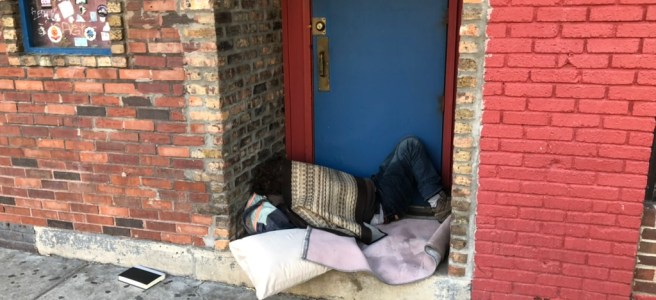
Like cities all across the nation our streets and wooded edges of neighborhoods or shopping areas are filling with unsheltered folks. Oh…Bloomington has plans… lots of pie-in-the-sky plans. Meanwhile the unsheltered sleep on the streets and in doorways of our public buildings. (See photo of one early morning this summer in the doorway of our public library.)

Maybe there will be more support for our existing shelters, and residences, maybe. These PLANS talk of “housing first.” But, where is the housing? We build great high-rise plans but little low-income housing. Thanks to the Chamber, Mayor and Community Foundation we have PLANS, Plans, plans… but not shelters. Dozens and dozens of new higher-income housing developments spouting up all over town. The university expands its enrollment dramatically but has done NOTHING to address the residential challenges it has helped create for low income persons.

Could we consider looking at models like Community Solutions that use abandoned spaces to make an immediate difference. We have lot’s of empty buildings, that, well, sit empty — with bathrooms in each (some former retirement centers, former medical facilities) that will “someday be razed” as the old hospital site is being “redeveloped.” Buildings are sitting empty during these years. We have empty buildings and PLANS but no facilities for my new friend Matthew. (https://community.solutions/)

Here is my challenge, my question for today. Where will Matthew sleep come December? I think we know. So, let me challenge the Mayor and City Council, County Council and Chamber and Community Foudation and Police Chief and leaders of our hospitals and health care centers. Will you make a commitment to spend a night or two sleeping on the street come December 16 and 17th? It’s the weekend before Christmas — good time to meet some other persons who are “disciples” and experience what they experience each evening. OR, perhaps some of your PLANS might include finding shelter (old or new, re-purposed or not) NOW! Can you include doing something NOW for the unsheltered in our city. Matthew, the disciple is asking.