
Author: philipamerson
Little Donkey Sunday
Little Donkey Sunday
Little Donkey Sunday: this is what pastor Dan Caldwell at the Sacred Heart congregation in Bloomington, Indiana called it. Dan suggested this was a better name for the Sunday before Easter than Palm Sunday. I think he is right. Dan explained the waving of palms was mentioned only in John’s Gospel, but the picture of Jesus mounting a little donkey or colt is offered each of the gospels.
The parade for Jesus took place on the east side of Jerusalem, coming in from the Mount of Olives. The crowd gathered and shouted their hosannas. Jesus, feet dragging the ground, was riding a small donkey. What a picture! Is this a sign of conquest? On the other side of town, the Roman legions were riding their stallions and marching in columns to display their strength. The Romans were there to control any disturbances during Passover observances. One featured a man on a little donkey, a humble king as portrayed by the prophet Zechariah (Zechariah 9:9); the other was a spectacle of might, it was the military power of empire.
Over fifty years ago, my friend, Bill Wiley-Kellermann wrote of these two parades. Bill reminded us then – and now – of these two choices. People of faith face these today. Two divergent understandings of power, strength and right. Some like Secretary of Defense Pete Hegseth pray for “overwhelming violence” against the people of Iran. He marries the strength of empire with a half-baked-Christian-theology that suggests faith is defended by Patriot Missiles. Missiles that smash the homes and lives of innocent people, killing thousands, even children, what power do they display? On the other side of our nation there are the little donkey people. More humble, even silly, these people march in No Kings demonstrations.
Pastor Dan has it right. He helps me as I struggle with the many empires of my world. I struggle to place my faith in the love of neighbor demonstrated by Jesus, riding on a little donkey. I struggle with more than empires of national or world politics. There are the empires of the social service industry, of university leaders who succumb to racism and narrow ideology, of social-media-billionaires with algorithms that do harm, or of religious denominational authorities.
In our religious denominational empires, that come replete with bishops, general secretaries, synod execs, and superintendents there are too few who seem to remember the power of the little donkey. Instead, not all – but too many, march into town parading new structures and corporate plans that are detached from common sense and grass roots relationships. There is little or no listening to those members in the pew. With top-down stylings and business-shaped designs, they hunger to consolidate power. Frightened by a loss of market share, these religious leaders miss the glory all-around of little donkeys ridden by the faithful.
Let me close with Mary Oliver’s poem “The Poet Thinks of the Donkey”
On the outskirts of Jerusalem
the donkey waited.
Not especially brave, or filled with understanding,
he stood and waited.
How horses, turned out into the meadow,
leap with delight!
How doves, released from their cages,
clatter away, splashed with sunlight.
But the donkey, tied to a tree as usual, waited.
Then he let himself be led away.
Then he let the stranger mount.
Never had he seen such crowds!
And I wonder if he at all imagined what was to happen.
Still, he was what he had always been: small, dark, obedient.
I hope, finally, he felt brave.
I hope, finally, he loved the man who rode so lightly upon him,
as he lifted one dusty hoof and stepped, as he had to, forward.
+ Mary Oliver
+++++++
Too often, I am “tethered by the tree as usual.” That tree is named EMPIRE. I miss the little donkeys and their riders all around me. Might I be brave, along with the donkey.
That Which Cannot Be Razed
That Which Cannot Be Razed
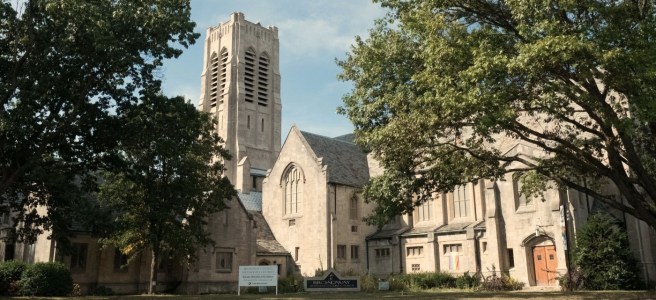
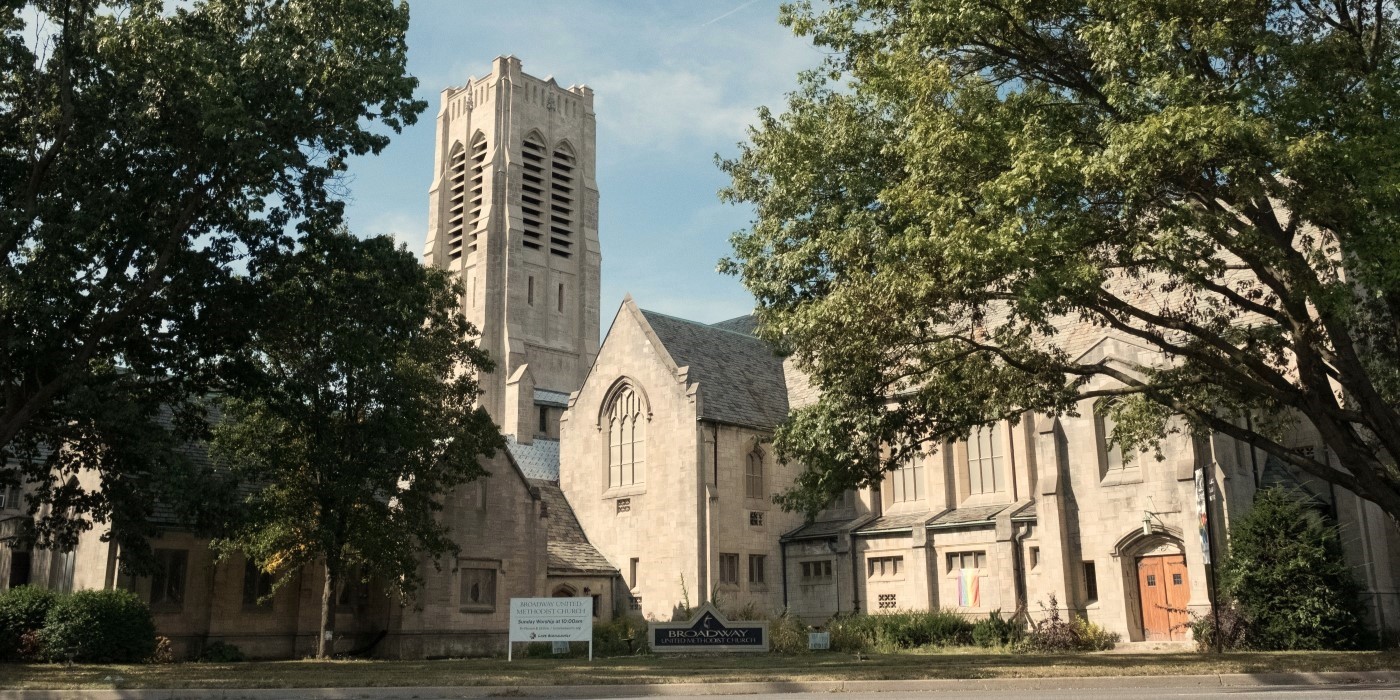
Admittedly naïve, the Christians at Broadway Church in Indianapolis in 1986 wrote: “As followers of Jesus Christ, responding to God’s love, our mission as the people of Broadway Church is to be a multicultural, Christian community that in its ministry seeks, welcomes, and values ALL people.” We knew it was a challenging aspiration, none-the-less the choice was to be a church that said it welcomed everyone – and acted like it. No matter. Everyone.
That congregation hasn’t done it perfectly, but over the decades it has claimed this mission. Still does. Yes, we were naïve, about our society, our world and the human condition… or were we?
Life would teach many lessons, some hard ones. The power of tribalism and fear-stoked resentment has too often overridden respect for all. It has even undermined alliances among western nations. Today we see bigotry and discrimination, dressed up as ICE agents with masked faces and camouflaged outfits, terrorizing our cities. Such threatening realities appear to trample on that simple mission statement.
Naïve? Surely so. Wrong as a witness to the love your neighbor message of Jesus? Not so then, not so, now. The Apostle Paul wrote of this in the earliest years of the church: “In Christ’s family there can be no division into Jew and non-Jew, slave and free, male and female. Among us you are all equal. That is, we are all in a common relationship with Jesus Christ. Also, since you are Christ’s family, then you are Abraham’s famous “descendant,” heirs according to the covenant promises.” (3:28-29 as rendered in The Message).
Twenty years ago, columnist David Brooks wrote of the coming death of multiculturalism. https://www.nytimes.com/2006/04/27/opinion/the-death-of-multiculturalism.html. Brooks spoke of what he saw as the excesses of multiculturalism where diversity was too easily celebrated and sometimes prevented true openness to all voices. He predicted multiculturalism would pass and we would see a “rebirth of liberal American nationalism.” I wonder what Brooks would say today of the trajectory he offered then?
Whether one points to the multiculturalism displayed in the Ruth and Naomi story, or to the multiple ways Jesus of Nazareth broke and transformed deep patterns of race, class or religious exclusion, or to the Pentecost events, multiculturalism and faithful Christian practices are intertwined.
At Broadway, shortly after that mission statement was written, a longtime member told me that grand old building of stone and stained glass might one day be gone, it might be razed, but the gift of knowing others who differed in a community of acceptance could never be erased. Perhaps that congregation at Broadway was not so naïve. It continues today as faithful to its mission. So do thousands of other gatherings and activities in the name of Jesus around the world. Naïve? Perhaps, it appears so, in the short term. However, as Eugene Peterson suggested, Christians are called to “a long obedience in the same direction.”
Little Boys with Nuclear Toys
The Spector of Little Boys with Nuclear Toys
As I watch and listen to Donald Trump, Pete Hegseth, Stephen Miller, J.D. Vance, Marco Rubio and many others, I find myself mumbling “We have little boys with nuclear toys.” There is war in the Middle East, focused primarily on Iran, but also overwhelming nearby Gulf States and Lebanon. We watch in horror as the war drags on in Ukraine and can’t comprehend the destruction in Gaza.
Always quick to justify our actions we point to others who find their identities through evil actions. Moral decision making is flattened to either them or us and violence becomes the only tool at hand. There are so many terrorists: Hamas, Revolutionary Guard, ISIS, Hizballah, Al-Qaida or the Latin American drug cartels. The little boys with Tomahawk missile toys leap into the fray. They proclaim they are showing our nation how to “man up!” Core values and truly ‘acting like a gentleman’ is being trashed in the corridors of power.
With little or no regard for the complex unfolding of history, or intelligence (military or otherwise), we watch one debacle after another. Trust is destroyed with allies, cities like Minneapolis or Chicago see trust for local law enforcement sabotaged and more than 170 children are blasted away at a girl’s school in Iran.
Adam Serwer’s “The Cruelty is the Point” was published five years ago. It was a warning and a window into a more positive alternative. Serwer argues that Donald Trump’s language and behaviors (the racism, bullying, January 6th insurrection, anti-immigrant actions, misogyny) are broadly misunderstood. Trump is not the primary cause of our current challenges; rather, only a symptom of a deeper malady. Christians have a category for this: it is SIN.
Further, this sin, this evil is beyond that of any one individual’s moral failings. Something more profound is at play. Individuals matter, of course. Something all too widely misunderstood and discounted is also at play. We are wrestling with our social, corporate, institutional, and cultural sins – not carried by individuals alone. It is no wonder that the “little boys” and their followers argue there is no such thing as social justice. Yes, they seek to avoid the law for their personal actions, but it is more critical to see there is social immorality and illegality as well. It is no wonder these little boys and their allies suggest that whole groups can be labeled as cockroaches, as dirty, as criminals. It is no wonder persons can be targeted soley on the basis of skin color or language. These social sins require a corporate confession, an admission of responsibility and a change in more than an individual’s heart. They call for social equity and justice in our institutions, our culture and in the wholeness of our moral vision.
Fr. Richard Rohr writes helpfully about our failure to speak clearly about sin:
https://cac.org/daily-meditations/collective-sin-and-evil/
These are frightening times indeed. There is a way forward – past the sin in which we all are entrapped. The little boys with nuclear toys appear to gain pleasure from all they can destroy, whether through warfare, undermining our courts and justice systems, estranging international allies, cutting of health and food supplies formerly offered through USAID and more.
There is a better way – a way of repentance and respect for all. We Christians pray for it every time we pray the prayer Jesus taught, which begins “Our Father.” This is a social prayer as it continues Thy Kingdom Come Thy Will Be Done On Earth.
Experts and other Obsoletes
Experts and other Obsoletes
Expertise and professionalism have shaped much of our social and economic world over the past century. Experts and professionals have their place – after all, my adult life has been spent playing one, or both, of these roles. Still, I chuckle at Mark Twain’s quip “an expert is an ordinary fellow from another town.” Later Geroge Bernard Shaw wrote the oft quoted line “Those who can do and those who can’t, teach.”
Now, at eighty, with nearly sixty years ordained as a pastor, administration and teaching behind me, I ponder the role of expertise and professionalism. I wonder if the role of “expert” and “professional” has been overvalued. A good consultant can be of great assistance. I know and have benefitted. Even so, much of professionalism and expertise is facing obsolesence. We are at the edge dramatically altered reality. Artificial intelligence is already radically shifting our assumptions and social stratifications.
Over my years of ministry, I have often been amazed by the authority and deference given to experts. Church experts on congregational life and pastoral ministry have brought their advice. It is often provided by consultants with minimal experience serving as pastor, or as one who has led a congregation.
These are good, well-meaning people, often talented and full of research that comes from arenas outside the life in a parish. However, as I have watched, I have been aware that they do not know, what they don’t know. They don’t know the reality of standing in the hospital room as the matriarch dies, the doctor not yet there, and the family looks for guidance and prayer. They have not been with parents whose child has been fatally shot, or who has committed a horrific crime, waiting for the sheriff or state trooper to confirm the tragic news. They have not faced a week in the parish when the boiler fails, there are three funerals to perform, a wedding coming on Saturday, a sermon to prepare and a church leader has been publicly accused of spousal abuse. They do not know what they do not know.
Experts function in a world of “let me help you analyze your situation and offer counsel with my preset categories.” These are often based on business, biological or cultural models. Meanwhile pastors live in ‘the overwhelming mix of emerging and overlapping situation(s).’
Often, I have appreciated the wisdom of a bishop with years of experience as a parish pastor. It makes a difference. I wonder, what if bishops served for a term and then returned to parish work? We could use this talent. This was a pattern in the former Evangelical United Brethren that merged with Methodists to become the United Methodist Church, where now bishops are elected for a lifetime. I watch as talented persons climb the ladders of leadership in the church, becoming experts on many things apart from leading a parish. Understandably something critical is being diminished, even lost. Often what is lost is the ability to value the talents of the members of a congregation. Often what is lost is a more democratic and community-building understanding of church.
This dilemma is not one faced by Mainline churches alone. A young couple I married a few years ago visited with me recently telling me of their experience in a large megachurch in a nearby city. They spoke of meeting the preaching pastor after a service and when they said, “We would like to welcome you to our home for a meal,” the preacher replied, “Oh, I am not that kind of pastor.”
Such specialization, such expertise, has limits and AI will expose these – sooner than most of us know. In the years ahead, when information about “situations” can be gained by, and speeded up by, using the powers of artificial intelligence, who will stand by the family in the hospital room? Or who will sit with the young woman in jail, or who will have gained understanding of the family dynamics often at play in weddings? Who will look in the eyes of other humans, hold their hands, pray the prayer that starts the healing? There won’t be time to login or call the consultant.
The future will require connectors, community builders. Leaders will need to convene and consecrate more than consult.
And the Nation Shrugged

And the Nation Shrugged
On CBS 60 Minutes, 9/28/25, Dana White, of cage boxing fame, challenges interviewer John Wertheim who asks about “toxic masculinity.” White responds: “You tell me what ‘toxic masculinity’ means. There is no such thing.” Wertheim shurgs. The day before two homeless men were beaten on the streets in my city by young men showing off their “masculinity” brutalizing those without shelter. Across the nation last night hundreds of women sought shelter from abusive partners. This morning hundreds of police officers and social workers seek to protect children from violence in their homes. Wertheim and the nation shrugs. Today the “Secretary of War” is gathering all senior leaders of the U.S. Military to encourage a “warrior mentality.”
There was a time when “be a man” meant tell the truth, take responsibility to do the right thing, be courteous and look out for the weak or vulnerable. As Dana White acknowledged he prefers to be seen as a bully! And the nation shrugs.
Shoveling Alone

Shoveling Alone
Shoveling alone. It is the story in almost all our communities in the United States. The poorest of the poor are shuffled to the edges of our economy and end up living on the streets — or in jail!
As I turned the shovel in Bloomington on a recent Wednesday, at the groundbreaking for our new Beacon center, I realized I was alone in that moment… no one on either side… but so many had gone ahead, and others would follow. Is it true in your community as well?
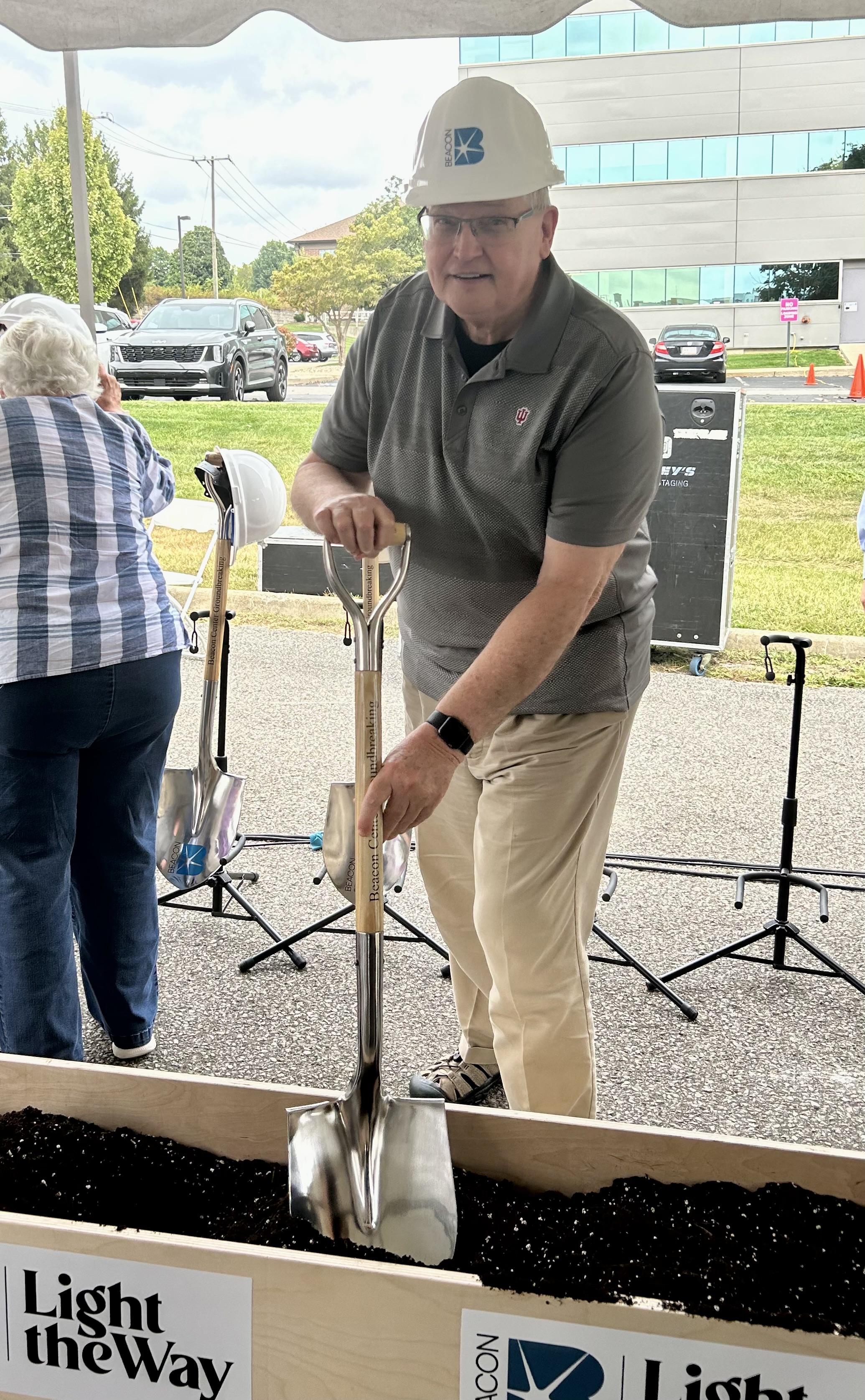
Not just on a given afternoon but across the years, I knew others in the faith community and beyond, who didn’t attend this groundbreaking… but who had ‘turned the soil’ of change in many places. They have been at this turning the soil, and turning our souls, in the past and will be in the future. In the process our souls are returned to an original place of hope and sharing among all.
I believe our local faith community, and others whereever you live, will do more in the months ahead, not just for places like Beacon. We must do this because our challenges cannot be fully handled by any one social service agency. Beacon, and similar agencies are a good, but insufficient response.
Bloomington Mayor Thomson is right, a comprehensive response to the challenge of persons without shelter is needed. Rise up now, faith communities and others, show more muscle, join in to assist the Emergency Winter Shelters, programs like Heading Home, the Recovery Alliance, New Leaf/New Life. Offer more mutual respect and support for all! The massive cuts to Medicaid will touch us all and especially the poor. Emergency rooms will be more crowded, retirement homes and clinics will close, healthcare will be rationed and delayed. Time for more to pick up the shovel and turn the soil toward the planting of new seeds of hope.
“When did we see you…?” the scriptures ask. “When you did it to the least among you” comes the answer. I live with the firm knowledge this shelter, even with a “better” setting where healthcare, employment assistance, public safety, addiction recovery and other resources, are provided is but a small beginning. It is not THE answer. Still, it is a needed step. Many can and will raise needed funds, offer to volunteer, and challenge public policy to do better… in God’s name.
The road is long and filled with twists and turns, social detours, myths about addiction, mental health and blindness to our own complicity in the “social welfare” practices in this country, and the misdirected, cruel political impulses and assault of so many in power in this time. Our culture lives with the myth of hero and victim. It is the “Hero Journey” story that Jung and Campbell identified as embedded in all we perceive as possible. It is so fully ingrained in our psyche and social systems that, sadly, we turn others into “clients” rather than “neighbors” and are more comfortable in speaking of THEY rather than with US.
It will take time — this turning the soil. Still as a Christian I recall the hymn refrain “We are not alone, for God is with us.” ‘Naive’ you say, of course it appears that way, of course. Others are using their constructions of false gods to continue cruelty. I know. That is why those who have theologies more tied to the larger, historic faith story must now speak the truth, afresh. Until some have seen a life changed, a person healed from addiction and communities moving away from cruel patterns of greed and domination, we are stuck. And, until a community is seen pulling together to solve such challenges, many will call me naive. I prefer to call it our shared hopes, foundational for the future — that we can care for one another. Check it out. This is a core teaching of Christianity and other great faith traditions. Interdependence is more essential to humanity’s long-term survival than independence.
Paul Farmer, remarkable physician and founder of Partners in Health (PIH) understood his life’s work as “The Long Defeat.” He said, “I have fought the long defeat and brought other people on to fight the long defeat, and I’m not going to stop because we keep losing. Now I actually think sometimes we may win. I don’t dislike victory. … You know, people from our background-like you, like most PIH-ers, like me-we’re used to being on a victory team, and actually what we’re really trying to do in PIH is to make common cause with the losers. Those are two very different things. We want to be on the winning team, but at the risk of turning our backs on the losers, no, it’s not worth it. So you fight the long defeat.” [From Tracy Kidder, “Mountains Beyond Mountains: The Quest of Dr. Paul Farmer, a Man Who Would Cure the World.”]
So, pick up a shovel, write a check, welcome the stranger, say ‘hello’, ask the stranger her/his name, smile… and keep doing it in your community, whereever you are. Keep at it, even when times are tough. My friend Wes Jackson put it this way, “If you think your life’s work can be accomplished in your lifetime, you are not thinking big enough!”
New Jails? The Fictions and True Costs of our Dependence on Punishment

New Jails? The Fiction and a Generational Mistake
Unless the citizens of Monroe County Indiana make a U-turn, we are heading toward a huge, generational mistake. (Others have made such mistakes recently: Grant County, Kentucky; Terrebonne Parish, Louisiana; Santa Fe, New Mexico; Indianapolis, Indiana and Douglas County, Kansas to name a few.) Building the proposed new jail in Bloomington Indiana will undercut resources for our children’s children. Construction, interest and maintenance will cost over $330 million dollars! The drive to build this jail is based on several myths: 1) our current jail cannot be renovated; 2) there are no good alternatives to incarceration; 3) the current jail isn’t large enough; 4) the 2008 ACLU lawsuit requires a larger jail.
NONE IS TRUE. Renovating and caring for the Bloomington current jail is one-fourth the cost of a new build (under $70 million). Alternatives to prison are demonstrating significantly better approaches. Monroe County’s current jail capacity is 294 while average population is 225. In her 2025 State of the City address, Mayor Kerry Thompson noted violent crime was down 24.3% in the community last year. There are multiple actions already being taken to respond to the ACLU lawsuit. It is rinse, wash and repeat with these myths, often hiding other motivations like those encouraged by the entities standing to benefit from the construction of a new jail. A majority of human service groups oppose a new jail based on their day-to-day service efforts. Yes, there is a troubling problem with mold in the building. Correction is underway.
Finally, there are many other troublesome dimensions to this drive for a new jail. Here are three:
1) A large majority (over 75%) of those held in jail are there because they are poor (can’t afford a bond), suffer from addictions or mental health issues, or are persons without shelter. Most are pretrial – they have been convicted of nothing. How does incarcerating them provide a way out of difficulty or build a stronger community? While in jail the indebtedness of those incarcerated grows! The expense to inmates for phone calls, room and board fees, commissary charges all add up, and up.
2) Access to the newly proposed location is limited to those with an automobile. There is currently no public transportation to the location. If courts and public defender’s offices are there, the visits and support of family and friends is further compromised. Many of the services currently available to the incarcerated, family and friends are downtown.
3) Finally, and deeply troubling, locating a new jail in Tax Increment Finance (TIF) is an attept to hide the way local governments can spur commercial and other development in the area based off the new and extended services put in place for the jail.
We ALL will pay more, but the debt burden on the poorest among us will be the highest.
Racism at Indiana University

Racism and Indiana University
Indiana University is in the midst of troubling acts of racist retrenchment. What is wrong with this picture? Yes, a backsliding into racism at that Indiana University, the one with a flagship campus in Bloomington, Indiana, and regional campuses around the state. Yes, the I.U. that has been shaped by commitments to diversity and inclusion. Tes, the one shaped by the likes of Herman B Wells and persons of academic excellence, integrity, faith and civic pride over the decades.
The great comprehensive university where notable Black alumni, students, faculty and staff are so multiple, it is too challenging to begin a list here. These are a few of the thousands of I.U. greats. In my personal experience, I have been blessed by friendships with folks like Joseph Taylor, LaVerta Terry, James Holland, David Baker, Vi Taliarerro, William McKinney, Camilla Williams, Charlie Nelms, and on and on the list goes.
It is unbelievable to those who know the historic commitments of this school. This racist retrenchments has resulted in the elimination of resources for students of underrepresented groups as well as critical support for faculty and staff. The actions challenge I.U.’s remarkable, historic legacy as a place where all are welcome and offered the opportunity to thrive. In recent months the following actions have taken place:
1. The awarding of scholarships designated for specific students based on ethnicity or sexual orientation have been “paused.”
2. Websites and campus materials have been scrubbed of words and phrases related to diversity or programs seeking racial understanding.
3. Posters around campus with the words “Build a Community Where All Belong” have been removed from bulletin boards and public spaces.
4. Names of programs or offices that provide services or support for underrepresented students are being removed or painted over or removed. The sign OVPDEI (Office of the Vice President for Diversity, Equity and Inclusion) has been painted over and left blank. Programs housed in this now unidentified building include Groups Scholars, FASE Mentoring, Twenty First Century Scholars and Hudson-Holland Scholars. Will all cultural centers face such identity-theft and censure, while programs that serve virtually all White programs and services go unchanged!
5. The essential core of academic freedom is being tested. Faculty face threats to their course materials over the use of language and/or ideas that call for the addressing of systemic or institutional racism.
We, the students, alumni, faculty and staff and friends of Indiana University, demand that on all its campuses, Indiana University STOP this retrenchment of White Racism being treated as normative. We demand that a commitment to the welcoming of ALL immediately be restored no matter race, class, creed or sexual orientation.
Corn-Bred
Corn-Bred
I’m a Hoosier, Indiana born and bred, on most July Sundays I can be found at church. On the best Sundays, the benediction ended, I then head for sweet corn at home from the farmer’s market. Bought the day before from a young Amish teen in the City Hall parking lot. Straw hat, gray shirt, grayer suspenders, blond curls and a sneaky, shiny smile. From down near Paoli most likely, I surmise – the corn and the smile. “Picked this morning” he offers. “In the moonlight?” I tease, in return. We trade a chortle. The grin and banter worth the entire purchase price alone; but I win, as I carry off a half-dozen ears. “He smiles with his eyes, he does.” I heard it growing up, like him I bet.
Early July, Indiana sweet corn is extra-scrumptious; I prescribe as it a necessary antidote to the extra-boneheaded politicians who now scour the state dressed in a toxic religious wardrobe. Deceptions attached to their bigotry like the sown-on-shadow of Peter Pan. This summer sweet corn is better. Much needed offset to the racism, so appreciated in the summer heat of ’25.

Worship was delicious too this Sabbath. A needed cure offered, beginning with soaring music. A fanfare for a refurbished organ followed by hymn texts full of ancient, hard-won truths. The anthem is fetched from the apothecary of faith. “It is well with my soul” lingers still. Take that, you many poisons of the soul, you dividers of a nation.
The stage is set by the liturgy – we are called to hope and not despair; and, then a sermon, chasing down our shared deeper story. Listen again to Naaman’s healing. His trust in his own power, his military hardware, is insufficient to bring peace. No, no, no, empathy is not “a bug in the system,” Mr. Musk. Empathy marks true humanity. A “healed femur is the sign of the beginning of civilization” Margaret Mead once noted. The wonderful irony of the powerful finding healing and justice by finally heeding the counsel of a young girl. She brings a four-star general to his knees and his senses… and more than an outer leprosy is healed. She did it well, both the young girl and the preacher this Sunday. We are reminded that interdependence is more to be valued than independence.
It’s corn-bred wisdom that hubris and arrogance will end in dust. True in Elisha’s time and a lesson to be relearned now. God’s preference is for the small and marginal ones. The narrative is told over and again. Let those with ears-to-hear, listen. Too bad uncle Donald was on the golf course and missed learning how his story will end. The closing hymn offers again this poetry of hope. Then I head home to sweet corn and a nap.
O God of every nation, Of every race and land,
Redeem the whole creation With your almighty hand.
Where hate and fear divide us And bitter threats are hurled,
In love and mercy guide us And heal our strife torn world.
Rain begins as we walk home… “good for the sweet corn,” I think...
 Hands of the Strong