Today is a Twos-Day. This, the twenty-second (22) day, of the second (2) month, of the year twenty-twenty-two (2022), has me considering the things that might be “twinned” together. What are two places, two events, or two persons that share something in common.
Briefly then, I write of two persons who come to mind on this day of 2s. I join author John Green in not being a fan of heroizing individuals; even so, I risk it here. The belief that there is some hero in a white hat who will come along and save the day, is a deeply inculcated myth in our culture. It does much damage. One the one hand, some folks chose to wait for the hero to appear, not stepping forward to join others in seeking to address some injustice of shared dilemma. On the other hand some think they are called to act as hero and come up with “the great fix” that will solve whatever problem they perceive to be at hand. One doesn’t have to live long in low-wealth communities to see the damage done by the continuing cycle of “heros” who appear and believe they are going to fixt things, all the while ignoring the gifts of the persons or neighborhoods they were scheming to FIX.
Even so, on this day of twinning, there are some difference-makers who come to mind. They show up in our world to point us to noblier paths. On a day when tyrants, like Vladimir Putin, act as bullies on the international stage, there are other options. On a day when one can, in hindsight, see through the thinly veiled efforts of our former U.S. president to take us out of NATO, and undermine the democratically elected government of the Ukraine, I want to hold up two other persons. If Putin and Trump can be seen as twinned — at least in their preference for autocratic governance, there are two men who have shown a different path forward: Paul Farmer and Jim Wallis.
The news came yesterday that Paul Farmer had died. I only met Farmer once and briefly. Still his life, his writings, and his witness standout. He would not accept that healthcare should limited to only the wealty or privileged neighborhoods in our nation or world. He did his work encouraging the resources at hand — whether with the people by establishing neighborhood health worker corps or building clinics and hospitals using the natural resources and gifts of the communities where they were built. Read more about Paul Famer here: https://www.washingtonpost.com/opinions/2022/02/21/how-paul-farmer-saved-millions-of-lives/.
Farmer was clear and persistent. His calling was to act along with others, to make a difference, to give access to health care FOR ALL. A friend tells of a time Paul Farmer was asked to meet with executives of a large pharmaceutical company in the Midwest. In his presentation, he said he could make a difference in a nation in Africa if a donation of $3 million in specific medicines could be made available. At the close of this talk, the executives quickly huddled, then came back saying the best the company could do was $1 million of these medicines. Dr. Farmer responded that, then, he wouldn’t be able to accept their donation because it wasn’t sufficient to the challenge the people were facing. As he stood to leave, the executives asked for a moment to discuss the matter further. Upon their return to the room, they assured Paul Farmer he would receive ALL the medical supplies he requested. Clarity and Persistence. We grieve Paul Farmer’s early death and celebrate the gifts he shared.
The second man that comes to mind is Jim Wallis. Jim is still very much alive and I give thanks for this. My friendship with Jim has been a long one, beginning back in San Francisco in 1974 when we were both called Young Evangelicals. I was teaching in an urban studies progam and invited Jim to come speak at a conference on the role Christians might play to address discrimination and poverty in our cities. As the editor of a new magazine, The Post American, later to become Sojourners Magazine, Jim was one of several persons who were emerging as important Christian witnesses. Jim would be the first to say he is not a hero; and my years of friendship would confirm his assessment. Like every person I know, he has his blemishes. Still, I suspect, that when a list of the saints of our generation is written, his name will be on that list (or at least he will be in a place of honorable-mention!).
Currently, I give thanks that Jim Wallis’ voice and experience in making it clear that voting rignts for all in the U.S. today is a moral issue: https://www.washingtonpost.com/religion/2022/02/18/sojourners-jim-wallis-voting-rights-religious-left/. As Wallis puts it, “For me it’s the first book of the Bible. We were all made in God’s image and likeness. Voter suppression on the basis of skin color is a throwing away of Imago Dei.” Jim has spent more than fifty years giving witness to the ways the Gospel calls us to live beyond the prejudices and discrimination still so prevelant. Clarity and Persistence.
These two men are connected by Clarity and Persistance: 1) they believe every human being is made in the image of God; 2) No matter the evil patterns and powers and persons who seek to exclude and dominate, God’s way of love for all is the preferred way for humanity. Paul and Jim have demonstrated THE BETTER WAY on this Twos-Day.
Steve Harper identifies what I have also seen as a rising effort to narrow the clear-Gospel-call for social holiness, into a narrow and dangerous individualism. Dr. Harper clearly and courageouly points to this sad attempt to re-boot the Evangelical message. In gratitude, I re-post his thoughts here.
Since the first of the month I have come across a book, a blog, and an article that reveal fundamentalist Christianity has identified yet another “enemy of the Gospel”—social justice. It’s a telling and false allegation.
I have seen periodic references to fundamentalists caricaturing “wokeness” (which includes a resistance to injustice) as a liberal attack on America and the Church, but its only in the past few weeks that I have come to connect the dots and recognize that “social justice” is a code phrase for a concerted opposition to progressive Christianity. The book, the blog, and the article have combined to reveal the bigger picture.
The book…..Owen Strachan has written ‘Christianity and Wokeness: How the Social Justice Movement Is Hijacking the Gospel — and the Way to Stop It’ (2021). Until recently, I did not know about him or his book. And to be fair, he is too extreme…
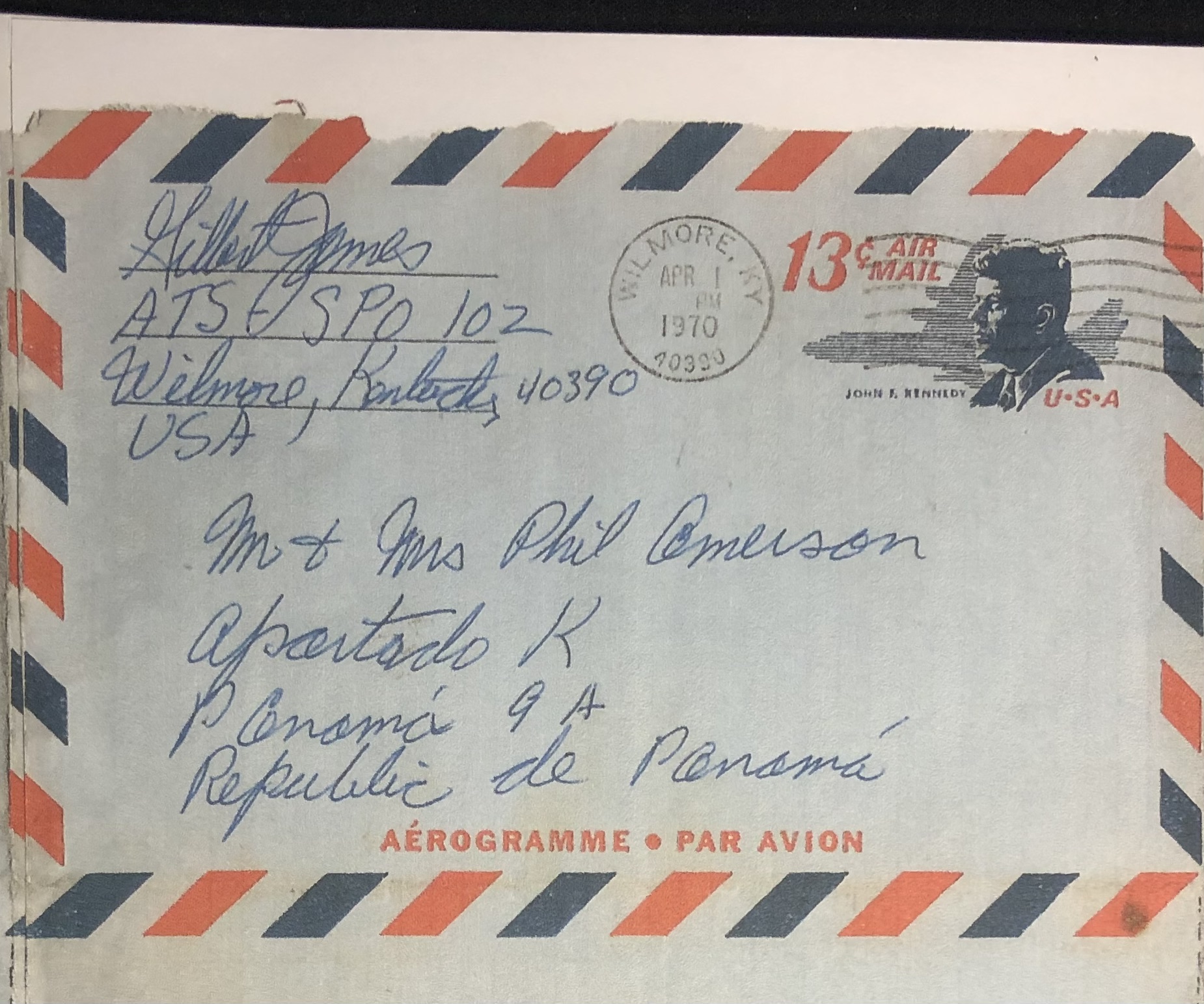
Recently while sorting though an old file, I found the letter from Professor Gilbert James written in 1970. I had taken a leave from my formal seminary education in Kentucky and was in a year-long intership, teaching at the United Methodist School IPA, in the Republic of Panamá. Professor James at Asbury Seminary and I exchanged correspondence during the year. I was taking a reading course from him while away from campus.
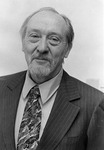
Dr. Gilbert James, Used Courtesy of the Archives and Special Collections of Asbury Theological Seminary
In the letter I recently discovered, Dr. James asks that I not share its contents because “if expressed openly on campus would be considered high treason.” Hyperbole is all too comon in the academy. However, I think Gilbert was quite serious. His comments in the letter would have created problems and perhaps even censure.
My spouse, Elaine, and I were in Panama. Back in the U.S. Gilbert was confronted with a “spontaneous revival” which had begun at the college across the street. Others have since spoken and written about the 1970 Asbury College Revival in positive terms. There are, indeed, powerful stories of persons finding emotional and physical healing and being restored in their faith.
What were these controversial comments in the letter? Gilbert writes of his dismay watching folks “getting high on ‘mass enthususiasm.'” As a social scientist, educated in both sociology and psychology, what he observed was a religious fanaticism, interpreted with narrow fundamentalist language, and celebrated with “abysmal Biblical ignorance.” Only that!
Gilbert and Esther James with Abbie Christian Establishing a Work in Indianapolis for the Department of Interracial Evangelism for the Free Methodist Church (circa 1955). (Used with Permission of the Asbury Seminary B.L. Fisher Archives and Special Collections)
Some saw in the enthusiastic fervor at Asbury College in 1970 a great time of spiritual renewal. Gilbert noted there was good, but expressed concerns rooted in his years of experience with such spiritual awakenings. There is irony in the fact that Gilbert James had spent much of his life as an evangelist, attending and preaching in many camp meetings and revivals. Between 1946 and 1960 he was the Superintendent of the Department of Interracial Evangelism for the Free Methodist Church. He knew the genuine article and celebrated it. In 1970 he also was troubled.
Knowing my teacher as a world class provocatuer, I suspect that his fear of being accused of being a traitor to the faith is correct. He might have been charged with something like “high theological treason” in that particular time and place five decades ago — and in many places still today. He saw some of the fanaticism of the events at the college across the street, spilling over into the seminary. My guess is that during the 1970 Asbury Revival his wife, Esther, had to tone him down each evening; although, I suspect she shared many of his perspectives.
With some discomfort I recall that Gilbert was a revivalist. He believed in seeking both personal and institutional renewal. My discomfort is primarily due to the fact that his breadth of theological vision seems to be in short supply in today’s world. Evangelism has been given over to a narrow set of understandings. It has been limited to only a change in an individual — who is being introduced into thinly disguised social and political understandings. Unlike the revivals in the Second Great Awkening, where a wide array of societal injustices were addressed (poverty, slavery, voting rights for women, etc.), there is scant focus on institutional practices that need transformation, apart from a short list that includes fights against abortion and homosexuality.
Gilbert, the evangelist, believed in personal conversion — in transformation, possible through faith in Christ. Such change is affirmed in the letter — but he knew of an evangelism that was much deeper and wider. And he knew of the threats of individualism and fundamentalism that were at play. There were troublesome signs for him in the events surrounding the 1970 Asbury Revival that I don’t believe have been made public before.
So, here, 52 years later I offer this insight into his perspective of the 1950 Asbury Revival. I have highlightedin bold some passages mentioned above, the underlining was his.
++++++++
Letter from Dr. Gilbert James – March 31, 1970 – Wilmore, Kentucty To: Phil and Elaine Amerson – Republic of Panamá
Dear Phil and Elaine,
“Thanks for your good letters and your patience with me… “ [Professor James then writes a few paragraphs about a reading course for Phil.]… The letter then continues speaking of the 1970 Asbury Revival.
“I am sure you have read of the revival and all of the excitement around here with teams going out in all directions – classes suspended – and the academic quarter an educational shambles.“
Letter from Gilbert James to Phil and Elaine Amerson, March 31, 1970
“There were some remarkable individual examples and changed lives and I am grateful for every one of them. There has been, however, I must in all honesty confess, a great deal of shear non-sense that was nothing more than “getting high” on mass enthusiasm. I have never witnessed in my life more expressions of atrocious theology and abysmal biblical ignorance than I heard from the “witnessing” lips of those college students. As a result, we underwent the usual “exorcism of demons” at the college until it was suppressed and now we have the most frightful outbreak of “tongues” at the seminary that we have ever suffered. The word is out that Asbury Seminary is the “Mecca” for the tongues movement. I am just sick about it. The most remarkable aspect of the whole affair is not that it occurred, but rather that as much good was accomplished as was with all the inane and disrespectful antics that went on with it.“
“Please do not write back to anyone about this, for what I am writing to you, if expressed openly on the campus would be considered high treason.” I repeat, I am glad for the work of a sovereign God, in spite of man’s ignorance and sinfulness, but I predict it will be years to fully recover from the unfortunate results that have damaged the reputation of Asbury and reflected on the sound biblical basis of her message.“
“I am right in the midst of the elaborate planning necessary for the Chicago program. We received $50,000 from Lilly for the experiment, and this is our big chance to try to seek some new directions in theological education. After a full day’s consultation with the Minister’s Study Board director of the NCC. He said, in great seriousness, “This is one of the most exciting and unique experiments in American theological education. He has agreed to direct our evaluation of the program and we hope to get a monograph out of it.“
“Love to you both – I must close. Write soon about books you want. Pray for me – please.“
Gilbert James
++++++++++++++++
Teaching in Panamá, I was thousands of miles away from the spiritual, emotional, psychological cyclone richocheting in and around Wilmore, Kentucky. I was far from the events my teacher, Gilbert, saw at close proximity. However, a “spiritual awakening” was continuing for me at the time in Panamá. There I saw more clearly the injustice, racism and violence of institutions and nations. Gilbert James had been insturmental in alerting me of similar structures in the U.S. in my earlier years as his student. In Panamá, these were brought into even sharper relief. I saw, up close, what it was like to live in a nation suffering under a dictator who was propped up by the U.S. I saw the racism institutionalized in the practices of the Canal Zone and the abuses of so called “aid projects” privileging of wealthy, both in Panamá and the U.S. I saw hungry children dumpster diving to have something to eat. And there was the corruption of young women sold into sexual arrangements as teenagers. Evangelization needed to be wider and deeper than “individuals getting high on mass enthusiasm.”
In my review of materials from the 1970 Revival and from reports I recall receiving from others at the time, there were many testimonies about giving up cheating, lying, gossip, drinking alcohol, smoking, sexual petting, premarital sex or persons having an “insufficient prayer life.” It is almost exclusively about individual sins or a shortcoming of one’s self. Where are the witnesses who say, “We must now speak out against racism, war, poverty or violence?”
I do not agree with all of Gilbert’s perspectives, including some in this letter. That would make him happy… and he would, no doubt, want to have a conversation about where we differ and what we might together learn. Even so, I very much believe his call to an intelligent faith that combines personal and social transformation, informed by careful biblical and theological work was right then, and continues to be right today.
I can already hear some saying, but you must begin with the individual, then “changed persons will change society.” My response: Where is your evidence? It has now been fifty years. If you disagree, please point me to how this “revival” made the kind of difference in our society that came from the revivals of the Second Great Awakening. The Cane Ridge Revival began forty-six miles from Wilmore and one-hundred-and-sixty-nine years earlier.
Other “Awakenings” or revivals involved more than an adjustment of personal pieties or individual behaviors and beliefs. For early Evangelicals like John Wesley or John Calvin, institutional changes accompanied personal change. For the Anabaptists, a new personal faith meant a commitment to pacifism and the persecution that ensued. There is the conversion of John Newton who wrote the lyric we now sing as “Amazing Grace.” Newton’s conversion led him to become an abolitionist, after serving as the captian of slave ships. More recently one thinks of the bombing of Coventry Cathedral in England and the ensuing spiritual awakening resulting in international work at peacemaking (See: Fire in Coventry, Varney, Stephen: Hoder and Stoughton Ltd., 1974). Dozens of other examples could be cited; the sadness is that even today Asbury College and Seminary have fallen into the narrow valleys of a tamed evangelism and pursue cultural stances that are more informed by reactionary political elites and shaped by categories of individualism.
Professor Gilbert James and Eugene Carson Blake, General Secretary of the World Council of Churches, Taize Community, circa 1971. Used Courtesy of the Archives and Special Collections, Asbury Theological Seminary.
Gilbert James was way ahead of me in 1970, and I suspect even now. When traveling with him for a seminary class in Chicago, New York, Detroit or Minneapolis, it was always amazing how he nudged us forward to see the broader ecology and the challenges of ministry in urban settings. It was even more astonishing meeting the people he brought to those seminars. Today I think of Letty Russell, Bill Stringfellow, Bill Pannell, George Riddick, Richard Leuke, Stan Hallett and George Weber, to name only a few.
A 1974 article by Gilbert entitled “The Use and Abuse of Power: A Study of the Principalities and Powers” demonstrates his understandings of the challenges Christians face in urban ecologies. He understood the need to seek transformation that is more than individual renewal (http://place.asburyseminary.edu/firstfruitspapers/15/).
My last visit with Gilbert was, I believe, in the fall of 1978. Having finished my doctoral work, I was asked to cover his seminary classes for a semester. My brilliant teacher was decending into early onset dementia. He would die in 1982 at the age of 66. I traveled to the seminary from my home at the time in Evansville, Indiana.
As I walked down a hallway in the seminary’s administration building, there was Gilbert heading toward the mail room. As he approached, we both began to weep. Then he gave me a hug and said, “I should know but I can’t place who you are.”
Ah, Gilbert, my friend, my beloved teacher, what is truly sad is that too few today remember who YOU are!




 Hands of the Strong